
…and be it further enacted that, to facilitate the transportation of letters by mail, the Postmaster General be authorized to prepare postage stamps which, when attached to any letter or packet, shall be evidence of prepayment of the postage chargeable on such letter.
-Act of Congress, March 3, 1847
On August 18, 2011, National Public Radio ran another in a long line of news stories on the fate of the postal service. Awash in debt, use declining, the conventional view is its demise is inevitable. The NPR story, “There’s Always Work at the Post Office,” focused on some of the 120,000 jobs being cut in the current round of layoffs. The human toll is steep. The interviews were poignant. The despair seeped through the radio into the room. However sad the losses, I listened for things I didn’t hear.
Once employing over 790,000 workers, proponents and detractors alike scoff at the antiquated idea of delivering paper mail anywhere in the country to anyone, rich or poor, for under 50 cents. “That’s the point!” I want to shout. All of us — found, and treated equally, no matter what our circumstances. Every letter brings the ghost of the venerable old institution’s founder, Benjamin Franklin. He knew when he began in 1775, it was a kind of glue for our fragile experiment in self-government. Riding horseback through the early colonies, drumming up support for his idea, he saw the postal service as a way to carry his message: “Where liberty dwells, there is my country.”
Our country isn’t new anymore, but it is still fragile. We have less in common. But we still share the mail…every town, every village, every city. It’s a way to orient the traveler, the wanderer, the seeker, the resident. There’s friendliness in a mailbox. Letters from wealthy people snuggle next to those from struggling students; rural farmers send news jammed next to serial tech entrepreneurs recounting their good fortune. Ph.D.s and children are there, all together, treated the same. Postmarks are far-flung. But every piece shares one similarity — the small notation stamped in the corner — U.S. Postage. It’s glue.
***
Growing up in a military family means growing up on the move. One of my childhood chores was getting the mail for Mother. At the end of snowy New England driveways, or in precarious metal containers outside California bungalows, or in apartment lobby wall boxes with tiny keys, I would find mail. The mailman fascinated me — what he brought, how he found us. His blue uniform and enormous leather satchel made every city feel like home.
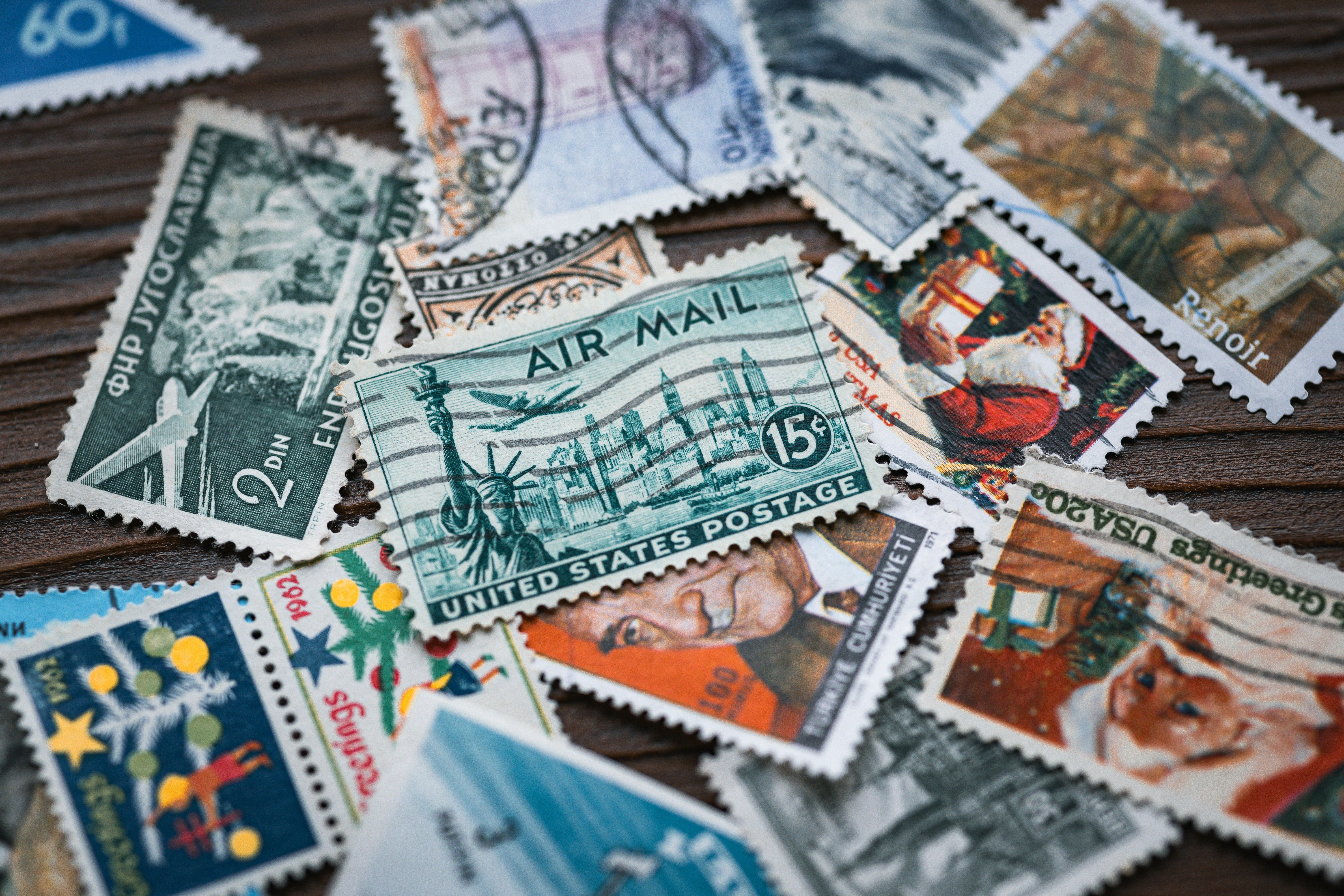
Mother would give me the discarded envelopes. I delivered them to my dolls. When I tired of the game, I would cut the stamps off and save them. Most were purple 3-cent denominations. A few were red airplane images. They were more important — 6 cents. We moved again and again. The stamps moved with me in an old shoebox. They reminded me of homes left behind. It was another kind of glue.
***
1971 arrived. I was an expectant mother in a small second-floor apartment behind a gas station in Eugene, Oregon. Our first purchase was a huge desk with a laminated wood top and chrome legs. In front of it, we squeezed a secondhand blond crib, adorned with the teeth marks of its four previous occupants. We figured we didn’t need much else. After all, I first slept in a dresser drawer, so this was an upgrade. On July 20, 1971, I wrote in my journal:
Summer is upon us… interminable. The world reflects my own restlessness — what will become of me now that I have set aside one career, well defined, for another, not defined at all? Am I strong enough to be curious, eager for each day — without a pre-designated series of challenges? I dream of writing, but wonder how much I have to say. I dream of art projects — warm, friendly things, and wonder if my imagination can take me there. The change from daughter to mother — what a giant step! Is my stride long enough?
Unpacking, I discovered my old stamp-filled shoebox. Sifting through the tiny reminders of time gone by, an idea dawned on me. I might be lost, but the mail would find me. I began to collect postage stamps in earnest. They are beautiful. They tell stories. Former Postmaster General Arthur Summerfield said of them, “The postage stamps of a nation are a picture gallery of its glories. They depict in miniature its famous men and women, the great events of its history, its organizations, its industries, its natural wonders.” I joined the Postal Commemorative Society, which delivered first-day-issue stamps from their point of origin to me for 25 years. No matter where we lived, they found their way… home.
***
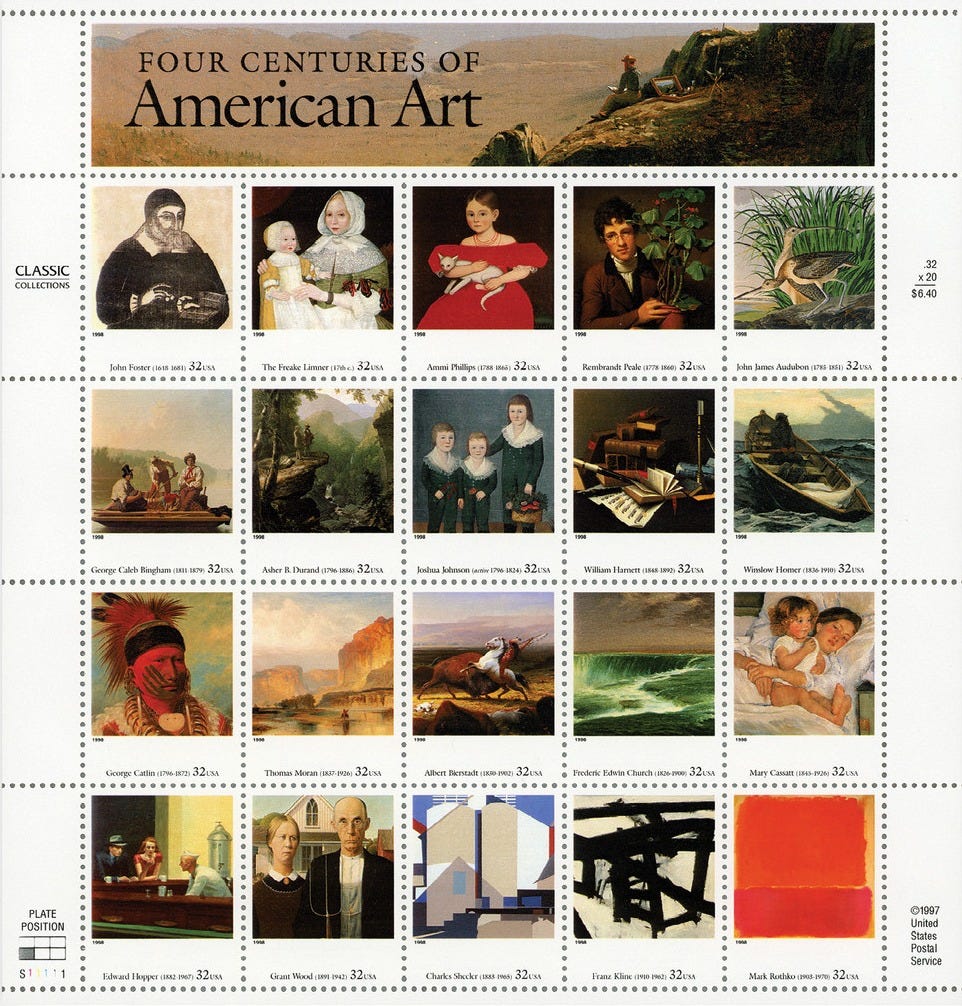
People who have garages use them for many things — the least of which is their cars. Ours has a long wall of cupboards lined with rows and rows of binders — filled with a lifetime stamp collection. They tell their own stories, and help mark the passage of our lives. Looking at the cupboard one day, 1998 caught my eye. Stamps were 32 cents that year. Among those featured was the U.S. Postal Service’s Classic Collection of 20 masterpieces of American art over four centuries.
The artists were from many parts of the country. A few were born abroad. Some were professionally trained — others self-taught. Their subjects ranged from Winslow Homer’s landscapes to Mary Cassatt and Grant Wood’s images of stoicism and self-reliance. 1998 was a hard year. My job had become untenable. One son struggled with health issues. The other with a shaky business start-up. The little stamps arrived like Lilliputian emissaries — bringing pictures that reminded me life is a very long story. Every age had challenges. Every age met them. We could too.
***
One can purchase postage stamps now with “Forever” as the monetary value. If people buy them at all it is a hedge against price increases they know are coming. I don’t. Nor do I buy them online or at the various places that sell stamps — grocery stores, drug stores, convenience stores, box stores. I go to the Post Office, stand in line surrounded by people sending bulky packages or renewing their passports. I think of the sturdy gray building, flag flying overhead, as a way station for travelers. I like imagining where their packages are going. Where their passports will take them.
The mailman fascinated me — what he brought, how he found us. His blue uniform and enormous leather satchel made every city feel like home.
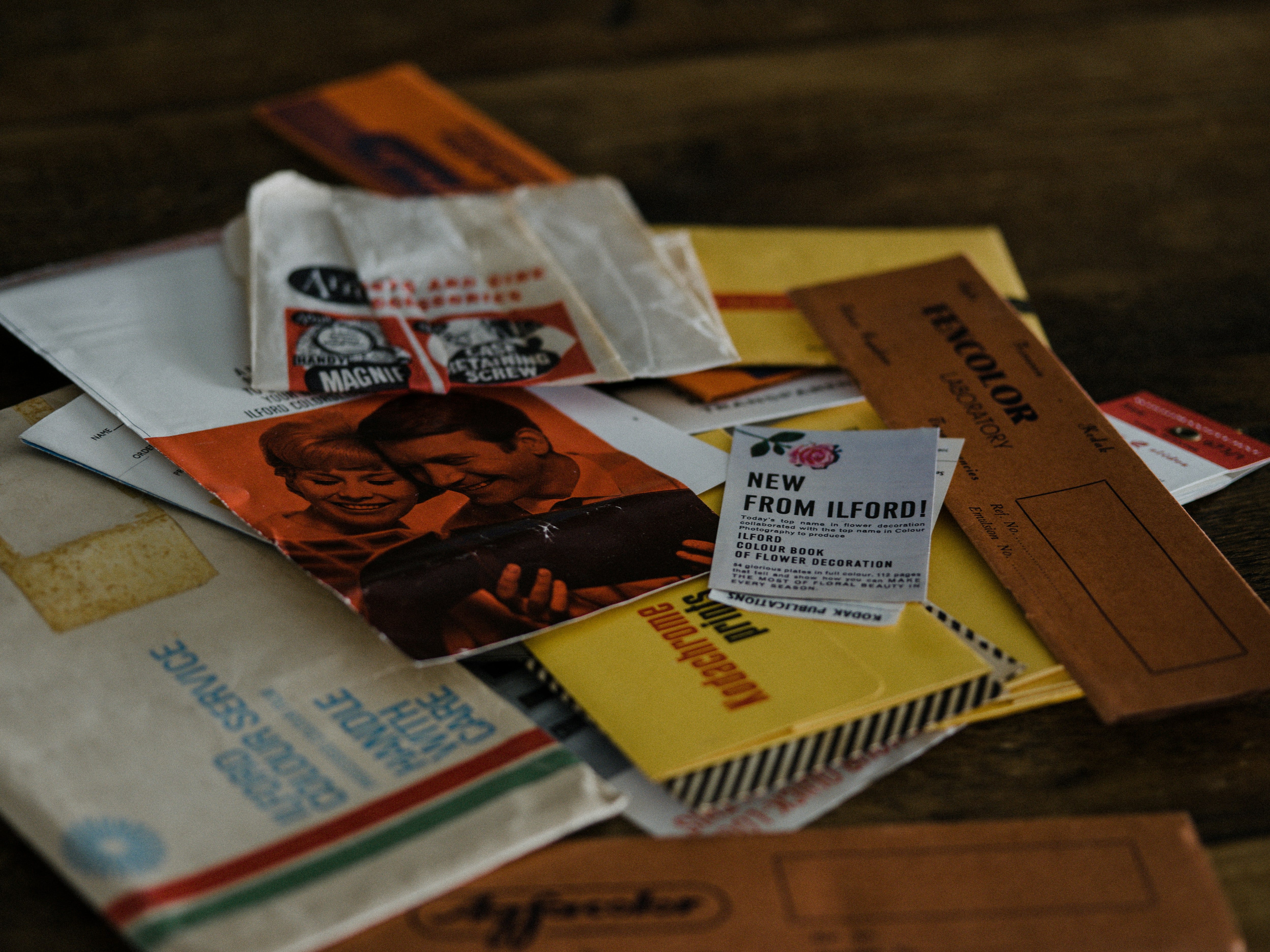
A tiny birdlike clerk with dyed jet-black hair motions people forward. She has worked in the same spot for 26 years. I study the current first class options, choose a half dozen sheets or so each visit, and bring them home in a large wax paper envelope. Nothing lasts forever. This ritual is on borrowed time. For most people, it is aggravating to stand in lines… at least at the Post Office. Frivolous to buy stamps. Foolish to care about mail. Fossil-like to use it.
Perhaps. Perhaps not. Stamps made my world bigger. They inspired me. They helped me create a home in my heart for wonders I might have otherwise overlooked.
It’s easy to focus on the negative… in politics, in neighborhoods, in general. Stamps highlight the astonishing beauty and courage of our human story. Like summer days that seem more special as they end, I will miss them when they’re gone.
Maya Angelou said, “I long, as does every human being, to be at home wherever I find myself.”
When stamps found me, I knew I was there.
River Journeys is a reader-supported publication. To receive new posts and support my work, consider becoming a free or paid subscriber.
Comments
Nothing yet. Say the first thing.
Sign in to join the conversation.