
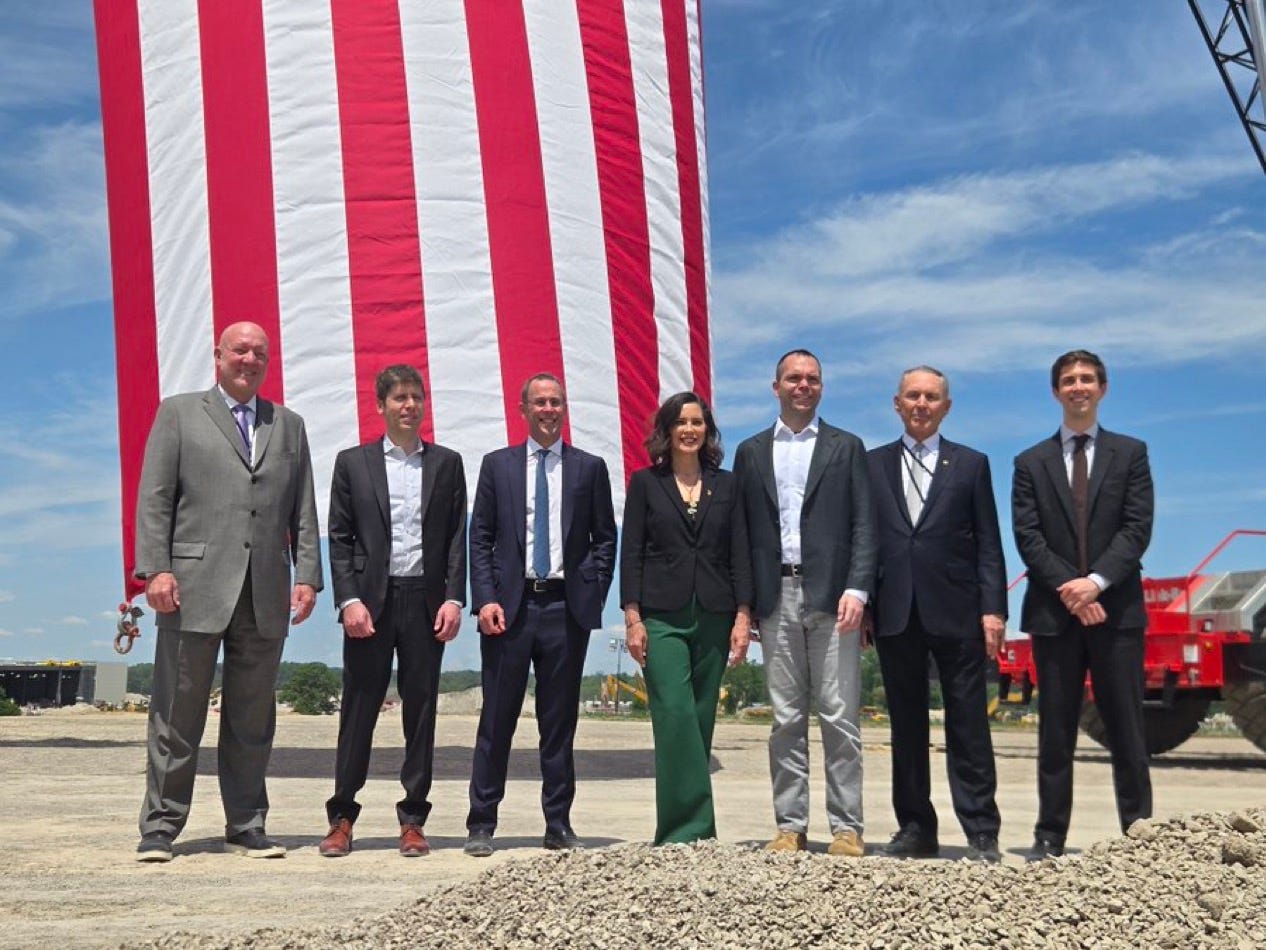
For months, many Michigan residents have been asking where Governor Gretchen Whitmer stands on the growing debate over data centers.
This week, they got their answer.
Whitmer attended a groundbreaking ceremony in Saline Township alongside technology leaders, including OpenAI CEO Sam Altman, celebrating a massive new data center project that state officials have described as a major economic investment for Michigan.
But for many residents who have followed the project’s history, the ceremony highlighted a very different story. This project had massive local opposition, a township lawsuit, expedited regulatory approvals, and taxpayer-funded incentives making it anything but ordinary.
One of the most overlooked aspects of the Saline Township data center project is that local officials initially voted against it. We’ve seen many communities approve large-scale developments despite significant public opposition, but that’s not what happened here. Township officials stood with their residents.
The 535-acre property in question was zoned for agricultural use. The developer submitted a conditional rezoning application seeking to transform the site into an industrial district suitable for a large-scale data center development.
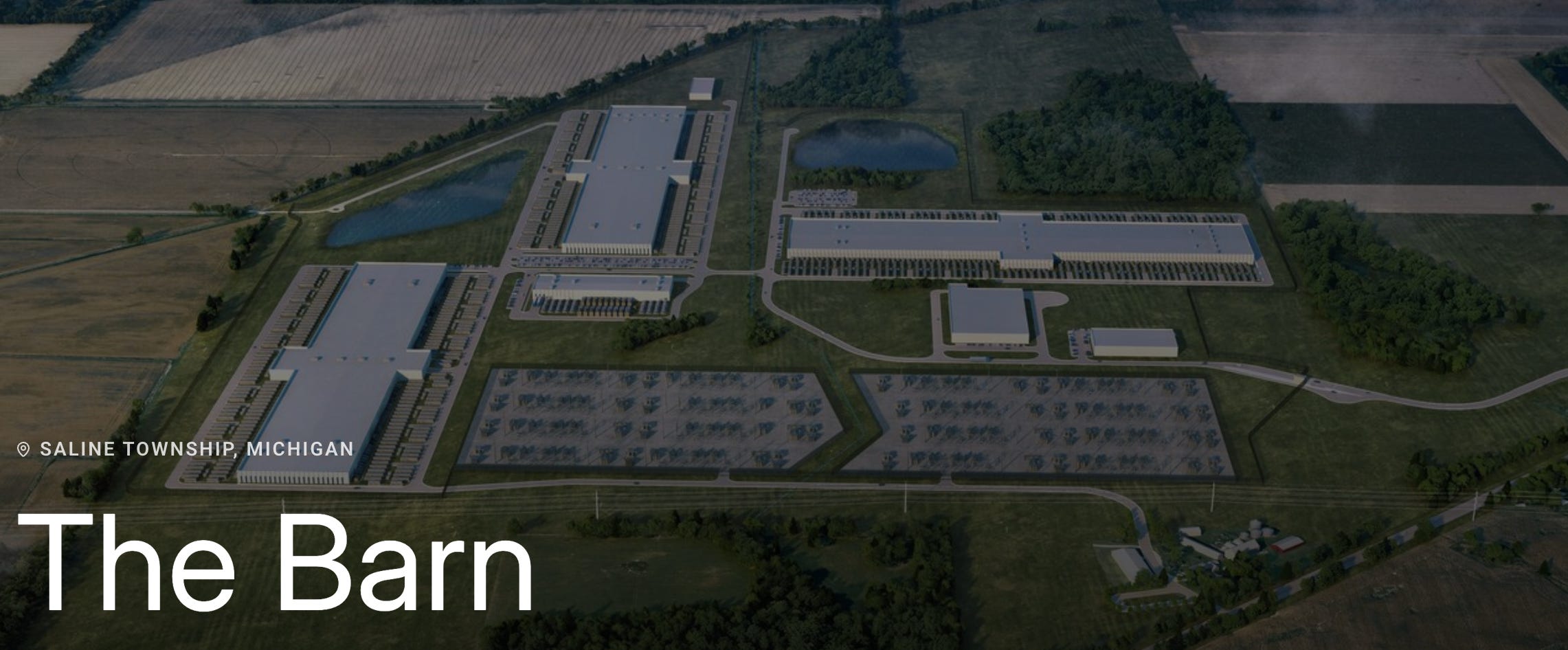
After reviewing the proposal in August 2025, the Saline Township Planning Commission voted against recommending the rezoning request. The following month, the Township Board also voted no, effectively halting the project.
Local governments routinely make zoning decisions. Whether residents agree with those decisions or not, zoning authority exists so communities can determine how land within their borders will be used.
In this case, the township exercised that authority and rejected the proposal.
The developer responded by suing just two days later in Circuit Court. The lawsuit alleged, “exclusionary zoning (which) is prohibited by the Michigan Constitution.”
For a small township of roughly 2,300 residents, defending litigation against a major developer can be a significant undertaking. One month later, the parties reached a settlement.
The reasons behind the quick settlement are not entirely clear. Litigation can be costly and time-consuming for local governments, regardless of the merits of a case. Settlements also provide both sides with certainty that may not exist when leaving a decision entirely in the hands of a judge.
Under the agreement, the project was allowed to move forward in exchange for a number of community benefits, including support for local public safety services. Those concessions may not have been available had the dispute been resolved solely through a court ruling.
In the span of just a few months, a project that local elected officials had rejected was ultimately approved and moved forward.
Related Companies, which became involved in the project, has drawn scrutiny because Michigan Secretary of State Jocelyn Benson’s husband previously served as a vice president at the company.
There is no evidence that Benson herself played any role in the township’s zoning dispute or the lawsuit. However, the relationship has fueled questions among critics who believe the project has received unusually favorable treatment from government officials.
Benson is now the front runner Democrat candidate for governor.
Another controversial aspect of the project involves the approval of special power contracts between DTE and the developers - something the state has to approve.
Normally, a project of this scale would face extensive scrutiny through a contested case process, allowing consumer advocates, environmental organizations, and other interested parties to conduct discovery, submit testimony, and challenge claims made by the utility.
Instead, DTE requested that the Michigan Public Service Commission review the contracts through an expedited “ex parte” process. Critics argued that the request was designed to avoid the level of scrutiny typically associated with a project expected to consume roughly 1.4 gigawatts of electricity.
Not only were opposing views denied into the decision making process, the contracts being reviewed by the Commission were redacted to the public.
Despite all of this, the Michigan Public Service Commission approved the contracts through the expedited process in December 2025.
The project also benefits from Michigan’s data center tax incentive program - which was signed into law by Gov. Gretchen Whitmer.
Under current state law, qualifying data centers can receive exemptions from Michigan’s 6% sales and use tax on eligible construction materials, equipment, and other investments associated with the facility.
The developers of the project highlight the roughly 2,500 jobs the project will create and the almost 10 million annually given to Saline Township and local schools. For a small town like Saline, this could be game changing for the community.
However, most jobs created by the project are temporary construction jobs. Developers say there will be 450 permanent jobs, but there is no guarantee. Data Center Knowledge says, “the typical data center results in an almost negligible number of permanent jobs relative to its scale.”
Furthermore, The Saline Post talked to David Arsen, Professor Emeritus of Education Policy and Educational Administration at MSU's College of Education. He said, “There really isn't any advantage for additional revenue for local school districts.” While he believes Saline Township will see additional tax revenue, the 8 million a year the developers are promoting will not be seen locally.
If there was any question on where Governor Whitmer stood on the topic, she made it very clear. She stands alongside major technology executives that force and bully their way into small communities.
Perhaps the most revealing comment about the project came from Sam Altman who described it as a “huge bet.” But that’s not enough for many residents. They want security in knowing their natural resources won’t dwindle, property values won’t decline, and their community will be better off today than it was yesterday.
The question is: who bears the risk if those bets don’t pay off? Because the long-term impacts will ultimately be felt by the people who live there, raise their families there, and call Saline home. Meanwhile, the corporations and politicians can pick up and leave at anytime.
No posts
Comments
Nothing yet. Say the first thing.
Sign in to join the conversation.