
Hello and Happy Monday.
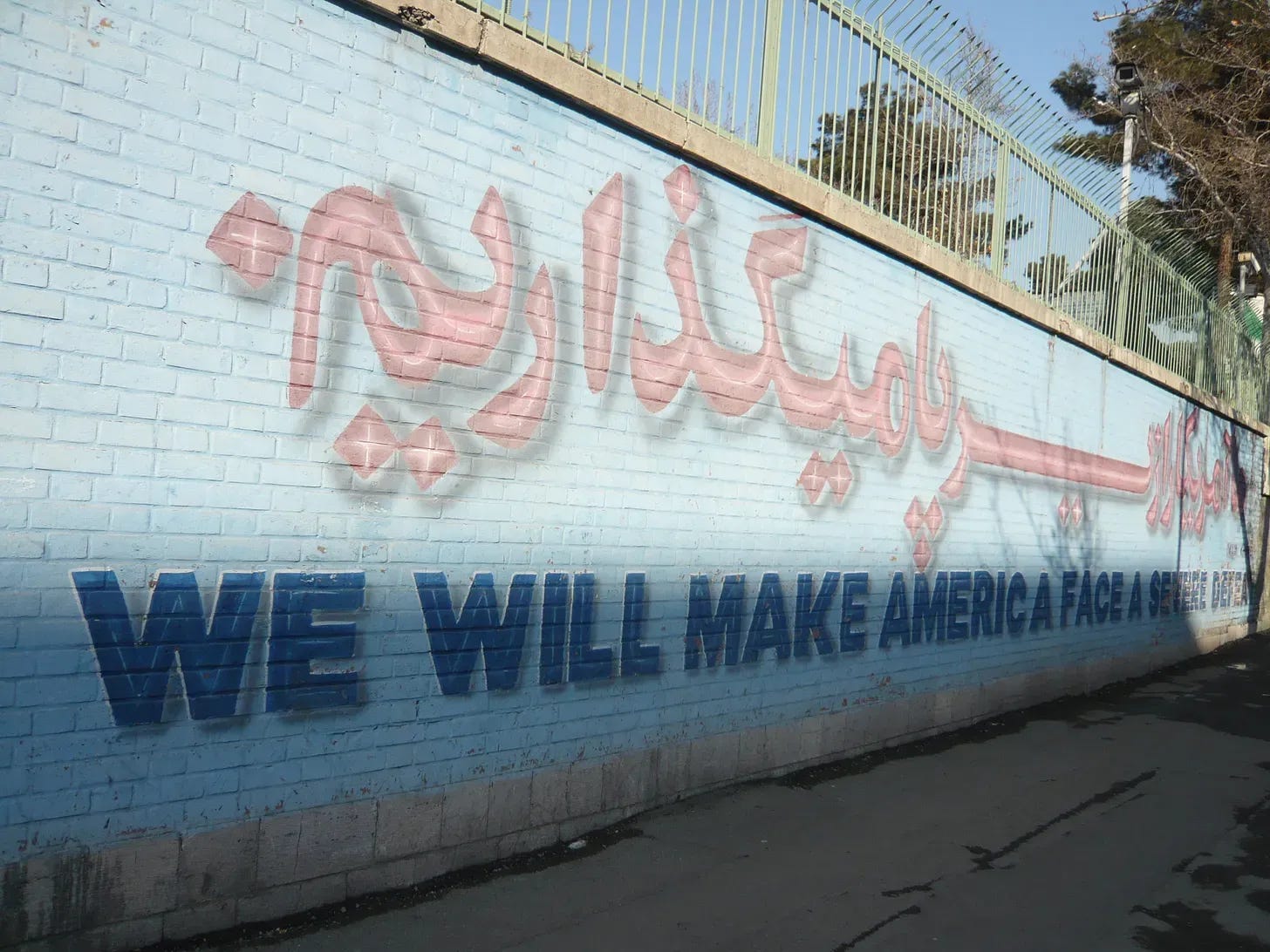
This week, we mark an unfortunate anniversary. When he ordered attacks on Iran on February 28, President Donald Trump said the conflict would last “four or five weeks.” Well, tomorrow marks five months of unnecessary war — and the US is mired in a mess of Trump’s own making (with a lot of help from his erstwhile friend, Benjamin Netanyahu.)
At the end of last week, it looked like the ceasefire was well and truly dead, and in fact the situation was getting worse with the Houthis attacking Saudi Arabia and threatening to blockade the Red Sea. Oil markets are in turmoil. And that’s without mentioning the significant damage Ukraine has done to Russia’s oil infrastructure.
After 13 consecutive nights of attacks, there has been a lull in hostilities, reviving hopes of a return to negotiations. Mike Waltz, who’s been the US ambassador to the United Nations since he was sidelined for adding a journalist to a Yemen war group chat, said Donald Trump had paused attacks in Iran and was “giving talks some space.”
But the New York Times (gift link) reported that the pause is also based on concerns that intensifying the war could dangerously drain the Pentagon’s already diminished stockpile of Patriot antimissile interceptors and other air defence munitions in the Middle East.
This week we will get more data about how Trump has caused a global economic crunch with his attacks — not to mention the ongoing human toll.
This week, the US, EU and Canada will issue GDP numbers for the second quarter, which will give a good indication of how the Iran war is affecting these big economies. As I reported last week, China has already released its Q2 growth figures: 4.3 percent, tracking lower than the government’s 4.5-5 percent target for the year, which was already the lowest target in decades. Statistics are highly political in China and should be taken with a grain of salt, but this shows the impact the war is having on the world’s second biggest economy.
The US will report its GDP figure on Thursday, with economists predicting the annual expansion holding steady at 2.1 percent. If anything, it’s a surprise that the global economy isn’t tanking. I found this story from the Grist encouraging because it describes the accelerated push towards renewable energy (even if it said it wouldn’t last.)
One podcast I listened to over the weekend even described Trump as the world’s biggest environmentalist because of the way he’s turbocharged the switch to green energy. Photo from Unsplash The right-ward tilt in Latin America continues this week with the inauguration in Peru of new president Keiko Fujimori. In 1994, at the age of 19, she became Peru’s first lady when her parents divorced and her father, President Alberto Fujimori, needed to fill the role. Now, after four attempts, she is poised to become president herself. But her critics joke she is so unpopular that she would lose if her rival were a loaf of paneton, the sweet Italian bread at Christmas, Al Jazeera reports. (This story is reminiscent of the rise of Park Geun-hye in South Korea — she became first lady after her mother was shot, and then went on to become a very controversial president, ending up in jail.)
Fujimori will be the latest addition to a host of ideologically aligned, right-wing leaders in Latin America who have assumed power in recent years, often unseating left-wing governments — many of whom have been supported by libertarian firebrand and Trump proxy, Javier Milei of Argentina. Milei will be at Fujimori’s inauguration in Peru on Tuesday, then Abelardo de la Espriella’s inauguration in Colombia on 7 August, from where he will travel to Ecuador to meet president Daniel Noboa, another Trump ally. In fact Brazil just denied visas to two Trump administration officials seeking to travel there ahead of the October presidential election. Luiz Inácio Lula da Silva, now the region’s predominant left-wing standard-bearer, is facing the son of convicted former president Jair Bolsonaro, and there are concerns that they will “politically exploit the situation and undermine the electoral system,” Reuters reported. Bolsanaro Sr was sentenced to 27 years in prison for his Trumpian, Jan. 6-style efforts to storm Congress after losing the 2022 election to Lula.
Finally, I’m adding this book to my stack: Annie Jacobsen, who wrote the breathtaking reads-like-fiction thriller Nuclear War, has a new book coming out this week: Biological War, about how a lab accident or a biological attack could spiral into a global pandemic and societal collapse. Maybe not one to read if you’re looking for a break from the gloom. Luckily I’m only halfway through the new Ann Patchett.

On how to end the war in Iran, I enjoyed this sober piece in the Atlantic (gift link through my subscription) by my old DC friend, Andrew Exum, who served as assistant secretary of defence for Middle East policy in the Obama administration: “The sooner we acknowledge that the United States has lost the war with Iran and stop fighting, the better. Because we now have a lot of work to do.”
Gosh it’s wonderful to see Simon Wilson taking off here on Substack. This latest piece was a cracker: Housing, Fonterra, cement: the crisis of predatory delay: “The term ‘predatory delay’ was invented by climate activist Alex Steffen in 2016. He used it to describe the way big polluters, while fully aware of the damage they cause, find ways to postpone structural or systemic change so they can keep on profiting from their destruction of the environment.”
Finally, I’ve interviewed maybe 100 escapees from North Korea over the past 20-something years, but the tales of their courageous escapes never fails to get to me. I found this story from the New York Times (gift link) incredibly moving — not just because of their escape but also the challenges the family, and almost all North Korean families, face in the South. We hear so little about actual North Koreans these days because very few have managed to escape since the covid lockdowns as Kim Jong Un used the pandemic as an excuse to further fortify the border with China. This story charts a rare defection by sea. People often ask me if North Koreans are brainwashed. I say almost all of them have seen media from the outside world and know the propaganda they’re fed is lies. Here’s a great line from this story, which I commend to you:
“Il-hyeok idolised K-pop groups like Girls’ Generation and styled his hair in a mohawk like BigBang’s Taeyang. He was arrested for “capitalist delinquency” and released only after paying a bribe, his hair razored. He and his friends once secretly watched “Valkyrie,” the Tom Cruise film about the plot to kill Hitler. When the conspirators failed and were executed, his friends wept.”
I’m scurrying off now to write an explainer for you later this week and to work on my next episode of The Detail. But I also have two reported features in the works that I’m excited about.
Thanks for all your comments and feedback, keep it coming
-anna
No posts
Comments
Nothing yet. Say the first thing.
Sign in to join the conversation.