
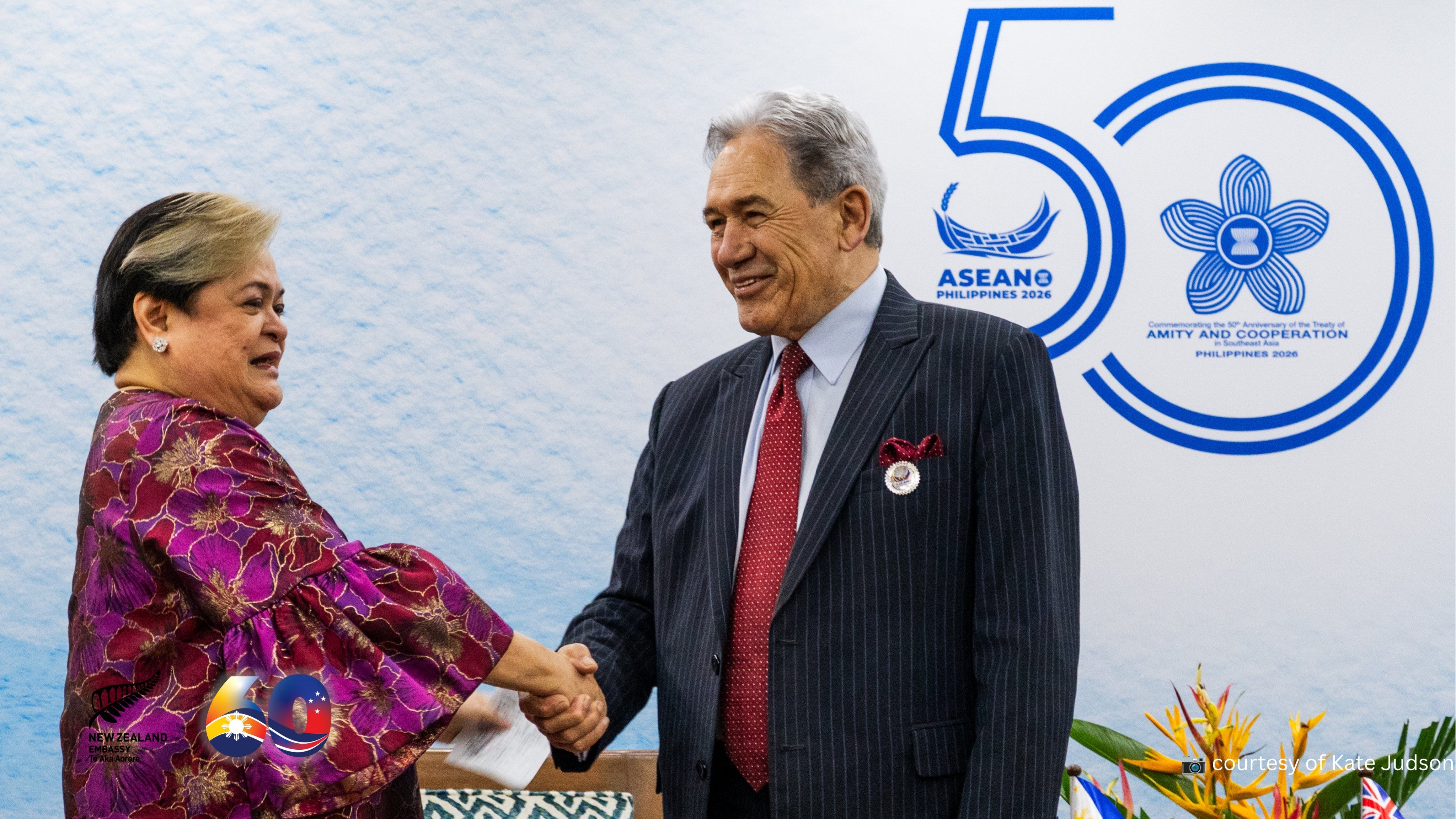
New Zealand and the Philippines last week signed a comprehensive partnership agreement that marks one of Wellington’s most significant diplomatic upgrades in Southeast Asia in recent years.
While the agreement received relatively little attention here, it reflects broader regional shifts and the growing web of middle-power cooperation: New Zealand is deepening engagement with Southeast Asia, while the Philippines is building a wider network of partners to navigate an increasingly contested regional order.
“New Zealand and the Philippines are close friends and trusted partners on the world stage – and today we turn this friendship into concrete action,” foreign minister Winston Peters said in Manila when inking the deal on the sidelines of the ASEAN forum. “Elevating our relationship to a comprehensive partnership signals the importance we place on working together to support a stable, rules-based Indo-Pacific.”
But it’s also a reflection of the closer cultural ties between the two countries, with 109,000 Filipinos now calling Aotearoa home – making them our eighth biggest ethnic community.
Here’s what you need to know about the agreement and the broader forces at play.
First, what’s in the comprehensive partnership?
Relations between Wellington and Manila have grown stronger in recent years, but the comprehensive partnership that Peters and Philippine Secretary of Foreign Affairs Maria Theresa Lazaro signed last week gives the two sides a more formal basis for cooperation and ensures it will be more structured.
The two sides laid out a road map containing four key areas of cooperation, including:
the development of political engagement, including a policy exchange mechanism on export capabilities in the Philippine agricultural sector, and to develop a framework for climate cooperation within the next two months.
defence, security, and maritime cooperation, including professional exchanges and training, to build on last year’s SOVFA, which allows joint exercises on each other’s soil.
trade and economic ties, supported by the establishment of a Joint Economic Commission that will identify new opportunities for investment and commercial collaboration. They signed an agreement to achieve a 50 per cent increase in two-way trade by 2030 and New Zealand pledged to support the Philippines’ goal to join the Comprehensive and Progressive Agreement for Trans-Pacific Partnership (CPTPP).
and people-to-people links, including in education, migrant worker cooperation, culture and visa facilitation.
It also included agreements on education and geothermal energy.
Carla Teng-Westergaard at Asia NZ’s Media Centre has a more, ahem, comprehensive rundown here.
How does this fit into NZ’s strategy in the region?
New Zealand has been trying to diversify its relationships across the region, and Prime Minister Christopher Luxon has talked about the economic opportunities of Southeast Asia, while also noting that economic prosperity and security are becoming inextricably linked.
Last year, an upgraded AANZFTA – a free trade agreement between ASEAN member states and Australia and New Zealand – was upgraded to further reduce barriers and boost trade in the region.
During his trip to Manila last week, Peters called the Philippines, home to 113 million people, a “dynamic partner in Southeast Asia” and “one of the region’s fastest-growing economies.”
Although it is still very much a developing economy, the Philippines is considered an emerging market.
But, just as the government is building on the Free Trade Agreement with India and deepening broader cooperation with a “strategic partnership” with the country, it is trying to move relations with the Philippines beyond the transactional field of trade.
The two countries have been steadily improving their ties over the past decade, especially on the military front, with a Status of Visiting Forces Agreement (SOVFA) cementing those ties.
In April, New Zealand took part in the Philippines’ biggest-ever military exercise, the Balikatan drills. It was the first time New Zealand participated, and the same too with Japan, Canada and France. It was the first time Tokyo had sent combat troops to Philippine soil since World War II. Australia and the US, both regular participants, were also there to practise strikes.
What else has the Philippines has been up to?
Understanding why this partnership matters also requires looking at how the Philippines has been reshaping its foreign policy.
An archipelago of 7,600 islands, it has been locked in territorial disputes with China over islands in the South China Sea that both stake a claim to, including the Scarborough Shoal and the Second Thomas Shoal.
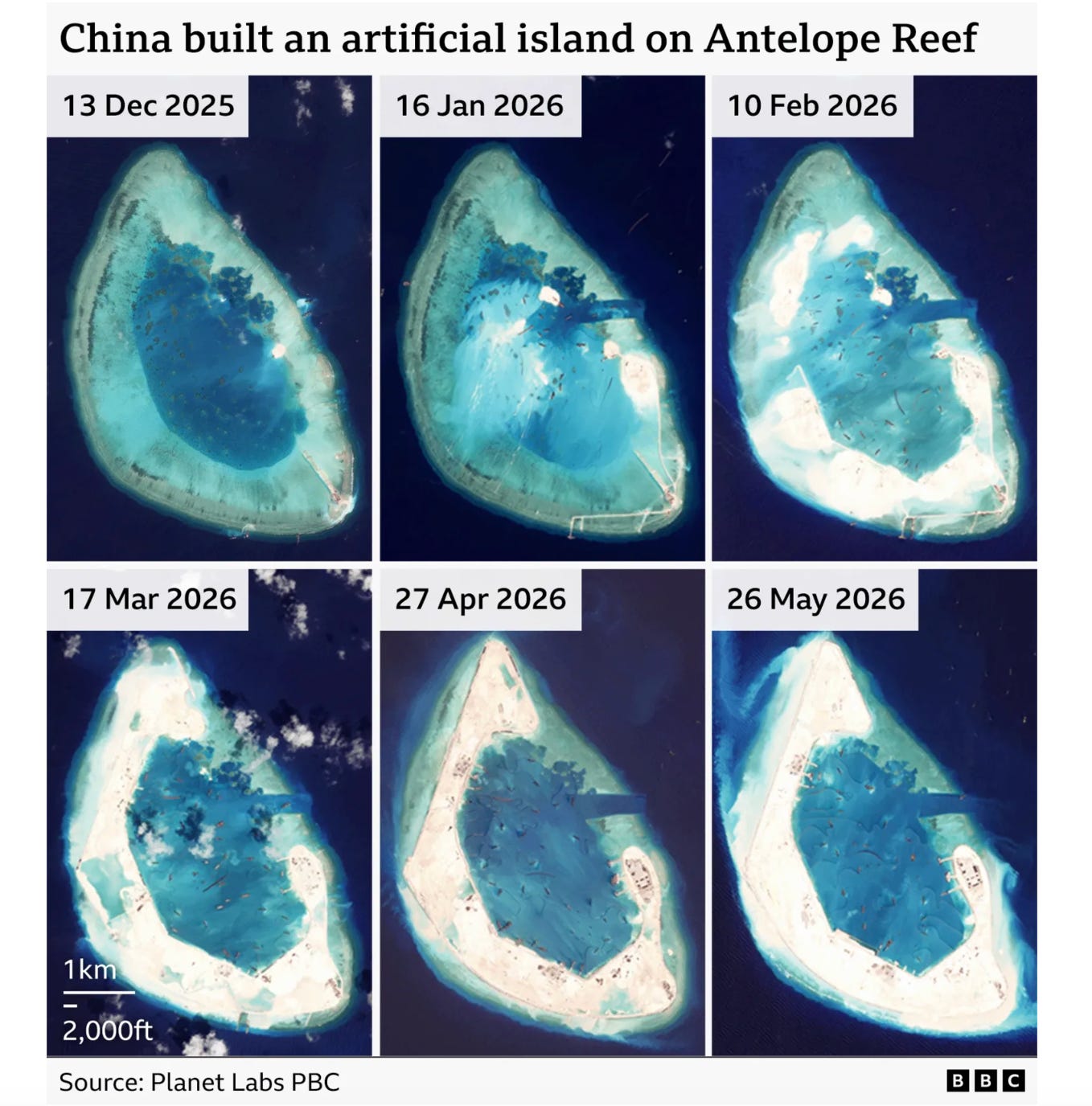
Beijing has been claiming reefs and building military bases on some of them, and the Chinese Coast Guard ships routinely harass Philippine vessels with water cannon or similar intimidation tactics around other reefs.
Manila won a landmark victory in 2016 when the Permanent Court of Arbitration unanimously ruled that China’s sweeping claims in the South China Sea had no legal basis under international law.
But Beijing has refused to acknowledge the ruling and has continued to stop the Philippines – often through aggressive harassment – from enforcing its territorial claims over the Scarborough Shoal and beyond.
Since Ferdinand “Bongbong” Marcos Jr, the son of the late former dictator Ferdinand Marcos Sr. and Imelda Marcos, became president in 2022, he has significantly strengthened ties with the US.
At the same time (and like many countries in the region), the Philippines has grown increasingly concerned about the unpredictability of the Trump administration and fears that the US will no longer guarantee the security of the region. The Marcos administration increased defence spending by 12 percent in its latest budget, but still devotes only 1.37 percent of GDP to its military, and laid out ambitious plans to buy more warships in particular.
The Philippines’ exposure to geopolitical currents was further reinforced this year, with the Strait of Hormuz crisis, which led Manila to declare a national energy emergency.
Closer ties across the region
Manila has been steadily building up its own military capacity and has also been forging closer ties with like-minded countries – in addition to its formal security treaty ally, the United States.
It signed its first comprehensive strategic partnership, with Japan in May, pledging to work more closely on defence and security, with Manila buying five Japanese frigates and light utility aircraft that will enable the Philippine Navy to boost regional maritime surveillance.
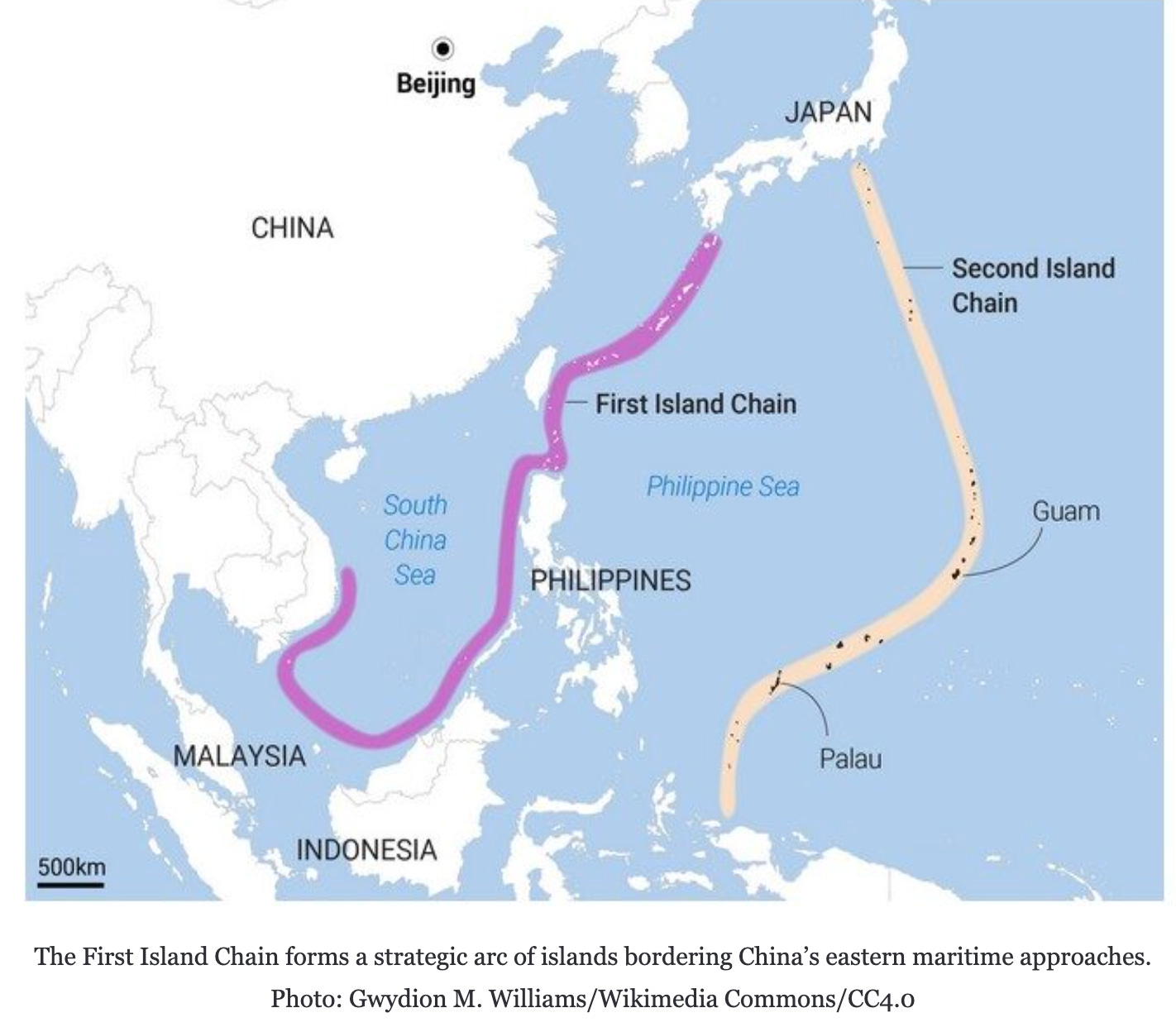
The two countries form key links in the First Island Chain, a string of islands stretching from Japan, down between Taiwan and the Philippines, to Indonesia and Vietnam. This chain has long been considered a vital maritime boundary that restricts China’s ability to project power into the Pacific.
Just this week, the Philippines, Japan and the US concluded a series of joint maritime exercises involving warships, coast guard vessels, and surveillance and fighter aircraft.
The Philippines is set to buy more than a dozen KF21 fighter jets from South Korea between 2027 and 2029, giving them significantly more air power in the region.
Manila has also been quietly ramping up both formal and informal engagement with Taiwan, a significant departure from its conservative approach toward the self-governed island, which China claims as its territory.
The Philippines is entitled to negotiate its relationship with Taiwan in response to regional changes, Defence Secretary Gilbert Teodoro told the Washington Post last year. This may anger China, but, in Manila’s experience, previous attempts to appease its powerful neighbour have gone nowhere, he said.
Earlier this month, Marcos and Canadian Prime Minister Mark Carney pledged to pursue a Canada-Philippines free trade agreement, deepen defense and maritime cooperation in the Indo-Pacific, and strengthen economic ties supported by Canada’s one million-strong Filipino community.
And Australia signed an enhanced defence cooperation framework with the Philippines last year, expanding links on maritime domain awareness and search and rescue, and increasing interoperability between the two militaries. It is now looking to turn it into a comprehensive relationship like Japan has.
How does NZ fit into all of this?
The Philippines’ widening security partnerships with Japan, South Korea, India and Australia are all designed to show its pulling its weight in the region.
“The Philippines is feeling both more comfortable in progressing its modernisation programme, which had been lagging,” said Hunter Marston, director of the Southeast Asia programme at the Lowy Institute in Sydney. “At the same time, it’s seen as an outlier within Asean so it wants to show it’s a proactive security player and is embedded in the region, that it’s not relying exclusively on the US.”
New Zealand, while small, can help with that by providing even more diversification and forging a closer relationship with another maritime country that depends on the international rules-based order.
“The SOVFA and the logistics pact of 2024 show that the Philippines is really intent on adding more defence partners to its security network,” Julio Amador, a foreign affairs commentator in the Philippines, told the South China Morning Post.
“In a practical sense, it may not mean much right now, but it does bring additional counterweight; having more countries on your side is really helpful should contingencies arise,” he told the Hong Kong-based paper.
New Zealand could help Manila grow its intelligence capabilities and enhance its maritime domain awareness and surveillance capacities through its ties with Wellington, said Chester Cabalza, president of the International Development and Security Cooperation. “Despite its modest military size, Wellington is a core member of the elite Five Eyes intelligence alliance,” Cabalza told SCMP.
This could be helpful as the Philippines needs better monitoring capabilities, including cyber-intelligence expertise, to counter Chinese intimidation efforts, analysts said.
The inclusion of New Zealand in these efforts can be seen as part of Manila’s long-term efforts to grow multilateral ties, Marston said.
“They’re not exclusively relying on the US to be the hub in regional security, the spokes are stepping up,” he said. “Middle powers are working together and Southeast Asian countries are looking beyond the US and China to find a middle path.”
Comments
Nothing yet. Say the first thing.
Sign in to join the conversation.