
Happy Monday —
The ongoing efforts to get the Pacific to speak with one voice on China’s missile launch into the region in July will be back on this week, with Foreign Minister Winston Peters heading to Palau for the Pacific Islands Forum (PIF) ahead of the leaders’ meeting next week.
The previous efforts amounted to nothing — because Kiribati and Naoero (Nauru) wouldn’t agree and all forum decisions must be unanimous — and there’s little chance of any further progress when the leaders gather.
Still, Palau’s President Surangel Whipps Jr, who will host the forum, is remaining hopeful. He last week said he was hoping to achieve a “united front” against China’s missile test, which came with only a few hours’ notice to select countries.
“It’s important for us in the Pacific, especially being so close to China, that any activity that happens in the Pacific should be transparent, and we should all know about missiles flying overhead over our area. I think we have a right as countries to be notified,” he told the Sydney Morning Herald.
Alas I’m not going to Palau, but I’ll be keeping an eye on this in the coming days.
The meeting could be spicy because Palau has a Compact of Free Association with the US, which makes the US responsible for its security — and Palau is on the frontlines of any potential conflict between the US and China.
But also, Palau is one of only three Pacific states to have formal diplomatic relations with Taiwan instead of China. Beijing, a PIF partner country, could seek to throw its weight around.
Beijing contributed US$1.08 million to the PIF Secretariat in June and earlier this month warned the secretariat “to abide by the one-China principle and properly handle Taiwan-related issues”.
Beijing insists it is the sole Chinese government and views Taiwan as a breakaway province. It has increasingly used its political and economic clout to convince Pacific nations to recognise Beijing instead of Taipei.
Taiwan was barred from attending last year’s meeting, hosted by the Solomon Islands, following protests from China. Beijing appears to be trying to engineer the same result this year — a spokesman warned the secretariat “to avoid disrupting the sound and steady development of the relations between China and the PIF.”
This is something that could soon become a live political issue for New Zealand: We will host the next PIF leaders’ meeting as we are next in the rotation to chair the PIF.
Separately, The Spinoff asked me to write about my exit from the Washington Post, and that story — which included my fears about efforts to control or intimidate the media here — was published last week here.
And I had a fun coffee meeting last week with founding ‘Between Giants’ member Josh, who regaled me with interesting stories about his work and gave me lots of encouragement for my writing. I am really enjoying getting out and meeting the founding members (as quickly as I can.)
Yes, I’m going to talk about the New Zealand International Film Festival again because I’ve seen some remarkable films this past week, including Fatherland about Thomas Mann’s return to Germany in 1949. Polish Academy Award winner Paweł Pawlikowski won the Best Director Award at Cannes Film Festival for this film. It was surprisingly funny (thanks to Erika Mann, played the wonderful Sandra Huller.)
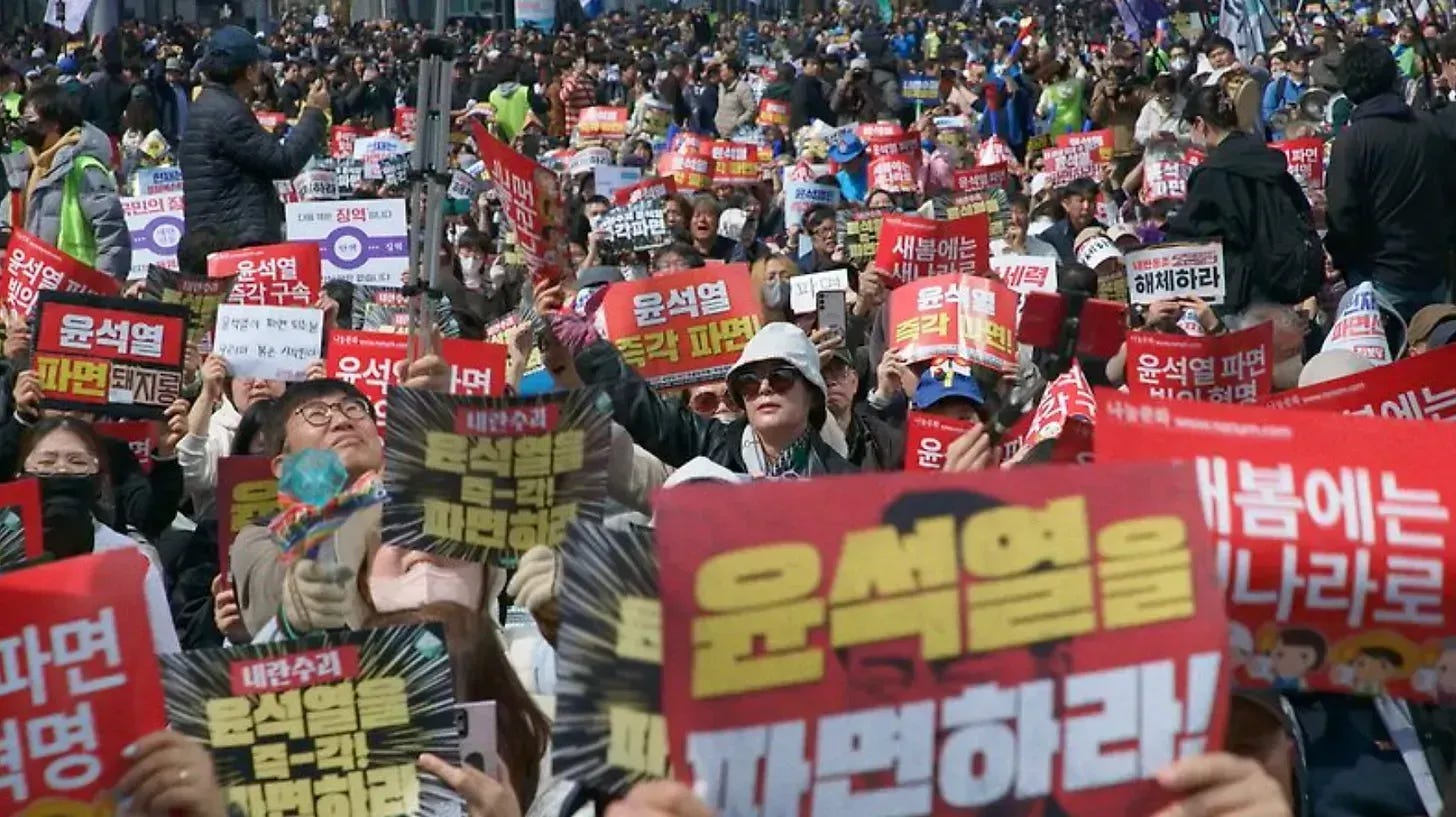
I also saw Seoul Guardians, a documentary made by journalists covering South Korea’s six hours of martial law at the end of 2024. I was editing Korea coverage for the Washington Post at the time and was shocked when a colleague in DC rang and woke me up for a South Korean crisis. I’d been woken up many times because of North Korea, but never South. I lived and breathed this story for many days, but it was still gobsmacking to see this film and just how ardently South Korean parliamentary staffers worked to protect their democracy, including by barricading the doors with office furniture so the soldiers couldn’t get in. The flashbacks to the 1980 Gwangju massacre made it extra moving. Highly recommended.
But the one notable thing about both these films: They were each 70 minutes long. One hour and 10 minutes! What a treat to go in and have a rich cinematic experience in less than two (or often these days, three) hours.
I have to confess I’ve been hoovering up stories about Natalie Harp, President Donald Trump’s executive assistant and the most sycophantic of all the aides in Trump’s coterie of yes-people. She’s been in the news because she was one of the few aides that Trump took on his clandestine exit from Turkey last month, a move seized on by a Democratic senator. Among all the other irregularities of the Trump administration, it emerged this week that Harp resisted going through a security check for one year — an extraordinary exception given the amount of top secret information she would have been privy to. Here’s a good, short podcast from the Guardian about Harp and the unique position she holds in Trump World.
Canada’s Mark Carney is once again standing up to Trump, saying after walking away from the US’s maximalist trade demands that Canada was “at war” with the US. I thought this piece by David Frum in the Atlantic (gift link) was excellent for giving the context on how Canadian Prime Minister Mark Carney has much more political permission to accept pain from a U.S.-Canadian trade war than Trump does:
To read current Canadian polling is to see a country united under its political leadership—and energized by its dislike and distrust of Trump’s United States. A majority of Canadians view Trump’s America as a more immediate threat to their security than Russia or China. Two-thirds favor the government taking a hard line in trade talks; fewer than one-quarter regard the United States as trustworthy. Meanwhile, Carney is backed by the Canadian public, polling at about 60 percent approval, a remarkable figure in a multiparty political system.
The Canadian economy has definitely suffered because of Trump’s hostility. Exports were down last year, and growth slowed. But this year, Canada got an unexpected bailout: Trump’s Iran war and Trump’s inflation have boosted prices for Canadian oil, gas, minerals, and food products. Canadian incomes are rising again. Meanwhile, Canada’s low levels of public debt have kept inflation low. Whereas the U.S. government must pay 5.3 percent to borrow money for 30 years, Canada pays 4.2 percent.
By contrast, Trump is facing an omnishamble. “Trump’s Economic Challenge: $40tn Debt, 6.7% Mortgages and $5 Diesel.” That’s a headline in today’s Financial Times. The paper could have added one more: 33 percent job approval, and falling fast.
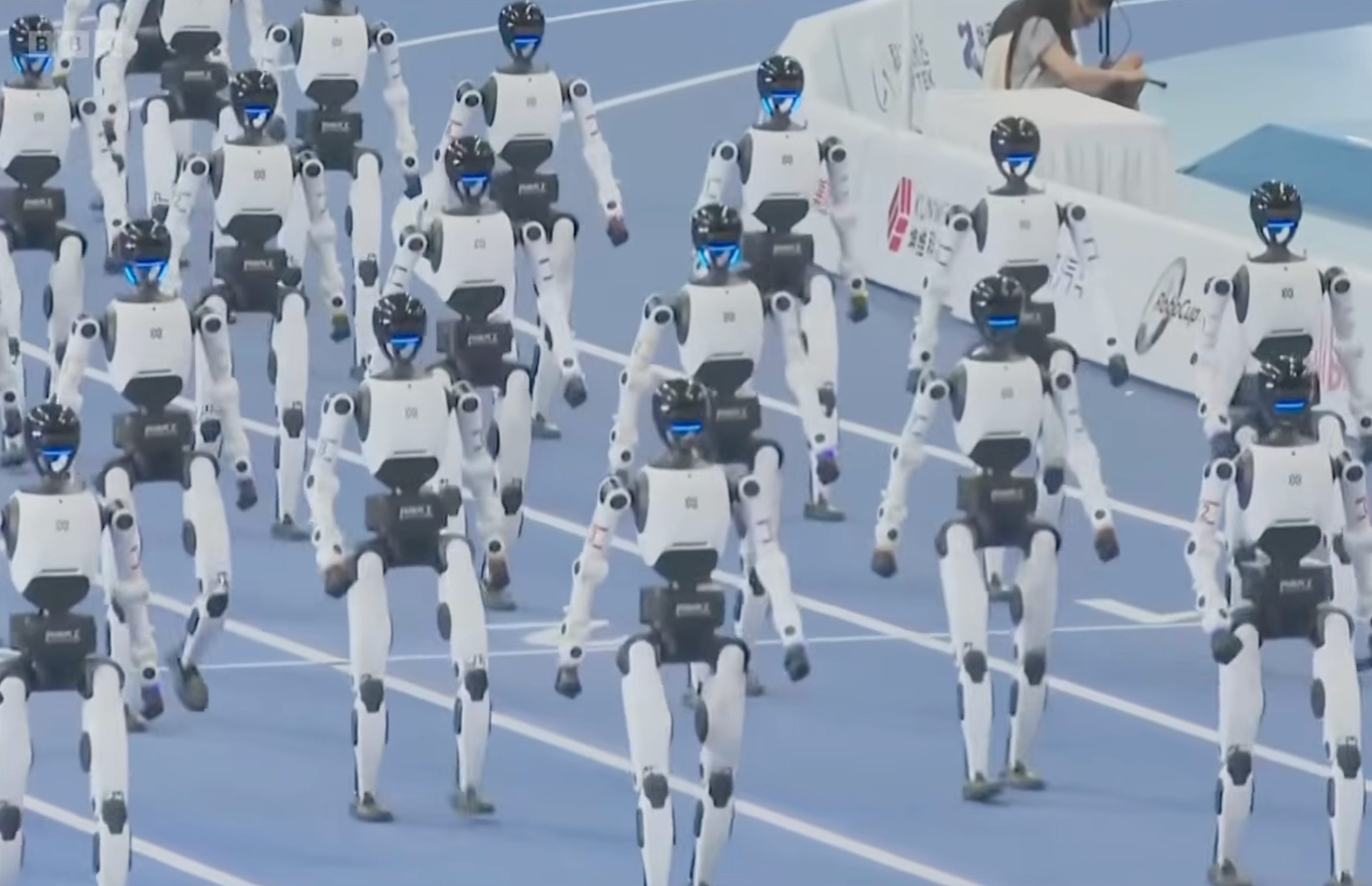
Finally, did you see that a robot at the second World Humanoid Robot Games in China just beat Usain Bolt’s 100m world record?
That’s it for today. See you again later this week.
-Anna
No posts
Comments
Nothing yet. Say the first thing.
Sign in to join the conversation.