
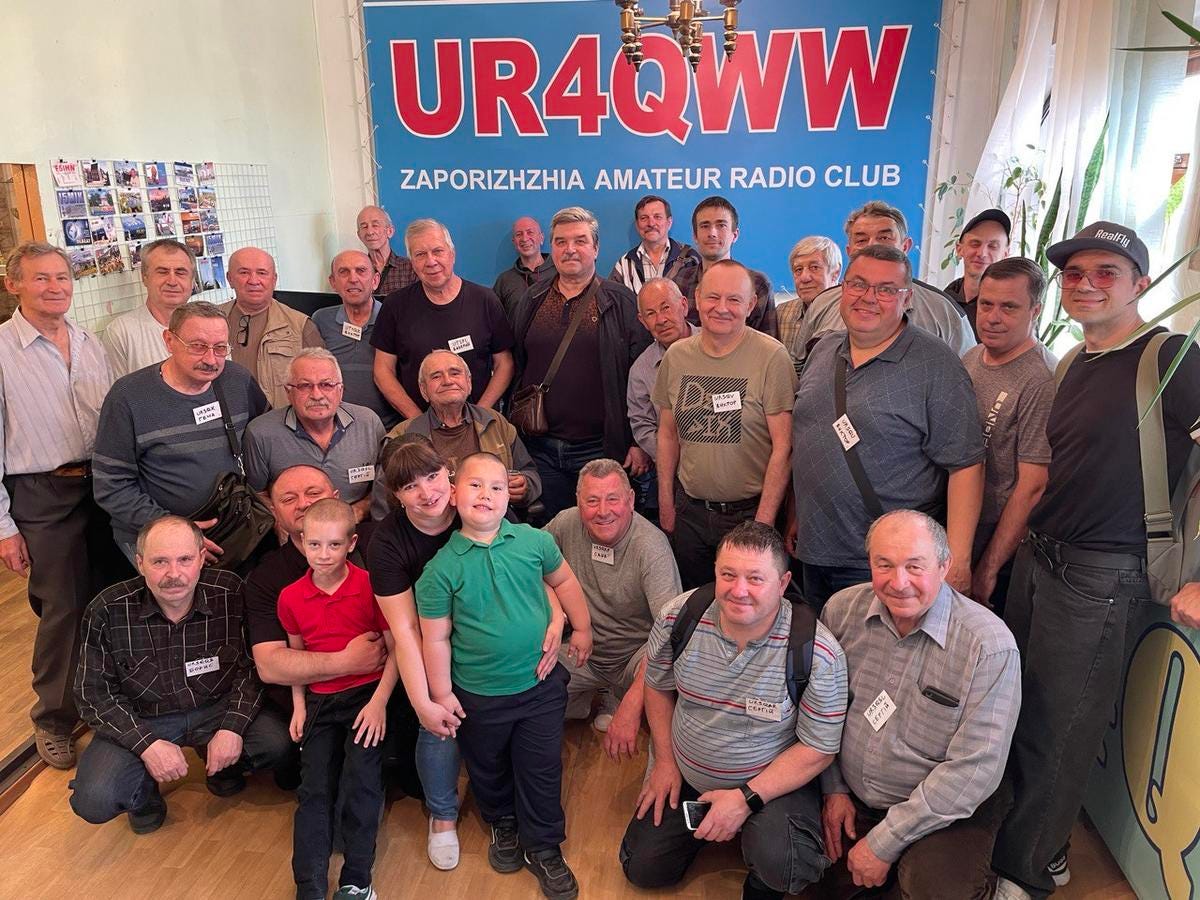
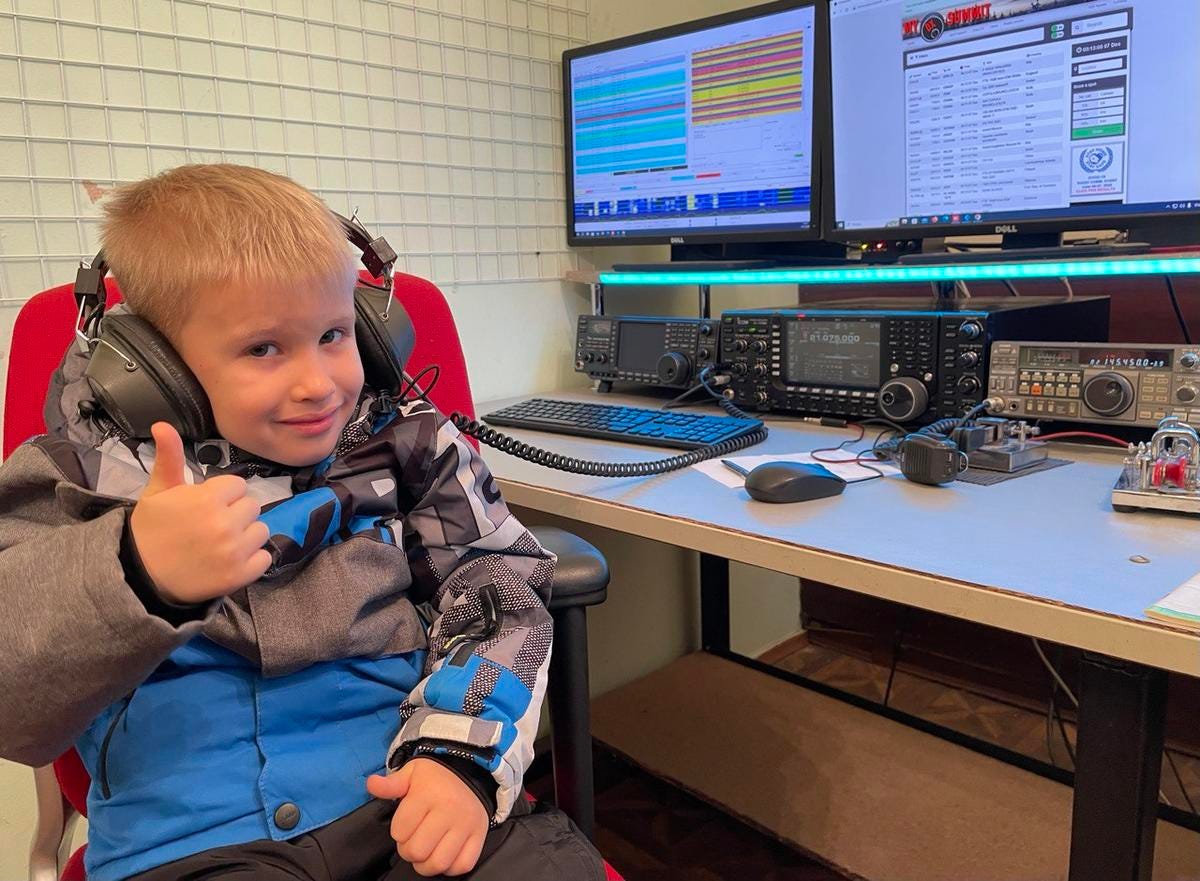
Ham radio is amateur radio communication where a person operates their own station and talks directly to others around the world, without relying on the internet or telecom operators. Even with the advent of the internet, it remains popular worldwide. Zaporizhzhia Radio Club’s president Mykola Papirovsky is in his thirties, and was displaced from his original home ten years ago to settle in Zaporizhzhia city, where he had family at the time. But his interest started long before that.
Mykola: “When I was twelve years old, I started going to the local radio club learning to solder. I read radio magazines and studied plans and designs. I was always into amateur radio. Then I went to a club radio station when I was thirteen. Everything was OK then, when I was studying and growing up. If you develop an interest during childhood, it usually stays with you all your life.”
Mykola now pays the favour forward to local children, who attend workshops and masterclasses at the club, where they learn practical skills such as soldering as well as being introduced to the world of ham radio. “It will help them to get a technical specialisation at university, and it teaches life skills generally.”
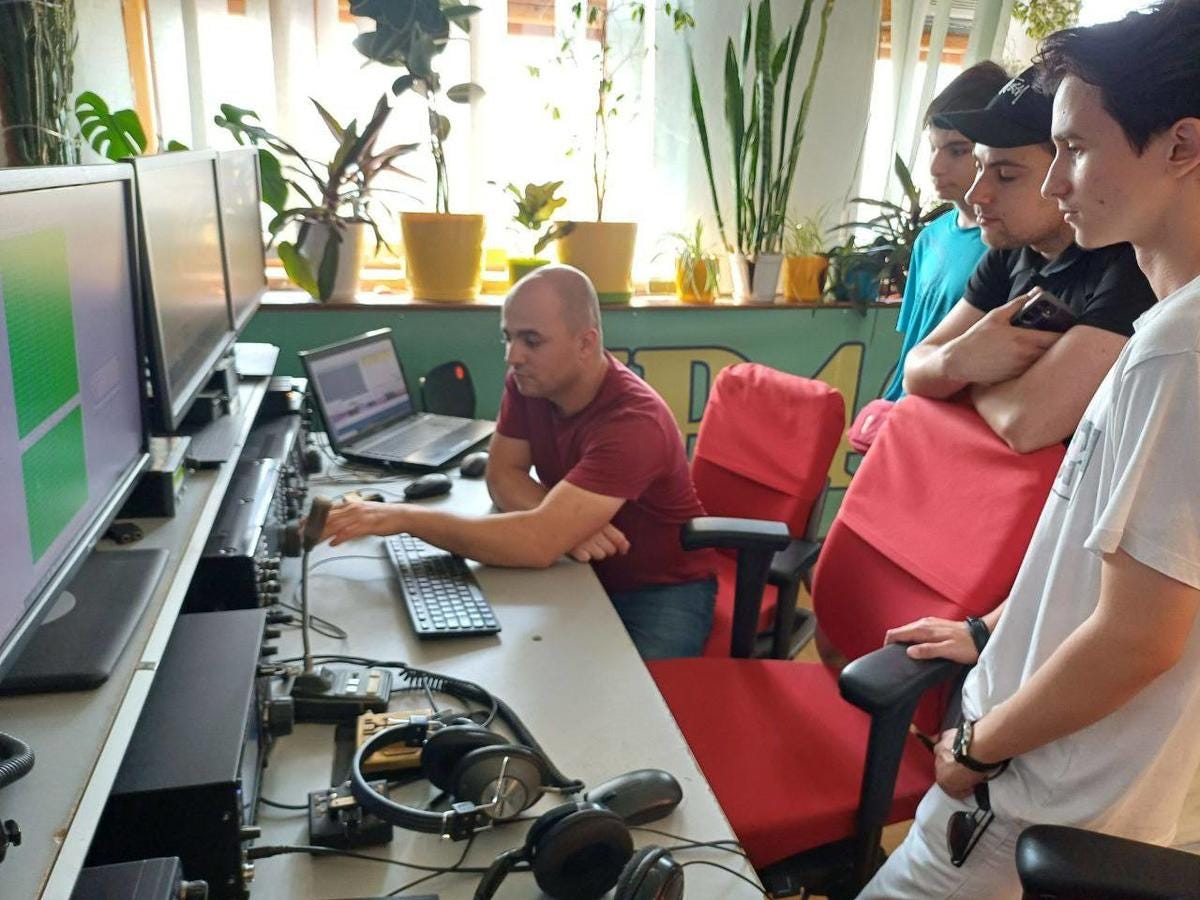
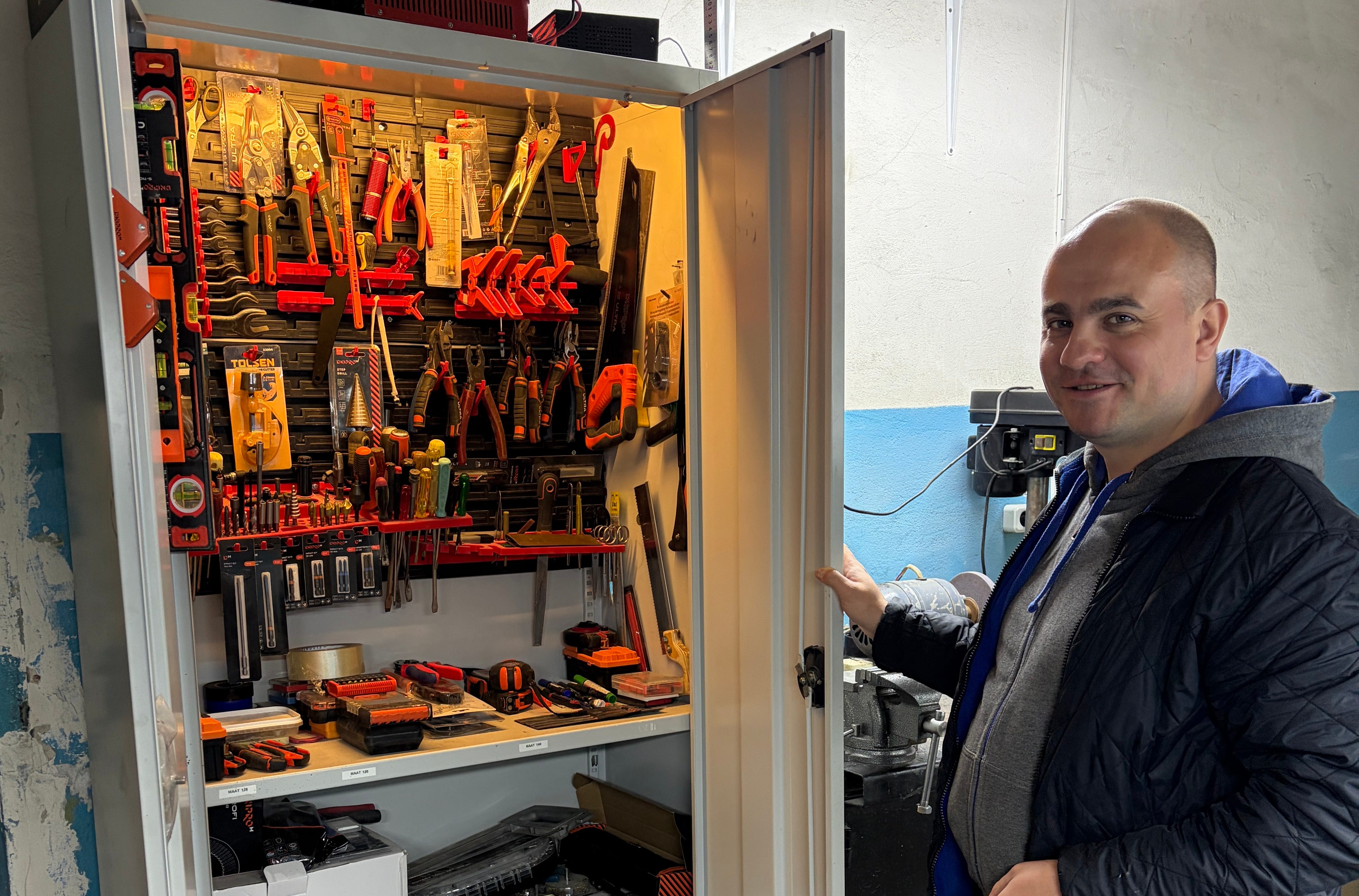
Mykola and his team are able to carry out workshops with their in-house equipment. Even more important, though, is some work that requires your help, for kids who aren’t in a stable enough situation to attend a radio club.
Why do you need old gadgets?
Mykola: “We give laptops to young people to help them study and IDPs to help them work.
Ukraine is going through a difficult time. The standard of living is deteriorating. People get low salaries, low pensions, and can’t afford much. Not just IDPs, but local people need help too. A lot of people don’t have laptops and phones at all, or they are very old and outdated. They have to prioritise buying groceries and medicines rather than useful gadgets. And the situation isn’t improving, so there’s always a need.
I’m an IDP myself, and I know what it’s like when you have a small wage and have to pay for housing and utilities. And prices have gone up a lot. Petrol has gone up a lot so everything else goes with it.”
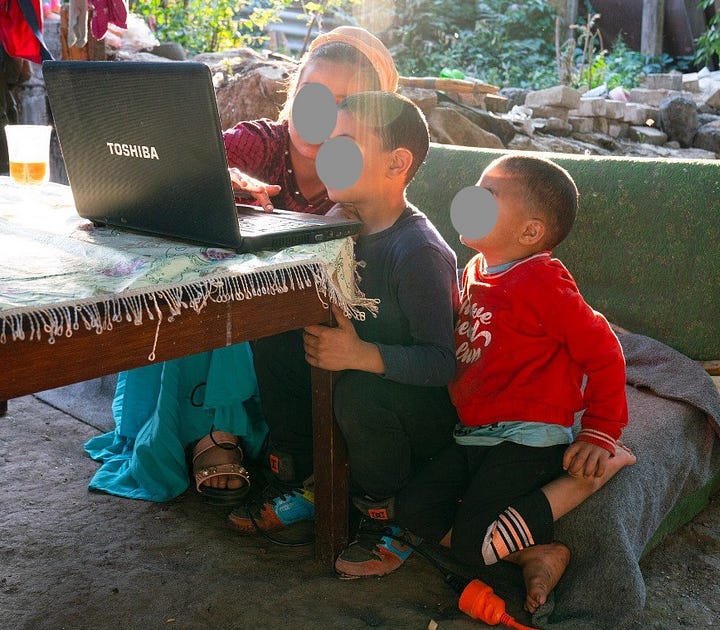
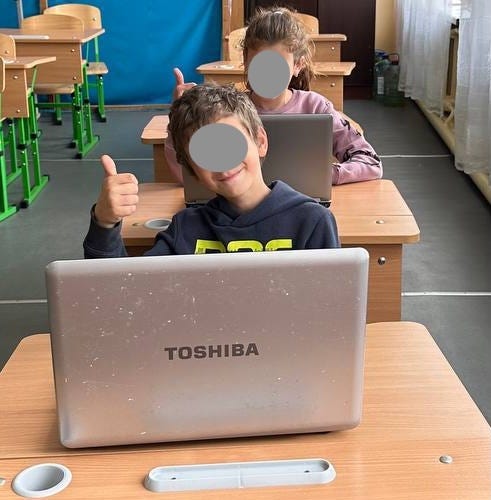
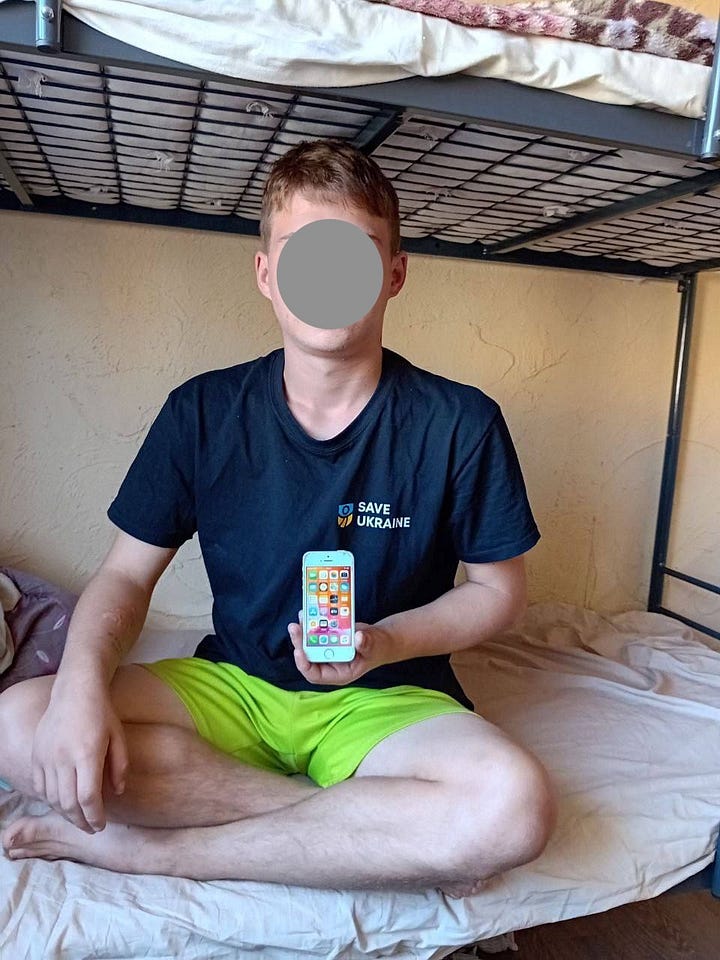
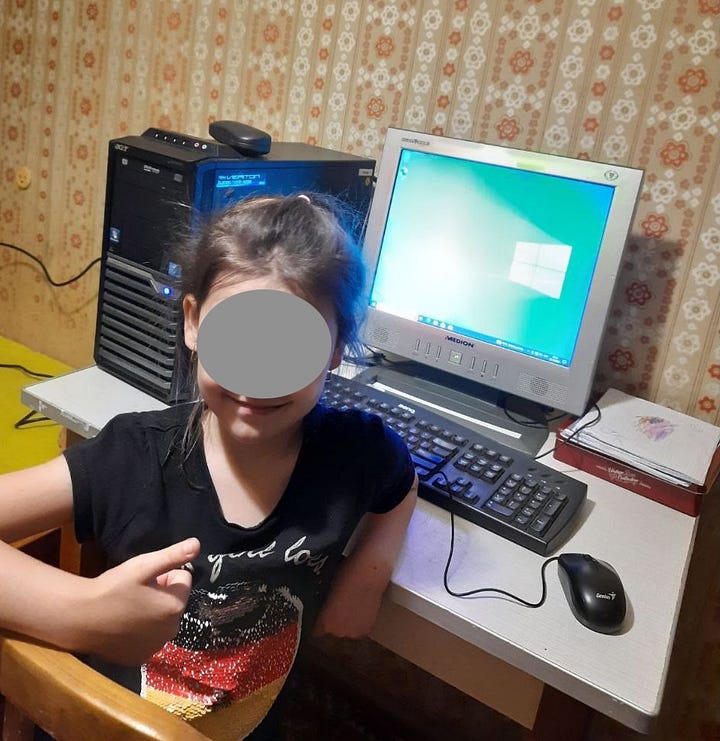
The radio club also help out volunteers.
Mykola: “Laptops also go to people like Tanya at Skhid Zhyttia. I asked if a stationary computer would suit her, but she said she wants a laptop because she works at home and in the office. We get requests for laptops all the time. There’s great demand for repairs, to power stations, to generators. We’re always asking for spare parts from other countries. Radio clubs in Germany and the UK help us in particular – the Radio Society of Great Britain are our colleagues and help us a lot with equipment and parts. They’ve sent us computer equipment, too.”
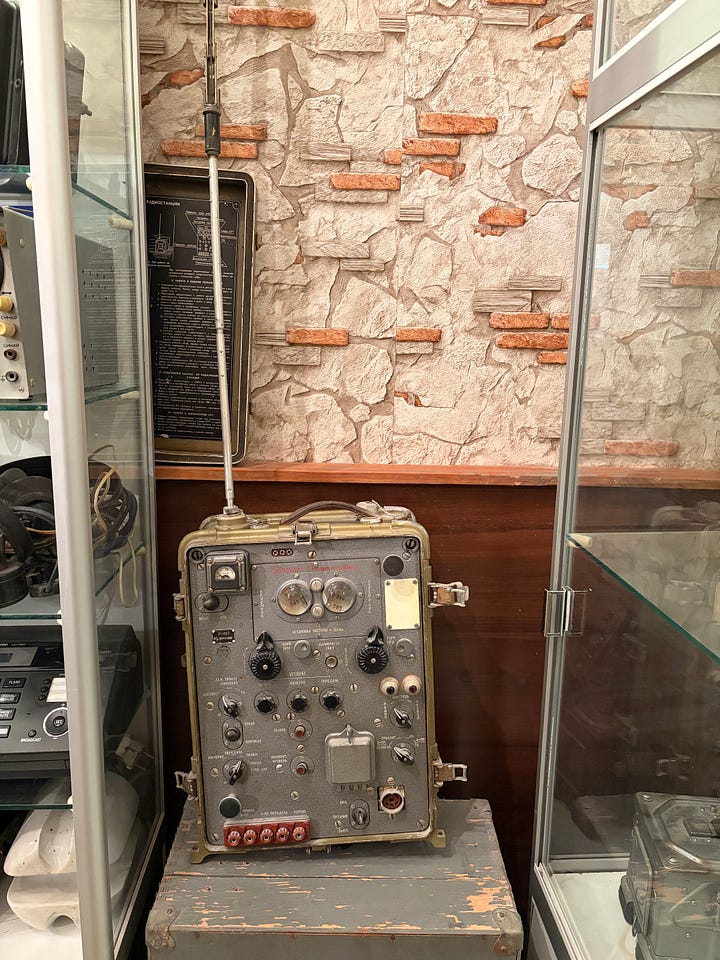
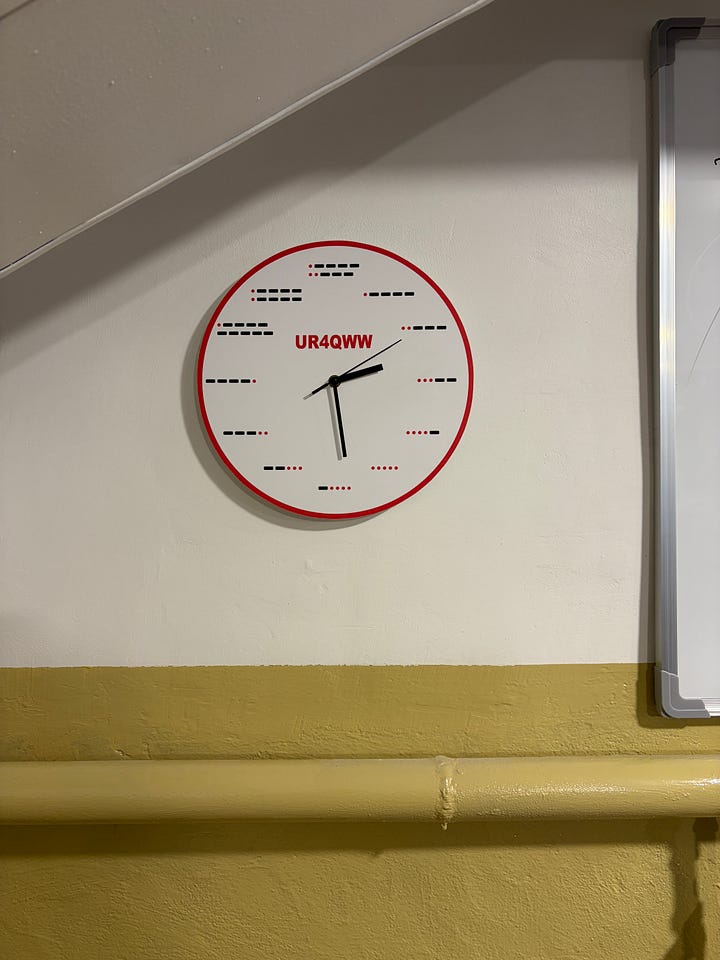
Of less immediate utility, but just as much joy to Mykola, is the club’s museum, a series of shelves and glass cabinets lining the main corridor.
Mykola: “We started it spontaneously. We were given the glass cases and I put them out here. Then other people began to bring in stuff they had in their attics.”
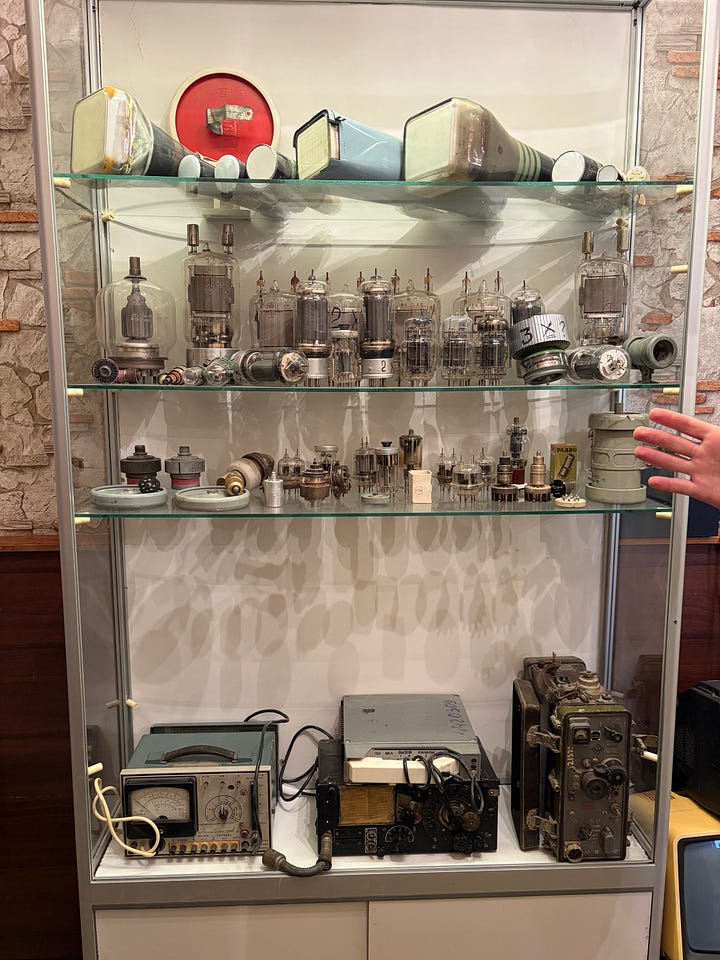
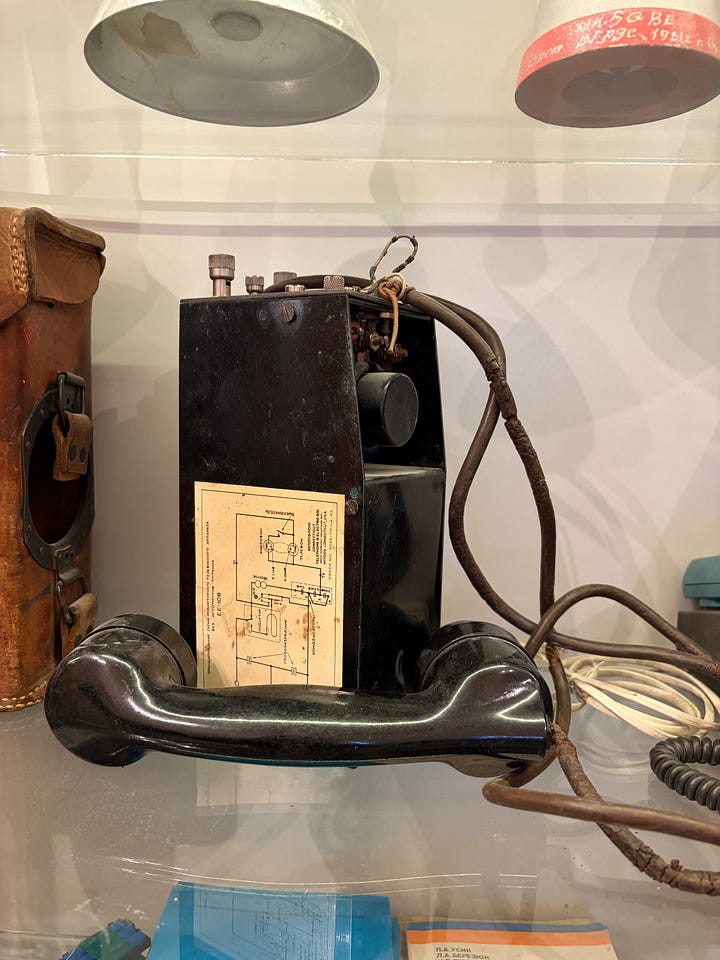
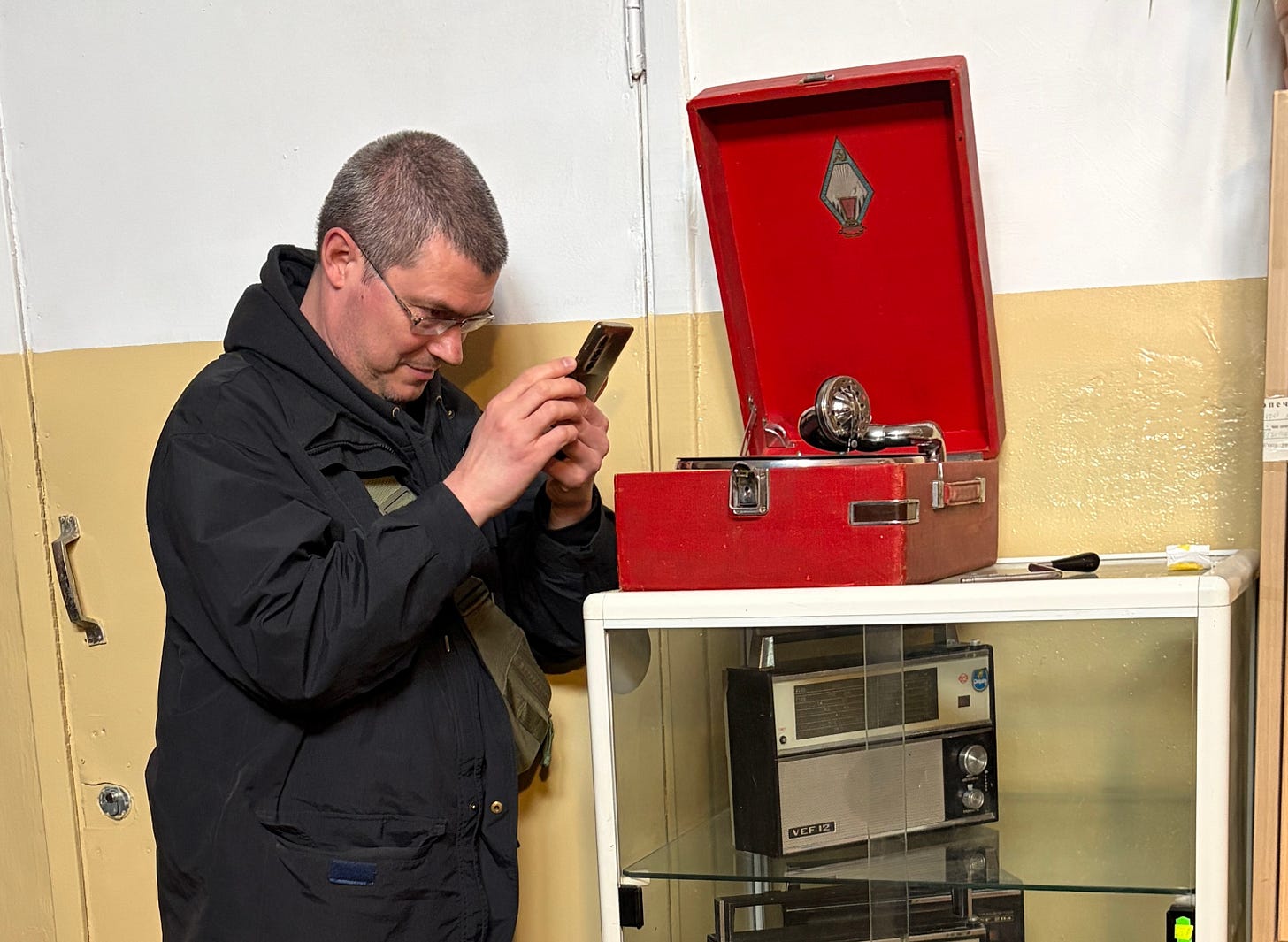
The most impressive piece from a layperson’s perspective is the 1950s gramophone. The din it emanated – a tango called ‘It’s Raining’, according to the label – was frankly horrible, but of historical interest. It was a present from a colleague in Dnipro, whose father bought it with his first wage packet in 1950. He has no children to pass it on to so he decided to give it to the radio club.
Above: Myk winds up the monster.
My husband holds a PhD in applied maths focusing on the optimal arrangement of microphones for particular purposes, and after the war I’m going to bring him to the Radio Club museum. He was particularly stirred by a video I sent him of one of the transceivers in action:
Under the influence of many hours of television with sound effects provided by the BBC Radiophonic Workshop, he praised this sound (high-speed Morse code) as “proper wobbulating electronic bleep noises”.
… But we digress from the war, which unfortunately has to be everyone’s focus for the time being. The radio club survived a shahed strike to the adjacent building in February 2025 that wrecked all the windows. A few weeks of work sorted out the worst of the damage but there are still cracks in the ceiling. Zaporizhzhia, like all the frontline cities, is coming under ever heavier bombardment. It’s a stark reality that the radio club, with all its wobbulations, could be wiped out in a moment. Anything here could.
But not yet.
The main challenge with donating items to the radio club is of course getting them there. It’s possible to post direct to Ukraine, but you may find the postage costs prohibitive. Freefilmers, the filmmaker-turned-humanitarian group I have been co-operating with since the start of the full-scale invasion, have friends in Berlin, Rotterdam and Bratislava, as well as myself in London. If you can get your donations to us (ideally with leads, and definitely with passwords/factory reset), we can get them to Ukraine. Leave a comment below or email me at firstname@firstnamelastname.co.uk for details.
Comments
Nothing yet. Say the first thing.
Sign in to join the conversation.