
This blog is the visible half of my volunteer work. The other, mostly unseen, half is facilitating relationships. And my favourite kind of connection to make is between donors and frontline teams. Mostly that means posting fundraiser details at the bottom of interviews and getting a few small, if very welcome, donations in. Occasionally it can be something much bigger.
Ryan Grant Little is the most prolific and effective donor I personally know. And another good thing about him: he doesn’t actually need me to say that. He assesses his success by his level of impact rather than volume of flattery. He just wants to get on with things, and I came up with the idea of interviewing him in the hope that his model will inspire others.
Currently I’m in London, and Ryan lives in Kyiv. So I called him at his flat to talk.
How did you get started, and how have you ended up basically shaping your whole life around Ukraine?
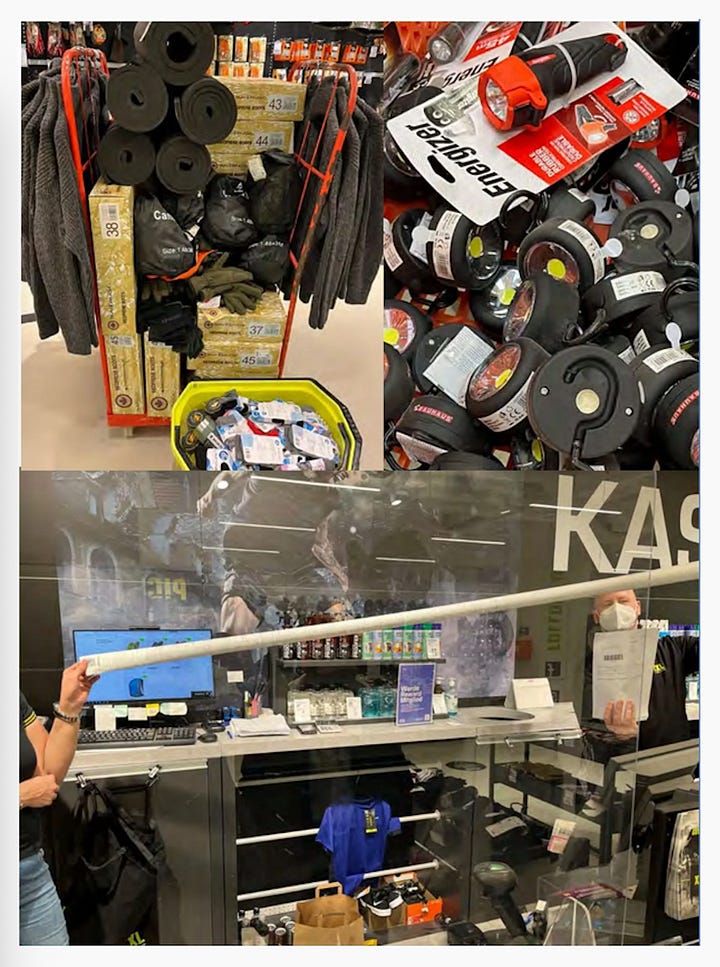
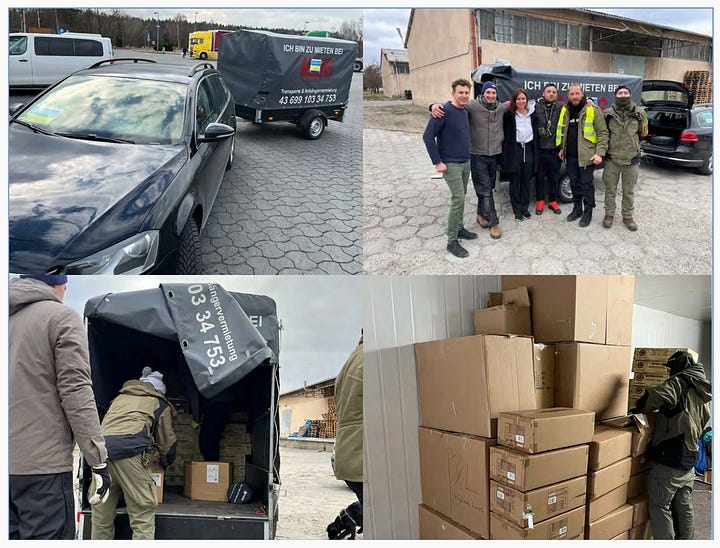
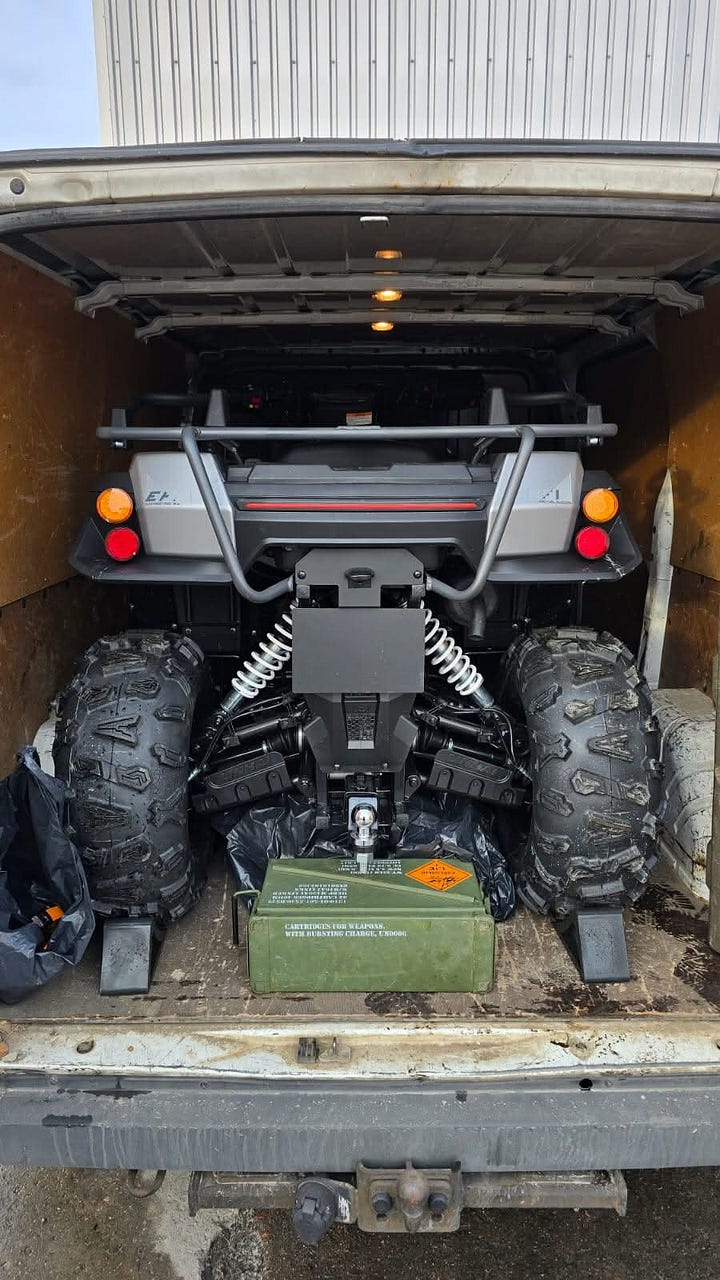
Ryan: I got started quickly. In the first week of the full-scale invasion I couldn’t think about anything else. I was living in Vienna and I discovered that if I pressed a button on my station wagon a trailer hitch would pop out. So I figured out where I could rent a trailer, and went to an outdoor shop to buy all sorts of things. My criterion was: what would people need tomorrow if everyone in the country was in the army? So boots, everything green, camping heaters, camping stoves, like all of this kind of stuff. I was planning to put it on my unlimited American Express card and then figure it out afterwards. It was about 30,000 euros.
And when I got to the till they told me they don’t take American Express!
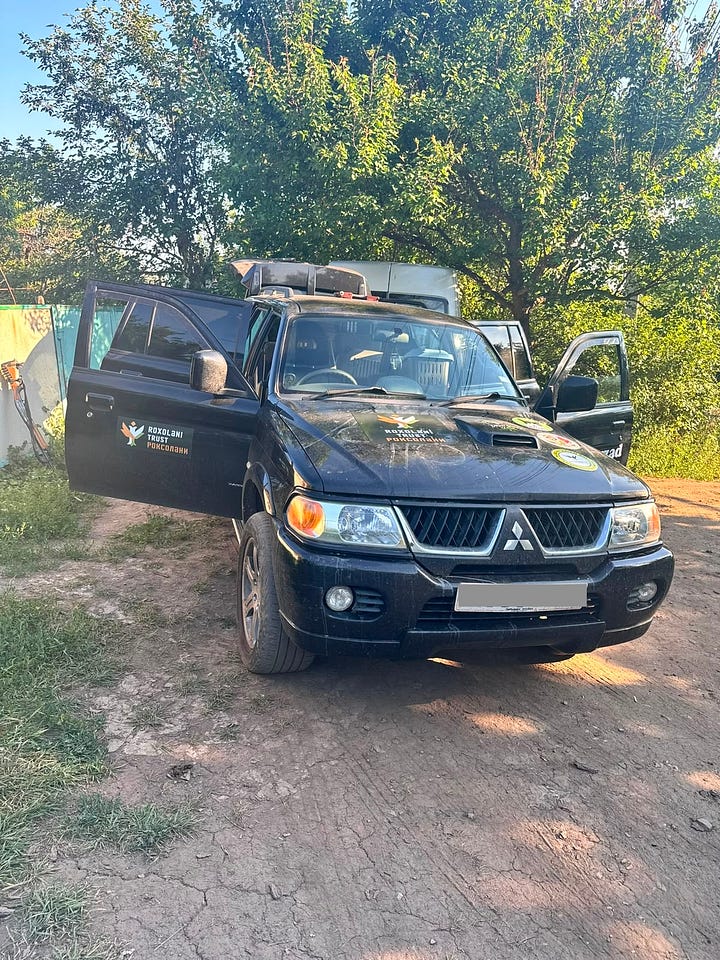
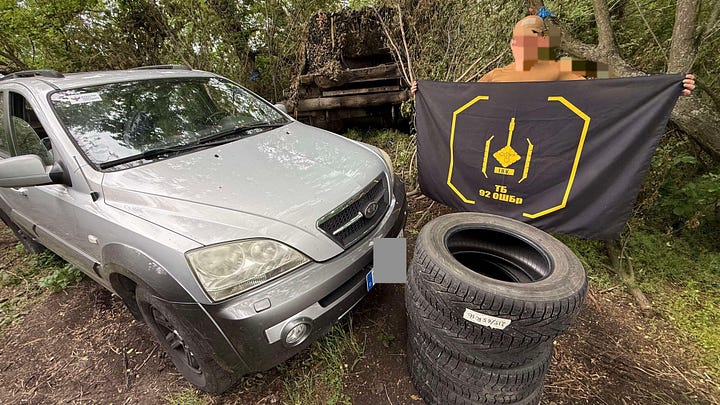
I was new in Vienna so I didn’t know a lot of people. But I reached out to basically all the people I knew and said you need to come over here and put your credit card down with me. That’s how I built this kind of little node. Some of them are still very active, like Tommy who gave that car to Druzi. [After my visit to Dobropillia in March, a donor came forward to provide a car to enable volunteers to travel back and forth for the ongoing sterilisation programme.]
So I filled up the trailer and drove east, calling any Ukrainians I knew – people I’d worked with as developers [as in computer programmers] – and saying, you’ve got eight hours to figure out where I should take this. I got to Przemsyl, and handed the stuff over to Plast, the Ukrainian Scouts, and asked them where I could find refugees. I brought a mother and daughter back to Vienna who stayed at my place.
And then I just kind of kept going! In the early days I was doing more on the kind of refugee side, but pretty early I started to understand, as I think a lot of people do who are working in this space, that helping orphans is important, but preventing orphans [by supporting the army to defend the country] is even more impactful.
You have a number of schemes of projects, for example, Invest in Bravery and Roxolani. Can you talk about them?
I started as an individual, then helped seed some organisations with their first money, like Vienna Mission for Ukraine.
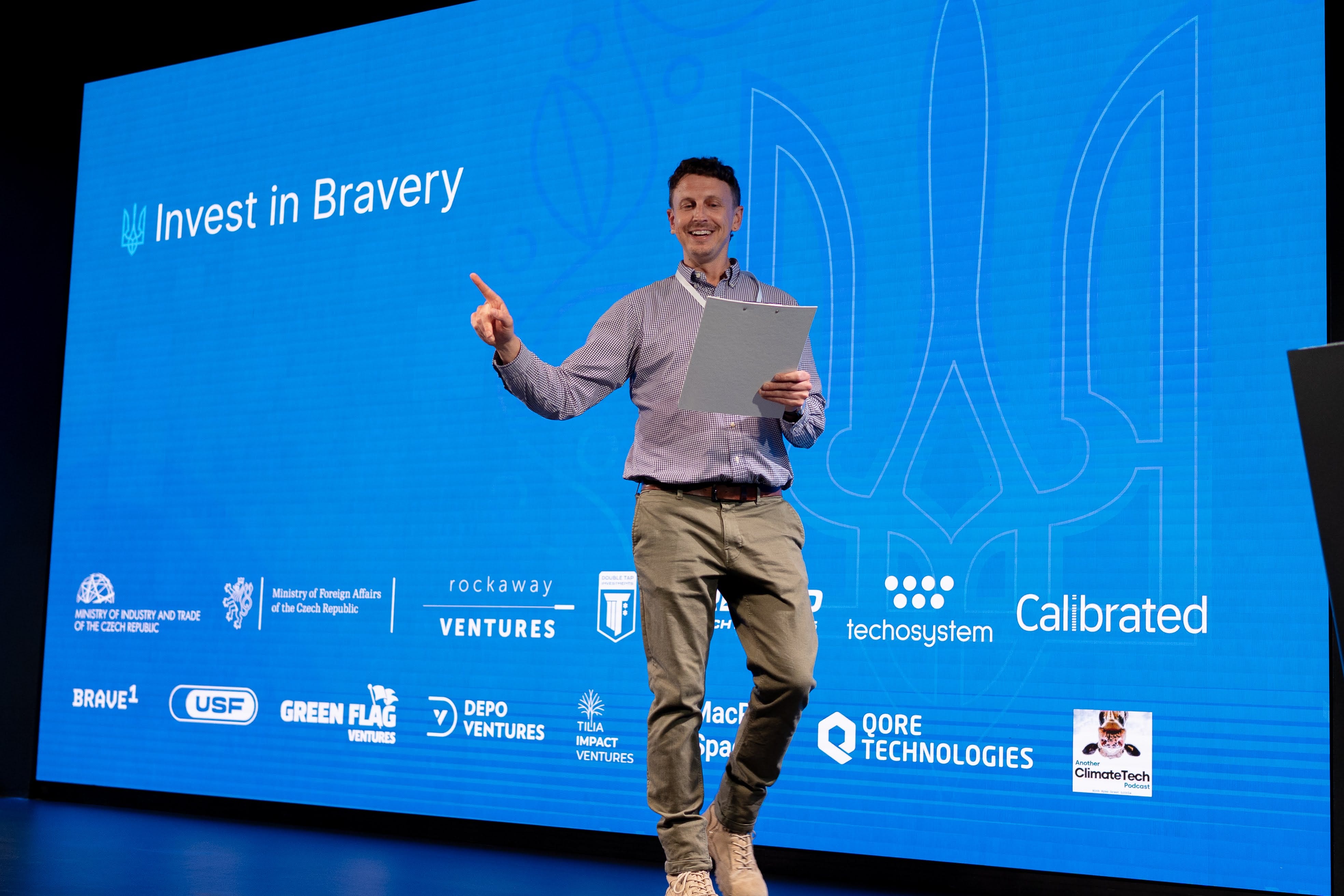
Invest in Bravery is about matching international investors with Ukrainian defence tech. I was giving a talk in Prague, and whenever I give talks I tell people to come find me afterwards if they are interested in doing something for Ukraine. David Nichols, an American based in Prague, came up to me and said hey, we’d love you to come. That went from me becoming an attendee to a co-founder and now chair of the board of Invest in Bravery.
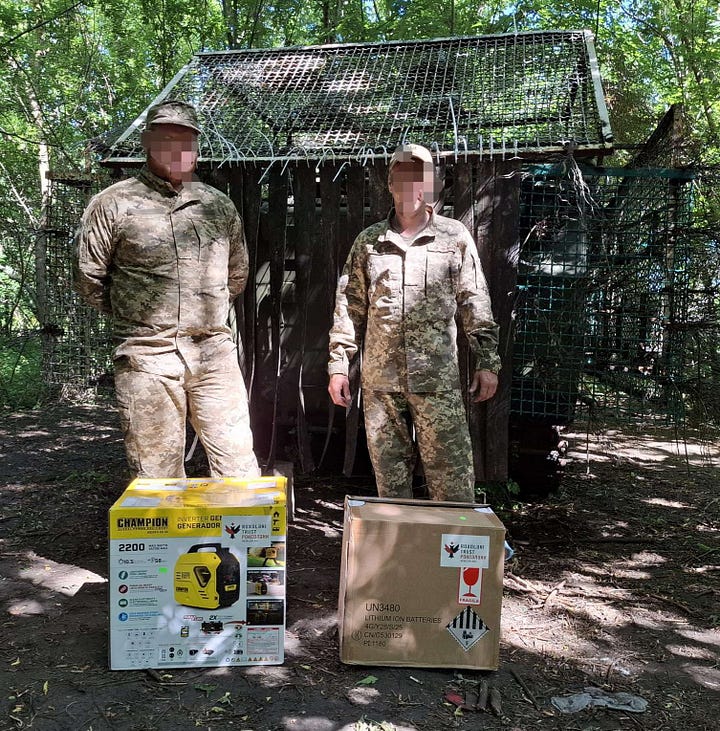
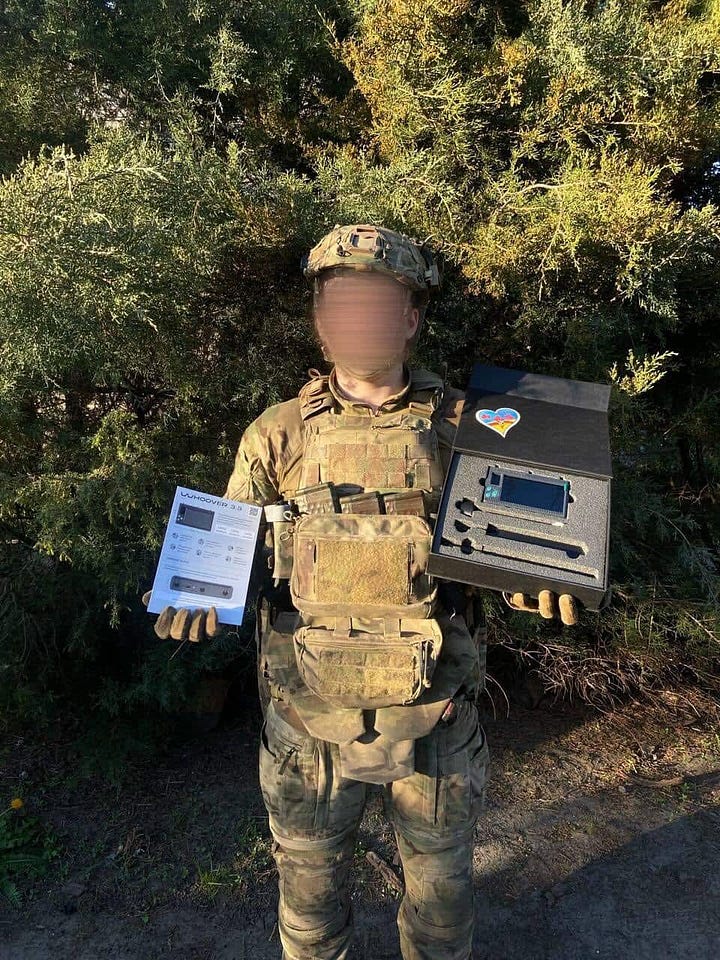
Roxolani Trust is basically the formalisation of the volunteer and fundraising work I’ve been doing since the beginning of the full-scale invasion. And now that I live in Ukraine full time, I wanted to have a foundation that would allow me to do things like fill in customs declarations and bring in vehicles.
What is your professional background?
I’m a climate tech founder by background, working in renewable energy and climate technologies. In the past ten years or so I’ve mostly been working as an advisor to other climate tech startups and as an investor in climate tech startups.
I remember thinking in 2022 that there’s no bigger climate disaster happening right now than 10,000 artillery shells exploding every single day and the ecocide that was happening in Ukraine.
It seems quite logical to me at the time, and still now, that if your primary concern is climate and animals and environment, then there’s no more important single issue than shutting Russia down.
You’re able to operate on a larger scale than many other donors.
I was pretty lucky early on. I have an MBA from Ivey Business School, which is the best in Canada, and my classmates there jumped on board pretty quickly. I also have really great family friends, especially my parents’ friends who are from the baby boomer generation who remember that Russia is our enemy, remember what they’re capable of. These people have helped me widen the base, and four and a half years later they keep me powered up to do this.
On the one hand, yes, it’s got some scale. On the other, it’s peanuts in the grand scheme of things. But you can achieve a whole lot with peanuts in this war.
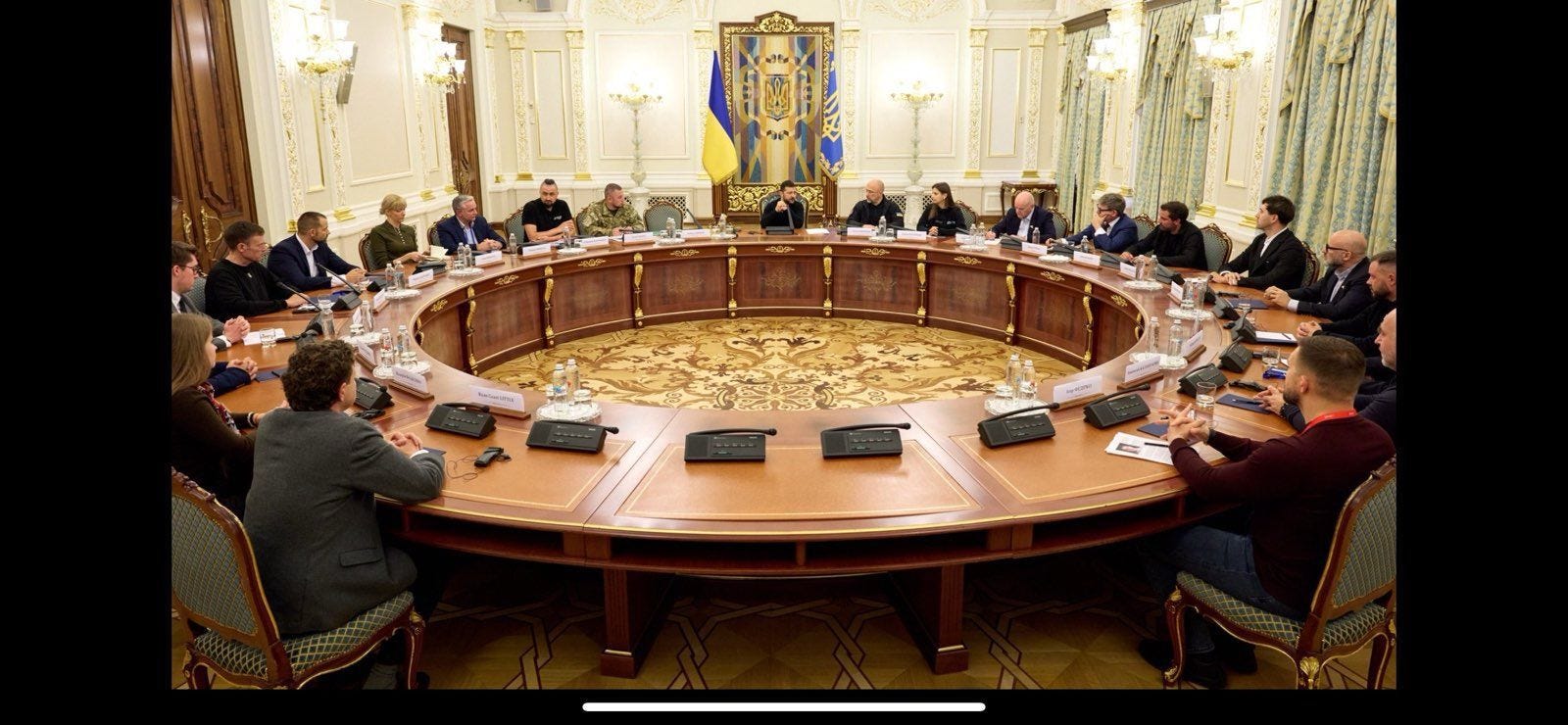
So you’ve been really successful in motivating others, which is an incredibly valuable skill. Do you have any advice on how readers can motivate other people in their lives?
People think Ukraine is so far away, and everything’s so complicated and difficult. But don’t try to boil the ocean. Just do something very small.
I encourage people who are planning to give $100 to try and find five of their friends to match that. Then you can be the node that connects them to the cause.
People might not want to support one of these massive organisations where they think the money is probably going to get absorbed into nowhere. On the other hand, they just don’t have the connections to donate to grassroots organisations, or have the will or interest to maintain that kind of direct relationship. So the trick is to be the person who says, I’ll take this on, I’ll make sure the money is used how it is supposed to be. I’ll get the pictures and the report afterwards. And that de-risks it a lot for the people who are willing to give $100 but just don’t know where to.
You don’t have to put your whole life savings into this. Just be a node or a channel and bring other people in.
Moving to Kyiv was a whole new stage. When and why did you decide to do that? And do you recommend it to other people?
In 2024, I crossed the Poland-Ukraine border something like 16 times. And I was based in Vienna!
I was doing less and less of my paid work and now living in an expensive place. So I thought, let’s maybe turn this around and live somewhere that the money from the little work I’m doing each month goes a lot farther.
I decided to go all in. Not necessarily forever, but I want to be on the ground here for a good chunk of time. Can I recommend it? You’re interviewing me two days after we got 42 ballistic missiles in 50 minutes here, so I can’t in good conscience necessarily recommend it right now…
So have you got a work-life balance? What is it?
No. I sure do not. No, I do not have a work-life balance. I have to watch out for, like, crossing the Rubicon on burnout. I’m trying to take care of myself a little bit, get some offline time. But I’m here for a specific reason, and that reason does not lend itself to balance of any kind.
I read in your reports that you couldn’t read Cyrillic when you first came to Kyiv. How are things now?
Ahaha. My Ukrainian is amazing if it revolves around ordering coffee. Beyond that, it’s hopeless!
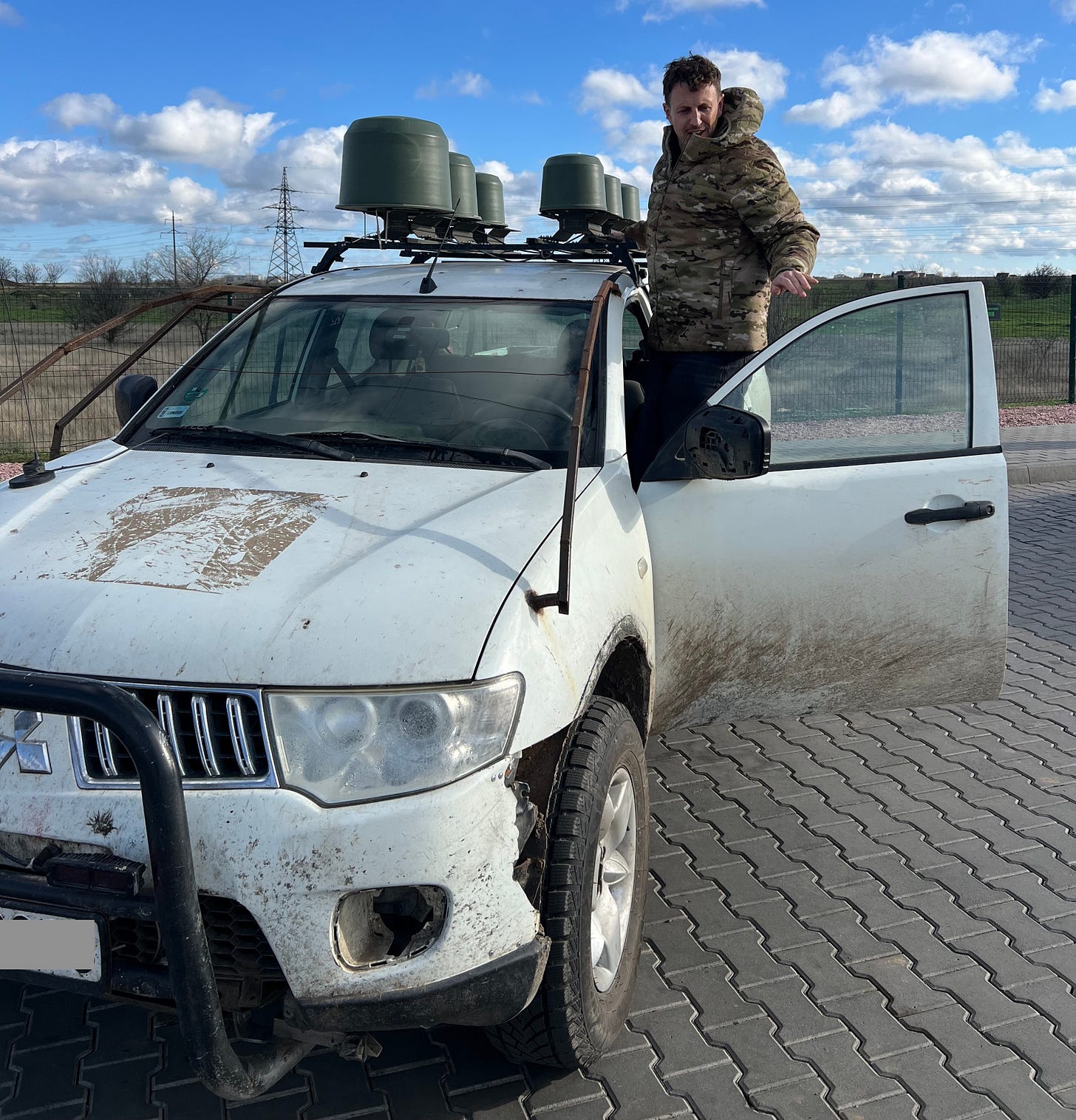
Moving on to the specifics of your work as it is now : you support an amazing variety of causes and groups. How do you select them?
I’ve been doing this for four and a half years and made a lot of connections over that time. You’ve built trust, and you see things that deliver.
I also keep my antennae out for intermediaries because things change all the time. I found a couple of the newest organisations that I support through your Substack. What I love about the work that you’re doing is that you’re actually going out there, you’re meeting people, you’re having the most real and specific conversations possible, about everything from toilet paper to water bottles. What people need, how things work, how they get done.
A lot of war reporting happens in a much more abstract or by-the-numbers way and you bring it much more down to earth. Everything is about relationships, and I’m trying to find people who are value-aligned, impact-oriented and actually doing the work.
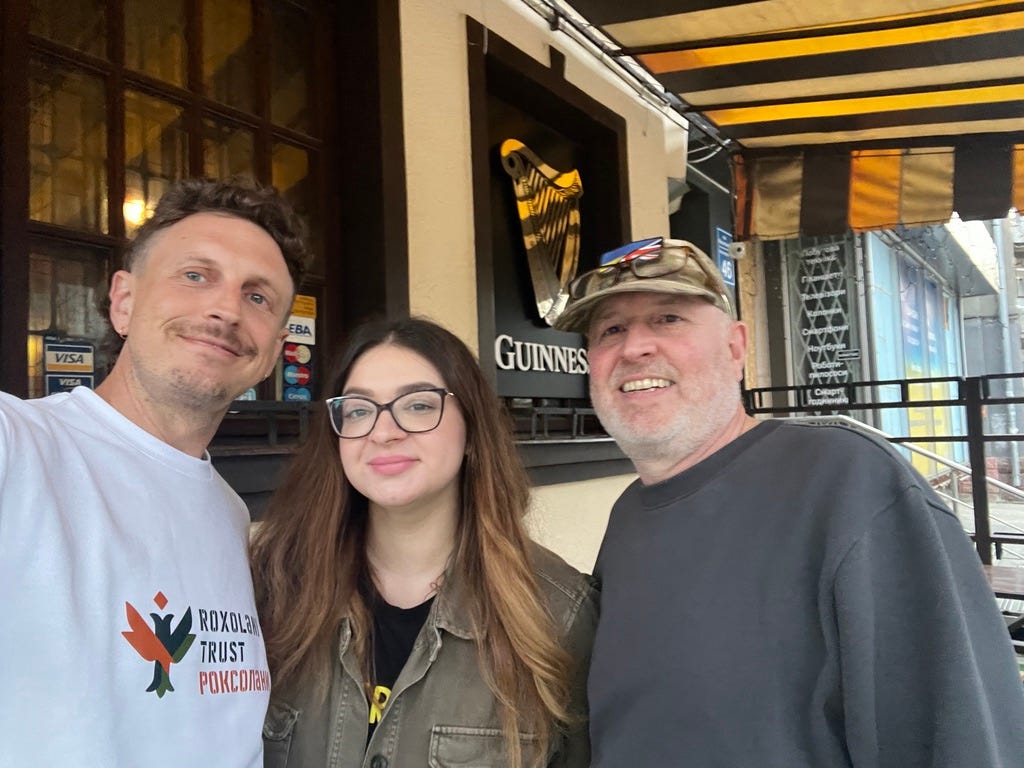
I first reached out to you when I read the story of Jack and Masha. I was so impressed, I could tell from the interview that they were so selfless, and everything was about the recipients [of the aid], not about them. I wanted to send funding that they would use for fixing the van.
You support both military and civilian groups. How do you differentiate, if you do?
One of the ways I select is based on managing flows of money. You have to know where it came from and what its intended use was, what the restrictions are.
Money that’s come through philanthropic channels where there’s been a tax receipt issued generally has restrictions. Funding a foreign army is usually out of bounds. If there’s money that doesn’t have restrictions, I will prioritise the military.
What appealed about the specific groups who you have located through my blog?
I tend to like groups that are super, super driven and where the only limitation is resources. If I see an organisation that’s led by volunteers who are just super dedicated and all they want to do is the next mission, but what’s standing in the way of them doing that next mission is a broken vehicle or an empty gas tank, that is a very straightforward case for me. Organisations where it’s just plan, execute, rest, plan, execute without a lot of the bureaucracy or politics that gets in the way at some of the larger organisations.
Druzi Space are like that. They’re so energetic, even though I can’t imagine how they keep going day after day. All they want is to get moving on the next mission and rescue people and animals. It’s not about positioning themselves for something. It’s not about the clicks and the likes, it’s about doing the work. I want to fund and support people like that as much as possible while I’m drinking lattes at cafes in Kyiv transferring money.
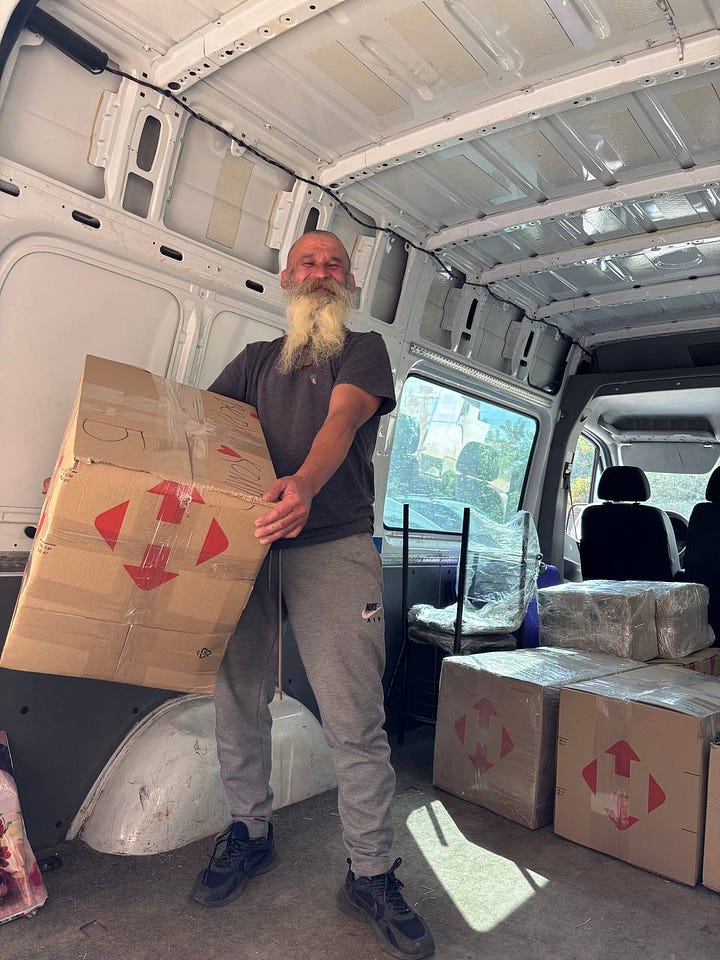

I asked Kaz, co-ordinator of Druzi Space, about working with Ryan. She’s a forthright lady…
Kaz: Few foreign volunteers genuinely understand what the frontline needs, but Ryan does.
Aid doesn’t have wings and evacuees don’t teleport. Medical deliveries, food parcels, civilian evacuations, animal rescues all start with one thing: fuel in the tank. Ryan has repeatedly stepped up to fund just that because he understands that logistics save lives.
But what really sets him apart is that he understands a principle too many humanitarian organisations have forgotten: solidarity over neutrality. Without the army there would be no civilians left to help. You can’t claim to stand with the people of Ukraine while refusing to stand with the defenders who protect them. Ryan understands that humanitarian work and military support aren’t competing ideas, they’re part of the same fight for Ukraine’s survival. If only more foreign organisations spent less time clinging to outdated doctrines and more time listening to the realities of the frontline, many more lives could be saved.
Ryan is amazing because he uses his time, effort, money, donations on really changing things that are broken within the system, to change outcomes.
Back to Ryan
You’ve also supplied, for example, spunbond [for making camouflage nets] via my friends the Freefilmers.
These are the really, kind of, unsexy things that win wars, right? The materials need to be bought, then put together by volunteers, allocated by volunteers and delivered by volunteers; but nobody’s waking up in the morning thinking how excited they are to fund this kind of material.
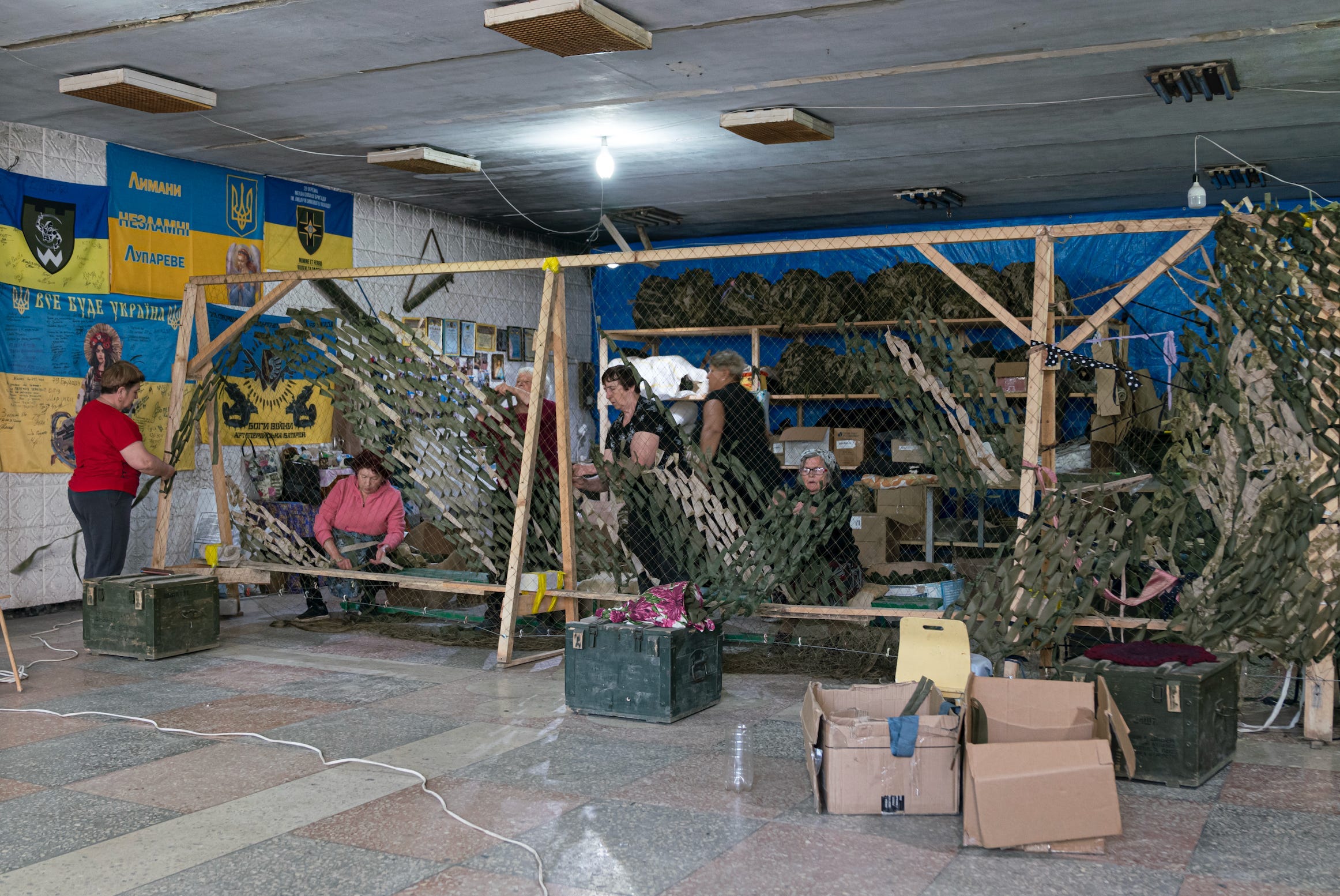
Things that feel unexciting and are kind of niche – that’s what I love and want to support! I can’t remember who said it, but soldiers win battles, logistics wins wars. It’s important to keep vehicles moving and that means repairs and fuel. You know the way I operate: Because I’m basically one person doing this I can make decisions in five minutes.
And there’s a need for that because if the cab of your vehicle gets blown up by a drone and you have to file a report to request funding for repairs, that’s going to come in six weeks. Which is just not going to work for this kind of war and what we’re dealing with. [A few days ago, Skhid Zhyttia’s van was severely damaged by a drone attack. As soon as I contacted him, Ryan immediately supplied enough money to cover the first stage of repairs.]
Even though there are times when I’m scaling up financially more than others, I’m careful to keep that direct connection. Because when you put too many systems in place and build a bureaucracy around it, people will die. People will die because of producing and filing forms that nobody’s going to read.
I’m lucky that I have a supporter base that trusts me so much and isn’t demanding cute videos and stuff like that all the time, is happy to get an email with updates once a month. I recognise my privilege with that; not everyone can do that. And with that privilege comes the responsibility not to get bogged down and be slow.
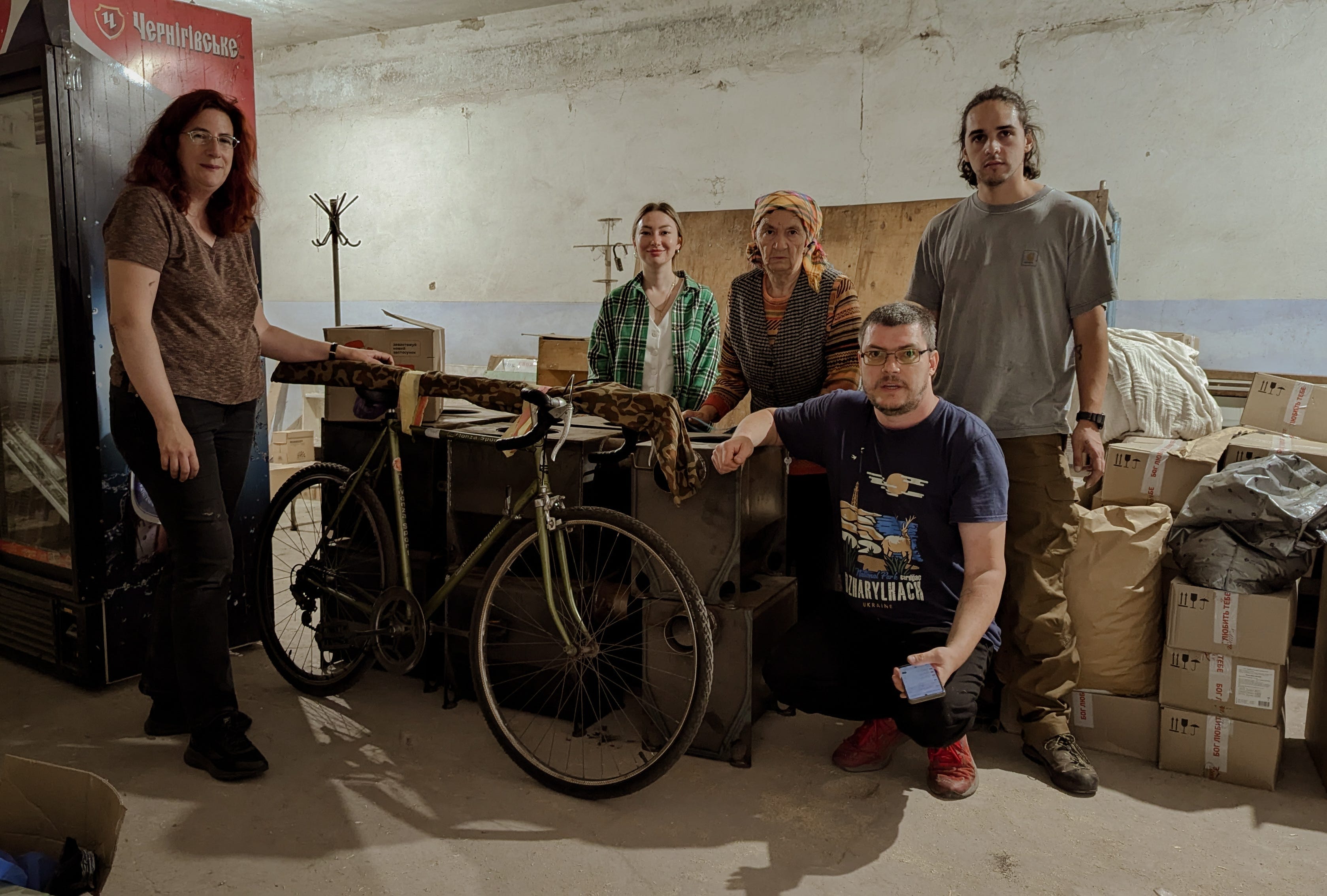
Sashko of Freefilmers about working with Ryan:
Sashko: I’m a member of a small NGO that helps the military, other volunteers and IDPs. On two occasions when we were really short of funds for our volunteer activities, Ryan helped us. Thanks to him, we managed to buy spunbond (special fabric) for the collectives of women who make camouflage nets. It’s always a mystery and a revelation when you meet a foreigner who’s dedicated to Ukraine so much. Ryan is one of those mysterious guys, ready to give a hand and support our cause!
Me: Mysterious?
Sashko: We keep asking ourselves WHY??? how is it possible? It’s surprising to us that people get here and fall in love with Ukraine and dedicate so much time to helping us!
Back to Ryan…
Do you work with any larger organisations?
Ryan: The large household names? I’m still waiting for them to show up. I do see them from time to time sitting in brand new Land Cruisers here in Kyiv, but I don’t really know what it is that they’re doing.
I work with a handful of mid-size operations like [Swedes] Operation Change, who are great. I’ll give you an example: right now I’m running a Power for Hospitals fundraiser in Canada. We’ve raised CA$110,000 (about £78,000/US$58,300). So, how do you then convert that donated money to generators in a hospital in Kherson oblast?
There’s different players involved. The BCU Foundation in Canada is handling the money and tax receipting. Operation Change is going to be banking the funds so that Power Up Ukraine, who are also in Sweden, can buy all the power supplies and manage the shipping down to the Roxolani warehouse in south-east Ukraine.
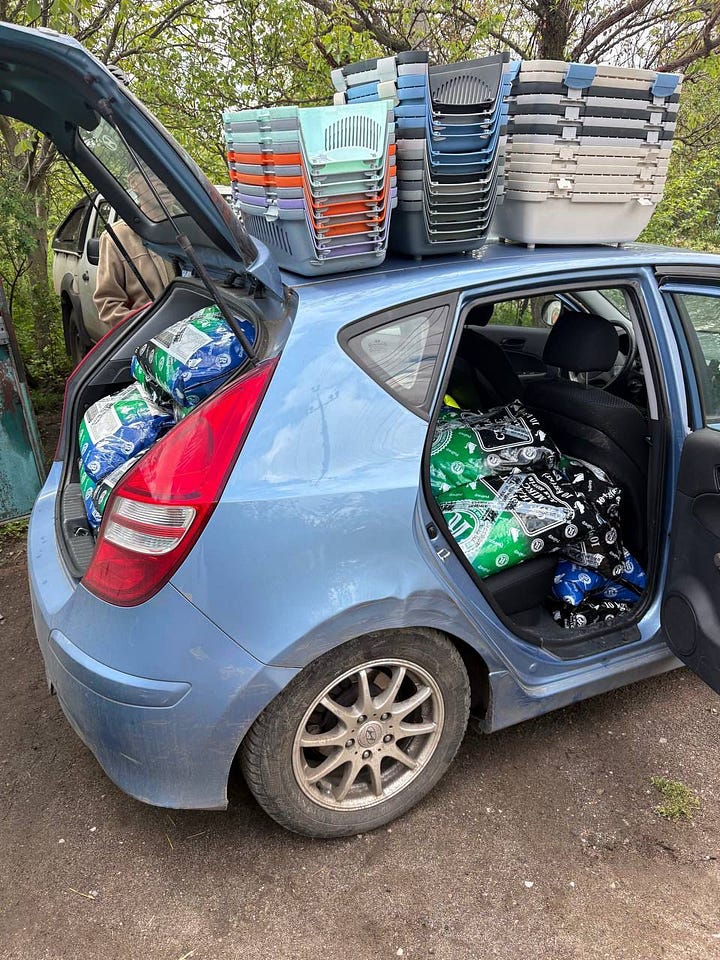
So it needs to be customs cleared and transferred to my charity and distributed across the south and the east. You have partners and you work together on these things. Any time I’m passing through the city and I’ve got an empty van I’m going to Operation Change and I’m going to fill it with fire extinguishers and bring those onwards to people like Jack and Masha.
It’s all about networks, about organisations that are volunteer first, that trust each other and know what everyone’s capabilities versus constraints are. And we try to work together as one organism making all this stuff happen.
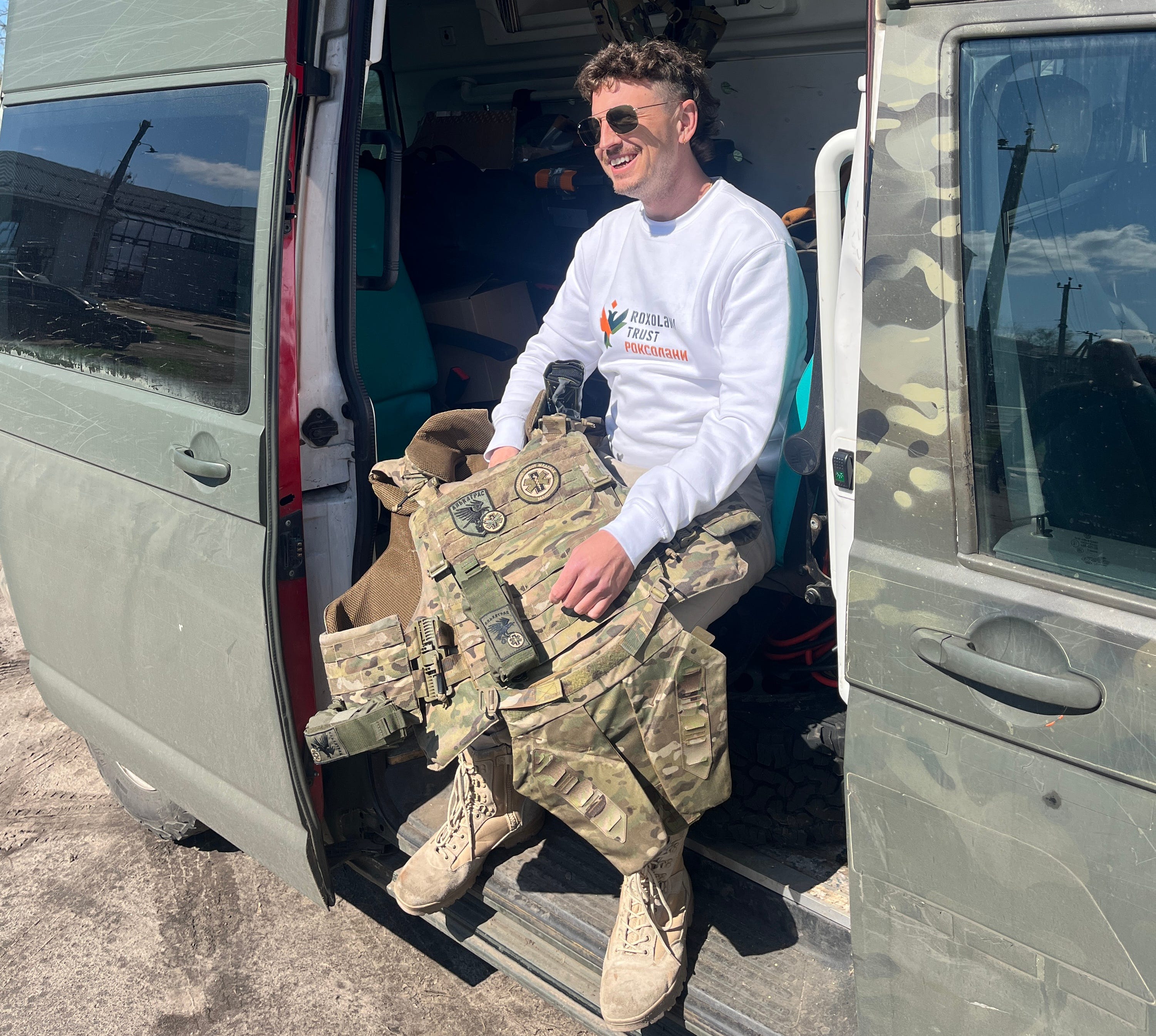
Any last thoughts?
There are so many problems in the world right now. It’s easy to feel overwhelmed and like we can’t do anything. But I can assure your readers that there’s so much opportunity to make such a difference! Your contributions of, let’s say, treasure, time and talent are welcome here, and there are lots of ways to support this.
I’d also like to remind people of the stakes here. This is the battle between the values that I think we, your readers, stand for, and the complete opposite. I mean, we’re working to take out the Russian war machine; Russia’s working to take out sleeping families in their apartments.
You can find Ryan on LinkedIn, and donate to Druzi Space here. Aid Ukraine UK are an umbrella organisation created specifically to channel international donations to frontline Donetsk oblast, and 100% of money they receive goes immediately to Druzi’s work.
Comments
Nothing yet. Say the first thing.
Sign in to join the conversation.