
Jack is a 60-year-old British ex-soldier, ex-policeman; Masha is a 27-year-old native of Kharkiv who’s been volunteering since her schooldays. I’ve interviewed them before about their work supplying the army with everything from ambulances to axes (a few more of the latter), and we’d been planning for me to go on a mission with them for some time but Zhorzhik, their faithful steed (van), spends almost as much time in the repair shop as out of it. Partly because of the terrible Ukrainian roads, and partly because they routinely do this to him:
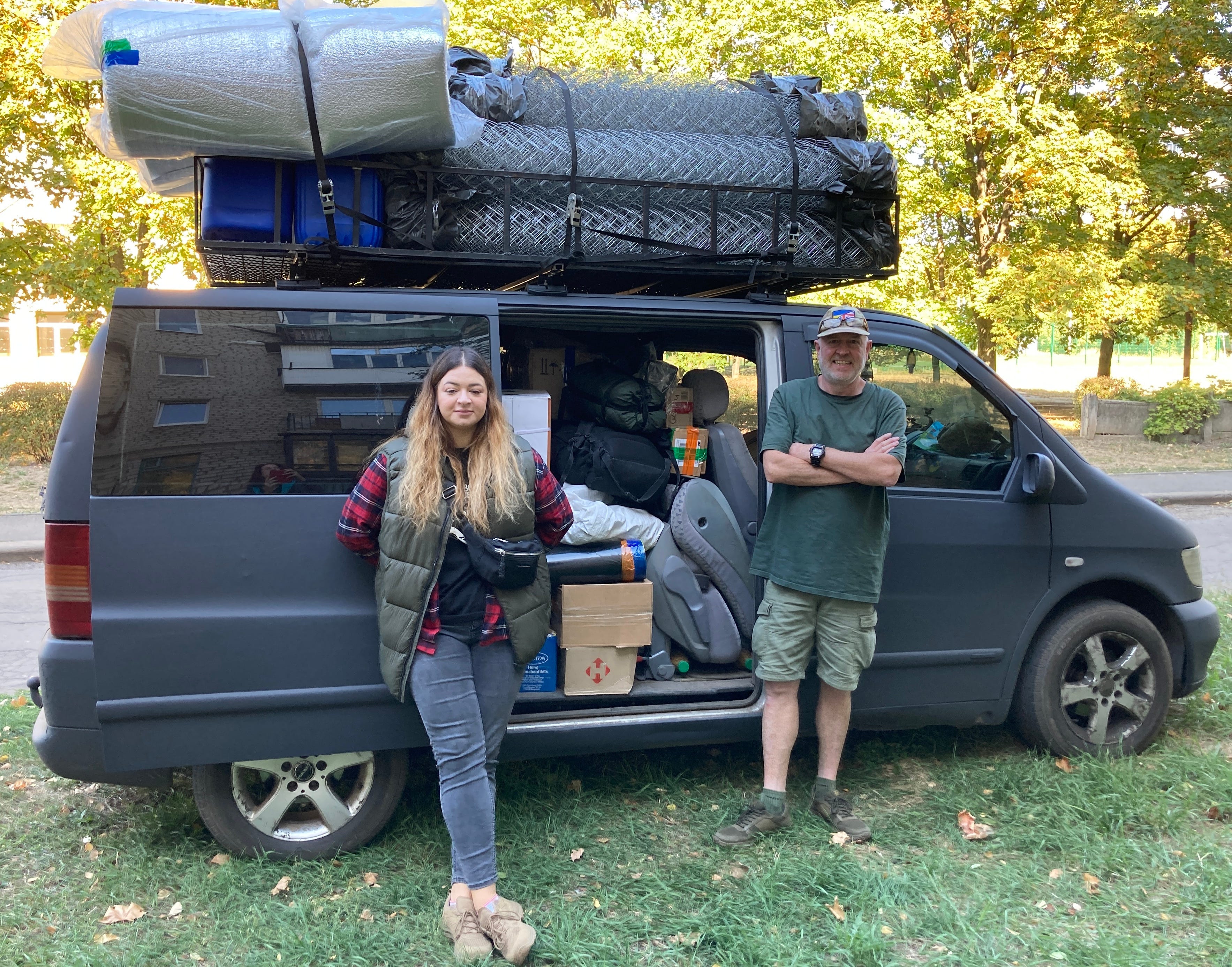
I too would expire under that weight. But on long-distance missions, Jack and Masha don’t want to waste an inch of space that could be used to take precious supplies to the front. Occasionally, though, they do more local missions, meaning that Zhorzhik bears a lighter weight and a bonus traveller can be fitted in. I bring you an exclusive report of our Mission to Zolochiv (and Stary Saltiv, and some random field).
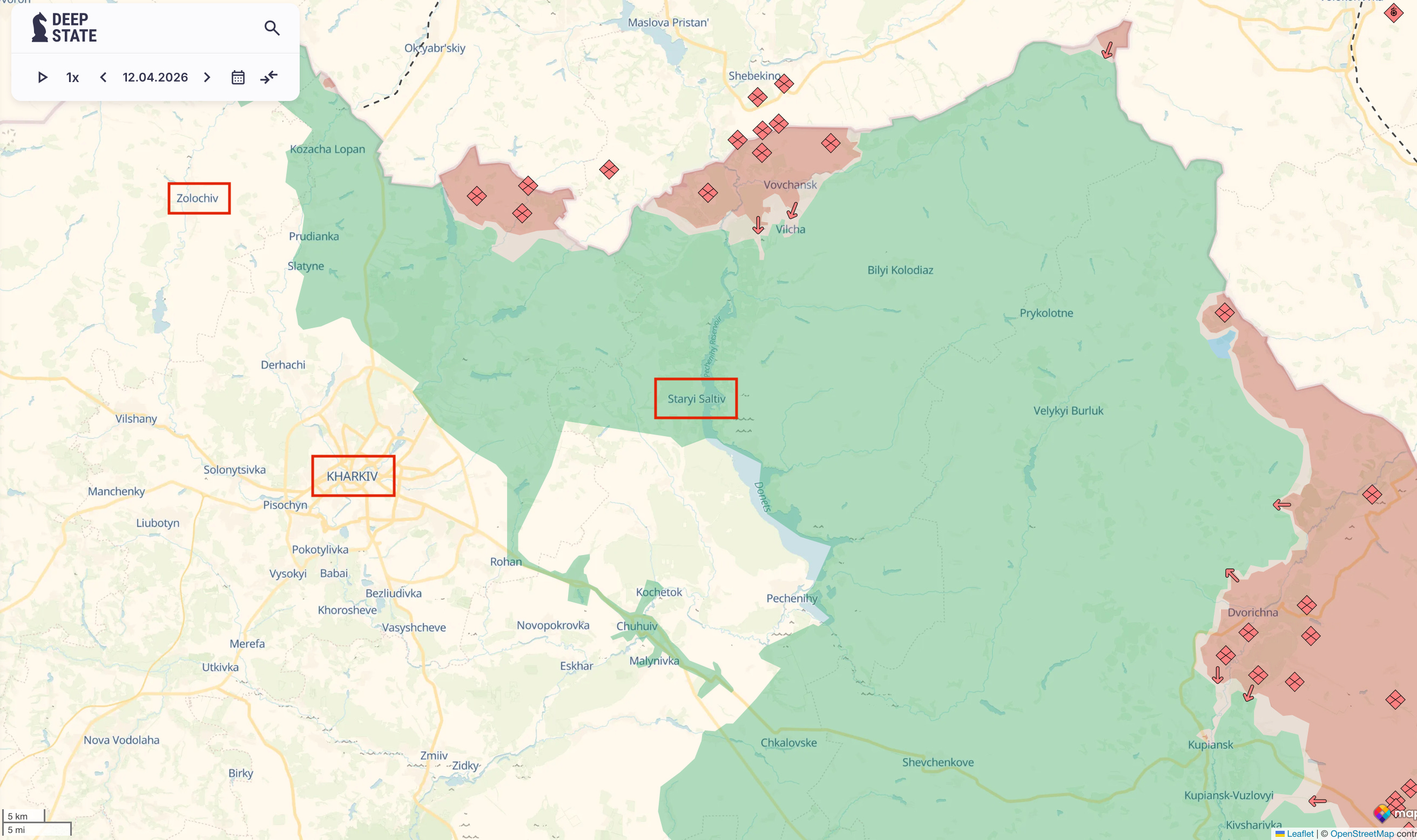
Sunday 12 April
14:00
Masha has been snatching a few hours’ sleep after working a twelve-hour night shift at her regular job, so it’s an afternoon start. I arrive at her and Jack’s luxury warehouse (no water, no heating, no inside toilet, but some nice battery-powered fairy lights they defiantly installed during the long winter blackouts) to commence the loading of the steed. Jack also reinstalls the back seat, which isn’t generally in use. This requires some swearing but the operation succeeds eventually.
Jack: In the back here we’ve got slippers, we’ve got axes, we’ve got shovels, we’ve got shovel handles, we’ve got hammers, nails, screws, lots of medication.
We’re not going fully loaded. We don’t have anything on the roof rack, which we wouldn’t possibly let happen if we were going down to Donbas or down to Zaporizhzhia region. This is just relatively local. But even though it’s a short trip, all the boxes are colour coded, counted and loaded in reverse order. We need to make sure nothing’s missed or delivered to the wrong place, and can be unloaded in the shortest possible time.
15:00
Jack is scrupulous about a final check for fluids, spare fuel, tow rope and other emergency supplies – including ration packs, because Jack and Masha have gone hungry before. We make sure our helmets and plates fit, we ensure we can find them quickly and easily, we make sure we know how to open our doors quickly and easily and… we are on the road!
In the course of a few minutes, Jack starts looking about ten years younger. He’s been stuck mostly in his flat, in such bad pain he can barely sleep, for six weeks after slipping on ice and tearing ligaments in his back while loading Zhorzhik back in February. Finally, escape!
15:30
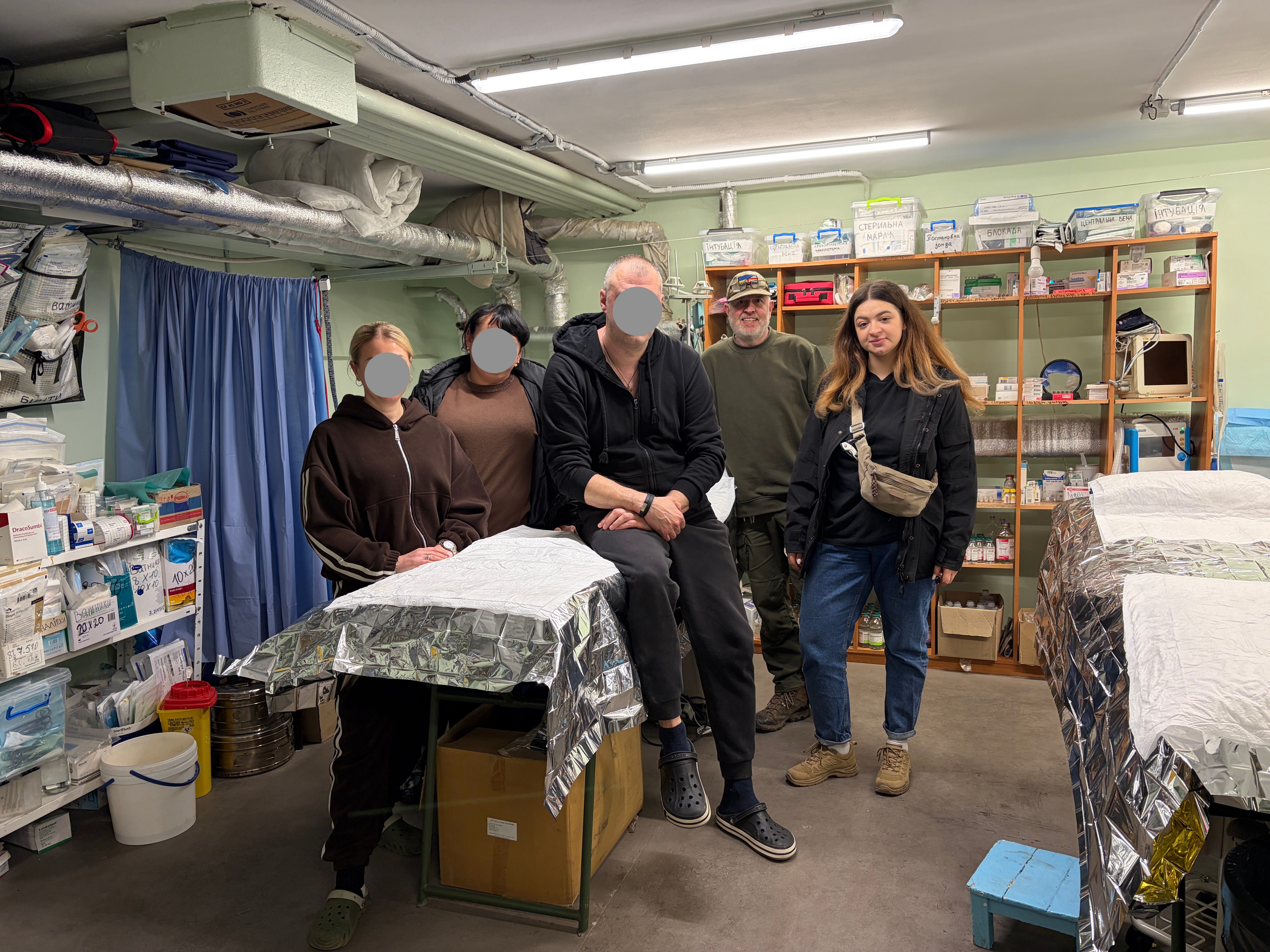
We arrive at a 26th brigade stabilisation point in the village of Zolochiv. Here, soldiers are brought from the front lines for emergency treatment before being sent on to hospital in Kharkiv. Medics are pleased to receive the delivery of blood pressure monitors plus several boxes of wet wipes, bandages and adult nappies.
One of the medics, Lena, is happy to give me a tour. She tells me that patients are received on the ground floor (above) but quickly taken downstairs for whatever emergency treatment is required or possible.
Lena: In March last year we had a lot of incoming, so we went down to the basement, and this is our stabilisation point. We work here for long periods. We have an autoclave, a steriliser, we were given them by French volunteers and they’re great.
Ivan the commander now turns up. I attempt to shake hands with him over a threshold, which he reminds me is bad luck as he leaps nimbly through the door. (Too late. Hopefully in a frontline hospital the extra bad luck won’t register.)
No patients today?
Ivan: They’re gone. We send them straight to Kharkiv. They don’t stay here, that’s not feasible. If we’re lucky we won’t have any more wounded today.
It’s generally about an hour or ninety minutes between arrival and evacuation. We’re given the documents, we do our work, we call a municipal ambulance or use our own.
Lena: We have four evacuation vehicles equipped with ventilators.
This looks well set up. It’s warm here in winter?
Ivan: Yes, we have a generator.
Lena: We have a lad who knows how it works!
Ivan: He even made it so we have running water from the generator. And a washing machine.
Of course there is always a social element to a group of volunteers bringing aid supplies to a unit. In this situation, the British would talk about the weather. Ukrainians also talk about what falls out of the sky. Lena recounts how she went to the church with a friend at Easter. There were drones overhead and when they started falling the women dropped the bags of food they’d brought for the service and ran for the church building.
Lena: Honestly I never thought I’d love rain so much. But when there’s rain, there’s no drones flying around. Fog, rain, wind, I love it.
Ivan has his phone out. It’s Easter Sunday, and as you may have heard in the news, there is an Easter ceasefire! Ivan reads reports from a Telegram group…
Ivan: Today, 8.30 am: a Molnia [drone] hits the village of Klynova-Novoselivka.
8.55 am: Strike on a shop in Zolochiv, a woman and a man suffer acute stress reactions.
9.05 am: A Molnia hits a farm building in Zolochiv.
9.55 am: Another strike on Zolochiv.
10.45 am: A Molnia strikes Klynova-Novoselivka.
11.05 am: A Gerber hits Zolochiv, damaging a farm building.
12.00: A third Molnia hits Klynova-Novoselivka.
12.05 am: A fourth Molnia hits a farm building in Zolochiv.
That’s all so far!
Everyone laughs.
Lena takes me outside to see the ambulance, which is also well-equipped.
Lena: We have a defibrillator, a ventilator a patient monitor, an infusometer, an oxygen concentrator. We have everything.
Where does this ambulance go?
It goes from the stabik to Kharkiv. It doesn’t go to the positions. It wouldn’t get there, it’s too big. No one goes to the positions in an ambulance. You need a ground drone for that, and another unit handles those. The unit’s combat medics go to the zero line, but mostly they try to do evacuations by ground drone.
17:00
We’re off again, this time to a house occupied by a unit of the 72nd Brigade near Stary Saltiv. They are happy to receive dozens of axes, spades and saws to help with digging and maintaining dugouts. Jack and Masha are less happy because they wish they could be bringing the guys big-ticket items such as generators and power stations… but that requires larger amounts of money than Jack and Masha are able to source in 2026.
Jack: We’ve had a relationship with 72nd Brigade for about a year. They usually come to Kharkiv to pick stuff up from us, and they can see what else we’ve got left in our warehouse and take what they need. But at the moment they’re under too much pressure. The fighting’s very active in this area, and they can’t come away from their positions.
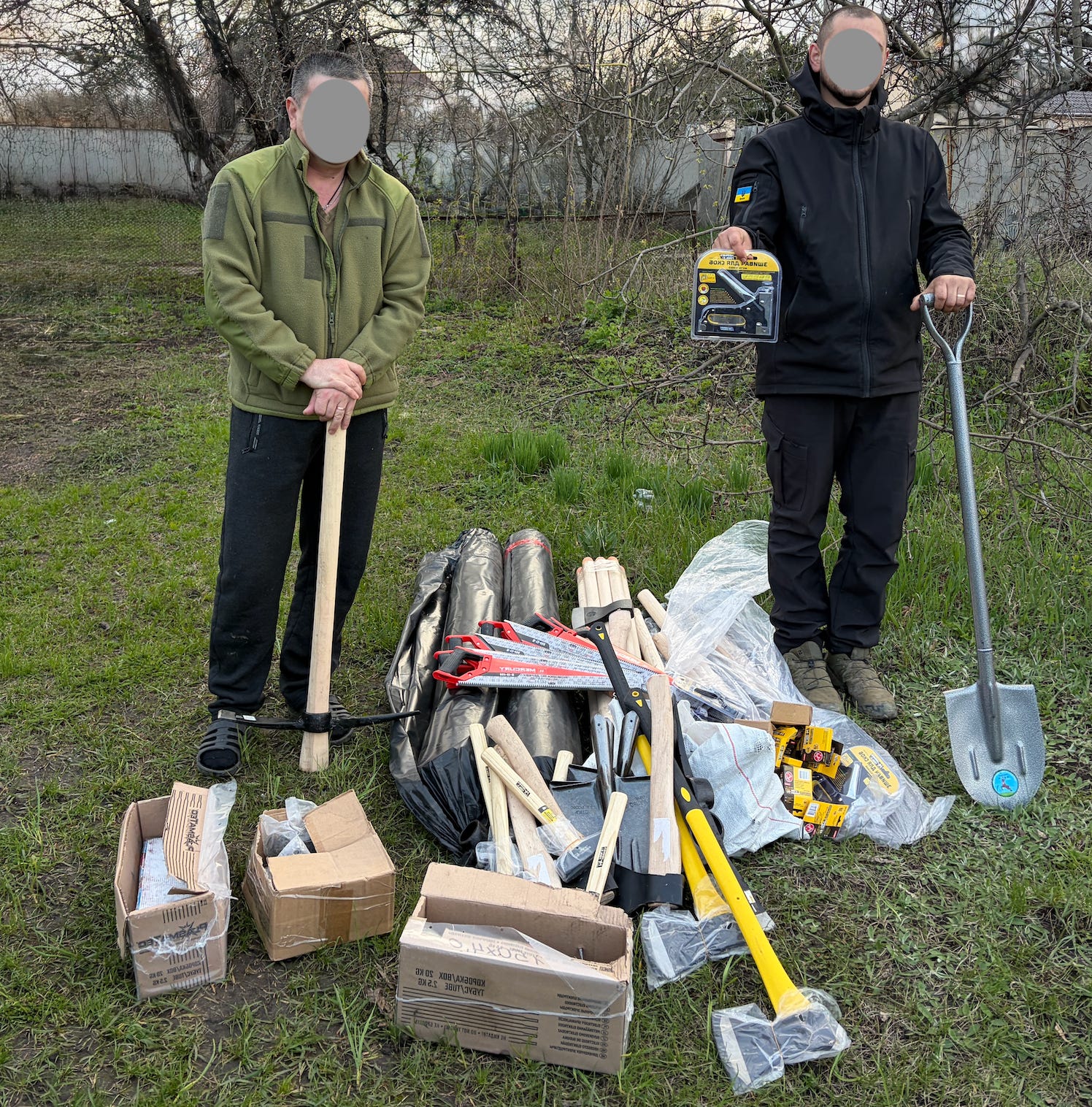
Like a lot of units, these men live in an ordinary house, rented from a family who have left for a safer area. It’s a good deal: they explain that they’re happy to be posted to Kharkiv oblast, not Donetsk, because many people in Donetsk oblast are ‘waiting for Russia’ and charge soldiers high rents.
Axes notwithstanding, the lads are in a low mood. A couple of days ago, a ‘waiter’ drone (‘waiter’ can be a person who hopes their town will be occupied by Russia, or a drone that lurks by the side of the road until the operator spots a vehicle) attacked a car from their unit. Another car was burnt out as well, causing the death of one soldier and injuring six more. Two laptops were destroyed along with them, including one the unit had received from Jack just a couple of days prior. For every one drone we launch, the Russians can launch 25, the soldiers say.
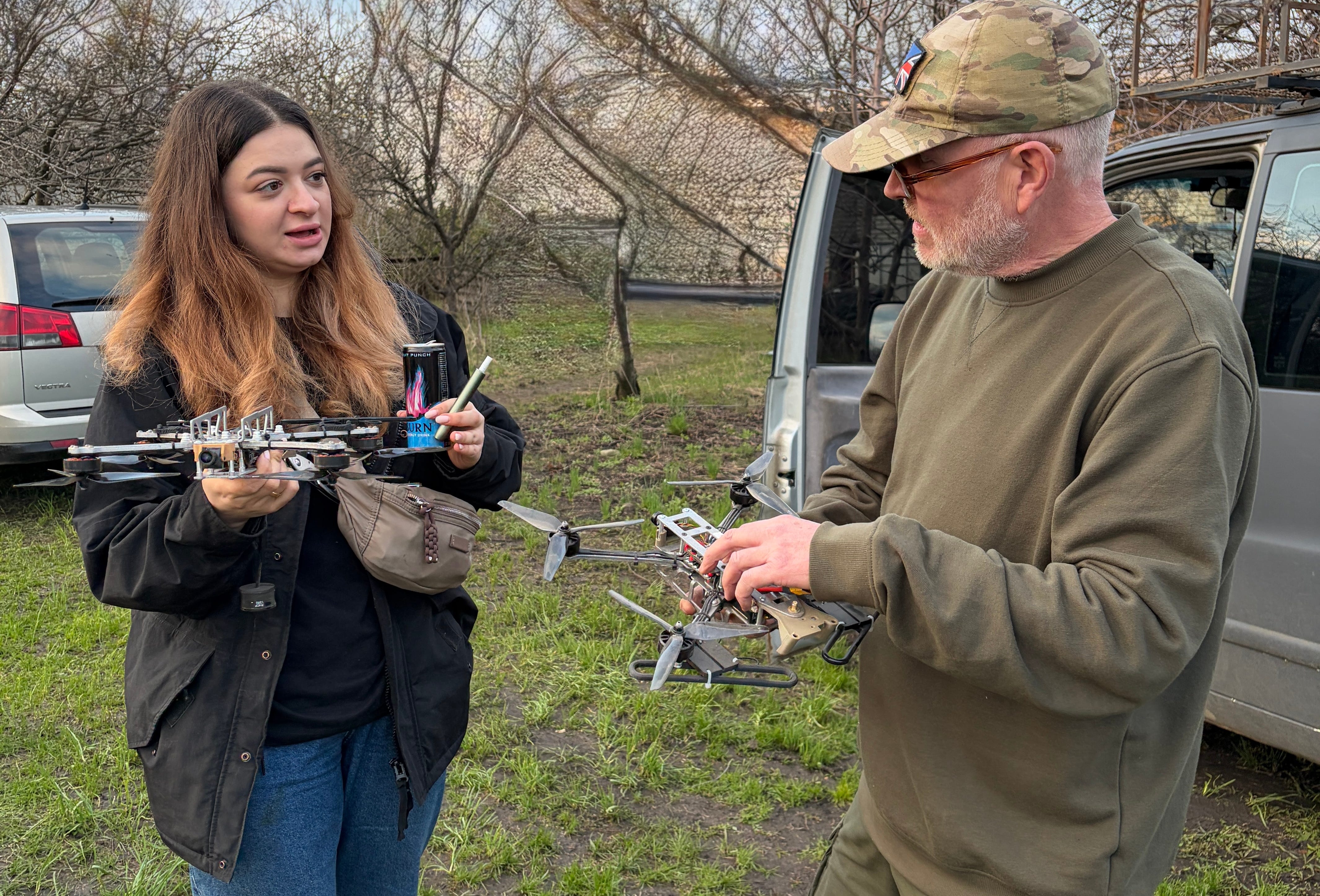
Delivering aid generally involves receiving as well as giving: it’s customary to give presents to guests. Over time, this results in a) enough thank-you certificates to wallpaper your entire base, b) enough signed flags to cover all the boards that cover the windows, c) guilt, because you want to help, not receive. Jack was initially taken aback to be offered two drones. However, the soldiers explained that these are now too old-fashioned to be of use – they are not able to carry a heavy enough payload – so Jack might as well have them to tinker with and use as spare parts for other projects.
18:40
We are on the road to our final destination of the day, the house currently occupied by an officer Jack describes as equivalent to a Company Sergeant Major in the UK: the unit’s Senior Non-Commissioned Officer, the link between the officers and the men, overseeing the right people and the right equipment being in the right place at the right time.
The road in question is a typical back road in an eastern oblast: rough, potholed and now covered with nets to (try to) prevent Russian FPV drones from dive-bombing vehicles. The screen of our drone detector is flashing at the bottom of the video. The lack of a clear picture means there is nothing close.
Jack has to tear along at Zhorzhik’s maximum speed. This is not good for him. The challenge is to balance speed and drone exposure time without causing excessive damage or losing control, but sometimes it seems like every time he hits a pothole, something else falls off. There is a box in the back full of random bits that are hopefully not important, mostly springs and plug socket covers.
Five seconds into the video you can see dragons’ teeth: triangular concrete blocks designed to impede tanks. There are now dozens of lines of dragons’ teeth parallel to the existing frontlines: fallback defences.
Coming in Part 2: We do not get lost in a field, but judiciously call someone before we are lost, which is a significant difference. Meanwhile, black humour continues to sustain Ukrainian sanity against all odds.
Donations are welcomed at at Jack’s buymeacoffee page or Masha’s PayPal at kabanetsmariya@gmail.com. All money goes to buying supplies for the army, or for keeping Zhorzhik upright to deliver them.
Please consider subscribing, to receive posts direct to your inbox.
Comments
Nothing yet. Say the first thing.
Sign in to join the conversation.