
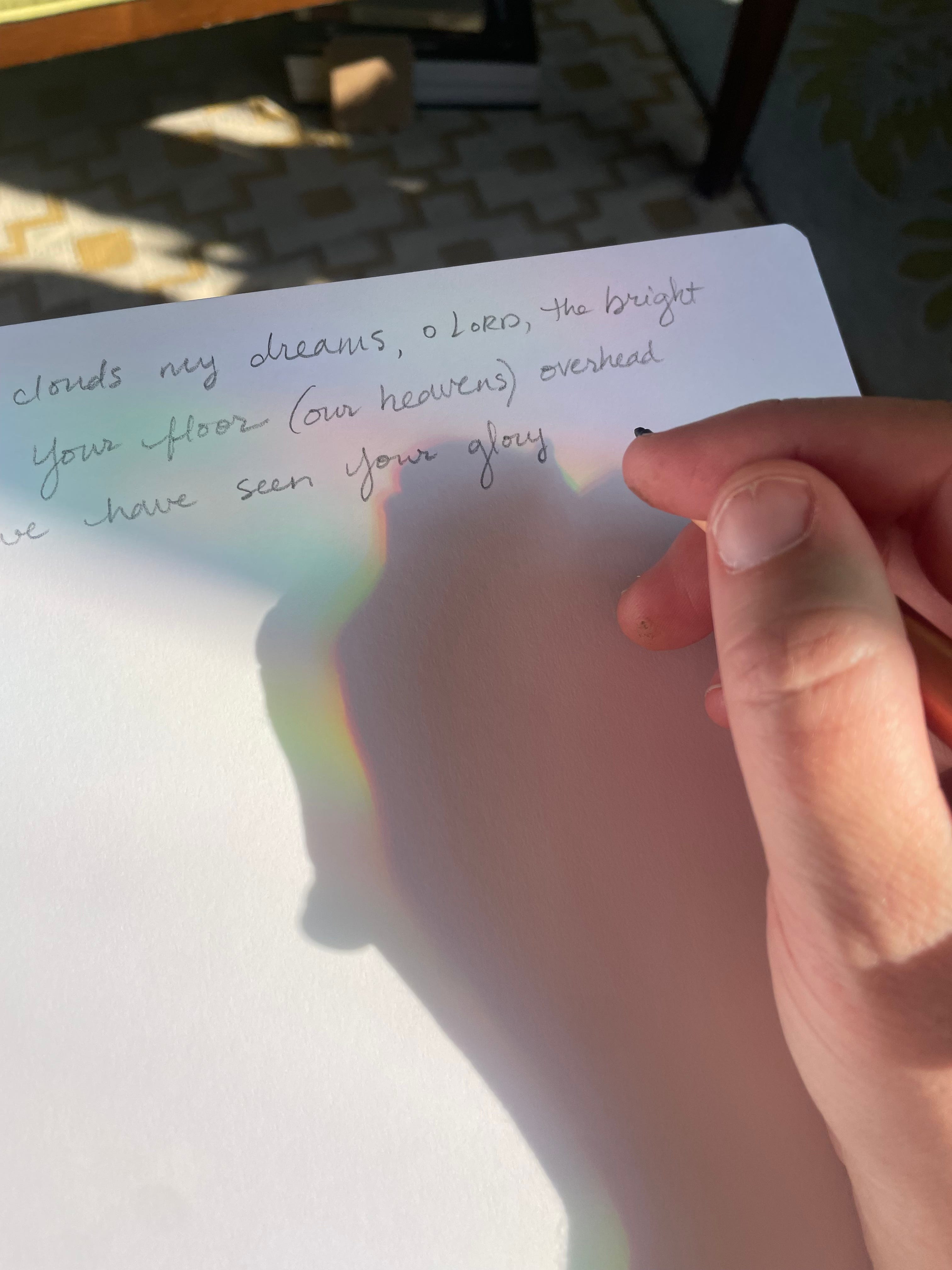
Hello kind readers and potentially grumpy readers, I have no idea where you’re at this morning. But you are reading a bit of poetry in your inbox and for that I am so thankful. Having just completed my taxes, I realize afresh how absurd it is to be a freelance Poet. But y’all, I am convinced. So I carry on, and your encouragements (a new paid subscriber! Thank you!) and comments and even critiques mean a great deal to me.
I’m working on this epic, about Aaron, Moses’ big brother by three years. My brother is also three years older than me, maybe that’s part of my interest. And my mother had a stillborn son named Aaron (my other big brother), so no doubt that is also in my heart as I labor these small words into all their white space.
But you longterm readers will know it’s also part of a larger project of mine — An Overness — a poetic exploration of all the ways the Bible reveals God as “up” or “over” us. The directionality intrigues me. You can start the journey here, if you’re interested. All the mountain encounters are where I’ve been hanging out for a while. And when it comes to Aaron, from the meaning of his name, to his final breath, this man had a lot to do with mountains, so he gets a prominent place in An Overness.
I shared the first 2 parts of this Aaronic epic about a month ago, and I believe the Rabbit Room’s Poetry Substack will soon share that beginning sequence as well. But today I’ve got the next 2 sections for you. I really want to share the next 4 parts, but I’m going to restrain myself and let it be a slow burn.
So little is said about Aaron in the Bible and yet the more I spend time searching out the bits of revelation related to him, the more I come back to that first line of this whole epic —
Come to love Aaron
whose first appearance
included a kiss.
Wondering about that kiss? Exodus 4:27. This seems to be driving me onwards — I want to “come to love Aaron” not because I think that’s the way to read the Bible — every story as prescription, rather than receiving that which is description. Plenty of Aaron’s actions are jacked up. Of course the golden calf fills most folks’ imaginations (we will come to that), and the time he and his sister came to Moses to say “hey you’re not the only prophet around here,” but there are other things said about him, too. Like every single person in the Bible that you study and wonder about and try to listen to in the text, Aaron is a complex human. A faithful man, the first High Priest, who loses two sons to God’s wrath, and finally is beckoned up a mountain to die. “Moses and Aaron” get mentioned together a lot, but then he seems to disappear from the text for great stretches of time. Why? Come and wonder with me through this epic.
Text within this block will maintain its original spacing when published
III.
The mouthpiece of Moses (hear him out-
maneuver Pharaoh), staff-in-hand (watch the snake
devour at his command) — he is the someone else
his brother begged God for
— beside him in the fear of Egypt,
beside him in the great Exodus,
beside him leading men and women
into the Desert of Sin. What becomes
of him?
IV.
We’d better not miss the meal on Mt. Sinai —
the pillars, the elders, the sprinkling of blood.
Aaron and his sons, Nadab and Abihu,
saw God. And they ate. And they drank.
Let every reader pause here. Please. We rush
to the calf made of gold — bright
ridiculous lie — and we lose
The significance of this: God set the table.
God beckoned him up to a feast, friend, heaven
on earth! This Aaron lifted a glass.
Here's a voice recording of the poem:0:00
-1:22
Further up & further in,
Anna
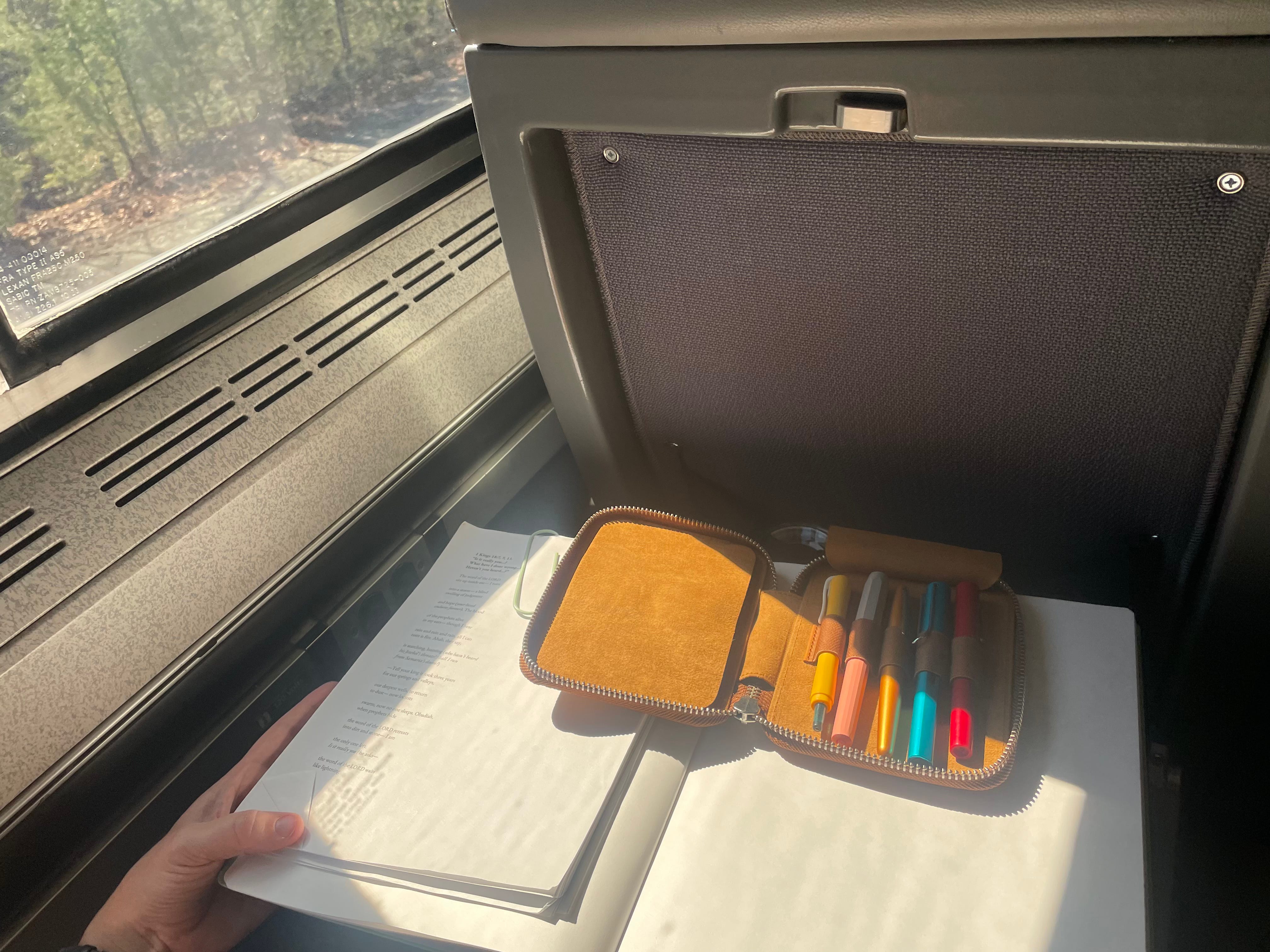
Comments
Nothing yet. Say the first thing.
Sign in to join the conversation.