
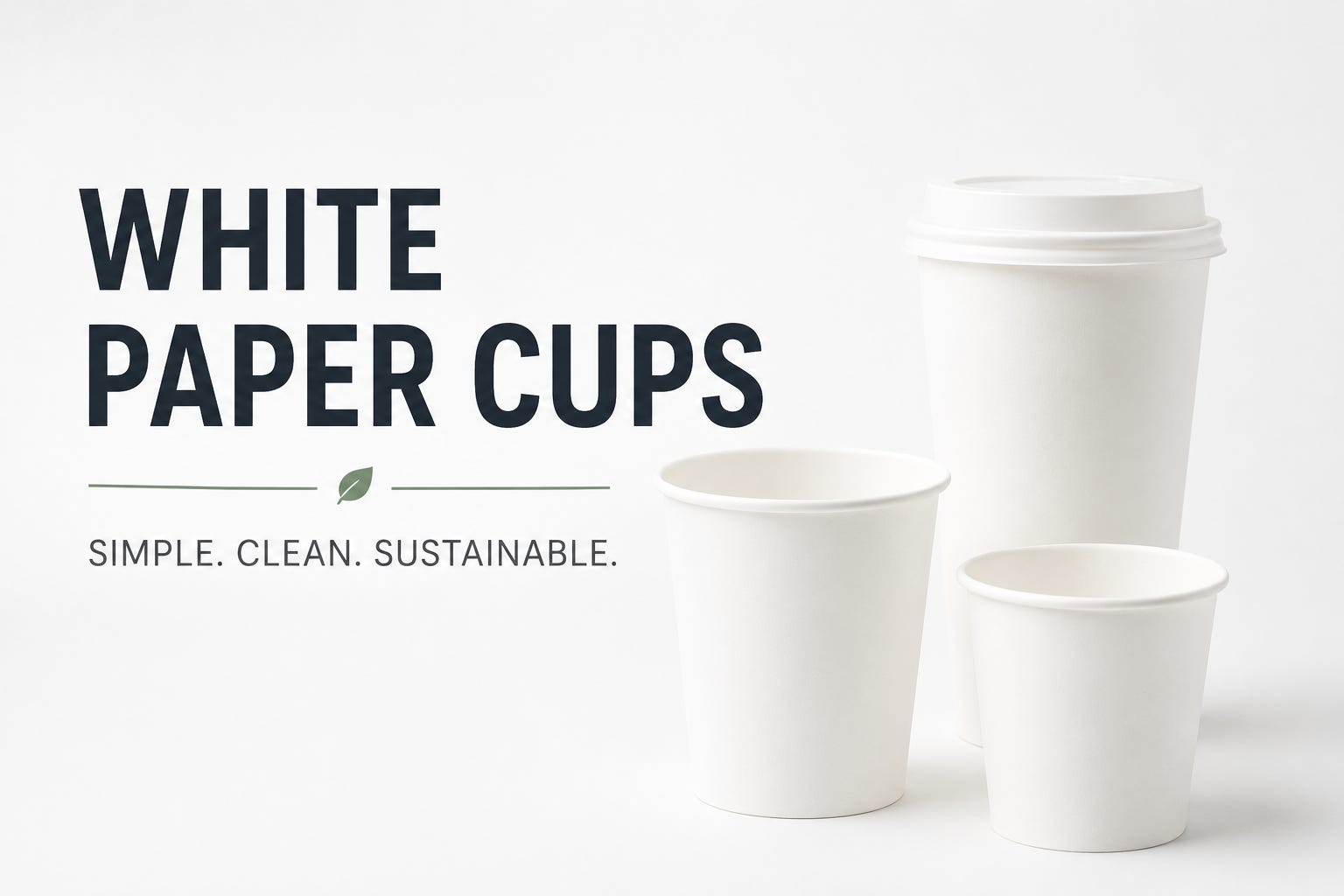
In the hyper-competitive Indian food and beverage sector, maintaining profit margins is a daily battle. Consequently, many cafe and QSR owners attempt to cut overhead by purchasing the cheapest white paper cups available in bulk.
However, saving a fraction of a rupee on basic packaging often triggers a disastrous chain reaction. A single cup that collapses, leaks boiling coffee onto a customer’s laptop, or fails to keep a beverage insulated can instantly destroy your hard-earned reputation. One negative Google review regarding a burned hand will cost your business significantly more than a year’s savings on budget supplies.
Fortunately, understanding the structural engineering behind food-grade packaging changes everything. In this guide, we will expose the hidden manufacturing flaws of bargain-bin cups and explain how investing in proper structural integrity protects both your customers and your bottom line.
Quick Answer:
What are the quality issues with cheap paper cups?
Cheap white paper cups frequently suffer from low GSM (thickness), poor ultrasonic bottom seam welding, and uneven rolled rims. These structural defects lead to rapid heat transfer, sudden leaks, and pop-off lids, ultimately causing customer dissatisfaction, increased operational waste (double-cupping), and severe damage to a restaurant’s brand reputation.
To understand why budget supplies fail, you must understand how a paper cup is manufactured. The quality of any beverage container comes down to three primary factors: paperboard thickness, lining material, and seam welding.
When you order highly discounted plain white paper cups from unregulated bulk suppliers, manufacturers have to cut corners to offer those rock-bottom prices.
The thickness and rigidity of paperboard are measured in GSM. Premium cups utilize 250 to 300+ GSM paperboard, ensuring the cup remains firm even when filled with 90°C liquids.
In contrast, budget suppliers often use 150 to 190 GSM paper. When this thin paper absorbs the ambient moisture of a hot beverage, the structural integrity of the cup compromises within minutes. This results in the cup becoming soft, squishy, and hazardous to hold.
When structural integrity is compromised to save manufacturing costs, the end-user—your customer—pays the price. Here are the five most common failures associated with low-tier packaging.
The most critical part of a cup is the bottom seam, where the base disc meets the cylindrical wall. Premium cups use precision ultrasonic welding or high-grade heat sealing to bond the Polyethylene (PE) or Polylactic Acid (PLA) lining. Cheap alternatives use outdated, inconsistent heat presses. When exposed to hot liquids, this weak seal softens, leading to sudden, catastrophic leaks from the base.
If you run a cafe, serving espresso or chai in budget white paper hot cups is a massive operational risk. Because the paper is too thin (single-wall construction), heat transfers instantly to the exterior. Customers cannot hold the cup without burning their fingers, leading to frustration before they even taste your product.
The top rim of the cup must be perfectly curled to create a tight, snap-on seal with plastic or sugarcane lids. Low-quality manufacturing results in uneven, flattened, or loosely rolled rims. Consequently, lids fail to secure properly, popping off easily during a customer’s commute.
High-quality food-grade paperboard undergoes rigorous purification. Cheap alternatives sometimes use lower-grade recycled pulp or inferior PE plastic linings. When boiling water hits these cheap linings, it releases a faint chemical odor, instantly ruining the flavor profile of your specialty coffee or tea.
Cold beverages are just as demanding as hot ones. Iced coffees create heavy exterior condensation. If the cup lacks a proper dual-sided aqueous or PE coating, the paper absorbs the external moisture. Within twenty minutes, the cup loses its rigidity and collapses under the pressure of the customer’s grip.
Many business owners believe they are outsmarting the system by buying cheap cups. However, the operational reality on the cafe floor tells a very different story.
Because cheap white disposable coffee cups fail to insulate heat, baristas are forced to “double-cup”—placing one cup inside another so the customer can hold it. Let us look at the actual math:
Packaging MetricCheap Single-Wall CupPremium Double-Wall CupBase Cost Per Unit₹1.20₹2.00Cups Used Per Drink2 (Due to heat transfer)1Actual Cost Per Drink₹2.40₹2.00Customer ExperienceClunky, looks unprofessionalPremium, sturdy, comfortableWaste GeneratedDouble the landfill massStandard single unit
By trying to save ₹0.80 per unit, you are actually losing ₹0.40 on every hot beverage sold. Furthermore, you are doubling your inventory storage requirements and contributing heavily to environmental waste.
As a packaging consultant, I frequently audit restaurant supply chains. In late 2024, I worked with a growing bakery chain in Mumbai experiencing a high volume of takeaway complaints.
Management assumed their delivery aggregators were mishandling the orders. We conducted an internal audit and traced the issue entirely to their procurement of generic white paper coffee cups.
The Findings:
Over 12% of deliveries arrived with minor to severe leaks.
The cafe was issuing refunds for approximately ₹15,000 worth of damaged orders monthly.
Staff were using an average of 1.6 cups per hot order to prevent customer burns.
The Solution:
We transitioned their inventory from a generic 180-GSM supplier to an FSSAI-certified, 280-GSM double-walled cup manufacturer.
The Result:
Within thirty days, delivery spill complaints dropped by 98%. The staff completely abandoned the practice of double-cupping. Most importantly, despite the new cups costing ₹0.60 more per unit, the complete elimination of product refunds and wasted secondary cups resulted in a net operational saving of ₹8,500 per month.
[Source: F&B Operations & Packaging Audit Case Study, 2025]
Protecting your business requires looking past the wholesale price tag. When sourcing packaging, you must prioritize structural safety.
Always ask suppliers for their GSM specifications, FSSAI compliance certificates, and details regarding their seam-welding technology. Moving away from the cheapest tier of plain white paper cups is not an expense; it is a critical risk management strategy for your brand.
1. What is the ideal GSM for a hot beverage paper cup?
For hot beverages without a cardboard sleeve, a minimum of 250 GSM is recommended for single-wall cups, though 280-300 GSM is ideal to prevent structural collapse and heat transfer.
2. Why do cheap paper cups leak from the bottom?
Leaks occur when the ultrasonic seal or heat press fails to properly fuse the cylindrical wall to the bottom disc. Cheap manufacturers rush this heating process, leaving microscopic gaps that expand when exposed to hot liquids.
3. Are all white paper cups lined with plastic?
Traditionally, yes. Most standard cups use a thin Polyethylene (PE) lining to prevent the paper from absorbing the liquid. However, modern sustainable alternatives now use biodegradable Polylactic Acid (PLA) or water-based aqueous coatings.
4. How can I test the quality of a paper cup before buying in bulk?
Request a sample batch. Fill the cup with 95°C water and let it sit for 30 minutes. Squeeze the middle of the cup gently to test rigidity, check the bottom seam for moisture, and test how securely the lid snaps onto the rolled rim.
5. Does double-cupping actually cost my cafe money?
Yes. Double-cupping essentially doubles your packaging cost per transaction. It is always more cost-effective to buy one slightly more expensive, high-quality double-wall cup than to use two cheap single-wall cups.
Choosing the right packaging is a fundamental pillar of operational success. While the upfront savings of cheap white paper cups may look attractive on a spreadsheet, the hidden costs of seam failures, rapid heat transfer, and deformed rims quickly consume those margins.
Every time a cup leaks or burns a hand, your brand equity takes a direct hit. By upgrading to thicker, structurally sound paperboard with reliable sealing technology, you eliminate operational waste, protect your customers, and safeguard your brand’s reputation. Stop letting poor-quality packaging drain your profits. Audit your cup supply today, request high-GSM samples, and make the switch to a vendor that prioritizes structural integrity.
No posts
Comments
Nothing yet. Say the first thing.
Sign in to join the conversation.