
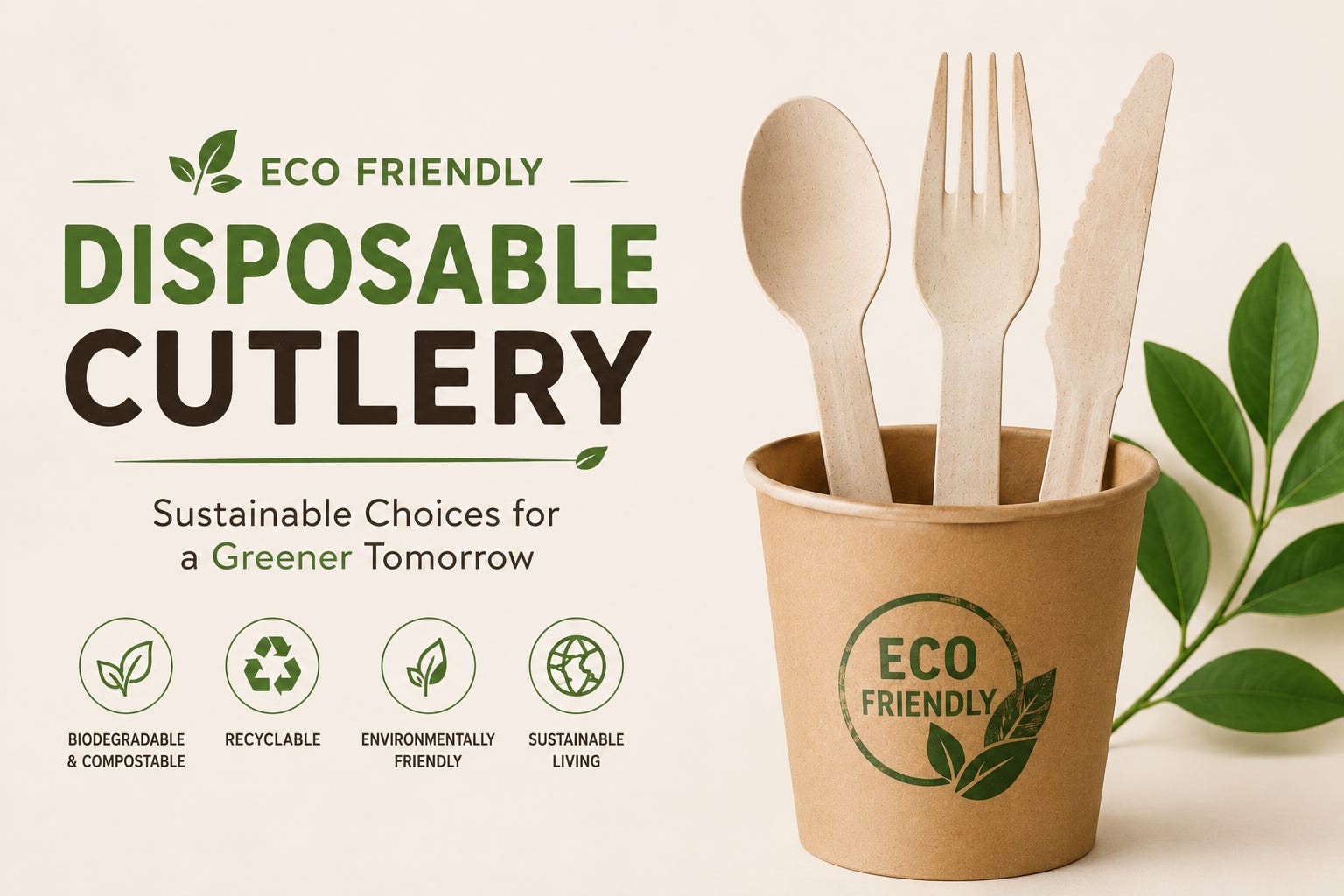
As a business owner in India’s fast-evolving food and hospitality sector, navigating the post-single-use-plastic ban era is incredibly challenging. Choosing the wrong disposable cutlery can ruin your customer experience with soggy forks or inadvertently violate Central Pollution Control Board (CPCB) guidelines.
If your brand provides utensils that bend under pressure or fail to degrade as promised, you risk both regulatory penalties and severe brand damage from eco-conscious consumers.
Fortunately, transitioning to sustainable dining doesn’t have to be a regulatory minefield or an operational headache. This comprehensive strategic guide breaks down the operational, financial, and environmental differences between paper, recyclable, and compostable alternatives so you can confidently select the perfect solution for your business.
What is the most sustainable disposable cutlery for businesses?
The most sustainable disposable cutlery depends heavily on your region’s waste management infrastructure. Compostable cutlery (made from PLA or bagasse) is ideal for commercial composting setups. Paper cutlery suits dry or quick-consumption meals, while recyclable cutlery works best where robust, closed-loop recycling systems exist.
The Evolution of Eco Friendly Disposable Cutlery in India
In recent years, the Indian food service market has witnessed a massive paradigm shift. Following the Ministry of Environment, Forest, and Climate Change ban on identified single-use plastics, businesses have rushed to find alternatives. However, many procurement managers fall into the trap of greenwashing, purchasing products labeled “eco-friendly” without checking verified certifications.
To maintain compliance and delight customers, you must understand the exact material sciences behind your options. Choosing high-quality eco friendly disposable cutlery is no longer just about public relations; it is a fundamental pillar of modern operational compliance and customer retention. Let’s look at the three primary categories shaping the industry today.
Paper Cutlery: Analyzing Pros, Cons, and Best Use Cases
Material Profile and Structural Integrity
Paper cutlery has emerged as a highly visible alternative, especially for quick-service restaurants (QSRs) and delivery-first food brands. Modern manufacturing utilizes compressed, food-grade paperboard coated with water-based barriers to prevent moisture absorption.
Operational Advantages for Food Businesses
The primary benefit of paper-based utensils is their high customization potential. Brands can easily print logos using soy-based inks, turning a simple utensil into a marketing touchpoint. Furthermore, it is exceptionally lightweight, reducing shipping costs when ordering in bulk.
The Limitations of Paper Utensils
However, paper options face structural issues when exposed to high temperatures or liquids over extended periods. A premium hot ramen or a heavy biryani can cause paper spoons to soften, directly degrading the customer experience. Therefore, it is best to reserve these for dry items, desserts, or rapid-consumption settings.
Recyclable Cutlery: The Infrastructure-Dependent Alternative
Understanding the Circular Economy Model
Recyclable cutlery typically consists of specific, high-purity polymers like Polypropylene (PP) or Polyethylene Terephthalate (PET) that local recycling units accept. Unlike banned single-use plastics, these items are designed with sufficient density and thickness (often exceeding 100 microns) to enter the circular economy.
Why Waste Infrastructure Matters in India
For a recyclable cutlery system to work, it requires clean segregation. If your restaurant operates within an airport, a corporate tech park, or a closed mall with strict waste-sorting bins, this option is highly effective. However, if your business relies on open municipal collection, these items often end up in landfills, defeating their ecological purpose.
Compostable Cutlery vs. Biodegradable Cutlery: Demystifying the Terms
Breaking Down the Commercial Terminology
Many suppliers use the terms biodegradable cutlery and compostable cutlery interchangeably, creating massive confusion for B2B buyers. To protect your business from compliance issues, you must know the core operational differences.
Biodegradable Cutlery: This term refers broadly to materials that break down via biological processes over an unspecified timeframe. Without proper standards, some products labeled “biodegradable” merely break into harmful microplastics.
Compostable Cutlery: This is a strictly regulated subset. True compostable items must disintegrate into nutrient-rich biomass within a specific timeframe (usually 90–180 days) under industrial composting conditions, leaving zero toxic residue behind.
Certifications to Demand from Wholesalers
When sourcing biodegradable cutlery wholesale, always demand certifications matching Indian standard IS/ISO 17088. Look for approval from the CPCB or the Central Institute of Petrochemicals Engineering & Technology (CIPET). Without these certifications, your business could face hefty fines during local municipality inspections.
Strategic Comparison of Environmentally Friendly Disposable Cutlery
To help you map your procurement strategy, let’s compare these materials across cost, durability, heat resistance, and end-of-life disposal.
MetricPaper CutleryRecyclable Cutlery (PP/PET)Compostable Cutlery (PLA/Bagasse)Heat ResistanceLow to Medium (Up to 60°C)High (Up to 100°C)Very High (Up to 120°C for Bagasse)Tensile StrengthLow (Flexes under pressure)High (Rigid and durable)High (Feels like traditional plastic)Best ForDesserts, dry snacks, cafesCorporate cafeterias, closed venuesPremium dining, hot gravies, cateringCPCB ComplianceFully CompliantCompliant if >100 micronsFully Compliant (Requires IS 17088)Relative CostMediumLow to MediumHigh
Using this matrix allows procurement managers to select the exact tool required for their specific menu profile, preventing capital waste on over-engineered packaging. Choosing the right environmentally friendly disposable cutlery comes down to balancing your menu’s physical needs against your operational budget.
Sourcing Smart: Buying Compostable Cutlery Bulk and Wholesale
Financial Planning for Scale
Transitioning to sustainable serving solutions can increase your packaging budget by 15% to 40% compared to legacy plastics. To mitigate this impact, purchasing compostable cutlery bulk quantities is essential. Establishing direct contracts with verified Indian manufacturers reduces per-unit costs significantly and stabilizes your supply chain against seasonal shortages.
Special Event Planning: Large-Scale Catering
High-end catering and event planning demand premium aesthetics. Using a flimsy utensil at a luxury event can ruin the entire ambiance. Sourcing a premium, heavy-duty disposable cutlery for wedding events—such as birchwood or CPCB-certified C-PLA—enures that guests enjoy heavy Indian cuisines (like mutton gravies or dense halwas) without structural failures.
Case Study: How an Indian QSR Chain Saved 22% on Sustainable Packaging
During my 15 years as an SEO and operational content strategist for the F&B sector, I collaborated with a regional cloud kitchen network across Mumbai and Pune. They initially switched blindly to generic wooden spoons, resulting in a spike in negative customer reviews complaining about a “woody taste” ruining their premium ice creams.
By analyzing their menu, we split their procurement strategy into two distinct channels:
They implemented lightweight, branded paper spoons for cold desserts and ice creams.
They acquired certified compostable cutlery bulk setups exclusively for their hot, heavy biryanis and curries.
This targeted allocation restored their delivery app rating from 3.8 to 4.5. Concurrently, it reduced their overall packaging waste expenditure by 22% through volume-based contract restructuring with a verified manufacturer.
Frequently Asked Questions About Disposable Cutlery
1. Is wooden cutlery better than compostable plastic cutlery?
Wooden cutlery (like birchwood) is naturally biodegradable and highly rigid. However, it can sometimes alter the taste profile of delicate foods. Certified compostable plastic (C-PLA) offers a smooth mouthfeel and superior heat resistance but requires industrial composting facilities to break down effectively.
2. Can compostable cutlery degrade in a standard Indian landfill?
No. Truly compostable utensils require specific levels of heat, oxygen, and microbial activity found only in commercial composting facilities to degrade within 180 days. In a tightly packed landfill lacking oxygen, their degradation slows down significantly.
3. How can I verify if a wholesale supplier is truly CPCB-approved?
Always ask the manufacturer for their CIPET test report and CPCB registration certificate confirming compliance with IS/ISO 17088. You can cross-verify their registration number directly on the official CPCB online portal.
4. What is the shelf life of unused compostable cutlery bulk inventory?
When stored in a dry, cool environment away from direct sunlight and moisture, high-quality compostable utensils have a stable shelf life of 12 to 24 months. Ensure your storage area does not experience extreme humidity during the monsoon season.
5. Why is eco-friendly cutlery more expensive than traditional plastic?
The higher price stems from the cost of raw sustainable materials (like cornstarch PLA or sugarcane bagasse) and specialized manufacturing processes. However, as production scales across India and consumer demand rises, wholesale prices continue to normalize.
Final Strategic Takeaway for Business Owners
Choosing the ideal eco-friendly solution requires balancing your menu’s physical demands, your operational budget, and local waste disposal realities. Never sacrifice user experience for a generic “green” label. Invest in high-quality, certified materials that protect both the planet and your brand’s hard-earned reputation.
Ready to optimize your supply chain with compliant, premium table setups? Contact our commercial procurement team today to receive tailored samples of a high-performance disposable cutlery set designed to elevate your food service business.
Comments
Nothing yet. Say the first thing.
Sign in to join the conversation.