
The beagles rescue trials were always about more than the act of rescue. At their heart lies a deeper question, one that every society must confront sooner or later:
What do we do when the law permits something that goes against our universal basic morality?
In the minds of most people in Britain, this nation of animal lovers, dog testing is a relic of the past. The image that lingers in our national memory is the “smoking beagles”: dogs lined up and industrially restrained, forced to wear oversized gas masks and inhale a never‑ending supply of cigarette smoke. That image is remembered as part of a darker scientific era.
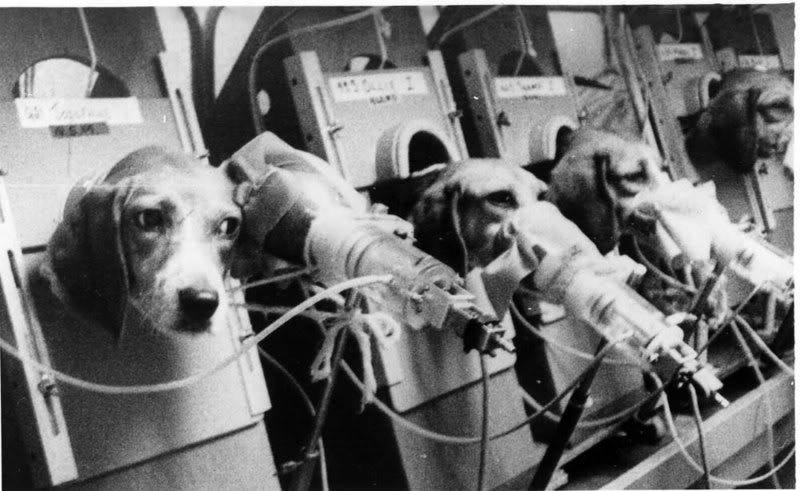
Campaigns in the 80s and 90s drew public outrage, and governments made loud pronouncements to make us think change had happened. They spoke about their commitment to phase out animal testing, but the reality never matched the rhetoric.
Despite clear government commitments to reduce and replace animal testing, millions of animals, including the puppies we rescued, are still used in experiments. The number of procedures today remains at 1990s levels. The promised shift simply did not happen.
The Blair government was elected on a pledge to conduct a Royal Commission on animal testing, but, as is all too common in our broken democracy, went back on it. Barry Horne went on hunger strike to the death to hold them to their promise, and still the industry continued. Huntington Life Sciences (or “Huntingdon Animal Cruelty”) rebranded to Labcorp and slipped out of public consciousness. And in the absence of public drama, people assumed the problem must have been solved.
I remember first discovering MBR Acres. I knew animal testing still happened, but I had no idea they were still testing on dogs. I love all animals, and I believe in animal equality, but testing on dogs felt like a step too far in a society where dogs are members of our families.
And when I went out to speak with the public on the streets, I didn’t meet a single person who thought dog testing still happened. Not one. People were shocked, genuinely shocked, to learn that thousands of beagles are still bred, experimented on, and killed every year.
Even today, ministers continue to say that the UK is “working to end animal testing,” while simultaneously designating facilities like MBR Acres as key national infrastructure in a cynical attempt to criminalise protest against them. The contradiction is stark: public reassurance on one hand, structural entrenchment on the other.
This is the quiet corruption at the heart of the system:
The public believes the cruelty has ended, the government claims it is ending, and yet the reality remains unchanged and the money keeps rolling in.
Polling from Ipsos MORI shows that only 14% of the public support testing on dogs. That is not a marginal disagreement; it is a near‑universal moral intuition. Across political lines, across generations, across regions, people feel the same: dogs should not be used in experiments.
And this extends far beyond dogs. Yougov polling shows that 70% of the public would reject the use of any animal for medical testing (imagine how high this is for pesticides!). This rejection is reflected everywhere: in the media, in public figures, in the instinctive reaction people have when they hear the words “animal testing,” and in the conversations we have on the streets, where shock turns immediately into moral clarity.
This is not a fringe concern. It is not a niche campaign. It is a mainstream moral position held by the overwhelming majority of the country.
There is a regulatory body, the Animals in Science Regulation Unit (ASRU), part of the Home Office, which provides a veneer of legitimacy and official oversight. It makes the public think the government is granting licences and therefore things must be fine.
But in reality, the system is a farce.
First, the animals themselves are stripped of legal protection.
The Animal Welfare Act, the law that protects animals from “unnecessary suffering”, explicitly excludes animals used in experiments. They are instead governed by the Animals (Scientific Procedures) Act 1986, a law designed not to protect animals but to permit their use.
Under that law, suffering is not only allowed…it is licensed.
Second, ASRU relies on self‑reporting.
Laboratories are expected to tell the regulator when they have done something wrong; they are literally expected to mark their own homework.
And when harms are reported, such as animals being left without food or water for days, ASRU responds by giving “advice.” No sanctions. No licence withdrawals. Just advice.
Third, inspections are not designed to enforce welfare.
The government employs 14 inspectors to cover millions of animals. Their own published guidance states that inspections are for “education and advice,” not enforcement. Whatever horrors they see, they do not act.
And why?
Because ASRU is funded by the industry it is meant to regulate. Its entire budget comes from the licence fees paid by the corporations running the laboratories.
The system has been bought and paid for by the very industry it oversees.
If this sounds familiar, it should; it is the same model used by the water companies, and it is why they have been allowed to pump sewage into our rivers for years.
Around 2,000 beagles a year are bred, bled, experimented on, and killed. Their organs are harvested. Their bodies are used in outdated, painful tests that many scientists themselves acknowledge are poor predictors of human outcomes.
And they are only the symbol; behind them stand millions of other animals whose suffering is hidden from public view.
This is not a minor harm. It is not a marginal issue. It is a systemic, industrialised form of suffering that persists only because it is hidden.
Every few months, hundreds of thousands sign a petition calling for an end to testing on beagle puppies. And as per procedure, a debate is called in Parliament. But it doesn’t happen in the main chamber, the one with the famous green benches and the full attendance of MPs. It is relegated to a back room. About ten MPs show up, all of them already opposed to animal testing, and they make well‑meaning but ineffectual speeches. Then the government representative arrives, reads out the same pre‑written lines about how everything will continue as normal, and the debate ends.
The will of the people is ignored; the formal channels are exhausted.
And nothing changes.
Parliament has made itself immune to the will of the people. So ordinary people are left with no choice but to step up themselves.
Back in 2014, I studied a Masters in Legal Theory at the London School of Economics, and the question that most animated me was the relationship between law, justice, and ethics. At its core, the debate asks: is law merely whatever is written down, or must it represent justice to deserve our obedience?
Law, as an ideal, is meant to serve two purposes:
Order: the need for rules to prevent chaos.
Justice: the need for laws to reflect the ordinary, decent morality of the population.
But in practice, laws often reflect power, not morality. And so the question becomes unavoidable:
What do we do when laws are unjust?
St Augustine wrote that “an unjust law is no law at all.”
Martin Luther King Jr. argued that we have not only a right but a moral responsibility to disobey unjust laws.
Crucially, civil disobedience, at its best, is not a rejection of law.
It is an expression of the highest respect for the law, grounded in the belief that law should represent what is good and just.
Recognising that law and morality can diverge does not mean that anyone should disobey any law they happen to disagree with. That would be chaos, not conscience. Civil disobedience is a last resort, a moral emergency brake, reserved for situations where three conditions are met.
First, the injustice must be serious.
Not a policy disagreement, not a minor flaw, but a profound moral wrong: the deliberate infliction of suffering on the vulnerable, the denial of basic rights, or the systemic abuse of power. The industrialised breeding, torment, and killing of thousands of beagle puppies every year — hidden from the public, protected by the state, and exempt from basic welfare laws — meets that threshold.
Second, all democratic avenues must have failed.
Petitions, debates, consultations, regulatory complaints, public pressure - all exhausted, all ignored. When hundreds of thousands sign petitions and Parliament relegates the debate to a back room; when regulators are funded by the industry they oversee; when ministers say one thing and legislate the opposite; the system is not functioning. It is stonewalling.
Third, the legal regime itself must be structurally corrupted.
Not corrupted in the sense of individual wrongdoing, but in the deeper sense that the system is built in a way that systematically protects injustice. A legal order can be democratic and still be unjust, shaped by prejudice, captured by industry, or designed to exclude the very beings whose suffering it governs. When the architecture of the law is arranged so that cruelty is permitted, oversight is hollow, and public morality is sidelined, then obedience to that system becomes complicity in its harms.
When these three conditions converge: grave injustice, democratic failure, and structural corruption, civil disobedience is not only justified.
It becomes a moral necessity.
Civil disobedience, at its best, is not about rejecting the idea of Law - it is about holding the legal order to a higher standard, a higher law rooted in universal basic morality. In the classical tradition, this higher law was often expressed in terms of divine law or natural law, the idea that there are moral truths deeper than human legislation.
The classical example comes from the ancient Greek play Antigone. In it, King Creon forbids funeral rites for Antigone’s brother, leaving his body unburied as punishment. Antigone refuses to obey. She performs the burial openly, knowing she will be punished, because she believes the state cannot override the most basic moral duties.
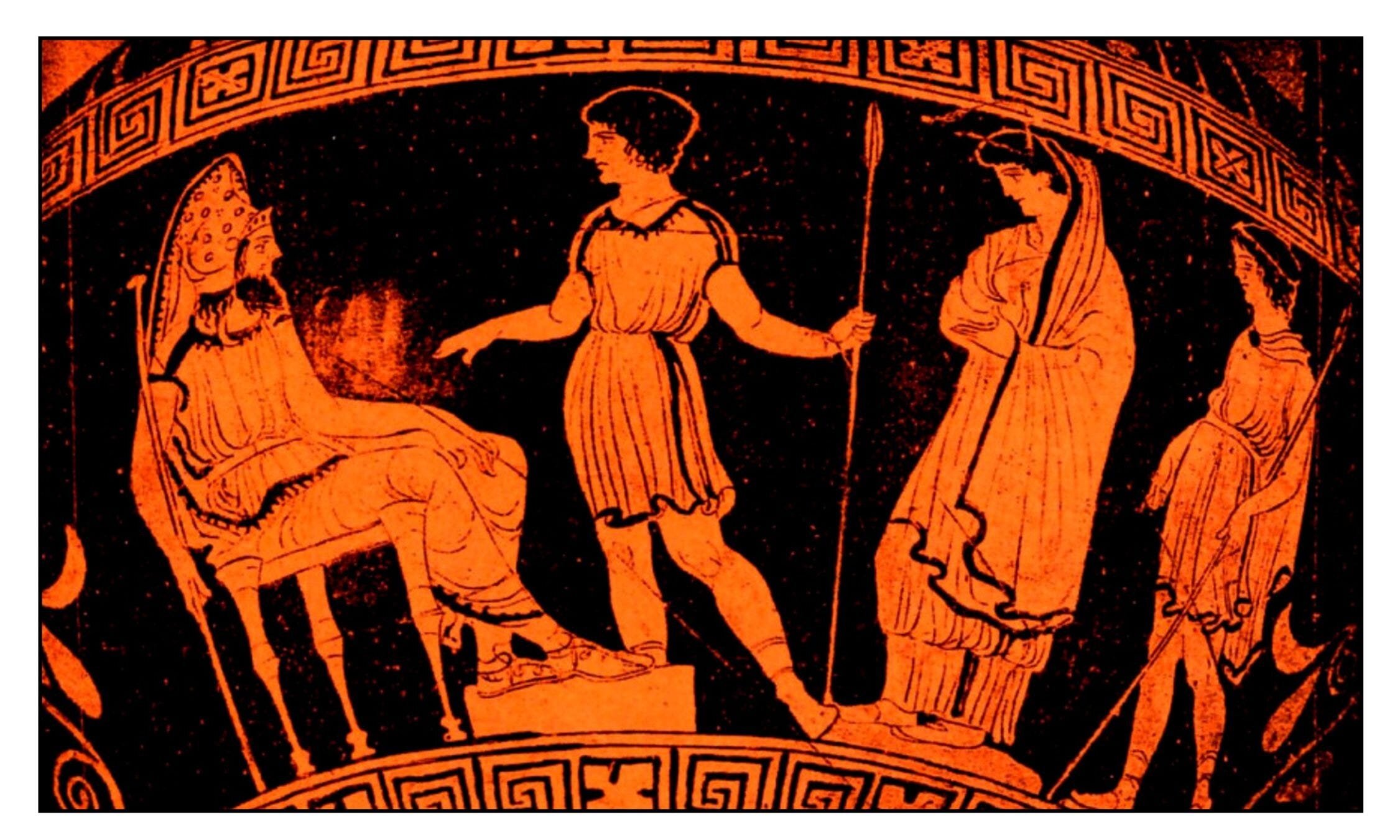
Her position is expressed in her most famous declaration of higher‑law ethics:
“I did not think your edicts strong enough to overrule the unwritten and unfailing laws of the gods.”
Creon, by contrast, represents the absolutist view of state authority — that legality itself is the highest value, even above morality. His worldview is captured in two stark assertions:
“The laws of the land must be upheld.”
“Disobedience is the worst of evils.”
This is the foundational clash at the heart of civil disobedience:
Antigone appeals to a universal moral law; Creon appeals to the supremacy of state power.
Martin Luther King Jr. made the same distinction in his Letter from Birmingham Jail, writing:
“A just law is a man‑made code that squares with the moral law. An unjust law is a code that is out of harmony with the moral law.”
Antigone and King speak across millennia with the same voice:
When the state violates basic moral truth, disobedience becomes moral duty.
This ancient tension, between law and morality, is not abstract. It is alive in every courtroom where civil disobedience is tried.
Across five trials, two juries found us not guilty, three found us guilty. In every courtroom, it was clear that the jurors morally supported rescuing the dogs. You could see it in their faces when they saw the footage. They looked sick. They understood the suffering. They understood why we acted.
But they also had to contend with the fact that we broke into a facility.
They had to reconcile their conscience with the legal framework they had sworn to uphold.
And it did not help that we were prevented from fully explaining the democratic and regulatory failures that left us no alternative. We were limited in what we could say. We could not present the full truth of how the system had failed these dogs and failed the public.
Even so, the struggle was visible.
Two not‑guilty verdicts.
Three guilty verdicts.
And in our final trial, a majority of 10–2, with two jurors visibly upset, clearly fighting hard for us.
I learned something profound through this process:
People are not found guilty only because the morality of the time lags behind. They are often found guilty because jurors feel a duty to uphold the legal order; even when they disagree with the law itself.
This became even clearer in my first Crown Court trial in November 2025, where I was tried for disrupting the Grand National with Animal Rising to protect horses. The judge, before the reached their verdict finding us not guilty, said:
“The thing about protest is, in hindsight they are often shown to be right.”
And he is correct.
Parliament Square is full of statues of people who were criminals in their time:
Mandela.
Gandhi.
The suffragettes.
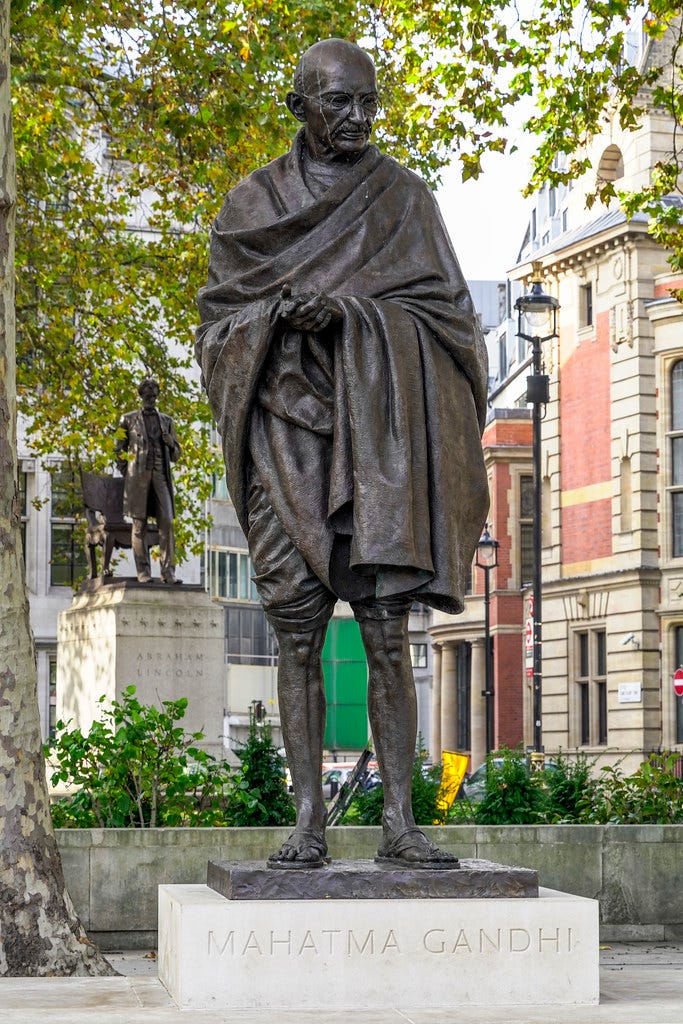
People whose moral clarity was punished by the law and later vindicated by history.
This tension… between conscience and legal order, leads directly to the next truth.
Martin Luther King Jr. taught that nonviolence requires a willingness to accept suffering without retaliation, not because suffering is noble, but because it exposes injustice and is often part of the process of creating change.
It is not martyrdom.
It is simply recognising that sacrifice is sometimes required to move society forward.
Sometimes the price of social progress is being found guilty.
Sometimes those who challenge injustice must endure consequences so that the injustice itself becomes visible.
Socrates’ unjust death helped birth Western philosophy.
Gandhi’s imprisonments helped expose the moral bankruptcy of colonial rule.
And in the most famous example in history of this dynamic, the suffering and crucifixion of Jesus at the hands of the Roman state became the catalyst through which the values of Christianity spread across continents.
And when people are punished for rescuing animals, the punishment itself becomes a spotlight revealing the moral absurdity of the system and shifting public conscience in ways that obedience never could.
Sacrifice has always been the engine of social progress.
This is why we handed ourselves in, because if we believe in acting openly and accountably, then we must stand before a jury and allow the public to judge our actions in the full light of both law and morality, rather than slip away into the night.
The classical foundation for this comes from Socrates. In Plato’s Apology, he stands before the Athenian jury, refusing to flatter them or beg for mercy. He insists on telling the truth as he sees it, even if it costs him his life:
“I shall obey the god rather than you.”
But in Crito, after being sentenced to death, Socrates refuses to escape. He argues that even when the law is wrong, one must not undermine the legal order itself:
“One must never do wrong, even in return for wrong.”
Two thousand years later, Gandhi embodied the same principle. When warrants were issued for his arrest, he presented himself voluntarily, writing:
“Civil disobedience becomes a sacred duty when the state becomes lawless or corrupt.”
And just as importantly:
“I am here to submit cheerfully to the highest penalty.”
This is why we handed ourselves in.
This is why we stood before juries.
This is why we accepted the consequences.
Not because the law was right, but because the legal order matters, and because civil disobedience must remain anchored in democratic accountability.
As I said in my closing speech to the jury:
“Whatever happens, whatever you decide, and whatever consequences I may or may not face, I will be at peace knowing that the dog I carried out of that place is living a happy life because of what we did.
To me, and to them, that is worth everything.”
The beagles rescue trials are not the end of anything. They are the beginning, not only of a reckoning with what happens inside MBR Acres, but of a deeper national conversation about how we treat all animals in our society.
Because the laws that allow animals to suffer are wrong. They go against our values as a nation of animal lovers. They go against the instincts of ordinary people, who know that causing suffering to a sentient being is not something to be licensed or hidden behind closed doors.
These trials forced that truth into the spotlight. They showed how far the law sits from morality, through the different verdicts, through the visible struggle of juries, and through the injustice of our convictions. They made clear that rescuing animals is not an act of extremism, but an act of compassion in a system that has lost its moral bearings.
Rescuing animals is the right thing to do.
Until the law recognises that, we will continue to act… openly, nonviolently, and accountably.
We will continue to challenge a legal system that denies animals even the most basic protection.
And we will continue to rescue animals from places of suffering, because their lives matter, and because justice demands nothing less.
Love and Courage,
Dan
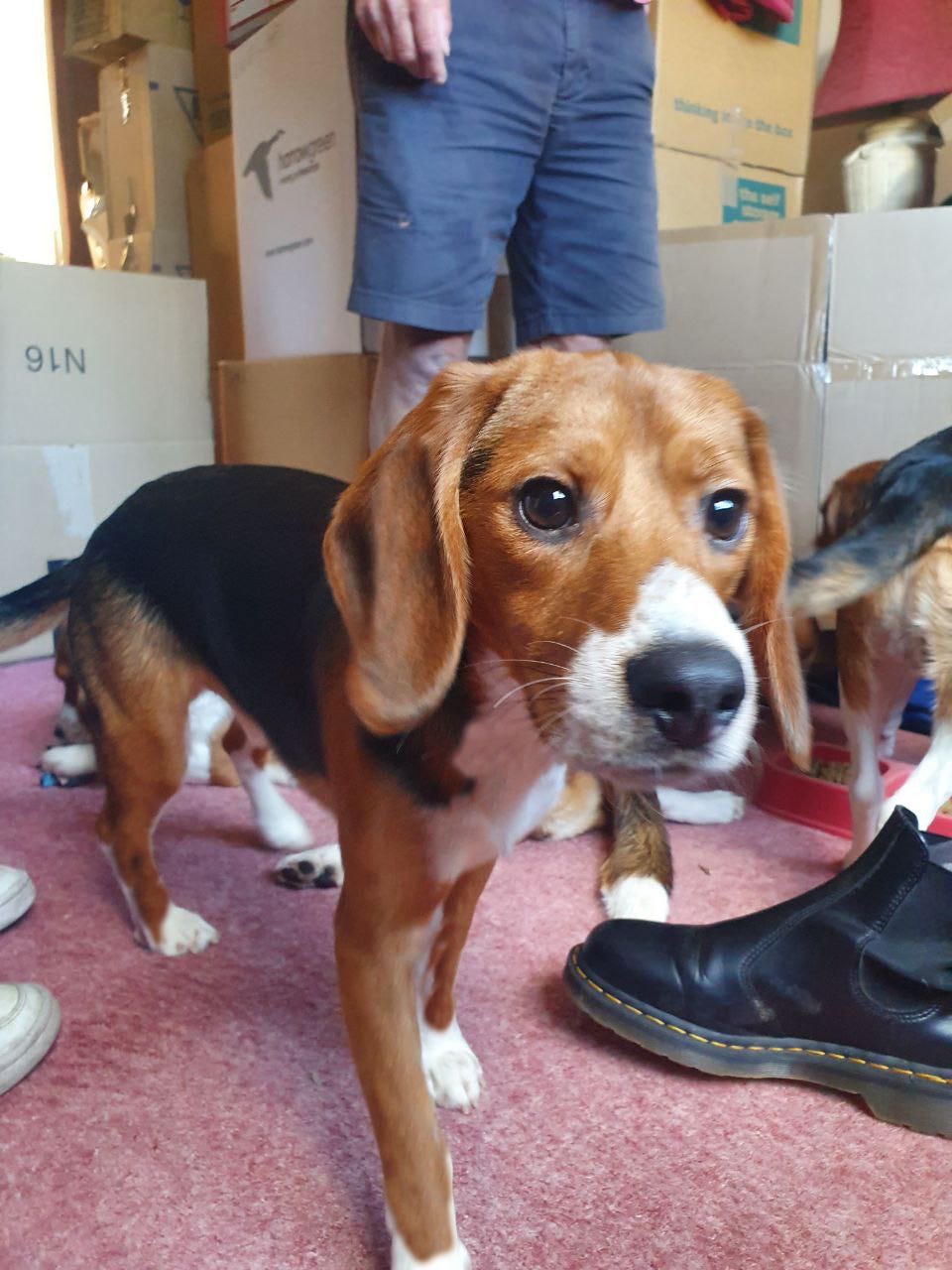
Later this year, Animal Rising activists charged with conspiracy over the Grand National protest will stand trial at Crown Court. If you want to support our action takers and campaigners facing trial, you can donate here.
No posts
Comments
Nothing yet. Say the first thing.
Sign in to join the conversation.