
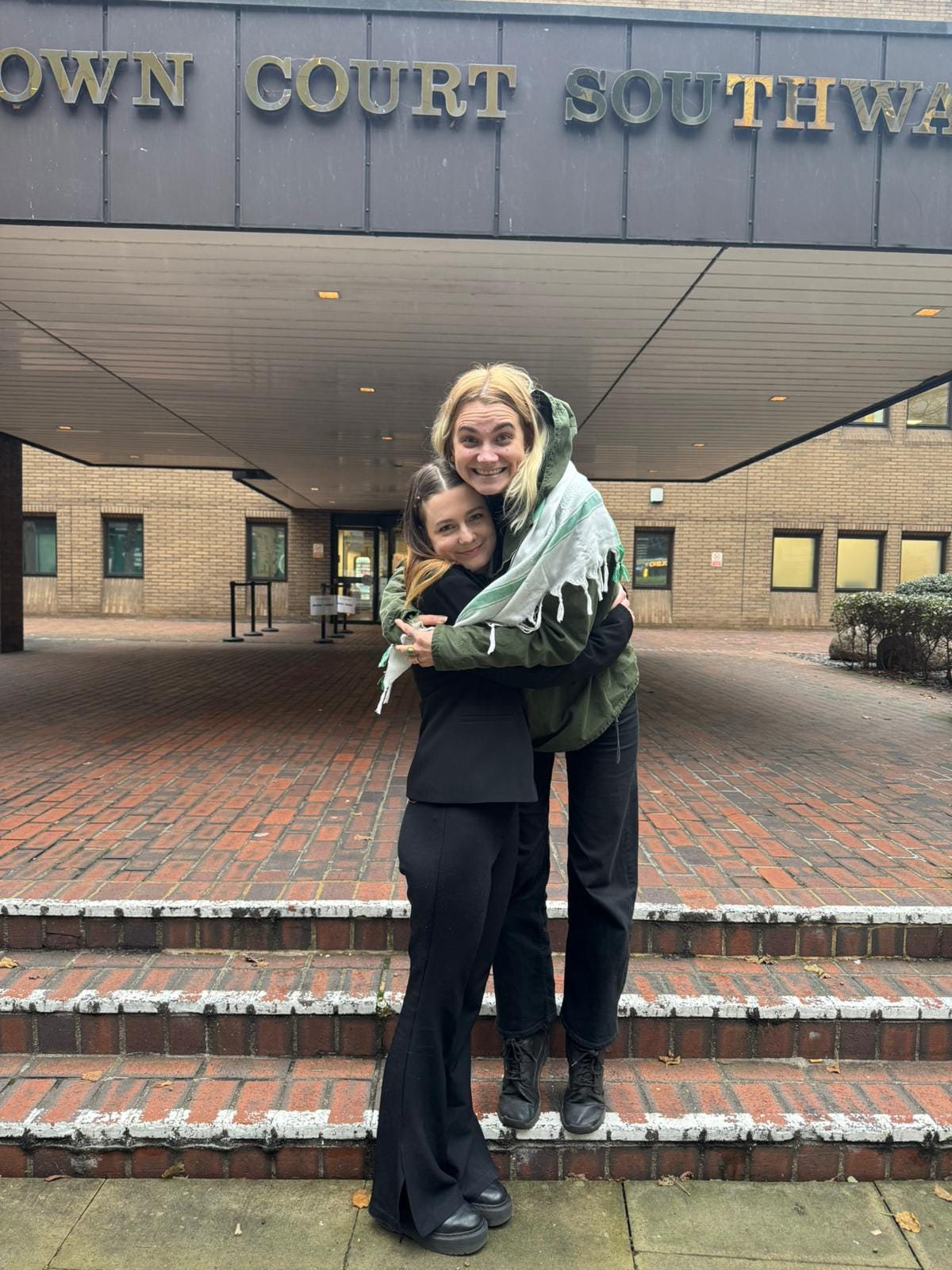
There isn’t a presumption of innocence with protest cases, because the defendants don’t deny that they did it, reflects Lex, a law graduate and my co-defendant, three months after we were found guilty of Criminal Damage at Southwark Crown Court.
In December we spent a week defending ourselves against the charge; a long-awaited repercussion of a peaceful protest against the hunting and shooting industry which took place over three years prior.
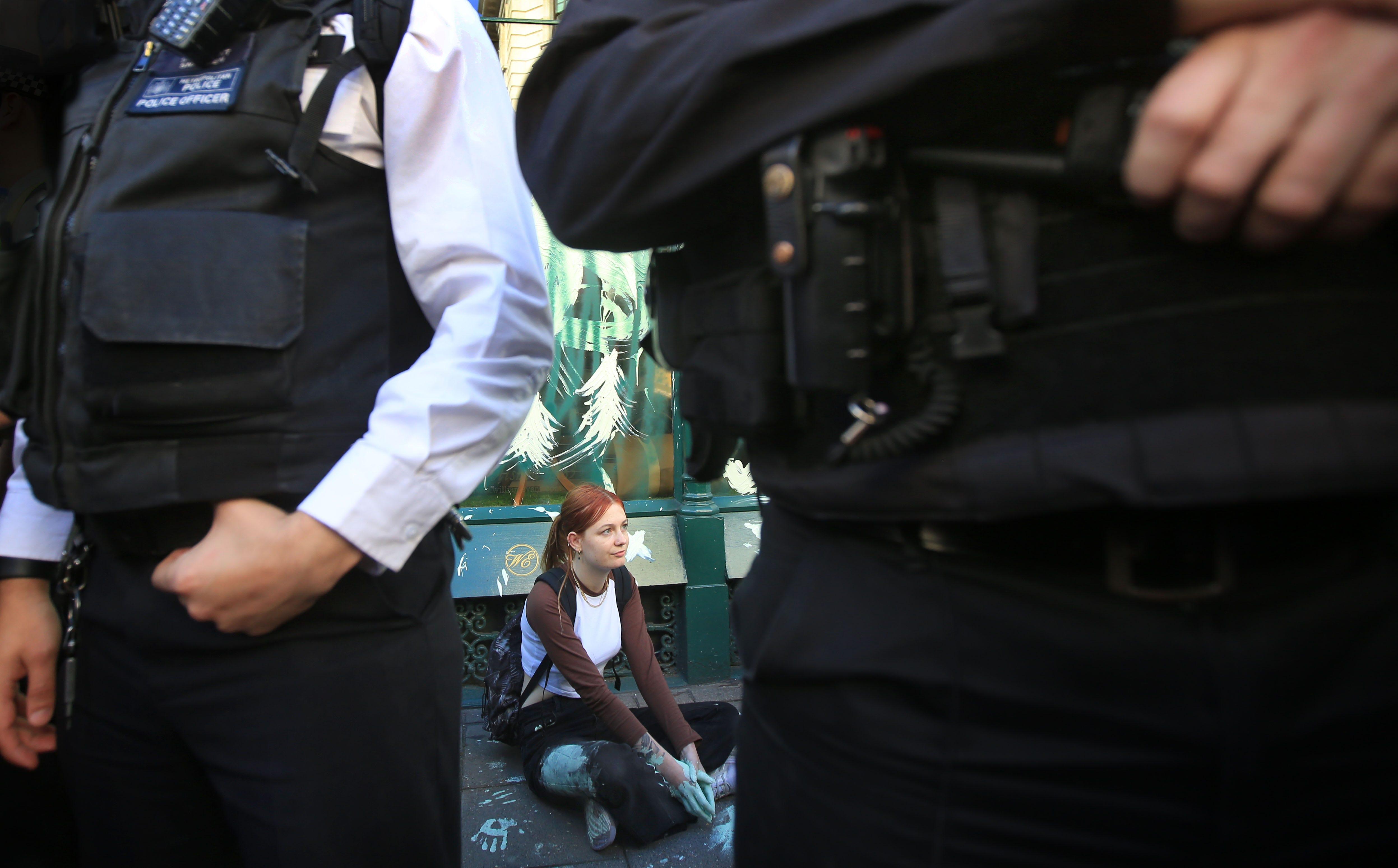
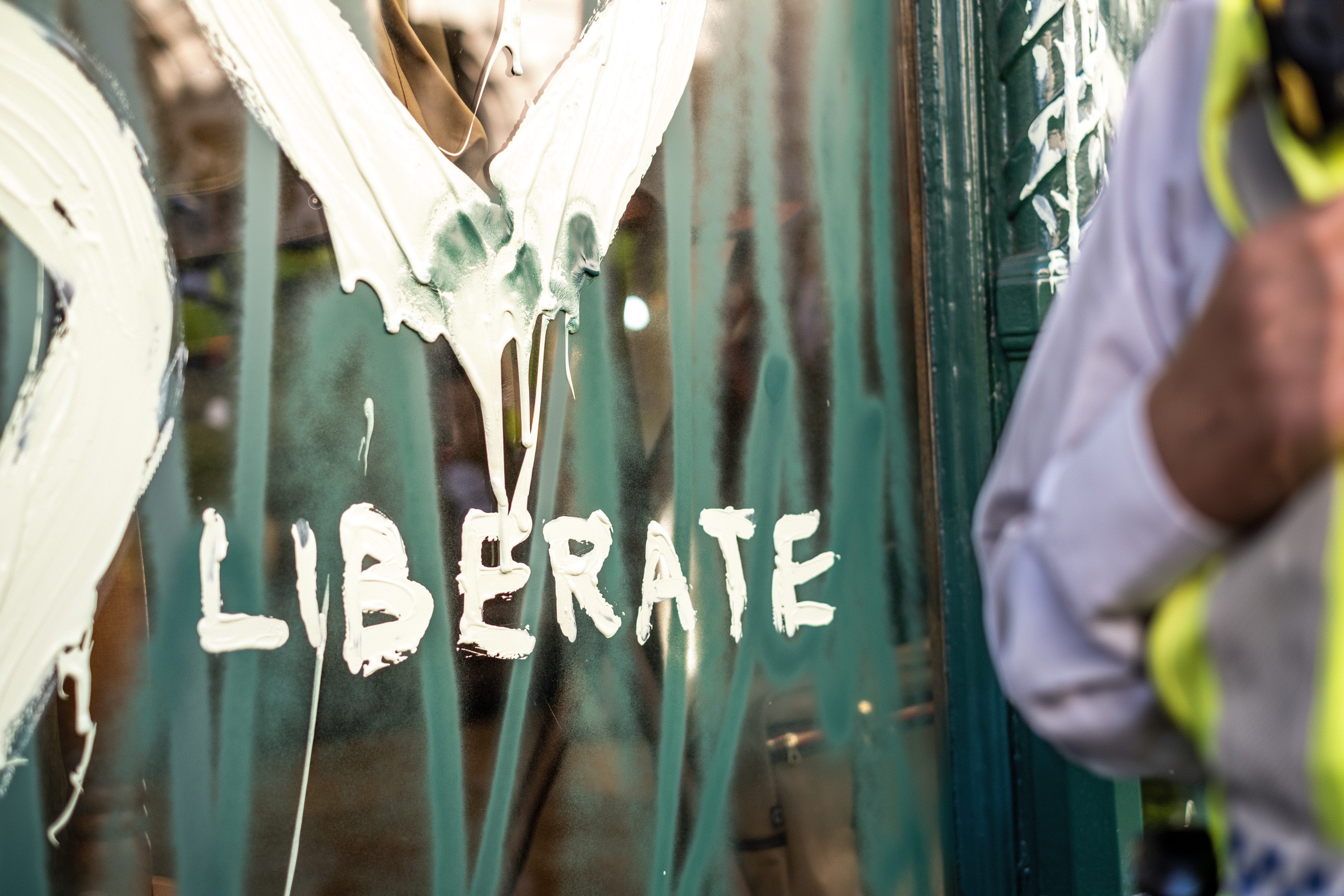
In 2023 I took part in a then-Animal Rebellion action, finger-painting the front of an exclusive gun shop to protest the brutal injustice of the hunting industry who torment and kill wildlife, despite majority public opposition to bloodsports.
The March for Love and Resistance was well underway when we approached the storefront of William Evans, a shop toting hundred-thousand-pound rifles, bullets, hunting gear, and a large array of tweed. William Evans is the flagship store of an exclusive industry: one where those who can afford the luxury are given license to stalk, maim, and kill wildlife - from birds of prey to foxes and their cubs - as well as birds factory farmed and released for the sole purpose of being shot.
Hearing the words ‘Criminal Damage’ and ‘Crown Court’ you’re probably imagining something pretty crazy. I’ll let my words, spoken to the courtroom, explain what actually happened: I used green paint, chosen to depict the future we wanted to see, with the green representing nature and wildlife, as a contrast to the guns which cover the walls of William Evans. I wanted to advocate for a future that is possible. I painted hearts and flowers with my fingers, and I wrote the words ‘liberate’ and ‘love’, my values distilled into the two words that underpin why I took part in this visual protest, and allow me to dream of a kinder future. These are the values that I believe should be integral to everything and should be prized in the legal system, alongside justice, so that it acts to protect everyone, not just the interests of elites.
Hunting is not just deadly, it’s a democratic injustice. Profit is being prized above life, again and again. I highlighted this in my defence also: If the British public’s opinion was protected, recreational hunting, the killing of wildlife for ‘sport’, is a practice which would have already been resigned to history. 83% of the public oppose recreational hunting, according to the 2024 YouGov poll. But hunting is the hobby of the elites, of the 1%, of Lords, and therefore it continues under our noses.
Throughout the trial, we chipped away at the prosecution’s overinflated level of damage caused, gave our honest telling of the day’s events, and delved into the plethora of reasons why it was so necessary to take action for animals and nature.
Being on trial is unlike anything else. The air is stale, saturated with an inescapable feeling of distrust and bad faith. The judge not only dictates the trial, he dictates the mood of the courtroom. His superiority reigns over the defendants and the court staff. He bosses them around snappily, speaks to the barristers in a coat of condescension, and whatever he says, always goes. In this way, when you’re on trial, your fate can be so reliant on a stranger’s mood.
When we found out that Judge Cole was assigned to our trial, we were terrified. We’d stood before him in a prior hearing, and he’d yelled at us, threatened prison, and scolded that it was because of us that rape cases weren’t being heard1. Thankfully, when our trial came around, his mood was a lot lighter. When he sentenced us to community service, without even teasing prison, I wanted to hug him. I wonder what he thought of us once the week had gone by, and he’d heard our stories. I wonder if he liked us more, or less. Or if his mood was entirely unrelated to our case.
Our fate was not only reliant on the judge, it also lay in the hands of twelve members of the public: our jury. During the space of one week these twelve people were bombarded with information, and arguments for and against our guilt. It was likely their first time in a courtroom, and the only legal direction they receive is from the judge, who is not always clear.
A jury trial is a key tenet of the UK criminal justice system, ensuring that the view of ordinary people is taken into account, and working as a fail-safe to prevent injustice in the name of law. A judge would never tell you this – speaking this fact aloud in court is shied away from even by barristers specialising in protest cases – but jurors have the right to acquit solely based on conscience. In fact, Judge Hehir ordered the arrest of eleven people, for holding signs stating this legal right outside of Southwark Crown Court (the very same court I was tried in).
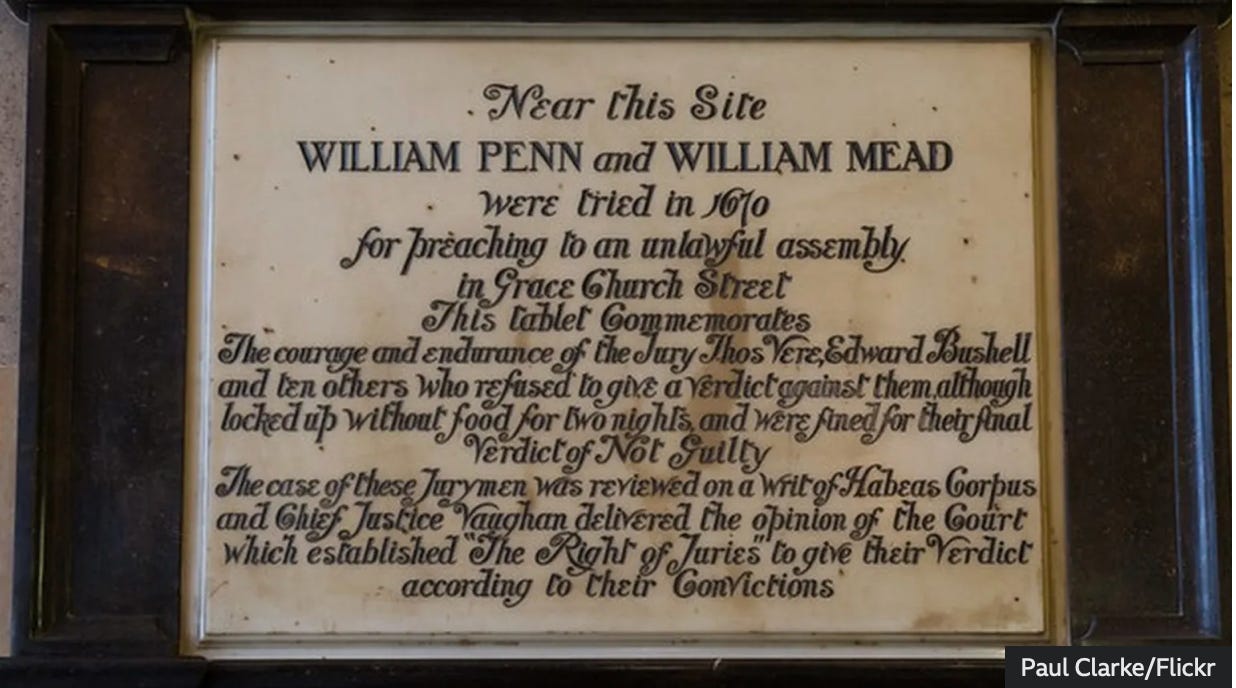
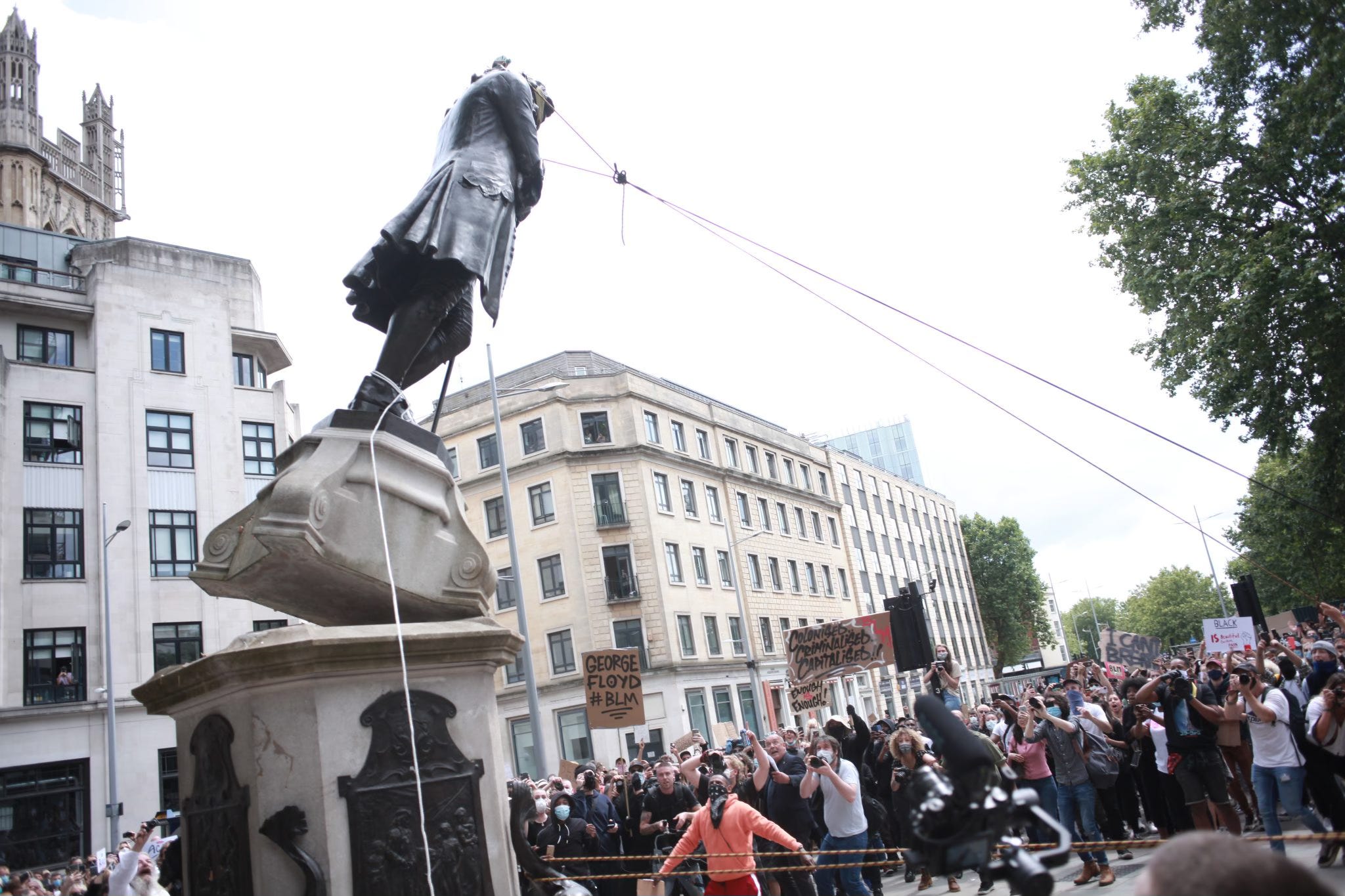
When the government tries to silence dissent via the courts, juries have a strong history of finding protesters not guilty. For example, a jury recently acquitted a group of six who had been held on remand in prison for well-over the pre-trial limit of six to eight months after breaking into an arms factory near Bristol and dismantling weapons used in the genocide of the Palestinian people. Famously, the Colston 4 were acquitted by a jury, after pulling down the statue of slave trader Edward Colston, painting it, and pushing it into Bristol Harbour. In response to this acquittal, the government imposed further restrictions on defences that can be used in protest cases.
Unfortunately, after three years lead-up, and a week of nerves in the courtroom, we were found guilty. As the jury read out the verdict, the mood shifted. We were now ‘criminals’, and Judge Cole spoke to us as such. The punchline: the entire cost of cleanup was covered by William Evans’ insurance company. After the verdict was made, the prosecution admitted this fact before the court, jury and all.
Only a week after our trial came to a close, the government finally announced it was taking action against trail hunting, a practice which is used as a smokescreen by the hunting industry to carry out the illegal killing of foxes. After years of work by animal rights activists, the practice is set to be banned – a nail in the coffin of an outdated industry profiteering off death. Following our disappointing verdict, this was happy news.
There isn’t a presumption of innocence with protest cases, because the defendants don’t deny that they did it, Lex said to me, but then she followed up: In fact, there isn’t a presumption of innocence in regular cases either… Although the burden of proof is entirely on the prosecution, and defendants are supposedly “innocent until proven guilty”, the reality is of course a lot less straightforward. Even the suspicion of crime is enough to arouse guilt – why would a jury member be minded to perceive you as innocent when you are facing trial?
Many factors can affect perception of guilt, not just the evidence at hand. These include your race, accent, gender and adherence to gender roles, weight, attractiveness, and the influence of media exposure. Even where you sit in the courtroom can affect your chances: a defendant will be perceived as more guilty if they are seated in a secure dock (although there is no legal obligation to sit defendants here, this is where you would be seated as standard) than if they are seated at the bar table (where you might sit if you represent yourself2).
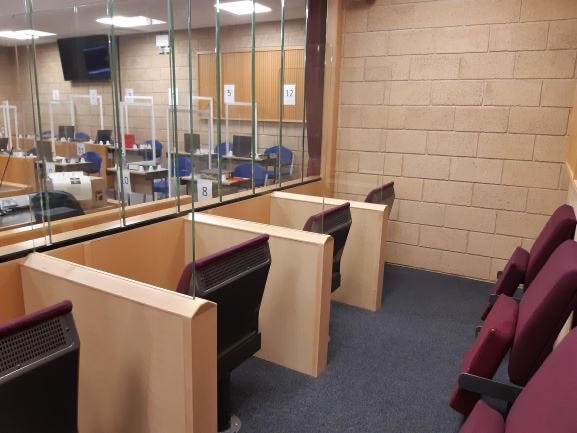
It’s no secret that the legal system is broken, with trials facing delays of over a year or more, less than half of victims confident in its efficacy, and feeble attempts from the government to rectify the situation – not by following the suggestions of criminal barristers to improve efficiency with adjustments to the day-to-day running of trials, or by injecting more funding into the system – but instead by announcing that jury trials will be scrapped in some cases.
My co-defendant Lex explains why the government would be inclined to remove jurors from certain cases: When there’s a criminalisation of protest, but juries keep acquitting protestors, it looks quite bad.
The new Courts and Tribunals Bill proposes the removal of jury trials for all cases which may result in a custodial sentence of 3 years or under, as well as the right to elect for a trial by jury in ‘either-way’ cases (a charge that can be tried in either the Magistrates or Crown Court). At the same time, the government is proposing the creation of a category known as an ‘Extreme Criminal Protest Group’ (which Lex describes as ‘Terrorism-lite’). This designation would apply to many protest groups, including those that use painting in their protests – like this one. Here’s the cinch: people who support an ‘Extreme Criminal Protest Group’, even merely by ‘providing material support’ (i.e. donating), would face up to – you guessed it – 3 years or under in prison. The government is continuing to introduce more laws, more restrictions on protest, and add to the ever-growing backlog in the courts. This isn’t about fixing the legal system, it’s about silencing dissent.
My experience may be different to those who protest in the future: what seems extreme to me (a Crown Court trial with the threat of a custodial sentence for an entirely peaceful protest) may soon seem tame to protesters in this new era of clampdown. Years ago, the consequences I have faced would have seemed dystopian and extreme. Protest is being restricted, as life-changing amendments get snuck into bills by meddling Peers, without any consultation of the public who face the real repercussions.
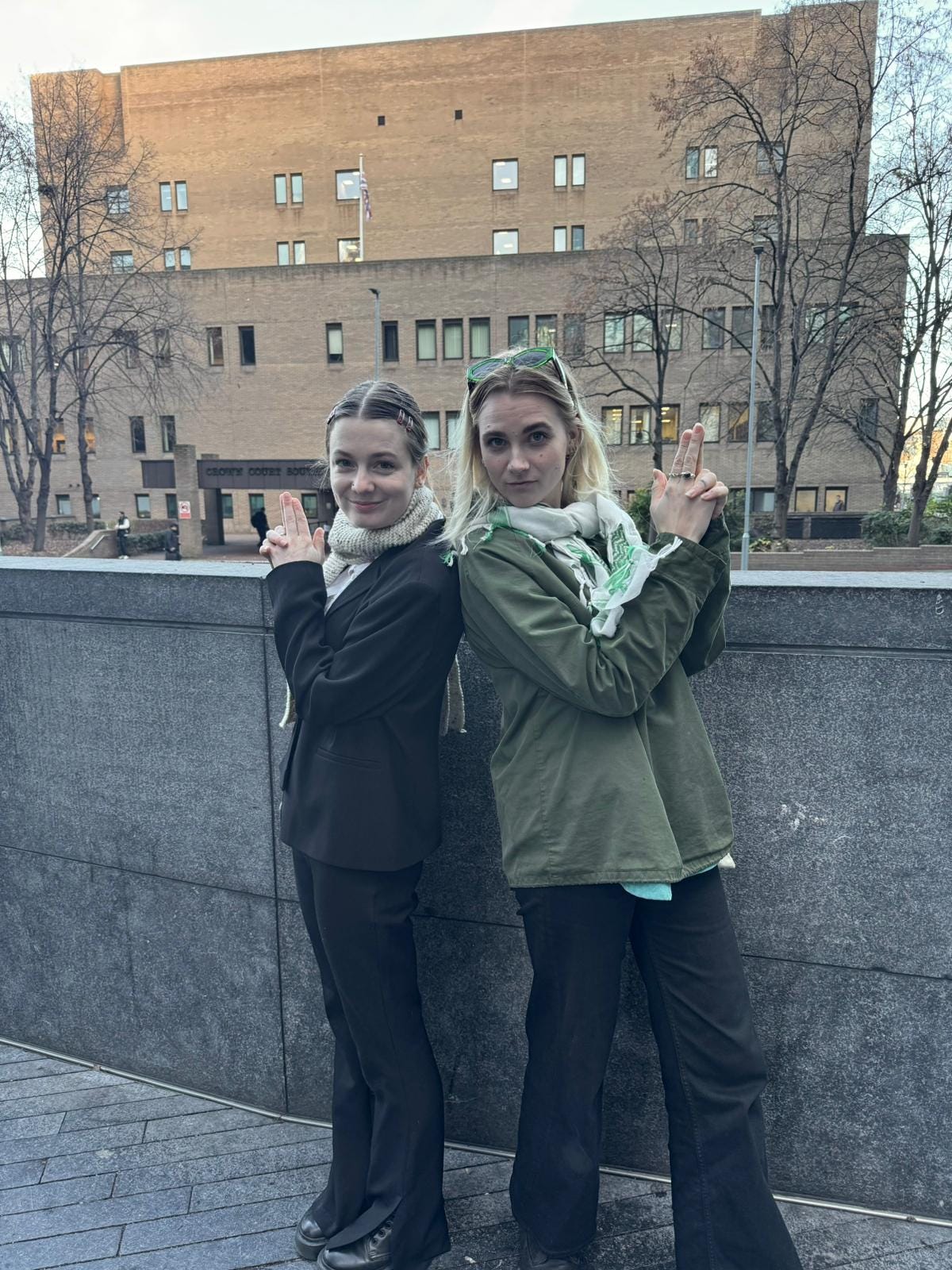
Three months after my trial and conviction, my life looks in many ways the same. Except, every Friday I spend my day working in a charity shop, surrounded by lovely staff and volunteers, meeting members of the community who wander in for a chat, sorting donations, and tidying up the store. It’s my court-mandated community service (100 hours to complete), but I really love my time there.
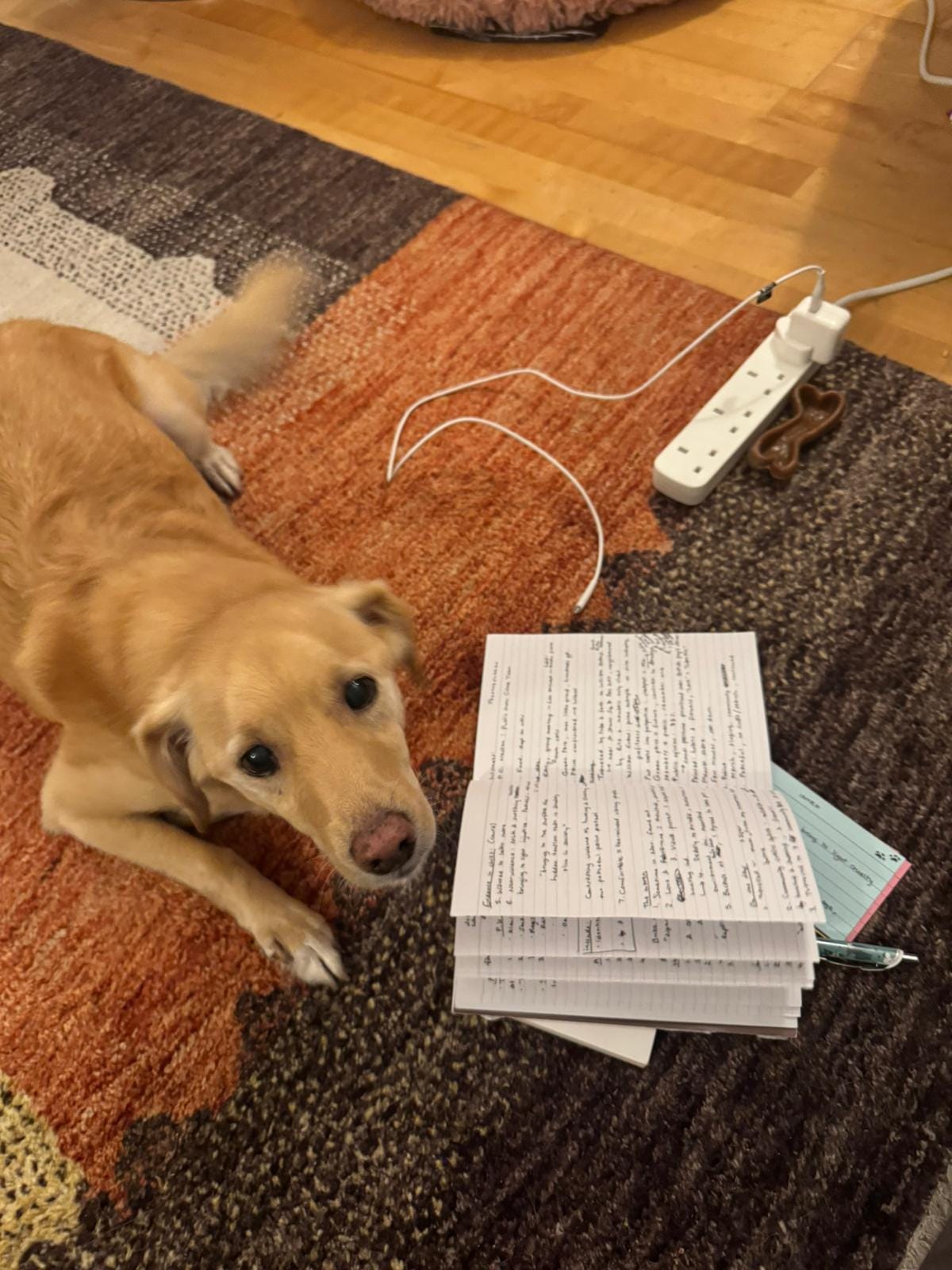
I prepared for trial by constantly reminding myself to expect the worst: I would be found guilty. But, as the trial went on, I found hope growing inside me. I heard our words, I witnessed the prosecution’s objectively flimsy case, I noticed the defence barrister’s cynicism fade and clung to her words: Maybe this will be a Christmas miracle. I imagined the phrase ‘not guilty’ being spoken aloud in court. I felt the imagined joy. It wasn’t even really about escaping conviction, or escaping punishment (although I was very scared of the judge turning on us and sentencing us to prison); I wanted to feel heard, to feel seen. I’d poured so much of myself into my defence. I’d told the jury everything I knew about the brutality of the hunting industry, about the democratic injustice of its continued existence, about the millions of animals who never hear a day in court, who never see justice. In the end, my words weren’t enough. But, although they weren’t enough for me to be found not guilty, a word spoken in defence of others is never a word wasted.
I think of the people who lined the public gallery every day, their numbers often surpassing the jury’s twelve, who smiled, and saw us for who we were. I remind myself that it was likely the jury’s first time in court, that they were following the guidelines set by the judge. I remind myself that I had had three years of preparation, of learning and knowing about the injustices I speak of now. For the jury, this all happened in just one week. It was likely an unwelcome disruption to their lives, and they just wanted to get home and prepare for Christmas (I know I did).
Our Christmas miracle didn’t come in the form of a positive verdict, but instead came in the government’s clampdown on trail hunting. And that’s really really good news.
Find out more about the protest here:
Many thanks to Lou who helped edit.
-Zuki
Later this year, Animal Rising activists charged with conspiracy over the Grand National protest will stand trial at Crown Court. If you want to support our action takers and campaigners facing trial, you can donate here.
This highly inappropriate comment (although not my first time hearing it from a judge) has been reported to the court by my co-defendant.
This comes with its own array of pros and cons.
No posts
Comments
Nothing yet. Say the first thing.
Sign in to join the conversation.