
Editor’s Note: This article examines a public challenge made by Rebecca Corry to Best Friends Animal Society and CEO Julie Castle. Animal Politics is not endorsing every allegation in Corry’s statement. It is reporting a matter of public interest involving two organizations with an established public relationship and examining whether the underlying questions can be answered through records, data, and on-the-record responses.
On Saturday, July 25, Rebecca Corry, a comedian and longtime Los Angeles advocate for pit bull-type dogs who founded the Stand Up For Pits Foundation, posted a public challenge on her organization’s Facebook page to Best Friends Animal Society and CEO Julie Castle. She called for an unscripted, on-camera conversation about Los Angeles shelters, the organization’s “No Kill” claims, and what Corry described as BFAS’s refusal to engage her directly.
The challenge is notable because Corry is not an outside critic. Best Friends publicly identifies Stand Up For Pits Foundation as a partner, and Corry says she previously supported a BFAS fundraising event.
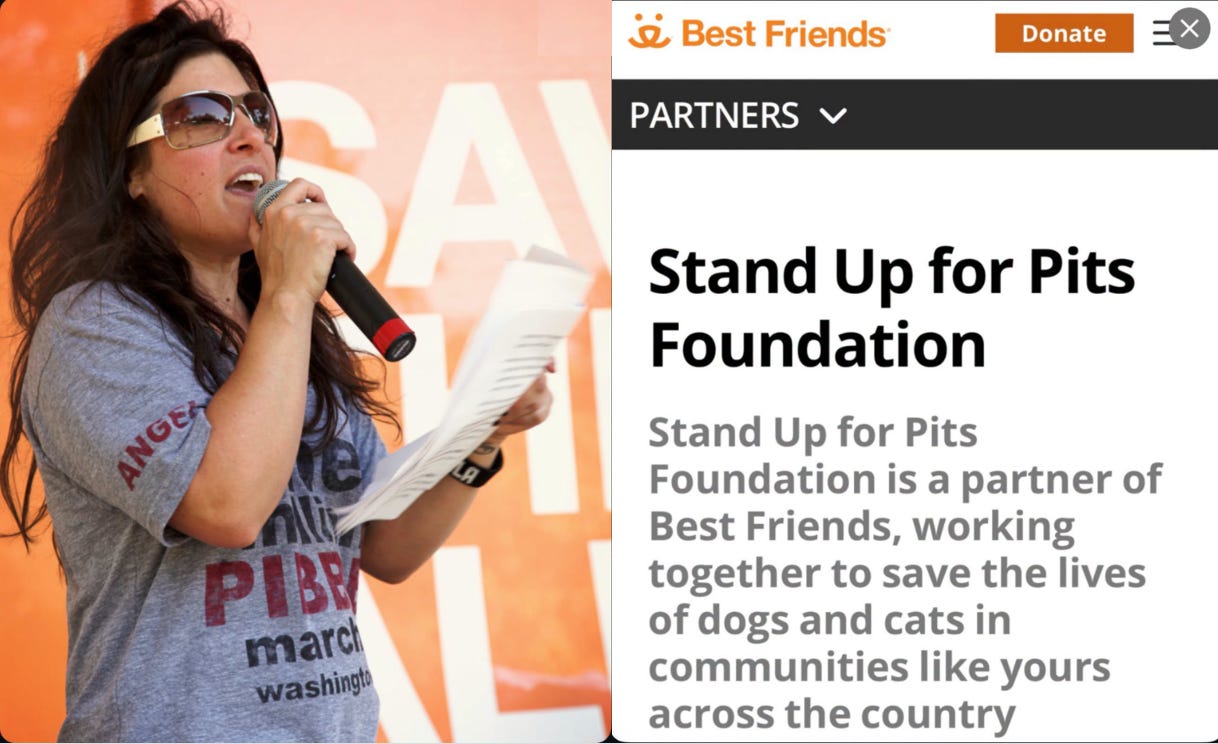
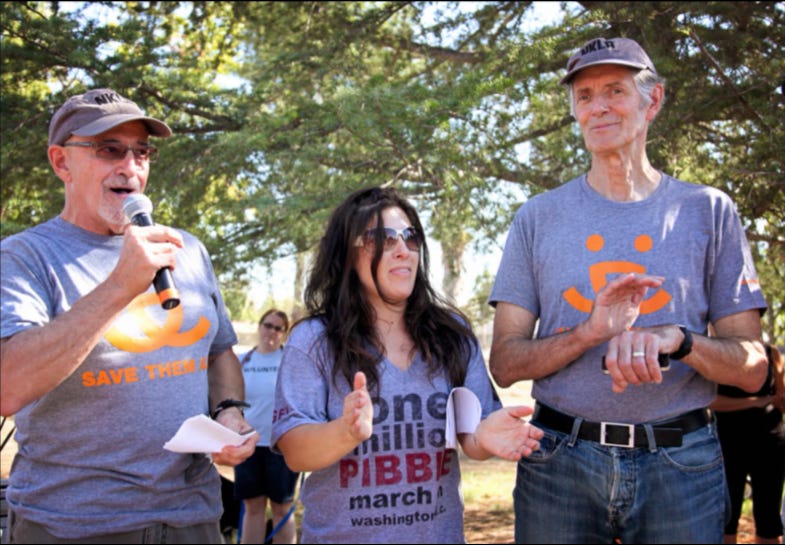
In a message included in Corry’s post, BFAS co-founder Silva Battista thanks Corry for hosting a fundraising event and states that nearly half a million dollars was raised for local-area rescue groups. Battista thanked Corry for appearing “on a very hot stage” and wrote that the funds raised were “powerful, in a life changing way.”
Corry says neither she nor Stand Up For Pits Foundation received funding from BFAS, and that she does not seek it. Yet she says her requests for a direct conversation with Julie Castle about Los Angeles shelters and the meaning of no kill have gone unanswered.
For years, Corry and Stand Up For Pits have publicly raised concerns about conditions for animals on Skid Row and the City’s enforcement response. Animal Politics examined those concerns in its 2025 reporting on Los Angeles Animal Services.
BFAS is not required to accept Corry’s preferred format. But Corry’s public challenge gives the organization an opportunity to confirm, dispute, or explain the factual assertions in her statement and to address the substance of her questions. The public-interest issue is whether it will do so.
At its heart, Corry’s challenge asks whether Best Friends’ public description of Los Angeles as “No Kill” accurately reflects conditions for animals and people inside the City’s shelter system.
That question matters because Los Angeles is not just another shelter system. It is one of the nation’s largest municipal animal services agencies, and BFAS has publicly presented it as one of its signature No Kill successes. Through the NKLA initiative, launched in 2012, Best Friends says it has worked alongside LA Animal Services and the NKLA Coalition and announced in 2021 that Los Angeles had achieved no-kill status after posting a 90.49 percent save rate in 2020.
What data support the No Kill designation?
What does it include?
What does it leave out?
How does the reality inside Los Angeles shelters compare with the public message?
This month, the Los Angeles City Council approved a $14.22 million, multi-year funding and operational-support agreement involving LA Animal Services, BFAS, and the ASPCA. The agreement funds 23 positions and places four ASPCA and BFAS consultants within LAAS facilities to support training, program development and implementation, and animal health and safety. This new agreement makes those four questions more timely than ever.
These questions are not limited to Los Angeles. Over the past two years, Animal Politics has examined related questions in communities from Riverside County to Danville and from El Paso to Indianapolis, where Best Friends has developed partnerships with local governments.
Across those communities, Animal Politics has documented concerns raised by advocates, shelter employees, and local officials about whether public messaging matches operational reality and whether elected officials and the public received a clear account of BFAS’s role.
Corry’s challenge is larger than a dispute between two Los Angeles organizations. Best Friends describes its Network as a nationwide coalition of thousands of shelters, rescue groups, spay/neuter organizations, and other animal-welfare organizations.
The issue extends beyond whether BFAS answers Corry. It includes what Best Friends means when it publicly calls an organization a “partner.”
Corry’s post puts an uncomfortable but practical question to every Best Friends partner:
What avenues do partners have when they publicly disagree with BFAS, question its policies, or ask its leaders to address local conditions on the record?
Could public dissent affect a partner’s access, visibility, professional relationships, or standing within the broader network?
Animal Politics does not know whether Stand Up For Pits has faced any consequence because of Corry’s criticism. BFAS can answer whether Stand Up For Pits remains a partner, whether its status or access has changed, and what procedures it applies when Network partners publicly dispute its policies or claims.
Those answers matter to partners nationwide.
A transparent partnership should leave room for candid disagreement. If partnership means cooperation, promotion, and shared public messaging, but not a clear process for substantive disagreement, organizations deserve to know that before they lend BFAS their name, credibility, data, labor, or public platform.
When BFAS enters a public shelter system through partnerships, grants, advocacy, data, or operational support, who has the authority to question its methods, and who remains accountable for the results?
Rebecca Corry has asked Best Friends to answer those questions publicly and on the record. BFAS can clarify what its partnership with Stand Up For Pits means, answer the factual questions she has raised, and explain how partners across its national network can raise difficult questions without uncertainty about their standing.
Editor’s update policy: Animal Politics will update this article to reflect any substantive public response from Best Friends Animal Society or Julie Castle, including a response to Corry’s request.
Ed Boks is the former executive director of animal care and control agencies in New York City, Los Angeles, and Maricopa County, and a past board member of the National Animal Control Association. His work has appeared in the Los Angeles Times, New York Times, Newsweek, Real Clear Policy, Sentient Media, and now on Animal Politics, a lively community spanning 49 states and 75 countries.
Animal Politics is reader-supported. If this reporting matters to you, a paid subscription is the most direct way to keep it going.
No posts
Comments
Nothing yet. Say the first thing.
Sign in to join the conversation.