
When you start working on an exhibition and ask artists for their thoughts and perspectives on the topic, you often don’t know what you’ll get. With Dear David by OONA, it was a complete surprise—and of course, at first I thought the imagery had been created with the help of AI. It hadn’t.
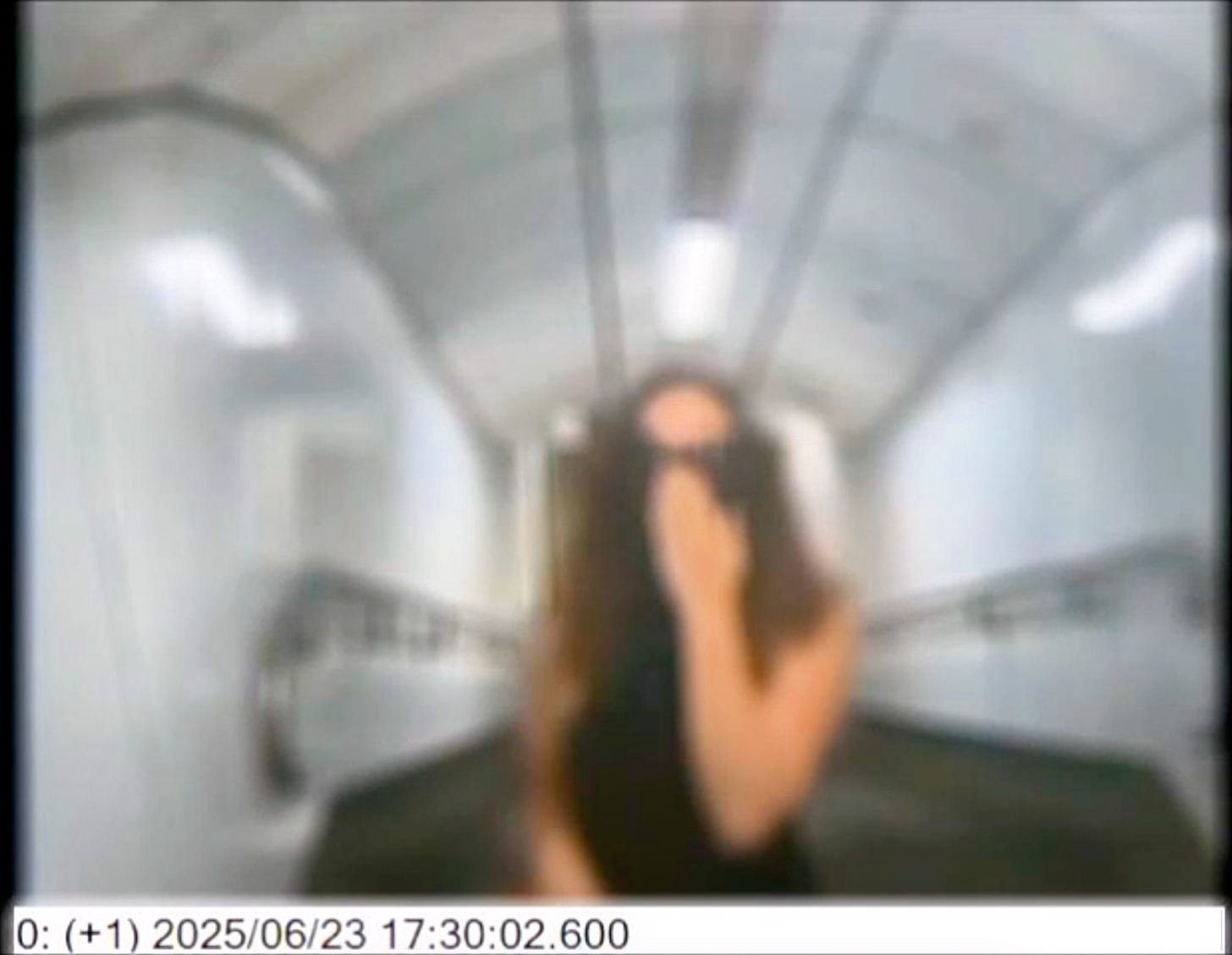
OONA, the anonymous artist who wears a mask and sunglasses, performed on the London Underground and requested the footage. Through a fortunate mistake, she got to know—via email—the man responsible for handling such requests. His name is David.
OONA kept performing in the London Underground, David kept sending her the footage, and OONA continues to turn the CCTV footage into love letters about surveillance and authorship, intimacy and care. Together, we have exhibited the videos at international exhibitions and art fairs such as Body Anxiety in the Age of AI online at HEK Basel, the Digital Art Mile, Virtually Yours on the occasion of Gallery Weekend Berlin, and The Bigger Your Pool at Art on Tezos: Berlin, in conjunction with NFT releases on objkt.
I chose How to Be Seen as the title for this newsletter—a deliberate echo of Hito Steyerl’s How Not to Be Seen. Where Steyerl explored disappearance as resistance, OONA’s work turns toward presence—toward the act of choosing to be visible. In her performances, visibility becomes a form of authorship, a way of reclaiming agency within systems of surveillance. The title situates OONA’s practice within the lineage of critical media art while marking a shift from evasion to assertion.
Our ongoing conversations have been published by Numéro Berlin, Fräulein, and OBJKTOR. The following is a medley of all three interviews.
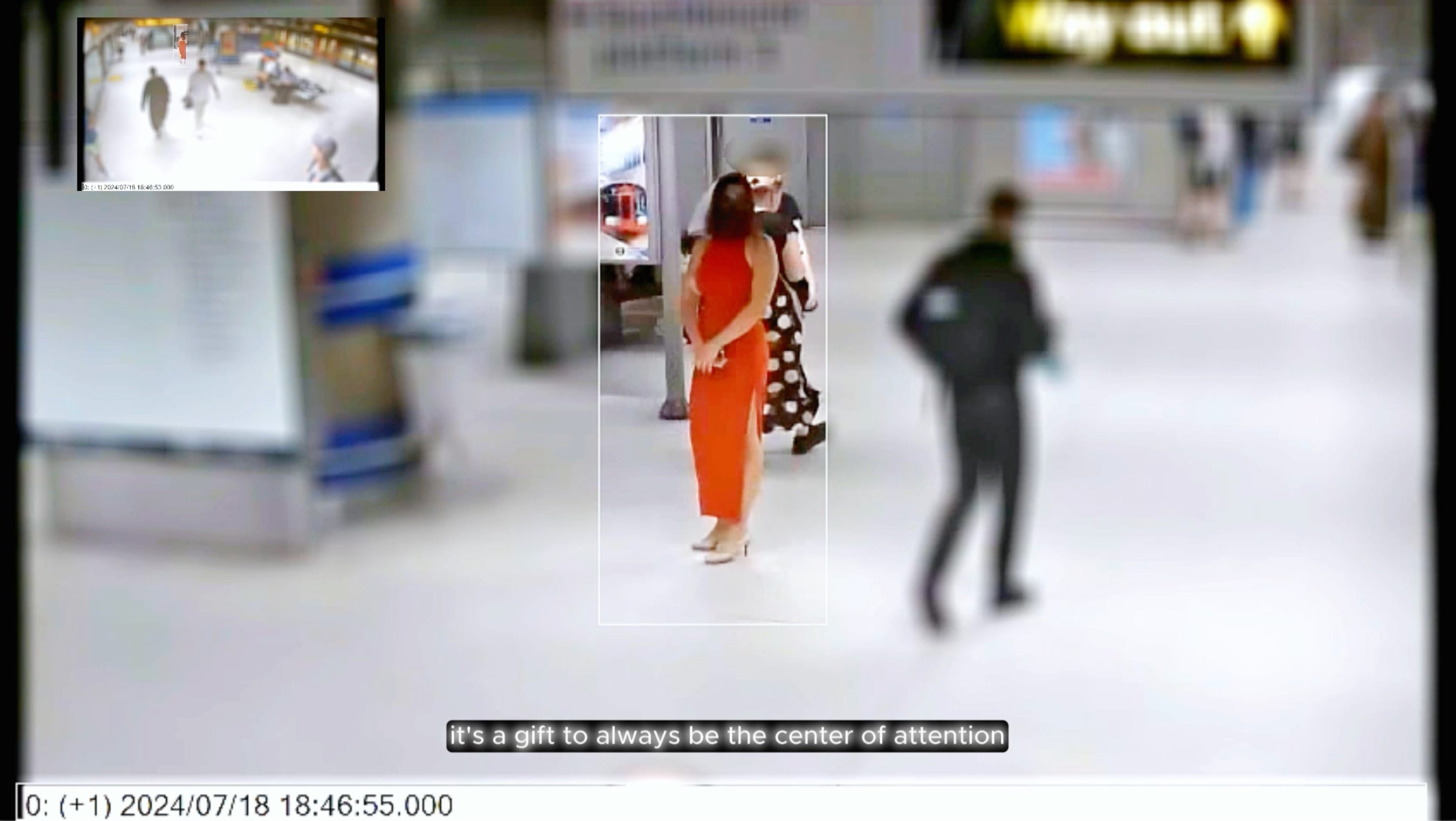
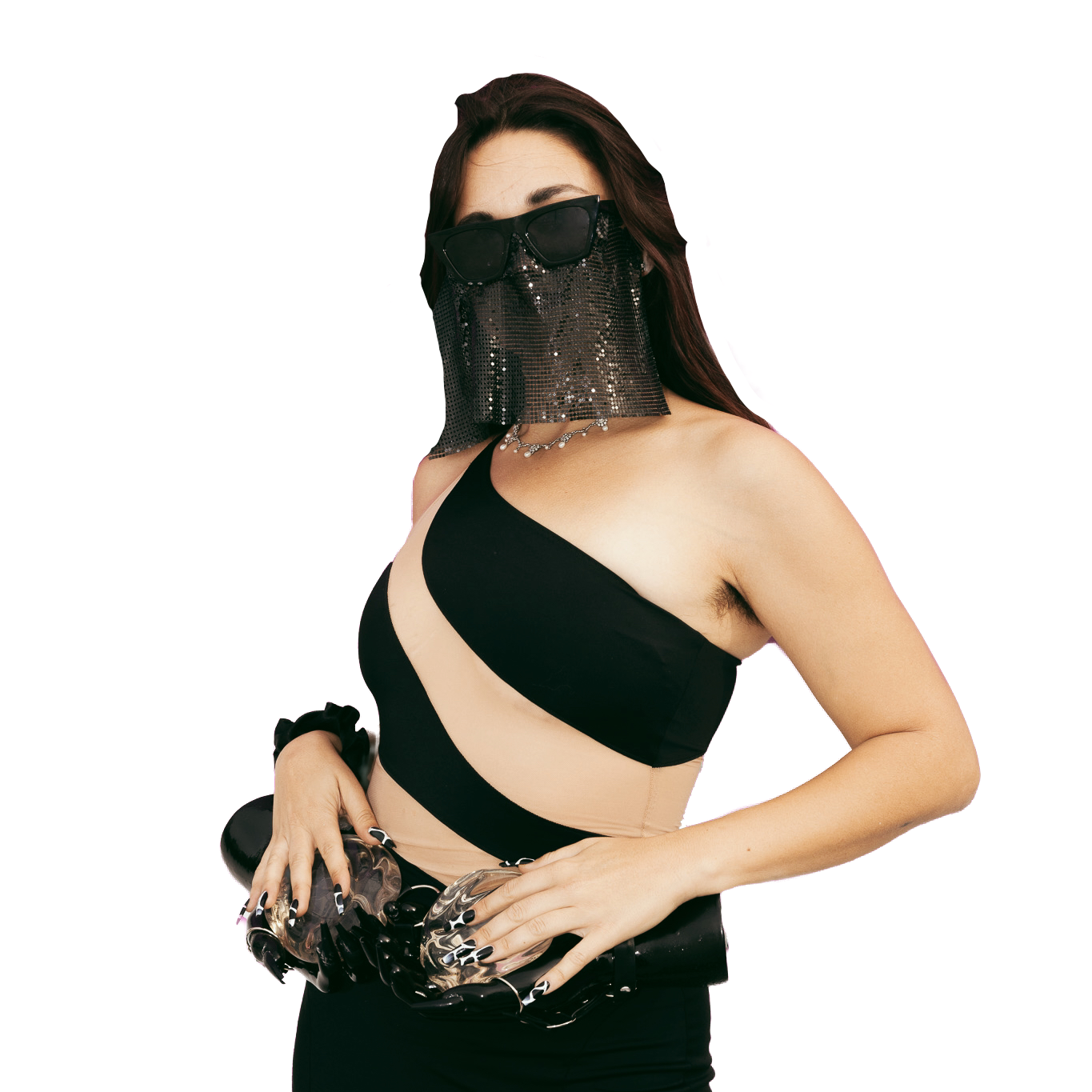
In our conversation, OONA talks about anonymity, self-sovereignty, and what it means to be both seen and unseen. From her performance Look Touch Own to the ongoing Dear David series, she traces the connections between technology, gender, and vulnerability. The result is an intimate reflection on control, care, and what it means to reclaim one’s own image.
AM: You work anonymously. You wear a mask, and only your eyes and body are visible. Some of your performances took place behind closed doors, while others were held publicly at art fairs, without invitation. Why did you choose anonymity?
OONA: I never show my face, but my body is often on display. Without my face, my body becomes a canvas, a (literal and physical) abstraction to explore the female form.
I used to have silicone breast implants; I explanted them. Now, in a performance called Look Touch Own, I invite people, one by one, to touch my breasts and the implants that were once inside me. The tension between anonymity and intimacy is intense. I’m letting strangers touch my scars, but they can’t see my face. It’s privacy vs. intimacy and honesty vs. visibility.
Anika Meier: What does OONA stand for?
OONA: Self-sovereignty. Which is just a fancy way of expressing the idea that I am in charge of my body, my money, my creativity, and my life. It’s a radical approach to the self, taking complete ownership of every aspect of my identity and way of being.
Anika Meier: When did you first know that you wanted to become an artist?
OONA: Most people know from childhood that they want to become an artist. I am not like most people. OONA only just turned four years old on November 1. I didn’t know I wanted to be an artist. I still don’t. I want to pursue ideas in whatever medium fits.
My interest has always been in visibility: in how people see and how they are seen. At Central Saint Martins, my research-based practice interrogated how lens-based media, particularly CCTV, mediates perception and contributes to the othering of marginalized groups. In other words, how surveillance functions as a tool of class exclusion in quasi-public spaces like King’s Cross. Surveillance did not serve to protect but to exclude.
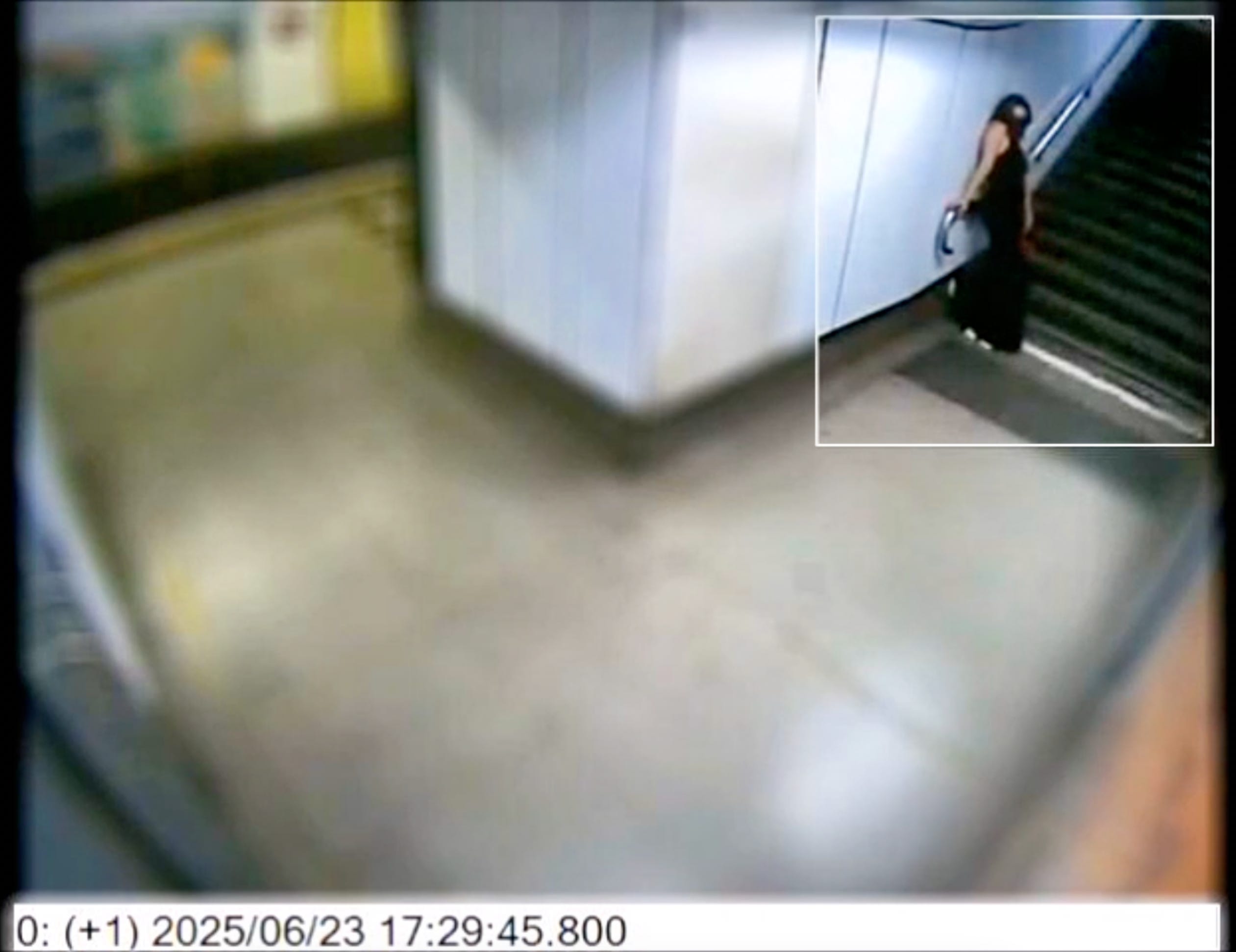
AM: And how did that path lead to Dear David? Dear David is a series of videos made entirely from CCTV footage of you in the London Underground. It’s addressed to David, the Transport for London employee who handles public requests for CCTV access. The first video in the series is titled Dear David: A Love Letter.
OONA: The beginnings of Dear David can be traced back to this early research in 2019. My surveillance-based work at uni was underdeveloped and initially dismissed by my professors. I graduated with a D– because apparently it was too much paperwork to fail me properly. So what do I know anyway?
I first requested access to my own surveillance footage from King’s Cross in London, where I was studying at Central Saint Martins. It’s a semi-public, semi-private space. They had signs saying you’re under private surveillance and offering an address you could contact to request your footage. So I did.
That began a much larger research process for me, realizing that in some cases you can request your footage, and in others you can’t.
OONA returned to the performance (being underground, performing for the machines, requesting the footage) in the summer of 2024, five years later, again not knowing what I was doing. It wasn’t until I was invited to participate in The Second Guess: Body Anxiety in the Age of AI, co-curated by you, Margaret Murphy, and Leah Schrager, and on view online at HEK Basel, that I understood how I wanted to reframe it all. From that, Dear David emerged.
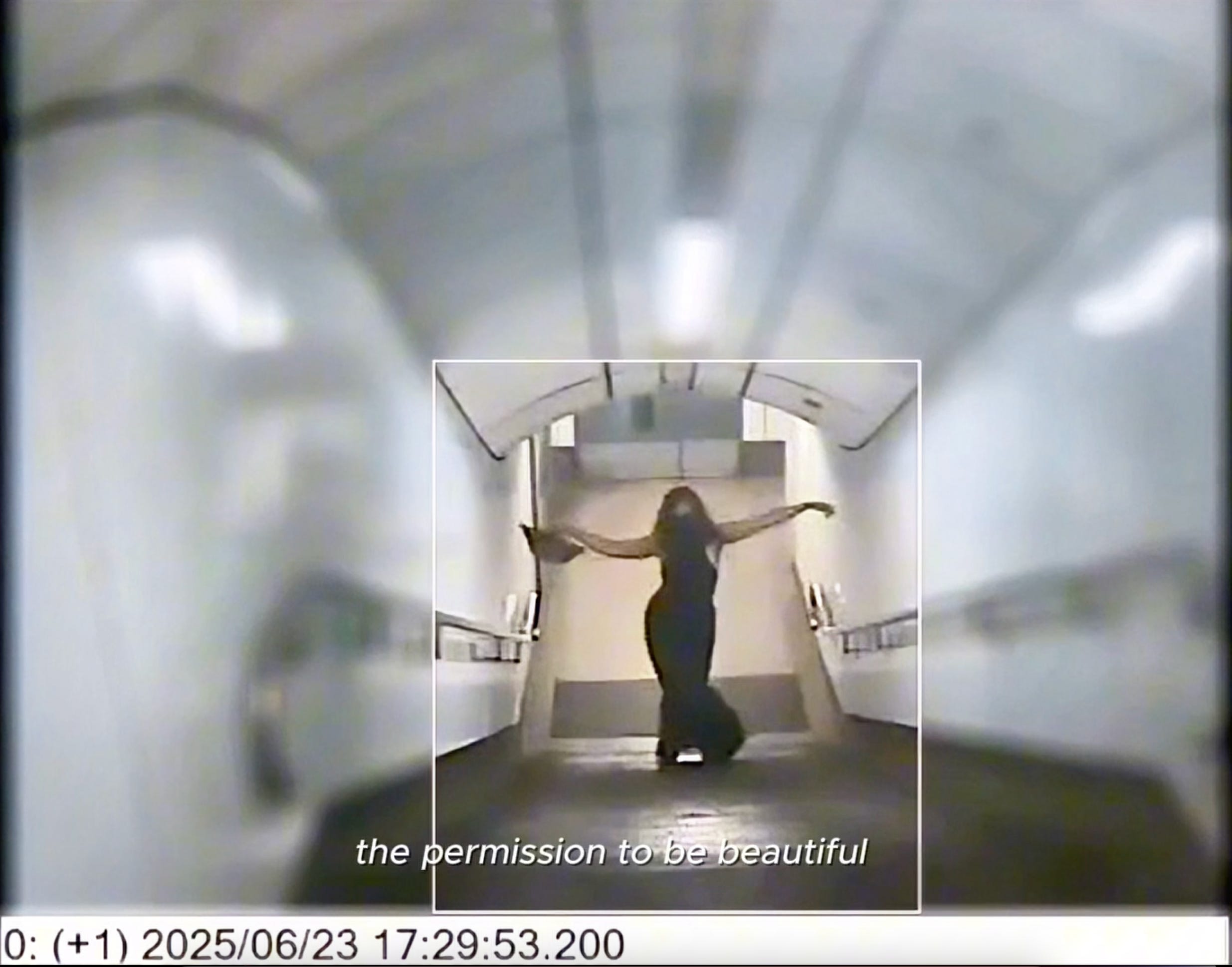
AM: You discovered that you can request your footage from Transport for London, through the UK government. How does the process actually work?
OONA: It’s an online form. You fill out your name, your address, a copy of your government-issued ID, where you were, what times you entered, and which platforms you used. I try to be really helpful and provide all the specifics, even a photograph of what I was wearing. Basically, you give them all this information in the form and explain why you want the footage. In my first form, I think I responded, “Because I want it.” I’ll have to check the original request. Now I don’t even bother submitting a formal request; they know me.
Anyway, with one of my first requests, I made a mistake with the date. I submitted the wrong day on the form. David, who is the CCTV data manager and oversees the requests, reached out to me saying, “Dear so-and-so, sorry, we can’t seem to find your footage.” Now I just email him straight. This is why the whole series really became Dear David.
AM: Surveillance art has often been about exposure and critique. Yet Dear David introduces intimacy and care. How did your correspondence with David transform the coldness of surveillance into something more human?
OONA: There are more than 15,000 cameras in the London Underground. And I’ve reduced them all to one man: CCTV Data Manager, David [REDACTED].
I really like David. I think he’s wonderful. And I hope that, at the end of the day, this becomes a small but memorable moment in his long career. As much as I frame David as an anonymous arm of the surveillance apparatus, I see him as its most human edge. He’s not a villain. If anything, David is the hero of this story.
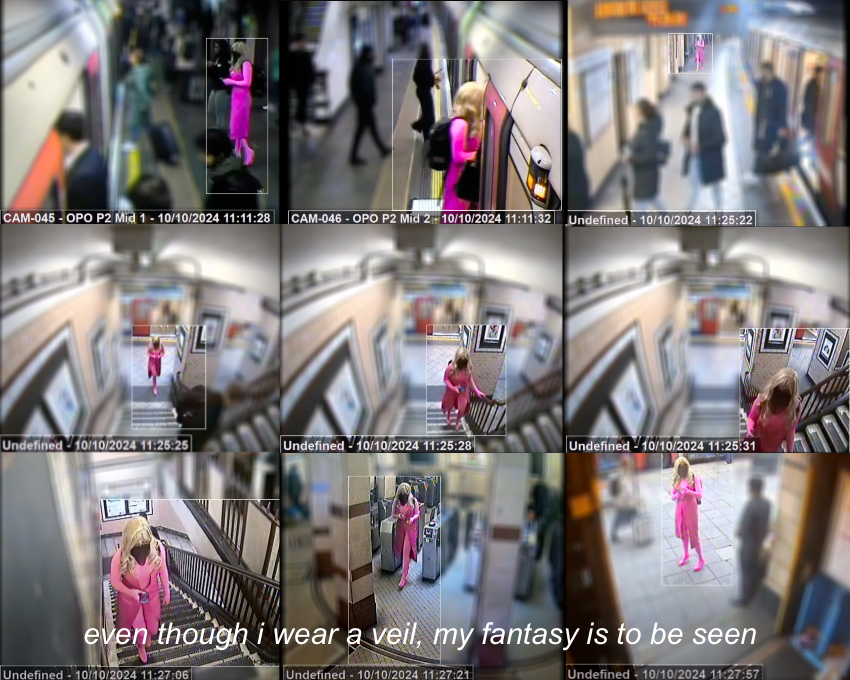
This reversal from system to subject, from machine to person, reminds me of the legacy of VNS Matrix, the Australian cyberfeminist collective from the 1990s, who I had the pleasure of exhibiting with this year at the Digital Art Mile, curated by you for The Second Guess. Their Cyberfeminist Manifesto for the 21st Century imagined technology not as an instrument of domination but as a site for pleasure, subversion, and care. I think Dear David exists in that spirit. Through our correspondence, the machinery of state surveillance became oddly intimate. Don’t be confused; my exchanges with David are not erotic but kind. I started to see the infrastructure of control as just a man.
AM: When you requested your CCTV footage, you effectively reversed the gaze: claiming authorship within a system meant to monitor. Did that process feel empowering?
OONA: The Dear David performances exist because of OONA. Every time I put on the OONA mask, it’s an act of power. To inhabit a female body that asserts its sovereignty, especially within a system designed to contain it, is radical. Dear David is just one of many performances in which I claim that authority.
Filing a Subject Access Request sounds grand, but it’s just bureaucratic tedium. Submit a form, send an email, wait politely, wait more, open an email, and get footage. It’s the opposite of spectacle. I’ve done much more with my body for art. And yet, this banal exchange has become one of my most approachably deep performances.
“I feel like I am always waiting to see what David will say and what he will withhold. There are clips David will never release to me, and I think about that often. For instance, one time I pole danced in the middle of the carriage. David never released this footage to me, but I wonder how long those images will linger in his mind. Whether he keeps them privately, somewhere he shouldn’t.” – OONA
AM: How do theories of the gaze and surveillance inform your approach in Dear David?
OONA: Theorists like Hito Steyerl and Laura Mulvey have written about how visual systems, from cinema to surveillance, structure power, visibility, and gender. Mulvey’s male gaze feels eerily relevant when the gaze no longer belongs to a man but to a network. The system still objectifies. But we’ve heard all this before. In Dear David, I wanted to see if the reverse is possible. Could I reduce the whole system to one single man? To my one and only beloved David.
And it wasn’t until, within this ecosystem, that I heard Sasha Stiles call the machine “her partner, her collaborator” that it clicked. The machine doesn’t have to be just a lens. That was the turning point for Dear David: when surveillance stopped being something imposed on me and instead became something I used to my advantage.
AM: Has the experience of making this work changed how you move through public space or how you think about being seen?
OONA: Since I was a little girl, I have always been able to feel every time I am being watched or looked at. It is my superpower.
AM: Thank you, OONA!
OONA on Fighting for Self-Sovereignty
If My Pussy Could Talk, What Would She Like to Say?
Numéro Berlin 18 FIGHT Spring/Summer 2025
Where Does My Agency Over My Image Begin and End?
Fräulein, August 2025
The Machine Isn’t Going to Reach Out and Touch Me
In Conversation With OONA, On Masks, Machines, And Reimagining What It Means To Be Seen
OBJKTOR, November 2025
A lot is going on at the moment. I’m currently re-reading Medium Hot by Hito Steyerl—this time in German—because OONA got me thinking about operational images. I’ve discussed reclaiming art history through sweetness and simulation with Claudia Hart; our conversation can be found online at OBJKTOR.
For my talk at the Computer Arts Society on the question Why are there so many women artists in the age of AI? I’ve read quite a few texts, and I’d like to recommend the following:
What Is Post-AI Art? in: ArtReview, 19 November 2025: Avery Singer, Jon Rafman, Simon Denny, Holly Herndon, and Mat Dryhurst discuss the future of art in the age of AI—covering image-making, defining burgeoning art movements, protocol art, embracing labels, and ethical AI. The piece was also a beautiful reminder that people tend to read only headlines, as there was quite a strong reaction to the term Post-AI Art.
The Prompt Engineer Is the Artist of Our Age in: The MIT Press Reader, written by Danny Oppenheimer. I guess it’s clear what this piece is about.
Digital Art Is Going Mainstream in: Art Basel, written by Aimee Dawson on November 19, 2025. With the launch of the new section Zero10 as part of Art Basel Miami Beach, Art Basel is very busy avoiding mention of the three letters “NFT” and instead makes it all about, well, how digital art is now mainstream.
Thank you for reading, and take care,
Anika
Comments
Nothing yet. Say the first thing.
Sign in to join the conversation.