
TL;DR Basel Edition: Some of my favorite moments from last week in Basel ❤️🔥
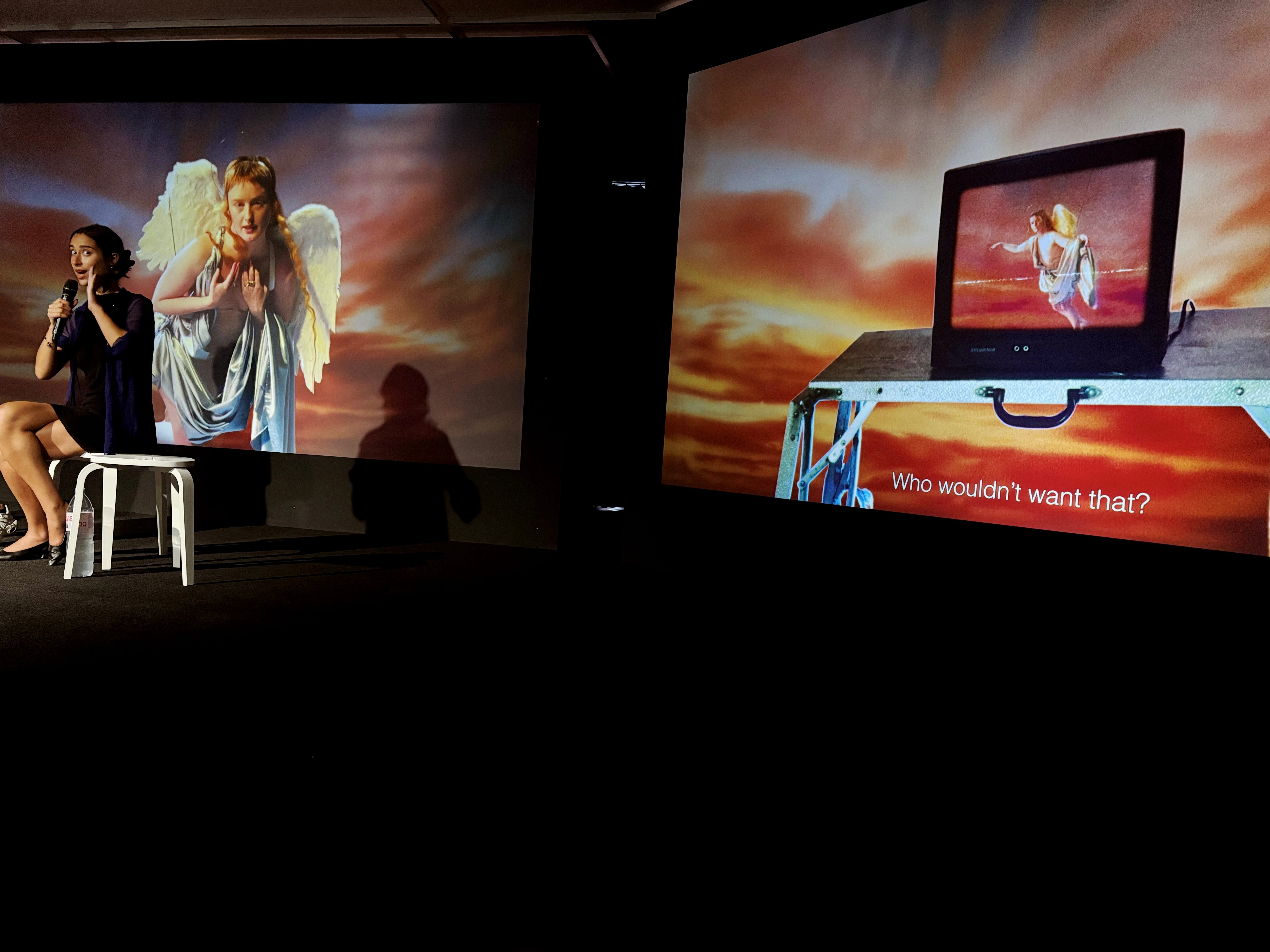
🪽 Visiting »Extrasensory,« the Chloe Wise exhibition, four times and watching the film »PsyFi« three times. Sorry for being the most annoying person about this exhibition all week, but luckily everyone has thanked me afterward so far.
Read my interview with Chloe Wise for SLEEK here: »I Want World Peace, But for Myself.«
🧀 Eating raclette with Liz from UBERMORGEN at the fair and wandering around Unlimited with her to see what’s left of the suddenly so-called digital art after the launch of Zero 10 in Basel, the curated digital initiative.
🚶 Discussing with people whether Art Basel was doing digital art a favor by placing it in a separate building across the street from the main fair. (The temperature in that building was lovely, btw.) I thought the idea was to bridge the gap.
🐄 Curating OONA’s guerrilla performance at the metaphorical gates of Art Basel (on Messeplatz). In case you were wondering: the police in Switzerland don’t mind if a woman goes topless, but they do mind if she’s wearing a mask. After the police ended OONA’s performance, I walked up to them and asked whether she needed a lawyer.
Police: »Why would she need a lawyer?«
Me: »OONA’s performance was cool, no?«
Police: »We didn’t see it.«
Me: »Next time, come earlier.«
Read more about the performance in Fräulein here.
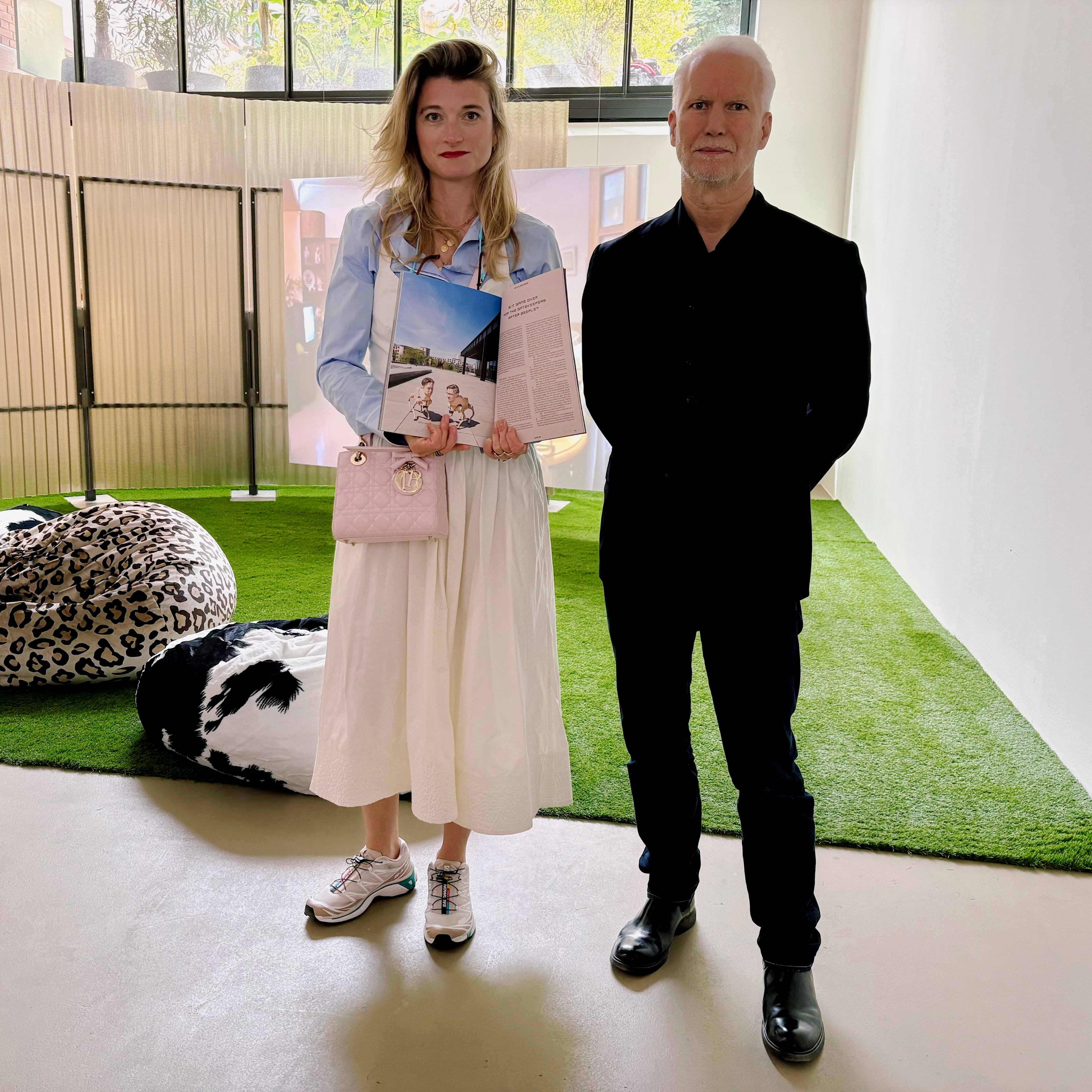
🥂 Co-hosting the Champagne Breakfast with SLEEK & CIFRA on the occasion of Cao Fei’s exhibition at Kunstmuseum Basel. Klaus Biesenbach and Lisa Botti, the curator of Beeple’s exhibition at Neue Nationalgalerie, joined the breakfast, so I had the chance to take a photo of them with my Beeple interview in SLEEK. Lisa Botti said she liked the title: »Is It Game Over for the Gatekeepers After Beeple?«
Watch the »Escape Doomscrolling« playlist I curated for CIFRA on the occasion of the Champagne Breakfast here.
🐴 Finally meeting artist 0xDEAFBEEF in person and taking a photo of him with Sam Spratt and OONA.
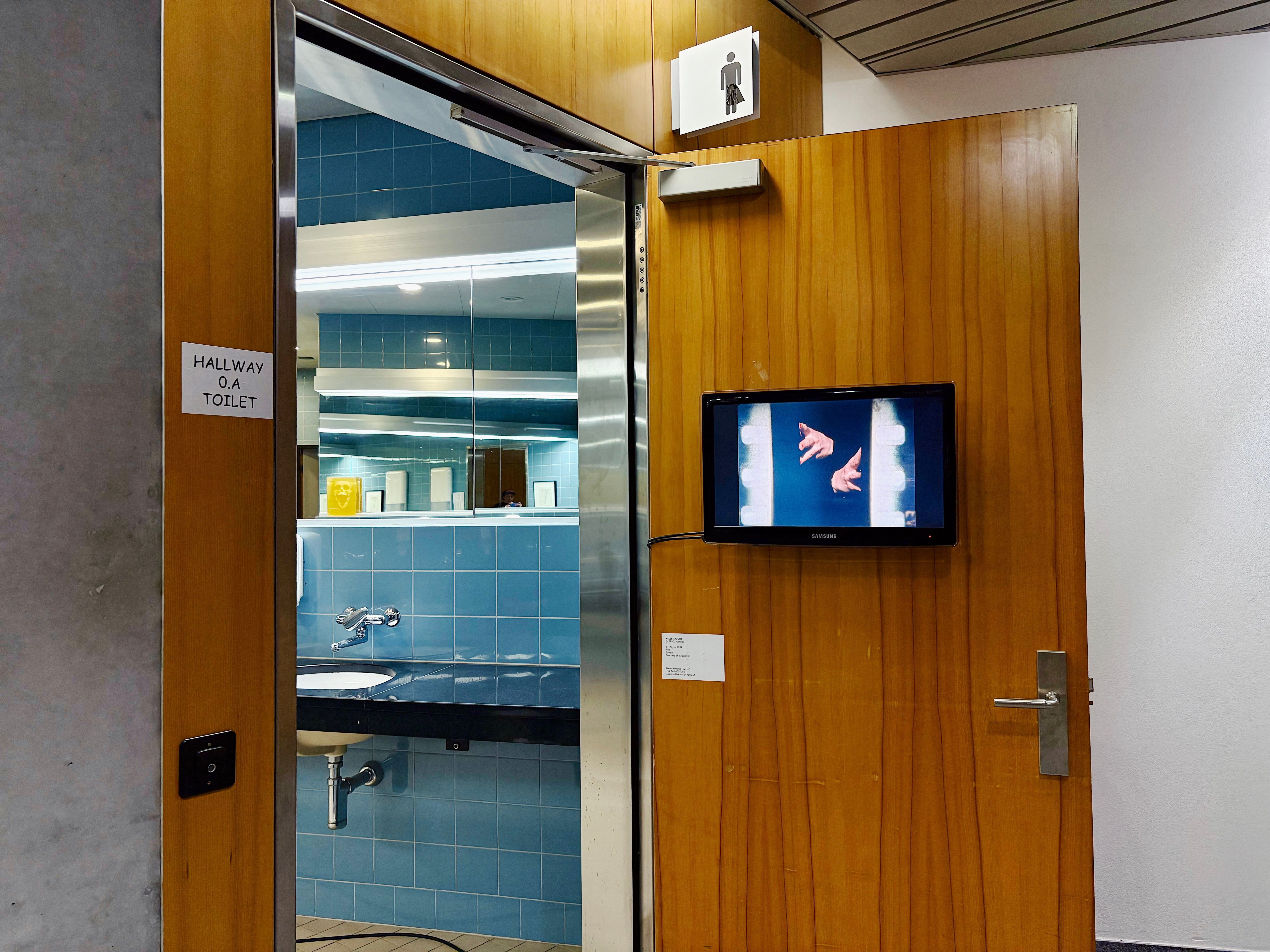
🪩 Seeing an artwork by VALIE EXPORT installed on the door of one of the men's restrooms at Basel Social Club.
🪄 Not accidentally running into that rapper.
💭 I agree with Dorian Batycka, and this is also my favorite sentence from any conversation I had this week: »I am so over the Internet.«
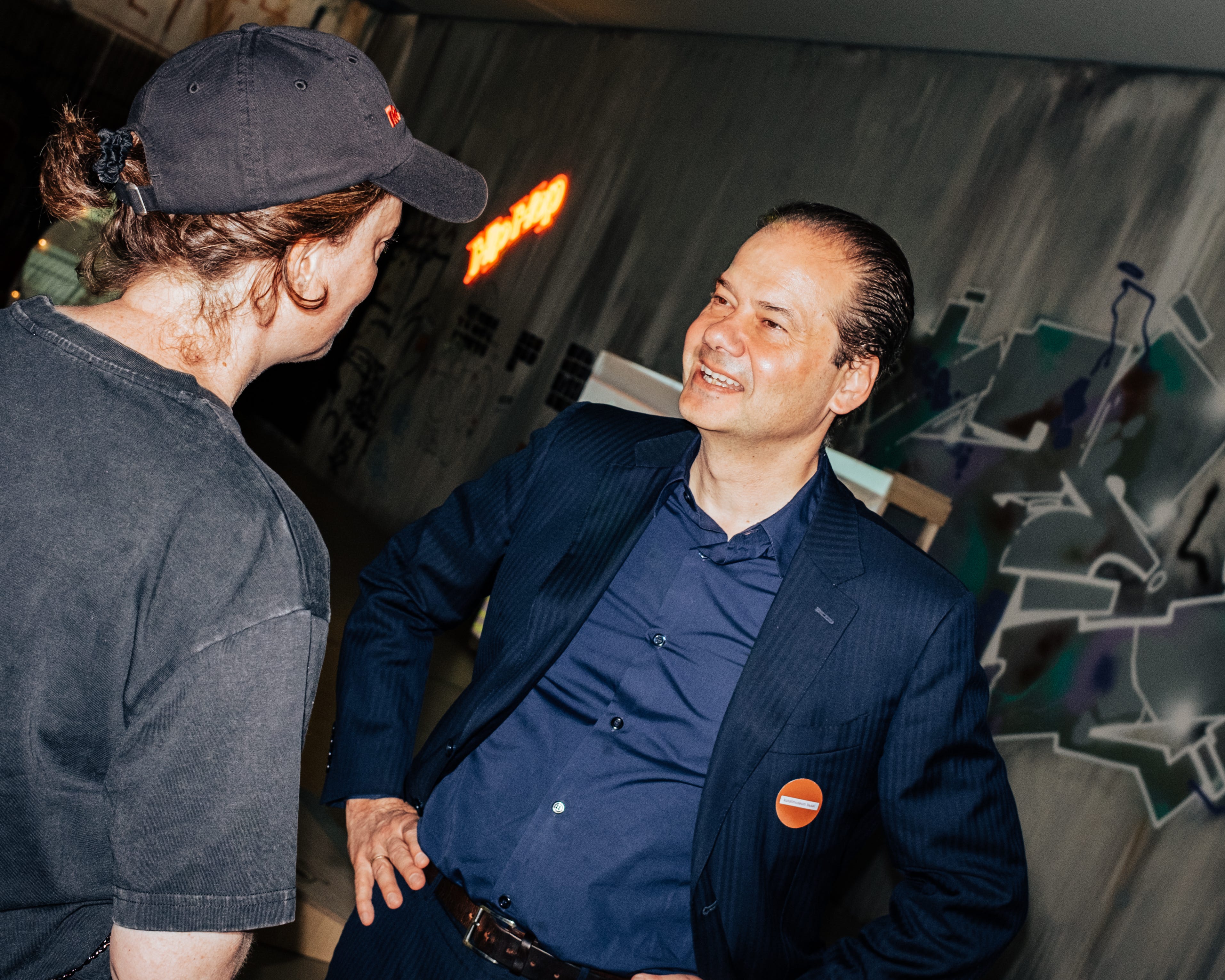
Max Hollein, Director of the Metropolitan Museum of Art in New York, was the first to arrive at the Champagne Breakfast at Kunstmuseum Basel on Tuesday during Art Basel week, hosted on the occasion of the Cao Fei exhibition by SLEEK & CIFRA. (I was involved in making it happen.) He came by bike.
Twenty years ago, as an art history student, I worked at the Städel Museum and Schirn Kunsthalle as a museum guide while Hollein was director. We had a student guide team whose job was to be present during blockbuster exhibitions such as »Botticelli,« standing in front of the artworks during peak hours to answer visitors’ questions. During that time, I learned how important storytelling is and that art is a conversation. I also learned to find words for complex ideas that make them accessible and relatable beyond the art context, for example, by highlighting their broader social implications.
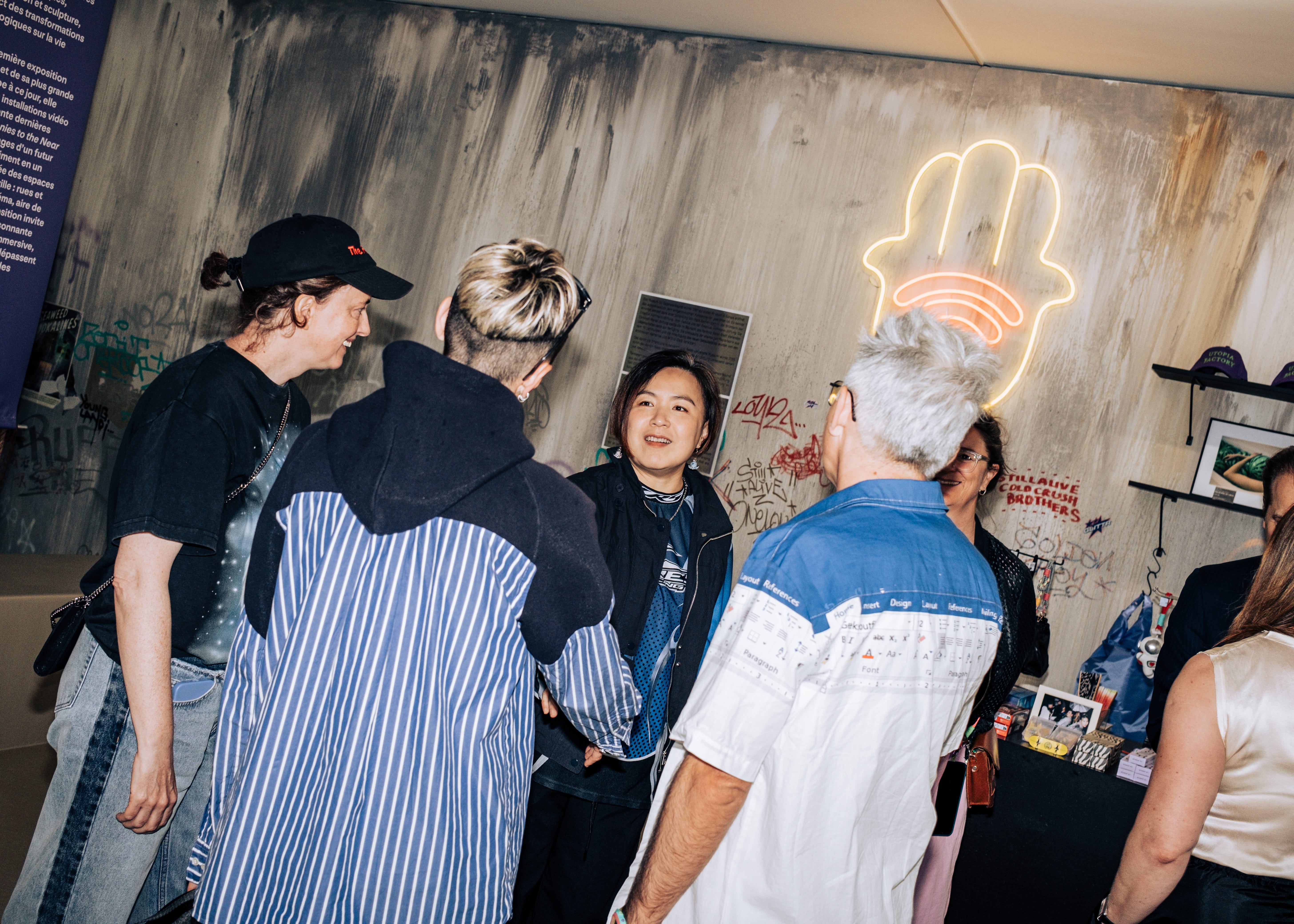
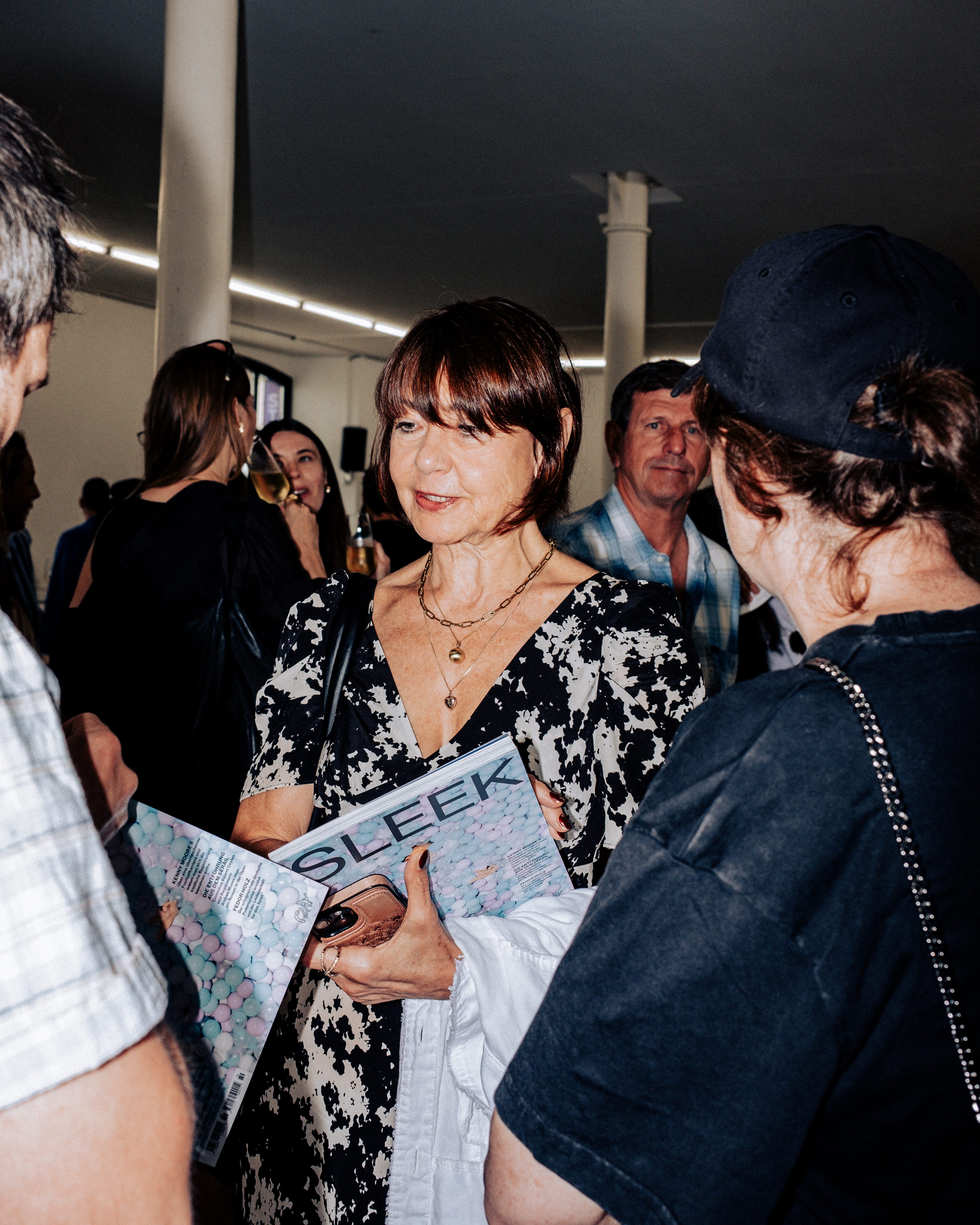
Klaus Biesenbach and Lisa Botti, the curator of Beeple’s exhibition at Neue Nationalgalerie, also stopped by and saw the interview I did with Beeple for SLEEK for the first time. The title reads more provocatively than the conversation actually was: »Is It Game Over for the Gatekeepers After Beeple?« Short answer: No.
Speaking of institutions, A LOT is in flux right now. You know, social media, AI, NFTs… I guess we can all agree on that. Refik Anadol just opened Dataland in LA, Art Basel launched Zero 10 in Basel, and the art market is still in crisis. What’s the role of the artist in the age of social media? What’s the role of the art fair post-NFTs? What’s the role of curators? And what can galleries still contribute when artists can build visibility for themselves and have collectors in their DMs on Instagram and Twitter? What makes galleries and art fairs still attractive to artists and collectors when they can build their own ecosystems online and sell directly? The latter was one of the big promises of NFTs and the new online art world that came out of the pandemic.
About Dataland, artist Ann Hirsch wrote in her review for artnet: »(...) but also feels like an official ushering into our new contemporary art world. This new art world moves beyond object assets and understands that all art is content, and that content, at its best, creates experiences that absolutely must rival a media-riddled landscape.«
And, of course, Ann Hirsch is right. In the post-digital age, art is more than ever about experiences. How do you get someone to leave their couch and put their phone aside if not to have an experience that the content on their phone cannot provide? And the best exhibitions on view during Art Basel prove that point.
Cao Fei, known as a world-builder, has built, without a doubt, her most impressive world to date across four floors of Kunstmuseum Basel. I was somehow reminded of Google’s offices, where every floor has a different theme, but with »Testimonies to the Near Future,« Cao Fei has created the sophisticated, and still fun, version of that. There is a skate park on the ground floor, you can play badminton on—I forgot which floor—jump into a ball pit, sit in front of a computer and play a video game, and so on.
Sunday evening last week, after my first day in Basel, I tweeted:
»Sorry, no offense to anyone exhibiting in Basel right now, but I think I’ve already seen my favorite exhibition: »Extrasensory« by Chloe Wise at KBH.G. It’s like »Twin Peaks« meets »The X-Files« in a Chloe Wise painting brought to life, with the supernatural vibes of »Stranger Things« on a Victoria’s Secret set. 🪽«
Why is it so good? You enter through the gift shop, and you don’t know what’s happening. The second room is a green room, an infinity room, and again, you don’t know what’s happening. Then you watch the three-channel video installation titled »PsyFi,« and you're left wondering: What just happened? You have to leave the exhibition the same way you came in, and things slowly start to make sense. The green room, but most of all the gift shop. Chloe Wise, in short, explores systems of belief and ways of grasping life. Be it through relationships and the way we communicate and (mis)understand each other, or through the way we perceive what is true. There's no storyline, only repetitions and an endless loop of sentences and characters.
Some sentences that stuck with me:
»As in the dark, you find the dark.«
»Give me your forever and ever.«
»I want world peace, but for myself.«
»Oh, the dog died again.«
»Who wouldn’t want that?«
»This planet is a mess.«
»There’s a hell of a good universe next door.«
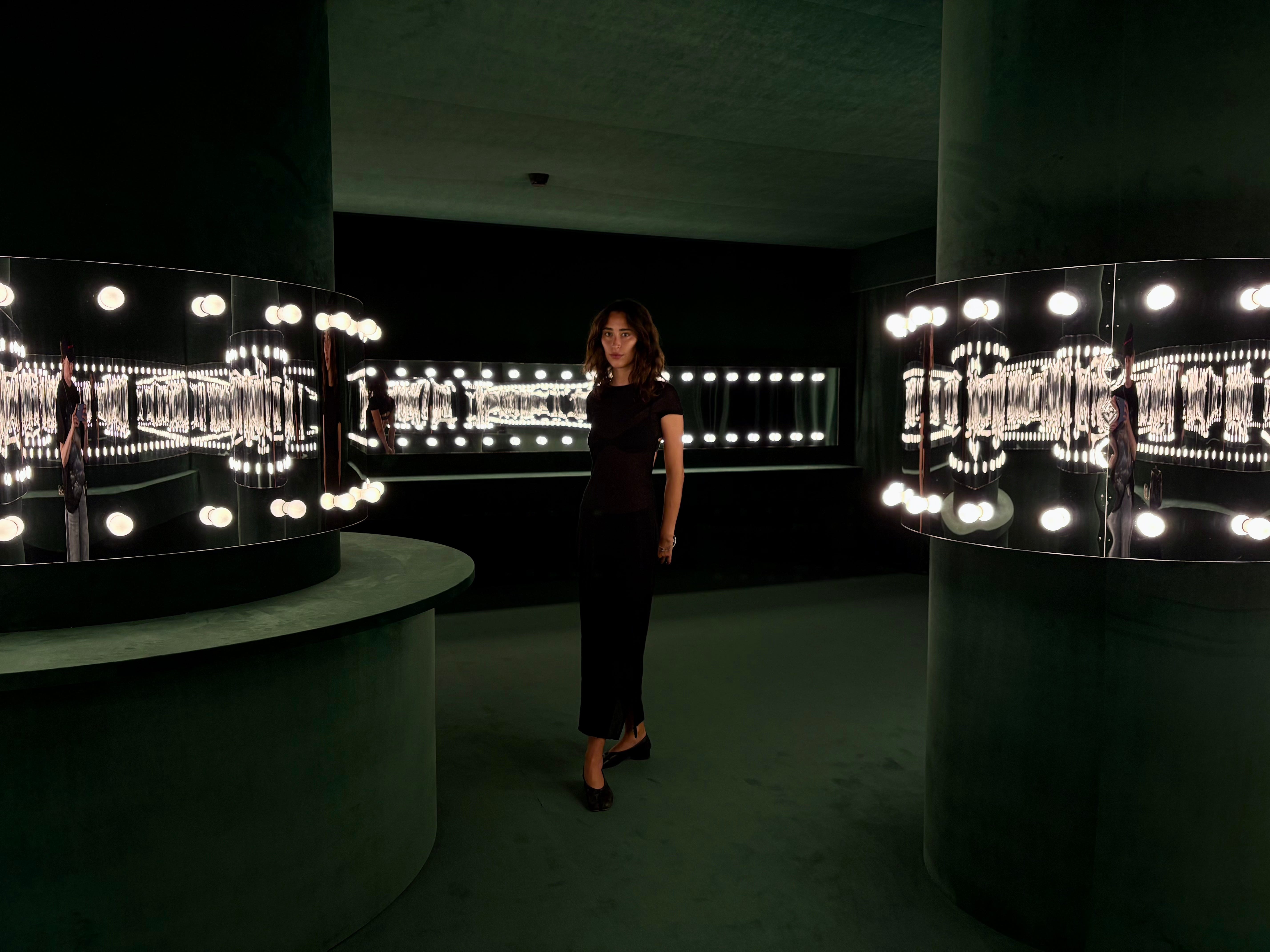
For SLEEK, I spoke with Chloe Wise about the exhibition and discussed why language breaks down, why lovers can end up speaking entirely different languages, and how the things we can’t explain often become the ones we can’t stop thinking about.
A somewhat clumsy bridge, but a bridge nonetheless: what many people couldn’t stop thinking about all week was whether Art Basel is doing digital art a favor with Zero 10.
To get straight to the point: Zero 10 in Basel wasn’t an experience in the sense of, »Something is happening here.« It wasn’t about entertaining visitors like Disneyland for the art world. And that was intentional. While the launch at Art Basel Miami Beach was an event and a spectacle, with Beeple’s robot dogs that, of course, went viral, and Art Basel Hong Kong impressed with a visually striking performance by Sougwen Chung, Basel deliberately kept things low-key.
The goal was education rather than experience. It was about the history of digital art. But is that what people go to an art fair for? Isn’t that more the role of a museum? And haven’t several museums just done exactly that, most notably the Tate with »Electric Dreams,« the Buffalo AKG Art Museum with »Electric Op,« LACMA with »Coded: Art Enters the Computer Age, 1952–1982,« and Kunsthalle Wien with »Radical Software: Women, Art & Computing 1960–1991«? Or you could simply go straight to ZKM in Karlsruhe. And how well can exhibitors at an art fair really deliver when it comes to telling the history of digital art? After all, the ultimate goal is to sell artworks, which means you're limited by what is available on the market, what fits into a booth, and so on. Can you really speak of »digital masterpieces« in that context, as ArtMeta did, and attempt to define a canon?
Sorry if I come across as a bit of a killjoy here by asking these questions. Today in Berlin, I ran into Trevor Paglen before his lecture, »How to See Like a Machine.« This was the first fair for which he was brought on as co-curator of Zero 10, with the goal of building a bridge between two of the many communities in the art world: the part of the traditional art world that also engages with digital art and the NFT space, which still largely revolves around a different group of artists. Of course, there is overlap. Galleries such as Fellowship, Nguyen Wahed, and Verse’s SOLOS program share artists with galleries like Société, Sprüth Magers, and formerly Pace.
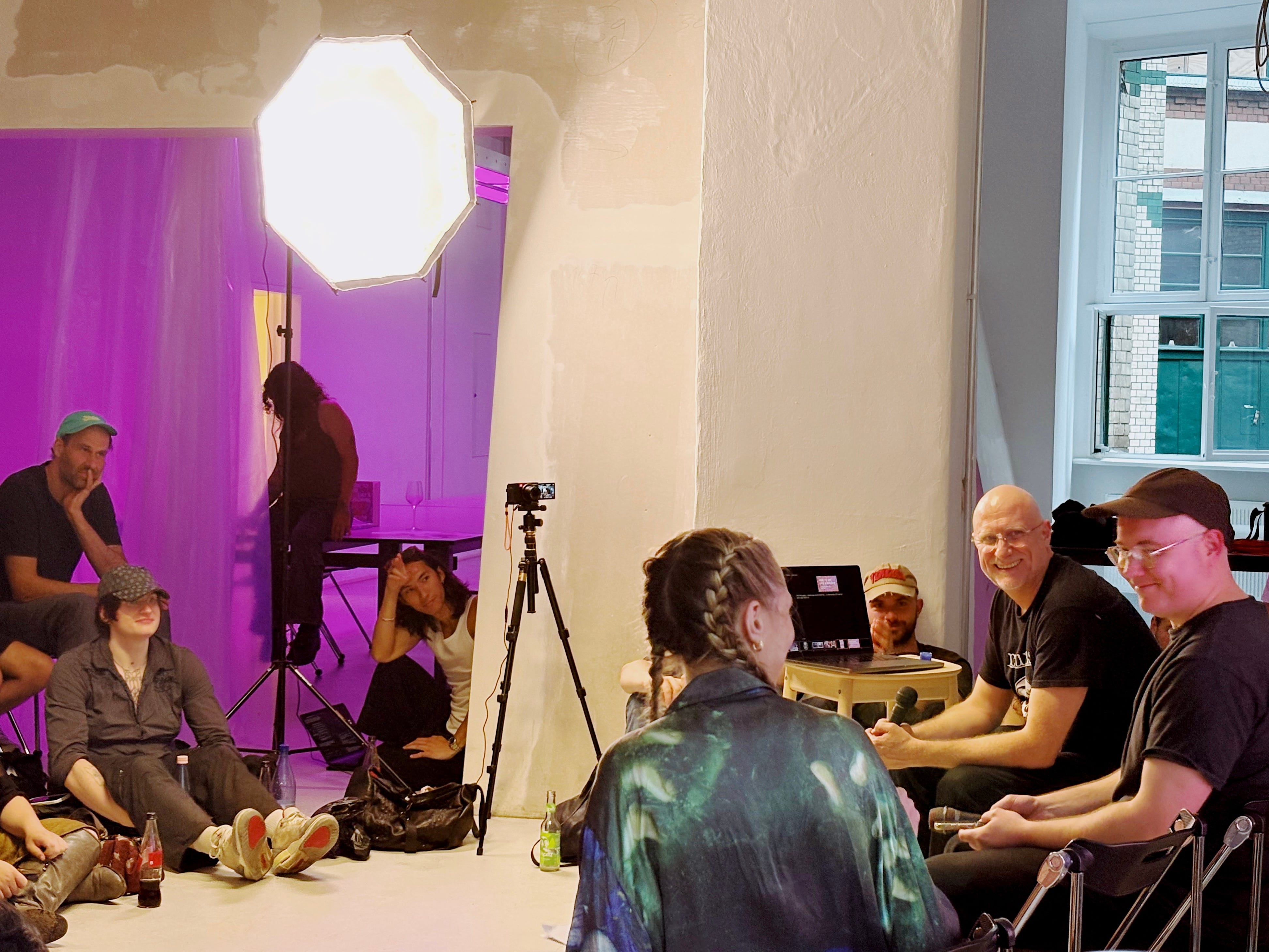
I mentioned to Paglen that today’s Substack takes a somewhat more questioning, or critical, look at Zero 10, and he agreed that there are, of course, things to criticize. What neither Paglen nor his co-curator Eli Scheinman can be blamed for is how difficult it is to bridge the so-called gap when there is, quite literally, a gap between the main fair and the building where Zero 10 is located.
Why not simply present works from Zero 10 in Unlimited? John Gerrard’s iconic flag works, for example, would have fit in perfectly. The same goes for Hito Steyerl’s »Green Screen« (2023) and Avery Singer’s »Shit Coin Maxi« (2025). And this is where it starts to get complicated. You begin to wonder why there is suddenly a physical separation, and on top of that, a separate curatorial category. Petra Cortright, Lu Yang, and many others have previously presented screen-based works in Unlimited. And if you follow Paglen’s argument, then almost everything being produced today is digital art anyway, because artists work with digital technologies. So why create a physically separate space for Zero 10 in Basel?
On the other hand, if Art Basel wanted to say, »All right then, show us what a generation of artists working with blockchain has been making,« then it shouldn’t be surprised if the result is a spectacle, or if people start handing out free NFTs, or... well, you get the idea.
In the Artnet podcast, Art Basel CEO Noah Horowitz explained what he hopes to achieve with Zero 10: attracting new galleries and new collecting communities. He also said that he hopes to give a new generation of artists greater visibility. But then why, in Basel, take a step back toward much more familiar artists and a much more restrained presentation? As Magnus Resch put it to me in conversation: »In Miami there were surprises. In Basel, there weren’t.« For example, Dazed shared a list of seven highlights from Zero 10, and with one exception, they were all already very well-known names: Avery Singer, Hito Steyerl, Rebecca Allen, UBERMORGEN, and John Gerrard. The exception was William Mapan, presented by the NFT platform Art Blocks.
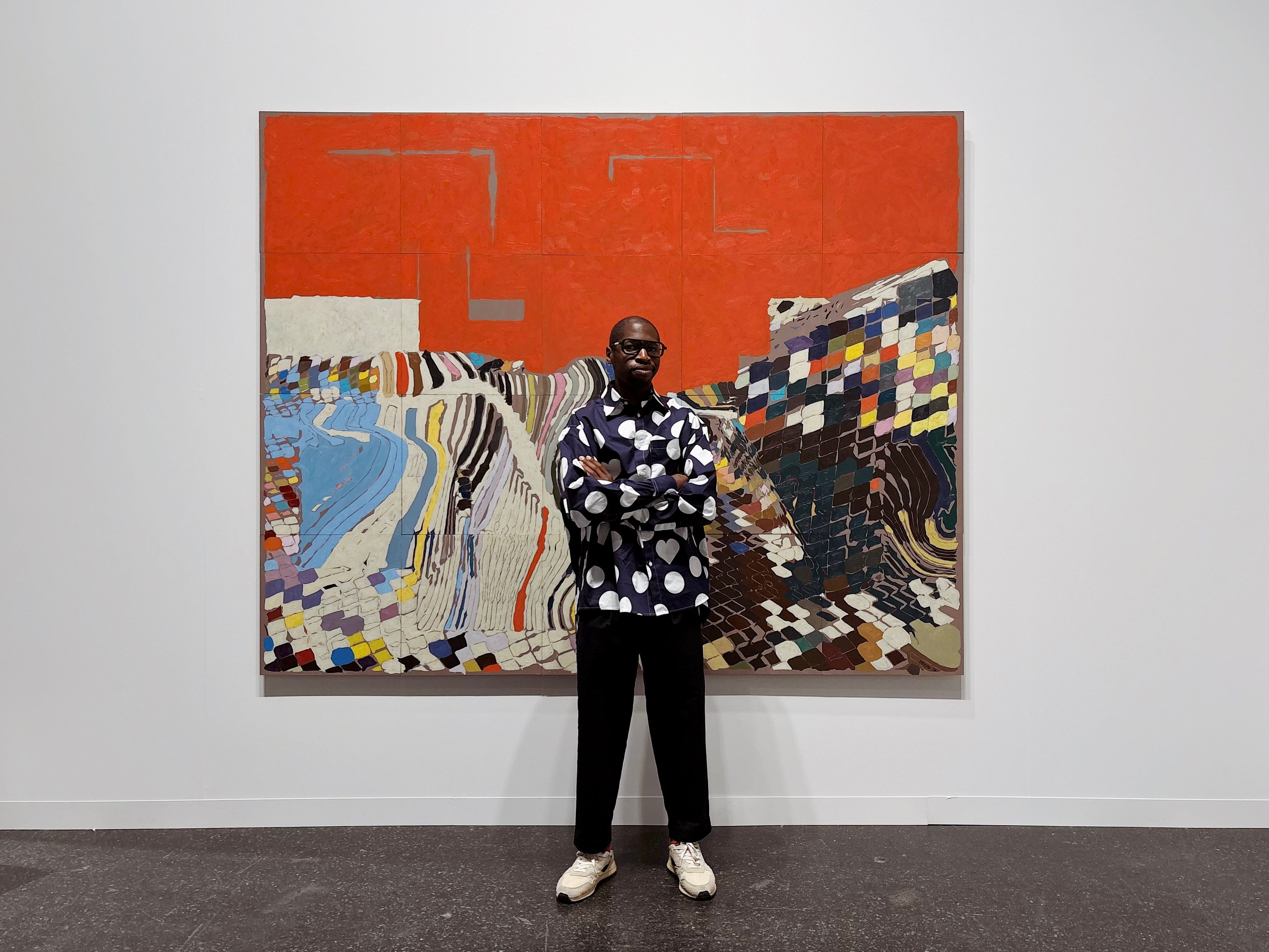
And, as Marc Spiegler is quoted in Artnet: »more galleries should be taking risks—mounting what he calls ›suicide booths‹—in the current market, to grab attention, rather than deferring to what’s expected. The danger of playing it too safe, of course, is being unmemorable. That may be the tale of this Art Basel.«
The same could be said of Zero 10. For these artists and galleries, a suicide booth would probably have been the safe-for-the-art-fair option. At the end of the day, it all comes down to one thing for every community, artist, gallery, and platform: I want digital art collectors, but for myself. We'll see who succeeds at that in the future, and by which means, or who manages to keep going the longest with the resources available to them.
Thank you for your time.
Take care,
Anika
Comments
Nothing yet. Say the first thing.
Sign in to join the conversation.