
I’m not in Venice. First of all. After a week of Gallery Weekend Berlin, who keeps this up, flying straight to Venice on a Monday morning, then to Munich for Various Others, maybe to Vienna for Vienna Digital Cultures, Zurich Art Weekend, Art Basel? Someone said to me on the phone today, when I brought up how people in the art world keep this up: many of these people don’t have a job. And I thought to myself that some of those who do have a job (artists, etc.) probably haven’t been paid by their galleries in quite a while, or have badly paid jobs in the cultural sector, and still somehow manage to be everywhere in constantly new designer clothes. Does this function according to the Benjamin von Stuckrad-Barre principle: you spend as much money as you want, not as much as you have?
But anyway, things went from the so-called dad joke in Berlin to the literal shitshow in Venice, from robot dogs to church bells. “It’s a fucking Disneyland,” art critic Tobias Timm quotes Florentina Holzinger, the artist of the Austrian Pavilion. “A bit fairground, a bit circus,” he writes. Of course it hurts to watch—meat hooks in the skin, a human bell—but the effect is not to look away, but to keep looking, smartphone in hand: because all of it looks insanely good in Instagram images.
So every now and then exhibitions are dismissed as “Instagram spectacles,” as happened last week in Berlin and this week in Venice. Meanwhile, everyone seems busily occupied with documenting on Instagram, as spectacularly as possible, that they are constantly right in the middle of it all: preview, party, people.
By the way, the weeks before Gallery Weekend were slightly more dramatic than necessary for me, because I had decided on a completely different kind of water instead: namely, a two-week relocation from Berlin to the Baltic Sea. So during the release week of Famesick by Lena Dunham, I was in a small town on the Baltic coast. The local bookstore, unsurprisingly, did not have the book. So I looked forward to coming home and going to a bookstore in Berlin, read and watched everything online in the meantime—interviews, reviews, whatever there was—and looked forward to the book even more because of it.
And then, once I was finally back in Berlin, it was sold out everywhere. Just to make sure, I walked through a couple of bookstores and asked everyone working there whether they were absolutely certain the book was sold out. It felt like every day my good friend Kevin Abosch asked me whether I was absolutely sure I didn’t just want to read the ebook. I was sure. At some point, Laurie Simmons, Lena Dunham’s mother, posted on Instagram that two bookstores in New York still had a few copies left. I decided those bookstores were probably a little too far away and that I would now have to become a bookfluencer, so that from now on advance copies would simply arrive unsolicited. On the Monday after Gallery Weekend, the book finally reappeared. Paperback. I’ll read it tomorrow.
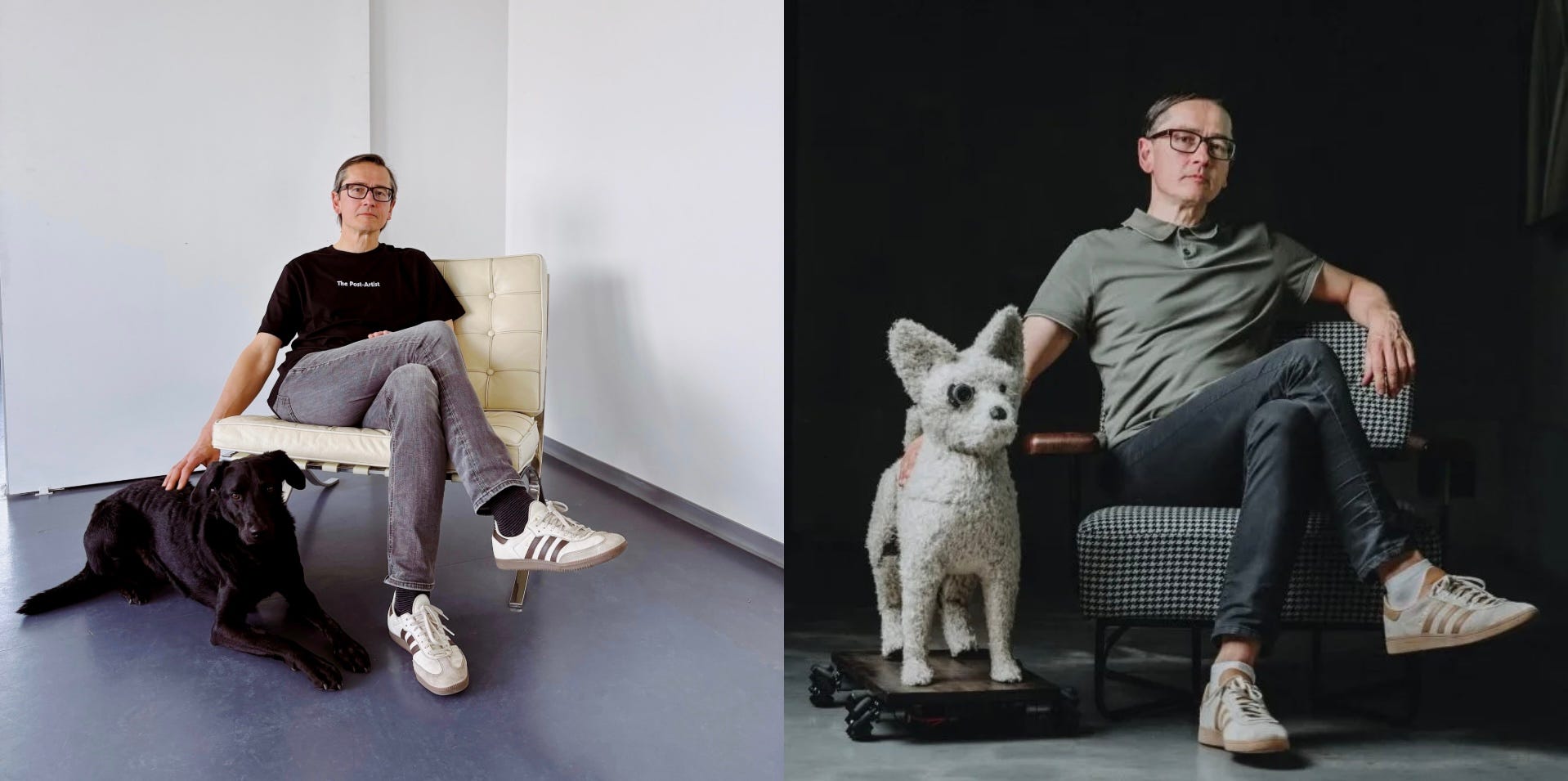
The Monday a week earlier, we opened Conflict of Interest by Mario Klingemann at the SLEEK Art Space in partnership with Art on Tezos. When he then stood in front of me, I remembered the photo of Mario with his robot dog A.I.C.C.A., and first of all, recreated the picture with my dog Willy. Mario Klingemann is someone who, as an artist, likes to be out in front when it comes to AI. As a response to the overwhelm of too much AI-generated content, he built a robot dog in 2023, A.I.C.C.A., that looks at images and poops out art criticism so that we don’t have to engage with everything ourselves. So three years ago, his answer was still: more AI as a response to AI, in order to cope better with too much AI.
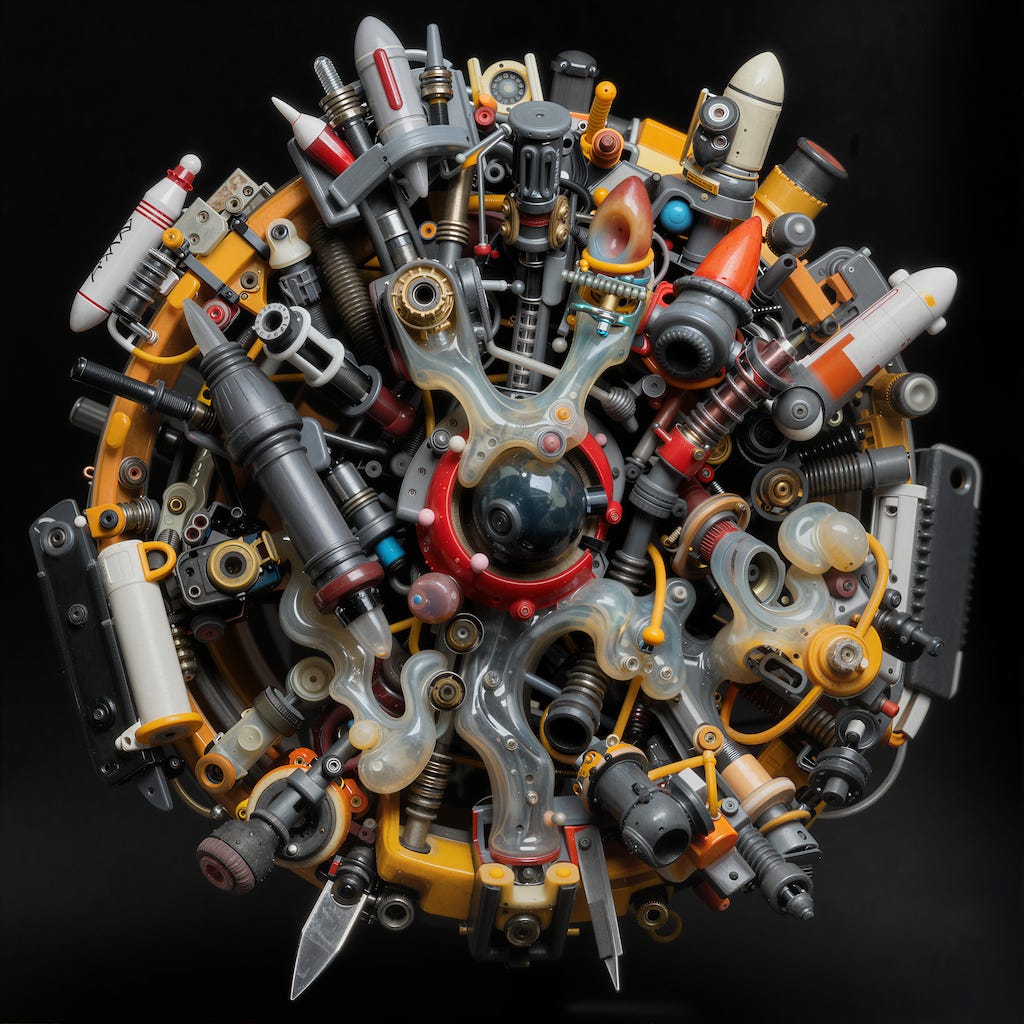
When we started working on the exhibition, I asked Mario Klingemann about the common thread running through his work. The long version can be read here (Curator’s Note in SLEEK: Attention Is All You Don’t Need) and here (Mario Klingemann in conversation with me for The AI Art Magazine: Why Make Images at All Today?). The short version: conflict of interest. Because he has always immediately embraced new technologies, there is no visual common thread through his work. Until now, that was the conflict of interest. But by now he is asking himself whether, and how, he can still produce images as an artist at all. Which reminded me of the crisis photographers went through when Instagram was new, everyone could suddenly share photos, and photographers started asking themselves what exactly they were supposed to do now.
Mario Klingemann has found a solution for himself. He calls them inert images, and he doesn’t make them—he found them. He collects slides, hundreds of thousands of them. He works his way through the collection bit by bit, trying, like a machine, to recognize patterns. They are “the most boring images imaginable,” as he says. His question, as Elke Buhr summarized it in Monopol: “When we are flooded with stimuli, does attention perhaps sharpen again when we engage with images that are this unspectacular? Does our ability to differentiate increase? Do we suddenly start discovering something in these average pictures of mountains, meadows, and inconspicuous deserts?”
And I mean, how do you position yourself as a chronically online artist amid discussions around tasteslop (Emily Segal), slop depth (Hadi Afif), post-AI, post-medium, the post-artist, protocol art, the new bad image, and, generally, within what Kyle Chayka has just described for The New Yorker as the lo-fi rebellion against AI. Mario Klingemann has chosen retreat instead; he is looking for the lonely island between slides and hard drives from flea markets, and with works he calls Weapons of Mass Distraction. He asks himself: how can one work with AI in such a way that an image still comes out as an image, but everything that would scream for attention gets destroyed in the production process?
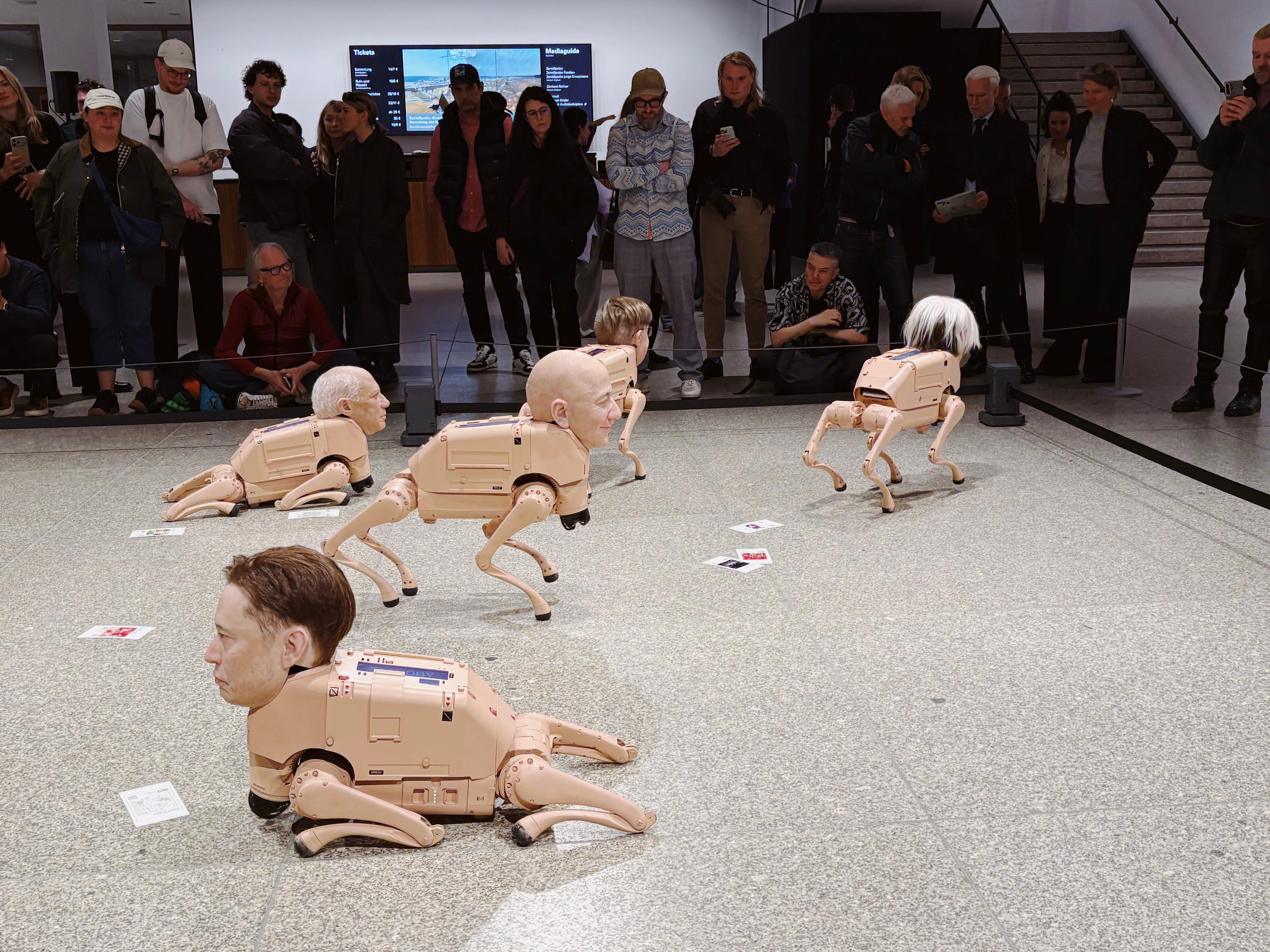
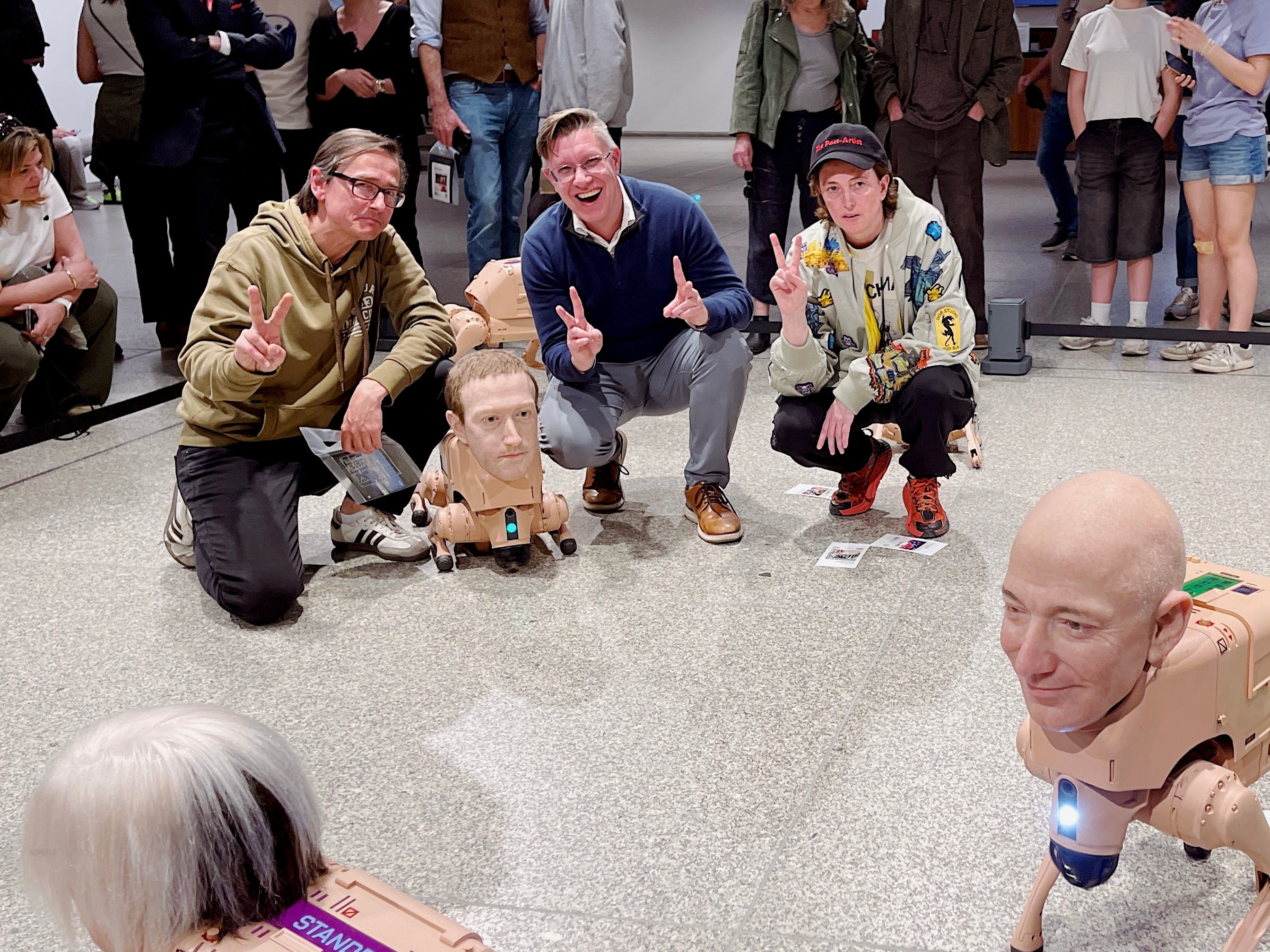
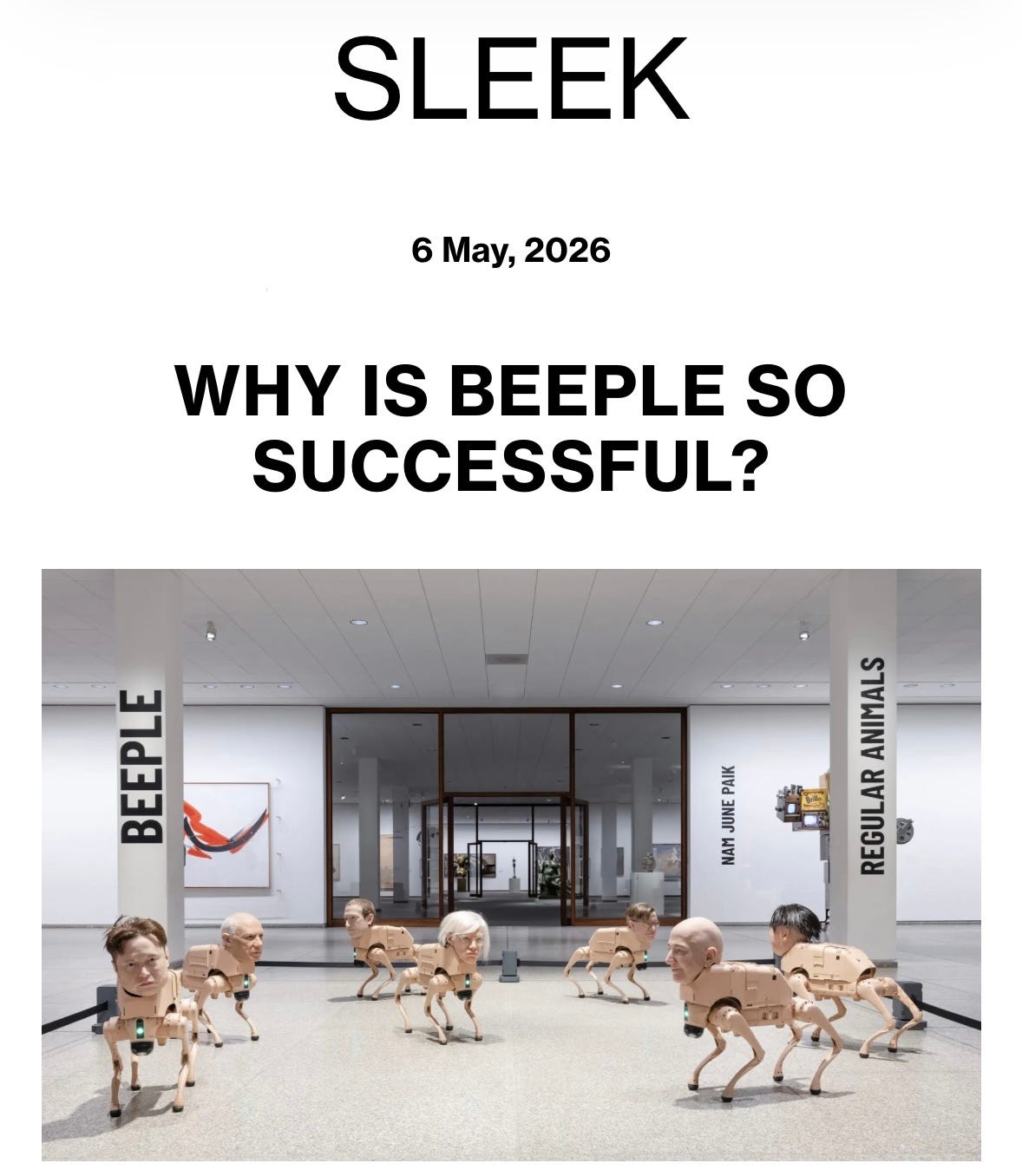
On Tuesday evening, there was the counterprogram at the Neue Nationalgalerie with the opening of Beeple’s exhibition Regular Animals: attentionmaxxing. Also there: Maurizio Cattelan, painting star Katharina Grosse, who at some point also made an NFT, Carolyn Christov-Bakargiev, who at some point curated the documenta and positions Beeple as the “real outsider of the art world,” and Rainald Goetz. But I think he is always there.
And then the media discourse revolved around one-liners and the supposed lack of depth of the robot dogs, and I found myself wondering whether good art is not always first a one-liner, and then something more once you look again and are familiar with current debates. One would do the robot dogs a greater favor by not introducing them with a PowerPoint presentation about robots, but by talking about image consumption, image circulation, vulgar images, and maybe also slop depth. I think Beeple slid from one extreme (crypto) into the other extreme (the institution), and quite a lot started skidding around in the process.
And because the vibe in the media was fairly annoyed, I got annoyed and started thinking about why Beeple is so successful. You can read my text here.
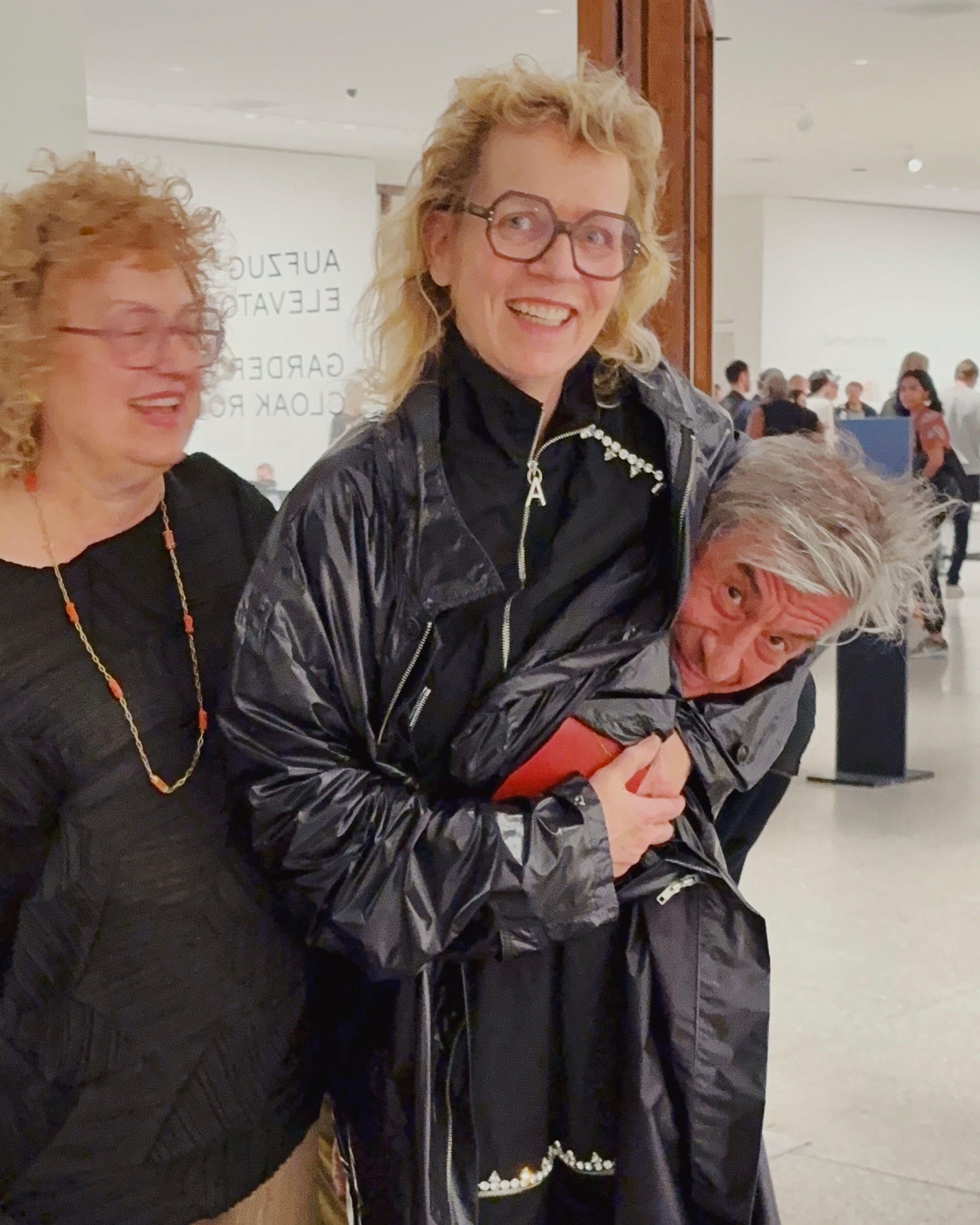
What else?
Thursday was the opening at Numéro Berlin by Olivier Zahm of Purple Magazine, and I was glad that Götz Offergeld once gifted me the OOR Studio gang jacket, because it meant I didn’t stand out too much somewhere between Sven Marquardt and the Elevator Boys, I think. People like to say that Schlachter 151 is the it-location in the city, and honestly, how exactly are you supposed to dress for that? The gang jacket solves the problem, except, of course, you are not alone with it.
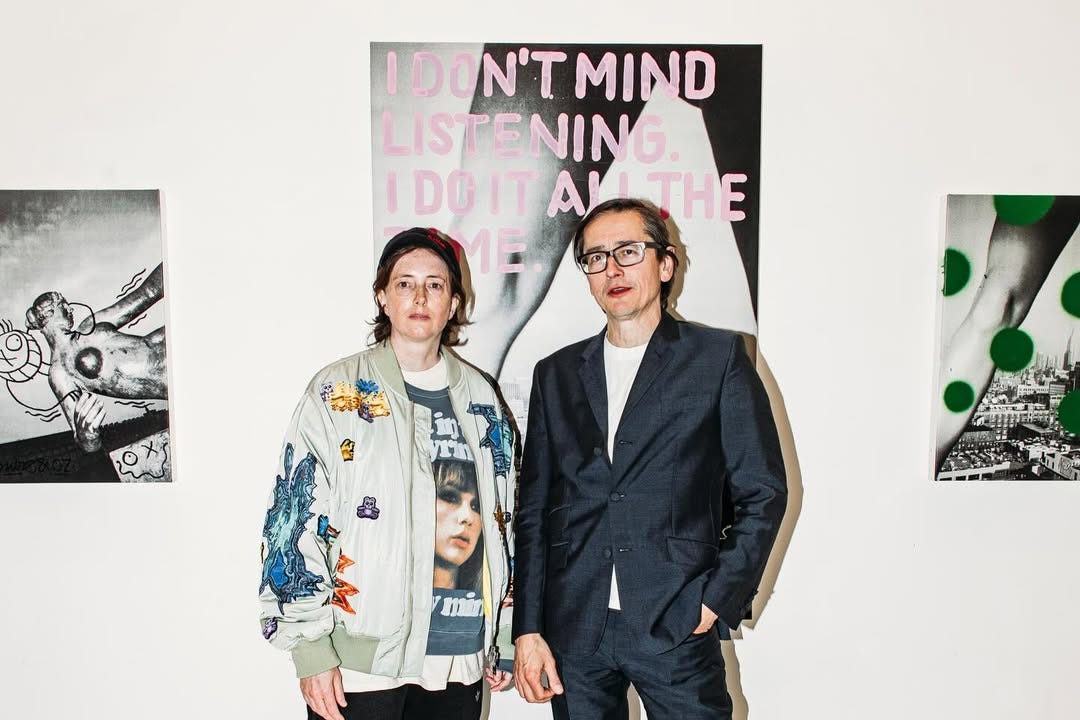
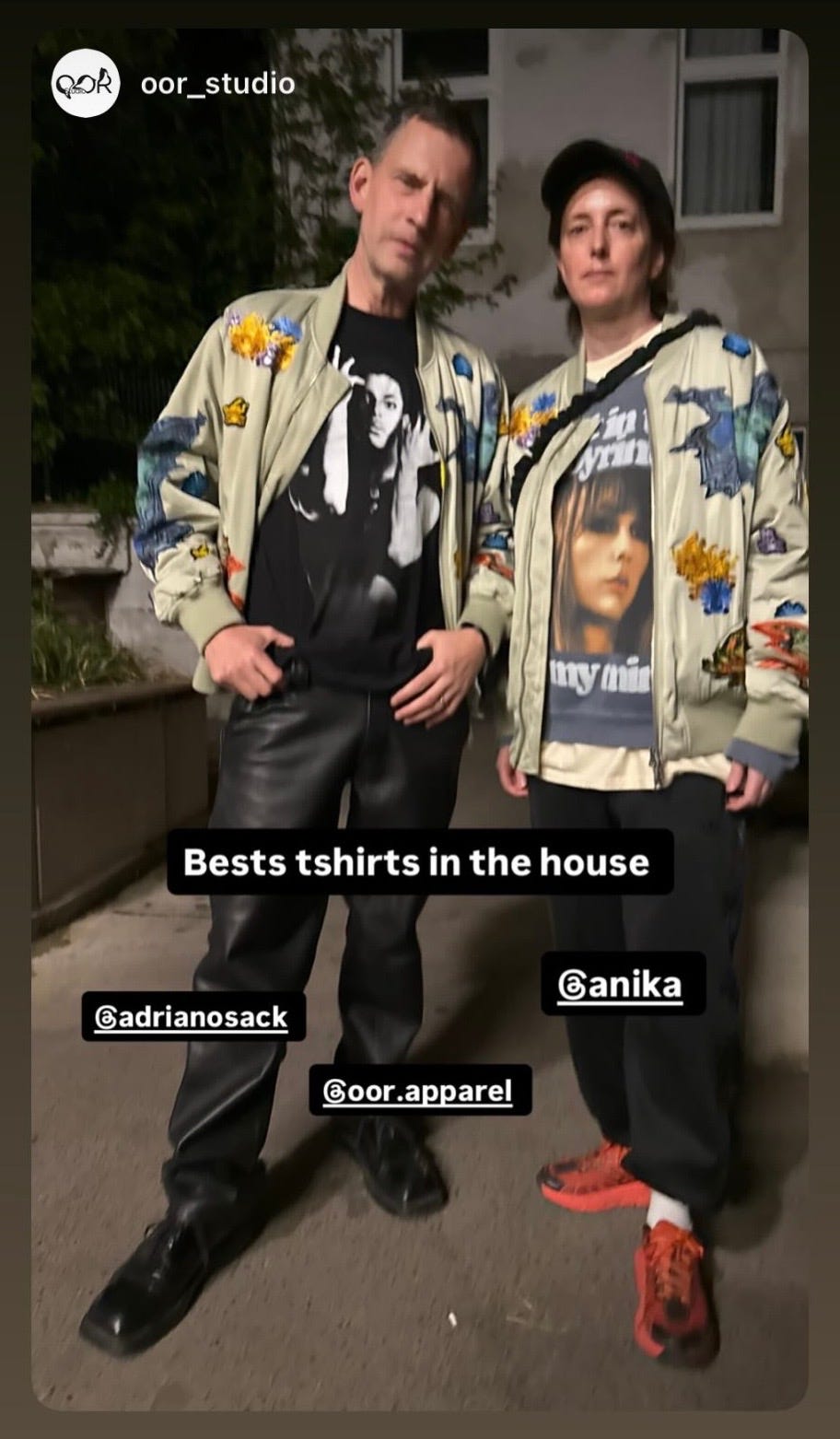
Adriano Sack, legendary style editor, had the same idea I did: wear band merch underneath it. In his case it was a Prince t-shirt; in my case it was my Taylor Swift Midnights jumper. And of course he didn’t want to discuss with me whose merch choice had been better; against Prince, I could only lose. Because it was already late, I admitted defeat.
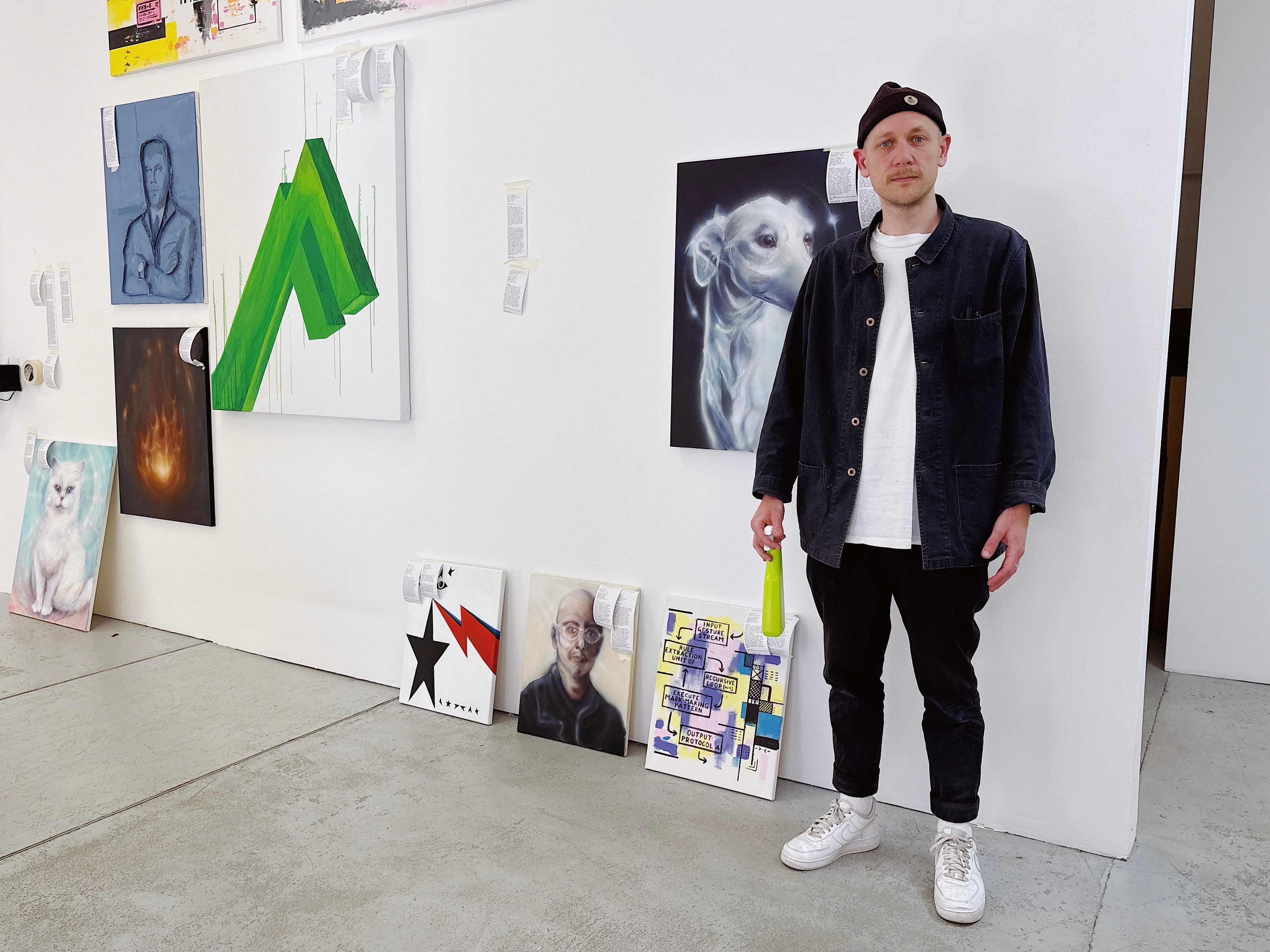
On Friday, we went to see a few exhibitions. First, Performance Review by Jonas Lund at Office Impart, where an AI agent commissions works on demand and the exhibition only comes into being during the exhibition itself. Conceptually, probably one of the best exhibitions during Gallery Weekend.
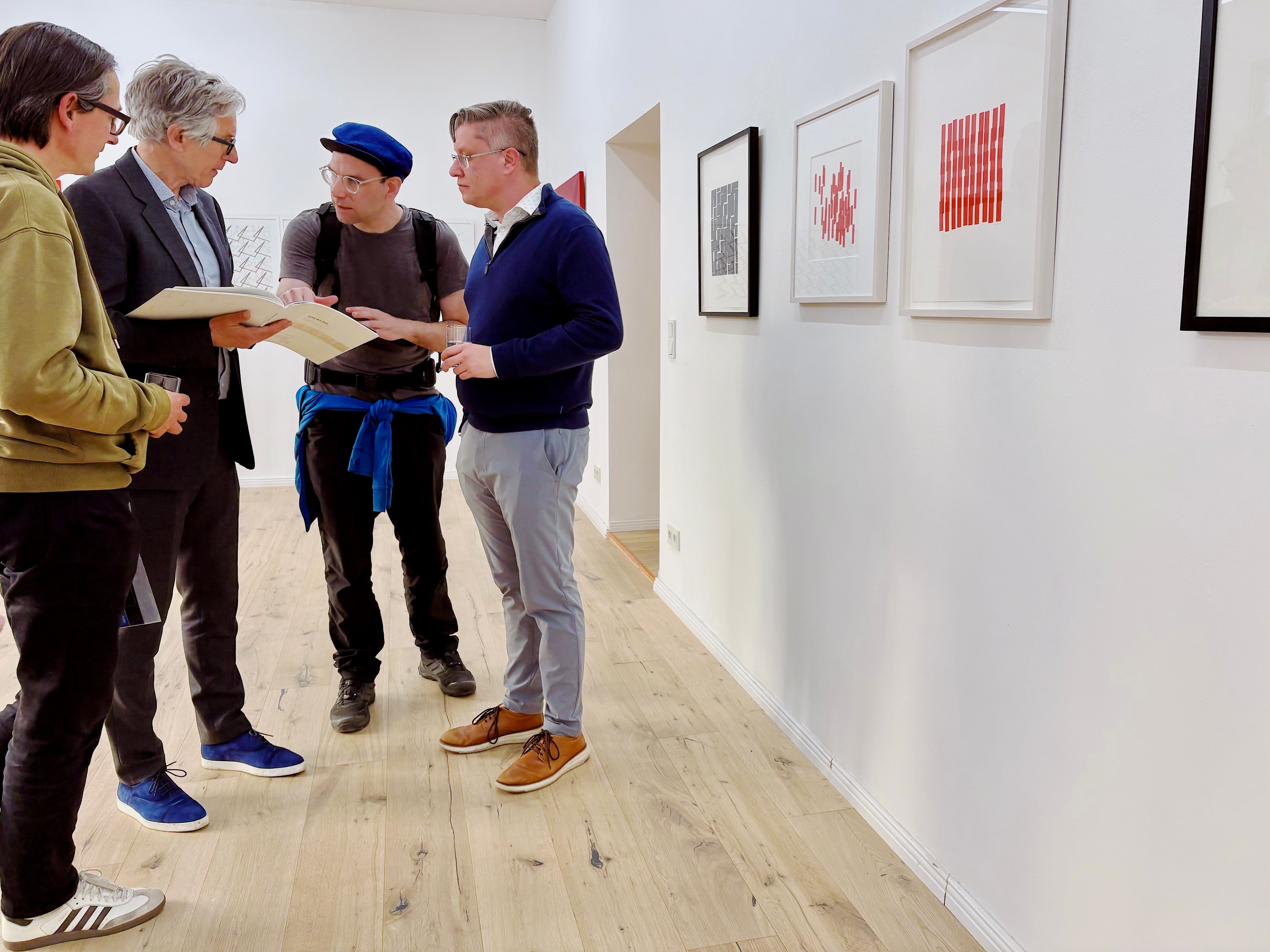
And then we went to Charlottenburg for the opening of Vera Molnár, the grande dame of generative art, at DAM Gallery.
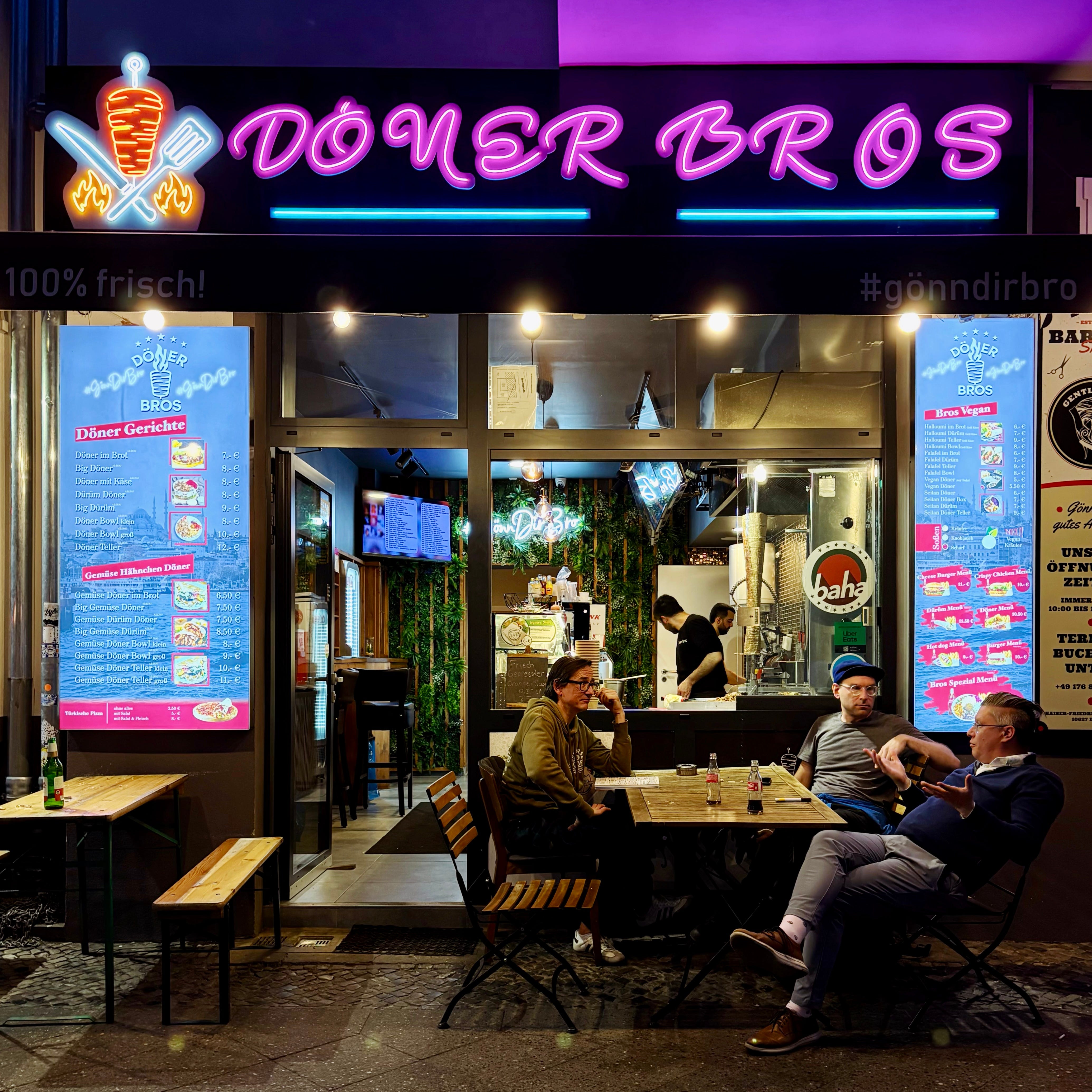
And then I got a few messages asking whether the Döner Bros image had been AI-generated. Of course not. How did it happen? It was Friday evening, we were somewhere in the middle of nowhere in Berlin, started walking, and then suddenly found ourselves in front of Döner Bros. Very easy to find when you don’t know the area and you’re hungry.
Saturday was a lot too: lines in front of the galleries, the ZEITmagazin party, dinner, etc. Sunday could finally come, and with it, the end of Gallery Weekend week.
On Sunday at noon, there was also the epic rant by Markus Lüpertz during his artist talk at the Neue Nationalgalerie. Lüpertz upstairs, the robot dogs downstairs. And of course he could not resist taking shots at Beeple and the robot dogs while presenting himself as particularly brilliant, because the attention has to come from somewhere if painting itself no longer lends itself quite so well to a viral hit.
“When I see these Mickey Mouses running around on the floor here, these dogs downstairs, what does that have to do with a museum? You can do that outside and put a hat next to it and collect money, but in a museum it goes too far. We are not in an event temple here. Art is not an event.” – Markus Lüpertz
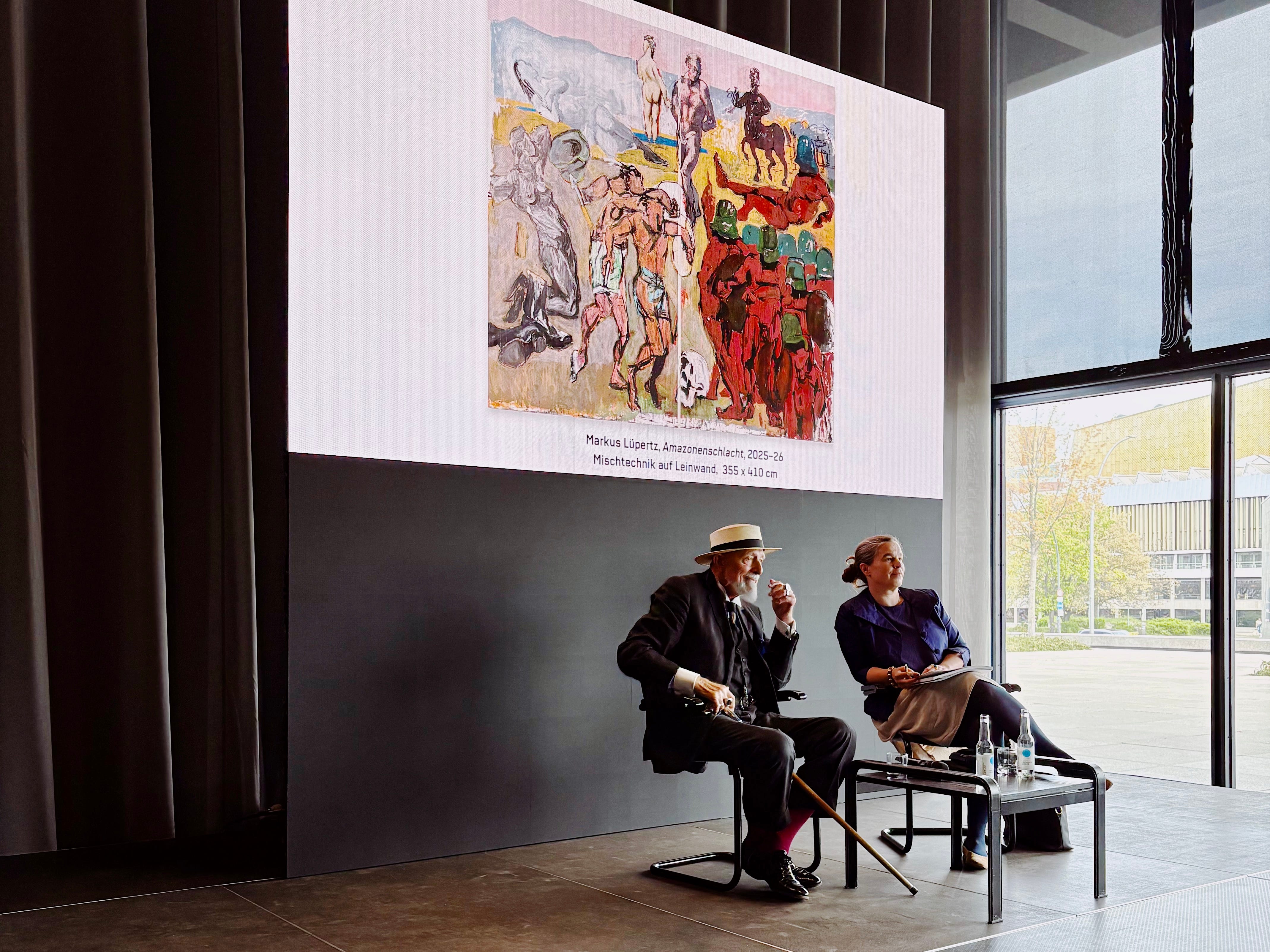
By the way, Lüpertz doesn’t own a smartphone. As an emerging artist today, he would probably have a hard time and likely would not have an audience sitting in front of such a stage. Born a few generations later, he would probably be trolling audiences on the internet today.
And for those who still want to keep reading:
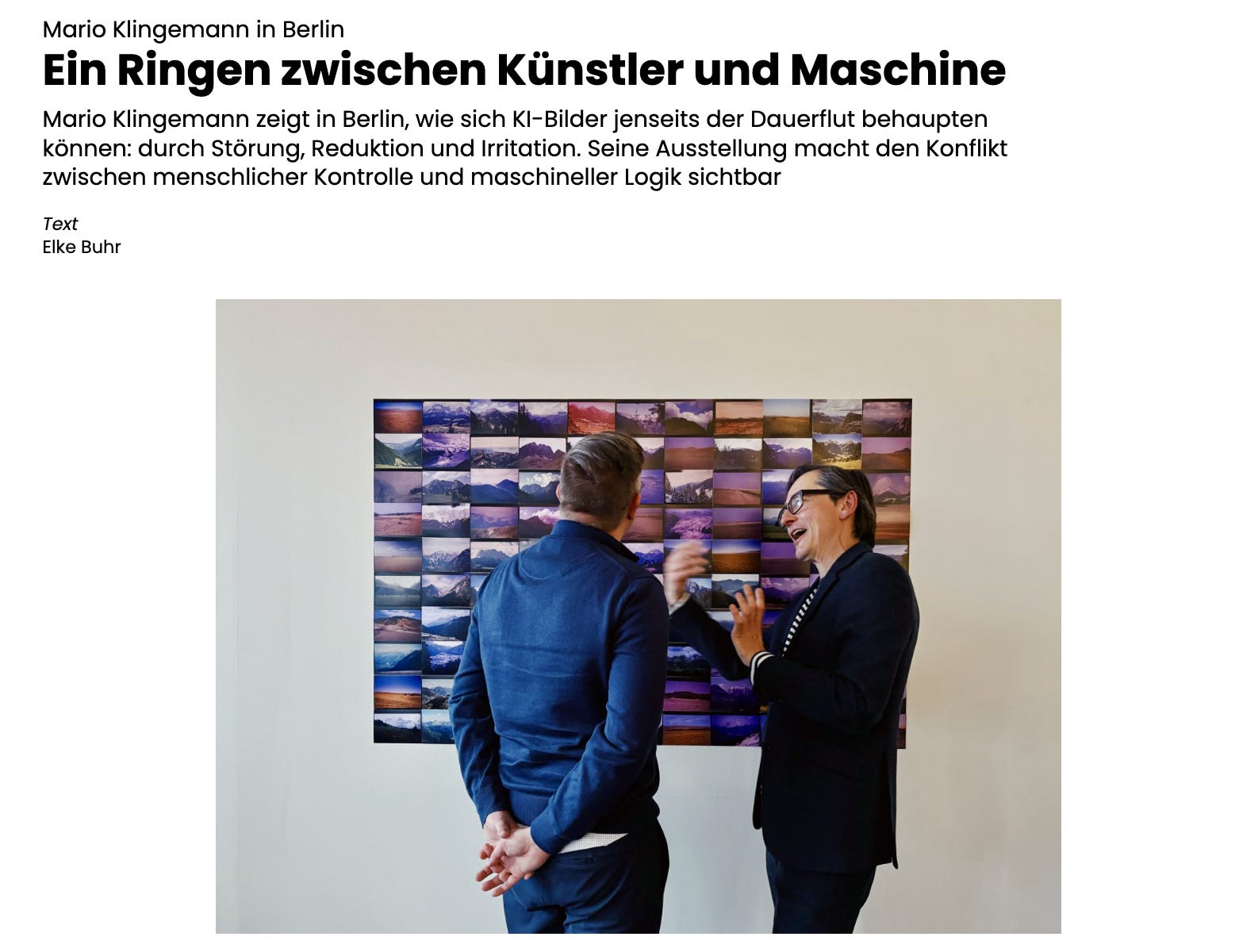
Elke Buhr, editor-in-chief of Monopol, wrote about Conflict of Interest by Mario Klingemann. Here.
I tried to answer the question of why Beeple is so successful. Here.
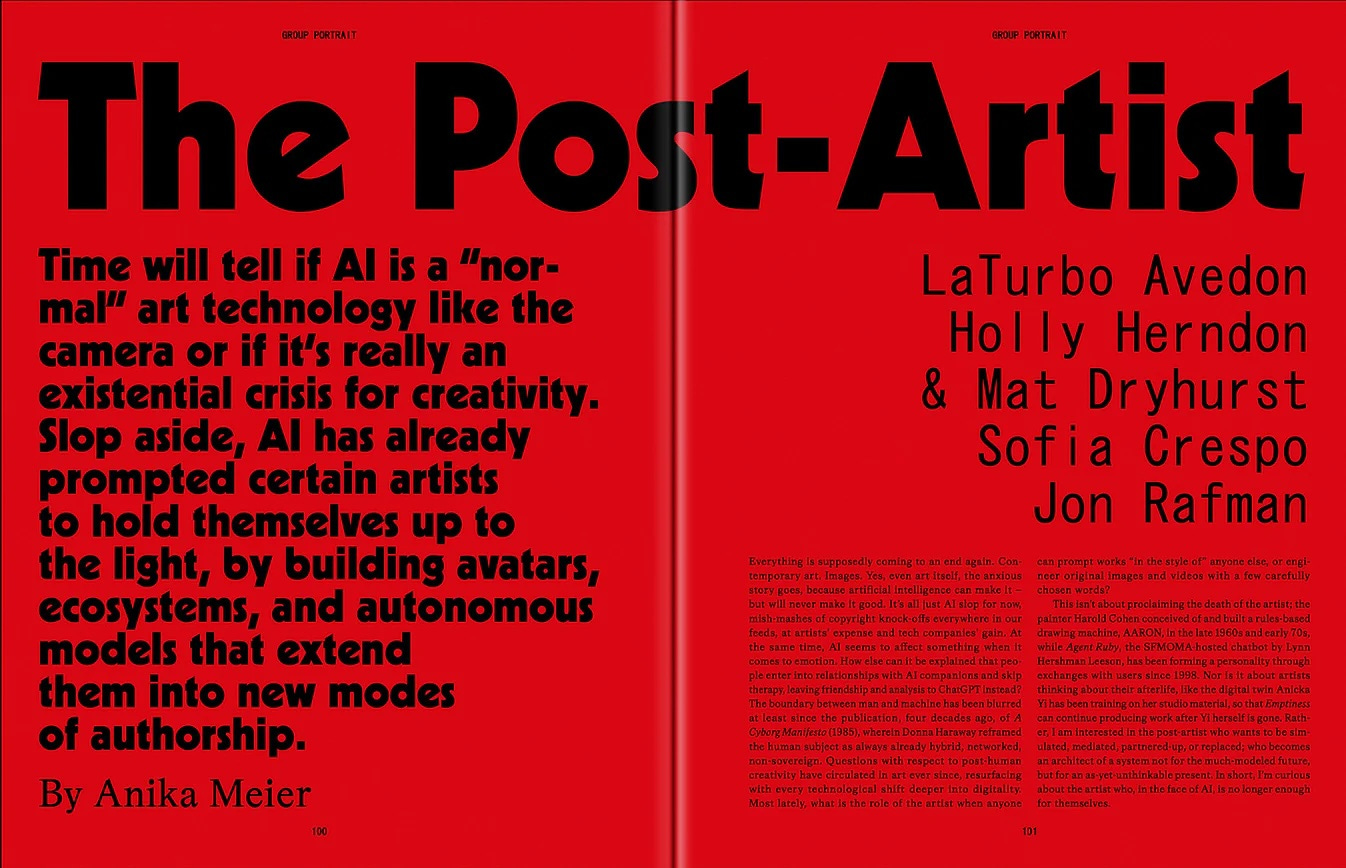
And then I started thinking that the term post-artist might be useful, and gave it a try. In print: Spike #87 (Spring 2026). The issue can be ordered here.
Thank you for your attention!
Take care,
Anika
Comments
Nothing yet. Say the first thing.
Sign in to join the conversation.