
Like most of Eastern Europe, communism in Romania ended in 1989.
It’s been a slog since, a slow climb out of the communist hangover, a gradual grind from those dark days into a relatively prosperous, European Union nation.
The Neighbor's Goat: An American in Romania is a reader-supported publication. To receive weekly posts and support my work, consider becoming a free or paid subscriber.
As an American who grew up in a totally different system but living in Romania now for many years, the communist past can both fascinate and frustrate, the latter in terms of its lingering effects on the collective mentality that I’ve observed over a two-decade period. But it’s also a historical legacy that helps me better understand and feel compassion for the country and its people, especially those who lived through it.
It’s not always a legitimate excuse after so many years, but it sometimes explains things. Old habits die hard but they also perpetuate through offspring.
Still, nearly four decades later, communist nostalgia persists. I’d divide that into two categories.
First, there is a large swath of the 19 million Romanians – multiple polls put it around 50% and higher – who believe life in Romania was better under communism. This idea played a central role in the 2024 presidential election during which an ultranationalist candidate surged and nearly won by tapping into this nostalgia and disillusionment, preying on the frustrated and spewing pro-fascist rhetoric. I’ve heard this sentiment directly from people over the years, mostly pensioners or middle-aged, often in villages, but the demographic has skewed surprisingly younger and more urban in recent years, as evidenced by the election. But I can’t think of a single Romanian in my orbit who would swap today for the communist era.
Secondly, there’s the softer side, the other kind of nostalgia, like reminiscing about certain fondness and memories – it wasn’t all bad – and even embracing elements of the communist era or poking fun at it.
Warsaw and other Polish cities still have their “milk bars,” cafeteria-style lunch spots from the communist times that offer a delicious, reasonable meal, a kind of “meat and three” as they say in the American South. Budapest is famous for its “ruin bars” in which abandoned, communist-era buildings were converted into hip, eclectic pubs and clubs. Berlin has its sleek DDR Museum, named for the initials of the former East Germany, giving visitors a look at daily life beyond the Berlin Wall before it fell in 1989. Bucharest, Romania’s capital, has a similarly themed museum that’s still on my list to see. Other communist museums are darker, like the Museum of the Occupation of Latvia, which I visited many years ago in Riga, a riveting but haunting experience about life in the USSR and under the KGB’s grip (the three Baltic countries weren’t independent until 1991).
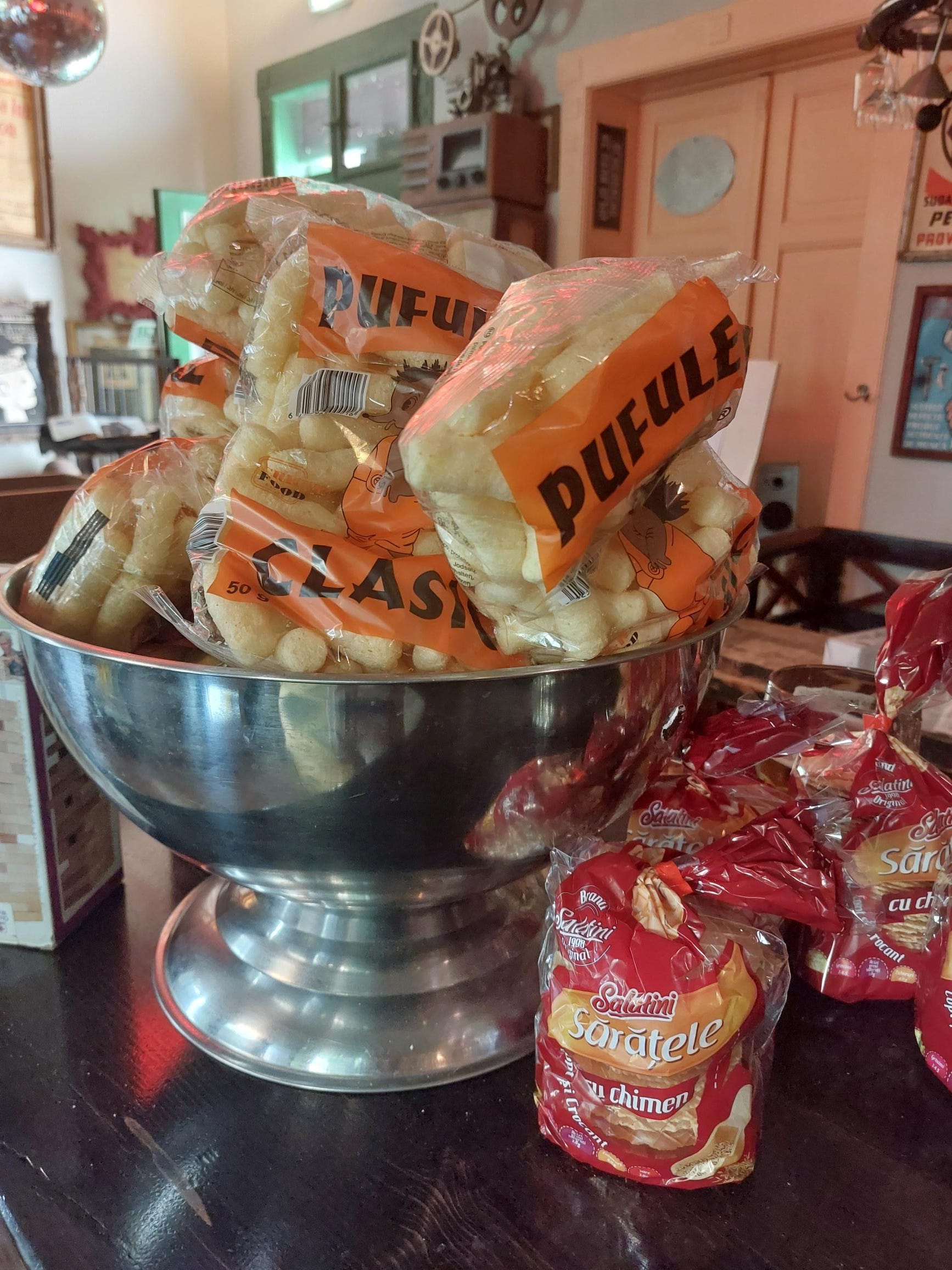
In Romania, a symbol of this softer nostalgia is pufuleți – corn puffs. The humble snack of extruded corn made from cornmeal remains as popular as ever. You can’t go far in Romania without encountering them. Grocery stores have enormous quantities; convenience stores and gas stations carry them; even big-box retailers similar to Home Depot and others stock them near the cash registers for impulse purchases from hunger pangs.
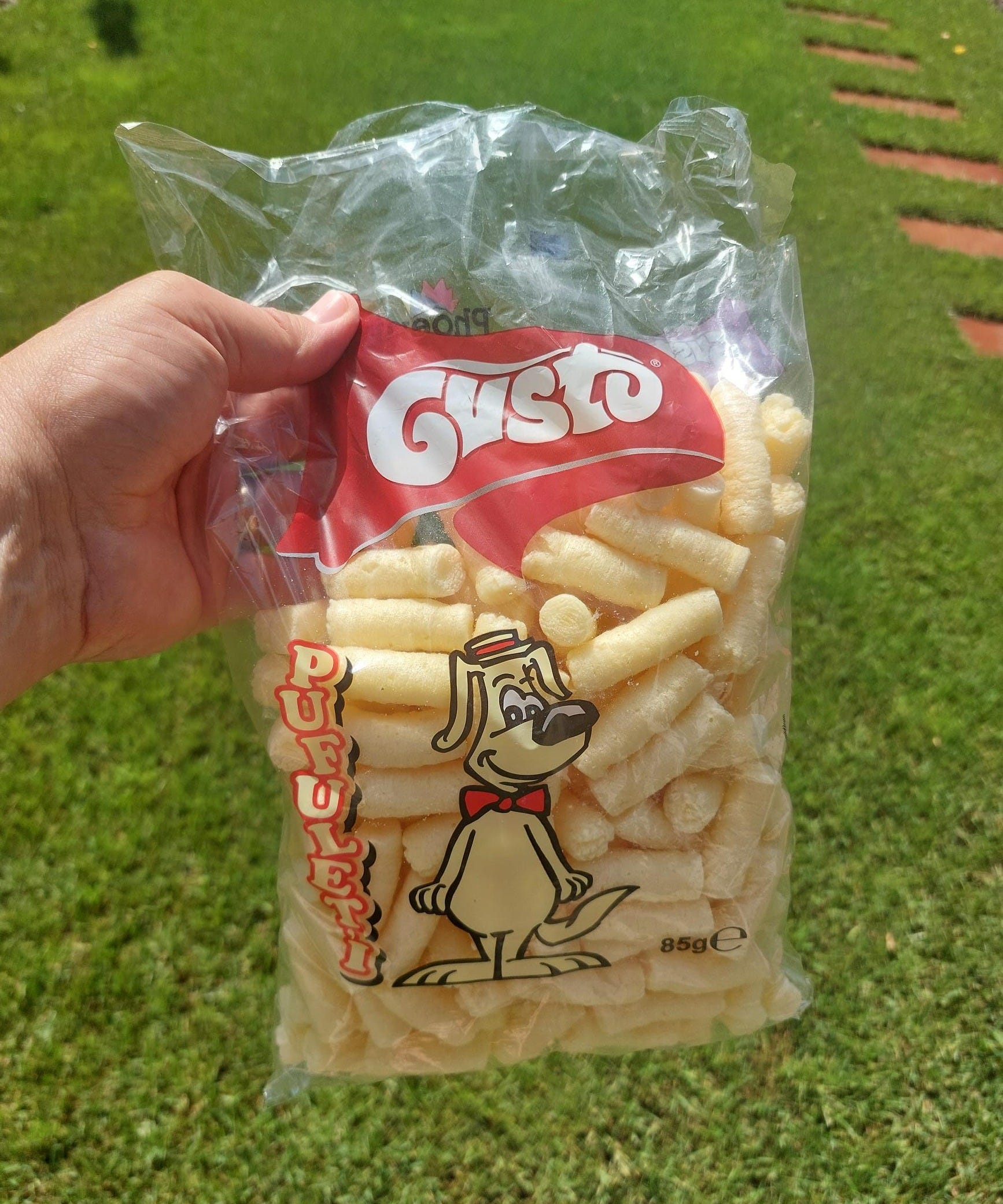
Pufuleți, pronounced poo-foo-letz, are a Romanian classic, crispy snacks that are slightly salty and pretty much addictive for adults and kids, who are often seen holding a bag. I’ve even seen pufuleți in Romanian and Eastern European markets in the United States for those in the diaspora craving a taste of home.
Many Romanians say the puffs in communist times were even better, coated with powdered milk, though today there are more flavors, including cheese, ketchup, wasabi, paprika, fruit, chocolate and so on, even organic ones. I prefer the classic corn puffs, plain but lightly salted, from the Gusto company. Depending on where you buy them, an 85-gram bag (3 oz.) can be had for around 2 Romanian lei, or less than 50 cents in American dollars.
This nostalgia crossed my mind lately, so this week I made a return trip to Scârț Loc Lejer, a well-known watering hole in my adopted hometown of Timișoara, Romania, the city that ignited the Romanian Revolution that took down communist dictator Nicolae Ceaușescu in 1989.
The bohemian hangout, a short walk the city’s main squares and my home, is in an old house, a former residence with minimal signage, but everybody seems to know where it is. The name, by the way, is hard to translate, but the pub’s slogan sums it up nicely: “A chill place.” There’s a small bar with a patio and a separate community theatre upstairs. Out back there’s a large, verdant courtyard with chairs, benches and hammocks, a cool spot except for the mosquitoes. It’s rustic, with a no-fuss feel.
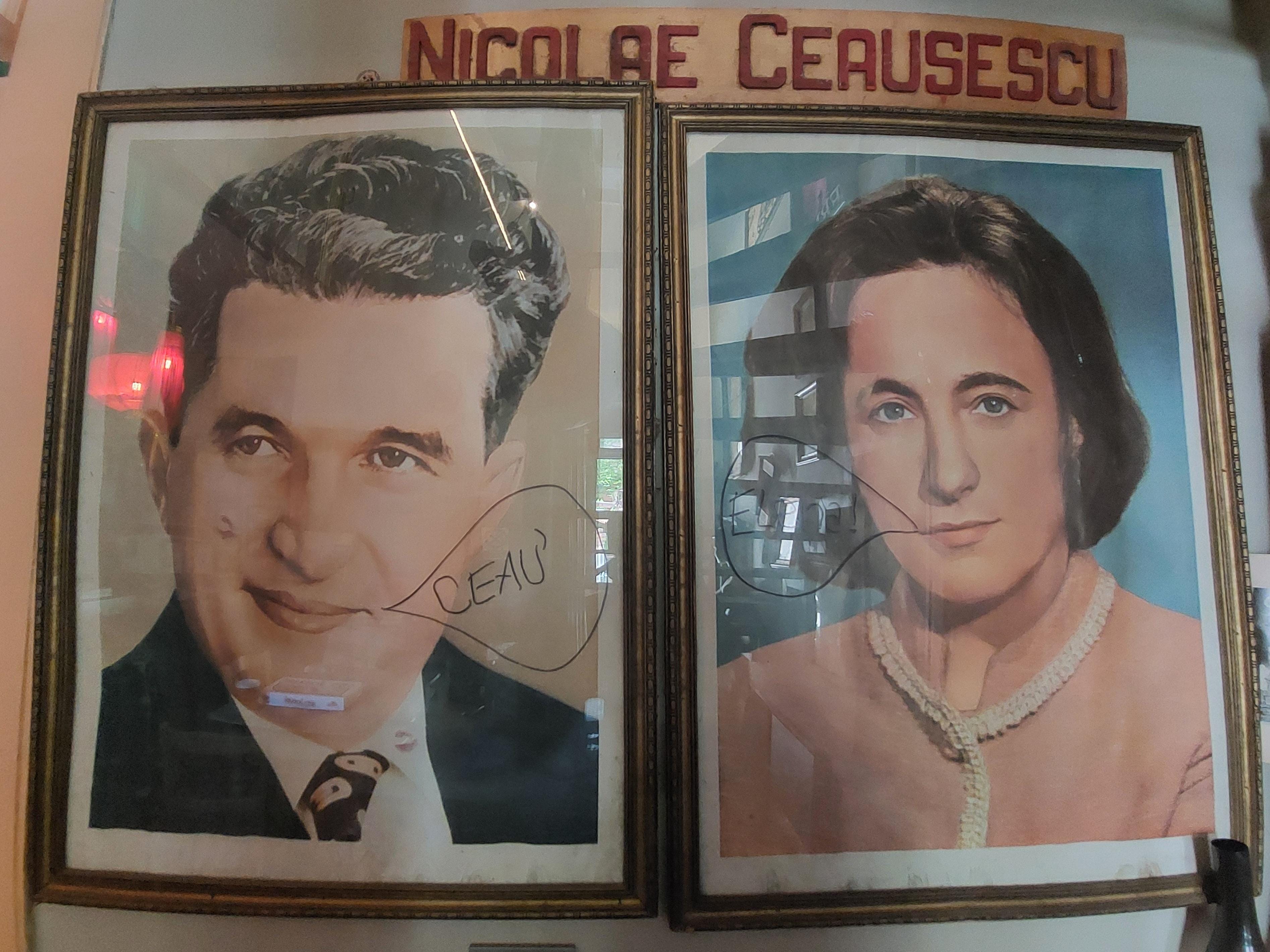
The basement, however, was my destination, after ordering a cold draft of Romanian beer Ciuc and introducing myself to the laid-back bartender, Mihai (Michael), who turned the light on for me as I headed down the steps near the creepy portraits of Ceaușescu and his wife, Elena, who were executed on Christmas Day 1989.
Why the basement?
It’s home to Scârț’s Museum of the Communist Consumer, which contains thousands of Romanian products used during the “Golden Age,” as Ceaușescu’s propaganda called it.
The memorabilia is organized in rooms like a Romanian apartment, the kitchen, living room and bedrooms. The objects are endless, mostly in good shape if a bit dusty, from old TVs, radios, turntables and rotary-dial phones to kitchen articles and household decor, bicycles and toys, school supplies and uniforms, vinyl records, propaganda magazines and more. The hammer-and-sickle logo of PCR, the Romanian Communist Party (Partidul Comunist Roman), also stared out at me, eerily.
The windows were cracked open and the air was fresher and not musty like I remember from prior visits. It’s a quirky collection of bric-a-brac – continually growing through sponsors and contributions since its inception in 2015 – and interesting to see, study and ponder. The museum visit is free (donations accepted), self-guided and takes all of 15 minutes. Schoolkids have field trips there and tourists seem to consistently find it. After I poked around the rooms and took photos, turning the lights on and off as I went, I headed upstairs.
Mihai invited me to sit at a table on the veranda, where he and several others were sipping beers and dragging on cigarettes.
The bar serves everything from cocktails and old-school Romanian beers to fresh lemonade and coffee, and offers nostalgic snacks that are still popular, including pufuleți, of course; Eugenia, a cookie sandwich with cocoa cream; ROM candy bars (good treats that are a play on words – rom means rum in Romanian, the flavor it has, plus the obvious country abbreviation); caraway-seed wafers; and salam de biscuiți, a traditional sweet with cocoa and crumbled cookies that looks like a tube of salami that’s sliced into circular pieces.
After chatting with the group of Romanians, including a software engineer who earned his doctoral degree in math from UCLA and a nursing student, plus an Australian retiree I’d met another time there a while back, none of whom were longing for communism – I headed home, grateful to live in a democracy but ever cognizant of Romania’s turbulent, multi-layered past.
This Substack is reader-supported. To receive new posts and support my work, consider becoming a free or paid subscriber.
If you don’t want to commit to a subscription, but you’d like to show appreciation for my writing on The Neighbor’s Goat, please consider Buy Me A Coffee.
I like long black or flat white. Thank you!
Comments
Nothing yet. Say the first thing.
Sign in to join the conversation.