
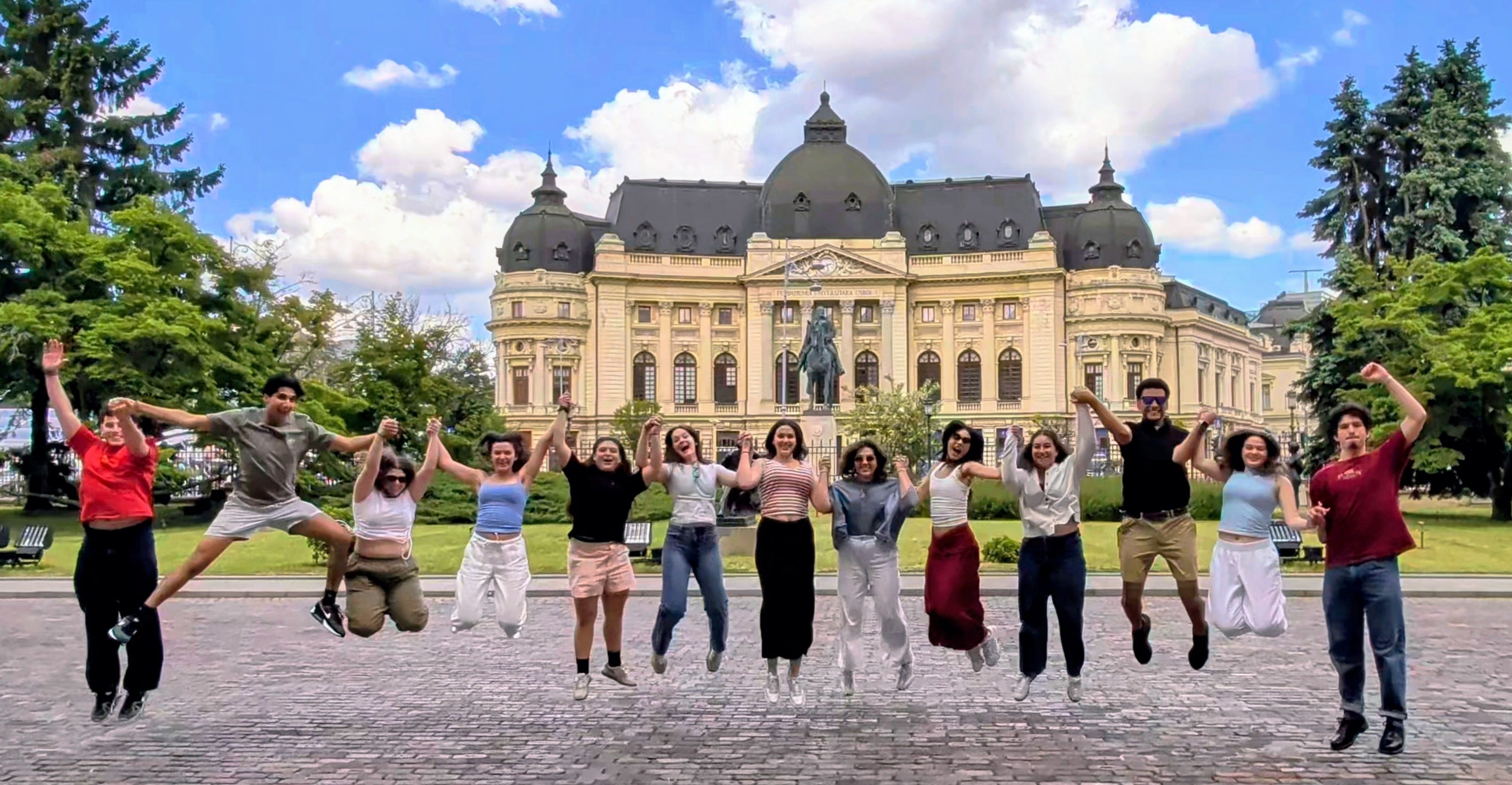
American college students who partake in a study abroad program – if they have such an opportunity – usually go to Italy, Spain or the United Kingdom. Florence, Barcelona and London are popular, comfortable choices, not surprisingly.
Romania? Nah, that’s not the norm. But the University of Pittsburgh is changing that.
The Neighbor's Goat: An American in Romania is a reader-supported publication. To receive weekly posts and support my work, consider becoming a free or paid subscriber.
The urban university with 35,000 students in Pennsylvania’s second-biggest city, a well-regarded public school that frequently cracks the Top 50/Top 100 rankings of American universities, is in its third year of “Pitt in Romania,” a five-week summer study abroad program, thanks to its leader, Professor Horia M. Dijmarescu, who was born in Romania, grew up in Canada and studied in the United States.
Earlier this week, at the gracious invitation of Professor Dijmarescu, I traveled two hours to Transylvania to meet this year’s Pitt students on one of their many stops, just as I’ve done the past two years since the program’s inception. Again, it was a real pleasure and a rare chance for me to hang out with Americans in Romania.
And guess what? They love Romania.
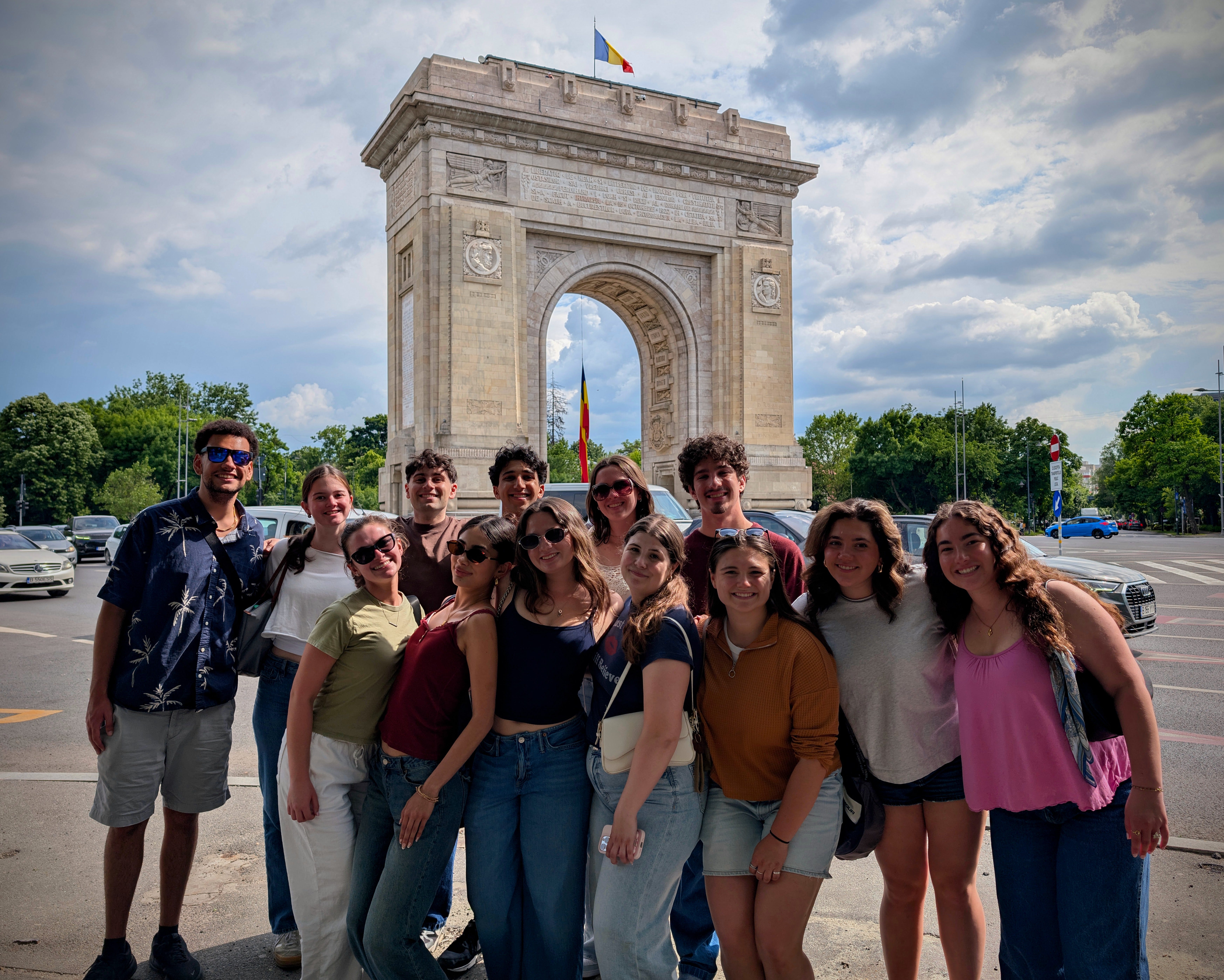
The group, made up of 13 rising juniors and seniors, spent two weeks in Bucharest, the bustling, frenetic capital, then two weeks in the beautiful, culturally rich Transylvania region, and now head into their final week in Brussels, Belgium, where they’ll focus mostly on the mechanics and policies of the European Union and Romania’s role in it.
For some in the group, the 5,000-mile, 8,000-kilometer journey was their first time traveling outside the United States or overseas. In a typical slice of Americana, the students are of varied descents, including Colombian, Indian, Turkish and Ukrainian, with a few being first-generation Americans born to immigrant parents.
They hail from Pennsylvania, of course, with a solid contingent from Philadelphia – where I spent my formative years – and Ohio, Texas and Virginia. Most are majoring in Political Science, with a mix of Politics and Philosophy, Economics, Physics and Public Health. All but three are eyeing law school after undergrad.
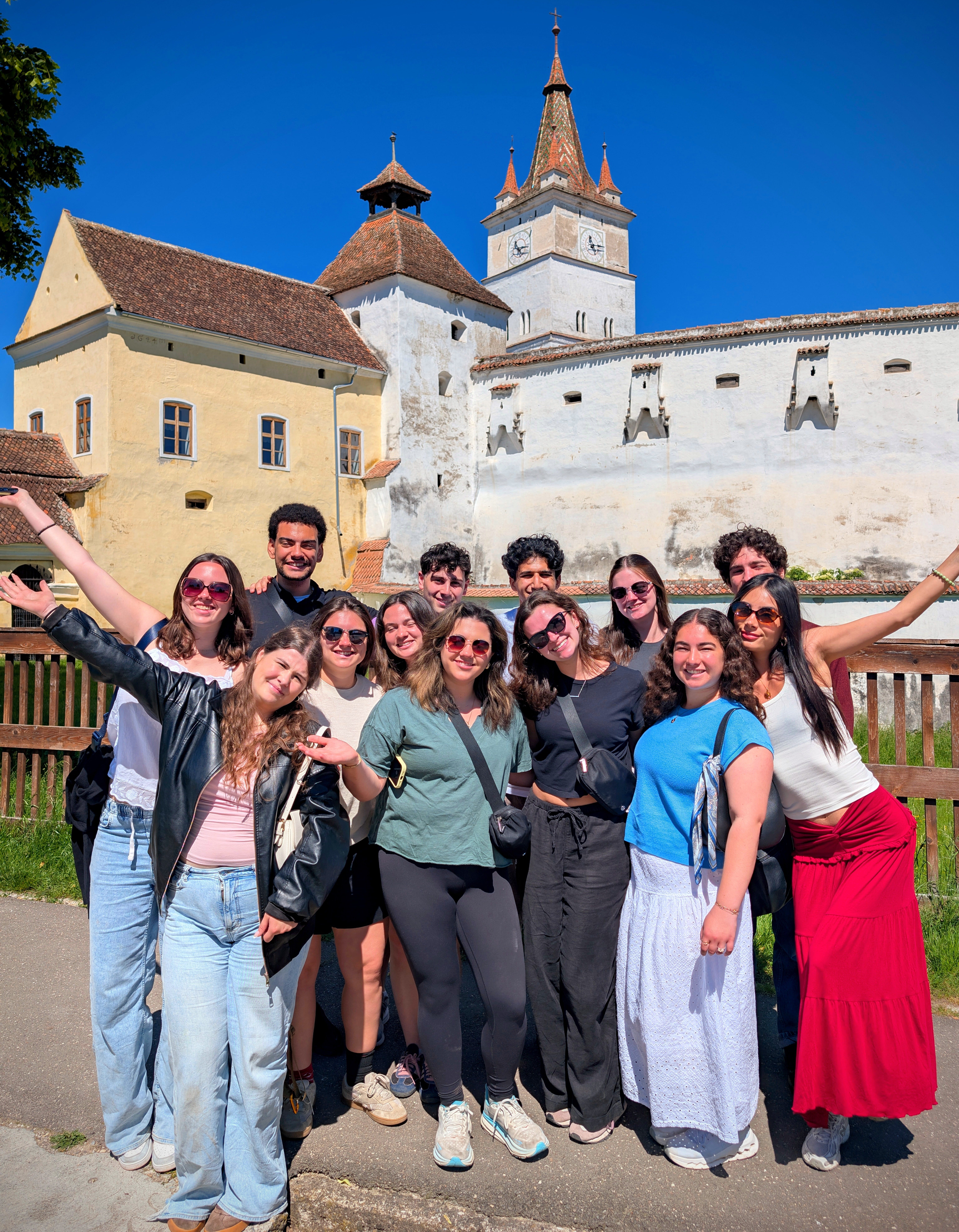
This particular Pitt study abroad program, which centers on Identity and Global Politics in Romania, is designed to immerse students in Romanian political, economic, social and cultural environments, focusing on two questions: By what processes do people construct national and transnational identities? What are their historical and contemporary socio-political consequences?
Along the way, in countless meetings and visits to NGOs and official state and European institutions – each paired with pertinent reading assignments in advance – the students have explored Romania’s position relative to regional, continental and global historical processes and delved into lingering tensions, contradictions and conflicts that arise from disparate conceptions of nationality. They’ve also probed how national and European identities are interwoven in the institutional context of the EU and against the backdrop of Romania’s post-1989 transition from socialist totalitarianism to capitalist parliamentary democracy.
What an opportunity – and seemingly exotic!
Thinking back to my college days, I did a comparatively ordinary exchange program at the University of Toronto in Canada, a second sojourn to our northern neighbor – the first was a canoe trip just before ninth grade – both my only travels “abroad” before I finally discovered Europe after graduation.
Speaking with the students over lunch in Deva, which happens to be the professor’s hometown, I was blown away by their keen observations and insightful questions. A few loved the “Little Paris” elegance and communistic contrasts of chaotic Bucharest, while others preferred the mountain resort feel of Sinaia or the Saxon charm of Sibiu. After I met them, they were headed to Alba Iulia, Romania’s symbolic capital, where the modern country was unified in 1918, and Cluj-Napoca, the second-largest city. They saw a good swath of Romania and had special experiences, all in the capable hands of Beyond Dracula, their bespoke travel organizer, and their easy-going, knowledgeable tour guide, Alin.
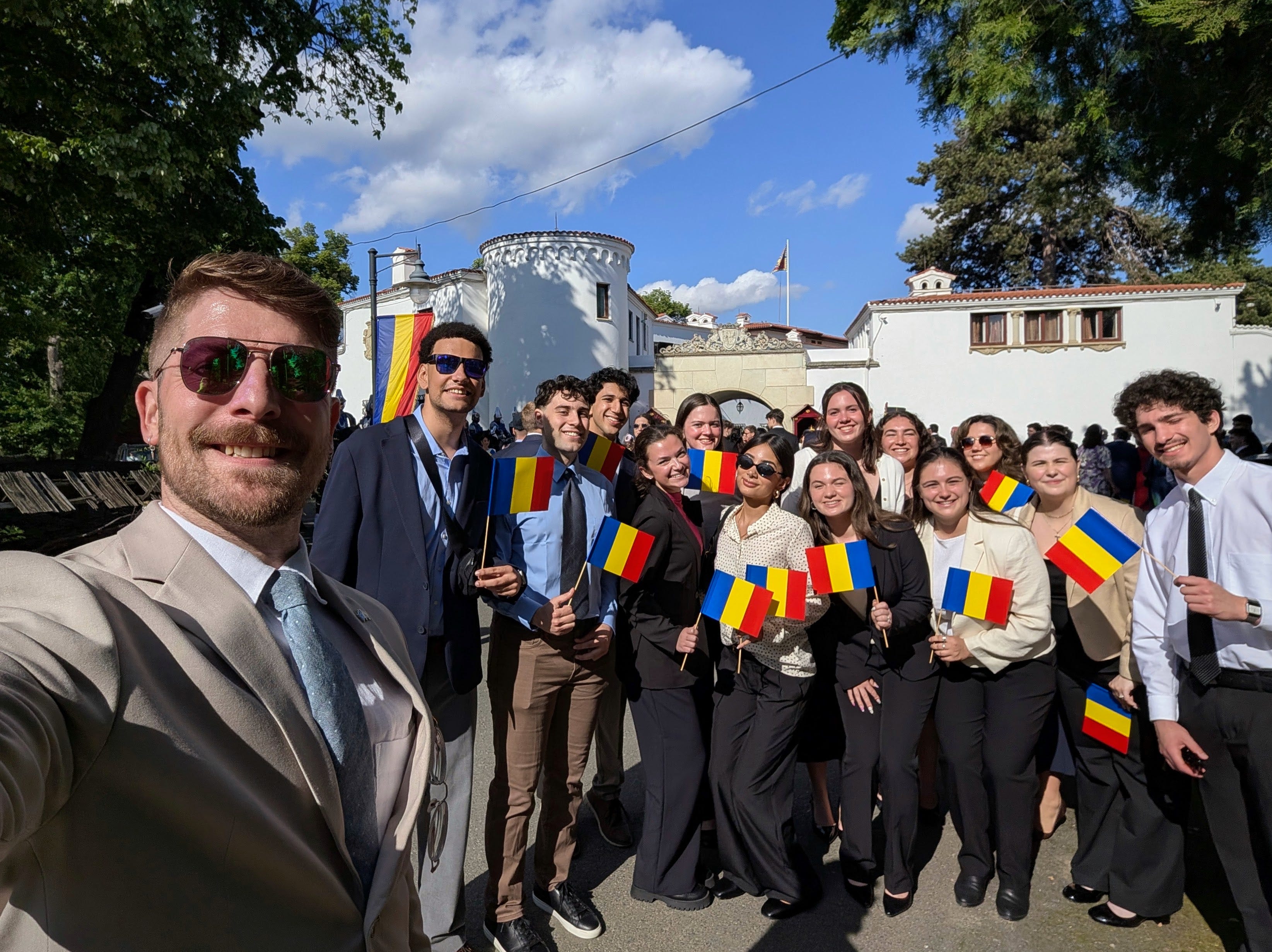
The Pitt students toured ancient castles and citadels; met with bishops, bureaucrats and members of the Romanian royal family, which is non-reigning but publicly recognized and active. They saw notable monuments, former communist factories turned into greenspaces and business parks, and historic villages including Viscri, where Britain’s King Charles has a private home. They toured Parliament, cultural centers, Orthodox and Catholic churches and synagogues; met with NGOs focused on all sorts of causes, from youth, cultural heritage and the 1989 Romanian Revolution, to the rights and discrimination of Roma and LGBTQ+ citizens. They also visited Recorder, one of Romania’s top investigative reporting news outlets, which was particularly interesting to the lone budding journalist in the group.
Unfortunately, they didn’t get to my adopted city of Timişoara, but Deva was the closest point for me to meet them.
Across the board, they loved the food – and the prices. One told me that eating out in Bucharest was at about a 25-30% discount from the United States and Transylvania was even cheaper.
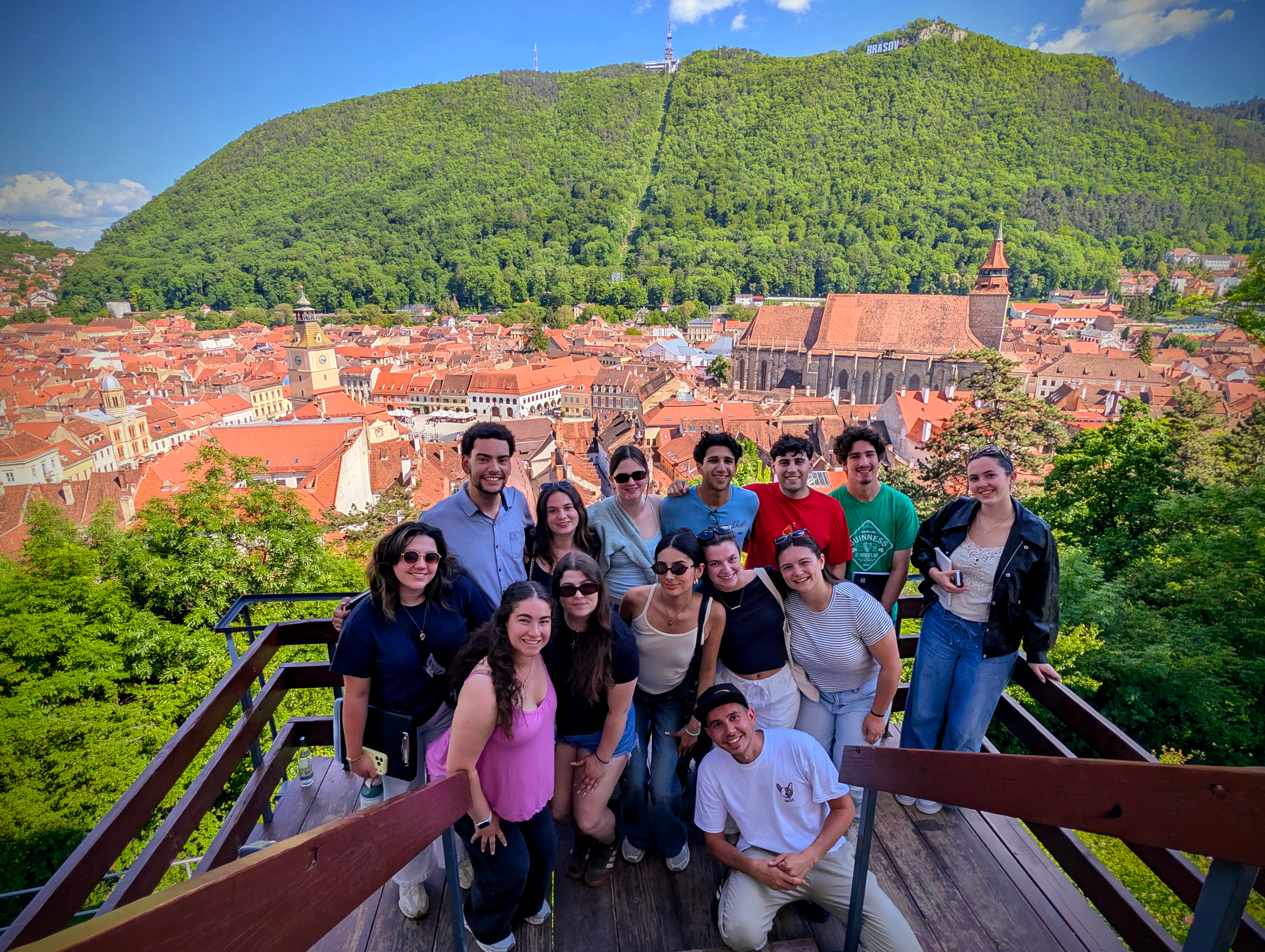
Many said Romania was more diverse than expected, especially in the ethnic sense – German, Hungarian, Serbian, Turkish and others. Several found the nature and scenery remarkable, one saying the Carpathian Mountains looked like a combination of the Rockies and the Appalachians.
Pitt in Romania’s Instagram page is a treasure trove of astute comments and sharp observations through an American lens. As part of the course, each student has to post twice weekly on Instagram. Random encounters are also featured.
One student stumbled into a smashburger restaurant in Deva and met the owner, a young Romanian entrepreneur who’d spent a summer working in Ocean City, Maryland, trying every burger he could to emulate it in Romania. Another couple of students randomly met Emil Boc, the mayor of Cluj-Napoca and former Romanian prime minister, on the street in Bucharest.
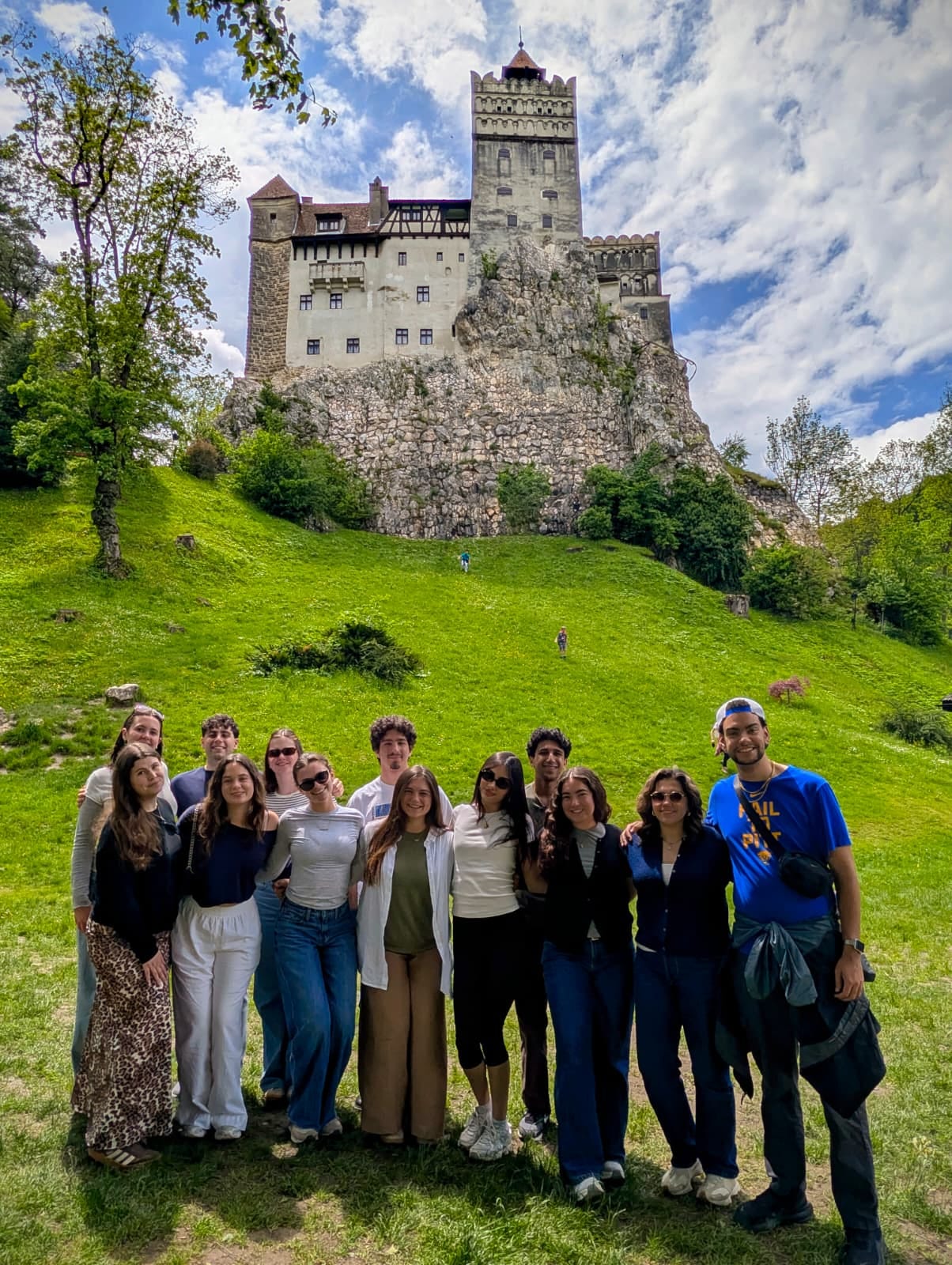
Despite their newfound affection for Romania, the students weren’t oblivious to its flaws and idiosyncrasies – the communist hangover mentality, spotty service, litter and dust, aggressive driving, chain smoking, the monochrome ugliness of communist block buildings. But it was all part of the fascinating introduction to this corner of Europe and a country wading through constant flux and transition.
The same could be said for a panel discussion that followed our lunch. Four Romanians who recently moved back after long, professional careers in Canada, Hungary and the United States, explained their reasons for repatriating but detailed the culture shock they’ve been dealing with since.
Their examples included lack of respect for personal space, laws not being enforced, nepotism over merit, less civility and dignified behavior, a dearth of ethics in business and healthcare and widespread dysfunctional bureaucracy.
The students asked terrific questions, surgically probing like journalists or lawyers, prying out earnest answers. Being an expat/immigrant myself, though not from the Romanian diaspora, I could relate to many of the comments and chimed in about my own experiences.
As one of them said, “Romania has changed for the better, but it still as a long way to go. A very long way.”
Warts and all, this may be part of Romania’s draw and curious charm, its spirit for the adventurous, and what differentiates it from the standard-issue “West” – though it’s getting more westernized all the time – in some ways, and in others, not at all.
This is a reader-supported publication. To receive weekly posts and support my work, consider becoming a free or paid subscriber.
If you don’t want to commit to a subscription, but you’d like to show appreciation for my writing on The Neighbor’s Goat, please consider Buy Me A Coffee.
I like long black or flat white. Thank you!
Comments
Nothing yet. Say the first thing.
Sign in to join the conversation.