
The Carpinteria salt marsh sits at the edge of the Pacific, a remnant of what this coastline once was, full of cordgrass and pickleweed, tidal channels cutting through mud flats, the air dense with salt and the particular smell of things decomposing into fertility. I live a block away. I walk the marsh regularly. A few days ago the swallows were back, and I found I was more pleased by this than I could easily account for.
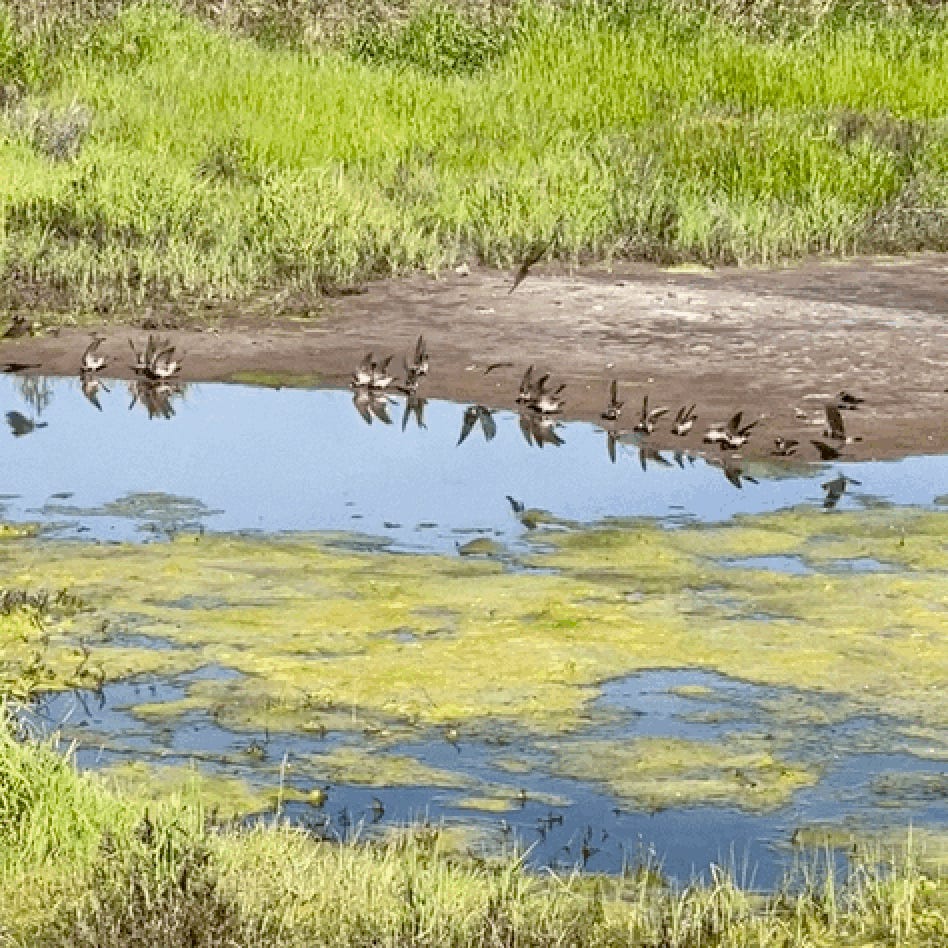
This afternoon I went to find them. They were at the mud bank along one of the tidal ponds, twenty or thirty of them, gathered at the waterline in a loose congregation. Each one would land, work the mud briefly with its bill, and lift off. Land, gather, lift. The whole group reflected in the still water below them, so that the birds and their doubles moved together, a line of small bodies and a line of shadows doing the same patient work in opposite directions. I stood and watched for a long time.
They nest under the old bridge at the marsh’s edge. I could see the reflection of its concrete columns in the channel — the structure inverted, the nests tucked into the underbelly of the span where the birds return each year. Swallows have sheltered under human structures for as long as humans have built them. They follow us. They build where we build, in the eaves and the overhangs and the ledges we leave behind, and they come back to those places with a loyalty that is, in its way, a form of faith. The same site. The same work. The mud gathered from the same marsh, pressed into the same cup, lined with feathers before the eggs arrive.
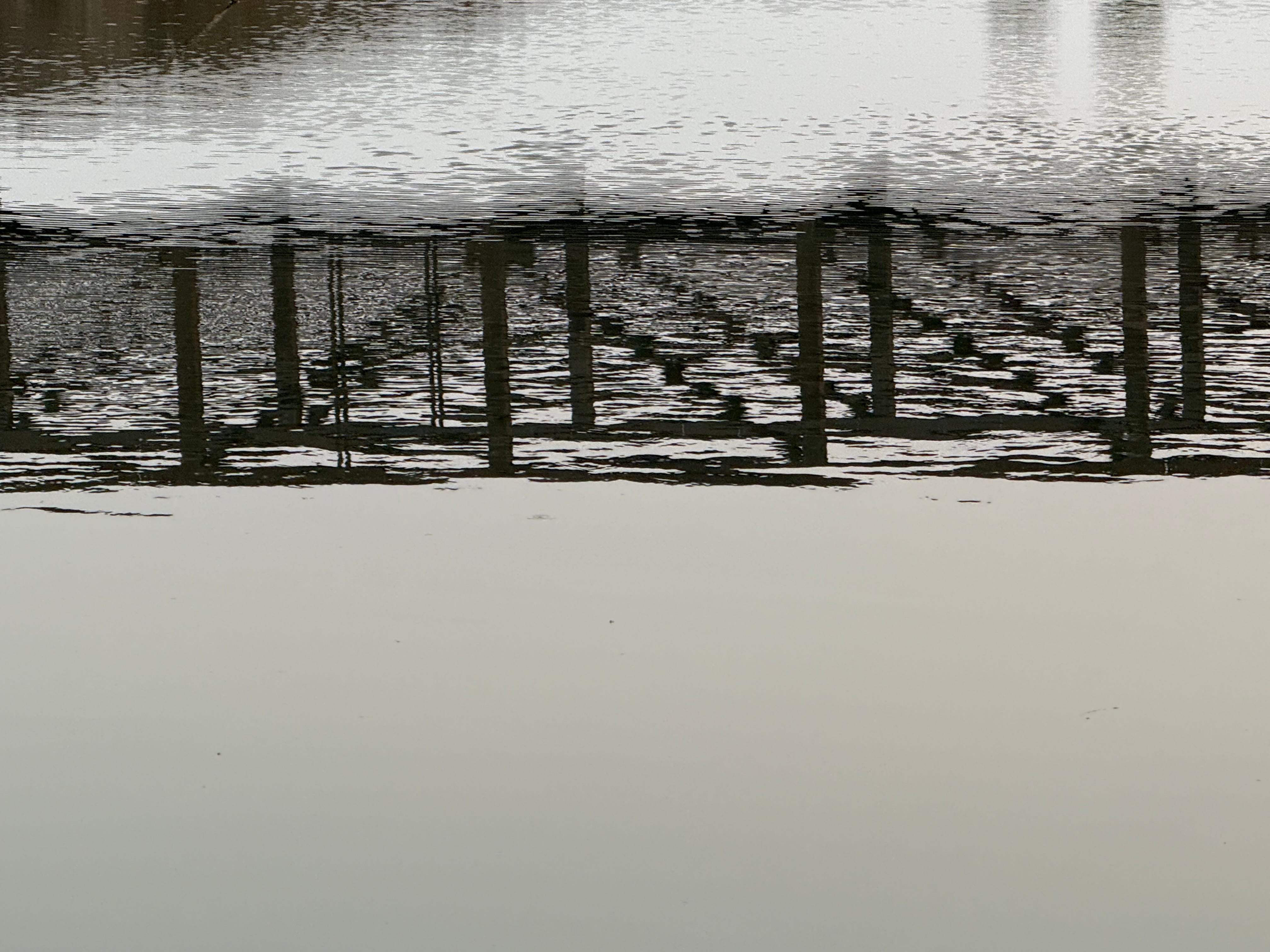
They have been doing this here longer than anyone now living can remember. They will do it, if we are careful, long after we are gone.
In the Hopi emergence myth, the people have climbed up from three successive underworlds into the Fourth World, the present one, the world of open sky and mesa and corn. But in their hurry to leave, they forgot to bring seed. They had nothing to plant. They were hungry and did not know how to proceed.
The Spirit of Dew sent the swallow back.
Back down through the opening. Back into the underworld the people had just escaped. The swallow returned carrying the seed of corn and other foods, and when it arrived, the Spirit of Dew planted what it had brought and chanted prayers over it, and the corn grew and ripened in a single day.
The swallow in this story is not a symbol of innocence or of spring, the way swallows function in European tradition. It is something more demanding than that. It is the one who goes back into the darkness, deliberately, to retrieve what was left behind — what the new world cannot sustain itself without. The retrieval is not nostalgia. The people do not return to the underworld to live there again. They send the swallow back for a specific purpose: to bring forward what is needed. Seed is not comfort. Seed is the condition of future life.
The Hopi have a Swallow Clan. The Zuni associate swallows with rain. These are not decorative associations. In the arid Southwest, rain and seed are not metaphors. They are what stands between the people and the end of the people.
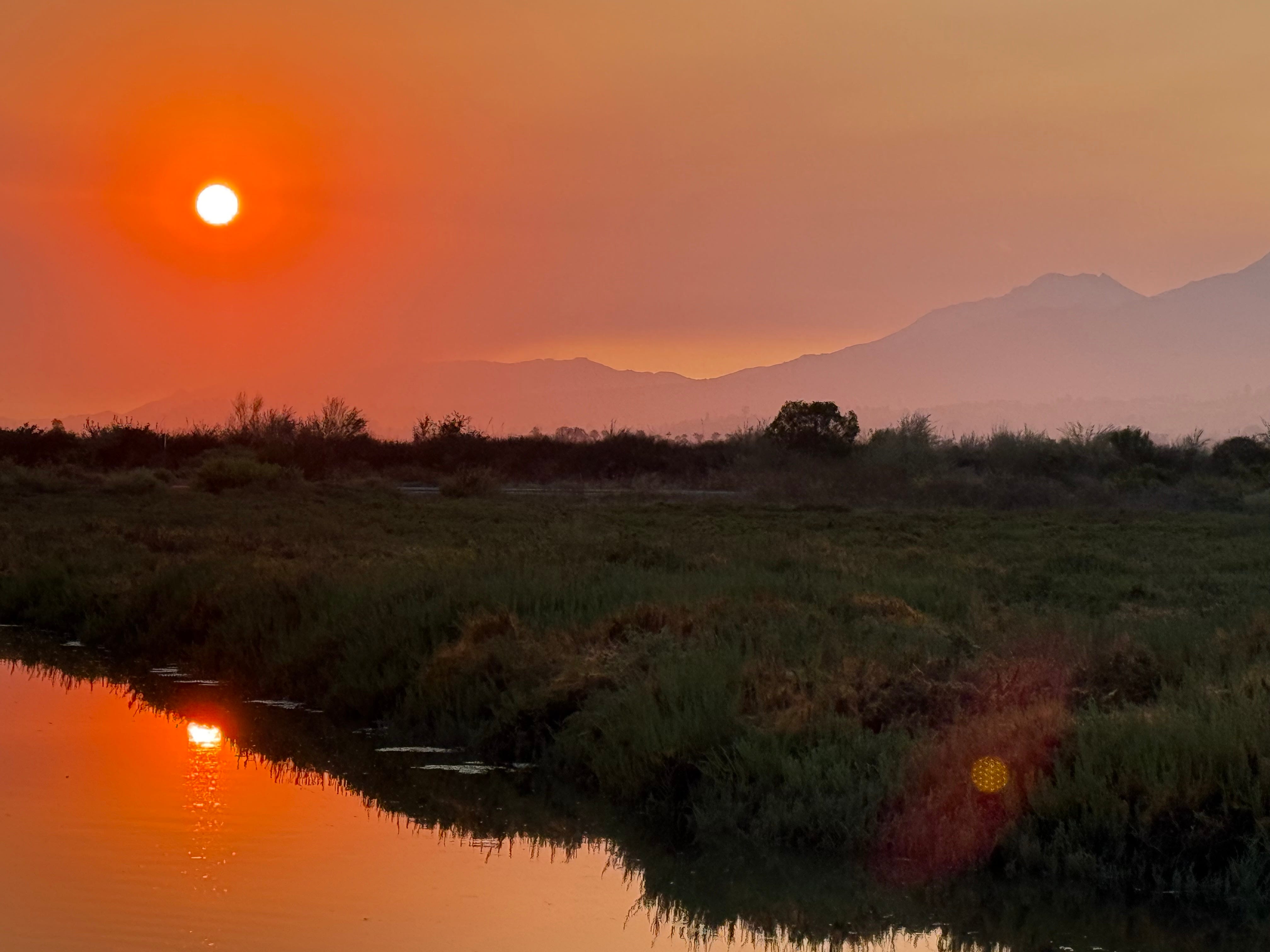
I want to be careful here, because the analogy I am reaching for is easy to reach for wrong.
We are not being asked to restore what was. The swallow does not return to an identical nest. It returns to the structure of the nest — the location, the architecture, the investment of prior seasons — and reinforces it with new mud, new feathers, new material gathered from where the bird is now. The nest that sheltered last year’s chicks is not the nest that will shelter this year’s. It is continuous with it. There is a difference.
What is being demolished in this country right now is not, finally, a set of institutions. Institutions are the nest, the mud and the feathers, the accumulated work of prior seasons. What is being demolished, underneath the institutions, are the principles that made the institutions worth building. The principle that power answers to law. That the vulnerable are owed protection. That truth is not a tool of the powerful but a constraint on them. That the people, taken together, are the sovereign, not the executive, not the donor, not the algorithm that has learned to simulate consent.
These are old ideas. They predate the Constitution that is supposed to house them. They are seed, not structure.
The swallow went back for seed, not for the world it came from.
This afternoon at the marsh I watched them work the mud bank and thought about what it takes to keep showing up to the same place, season after season, to do the same necessary thing. There is no deliberation visible in it. They land, they gather, they lift. The reflection in the water holds them for a moment and then they are gone, and then another comes, and the work continues.
The swallow came back with seed. The Spirit of Dew planted it and chanted prayers. The corn grew in a single day.
I do not think we will be that fast. I think the work of retrieval, that is going back for what we left behind in our hurry, the principles we assumed the structures would hold for us, is longer and harder and less miraculous than the myth. But the myth was never really about speed. It was about the willingness to go back. To know what was left. To understand that the new world cannot feed itself on the new world alone.
The swallows are in the marsh this spring. I watched them this afternoon gathering mud from the bank, their reflections moving beside them in the still water, patient and purposeful and returned.
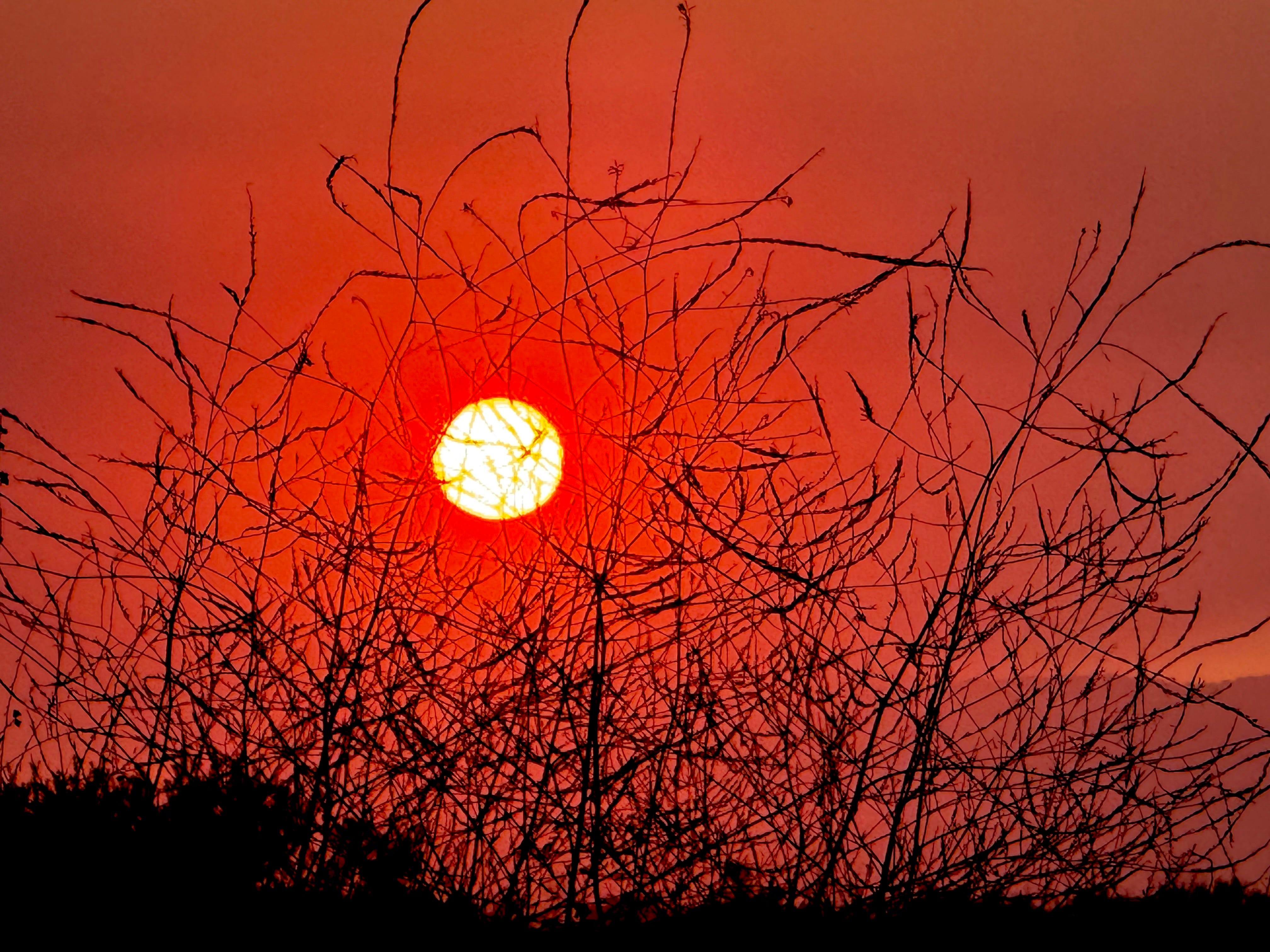
The sun goes down through bare branches and comes up again.
Tomorrow is another day.
.
The distance between dates is a reader-supported publication. To receive new posts and support my work, consider becoming a free or paid subscriber.
Comments
Nothing yet. Say the first thing.
Sign in to join the conversation.