
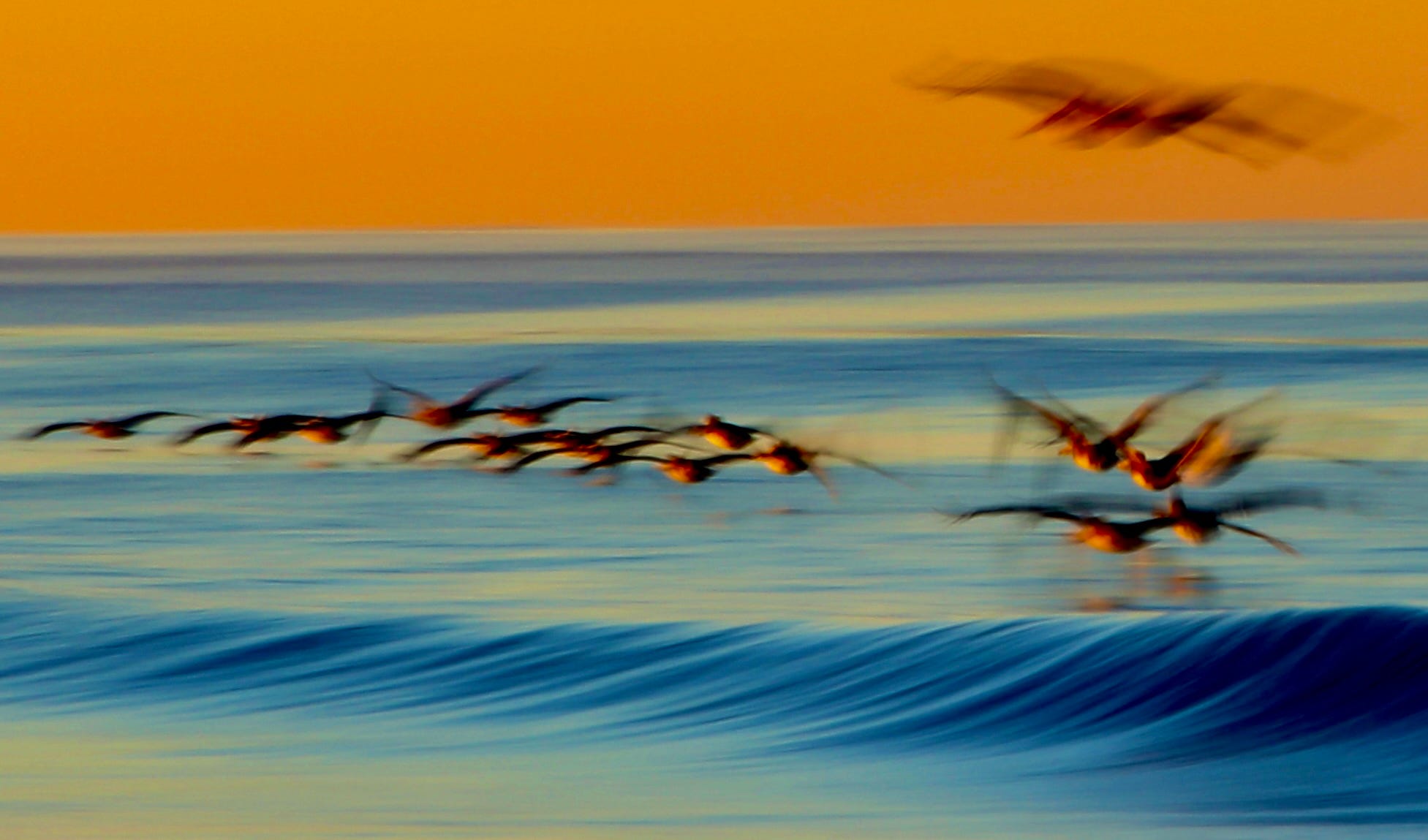
I have been photographing pelicans for years, and I have learned one thing the fast shutter cannot teach: a pelican in flow is barely distinguishable from the wave it rides.
The slow shutter shows you this. It dissolves the bird into the water, blurs the wingbeat into the curl of the swell, until what you are looking at is not a creature fighting gravity but a system in momentary perfection. The brown pelicans off Carpinteria have been doing this for longer than anyone has been watching. They find the pressure differential that builds just ahead of a breaking wave -- a sleeve of rising air, thin and precise -- and they enter it. Once inside, they barely move a wing. The wave carries them.
This is not metaphor yet. This is physics. The pelican does not generate the lift. The wave does. The bird’s job is alignment.
I have been having trouble finding flow lately. I notice it the way you notice a sound that has stopped, by its absence, by the slightly wrong quality of the silence where it used to be. The body knows before the mind does. Something in the architecture has shifted, and effort that once moved easily now meets resistance at every surface.
I have been trying to locate the source of this. Some of it is internal, the ordinary misalignments of a life, the places where what I believe and what I am doing have drifted apart without my full attention. That kind of disruption is mine to address. I know this.
But some of it is not internal. Some of it is the wave.
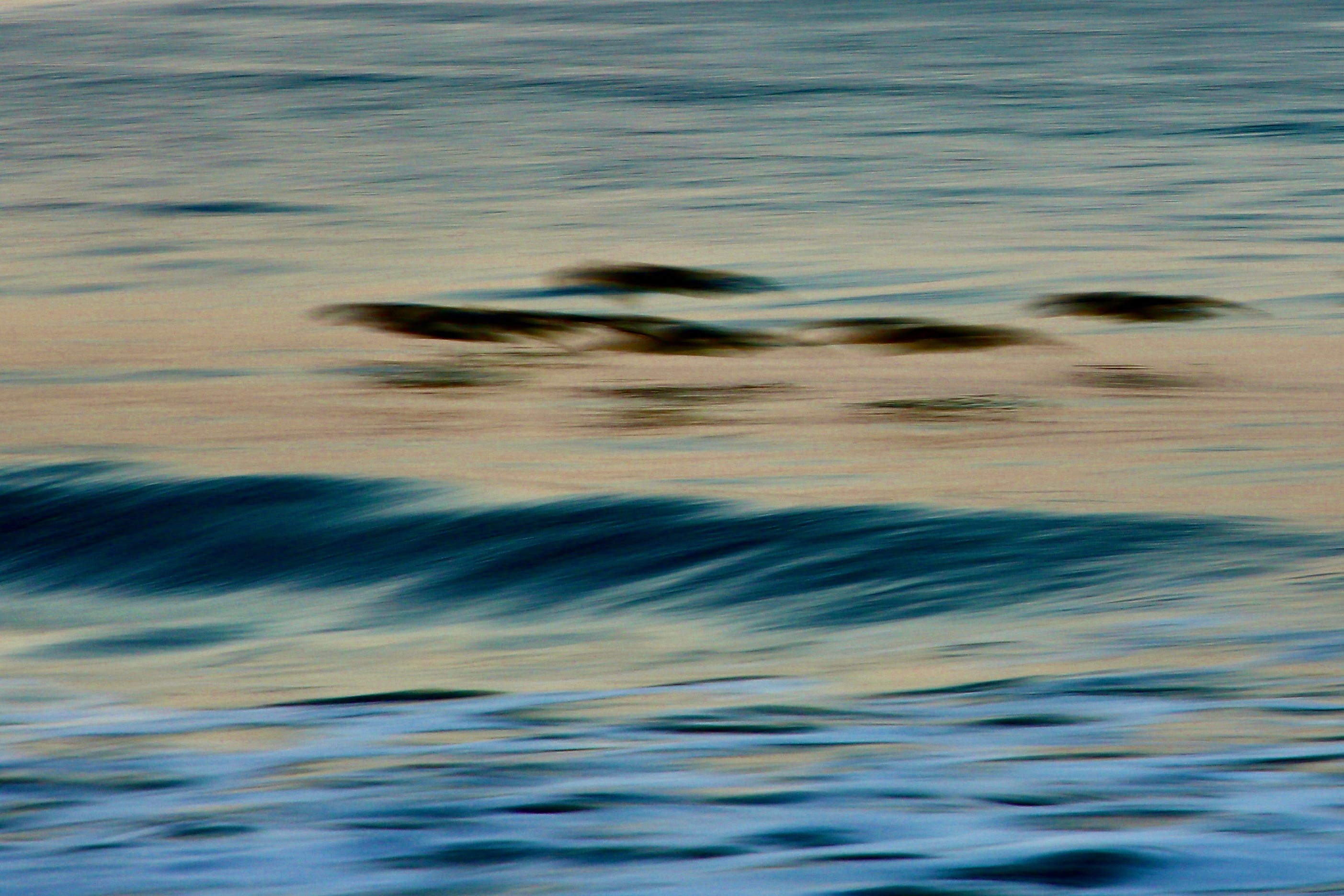
Flow operates at every scale. This is what I find myself thinking on the beach at Carpinteria, watching the pelicans work the morning swell.
A body in flow. A relationship in flow. An institution. A nation. An international order built, however imperfectly, on the premise that systems of law and democratic accountability create the conditions under which human beings can move with something like freedom and purpose.
These are not separate phenomena. They are the same phenomenon at different magnitudes. And they share the same vulnerability: flow requires conditions. Disrupt the conditions, and you do not get less flow. You get force.
Three days ago the Trump administration announced the dismantling of the U.S. Forest Service. Not a budget cut. Not a reorganization. The headquarters pulled from Washington and shipped to Salt Lake City, the center of the anti-public-lands movement in America. Every regional office shuttered. Fifty research facilities across thirty-one states, decades of irreplaceable long-term science, the kind you cannot restart once it’s gone, eliminated. One hundred and ninety-three million acres of national forest, an area larger than Texas, handed to fifteen political appointees embedded alongside the governors and industry lobbyists who have spent their careers demanding the Forest Service log more and protect less.
Gifford Pinchot built that system over a century ago. It took three days to dismantle.
This is what force looks like at institutional scale. It moves things. It also destroys the conditions under which living systems -- forests, watersheds, the wave off Carpinteria that the pelicans have been riding since before anyone was watching -- find and maintain their form. You do not get less flow from this. You get pressure on architecture that was never designed to absorb it.
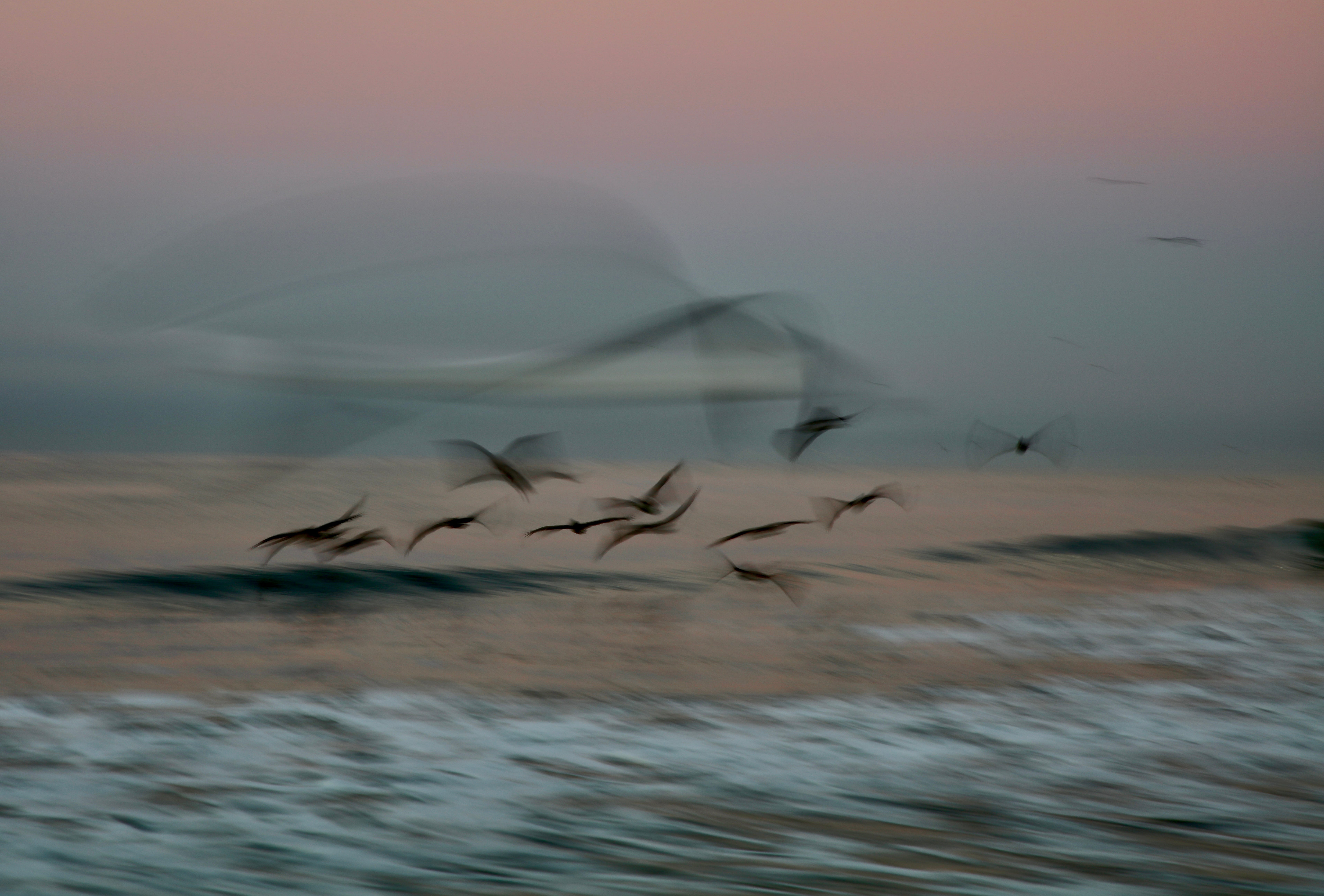
Force is what we reach for when flow is gone. It can move things, it does move things, but it works by pressure rather than alignment, and pressure has consequences that flow does not. A wave that is forced rather than formed does not carry pelicans. It breaks architecture.
I have been watching architecture break.
When our sense of right and wrong is systematically abused and when the very ground of the democratic republic is torn up and the tearing is called reform, well, something happens inside the body that is not merely political. It is physical. It is the loss of the pressure differential, the disappearance of the sleeve of air that made motion effortless. You are still you. The wave has changed shape.
And so you try harder. You increase effort to compensate for lost lift. This is understandable. It is also, if the pelican is any guide, precisely wrong. The bird that tries to muscle through a disrupted wave does not find flow. It finds exhaustion. The conditions are not restored by effort. They are restored by conditions.
I was standing on the beach at Carpinteria last week before the light was fully up, watching a line of browns work a set of waves coming in from the west. The shutter was slow. I have always preferred the slow shutter for flight, because it shows you what is actually happening rather than the frozen instant that looks like flight but is really just a bird suspended, wingbeat caught, context removed.
The slow shutter shows motion as motion. It shows the relationship between the bird and the wave, the blur of the wingbeat that is barely a wingbeat, the dissolution of the creature into the system that is carrying it.
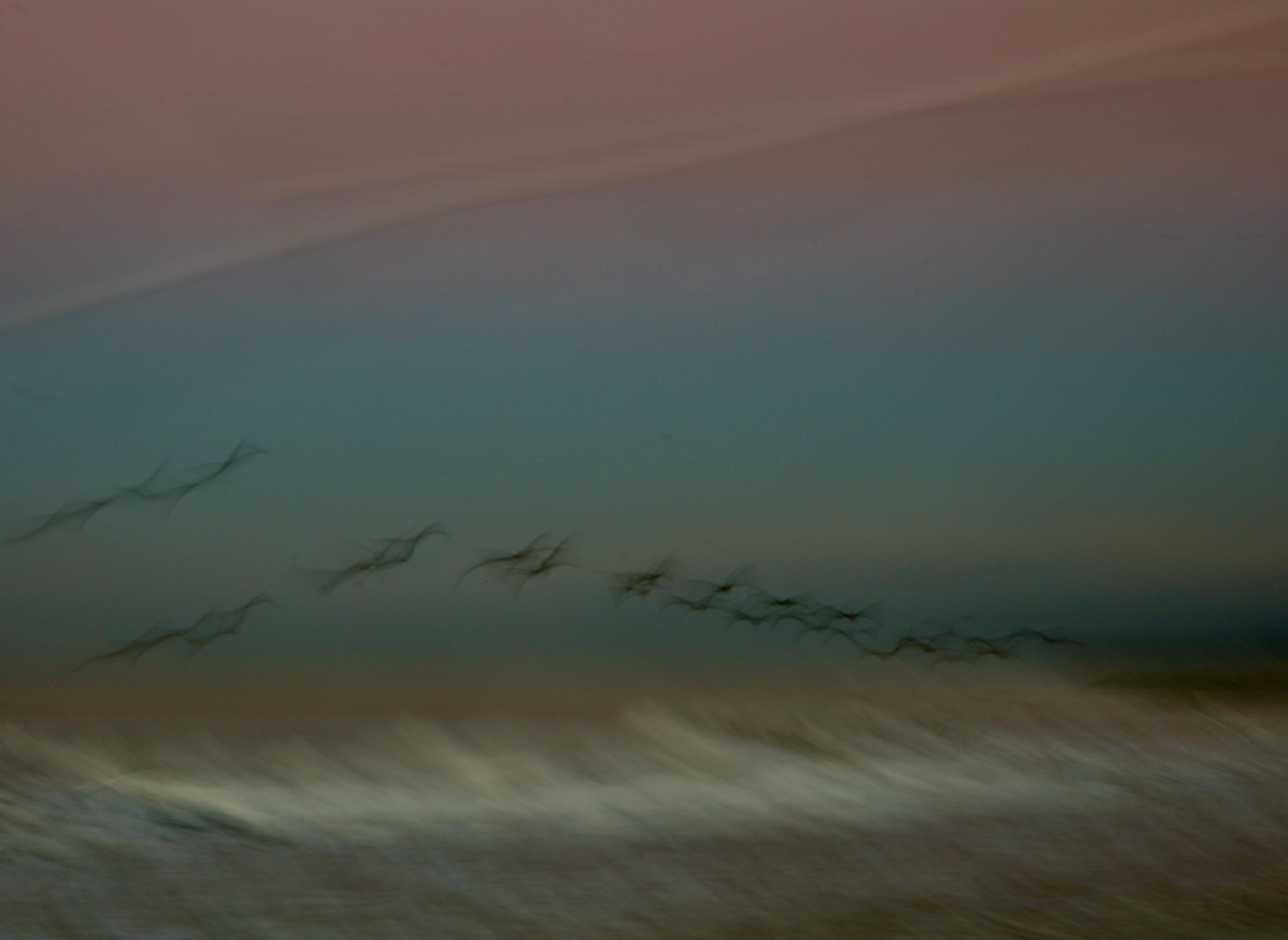
In one frame, the birds are almost gone, absorbed into the teal and gray of the wave face, present only as marks, as cursive, as evidence that something passed through. You have to look to find them.
I find that I am still looking. That is what I have, this morning, on this coastline that holds me. The slow shutter. The willingness to stand in the disrupted conditions and keep looking for the birds, keep looking for the wave that has the right shape, keep looking for the moment when alignment becomes possible again.
We are all standing on that beach. Together.
No posts
Comments
Nothing yet. Say the first thing.
Sign in to join the conversation.