
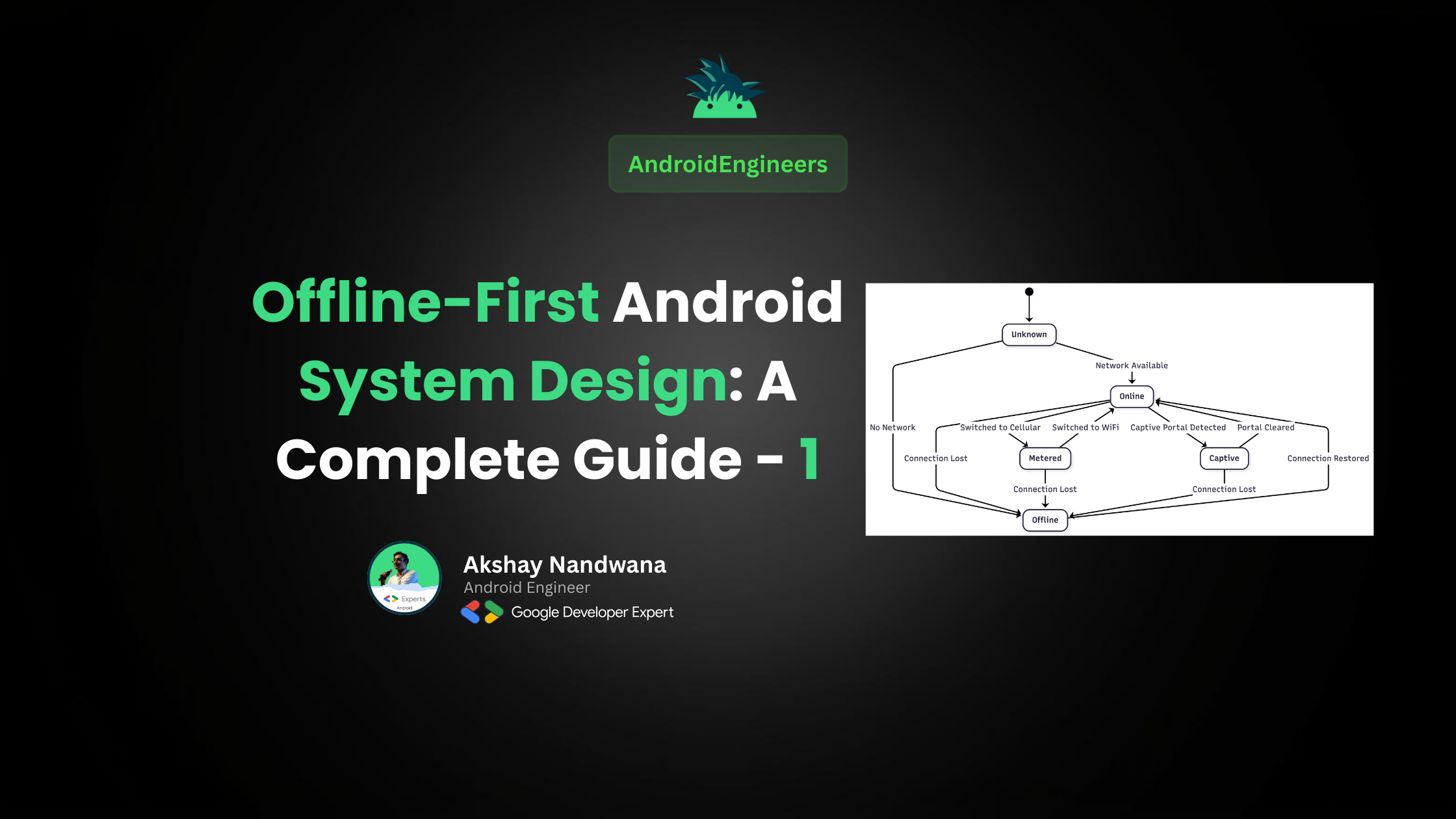
A comprehensive deep-dive into building Android applications that work seamlessly offline, covering architecture patterns, synchronization strategies, edge cases, and real-world implementation approaches.
Join Jetpack Compose - Cohort 3
Part - 1
Introduction to Offline-First
Core Architecture Patterns
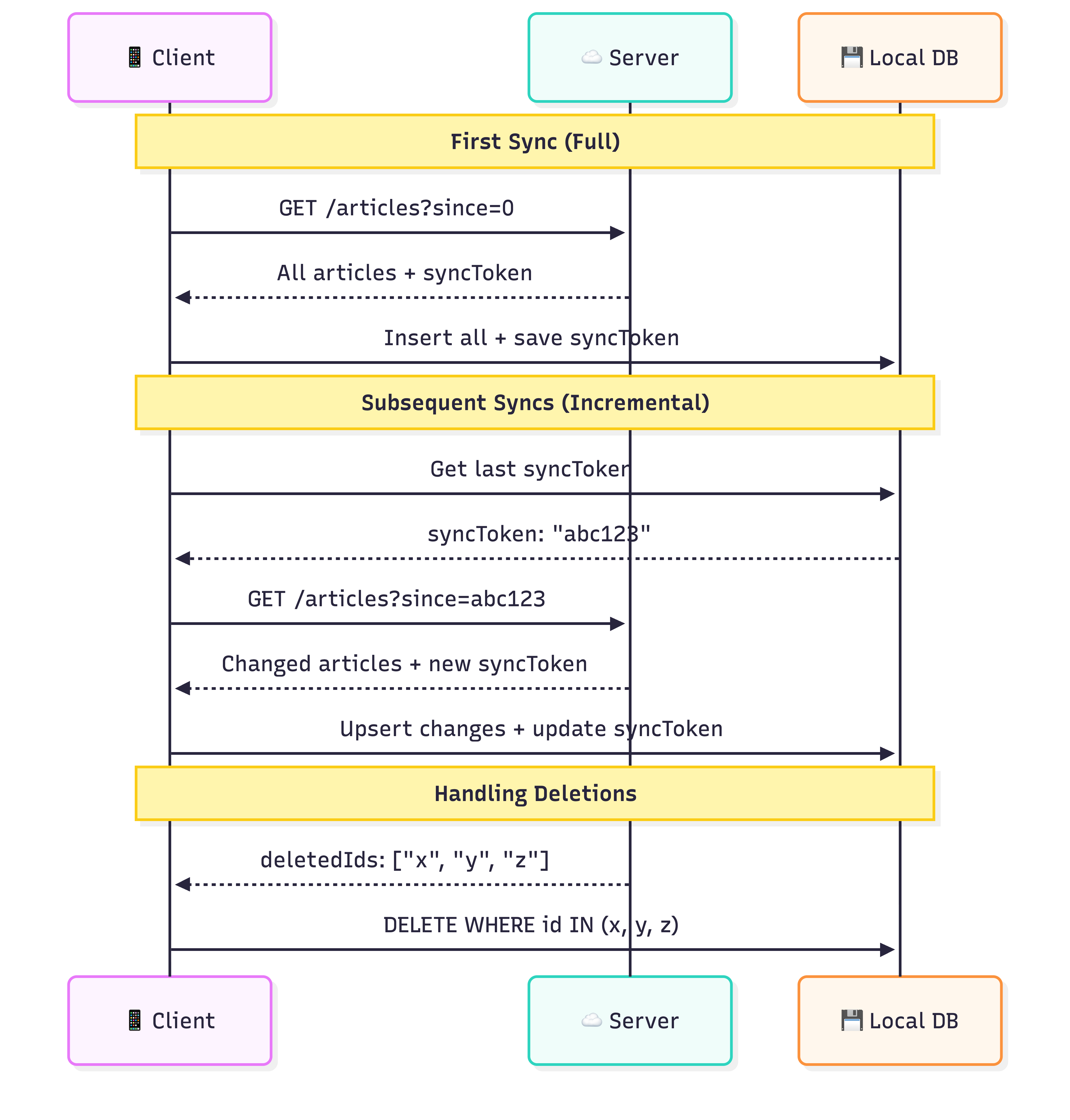
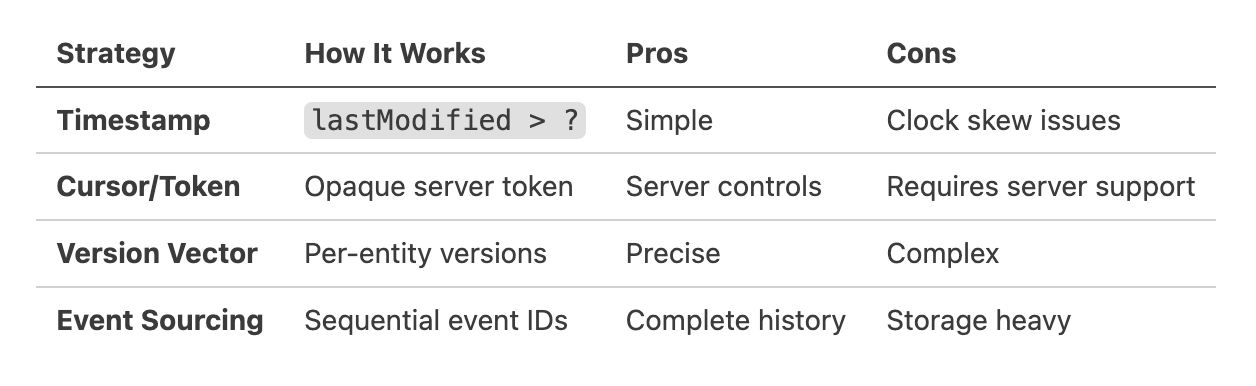
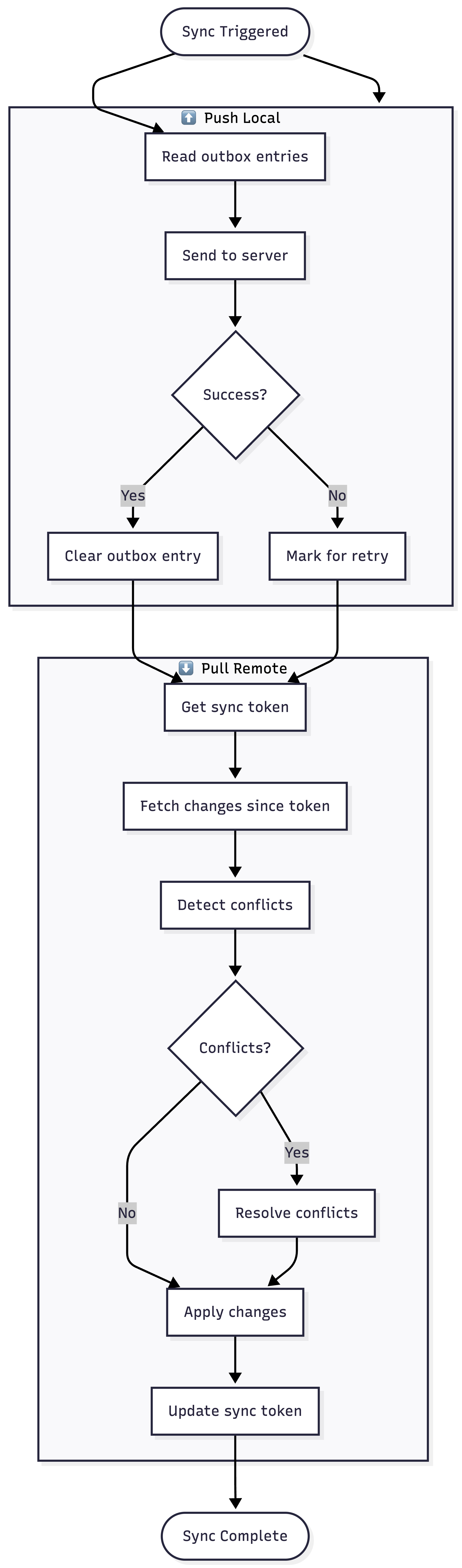
Data Synchronization Strategies
Conflict Resolution
Part - 2
Caching Architecture
Network State Management
Background Sync & WorkManager
Edge Cases & Error Handling
Testing Offline Scenarios
Best Practices & Patterns
Join Jetpack Compose - Cohort 3
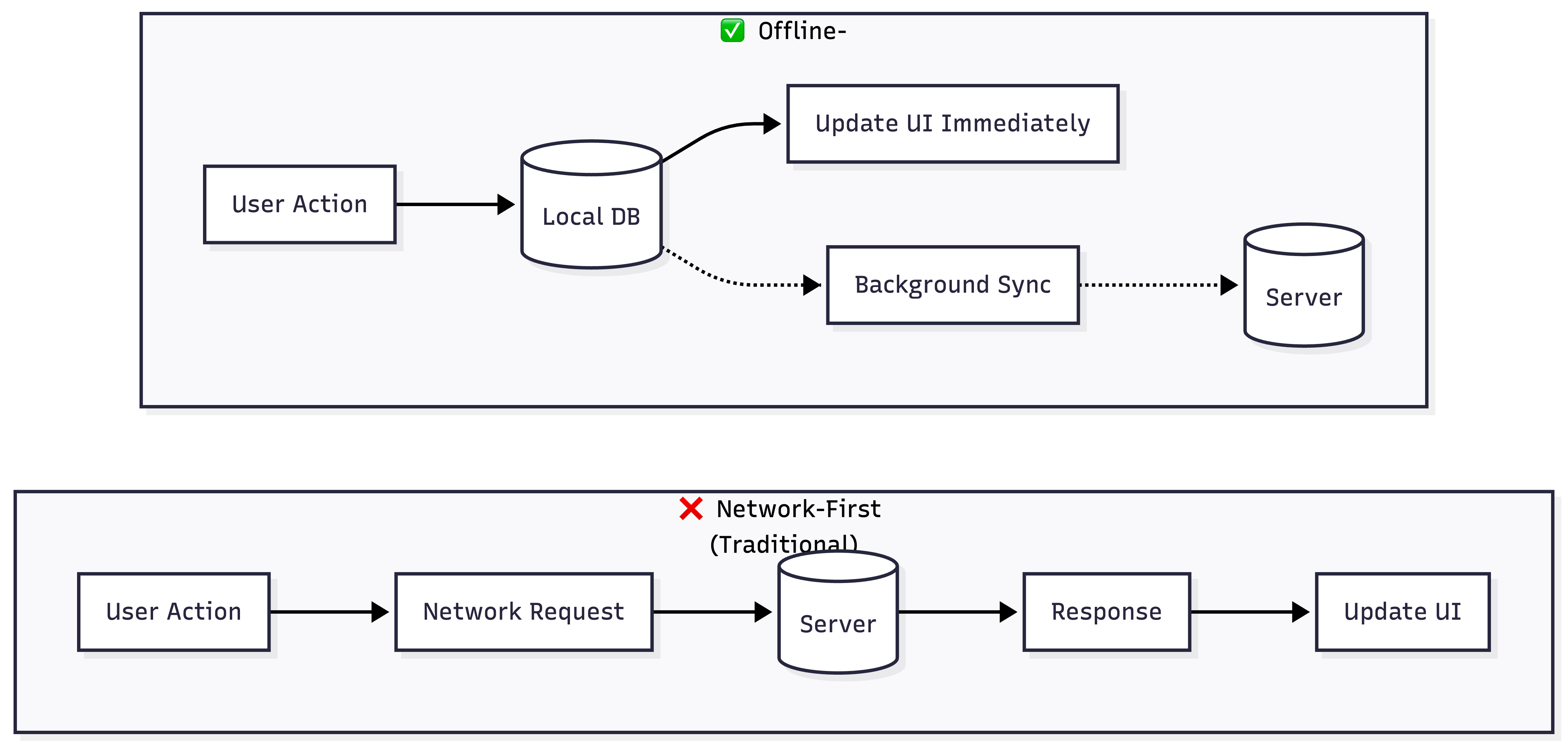
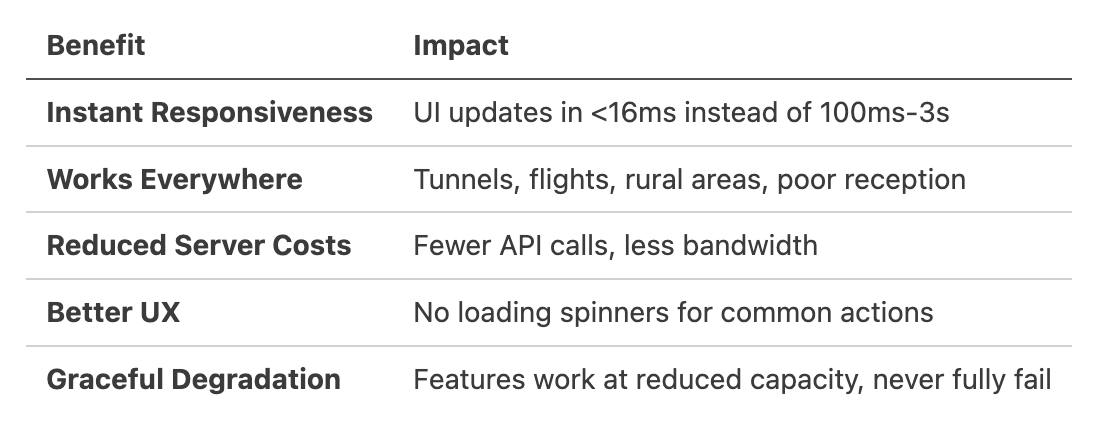
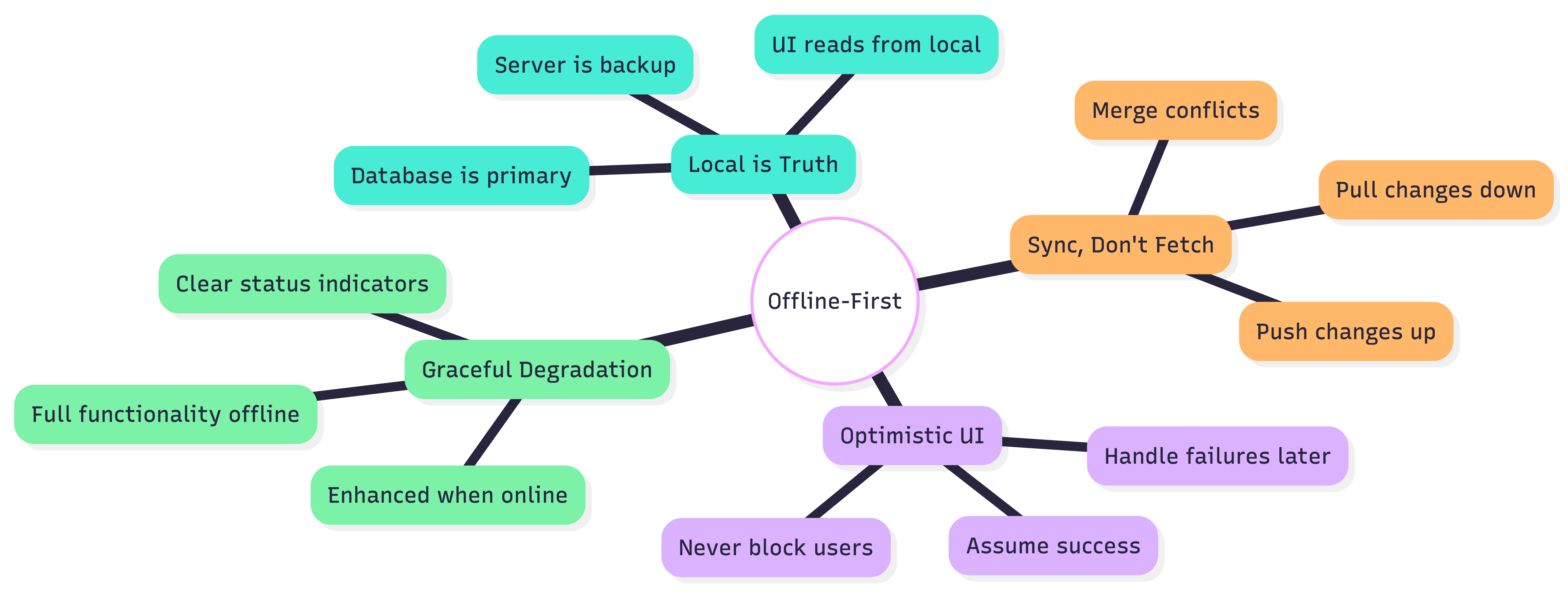
Offline-first is an architectural approach where the local database is the primary source of truth, and the network is treated as an optimization layer rather than a requirement.
Join Jetpack Compose - Cohort 3
The repository acts as the gatekeeper between your domain logic and data sources. In offline-first, it orchestrates the dance between local and remote data.
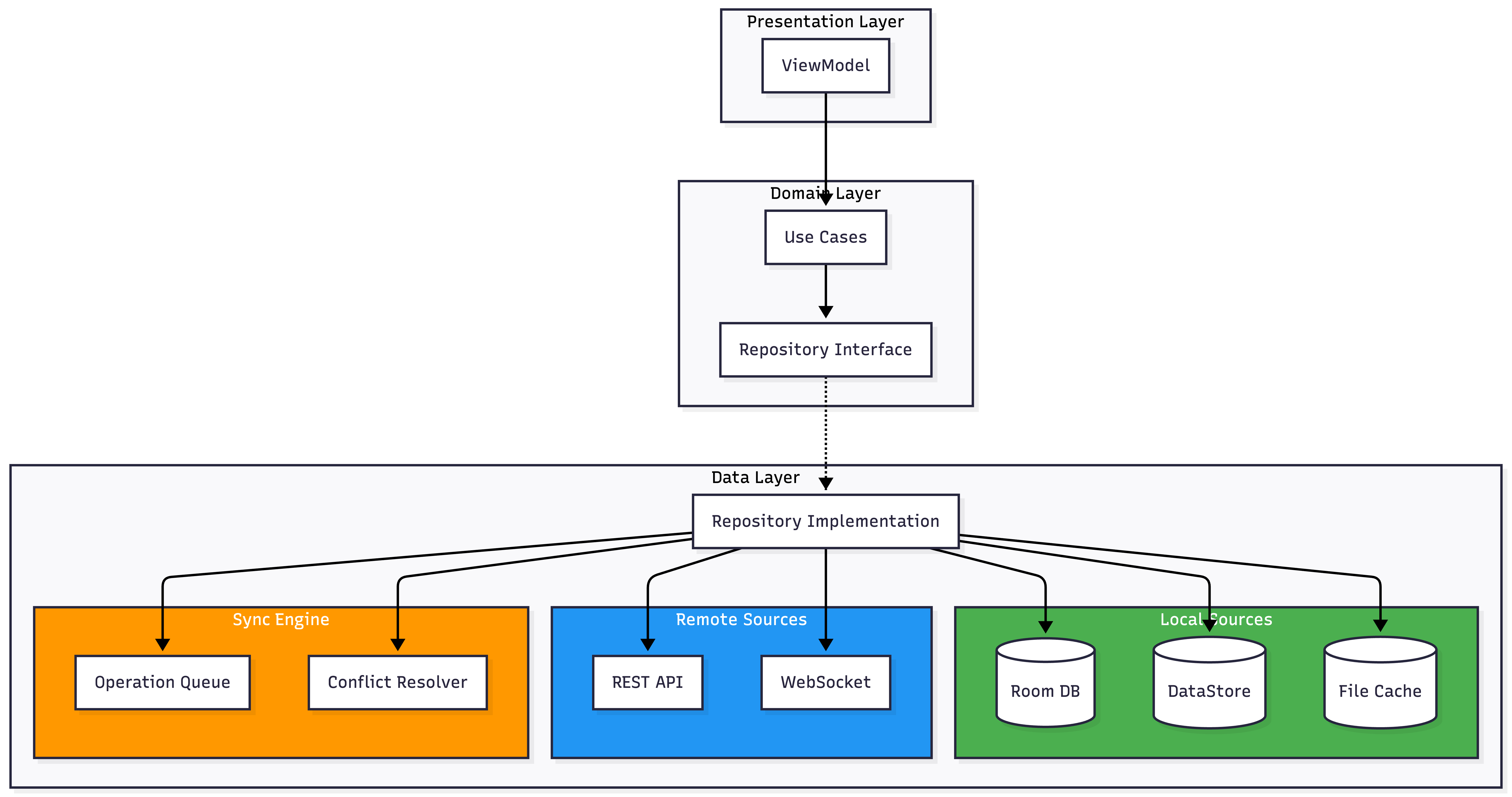
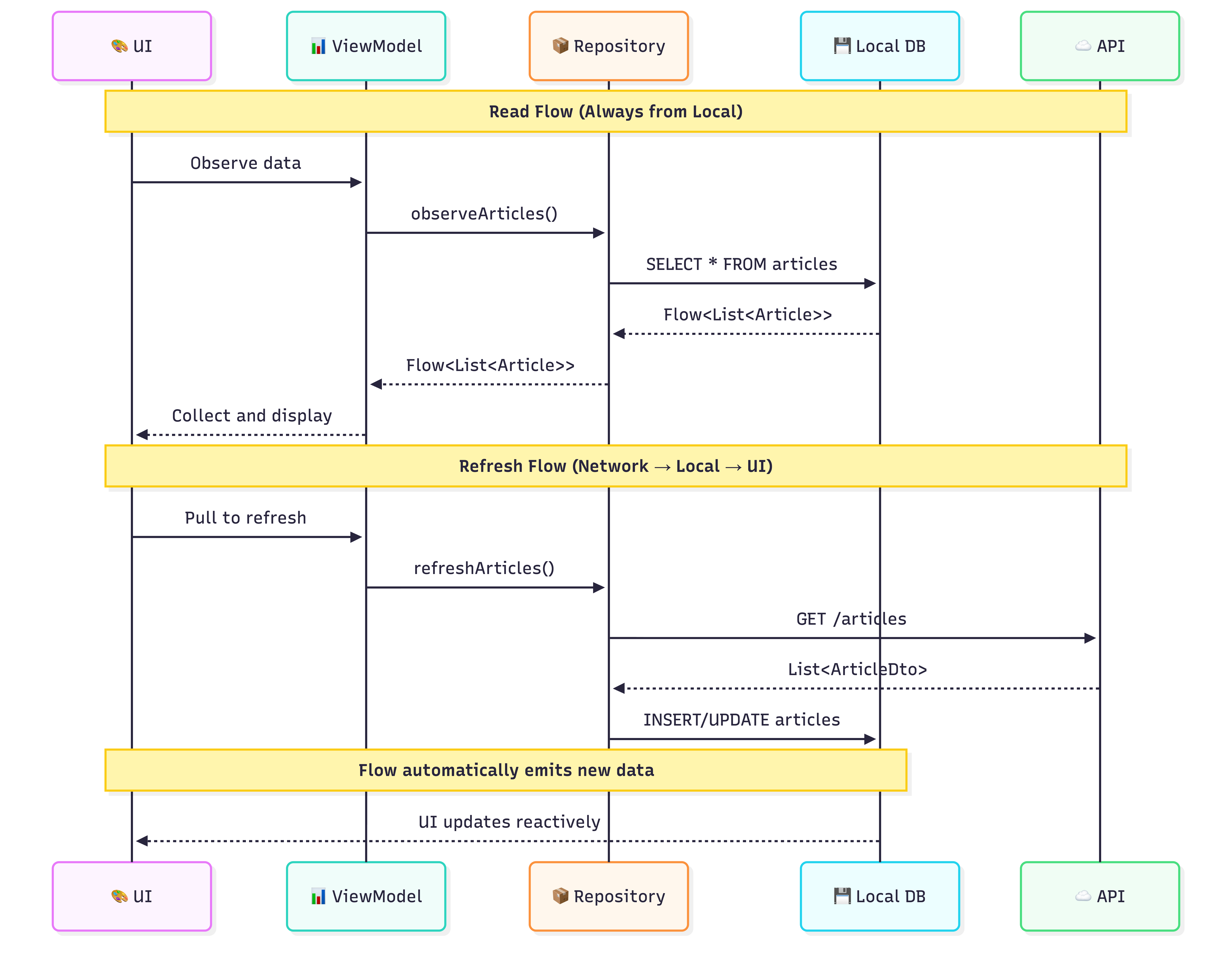
// The key insight: UI always observes local database
// Network operations write to local database
// UI updates reactively from database changes
interface ArticleRepository {
    fun observeArticles(): Flow<List<Article>>
    fun observeArticle(id: String): Flow<Article?>
    suspend fun refreshArticles(): Result<Unit>
    suspend fun createArticle(article: Article): Result<Article>
    suspend fun updateArticle(article: Article): Result<Article>
    suspend fun deleteArticle(id: String): Result<Unit>
}
For write operations, the outbox pattern ensures no data is lost when offline.
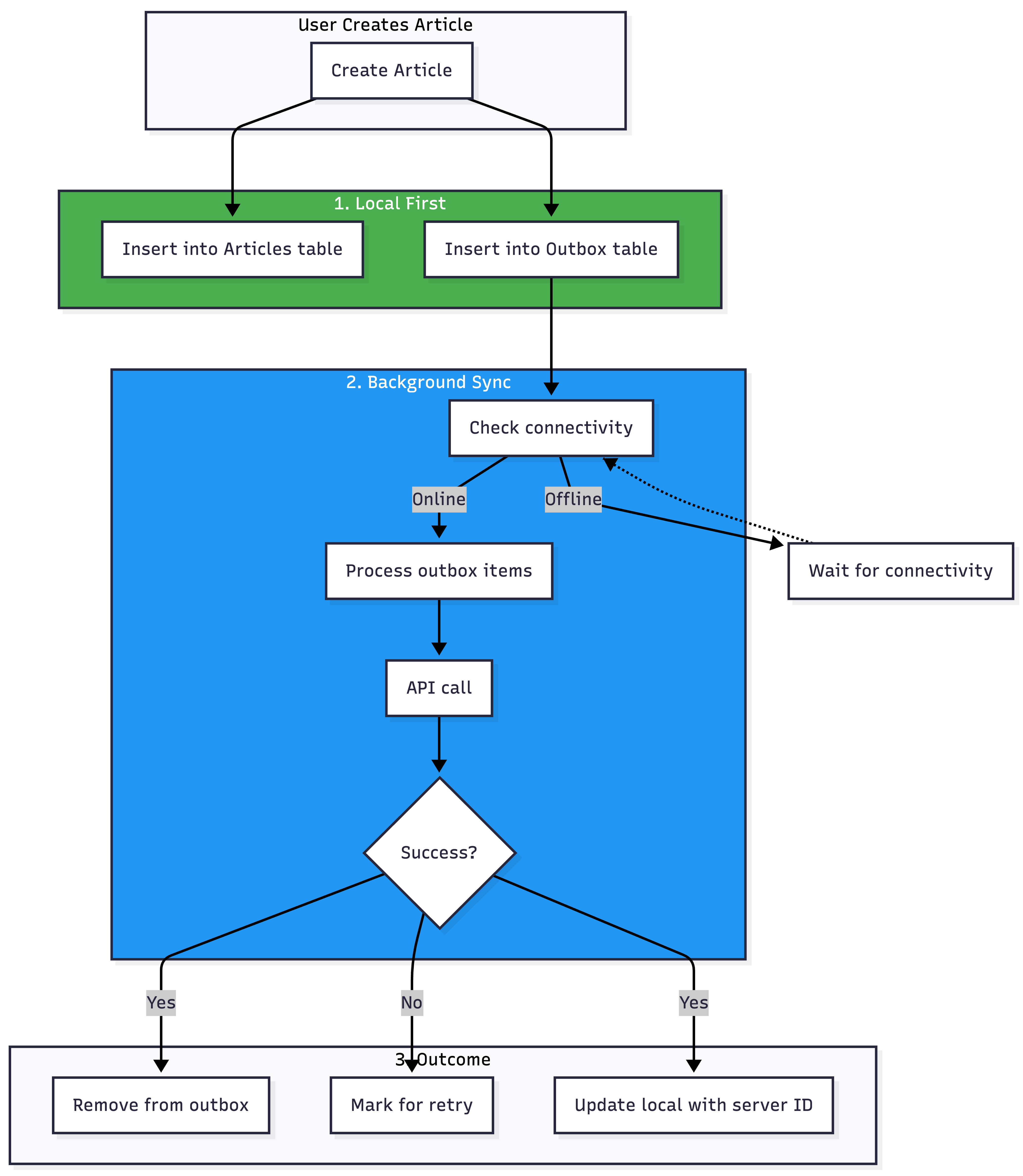
// Outbox entity for pending operations
@Entity(tableName = "outbox")
data class OutboxEntry(
    @PrimaryKey val id: String = UUID.randomUUID().toString(),
    val entityType: String,        // "article", "comment", etc.
    val entityId: String,          // ID of the affected entity
    val operation: Operation,      // CREATE, UPDATE, DELETE
    val payload: String,           // JSON serialized data
    val createdAt: Long = System.currentTimeMillis(),
    val retryCount: Int = 0,
    val lastError: String? = null
)
enum class Operation { CREATE, UPDATE, DELETE }
Join Jetpack Compose - Cohort 3
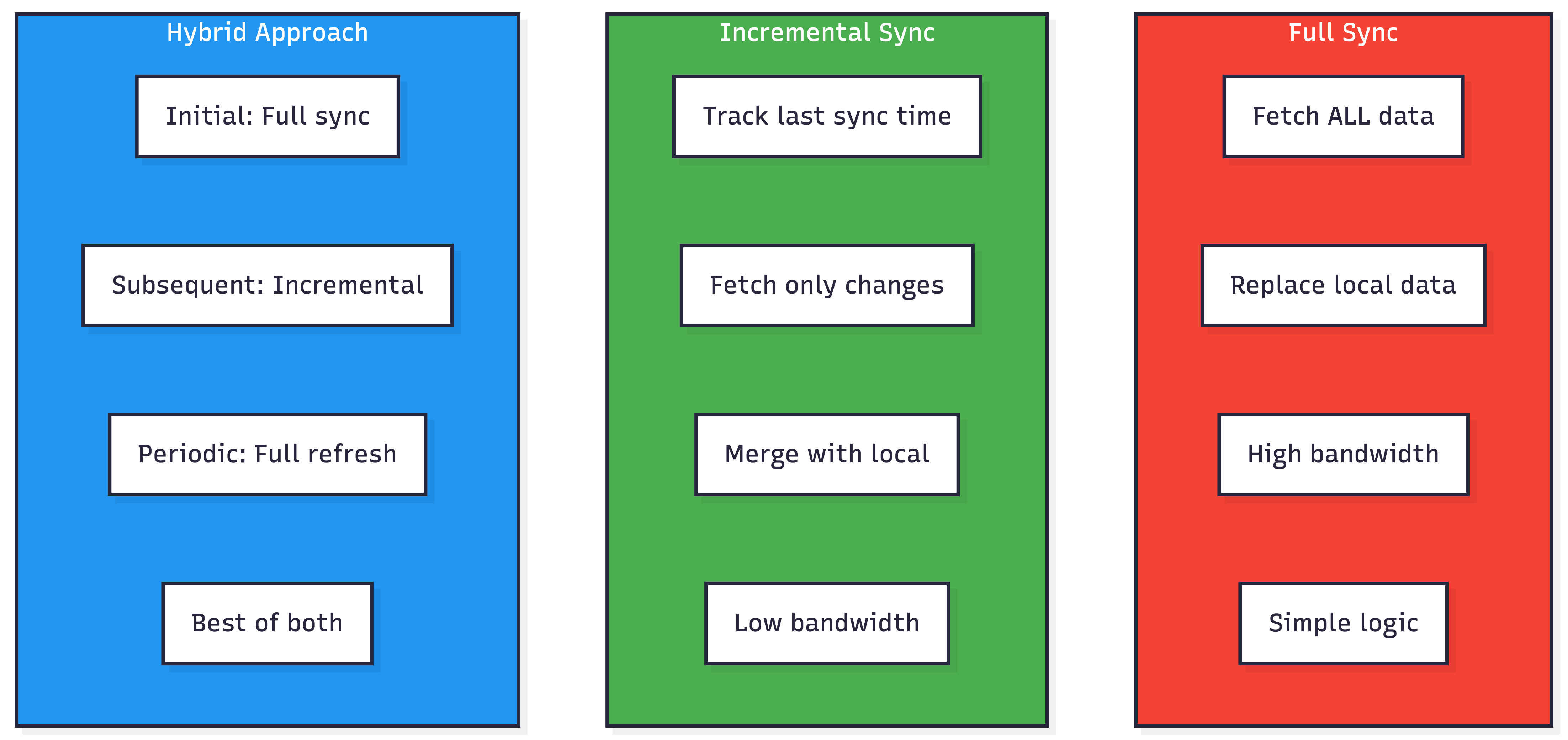
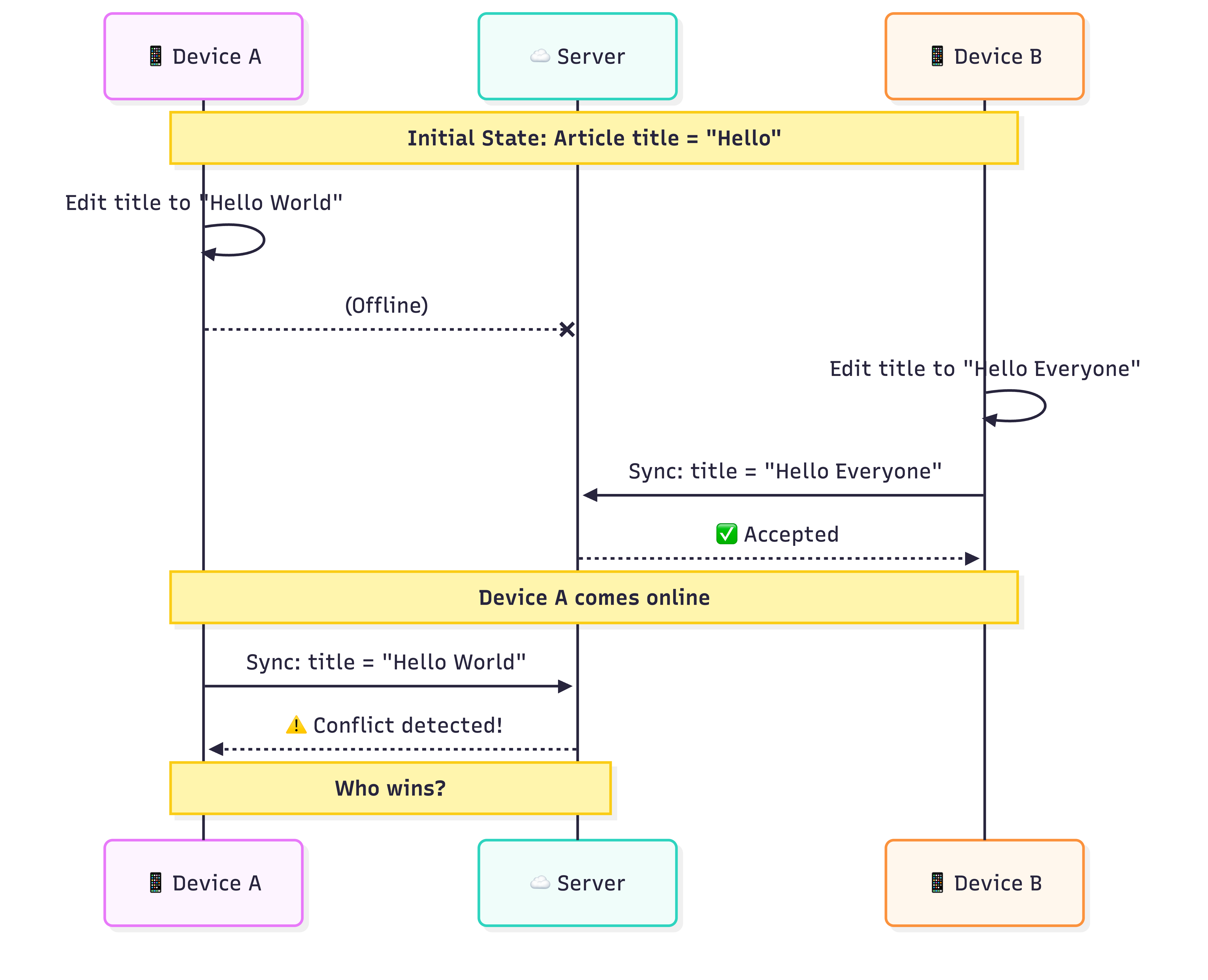
Conflicts occur when the same data is modified on multiple devices before synchronization. This is inevitable in offline-first systems.
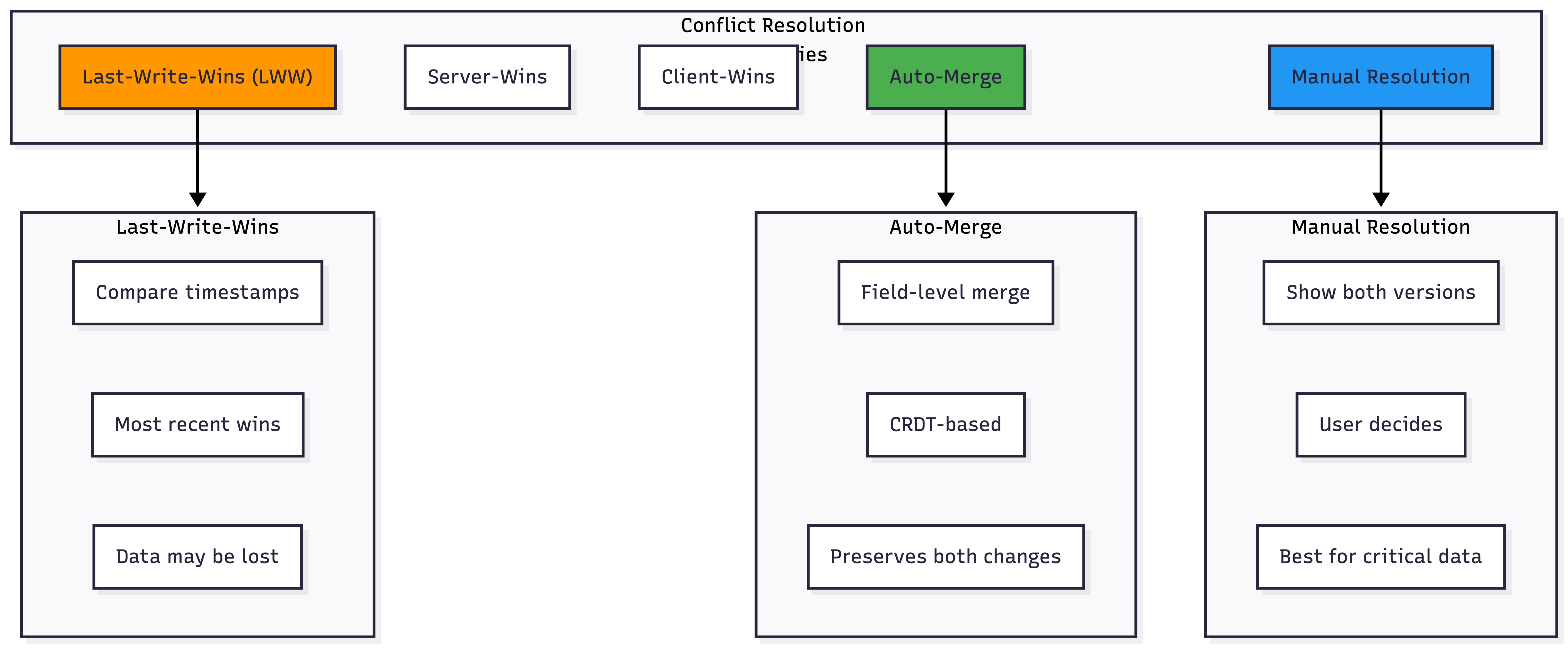
Instead of replacing entire documents, merge at the field level:

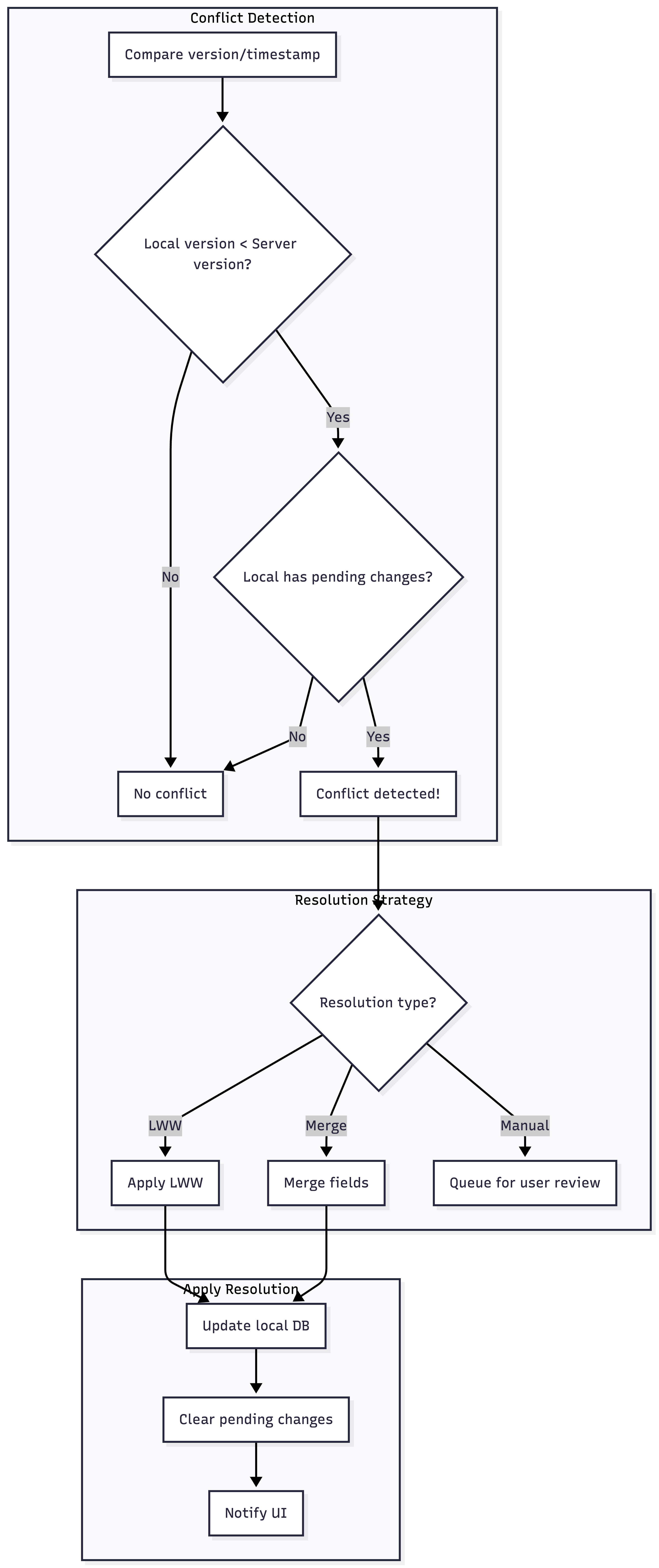
// Conflict resolution based on data type and user preference
sealed class ConflictResolution {
    object LastWriteWins : ConflictResolution()
    object ServerWins : ConflictResolution()
    object ClientWins : ConflictResolution()
    data class FieldMerge(val rules: Map<String, MergeRule>) : ConflictResolution()
    object AskUser : ConflictResolution()
}
enum class MergeRule {
    PREFER_LOCAL,
    PREFER_REMOTE,
    PREFER_LONGER,      // For text fields
    UNION,              // For lists/sets
    INTERSECTION,       // For lists/sets
    SUM,                // For numeric fields
    MAX                 // For numeric fields
}
// Example: Smart article conflict resolution
fun resolveArticleConflict(local: Article, remote: Article): Article {
    return Article(
        id = remote.id,  // Server ID is authoritative
        title = if (local.titleModifiedAt > remote.titleModifiedAt) local.title else remote.title,
        body = mergeText(local.body, remote.body, findCommonAncestor(local, remote)),
        tags = (local.tags + remote.tags).distinct(),  // Union of tags
        version = remote.version,  // Accept server version
        lastModified = maxOf(local.lastModified, remote.lastModified)
    )
}
🚀 Continue to Part 2
We’ve covered the foundational architecture of offline-first apps — the repository pattern, synchronization strategies, and conflict resolution. But building truly robust offline applications requires more.
In Part 2, we dive into:
Multi-layer caching that makes your app feel instant
Network state management that adapts to real-world conditions
Background sync with WorkManager for reliable data synchronization
Edge cases & error handling — the 30+ scenarios that will break your app if ignored
Testing strategies to validate offline behavior
Join Jetpack Compose - Cohort 3
Read Part 2: Caching, Sync, and Edge Cases →
Comments
Nothing yet. Say the first thing.
Sign in to join the conversation.