
Today’s Newsletter Includes:
A Japanese rice dish that has been solving the weeknight dinner problem for more than a thousand years
Why your rice cooker deserves a little more respect
A ridiculously forgiving recipe that lets you clean out the fridge and call it dinner
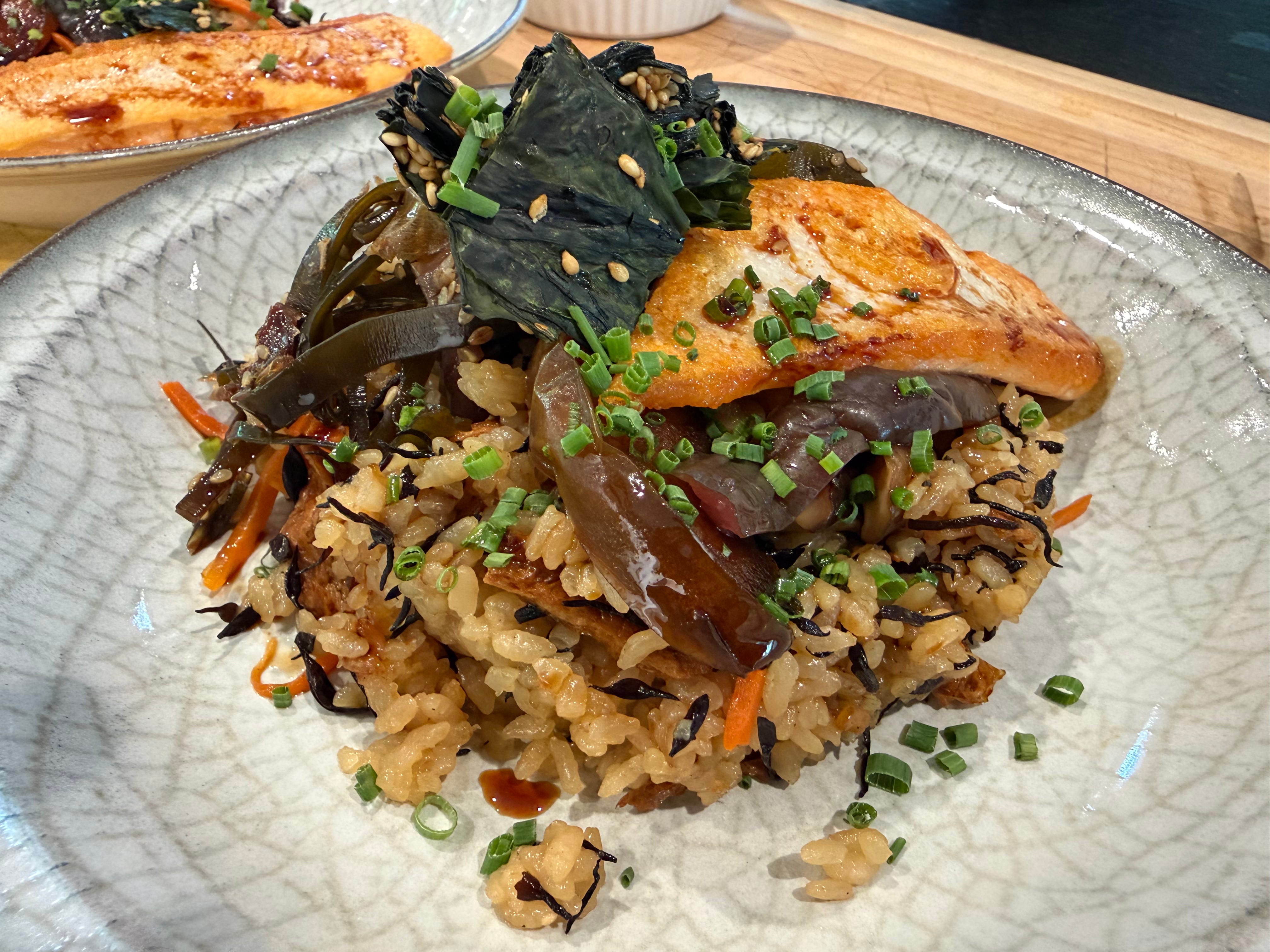
I wish you would all have come with me on my trip to Japan and Korea last week! Now that I’m home, I’m making a lot of dishes that I learned to cook on that trip, or that were inspired by it. This dish is different. I’ve been making it for decades. And I did bring a lot of little goodies home to sprinkle on top or mix into this rice dish. It seems complex at first, but it is far from it.
Takikomi gohan is a classic of the Japanese culinary canon. It’s one of those dishes that makes you wonder why Americans spend so much time inventing solutions to problems that other cultures solved centuries ago.
Literally, the name means something akin to “rice cooked together,” and that is essentially the whole idea. Short grain rice, liquid seasoning and whatever else you have are put into the same pot and cooked together. The rice absorbs the dashi, soy sauce, sake and mirin, and, as importantly, the juices and flavors released by everything cooking above and around it.
There are several classic versions of this dish. This is not a new rice cooker hack. The roots of takikomi gohan can be traced at least as far back as Japan’s Nara period, from 710 to 794, when rice was precious and people stretched it by cooking it with millet, barley, wild plants, beans, roots, seaweed and other available foods.
An early ancestor of this dish was called kate-meshi, essentially rice bulked out with other ingredients. What began partly as thrift gradually became an essential part of the cuisine. By the Muromachi period, variations incorporating chestnuts, beans and vegetables were established, and during the Edo period, the idea blossomed into something far more pleasurable and seasonal.
Comments
Nothing yet. Say the first thing.
Sign in to join the conversation.