
All I wanted was sleep.
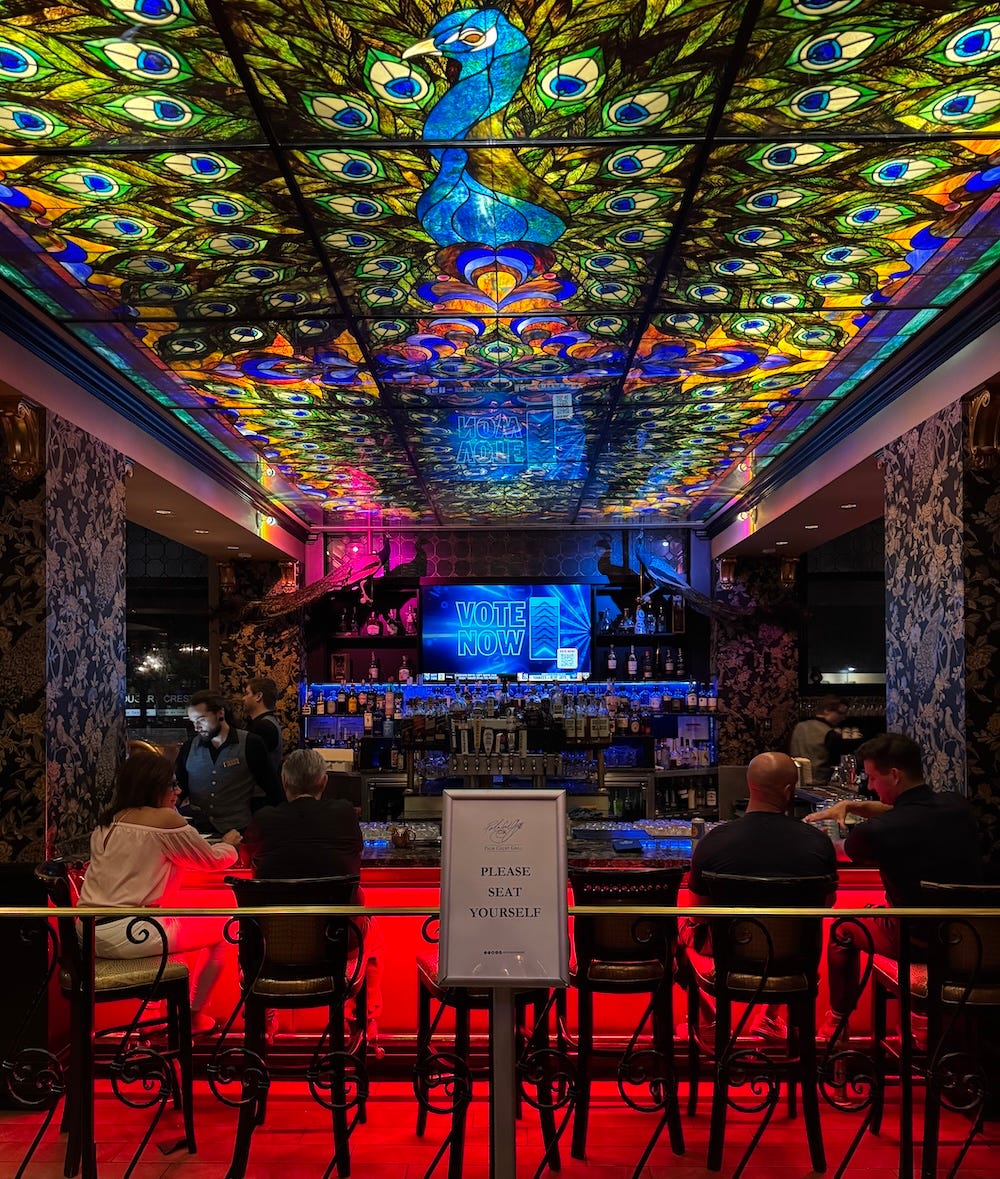
Instead, checking in after midnight, I’m listening to laughter echo from the Peacock Room, a storied bar inside Spokane, Washington’s Davenport Hotel. The voices are friendly and loud, the way people who like each other talk after having a few. A middle-aged couple emerges from the crowd and leans into one another as they disappear into brass-trimmed elevators beneath the carved ceilings and chandeliers.
The scene feels strangely familiar, though I can’t say from where. The Davenport, opened in 1914, exudes the old-school glamour the Overlook did in The Shining but without the creepy twins and all the REDRUM. The chatter I’m hearing isn’t haunted. It’s comforting, like another lost year—1956 perhaps—when you dressed up for downtown, the hotels stayed up late and strangers could still debate politics—I Like Ike!—without today’s Facebook-fueled rancor. I collapsed on a king-size bed with a towering French Empire-style headboard. Like I said, old-school.
Around four in the morning, a rumbling through downtown awakens me. It’s a real freight locomotive. A working train still hauling things across the American West.
Lying there in the dark listening to that clanging call from another time, I fall in love with Spokane.
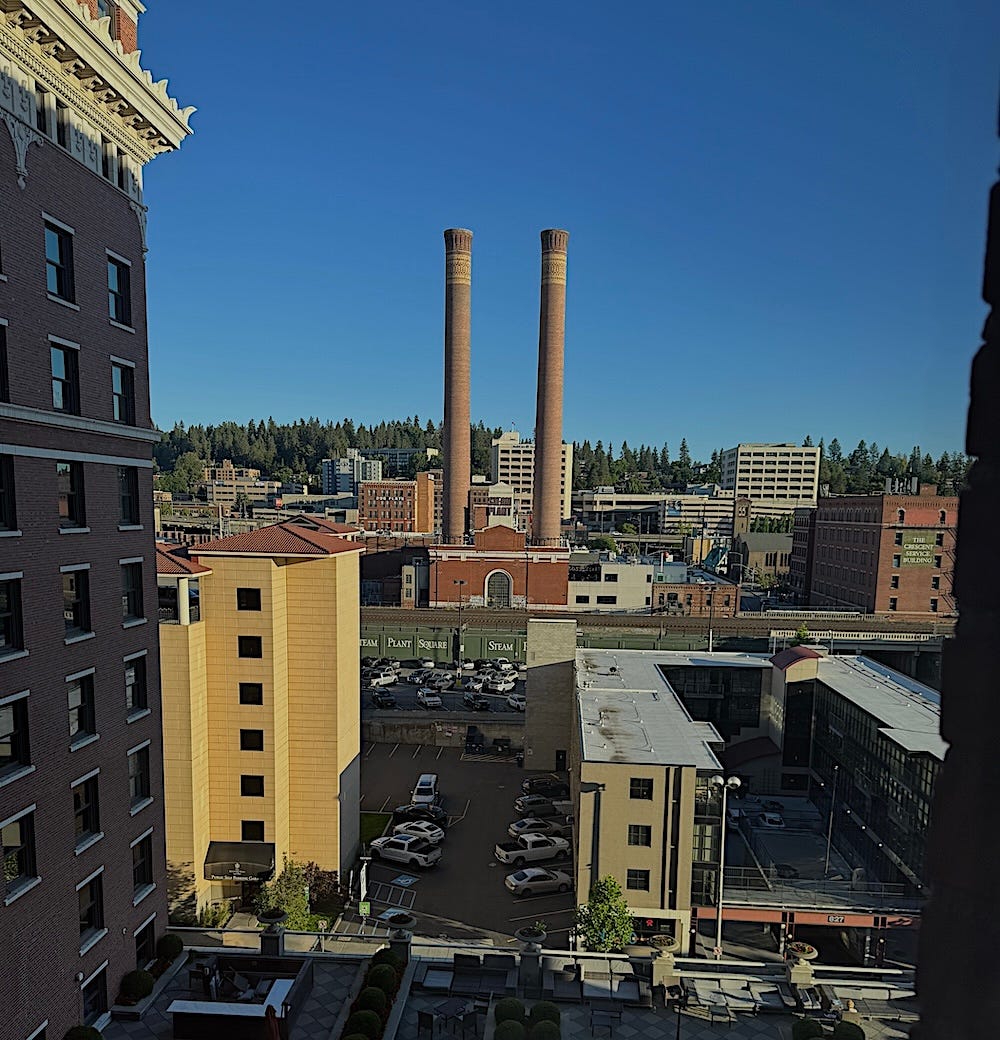
The next morning I begin to understand why. Past and present don’t compete in Spokane (pop: 231,000), they cooperate. Grand hotels and Anthropologie coexist along with box cars and pour overs. It’s where 1900 labor organizers and 2026 web designers walked the same streets, even worked in the same buildings. Where teenage girls sporting black Cher-styled eye-liner, combat boots and fishnet body stockings browse vinyl records with the same singular focus wading moose browse the willows on the Spokane River.
Moose. Cher eyes. Box cars. Spokane is weird-wonderful the way David Lynch is weird-wonderful.
No surprise, really, when I discover the late film director lived here as a child. Lynch didn’t invent weird America so much as recognize it. Spokane came with all the ingredients. Just add the water.
And that means the Spokane River. Along its 111 mile-course, the Spokane does what rivers do—eroding rock, drawing people, powering industry, and coursing whitewater through a city that never stops listening to it.
Riverfront Park occupies 100 acres along the river on what was once a tangle of railroad yards until the city cleared it for Expo ‘74, an environmentally themed World’s Fair that was the first great example of Spokane’s adaptive reuse. It was an optimistic act of urban recycling. The locomotives disappeared, along with the railroad station leaving the Great Northern Clocktower, the sweeping cables of the U.S. Pavilion and a recycling station in the form of a garbage-eating mechanical goat. For $13.95, the Numerica SkyRide carries visitors over the Spokane River and out above the falls. You’re floating over a canyon where the river drops violently across the rocks. Momentarily, the modern city seems overwhelmed by churning rapids.
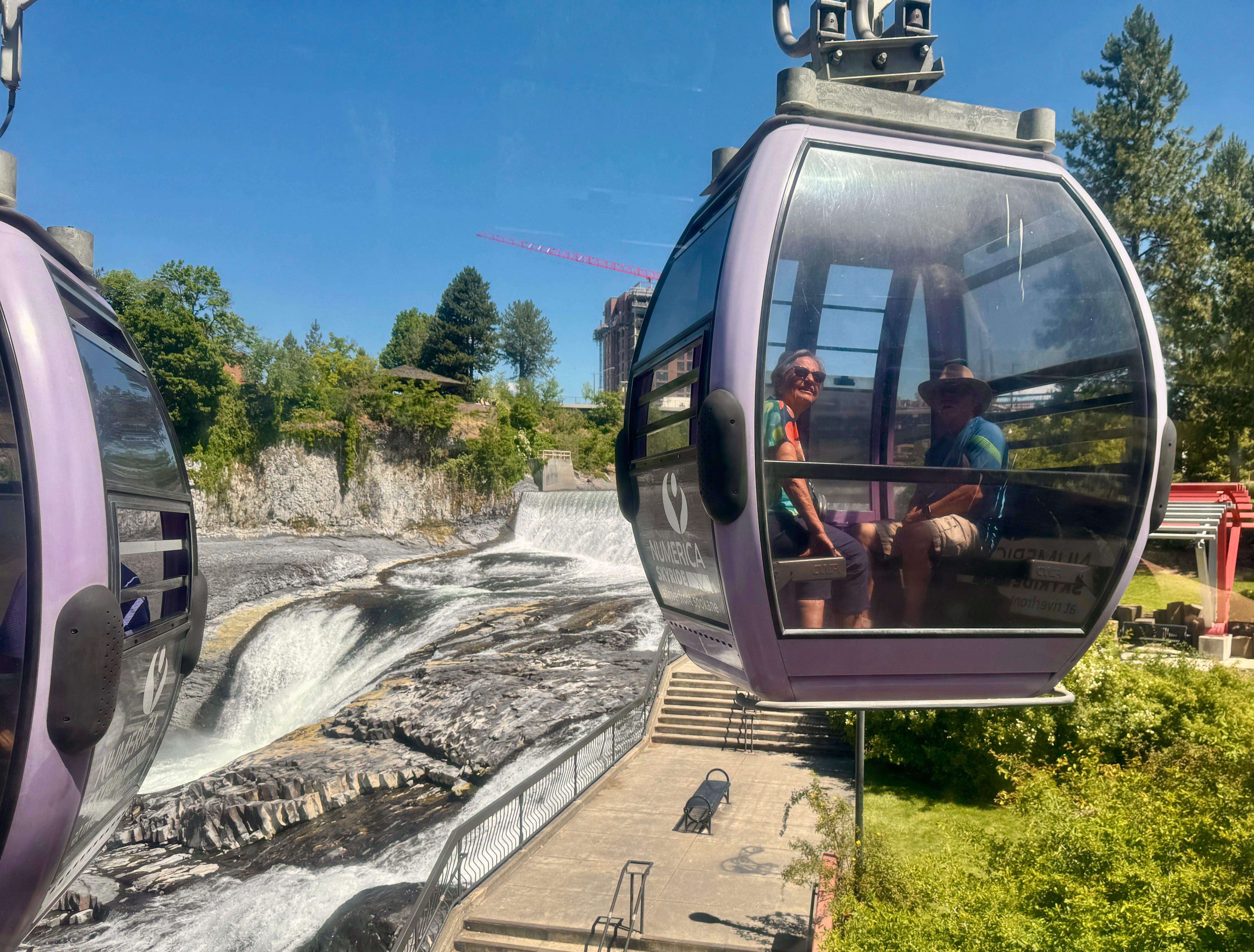
Looking into the gorge it’s easy to imagine a young Lynch filing away images of rushing water, and industrial power plants to surface in the Twin Peaks opener.
In Spokane nature is never very far away. That becomes even clearer paddling a raft through the river’s rapids just a few minutes from downtown. The Spokane River isn’t a recreational afterthought squeezed into an urban corridor. Now cleaned up and suitable for rafting, swimming and tubing, it remains the city’s central character. Eagles circle overhead. Ponderosa pines lean toward the water. Jesse, my guide from Wiley E. Waters Rafting, tells me it’s common to see moose here. “Like the rest of us, they head to the river in the hot summer months.”
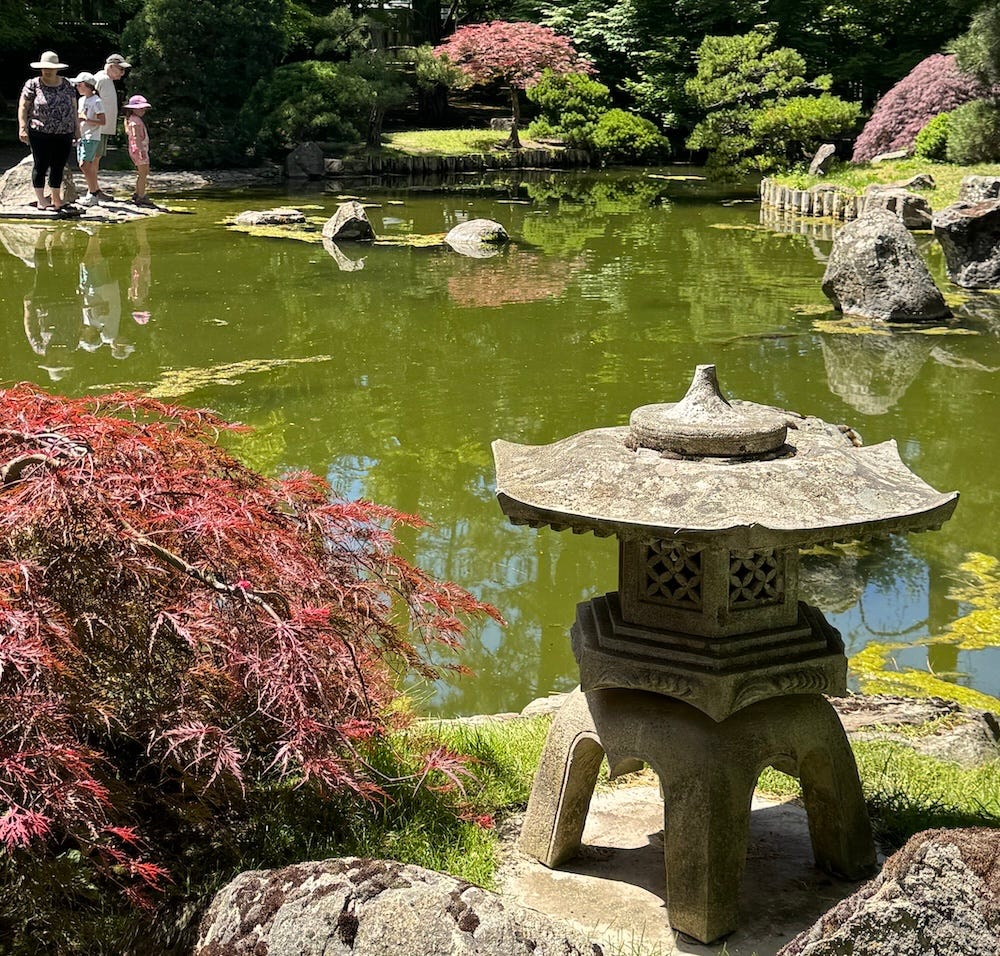
That’s Spokane’s sleight of hand. It never asks you to choose between nature and civilization because it never quite separated the two. On the city’s South Hill, Manito Park offers the same lesson. Its elegant Japanese Garden and sweet-scented Rose Garden are stitched seamlessly into a neighborhood of Craftsman-era bungalows
But these idylls rest along a historical tension in the city’s rise. Spokane isn’t just a cityscape, but a collision between labor and wealth that’s cemented into its thick brick warehouses and handsome Beaux-Arts buildings. Every corner tells the story of turning the wild, extractive West into something permanent. By the 1890s, timber, railroads, and the silver pouring out of Idaho’s Coeur d’Alene mines had transformed a rough frontier settlement into the commercial capital of the Inland Northwest. Mining fortunes and lumber money paid for grand banks, department stores, and lavish hotels. The elegant, seven-story Peyton Building, completed in 1898, announced that Spokane intended to matter.
The Davenport, where I’m sleeping, became the clubhouse for this sudden, massive wealth. Opened in 1914, the 14-story structure boasted over 400 rooms cooled by insulated pipes and ducts—a first in hospitality history. Known as Spokane’s “living room,” the Davenport drew the timber and silver barons who brokered deals in the Peacock Room and by the lobby fireplace.
But workers arrived by the thousands, too. Not all of them were content enriching the men in those boardrooms. In 1909 and 1910, Spokane’s downtown streets became conflicted ones during the Free Speech Fights, a labor rights battle led by the Industrial Workers of the World (IWW). The punk rockers of the union movement, the Wobblies deliberately filled the local jails by violating ordinances designed to silence labor organizers. It was messy, theatrical, confrontational—and unmistakably Spokane.
History has a funny way of lingering in Spokane. Not always in ideology, but in temperament.
Across from the Davenport, Baby Bar is the sort of tiny neighborhood haunt where the bartender gets busy feeding grapefruit into a steampunk-like juicer to make Greyhounds that two regulars insist I order. Before long we’re yakking like old friends. In an era when so many cities feel curated and transactional, Spokane feels willing to improvise—a place where strangers strike up conversations, old buildings find unexpected second lives, and a quiet skepticism toward polo shirts and the predictable floats beneath the surface.
Around Spokane that history often shows up with menus. Dry Fly Distilling now occupies a former newspaper printing plant. Down the block, Revival Tea Company’s tasting room operates out of a subterranean brick basement that once served as a Prohibition-era speakeasy. Near the core of downtown, refugee chefs at Feast World Kitchen have transformed a former furniture store into a vibrant, cross-cultural restaurant where the menu changes daily with the nationality of the cook.
Nowhere is this instinct for preservation more profound than the Davenport. Like so many grand American hotels, the Davenport gradually fell from grace in the late twentieth century, shuttering its doors and staring down what seemed an inevitable date with the wrecking ball. Ironically, the very technology that had once made it a marvel of modern luxury ultimately saved it.

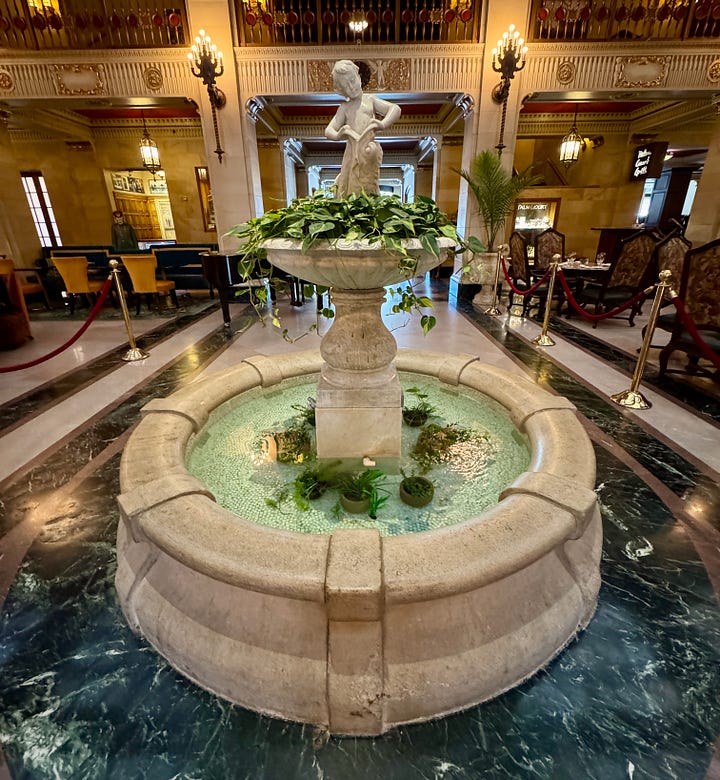
When the hotel opened in 1914, its pioneering climate-control system relied on pipes insulated with asbestos, then celebrated as the Industrial Age’s wonder material. Decades later, it had become a toxic liability. Any developer hoping to demolish the Davenport first faced the staggering cost of asbestos abatement. The cost of destruction bought it something far more valuable than insulation: time. Long enough for local entrepreneurs Walt and Karen Worthy to invest $38 million restoring Spokane’s grand hotel to its former glory.
A mad crush makes for sweeping pronouncements. Maybe my hearthrob isn’t America’s last good place. But Spokane may be one of the last cities that still feels comfortable with its contradictions. Goth kids mix with Rotary Club members. Grand hotels survive because asbestos once insulated their walls. Speakeasies become tea parlors. Printing plants become distilleries. Rivers welcome whitewater paddlers.
Spokane never became what anyone expected, and the freight trains still rumble in the night. At 4 AM in bed at the Davenport, that’s reason to fall in love.
If this is your first visit to Lost in Place, you might also enjoy:
Field Notes for Spokane
Tours:
Visitors can uncover Spokane’s history on free summer walking tours of Riverfront Park, or explore downtown’s architectural highlights with Wander Spokane. The Davenport Hotel offers a self-guided tour of the interior.
Food:
Indicana Indian and Mexican cuisines collide in unexpectedly harmonious ways thanks to owner Noreen, who first honed her craft at Feast World Kitchen. Tacos stuffed with tikka flavors and fragrant curries make this Perry District restaurant one of Spokane’s most inventive dinners. Address: 1020 S. Perry St; Tele: (509) 290-5639
Ferguson’s Cafe A Garland District institution with movie-star credentials, this retro diner appeared in Vision Quest and Benny & Joon. Come for the cinnamon rolls, omelets, and a slice of old Spokane that hasn’t forgotten what breakfast is supposed to be. Address: 804 W. Garland Ave; Tele: (509) 325-3482
Gander and Ryegrass Chef Peter Froese’s ambitious tasting menus have helped put Spokane on the culinary map. The six-course “Marathon” experience combines local ingredients with serious technique and enough creativity to justify the stretchy pants. Address: 404 W. Main Ave; Tele: (509) 315-4613
Feast World Kitchen Part nonprofit, part culinary incubator, Feast World Kitchen gives refugee and immigrant chefs a chance to share the flavors of home while building businesses. The menu changes daily, making every visit a surprise and every meal a lesson in Spokane’s evolving identity. Address: 1321 W. 3rd Ave.; Tele: (509) 608-1313
House of Brunch This lively downtown favorite leans into modern brunch culture with creative plates, espresso drinks, and enough energy to start the day right. Yes, mushroom coffee is on the menu. Address: 818 W. Riverside Ave.; Tele: (509) 413-9679

Drink
Indaba Coffee Coffee culture in Spokane is less about laptops and hustle than conversation and community, and Indaba embodies that spirit. Its downtown café serves excellent coffee with an easygoing atmosphere that feels distinctly Eastern Washington. Address: 518 W. Riverside Ave: Tele: (509) 822-7182
Dry Fly Distilling Washington’s first legal distillery opened in a former newspaper printing plant, proving that Spokane has a talent for repurposing its industrial past. The vodka, whiskey, and gin are all crafted with regional grains. Address: 1021 W. Riverside Ave; Tele: (509) 489-2112
Revival Tea Company Located inside a former speakeasy, Revival Tea handcrafts blends and offers tastings that feel both old-fashioned and modern. The founders have grand ambitions for tea, but the experience remains warmly personal. Address: 415 W. Main Ave., Suite 100; Tele: (509) 315-8099
The Emporium The circular bar at Spokane’s Davenport Hotel sits beneath one of America’s great hotel lobbies. Cocktails, martinis, and a touch of railroad-era glamour make it an ideal perch for watching Spokane go by. Address: 10 S. Post St; Tele: (509) 789-6848
Arbor Crest Wine Cellars Set on the former estate of inventor Royal Riblet, Arbor Crest pairs sweeping views with approachable Washington wines. It’s hard to decide whether the scenery or the rosé deserves top billing. Address: 4705 N. Fruit Hill Rd; Tele: (509) 927-9463
Baby Bar
Tiny, quirky, and beloved, Baby Bar has inspired devotion from everyone from locals to singer Neko Case, who once declared it the best bar in America. Order a drink, squeeze in, and see if she’s right. Address: 827 W. 1st Ave: Tele: (509) 847-1234
Stays
The Historic Davenport Hotel is more than a place to sleep—it’s the emotional center of the city and one of the West’s legendary historic hotels. Opened in 1914, the Spanish Renaissance landmark nearly disappeared before an ambitious restoration returned its marble lobbies, soaring chandeliers, Peacock Room Lounge and legendary Palm Court Grill to their former glory. Even if you’re not spending the night, stop in for a cocktail beneath the stained-glass ceiling or afternoon tea. though they fluctuate seasonally. Address: 10 S. Post St.; Tele: (509) 455-8888; Rates: from about $190
###
No posts
Comments
Nothing yet. Say the first thing.
Sign in to join the conversation.