
Note: I’m flying so it’s a short post today.
Before this week, I could not think of anything duller than World War I.
This misty, half-remembered war, the one to end all wars, the one overshadowed by the more pop-culture-accessible World War II, evokes blue booklet essays from my history class at Pittsford Sutherland High. I wrote something about the League of Nations, handed it in and forgot all about doughboys, the Somme and the Kaiser and his helmet with that pointy end you could stick a pickle on.
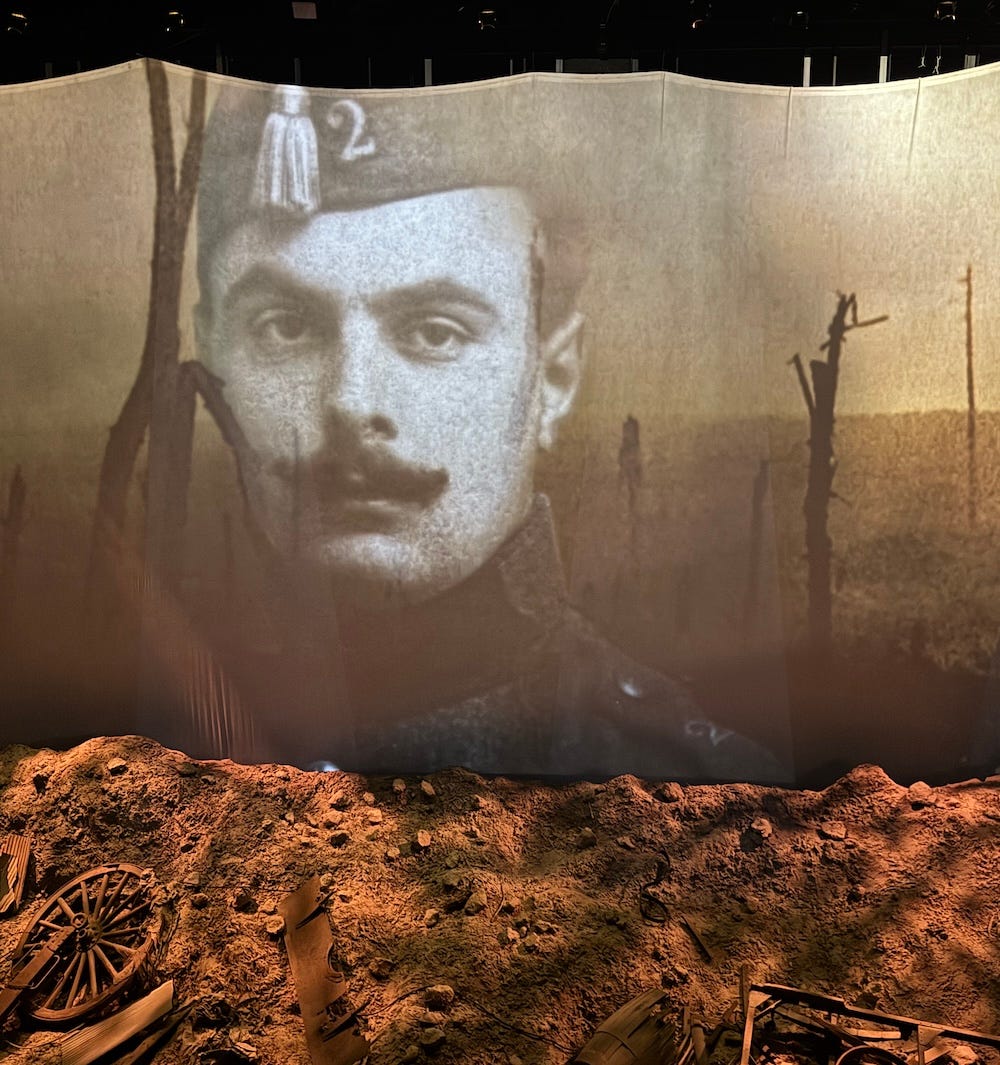
But after touring the newly revamped National WWI Museum in Kansas City this week, I was struck dumb by how little I really knew and how much our modern world was shaped by the Great War as people called it then—because, of course, the even more terrible one hadn’t happened yet.
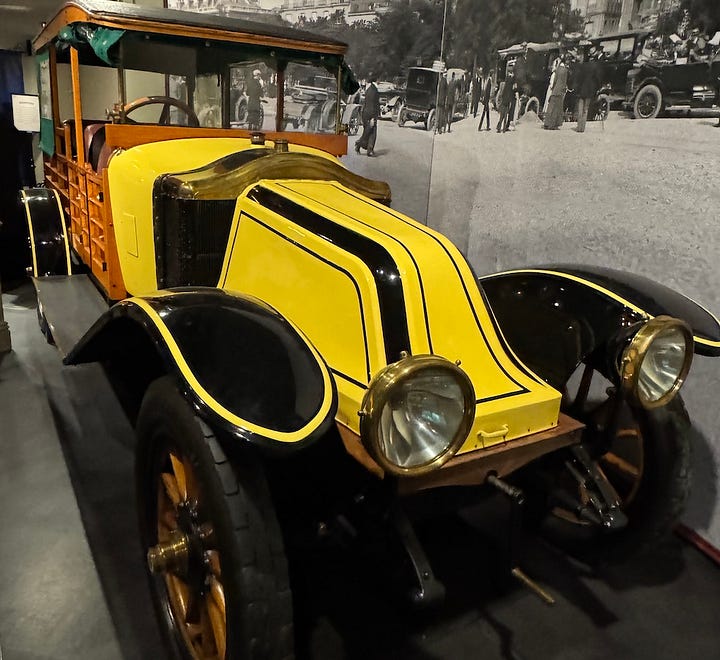

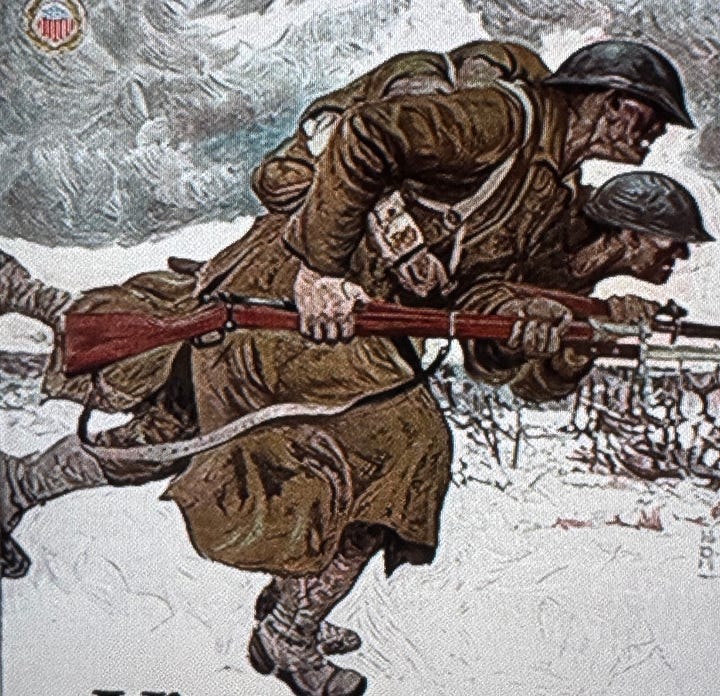
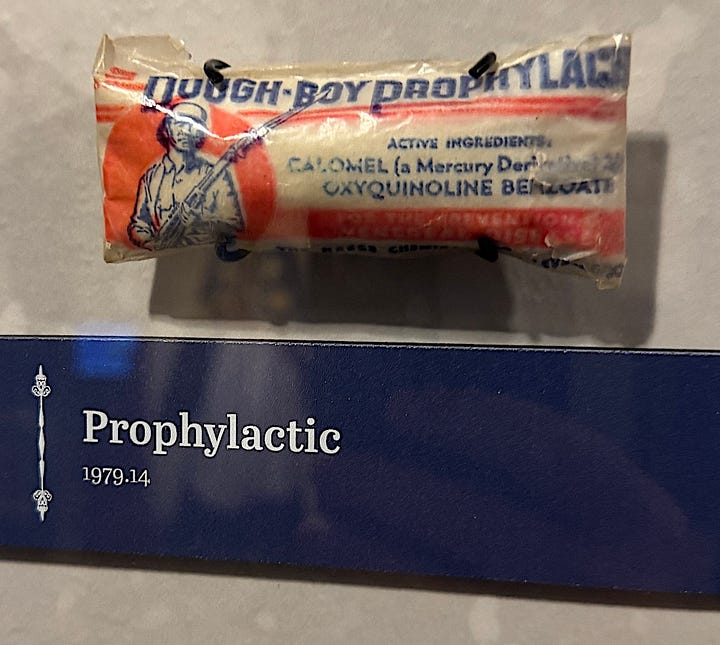
The collection is terrific: flags and posters, Parisian taxi cabs, machine guns, gas masks, a torpedo and even condoms called “Dough-Boy Prophylactics.”
It makes you realize that war isn’t just hell, it’s stuff.
The setting is both soaring and stately. Set on a hill overlooking the city, the museum is housed beneath the Liberty Memorial, a 217-foot-tall limestone-clad tower honoring World War I veterans dedicated by President Calvin Coolidge one hundred years ago this fall.
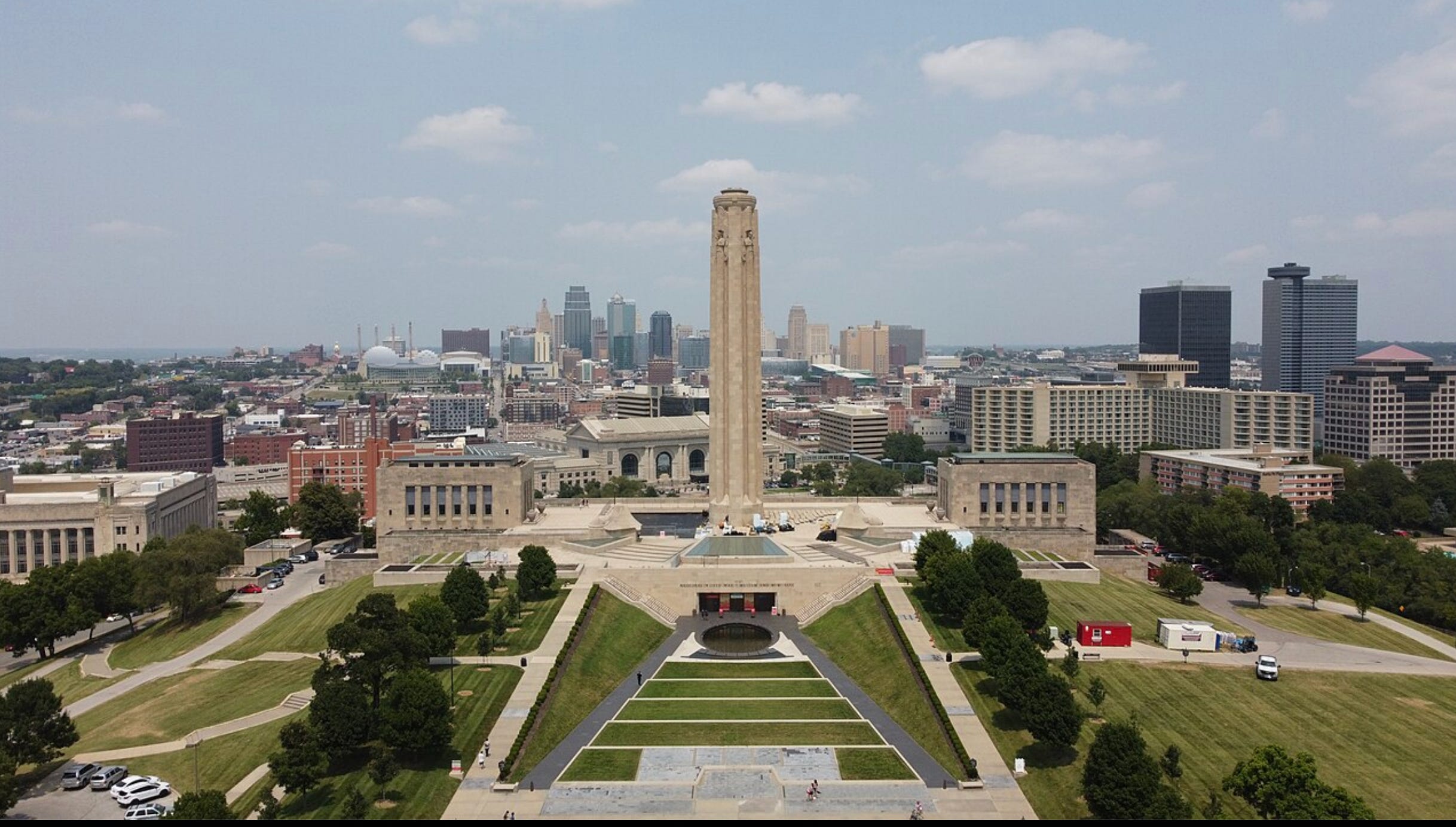
The museum opened in 2006. Starting in 2023 the galleries were updated with all the latest digital bells and whistles to tell this complicated story. The curators deploy videos and interactive graphics including immersive environments that speak to the horrors of trench warfare and first-person stories from actual letters and diaries.
It works only too well.
You witness how human stupidity and arrogance lead to the destruction of a social order, make that several of them. French and British youth choking on poison gas. American civilians drowned at sea by German U-boats. The Romanov princesses shot in a cellar. The great sculptor Auguste Rodin dying in an unheated villa from the cold in the coal-scarce winter of 1917.
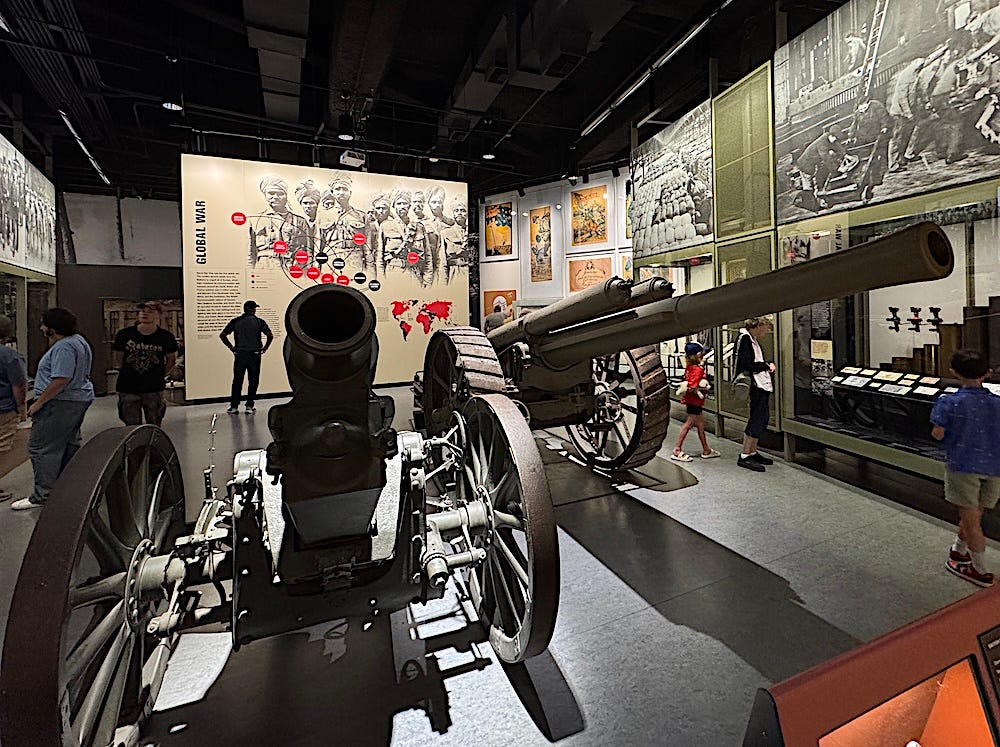
The world in 1914 was supremely confident, increasingly prosperous and looking forward to a golden age. They thought the war would be over in days. It lasted four years, killed millions and toppled empires.
They never understood war’s capacity for unexpected consequences.
Sound familiar?
Field Notes:
The National WWI Museum and Memorial. Its expansive galleries are rich with artifacts and information. Give yourself two hours, three if you’re a reader of displays and want to watch the excellent video presentations. Adult admission is $19.50; People 65 and older and military: $15.50. Youth 6-15: $11.50. The Liberty Memorial Tower requires an additional ticket. Address: 2 Memorial Drive; Tele: 816-888-8100
A note on AI: I use AI like I might use a good research assistant and copy editor—if I could afford them—to chase down references and links, flag things worth checking, and find errors, grammatical mistakes and clumsy prose. I verify the facts and print corrections when wrong. The ideas, words, observations and opinions are my own.
###
No posts
Comments
Nothing yet. Say the first thing.
Sign in to join the conversation.