
In this 2021 pod, a happily transitioned man and a happily detransitioned woman share a fierce independence of thought.

(The full Dish returns on September 4. In the meantime, we are re-airing a handful of the most downloaded episodes from the early years of the Dishcast.)
In addition to the Middle East, another topic that has generated a lot of heat on the Dish since 2020 is the issue of the gender revolution and the TQ+ movement. So here are two perspectives from an early pod — that shows again how we at the Dish have genuinely sought the truth in this area, have listened to all sides, and aired all the arguments. Almost no other place does this anymore. Which is why we’re so grateful for your support and subscriptions.
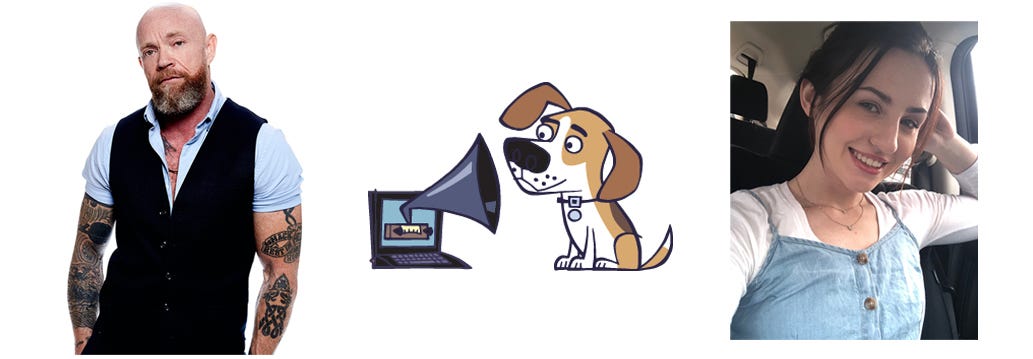
Buck Angel was a pioneering porn star — the only trans man to ever win Transsexual Performer of the Year at the AVN Awards — and today he’s a sex educator, motivational speaker, and entrepreneur. Helena Kerschner is a young woman who lived as a man on hormone therapy for several years before detransitioning. Buck’s transition saved his life, while Helena’s transition was a bit of a calamity, but they share a resistance to the dogma of the trans activist community and speak forcefully and elegantly against it.
Go here for a polished transcript. Four clips on YouTube are also available: on the cult-like behavior of many trans activists; on the risks of puberty blockers; on the profound effects of testosterone; on how the hormone caused Buck, a former lesbian, to become attracted to men for the first time.
This episode is part of an ongoing series on the lives of transgender people and the debates surrounding one of the most polarizing subjects of today, especially when it comes to kids transitioning. Our previous episodes welcomed three happily transitioned and brilliant women — Dana Beyer, Mara Keisling, Brianna Wu — along with a remarkable trans man, Shannon Minter. All of them pushed back against my views, and we agreed on a lot as well.
Many listeners responded to the episode with Buck and Helena, and we’re reproducing some of them below. Here’s a fan:
I thought this discussion was terrific! Buck is a character, and Helena is warm and precocious. I had not heard of either of them beforehand, so I nearly skipped the episode. But after I began listening, I quickly appreciated their personalities; they are both open, non-dogmatic, friendly, and cheerful. By the end of your discussion, I found myself really rooting for Helena and Buck. It is wonderful that they appear to be thriving despite the difficulties they’ve faced.
Another was drawn to Buck in particular:
Thanks for a particularly good Dishcast! I’m pretty damn close to a Kinsey six or whatever; I may admire women as beautiful and impressive humans, but they do NOTHING for me sexually. I like GUYS: the hairiness, the attitude, the pheromones, the works. Someone like Buck Angel DOES just resonate as a “guy” — the secondary characteristics and attitude matter a lot more than external genitalia. So I guess that’s where I differ from you: the dick, per se, does not make the man; attitude and presentation are far more important.
The problem I’ve run into has been that some super-cute trans otter-or-bear men who appeal immensely on visual/“GUY” terms, will then, almost immediately, if not preemptively, throw up a VERY hostile separatist-lesbian wall of critical theory about “I’m not interested if you’re just objectifying me/I’m not your experiment.” If objectification is oppression, then gay men are all dirty pigs! As a 34-years-out gay man, if someone is purporting to BE a gay man, well, isn’t objectification the whole bloody point?! All my 40-50-60ish cis-male gay pals are ALL about the friendly/brotherly gropey-fun objectification. It makes us all feel seen and appreciated in a low-key kind of way.
Needless to say, I’ve had little luck with the FTM community, at least the young ‘uns. But it’s the antithesis of truth to say that’s because I’m Transphobic.
On the other hand, I do get it: That kind of gropey-fun attitude for either straight/cis women or, apparently, for anyone whose youngest formative years were as equipped with female organs and hormones, is problematic, to say the least. And I’m glad you kinda pointed that out: there is a BIG biological divergence here.
All of this just makes me REALLY appreciate a guy like Buck, who’s clearly a guy we would all just like to hang out with, and fool around with, as one of the guys. He did it utterly by himself so long ago, not in any Boomer-parent-coddled cocoon or with any internet echo chambers of satirically Orwellian social theory. He’s just … a GUY.
Another wrote, “What stood out in Helena’s story was how casually she was given testosterone”:
My son started testosterone treatments for delayed puberty and there was nothing casual about it: blood tests, bone age scans, a pituitary MRI, a thyroid ultrasound … we are on a first-name basis with security at the children’s hospital. Our endocrinologist (who coordinated with our pediatrician) has been monitoring my son for several years, and it still took three months between when she recommended testosterone and when my son had the first shot. She’s called twice to remind me she has to see him in person before the second shot (not a call from her receptionist, but the doctor herself). And my son was born a biological male, who should at this point have large quantities of testosterone in his system already.
So it’s crazy that a biological female can get a same-day testosterone shot.
Next up, a cis woman brought to bear her experience with hormone therapy:
I had stage III ovarian cancer at age 33. Now I don’t have ovaries, and I’ve been on hormone replacement for the past seven years. If a trans person told me they had gotten surgery or taken hormones, I would support them — because I don’t think it’s my place to tell another adult what to do. However, if they asked my opinion on whether to get surgery or take hormones, my answer would be absolutely not.
I know that some people might benefit from hormone treatment, as I do, but I know better than anyone the complexity of dealing with hormone changes. And when it comes to elective surgery, that’s just about the dumbest thing a person could ever do. Celebrating the fact that children are doing this is insanity.
Over the years, I’ve found myself wandering into conversations where people get very angry at me for sharing my opinions. For example, my brother flipped out on me for saying that I think many of these young people would benefit from not having medical interventions and working toward accepting themselves as they are, however they happen to be, even if this isn’t their preferred gender. Yes, they might feel they “are” another gender, but isn’t it an even higher plane of being to just accept whatever you are and try to be healthy?
I still feel like a woman, even though my female organs have been removed and I have no natural estrogen/progesterone and went into menopause as a young adult, then back out of menopause on hormone treatment. Losing those hormones didn’t change who I am. It did, however, make me appreciate being healthy and being sane. A hormone upheaval makes you feel neither of these things. I take hormone treatment now (as small of doses as possible) to try to reduce the physical symptoms of menopause.
So I look at parents championing their children’s needless surgeries and experimental hormone treatments in disbelief.
Here’s a “long-time reader since your blog was purple”:
I’m a middle-aged bisexual male married to a middle-aged trans woman. We’ve been together for 19 years, and I was her boyfriend even before she transitioned (being bisexual comes in handy that way).
I won’t bullshit you: youth trans healthcare is a zero-sum, harm-reduction game. Either you cause some harm to the gay-but-confused-not-trans kid by mistakenly delaying their puberty until 16 and then HRT, or you cause harm to the actually-trans-girl by forcing her to endure permanent masculinizing features (hands, feet, height, frame, hips) that may cause her to be permanently clocked (and often discriminated against) as a trans woman for the rest of her life.
This zero sum is undeniable. The healthcare industry and the WPATH SOC 7 generally has a high bar for determining fitness but obviously lax (and often low-income) clinics with good intentions can pave the road to hell. You go to war against the healthcare system you have, as Rumsfeld never said.
The vectors of harm are not the same for MTF vs FTM kids (and those clinically mistaken for them). It may even be the case that the solutions and risks and age determinations for MTF vs FTM should be different. Only the data and the analysis can tell you that.
I’ll bring up one point you haven’t touched on, that you should: You can’t keep young trans people from hormones. You act as if many corners of the internet like this one don’t exist: r/TransDIY. You don’t even need pre-paid debit cards anymore, since many sites that deliver meds will take crypto as payment.
The worst case: ubiquitous birth-control pills. One trip to Planned Parenthood with a cis girl friend and you have them. This is the standard way that trans women with no resources in poorer parts of the world feminize themselves — in Thailand (katoey), India (hijra/kinnar), Indonesia (waria), Mexico (muxe), etc.
Does birth control (ethinylestradiol) have major blood-clot health risks if you’re not suppressing T? Yes. Will the desperate-to-transition people give a fuck? Not really. Does it work? So-so, but when you’re a trans girl who hates that you look like a “brick”, it works wonders for taking the edge of dysphoria. Risks be damned.
My wife took birth control pills during puberty because she was trans, poor, and desperate, and it was a different time. She’s glad she did. I wish she didn’t have to.
A reader makes a semantic point about a Dish column:
When it comes to your “Trans Proposal In The Trans Wars,” I respectfully suggest you use “reasonable accommodation” rather than “compromise”? It sounds better.
When I referred to “the trans question” on Twitter, many people claimed I was comparing it to “the Jewish question” and thus the Final Solution. Oy. For the record, I constantly referred to “the gay question” in all the years I pushed for and debated marriage equality.
Below are reader emails we originally ran alongside the Buck and Helena pod. First is a reader who “recently lost my 21-year-old, mentally ill, heroin-addicted, trans nephew whom I raised during his teen years”:
As a young girl, my niece literally had no friends and couldn’t find her way in the world. Incredibly smart, beautiful, and funny, she was a lost soul and couldn’t make sense of her life. There was so much mental illness in her family, including her parents.
In high school, she founded the Equality Alliance Club and became fascinated by the trans kids. Pretty soon, I found boy’s underwear in her laundry. We had a talk and I got her in therapy. From there, things moved way too fast and before I knew it, her mom okayed testosterone treatment — like six months into the process. It just didn’t fit the kid I knew. And he never found happiness and ended up addicted and homeless.
I appreciate your thoughtful analysis of this important issue. Anything under the age of 18 needs to be dealt with slowly and carefully and definitely with second opinions.
Here’s another story about a biological girl who transitioned:
Thank you so much for “A Truce Proposal in the Trans War.” As the parent of a 20 year old who identifies as trans male, I can say that so much of your piece perfectly resonates with my observations. I may just reference it directly when asked, “What do you think?”
For me, the trans identity, or any feelings of non-alignment with externally defined gender designations, has never been an issue. My wife and I adore our son, as he is, and support him any way we can, no strings attached. We are fully supportive of him constructing his own life, defined as he wishes.
Nevertheless, that doesn’t mean we are required to agree with every one of his decisions. Because of the ideological forces you describe in your article, our thoughts on gender issues are not requested or welcomed. We are always under threat of being lumped in with people who are cruel or indifferent in the type of catch-all thinking you describe — either believe it all or be ostracized to the sideline.
Our son is brilliant (quite literally) and has always been extremely independent. However, no amount of raw intelligence or independence can substitute for the wisdom of age and, importantly, the final maturation of the brain. This latter idea — brain maturation — is where I have a minor dissent from your piece.
You laudably attempt to distinguish between the experiments we perform on children and those that adults choose to perform on themselves. You follow the societally determined age of adulthood as being the critical line. However, you are also attempting to ground your thinking in real science, and I suspect you have only acquiesced to 18 for convenience. The age of 18 is far from being a useful determinant of adulthood or final maturation. In fact, current research suggests that the human brain finishes maturing somewhere around 25 years old. (Here’s just one popular article.)
What’s still happening between the ages of 18 and 25? Critically, it’s the development of the prefrontal cortex, which regulates behaviors related to risk and long-term planning, to name two key areas. Those seem sort of important here.
So I am primarily concerned with medical interventions, such as hormone therapy and permanent alterations (e.g. breast removal), made prior to final maturation of the brain — and 18 has no actual basis in science. Cultures vary in where they draw these lines, while the biology couldn’t care less.
I do not have the expertise to define the “right” age, nor do I even feel like there is a perfect age for all individuals. If we admit that there are both genuine trans and trans-curious individuals (even that objectively true statement is begging for a fight), and we acknowledge our extreme ignorance about the long-term impacts of some procedures, isn’t genuine caution warranted here? Don’t we have an adult responsibility to retain some stake in the conversation after our child suddenly and instantly becomes an adult on their 18th birthday?
As it stands, my wife and I chose not to fight or attempt to interfere in our “adult” (now 20) child’s health decisions. We were essentially hostages in this non-negotiation, with only two choices: maintain a relationship or not. So instead of being partners in our kid’s heath-care choices, we are sideline observers who can’t help think that one day a host of negative health repercussions will emerge and our son will rightfully ask, “Where the fuck were you?” Good question.
Yet another parent was very reluctant to allow his child to seek hormone therapy or more:
I am a mid-40s, straight, white, Christian, conservative male with a wife and two children. However, I like to think of myself as fairly open minded, and the rest of my extended family would tell you that I’m over-the-edge liberal.
My oldest child, a 15 year old who was born female, recently told us that they were self-harming and needed help. We immediately sought crisis intervention, therapy, and psychiatry. During therapy they let us know that they were trans. They also let us know that their boyfriend was cis female and in the process of transitioning.
My wife and I have known our child their entire life and we know them well enough to know they can’t decide whether or not they like hot dogs (true story: it switches every couple months). We know that there is a strong possibility that this is due to influence from a group of friends who all identify as trans but have accepted our child into their circle. We don’t know if our child is truly trans or not, but we do know they are not in a good place to make life-altering decisions.
Of course, the counterargument is that if we allow hormone therapy, the depression may go away. It could — or it could get worse. I often wonder if I am being overly Christian conservative with all this, even though we have allowed the name change, clothing-style change, hair change, etc.
In years to come, we will know whether or not we have made the correct decision. It may be that our child is truly trans and we have delayed their happiness a few years and will be hated because of it — or it may go the other way. Either way, we will always love our child and are doing our very best to parent from a position of love, and to teach them that no matter what, love others — and everything else will work out.
Another reader suggested that waiting until early adulthood to transition better enables certain trans people to still have children:
I am a post-op transwoman in a second marriage to a woman, and also a parent and grandparent. (I also have a partially completed Master of Research with a focus of transgender health care.) So the question of fertility for trans people has a personal resonance for me, because I cannot imagine myself not being a parent. I cannot imagine needing to make a choice between transition and having children, when in my mid twenties and even later. But then I’m an older transitioner and an early Boomer, so there was nothing available in the airwaves or in popular print media in the ‘60s about gender identity or transitioning.
This last reader also touched on the topic of fertility, and much more — including the radioactive topic of autogynephilia:
Many people ignore a huge elephant in the room as to why some trans people are unable to pass. It isn’t simply because they aren’t allowed to transition early enough; it’s that gender dysphoria, especially for many trans women, doesn’t appear until sometime around puberty when changes are already happening. This is in the DSM; the distinction is drawn between early onset and late-onset gender dysphoria, since different people experience dysphoria for different reasons.
Trans activists hate this theory, because apparently the characteristics of early-onset dysphoria in children assigned male at birth correlates strongly with other kids who are not trans and grow up to be cis gay males, whereas the characteristics of late-onset dysphoria in teens assigned male at birth correlates strongly with heterosexual cis men who have an erotic or romantic cross-dressing fantasy. The explosive nature of that “two types” model, and especially the second type, is what led to the harassment of scientists by trans activists that was documented in Alice Dreger’s book, Galileo’s Middle Finger.
Accordingly, there isn’t actually any solution where if we “catch” gender dysphoria early enough, everyone is going to be able to transition before puberty and pass. In fact, many people don’t get dysphoria until puberty and it doesn’t reach the point when they want to transition until far later in life, when the dysphoria becomes so intense that they decide they need to become the woman they love so much and fantasize about. In addition to the DSM, you can find the data backing up these claims in the scholarship of Ray Blanchard, Michael Bailey, Debra Soh, and others.
The folks who are driving this activist train are mostly late-onset gender dysphoria trans women. They are people who (1) identify as women and (2) are themselves unable to bear children. The fact that these people have a very different life story than the teens they are advocating for is a real problem. They are speaking for teenage trans boys who have the capability to bear or breastfeed children and who might very much regret such a sacrifice later in life. If you take reproductive ability away from someone who later wants to bear a child, that has to be traumatic. You think Keira Bell isn’t suffering trauma?
When I got a vasectomy, at age 25, I was required to fill out all sorts of forms by the HMO and assure several doctors that I was making an intelligent decision and understood I was giving up my ability to have children. And that’s despite the fact that vasectomies are often reversible!
None of that is an argument against medical transition for people who really need it. But it underscores how folks are demanding that teenagers be able to rush into medical transitions that have serious long-term consequences of the sort that doctors traditionally felt required a great deal of guidance even when the patients were adults.
Also, I am so sick of the talking point that we don’t debate or compromise people’s human rights. The Civil Rights statutes of the 1960s were filled with compromises — for instance, the statutes didn’t apply to the smallest businesses. Thurgood Marshall NEVER said, “I don’t have to debate my human rights.” He did it, all the time, for decades.
This isn’t because we’re all a bunch of racists and transphobes. It’s because (1) you have to convince people who don’t agree with you or have doubts; and (2) there are some competing interests involved. There were even competing interests involved in race discrimination, and we ultimately, as a society, decided that the freedom to refuse to associate with Blacks had to yield. But the argument was made, and it was defeated on its merits. Sex-discrimination laws had to make accommodations for single-sex schools. Masterpiece Cakeshop doesn’t have to bake wedding cakes for gay couples because of the owner’s religious beliefs. We balance these interests.
This position of “I don’t have to debate or negotiate” is just a convenient excuse to never have to deal with dissent. And I would argue that it — rather than scientists who study ROGD, or pundits like you who try to seek compromises — is a much bigger threat to trans rights. Because if trans activists never debate or negotiate, you get more transphobic legislation like the bathroom bills and sports bills we’ve been seeing.
There’s no way any movement can get everything it wants without hearing contrary views and persuading people and, yes, sometimes compromising. The alternative isn’t a clean victory — it’s defeat.
If you’re interested in other Dish episodes on the topic of trans, check out Hannah Barnes, Carole Hooven, Julie Bindel, Leor Sapir, and Kathleen Stock.
Comments
Nothing yet. Say the first thing.
Sign in to join the conversation.