
Welcome to the annual Andrew’s Previews megapreview, covering everything that goes on in the ordinary local elections in Great Britain on 7th May 2026.
Because of its size, this Preview has been split into multiple parts. Part VI covers the devolved elections and local by-elections in Wales and Scotland, the annual In memoriam section, and concluding remarks.
Links to other parts:
Part I (Introduction, Northern England)
Part II (Midlands, South West England)
Part III (Eastern England)
Part IV (South East England)
Part V (London)
Wales
Here’s a dirty little secret that I’ve not been telling you in this piece so far. Nearly all council majorities in England and Wales are based on a minority of the actual votes cast: that’s one of the perceived advantages of England’s first-past-the-post system. But proportional representation applies to the devolved administrations in Wales, Scotland, Northern Ireland and the London Assembly.
This year we see the seventh general election to Senedd Cymru, the Welsh Parliament, which gets a rather new look this year. The Senedd is being expanded from the current 60 members to 96, reflecting the extra responsibilities it has taken on over the last 27 years; it is also going back to 4-year terms, so the next elections after this will be in 2030 rather than 2031.
The expansion of the Senedd is also being accompanied by electoral reform, in which the previous Additional Member top-up system has been abolished. Previously 40 of the 60 MSs were elected from single-member constituencies and the remaining 20 regional seats were allocated to correct the resulting disproportionality in the constituency results; but in practice there weren’t enough top-up seats to fully compensate for Labour’s strong lead in the constituencies at the last six elections. In the 2021 election Labour won 30 seats out of 60 from 36% of the regional vote, having won 27 constituencies and 3 top-up seats; the Conservatives polled 25% and won 16 seats, Plaid Cymru had 21% and 13 seats, and the remaining seat went to the Lib Dems in the Mid and West Wales region. The “overhang”, where Labour won more constituencies than they would have been entitled to from the regional vote, was worth four seats to Labour on that occasion.
The new electoral arrangements are the result of a compromise between Labour and Plaid Cymru. The old 40 single-member constituencies and 5 regions have been cleared away. In their place Wales has been divided into 16 Senedd constituencies, constructed by pairing off the 32 Westminster seats, and each of the new Senedd constituencies will each return six MSs by proportional representation. Each of the constituencies has a Welsh-only name. The original idea was for each party to submit a list alternating between male and female candidates; this failed to make it through the Senedd, but Plaid Cymru have adopted the practice - somewhat to the detriment of some of their outgoing MSs including the former party leader Adam Price, who is in third place on the party’s list for Sir Gaerfyrddin.
There are no seat overhangs in the new system, but nonetheless the largest parties do still have an advantage thanks to the relatively small number of MSs per constituency. Parties (or independent candidates) will need to poll one-seventh of the vote (14.3%) in any constituency to guarantee a seat, although a percentage point or two less might well be enough depending on how fragmented the result is. Notional results prepared by Pete Whitehead suggest that if the present system had been in use in 2021, then Labour would have won 44 seats against 28 Conservatives, 24 for Plaid Cymru and nothing for the Liberal Democrats, who had enough votes for one seat out of 12 in the old Mid and West region but not enough votes for one seat out of 6 in any of the successor constituencies. If we plug the rather different votes cast in the 2024 Westminster election (Labour 37.0%, Conservative 18.2%, Reform UK 16.9%, Plaid Cymru 14.8%, Liberal Democrat 6.5%, Green Party 4.7%) into the formula, then Labour would have won 47 seats - two short of a majority - against 19 for the Conservatives, 16 for Reform UK, 12 Plaid Cymru and 2 Lib Dems.
We can probably expect something different again in this election. Opinion polling in Wales tends to be infrequent and this is a difficult place to poll well, but the surveys which have been carried out this year suggest that the Labour vote is running at around half or less than half of the 36% they got in 2021; instead Plaid Cymru have moved into first place, with Reform UK either level with them or close behind in second. This being a PR election, we can expect vote percentages to translate into seats much more cleanly and predictably then in England’s first-past-the-post system, so a small Plaid Cymru lead in votes should be reflected in a small Plaid Cymru lead in seats.
This picture is also borne out by by-elections in Wales over the last couple of years, notably the stunning Plaid Cymru gain at the Senedd by-election in Caerphilly last year. This was not a flash in the pan. Local by-election results in Wales are an unreliable indicator, but since January 2025 Labour have had thirteen seats to defend and have only managed to hold on to two of them: seven Labour seats were gained by Reform UK, two by Plaid Cymru and one each went to the Greens and the Lib Dems. Plaid Cymru have fared much better, holding five of the six by-elections they were defending: there have only been two local by-elections for Welsh Conservative seats since the start of last year, of which one was held and the other was gained by an independent.
In terms of where the party leaders are standing, the First Minister Eluned Morgan is top of the Labour list in Ceredigion Penfro; the Conservatives’ Darren Millar is seeking re-election in Clwyd; Plaid Cymru’s Rhun ap Iorwerth heads their list in Bangor Conwy Môn; Jane Dodds of the Liberal Democrats contests Brycheiniog Tawe Nedd; the Greens’ Antony Slaughter is standing in Caerdydd Penarth; and Reform UK’s Dan Thomas, who we mentioned in Part V in his previous role as a Conservative Barnet councillor, is number 1 on the RUK list for Casnewydd Islwyn. The Caerphilly by-election winner Lindsay Whittle will get back if Plaid Cymru win multiple seats in Blaenau Gwent Caerffili Rhymni: 29% of the vote would guarantee that. Of the MSs who have changed party allegiance during this term, Rhys ab Owen (who was thrown out of Plaid Cymru following a sexual harassment scandal) is standing as an independent in Caerdydd Penarth, while Conservative to Reform UK defectors James Evans and Laura Anne Jones are respectively seeking re-election under their new colours in Brycheiniog Tawe Nedd and Sir Fynwy Torfaen. A total of 14 Labour MSs are standing down, including the former First Ministers Mark Drakeford and Vaughan Gething. Of the four remaining members who have continuous service since the first Assembly election in 1999, two are standing again: the Llywydd Elin Jones is top of the Plaid Cymru list in Ceredigion Penfro, and Labour’s Lynne Neagle is her party’s number 1 candidate for Sir Fynwy Torfaen.
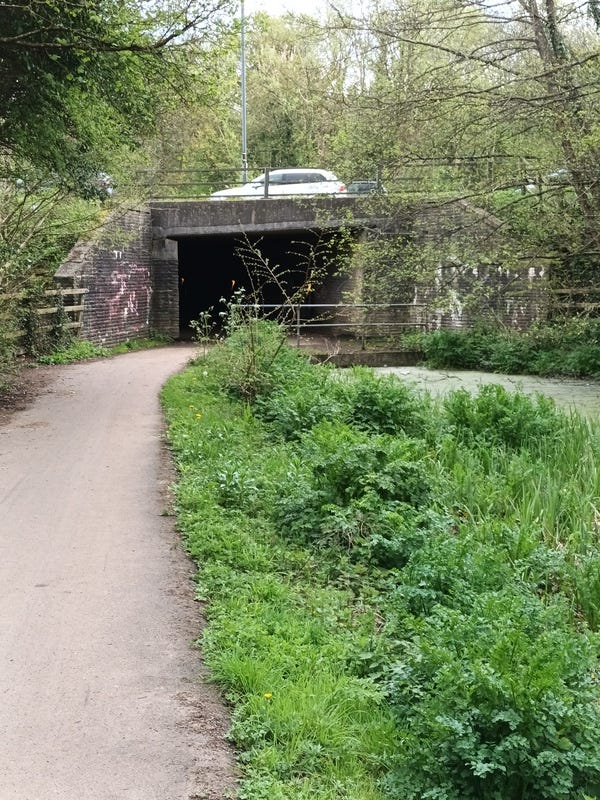
One issue which has reared its head again in this year’s Senedd elections is the question of whether or not to build the M4 relief road to the south of Newport, in order to divert motorway traffic away from the bottleneck of the Brynglas Tunnels and improve air quality in Newport’s built-up northern suburbs. Eastbound M4 traffic queuing to get into the tunnel might well have noticed a bridge under the motorway just past junction 27, from which a flight of fourteen canal locks climbs the hill to the west towards Rogerstone. This was part of the Crumlin arm of the Monmouthshire Canal.
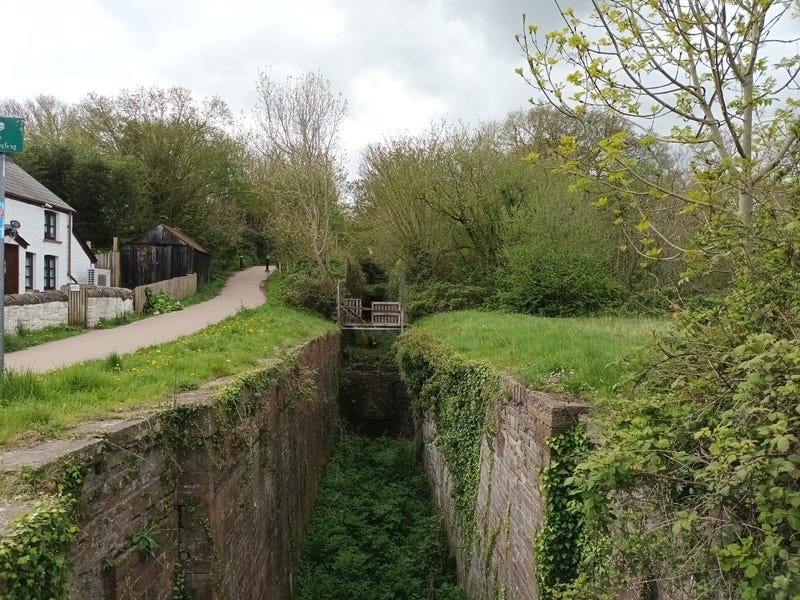
The fourteen locks are generally in a derelict state and clearly haven’t seen a boat pass through them for many a long year, but the top few locks at Cefn Bridge have been tidied up in recent years with a tearoom and exhibition/conference space being opened.
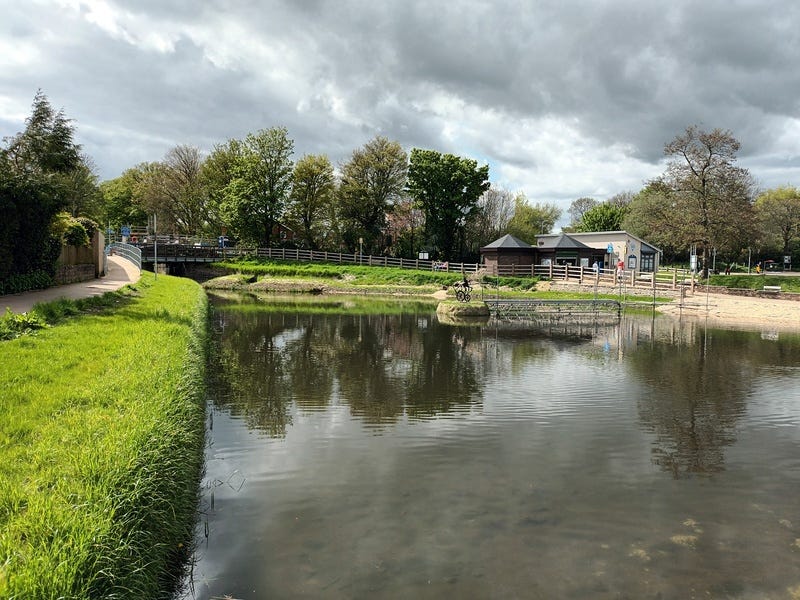
Beyond Cefn Bridge is the nice-looking housing of Rogerstone North ward, which is part of the Casnewydd Islwyn constituency for the Senedd election and is also holding a by-election to replace Conservative councillor Chris Reeks, who has stood down from Newport council for personal reasons.
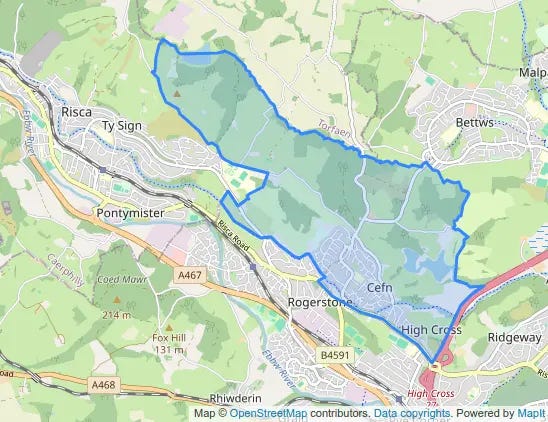
Reeks was elected in 2022 by the narrow margin of 55-45 in a straight fight with Labour, so the defending Conservative candidate Nick Baneswell - who is the landlord of the Tredegar Arms, just outside the ward boundary - will have some work to do here. Labour’s defeated candidate from 2022 Jonathan Gibbons is back for another go, and this time the electors have much more choice with Iestyn Davies of Plaid Cymru, Stewart Jones of the Greens, John Miller of the Lib Dems (who is also second on his party’s list for Casnewydd Islwyn) and Kevin Preston of Reform UK all submitting valid nominations.
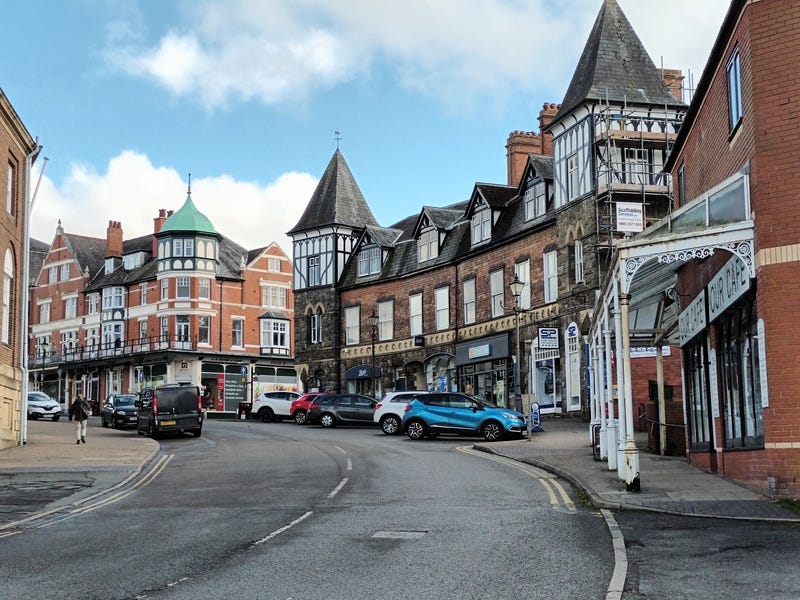
The last of the 20 local by-elections being held on the undercard of this year’s local elections falls in mid-Wales. We are in the town of Llandrindod Wells, which is the home of Powys county council and was home to Radnorshire county council before that. Llandrindod is a typical Welsh name referring to a church (llan) dedicated to the Holy Trinity (trindod). The English-language suffix Wells indicates that this is a spa town, and the Victorians went for Llandrindod’s mineral waters in a big way - particularly after the railways came in 1865, and Llandrindod station is now a passing-place on the Heart of Wales railway line.
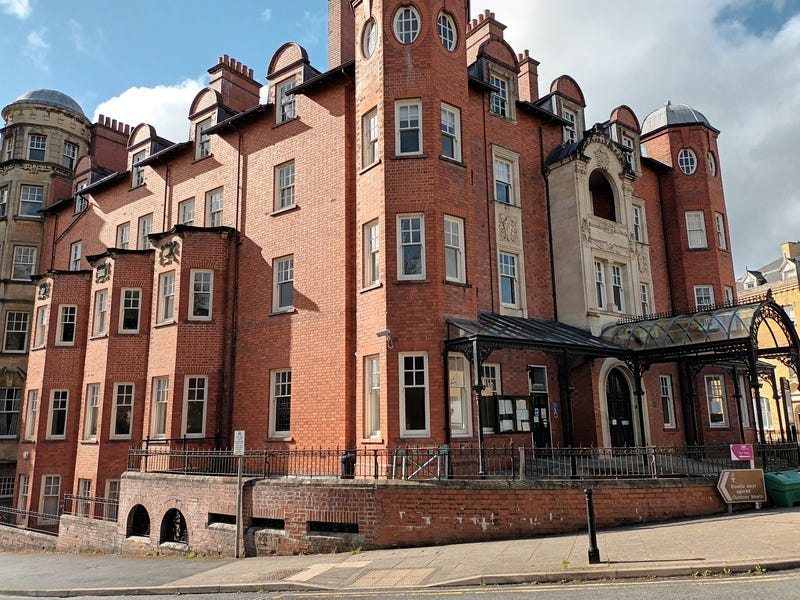
The town centre is still full of massive Victorian hotels and arcades which have survived to the present day virtually untouched, and the annual Victorian Festival in late August provides a major boost to the local economy. If you like Victoriana, you will not want to leave.
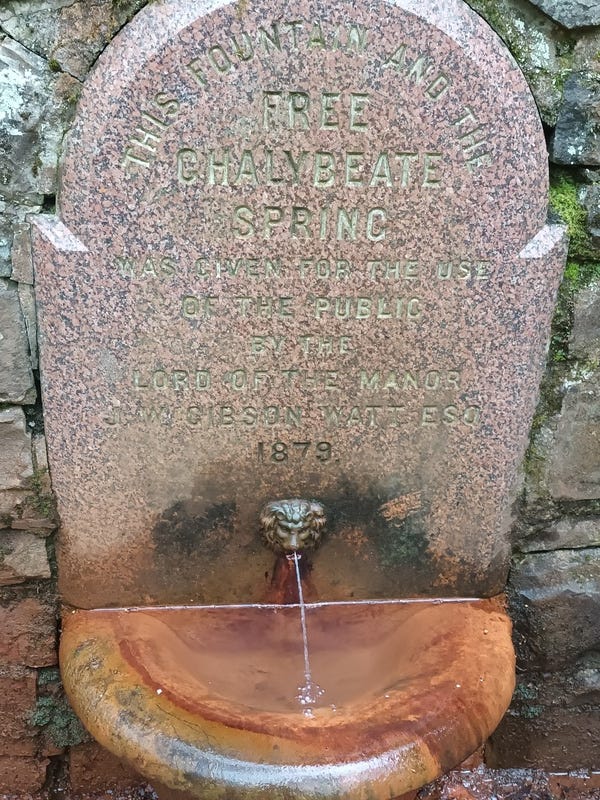
The waters here can still be taken at the Free Chalybeate Spring in Rock Park, with an inscribed stone above the fountain stating that the spring “was given for the use of the public by the Lord of the Manor, J W Gibson-Watt Esq, 1879”. The Gibson-Watts are still big political cheeses in Radnorshire to this day, and when a Lib Dem-Labour coalition took control of Powys council in 2022 the Lib Dem group leader - who became leader of the council - was James Gibson-Watt. He stood down as leader last year but remains in the council cabinet.
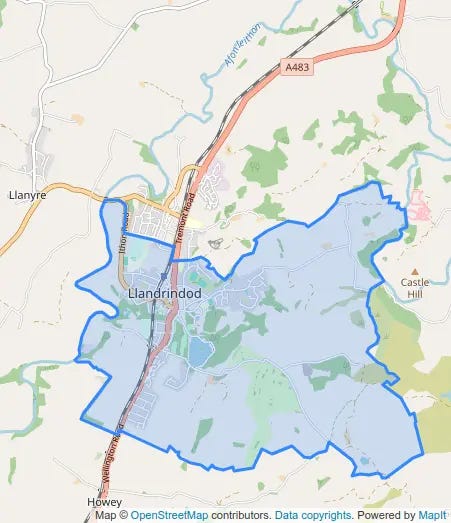
The Lib Dem-Labour coalition is short of a majority with the two parties controlling 30 out of 68 seats plus this vacancy, which arose in March after Llandrindod South ward councillor Josie Ewing quit both the council and the Lib Dems: her resignation statement showed clear frustration with her experience as a councillor. Ewing had been elected in second place in Llandrindod South ward in 2022, with the Lib Dem slate polling 48% against 32% for independent candidate Andrew Price and 19% for the Conservatives.
Defending this seat for the Lib Dems is Lauren d’Silva, who is a therapist specialising in crystal healing and spiritual awakening. There are two independent candidates on the ballot, Christopher Moore (who was in the Conservatives until January) and Paul Smith (a former director of adult social care at Herefordshire council). The official Conservative candidate is Mark Burton. Again, we have a wider ballot paper than last time with John Ball standing for Reform UK (in a slightly bizarre move he is also number 5 on the party’s Senedd list for Pontypridd Cynon Merthyr), Janet Barker for the Green Party and Thomas Duggan for Plaid Cymru.
All votes in Wales are being counted on Friday except for the Rogerstone North by-election, which will declare overnight and whose result might be a significant clue as to what will happen when the Senedd votes tumble out of the ballot boxes.
Scotland
In Scotland there are no local by-elections on the undercard of today’s poll, for the excellent reason that there were no vacancies in Scottish local government at the cutoff date. So it’s all eyes on the 7th election for the 129 members of the Scottish Parliament.
Unlike in Wales, Scotland has retained its two-tier electoral system in which 73 MSPs are elected from single-member constituencies and the other 56 are regional top-up seats allocated to correct the disproportionality in the constituency result. For the latter purpose Scotland is divided into eight electoral regions, which are constructed by aggregating together between eight and ten constituencies: each region elects seven additional members.
There are boundary changes this year, which at the regional level mostly affect the Central, Lothians and South regions. In rough terms, West Lothian transfers from the Lothians region to the Central region (which is renamed as “Central Scotland and Lothians West”); East Lothian transfers from the South region to the Lothians region (which is renamed “Edinburgh and Lothians East”); and Hamilton transfers from the Central region to the South region. There is also more minor tinkering around the edges going on elsewhere, one effect of which is that the Glasgow region no longer includes the whole of Glasgow: the city’s Cardonald ward has been transferred into the Renfrewshire North and Cardonald constituency, which is part of the West region.
The seven additional members per region are not always enough to prevent parties from having an overhang when they sweep the board in the constituencies. That’s something which often happens in the Central Belt, which contains the bulk of Scotland’s population and is quite politically homogeneous. Originally this was to the benefit of the Labour Party, but since 2011 the Scottish National Party has won the bulk of the constituencies. At the last Holyrood election in 2021 the SNP won 62 constituencies to 5 for the Conservatives, 4 for the Liberal Democrats and 2 for Labour; once the top-ups had been made, the final result was 64 SNP MSPs, 31 Conservatives, 22 Labour, 8 Greens and 4 Lib Dems. This was based on a regional vote of 40.3% for the SNP, 23.5% for the Conservatives, 17.9% for Labour, 8.1% for the Greens and 5.1% for the Lib Dems. The SNP’s constituency performance meant that they had an overhang of four seats.
All this left the Scottish National Party, then led by Nicola Sturgeon, one seat short of an overall majority. Initially they entered into a coalition with the Scottish Green Party, but this collapsed in April 2024; the Scottish Greens then pulled the plug on First Minister Humza Yousaf, who had replaced Sturgeon in 2023, and he was forced to resign. John Swinney then took over as First Minister and he has run an SNP minority administration since 2024.
The first few months of the Swinney administration were marked by a sudden revival for Scottish Labour, who made sweeping gains in the 2024 Westminster election, but since then the Labour vote in Scotland has dissipated as suddenly as it had arrived. The SNP are back in first place, but their vote has slipped since 2021: polling in this Holyrood election campaign has normally had the Nationalists in the high 20s, a big drop from the 40% of five years ago, with the other four Holyrood parties plus Reform UK all jockeying for position in the range 8-20%. If the voters want fragmentation, then PR systems would normally deliver that: but most seat projections for this election still have the SNP close to an overall majority, which is pretty good going for a government that has been in office continuously since 2007. This is mostly thanks to the SNP’s continued dominance in the constituency vote; not only are they leading in the Central Belt, but also the Scottish Green Party are running very few constituency candidates which means that in most areas the SNP are the default pro-independence option on that side of the ballot.
Looking at local by-election results in Scotland tends to present a mixed picture, partly because the SNP performance at the last local elections in 2022 was nothing to write home about and partly because the use of PR for Scottish local government means that seat changes in by-elections are not necessarily a reliable indicator. There have been 24 by-elections in Scotland for 25 council seats since the start of 2025, with the SNP winning 10 seats, independents 5, the Lib Dems 4, Labour 3, the Conservatives 2 and Reform UK 1; the biggest movement of seats is from Labour to the SNP, with five by-elections going that way over the period. Labour have only gained one seat from the SNP since January 2025, but it was a big one: Davy Russell came out on top of a close three-way split in the Hamilton, Larkhall and Stonehouse Holyrood by-election last June.
In 2021 the Holyrood election count was staggered over two days due to COVID restrictions reducing the number of people able to work in the counting halls, and the returning officer for Airdrie and Shotts refused a request to combine a Westminster by-election with the Scottish Parliament poll partly for that reason. COVID considerations are now a thing of the past, but the Electoral Management Board for Scotland have decided not to go back to overnight counts: instead the Holyrood votes will be counted in daylight on Friday, once the election staff who are responsible for delivering the result have had a good night’s sleep after a long day administering the poll on Thursday. It’s better to conduct a correct vote count than a quick one.
First Minster John Swinney is one of three MSPs with continuous service since the re-establishment of the Scottish Parliament in 1999 who are seeking re-election for a seventh term of office. (The other two are Labour’s Jackie Baillie, who is seeking another term as the constituency MSP for Dumbarton and is top of the Labour list in West Scotland, and Fergus Ewing who is standing as an independent candidate for his Inverness and Nairn constituency after falling out with the SNP.) Swinney is the SNP candidate for Perthshire North and is also top of the party’s list for the Mid Scotland and Fife region. The West Scotland regional ballot is one to watch with three of the Scottish party leaders standing there at the top of their respective party lists: they are Russell Findlay of the Conservatives, the Scottish Greens co-leader Ross Greer and Malcolm Offord (who is also contesting the Inverclyde constituency) for Reform UK. Labour’s Anas Sarwar is standing in the Glasgow Cathcart and Pollok constituency and in first place on the Labour list for Glasgow; the other Scottish Green co-leader Gillian Mackay is top of her party’s list in the Central Scotland and Lothians West region; and the Lib Dems’ Alex Cole-Hamilton is standing only in the constituency ballot, where he is seeking re-election in a redrawn seat of Edinburgh North Western.
Five MSPs who have changed party allegiance since 2021 are standing again. Fergus Ewing has already been mentioned above, Ash Regan (who was elected for the SNP, defected to Alba and then went independent once Alba was wound up) and Jeremy Balfour (who fell out with the Conservatives over Findlay’s leadership) are both seeking re-election as independent candidates for the Edinburgh and Lothians East region. Conservative to Lib Dem defector Jamie Greene is the Lib Dem candidate for Inverclyde and number 2 on his party’s West Scotland list, and Conservative to Reform UK defector Graham Simpson is standing in Airdrie and is number 1 on the RUK list for Central Scotland and Lothians West.
Finally, we should note that the SNP slate for these elections includes two current Westminster MPs. The party’s House of Commons leader Stephen Flynn is standing in Aberdeen Deeside and North Kincardine and is top of the SNP list for North East Scotland, while Stephen Gethins is the SNP candidate for Dundee City East. If either Flynn or Gethins win, then they would have to resign their Westminster seats and by-elections would follow. But those would be Previews for another time.
In memoriam
Before wrapping up this preview, it’s time for us to pause and remember those elected representatives who passed away during the municipal year 2025-26. The toll of the Grim Reaper falls indiscriminately on young and old, local government veterans and neophytes, councillors of all parties and none. This column has told the stories of many of these dedicated public servants over the last twelve months, and in a few cases the by-elections to replace these councillors are yet to come. But there were some councillors whose seats were left vacant after their deaths without a by-election, and others whose seats will be filled as additional vacancies combined with these ordinary local elections. They are listed here.
Hefin David MS
Susan Armitage, North Lincolnshire
Michael Bird, Great Yarmouth
Ross Bofinger, Broxtowe
Dave Bolwell, Dorset
Russell Brown, Bradford
Cahal Burke, Kirklees
David Busby, Babergh
Geraldine Carter, Calderdale
Jeanette Chamberlain-Jones, Denbighshire
Nick Cottle, Somerset
Marion Couchman, Tamworth
Betty Cunningham, East Renfrewshire
George Davies, Wigan
Neil Denton, North Devon
Sukhbir Singh Dhaliwal, Hounslow
Mark Dixon, South Ayrshire
Alan Dowson, Peterborough
Robert Everitt, Suffolk CC
Richard Foote, Hounslow
Christine Forehead, Caerphilly
Mahalia France-Mir, Leeds
John Furey, Surrey CC and Runnymede
David Gair, Harborough
Barry Goringe, Dorset
Tom Graham, Gateshead
Brian Hall, Pembrokeshire
Howard Hamilton, Vale of Glamorgan
Harold Hancock, South Ribble
Val Hill, Halton
Chris Hilliard, Cheshire East
Myles Hogg, Cheshire West and Chester
Paxton Hood-Williams, Swansea
Marlene Howarth, Hyndburn
Trefor Hughes, Isle of Anglesey
Ray Hughes, Flintshire
Kevin Hurn, South Norfolk
Hugh Irving, Denbighshire
Paul Jacobs, Chesterfield
Mike James, Teignbridge
Kerry Jenkins, Birmingham
Barbara Johnson, Harborough
Gary Jones, Carmarthenshire
Darren Kitchener, Sevenoaks
David Kirton, Calderdale
Jonathan Laidlaw, Bromley
David Lancaster, Salford
Roger Lees, South Staffordshire
David Lewis, Surrey CC
Steve Lismore, Chesterfield
Lesley McDonald, South Lanarkshire
Hilary McGuill, Flintshire
Mike Mackrory, Essex CC
Elaine Mactiernan, Tewkesbury
Richard Maisey, Stroud
Bob Maynard, Gosport
Junue Meah, Hounslow
Ann Mear, North Kesteven
Keith Onslow, Bromley
Stuart Parker, Cheshire West and Chester
Alan Plancey, Hertsmere
Peter Pragnell, East Sussex CC
Fred Prestwood, Cannock Chase
Aysha Raza, Ealing
Mark Reed, Brentwood
Peter Richards, Neath Port Talbot
Tony Robbins, Somerset
David Robinson, North Lincolnshire
Claire Rowntree, Sunderland
Jordan Ryan, Pembrokeshire
Michael Royds, Rossendale
Shailain Shah, Hertsmere
Jagdish Sharma, Hounslow
Marsie Skeete, Merton
Manjula Sood, Leicester
Robert Stewart, Dacorum
Mike Stoddart, Pembrokeshire
Nick Sugden, Surrey CC
Jeanette Sunderland, Bradford
Nick Thulbourn, Peterborough
Kevin Towill, Cornwall
Andrew Toye, East Devon
Roger Trigg, Welwyn Hatfield
Rob Triggs, Gwynedd
William Trite, Dorset
Dorothy Trueman, Sunderland
Jim Turnbull, Gateshead
Melanie Vigo di Gallidoro, Suffolk CC
Denise Western, Trafford
Gary Williamson, Sevenoaks
Neil Wilson, Newham
David Wynn, Luton
Waseem Zaffar, Birmingham
Requiescat in pace.
Concluding remarks
Results for these elections will trickle through slowly, with most seats not declaring until Friday and relatively little action overnight. There will be plenty of time for result followers, so pace yourself.
When the results come through, be prepared for shocks because elections are always like that. Once all the votes are in I will name one result which made my jaw drop when I saw it, so if you’re a candidate in these elections and you think that I’ve unfairly written off your chances of winning, the best way to counter that is to get out there on the campaign trail, prove me wrong and make the case for me to give you that award. It will be much more satisfying for all of us if you send me a smug message afterwards rather than a whinging message now - and your win will give me material for future columns. And the prize for winning is a worthwhile one: the chance to improve your local community, to fix those potholes rather than point at them.
Those results will be the outcome of a lot of hard work by around 150 Returning Officers and their tens of thousands of poll and count staff, who do a thankless job that doesn’t just last for one day a year. There is a fantastic amount of behind-the-scenes work that’s needed to put this show on for your benefit: polling day is just the tip of the administrative iceberg, representing the culmination of months of planning. Your council election teams have no margin for error: it all has to go right, every single time. This column sends its best wishes to everybody working on this election for a smooth and trouble-free poll and count.
Shoutouts are also due to the more than 25,000 candidates across England, Scotland and Wales in this most brutal form of job application. No, I am not listing you all individually; but your local candidates can be found by entering your postcode into whocanivotefor.co.uk. For the winners, perhaps: the chance to do something about those potholes rather than point glumly at them, the chance to improve their local community. For the losers: well, nobody remembers who comes second, with the exception of this column. Your columnist’s other electoral hobby, the Local Elections Archive Project, will eventually get around to recording your result for posterity.
But the most important people in today’s festival of democracy are you, the voters. You are fortunate that you do not live in a place where democracy is not free, not fair or not existent. The people of unoccupied Ukraine are literally fighting for their right to live in a country that holds elections rather than stages election-type events. Democracy will only last for as long as there are people prepared to support it, prepared to participate in it, prepared to defend it, prepared to fight for it.
The best way you can defend Britain’s local democracy is to take part in it. Your vote will be free, it will be fair, it will be secret, and it will count in the same way as my vote and everybody else’s vote. But if you don’t vote, your voice won’t be heard when the ballot papers tumble out of the box onto the counting table, to decide your councillors’ future - and yours. If you have a postal vote you should have received it by now; if you intend to vote at a polling station, don’t forget to go there between 7am and 10pm on Thursday. If you are voting in England, take your photo ID with you. You will be most welcome. You can find your designated polling station on your polling card, or by going to wherecanivote.co.uk.
This column doesn’t just come out at election time: Andrew’s Previews is here for you all year round. We will be taking a break next week to try and process what the hell just happened, but the wheel of democracy continues to turn and preparations are already underway for four local by-elections on 21st May. Stay tuned.
If you enjoyed these previews, there are many more like them - going back to 2016 - in the Andrew’s Previews books, which are available to buy now (link). You can also support future previews by becoming a paid subscriber to this blog - which will also you get you early access to the Previews.
Andrew Teale
Comments
Nothing yet. Say the first thing.
Sign in to join the conversation.