
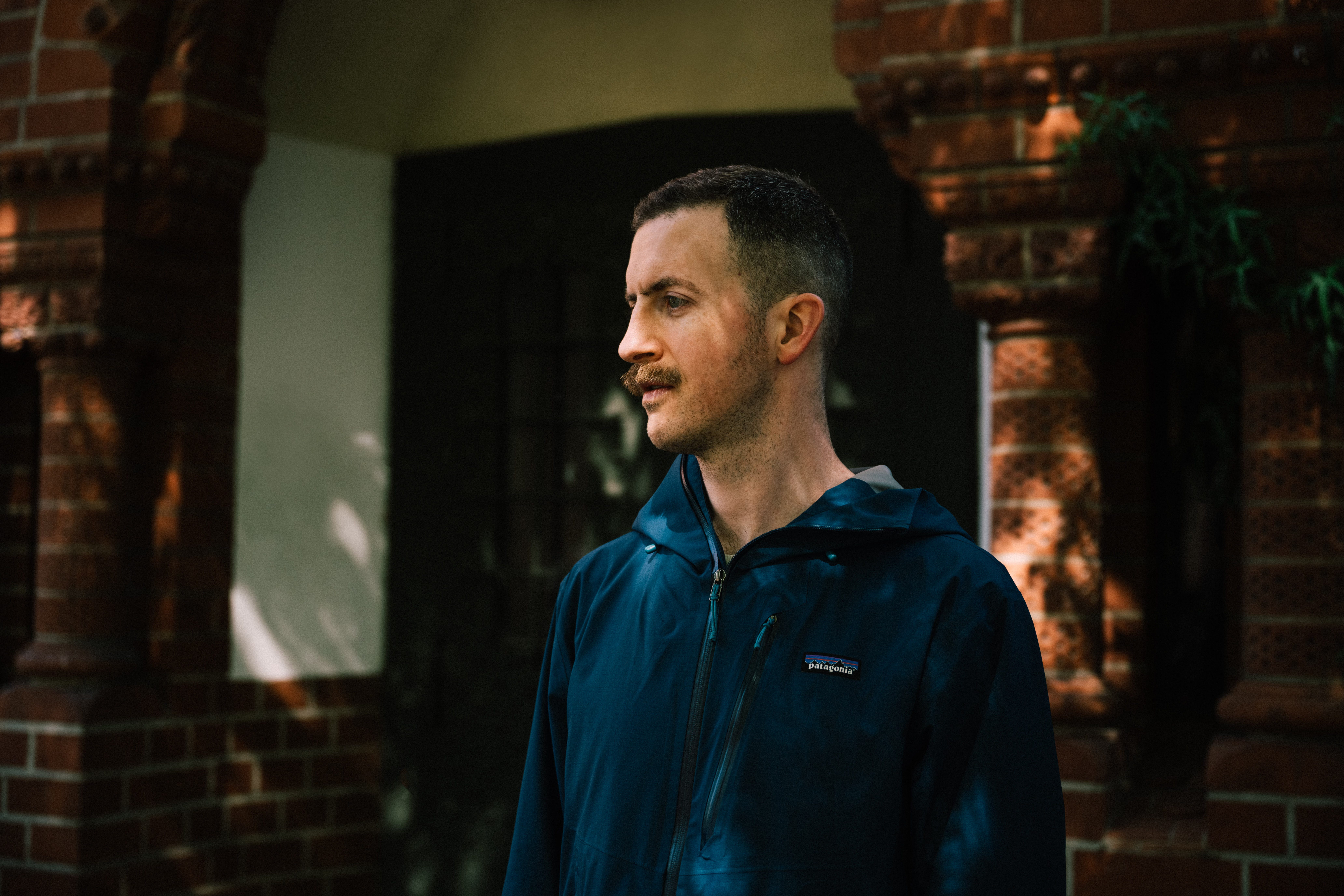
Edited by Tom Gledhill
What do you think of when someone mentions black or death metal? Long hair? Cookie monster vocals? Corpse paint? Guitar riffs that sound like Godzilla dry heaving? Whatever the image, it’s probably not it’s eerie dark ambient music, or synths sweeping across desolate soundscapes. But as long as there has been extreme metal, so has its experimental streak. Think death metal bands adding terrifying (if kitschy) ambience to bookend their albums, or black metal kids locked in their bedrooms with a sampler, trying to conjure something from the netherrealms.
Electronic weirdness is a rich tradition in extreme metal. Some bands, like Beherit and Ulver, eventually went full electronic, while others relegated the synths to strange interludes. (A personal favorite is Morbid Angel’s underrated 1998 masterpiece Formulas Fatal To The Flesh, where the ripping death metal tracks are interrupted by Ancient Sumerian-inspired instrumentals.) Either way, it the results were intriguing.
Futureproofing is a reader-supported publication. To receive new posts and support my work, consider becoming a free or paid subscriber.
American ambient artist Jake Muir was working with Barn Owl member Evan Caminiti on Talisman, an album of windswept guitar vistas that reminds me of a less oppressive version of late-period Earth, when he started to think about the heavy metal of his younger days. Always on the hunt for a new concept, Muir, who usually pulverizes samples into an impressionistic blur, thought about making a record out of clips of these strange metal moments. Muir polled a number of metalheads (including yours truly) about which bands had the sickest, weirdest interludes, and worked on the record for about three years.
Pareidolia is Muir’s latest album based around one particular sound source or theme, following LPs focused on surf rock, library music and gay bathhouses. Unsurprisingly, this one is also his darkest. The music moves with a slow, menacing scowl borrowed from the source material—retaining the atmosphere of the samples even as Muir’s processing renders them unrecognisable.
Whatever the source, Muir has a way of flattening and reshaping samples into sheets of sound that alternate between coarse, sandpapery grit and shimmery gossamer. It’s an approach that’s both old- and new-school, rooted in turntablism and decades-old software, but results in a sound that feels entirely fresh. It’s melodic but never too approachable, and emotionally ambiguous without feeling empty.
Some parts of Pareidolia remind me of early Biosphere. They’re roughly hewn, with jagged samples, and voices—at least I think they’re voices—pitched to unnatural extremes, gasping and croaking like those on classic LPs like Microgravity. But instead of the vast expanse of space, Pareidolia inhabits a scarier, more claustrophobic realm: a hell of its own making. The album opens with howling wind and what sounds like evil circus music, before “Necrotic Mist” expands the soundscape into a three-dimensional field populated by bells, wheezing, and an unnerving bassy, low-end hum.
Defined by texture rather than tension, the album is Muir’s most enveloping work to date. Not a lot happens, but it slowly pulls you into its demonic clutches. As the tracks become more crowded, you’re left guessing their source (is the frantic flapping on “Oblivion” a colony of bats? Did I just hear a guitar?). My favorite moment is the sonic cold plunge of “Each Uisge,” which alters the temperature of whatever environment you happen to be in as you listen to it. It’s a shift also marked by a mournful synth passage reminiscent of mid-’70s Pink Floyd and Tangerine Dream.
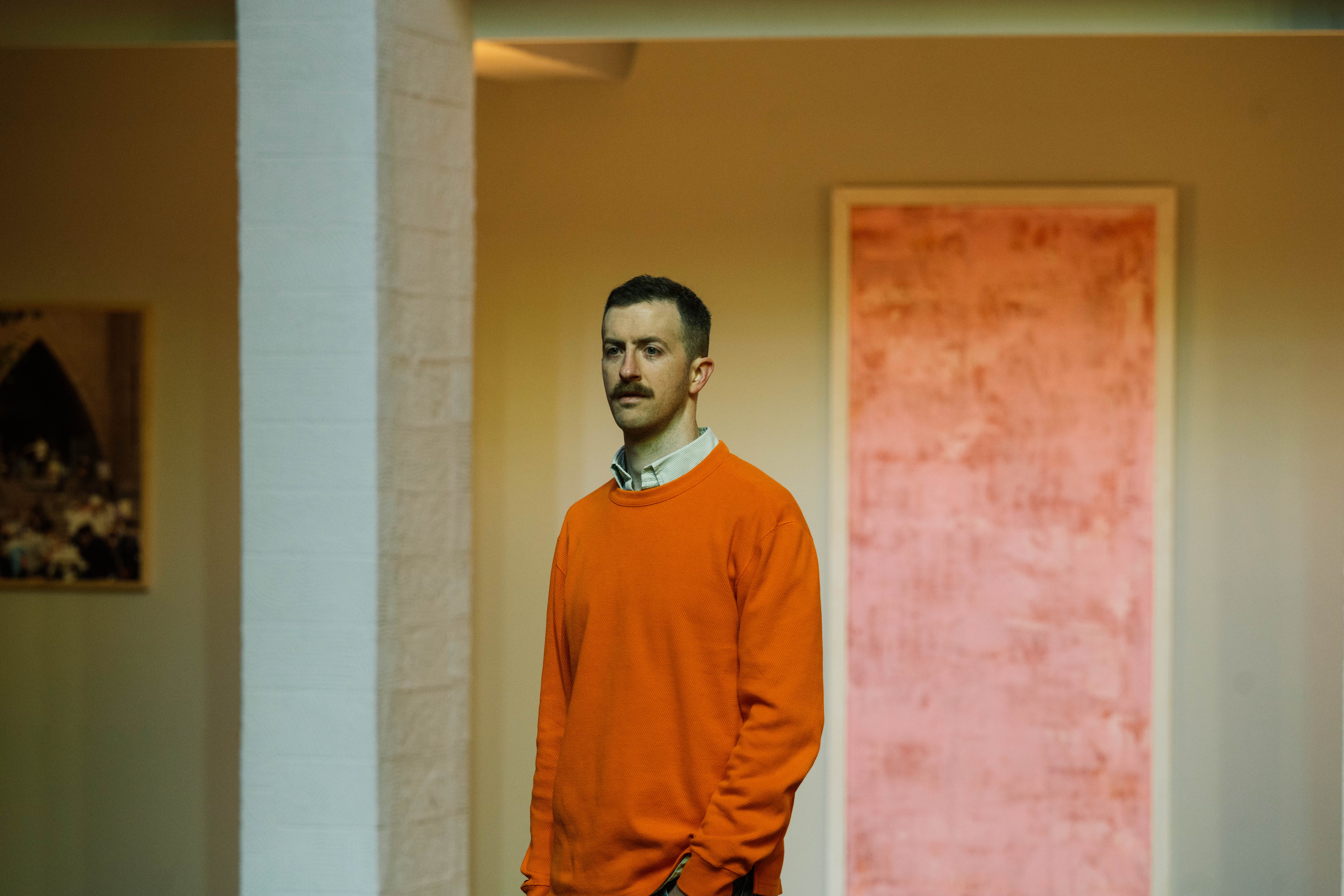
All of this might surprise you if you came in expecting heavy riffs and growling vocals. Sure, you might hear ghostly traces of them, but Pareidolia reflects its source material in a different way: it’s earnest and occasionally silly, like a grown-up version of the Halloween sound-effect tapes people used to play on their porch boomboxes for trick-or-treaters. It’s a specific kind of record, but it’s also a testament to Muir’s gift for sampling, where the vibe of the source material is more intact than the actual sounds themselves. I sat down with Muir at an Armenian restaurant in Glendale to discuss his method, and his on-and-off love affair with metal as a genre.
Tell me about your history with extreme metal.
My good friend Billy has been really into metal since high school. Meshuggah was, and still is, his favorite band. Through him I got into them, around the time of obZen, and Devin Townsend for a period of time. I found Earth on my own around then as well and dabbled in things after that. But it took longer to get into death metal and black metal. It was a little too intense for me back then. While working on Talisman with Evan Caminiti, I got more into those genres since he’s a fan of both. I found out about Spectral Voice through him.
So it’s been a slow burn. As I get older I find I have more and more of an appreciation for heavier music. When I was younger I guess I thought it was too much.
Who are some of the bands you’ve discovered in the last few years? Not for sampling, just for listening to.
Spectral Voice is my favorite, even above Blood Incantation. I feel like they really hit the nail on the head with being heavy, but also having these tripped-out sections. Also: Tomb Mold, Eternal Darkness, Paysage d’Hiver, Worm.
Worm’s very trendy right now.
I guess I haven’t kept up. I really liked Foreverglade which came out a few years ago, that one was really fierce. What else… Winter, Gorguts, Entombed, diSEMBOWELMENT, Morbid Angel. A lot of this is catch-up. Some friends recommended bands and albums to me on YouTube and whatnot.
So how did you actually start work on this record?
The initial impetus came from a show invitation via Meakusma around September of 2022. Talisman had come out in August and they were hoping to get Evan and I for their event in Berlin. They just liked the record, and didn’t know where Evan lived.
I said yes, but Evan’s in LA, so we couldn’t work as a duo. As a way to bridge the gap aesthetically, I thought: “Okay, what if I did a set sampling the more abstract sections from black and death metal records?”
Even though these two subgenres of metal are stylistically very different, they both have these more experimental or atmospheric moments. Death metal tends to be more cerebral, while black metal is more raw and moody, sometimes shrill. I thought it would be an interesting crossover to pit them against each other.
Initially I was just putting things together for this live set. Then I put it aside for a while and worked on Bathhouse Blues and the bell project. In fall of 2024 I finally went back to it and slammed it out over the course of a few months.
So did you play that gig?
Yeah, though I didn’t have enough time to get it to where I wanted it to be for the show. When I went back to the project, I ripped through loads more records. I think the playlist in rekordbox has around 200 samples. I grouped them by key, something I’ve been doing since Mana, which makes collaging samples together way easier, because I don’t have a perfect pitch. That changed the game for me.
Pareidolia is a combination of guitar, synth, vocals, percussion, and sound effects—the latter of which are mostly from the black metal records.
Are the samples intro tracks from metal albums?
Yeah, but also outros and interludes or bridges. The sound effects are things like wind rustling at the start of the song. Certain bands have more of a tendency to have these weirdo sections, where others don’t entertain it at all. Someone recommended Bolt Thrower, and they always have an intro track on that vibe, but that’s it. So it took a while to go through everything. And it was interesting to see which bands were willing to fuck with their records a bit more, and which weren’t like that.
How were you researching it? How are you finding the bands?
A fair amount were recommended by friends and mutuals on Instagram. Besides Evan, Madeline Stepien and Jason Halal [Aurora Halal’s brother] gave me some nice tips. You were very helpful. I would also go through label discographies and just randomly pick stuff out and see if it was useful. But otherwise, without recommendations, it was just like, “Where do I start?”
Which band did you use the most on the record?
I used a track of Winter’s twice in different ways and a couple bits from Esoteric. Also Blood Incantation, Spectral Voice, Gorguts, Morbid Angel.
So the stuff you’re putting in rekordbox—is it whole tracks, or were you cutting them up?
They’re cut-up samples, except for a few cases. Morbid Angel has a couple fully ambient tracks that were under two minutes long. So I would just leave those in there whole. Otherwise, they were either loops I made, or short sound effects.
Okay, so you have all those samples in rekordbox. Then what?
I have a general system I’ve been using that started with the production of Mana. In some cases I’ll process audio directly and/or via another program, and in others I’ll use Omnisphere as the primary sampler. It has some interesting built-in functions, including a unison effect, convolution reverb, a granular synth, plus a good built-in effects rack. I think I primarily used some of the effects in there to capitalize on the wavy guitar sound that’s prominent on death metal records.
Akira Rabelais’s Argeïphontes Lyre program has also been crucial for me, and I’ve been using it for almost 10 years now, so I’ve gotten the hang of certain aspects of it. It has several audio processing modules. One I used a number of times on the album seems to act as a weird combo looper; The exported recording will have different iterations of the sample overlapping each other, and in some cases, fused notes together. I also made some drone-y layers out of samples using the convolution module, where you plug in two audio sources and it mushes them together. That was good for bass tones.
But a lot of the samples are not all that destroyed.
Less destroyed than your other records?
Yeah. There’s more one-shots on this record, and some samples are just pitched up or down with one or more effects on them. Not all that much granular synthesis. When I did use that on Pareidolia, I only used big grains, so you can still hear the source. Effects-wise, there’s some spectral processing on some elements, but for the most part it’s typical ones like reverb, delay, chorus, flangers, and phasers that I felt paid homage to the source material. There’s a fair amount of compression and distortion going on as well.
How much of it was planned, or written—or are you just improvising with the different samples?
All of my records are essentially made through glacial improvisation, where I’ll just start playing with the source material and then it’ll be a lot of trial and error to get the layers right. Sometimes I’ll have a specific idea that I’ll try to pursue. Structurally, I’ve always sequenced things the old fashioned way: in Ableton’s arrangement view. The mixing more or less gets baked into the sound design.
What do you mean?
A lot of artists and producers will have a mix phase for their records after they’ve made or recorded everything, where all the elements have to be put together nicely.
Whereas the tools are doing it for you?
Sort of. Things are being engineered and sequenced carefully as they come together. I’m EQing elements so that they’re not fighting with others frequency wise, thinking about placement and spatialization while playing with sounds. The sound design of the record is just part of the construction of it. So the only thing I’m really doing later on in the process is automating effects.
How long does it take you to make one song?
It varies. Some tracks come together relatively quickly where I’ll have the general structure and sound palette within a week or two, and then things get fine-tuned afterwards. Otherwise it’s made incrementally over months, bouncing between pieces, and sometimes one yields an idea for another.
My first record, Muara, which was built from initial experiments when I was still learning how to make music, took two and a half years. Lady’s Mantle took a year, because I scrapped the first version of it, but every record after that has taken around six months to create.
How do you decide when a track is finished if you’re just improvising and playing around with samples?
I usually hit a point where I can’t think of anything else to add, subtract, or dial in. Sometimes when listening to things after I’ve given it a breather or something, I’m like, “Oh, maybe this needs a bit more embellishment with effects,” or, “Maybe this is doing too much, I need to take that out.” On the last track, “Cathedral of Decay,” there was a vocal sample towards the end that I decided wasn’t working, and I think the track is better for it in the end. So it depends.
Do you have a favorite track on the album, or one you think is the most impressive?
I think “Anima” might be my favorite. It’s maybe the most stereotypically psychedelic track. The first section revolves around a percussion sample from Spectral Voice—I actually passed them the track, but never heard back, so I’m assuming it’s fine—and then there’s a main guitar sample in the second half. The whole track sounds kind of melted, which is a recurring theme across all my records.
Did this album feel different, aside from how the samples were left more whole than usual?
I guess mostly in the sense that it’s the most darksided album I’ve made. I was also more free to twist guitar here than I was with Talisman, since I had to make considerations there around letting Evan’s playing breathe. Otherwise, the kinds of samples I used on this album I have on others as well, if we count the guitar used on Talisman. Pareidolia is maybe an extension of Mana stylistically, but that had more going on under the hood, since it was partly inspired by turntablism. This one is more stripped-down.
What did you learn after spending all this time with extreme metal and making an album from it?
I guess the preconceived notion is that metal has no chill, but it actually does. Meshuggah has occasionally dabbled in more ambient territory, but I was pleasantly surprised to hear all these records with interesting, trippy moments that had no heavy riffs or blast beats. Some of them are even pretty melodic—I probably could have made a separate EP with just really chill tracks, but I ended up going with the more stereotypical “dark” vibe. It’s been interesting to hear various metal bands taking more creative liberties with the genre, like the Finnish band Beherit who have made some cool electronic records, like Electric Doom Synthesis and H418ov21.C.
Futureproofing is a reader-supported publication. To receive new posts and support my work, consider becoming a free or paid subscriber.
Comments
Nothing yet. Say the first thing.
Sign in to join the conversation.