
Today the Senate Banking Committee and the House Financial Services Committee announced they had reached bicameral agreement on the 21st Century Road to Housing Act, the most significant piece of housing legislation in decades. Anything can happen in Washington, but the bill has received wide bipartisan support and support from President Trump. The Senate will begin a series of procedural votes on the bill this week, and barring anything unexpected should pass into law later this summer.
The 300-page bill includes several provisions that will be of interest to disaster, climate and resilience aficionados:
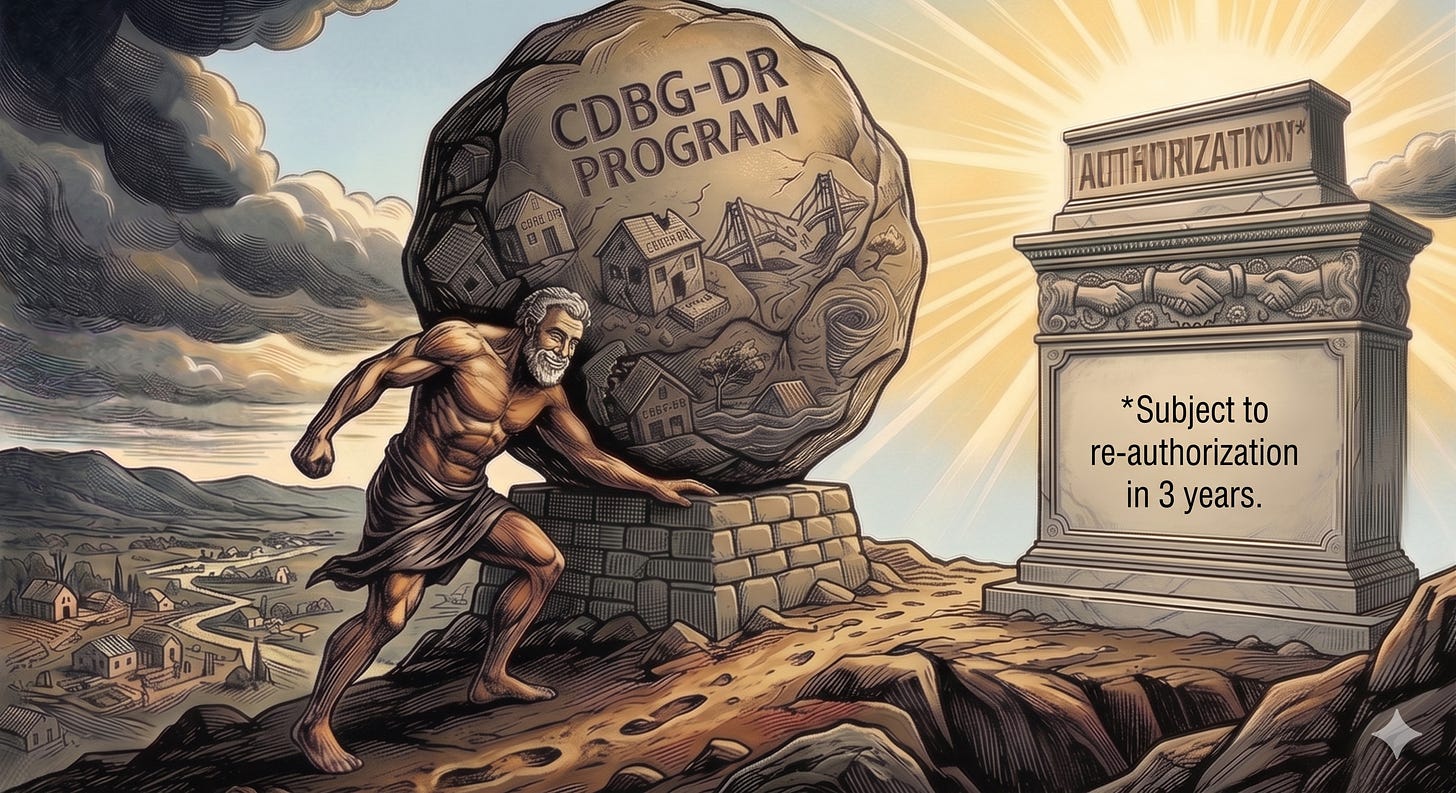
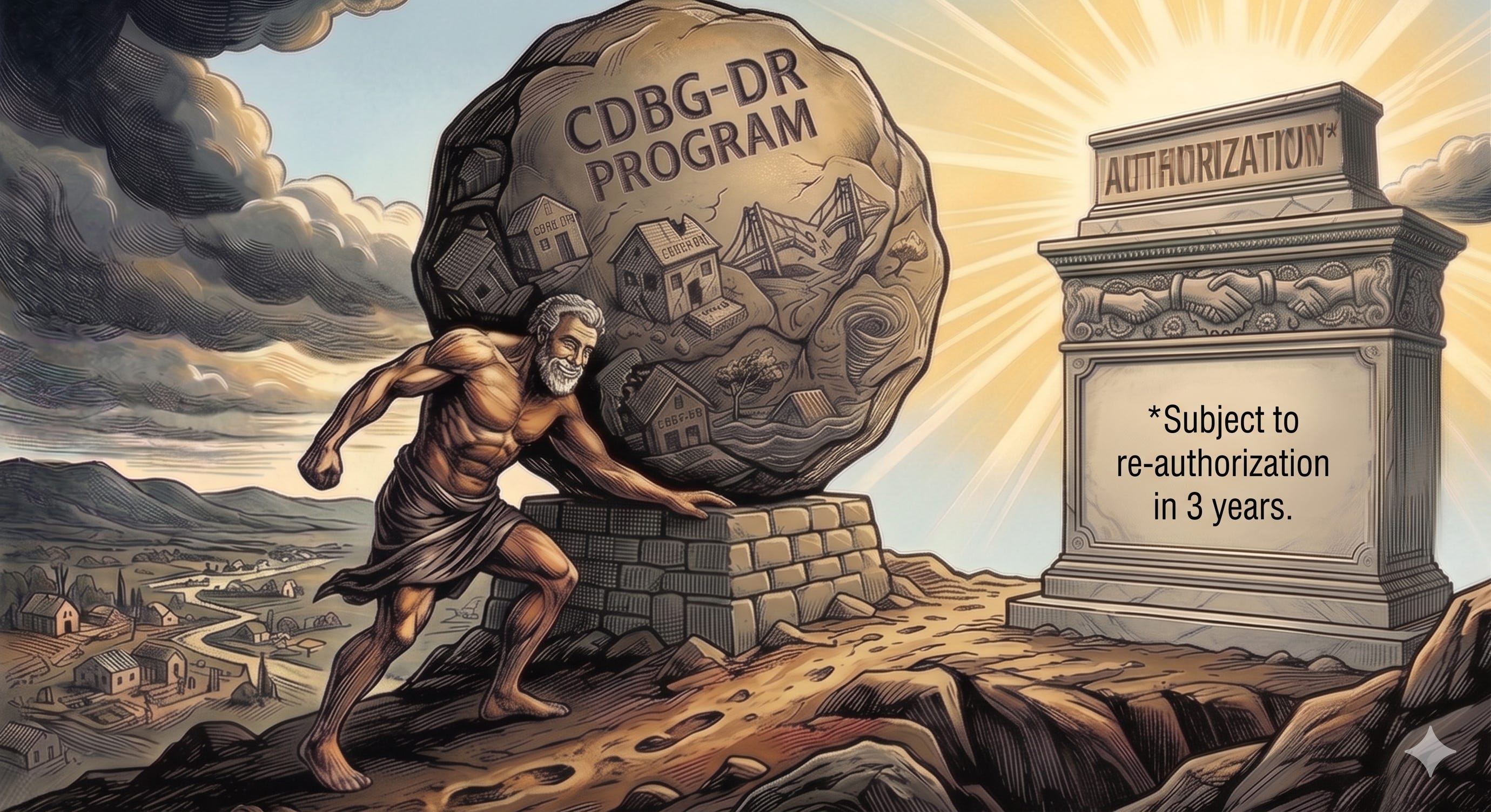
CDBG-DR gets permanent authorization — with an expiration date. The legislation will, for the first time, permanently authorize a Community Development Block Grant Disaster Recovery program, ending the decades-long pattern of one-off appropriations. This portion of the bill, which was largely restored after being cut out by the House, establishes a standing Long-Term Disaster Recovery Fund, a HUD Office of Disaster Management and Resiliency, formula-based allocation of resources, and codified rules on duplication of benefits and data-sharing with FEMA and the SBA. The one notable change in the consensus text is a new three-year sunset, softened by a non-binding “sense of Congress” that a successor program could follow. So, the program is permanent…for a few years.
PRICE is in. The Preservation and Reinvestment Initiative for Community Enhancement (PRICE) Act made it into the consensus bill, after being removed from an earlier House version. The Act would codify HUD's PRICE program - the top policy recommendations coming out our report Building a Climate Resilient Manufactured Housing Stock. PRICE is a HUD-run competitive grant program for manufactured housing communities that are affordable to low- and moderate-income residents and that are either resident-owned or otherwise kept affordable through mechanisms like non-profit ownership. Awards can flow to a broad set of recipients (the communities themselves, resident cooperatives, local governments and housing authorities, nonprofits with housing expertise, CDFIs, states, among others). Lots of eligible uses directly shape resilience of manufactured home communities, i.e. community infrastructure and utilities, reconstruction or replacement of existing homes, site acquisition and expansion, planning, and resident health, safety, and accessibility improvements. The program would sunset after seven years.
The Whole Home Repairs Act remains in. This resilience-adjacent provision (Sec. 202) authorizes a pilot program in which HUD funds local "implementing organizations" to run whole-home repair efforts, channeling per-unit grants to eligible homeowners and landlords for work not already covered by other federal programs. Alongside accessibility and basic habitability fixes, eligible repairs include "energy and water efficiency, resilience, and weatherization" — an important policy hook for hardening older, naturally occurring affordable housing against extreme weather. Like PRICE, appropriations will happen later and I will be tracking the scale of the pilot effort.
All-in-all, one of the more significant pieces of disaster legislation in recent years. We are looking forward to analyzing these policies in greater depth. Hope you will keep following along.
Comments
Nothing yet. Say the first thing.
Sign in to join the conversation.