
Winter in Germany looks like it is finally over and, believe me, it has been a tough one. Apparently, the coldest European winter in 16 years. It was clear that the locals had completely forgotten how to deal with this weather. So, imagine how me, an Australian, found the experience. Luckily, I had a lot of culture to keep me entertained and warm over the last couple of months.
This post will look at some of the highlights.
The Only Living Pickpocket in New York (2026)
The two weeks of the Berlin International Film Festival saw me snowed under a mountain of work and other commitments, so I didn’t get to nearly as much of it as I wanted to. I must add that their weird ticketing system, which necessitated having to log on at 10am every three days to secure tickets to the next three days films, didn’t exactly do it for me either. Whatever, I am sure the Berlinale has their reasons for structuring it like this and I still saw some great films.
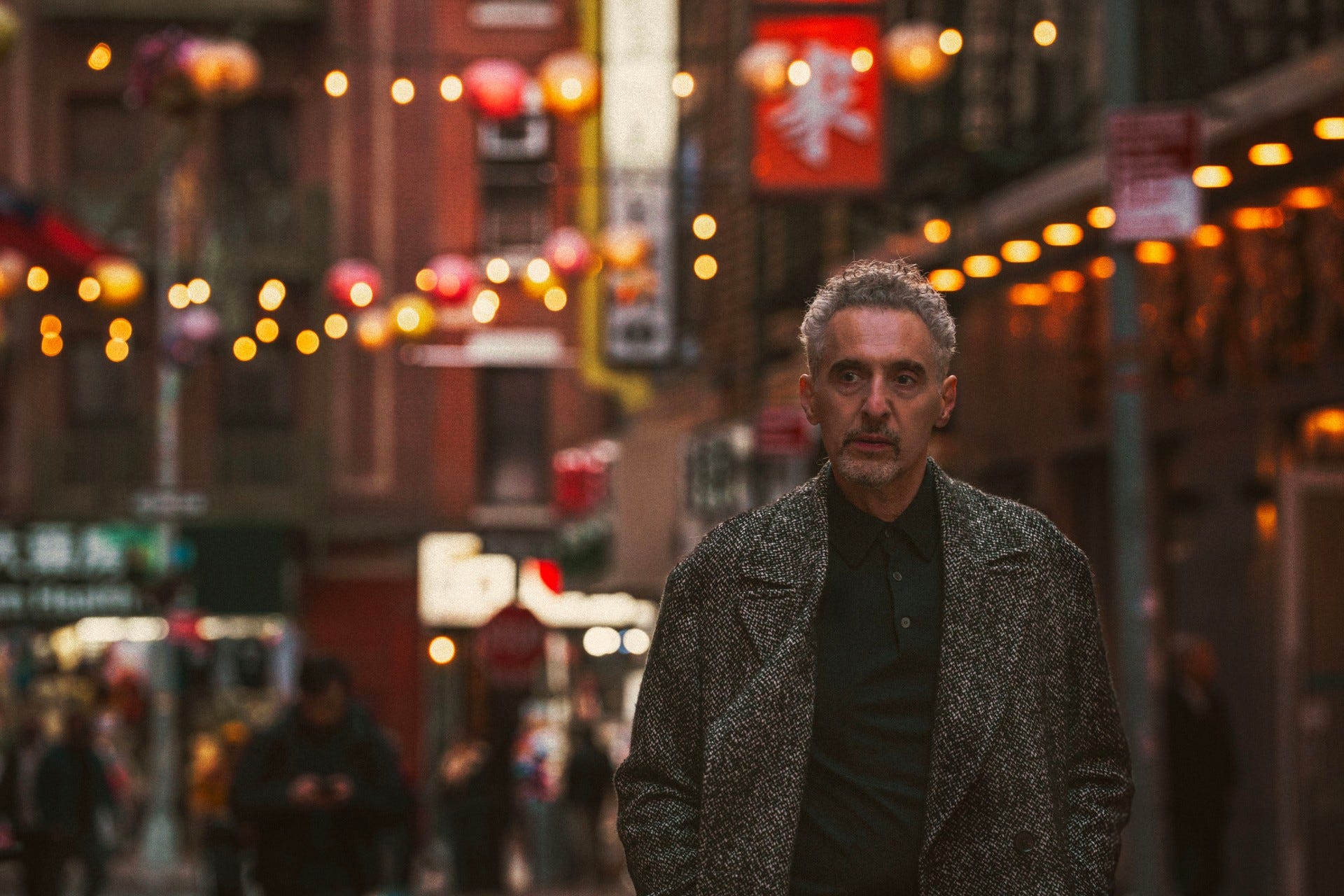
There are two films I particularly want to highlight. First – and the one that might appeal to most readers of my Substack - was Noah Segan’s The Only Living Pickpocket In New York. The story of a professional pickpocket who steals from the wrong person, there’s really nothing new to see plot wise here. Indeed, the film feels like it takes more than a few cues from Sam Fuller’s 1953 film noir, Pick Up on South Street, about a low life pickpocket who lifts a purse on a crowded NY subway train, only to discover it contains top secret government information, the theft of which has embroiled him in efforts to crack a communist spy ring. But, as I wrote in my Substack a year or so ago, l adore films about aging blue collar criminals increasingly adrift in a changing world, which is exactly what this story is. Plus, its elevated by a great cast, headed by John Turturro, who was made for the role.
The other film at the Berlinale that really blew me away was Raspad (Collapse), a 1990 Russian about the Chernobyl disaster. I really dug the 2019 HBO series, Chernobyl, but Collapse put that effort in the shade. Filmed just on the cusp of the collapse of the Soviet Union, it is an incredibly bleak take, which tells the story from multiple perspectives and is, by turns, a disaster film, a piece of almost dystopian science fiction, and a blistering takedown of the Soviet system. The collapse is very obviously a wider systemic one. It was directed by the now dead Mykhailo Belikov, born in what was at the time Soviet Ukraine and about who very little has been written in English. Good luck finding a version with subs but, if you do, grab it, because it is quite brilliant.
One other film that I really recommend – and it’s highly topical as we head into America’s nex war in the Middle East – is Jafar Panahi’s It Was Just an Accident (released in 2025 and not part of this year’s Berlinale). The story centres around a working class Iranian mechanic, Vahid, who recognises the man who brutally tortured him in one of the Mullah’s jails and left him with lingering physical and mental trauma. Vahid decides to take matters into his own hands in a completely chaotic way and with surprising results. This film, particularly the killer closing scene, has stayed with me in the month or so since I saw it. Yes, the world is full of monsters. What do you do when you catch one?
The Casino, Iain Ryan
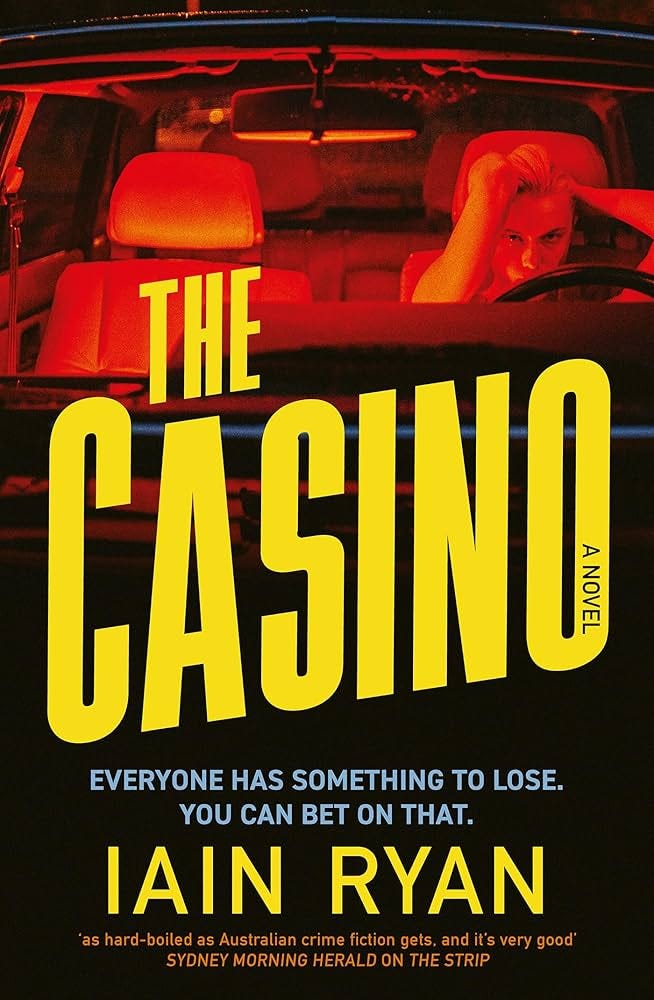
The Casino is the third in a trilogy of noir novels set amidst the glitz and sleave of Queensland’s Surface Paradise in the 1980s, the first two being The Strip (2023) and The Dream (2024). Queensland was ruled during the eighties by a cabal of incredibly corrupt cops who did whatever they want and, literally, killed or destroyed the careers of anyone who got in their way. The Casino, like the first two books in this series, captures this nightmare setting perfectly. There is a cast of suitably down and desperate characters, some of whom appeared in earlier books, lots of dirty cop and PI action, the dialogue is great and the prose razor sharp. Think James Ellroy, but set in Australia’s tropical north and while he was still writing good books.
I’ve said here before, that I think the Australian crime fiction landscape often seems to be divided between by literary crime, ie, books thin on the crime and heavy on the interior monologue, and the algae bloom of rural small town big secrets stories (I quite liked The Dry but, hell, it has a lot to answer for in this respect). Some of the worst books attempt to do both. Whatever the case, Ryan is among a handful of Australian writers who are trying to do something different.
Vengeance is Mine, Friedrich Torberg
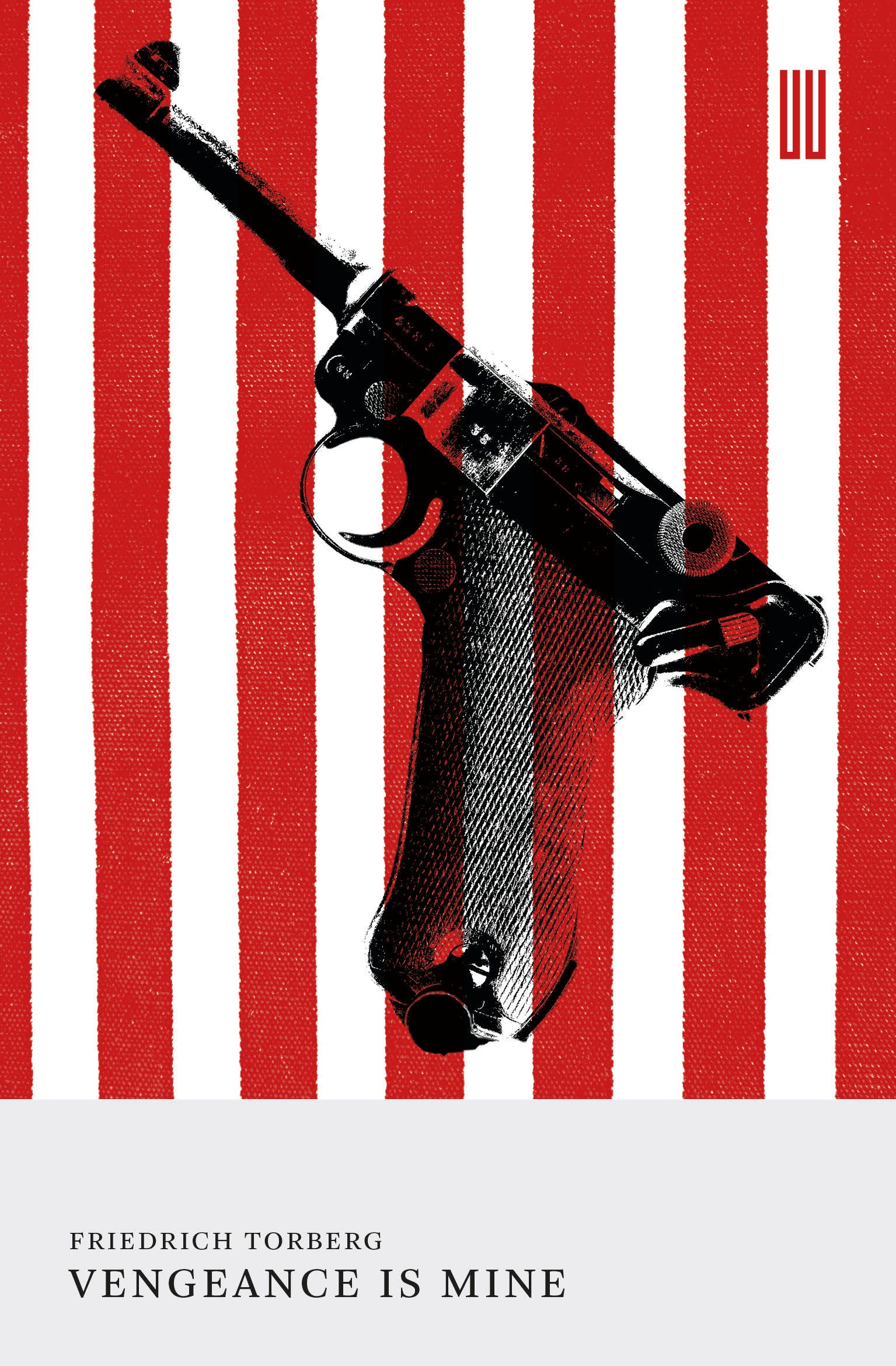
I’d never heard of the Austrian Jewish writer Friedrich Torberg until I read his novella, Vengeance Is Mine, which has just been translated into English and will soon going to be republished by Boiler House Press, as part of their Rediscovered Books series. I saw publisher, Brad Bigalow (who BTW is worth a follow on both his BlueSky account – @neglectedbooks.com – and his website Neglected Books), talking about Vengeance is Mine on the former, clocked the amazing design, and asked for review copy.
It’s a thin slip of a book, easily read in one sitting. But the story, depicting a 1940 meeting on a New Jersey pier where a Holocaust survivor recounts a battle of wits between a Jewish prisoner and a sadistic Nazi SS concentration camp commander, packs a real emotional punch. It was written in 1943, while the Holocaust was largely unknown to the Western public and only published once previously, in Munich in 1963, so massive kudos to Boiler House Press for republishing it. It should definitely be on your radar to pick up in the coming months.
Rodolfo Walsh’s Last Case, Elsa Drucaroff
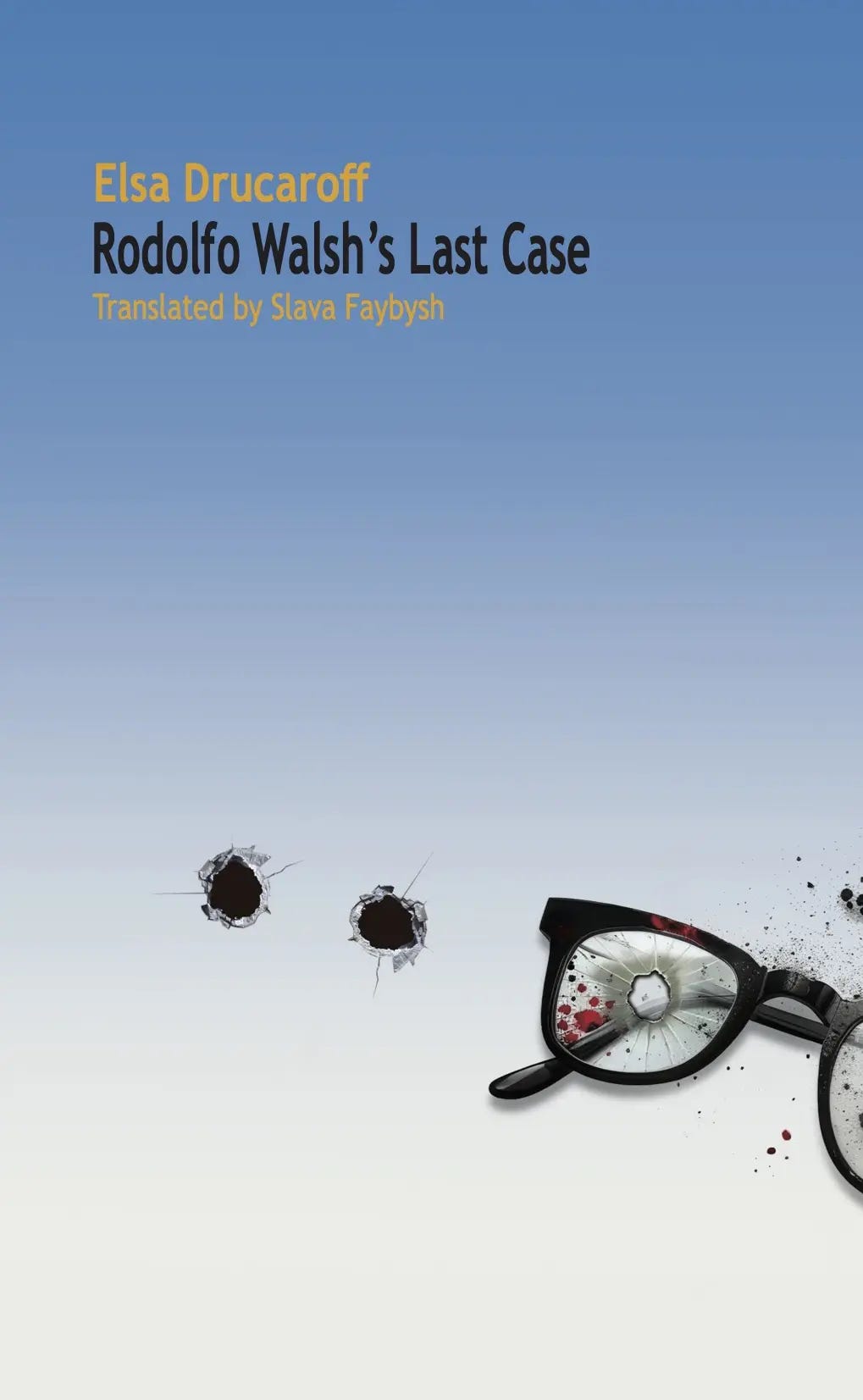
Rodolfo Walsh’s Last Case is the product of another hard working small press, Corylus Books, which focuses on fiction, particularly crime fiction, that has not been already published in English. Originally published in Spanish in Argentina, the book takes as its starting point a real life event: a 1976 open letter by Rodolfo Walsh, author and a senior militant in the Montoneros, a far left Marxist Peronist group engaged armed struggle, in response to his daughter’s death in a shoot with members of the military, who had engineered a violent take over the country earlier that year.
The story envisages what would have happened if Walsh, a fraught, compromised character if ever there was, had undertaken his own painful investigation into the events around his daughter’s death. The fact that there is no chance of justice under the country’s military dictatorship, a regime that literally declared war on its own people, only makes Walsh’s search for the truth feel more tragic and compelling. On one level, it is ancient history now, but on another, well, there’s an eerie feeling it could have been written today.
I want to give a quick shout out to several other books I read over the long winter that made an impression on me. Research for my next non-fiction book project saw me read both novels available in English by West German crime writer Jörg Fauser, The Snowman (1981) and Raw Material (1984). You’ll hear a lot more from me about Fauser in the not so distant future.
Danny Orbach’s non-fiction work, Fugitives (2024), answers the question, what exactly did happen to all those Nazis who managed to survive the war with only one set of marketable skills? Short answer, they went into arms trading and worked for all the various sides as spies during the Cold War. And, I mean, all sides, the West, the Soviets, and governments in the Middle East, including the Israelis. A fascinating piece of detailed research that reads like a spy thriller.
Burning Down the Haus: Punk Rock, Revolution and the Fall of the Berlin Wall (2017) by Tim Mohr, was not only a wonderful history of the East German punk scene and it’s surprisingly significant role in helping to topple that country’s Stalinist regime. It also explores a now little remembered aspect of oppositional movements in the former eastern bloc; that not everyone wanted western capitalism and values imposed on the former Soviet states. Many wanted a more humane, democratic form of socialism. Indeed, I found this aspect of the story, which only really comes into sharp focus towards the end of the book, the most interesting part. If any readers have suggestions for books that deal with this particular historical aspect of the fall of the eastern bloc in more detail, I would love it if you could let me know in the comments.
The Red Army Faction on the screen
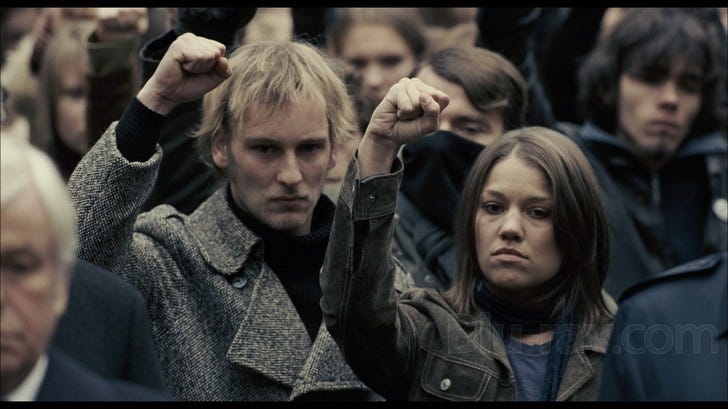
Last September I wrote about discovering two films that explored the historical aspects of West Germany’s Baader Meinhof gang. Namely, Volker Schlöndorff’s The Legend of Rita and Christian Petzold’s The State I Am In, both of which appeared in 2000. My interest in this area originated in research I am doing for my next non-fiction book. But like all good obsessions, it has since gathered a momentum of its own. My hunt for other films that depict the Baader Meinhof aka Red Army Faction on the screen, either direct depictions, documentaries or fictional takes that talk about the milieu that influenced them has resulted in this Letterboxd list, not all of which, I should stress, I have seen. I would be interested in hearing from readers who can add any films to this list
No posts
Comments
Nothing yet. Say the first thing.
Sign in to join the conversation.