
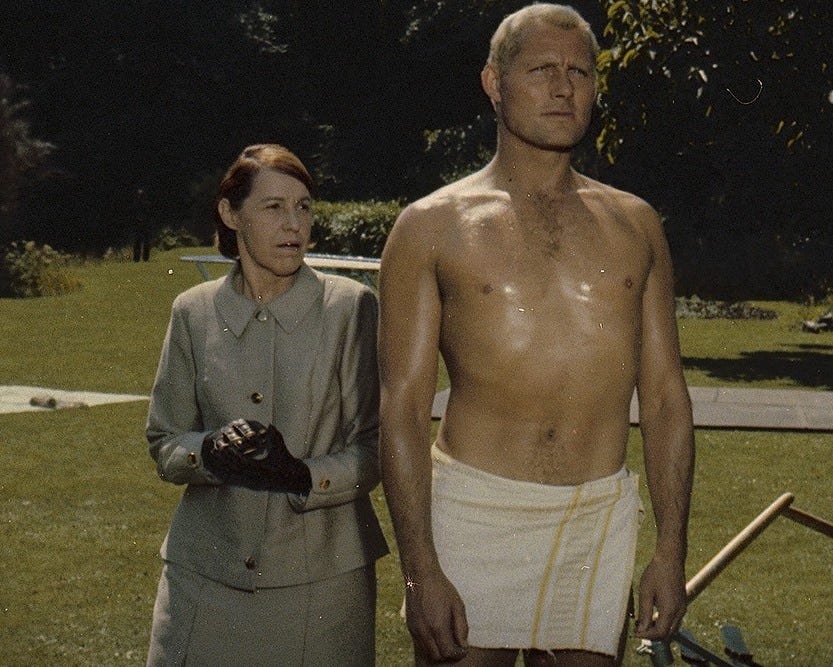
The first James Bond novel, Casino Royale, published in 1953, kickstarted the modern fascination with spies. Well-known spy novelists such as Richard Condon, Alistair MacLean, Frederick Forsyth and John Le Carré, as well as a legion of lesser-known writers and pulp imitators, all followed in Bond’s wake. The franchise grew with the 1962 release of the first movie adaption, Dr. No, and became a global phenomenon after Goldfinger, the third film in the series, hit the screens in 1964.
But the spy craze that infected sixties popular culture wasn’t restricted to the West. From the Philippines to Turkey, local writers penned their own fictional spies. Even pre-1975 South Vietnam had its own spy: secret agent Z.28, who liked sports cars and beautiful girls, and featured in a series of over sixty books written by Nguyen Thu Tam.
But the most interesting response came from the other side of the Iron Curtain; Soviet authorities were not only aware of the global popularity of James Bond, they also saw him as a major propaganda coup for the West.
With all the Hollywood production bullshit and cultural hot take politics that surround the 007 franchise today, it’s easy to lose sight of what James Bond represented in the 1950s and 1960s, particularly in Fleming’s novels. I re-read nearly all the original books during one of Melbourne’s prolonged Covid-19 lockdowns and, aside from all dodgy sexual politics and the long ruminations on food, I was struck by how brutal and hard boiled they are. This is a quality that is also evident in the film adaptations up to and including On Her Majesty’s Secret Service in 1969.
Stripped of the snappy one liners and the running flirtation with Moneypenny, Bond was a blunt weapon in a dinner suit. His sole purpose: to smash the West’s enemies. Bond was also the epitome of sexual and social permissiveness at a time when the notion still contained some sort of radical content. He was licensed to kill and to have a good time. The casual sex, alcohol, fine living and travel to exotic destinations were all symbols of what was for most people in Western societies in the 1960s , only the first faint sense of economic affluence and moral permissiveness. In The Dream Life: Movies, Media and Mythology of the Sixties, James Hoberman writes about the first Bond film: ‘Replete with colourful Third World atmosphere, blithely imperialist in its racial assumptions, Dr. No speaks of a time foreign travel and even airports seemed glamorous.’ The villain’s island headquarters, set amid secluded white sandy beaches, he notes, ‘is a bachelor pad worthy of a six-page Playboy spread.’
In the Soviet Union, Ian Fleming’s books were banned and Soviet newspapers lambasted the secret agent as a sadist and a Nazi. As Komsomolskaya Pravda, the official organ of the Communist Party’s youth organisation, put it: ‘James Bond lives in a nightmarish world where laws are written at the point of a gun, where coercion and rape is considered valour and murder is a funny trick.’ Soviet culture never offered up anything as glitzy or lurid as Bond, but it nonetheless produced its own fictional spies.
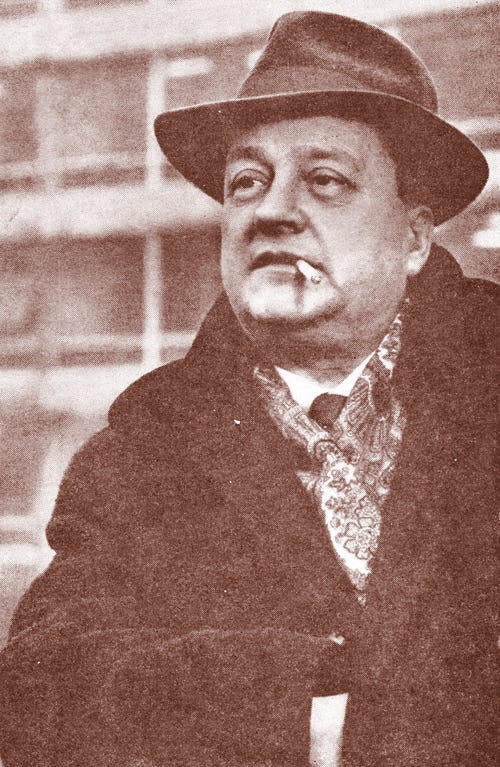
The most infamous was Avakoum Zahov, who featured in a series of books by Bulgarian author Andrei Gulyashki that were later translated into Russian. Two of these were reprinted in the West: the first, The Zakhov Mission, was published in the UK and the US; the second, Avakoum Zahov vs. 07, found its way onto bookshelves in Australia in 1967 via a local publisher, Scripts.
Scripts was established in the late sixties by Australia’s largest pulp paperback publisher, Horwitz Publications, as an outlet for their more adult-oriented material and, over time, straight out smut. Exactly how Avakoum Zahov vs. 07 came to be released by an obscure local pulp outfit best known for books about bikie gangs, rent boys, sexually bored housewives and women in jail, is just one of the mysteries surrounding the book.
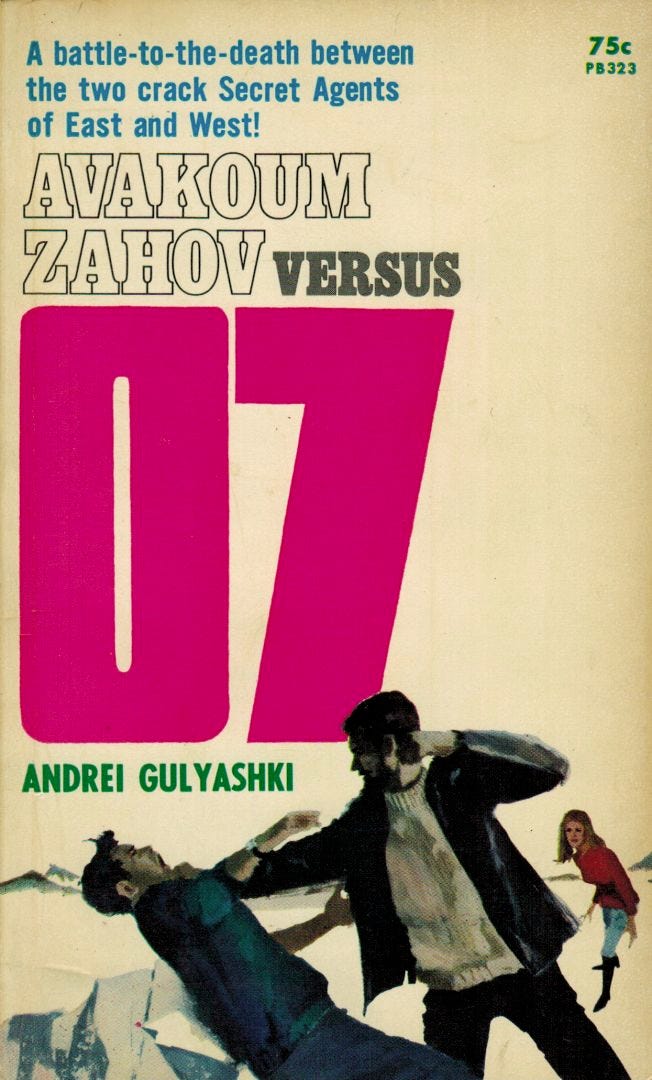
There have been claims that Fleming’s publisher, Glidrose Productions, was against the idea of further Bond books after the author’s death in 1964. That changed after Gulyashki announced his intention to pen his own take on James Bond in a 1965 interview with the Moscow Literary Gazette. He visited London in early 1966 to get a feel for Bond’s home turf and approached Fleming’s publisher with the idea.
Gulyashki’s trip to London was covered by the New York Times and Time magazine. The latter wrote: ‘Who would that baggy Bulgarian be, prowling up Bond Street, slipping into pubs all over town and quietly haunting the men’s clubs? A job for 007? Quite. Sofia author Andrei Gulyashki, 51, celebrated behind the Iron Curtain as Communism’s answer to Ian Fleming, was in London to do a little spying on “James Bond’s town” and gather background for his new counterespionage epic, Avvakum Zakhov Meets James Bond.’
One can imagine the horror with which the blue bloods at Glidrose received the Bulgarian. They declined Gulyashki’s proposal, banned him from using the Bond name and 007 prefix, and hastily commissioned Kingsley Amis, writing as Robert Markham, to produce Colonel Sun, the first of what would be many post-Fleming novels featuring Bond.
For his part, Gulyashki returned to Sofia, shortened Bond’s codename to 07 and made him a nameless British agent ordered to kidnap Konstantin Trofimov, a Russian scientist who had perfected a powerful laser beam. Despite the hero’s efforts, 07 manages to kidnap Trofimov and his secretary, Natalia, and spirit them onto a ship heading towards Antarctica. Zahov slips on board the ship to rescue the professor and his secretary.
The original version of the story reportedly has Zahov, the scientist, his secretary and 07 shipwrecked on an ice sheet where they are waiting on a Russian rescue plane that Zahov contacted before the boat capsized. Agent 07 escapes just as the plane arrives, no doubt to lick his wounds after his defeat by the communist agent. But the English version published by Scripts changes the ending: Zahov and 07 engage in a vicious hand-to-hand fight, which ends with the latter pushed into a hundred-foot crevice, presumably to his death, as the Soviet plane comes into sight.
As a piece of literature, there is little to recommend Avakoum Zahov vs. 07. The plot is confused and the writing flat, most likely due to the translation. The most interesting aspect is the contrasting portrayal of Zahov and his Western nemesis. While his name may have been ‘whispered with dread in the spy centres of the West’, the Bulgarian agent is more of a classic sleuth than a testosterone-charged super spy. He is an amateur archaeologist and Mozart buff who prefers simple food and accommodation. In contrast, 07 is a sexual harasser and brutal killer, not adverse to using a little torture to get what he wants.
But the most hotly debated topic on Bond websites is whether Avakoum Zahov vs. 07 was part of a deliberate plot by the Soviets to counter the popularity of Bond. The Soviets were certainly alive to the power of a good spy yarn; Pravda admitted as much in 1964 when it said detective and adventure stories would become ‘a powerful means of propaganda for the Soviet way of life, and for the new attitude of our society towards the people who stand guard over its tranquillity’.
Journalist and popular historian Donald McCormick was the first to raise the idea that Gulyashki was involved in a propaganda scheme to create a proletarian Bond. In his 1977 book Who’s Who in Spy Fiction, McCormick lists the Bulgarian as a ‘novelist who responded to the KGB’s request for writers to glorify the deeds of Soviet espionage and to improve its own image in the early sixties. The object was to popularise secret agents of the Soviet Union as noble heroes who protected the fatherland and it was launched by Vladimir Semichastny, the newly appointed head of the KGB in 1961, when he contributed an article to Izvestia on this very subject.’
It is not clear where McCormick got his information, but others have since picked up the claim and run with it. The Penguin Dictionary of Literary Terms and Literary Theory states that Gulyashki ‘was invited by the KGB to refurbish the image of Soviet espionage which had been tarnished by the success of James Bond’. Likewise, Wesley Britton claims in Beyond Bond: Spies in Fiction and Film that, in 1966, the Bulgarian novelist was hired by the Soviet press to create a communist agent to stand against the British spy ‘because of Russian fears that 007 was in fact an effective propaganda tool for the West’.
Avakoum Zahov vs. 07 was serialised in Komsomolskaya Pravda, giving it the imprimatur of the Communist Party. The apparent freedom with which Gulyashki was able to travel to London also suggests his mission could have been officially approved. Of course, the other possibility is that Gulyashki simply wanted to cash in on the Bond craze for his own ends. Another is that he wanted to get his own back for Fleming’s consistent portrayal of Bulgarians as mindless thugs exploited by Russia’s spy service.
As for the book’s ending, it could have been changed for propaganda purposes. Just as likely, an enterprising editor at Scripts, a company notorious for the speed with which it turned around its racy fare and the liberties it took with reprinted texts, may have simply wanted to sex things up for readers.
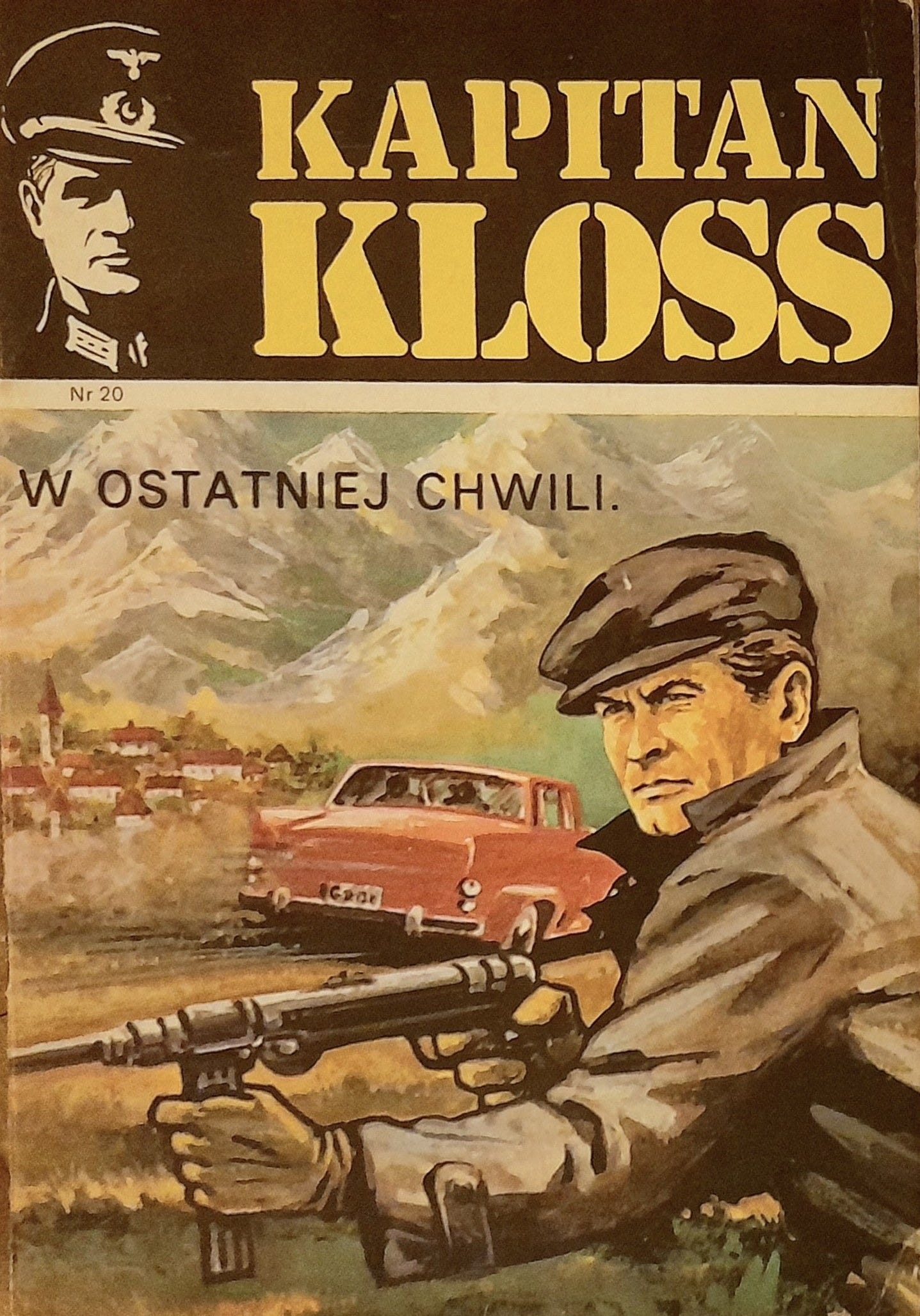
Whatever the case, Gulyashki was not the only writer of fictional spies in the Soviet bloc. Vladimir Bogomolov wrote a number of thrillers, the most famous of which, The Moment of Truth (1973), tells the story of SMERSH operatives who followed the Russian frontline, restoring order and eliminating deserters or suspected spies. It was done in a pseudo-documentary style through field reports and government wire. Polish state TV produced an eighteen-part series in the sixties, Kapitan Kloss, which featured the exploits of a Polish spy in the German army. If the clips available on YouTube are anything to go by, it had a pulpy, Bond-like feel. Kloss also featured in a series of comic books.
By far the most successful Soviet writer of suspense and spy mysteries was Yulian (or Julian, as his name is often spelt in English) Semyonov. Once referred to by the Los Angeles Times as ‘the Soviet Robert Ludlum’, Semyonov was a pioneering Soviet journalist and novelist whose books reportedly sold thirty-five million copies worldwide. Semyonov’s father worked as secretary to prominent Bolshevik Nikolai Bukharin before being arrested in one of Stalin’s many purges. The younger Semyonov was expelled from the Komsomol and would himself doubtless have been arrested, if not for Stalin’s death in 1953. Semyonov worked for Soviet news magazines in the sixties and seventies, reporting from Latin America, the United States, Asia and Europe. He tracked down escaped Nazi war criminals and reportedly took part in combat operations with Lao and Vietnamese guerrillas. A 1990 stroke left him bedridden; he died in 1993. According to one account he was actually poisoned to prevent him publishing material on KGB collaboration with the Russian Orthodox Church.
His best-known work, still popular in Russia today, was a series of thirteen books featuring a Soviet spy called Max Otto von Stirlitz, the code name for Colonel Maxim Maximovich Isaev.
The first Isaev book, No Passport Needed (1966) was set in the Far East in the early twenties. The wonderfully titled Diamonds for the Dictatorship of the Proletariat (1971) saw Isaev deal with theft from a state-operated precious-metals repository. Alternative (1974) takes place in Yugoslavia in the spring of 1941. Isaev chased Nazi spies in the Ukraine at the beginning of the Second World War in Third Card (1977). In Seventeen Instants of Spring (1969), he was assigned to foil an attempt by Britain and the US to conclude a separate peace deal with the Nazis and open up a common front against the Soviets. The book was turned into a twelve-part miniseries in 1973. Isaev was also present during the last days of the Nazi Reich in the 1982 book, The Order to Survive.
Semyonov didn’t shy away completely from contemporary settings. His first novel, Petrovka, 38, published in 1963 - and the only one I’ve been able read - is a hardboiled police procedural about a squad of cops trying to solve thefts from a state savings bank. According to an April 1987 profile in People magazine, Semyonov wrote the book after spending three months with Moscow police detectives. It spun off into a further four novels (known as the Militia Series) that dealt with contemporary crime in Russia.
TASS is Authorised to Announce, published in 1977, is a contemporary thriller set around a fictitious African country called Nagonia, where the CIA is planning a coup. The KGB manages to foil the plot by blackmailing a corrupt CIA agent. As a result, TASS, the state’s central news agency, issues a news bulletin exposing the American plot. Semyonov’s wealth (considerable by Soviet standards) and international travel privileges earned him the ire of many, including Russian émigrés who accused him of working for the KGB. The writer certainly had friends in high places. No Passport Needed reportedly resulted in a phone call from ex-KGB head and Politburo member Yuri Andropov who enjoyed the book so much he invited the author for a talk and offered access to sections of the Soviet archives for future books.
By the eighties things were changing in the Soviet Union. Reform-minded Mikhail Gorbachev (another personal friend of Semyonov) become general secretary of the Communist Party in March 1985, and the wall preventing outside cultural influences reaching ordinary Russians began to crumble. Bond novels and movies became available on the black market. By the time Gorbachev became president in 1990, Bond films were showing in public cinemas and the first Russian editions of Fleming’s novels appeared in bookshops.
And, of course, by then Bond had bigger fish to fry than the declining Soviet empire.
There is no evidence or suggestion the CIA ever supported Fleming in the same way it funded conservative periodicals or modern American artists like Jackson Pollock and Mark Rothko. But they were happy to utilise Bond’s propaganda potential, and Fleming seems to have been happy to play along. Fleming’s books were the favoured reading of JFK and long-time US intelligence director Allen Dulles. In The Dream Life, Hoberman recounts that Fleming, while attending a dinner party in the US where JFK was also a guest, chided the president that the Americans took Cuban leader Fidel Castro too seriously. Fleming suggested the CIA should change tactics and seek to undermine his image through ridicule and innuendo, like dropping leaflets suggesting he was impotent. ‘Fleming’s presentation,’ says Hoberman, ‘created a buzz so strong that the following morning, CIA chief Dulles himself was making phone calls to get his own briefing from the British writer.’
According to an analysis of declassified letters and interviews by an academic at the University of Warwick, Fleming and Dulles became friends. The American urged the writer to portray the CIA, then an organisation largely unknown to the public, in a positive light. The author - whose politics were very conservative - was happy to oblige, and Fleming’s books became progressively more flattering of the US intelligence service. In return, Dulles praised Fleming in the American press, even saying on one occasion that his organisation ‘could do with a few James Bonds’.
According to the University of Warwick study, the CIA tried to copy some of the gadgets in the Bond books, including Rosa Klebb’s poison-tipped dagger shoe in From Russia With Love. They had less luck with the homing beacon device used in Goldfinger to track the villain’s car: the CIA’s version had ‘too many bugs in it’, Dulles said, and stopped working when the target entered a heavily populated area.
This post is an edited version of a longer article that original that first appeared in the Autumn 2014 edition of the Australian literary magazine, Overland.
No posts
Comments
Nothing yet. Say the first thing.
Sign in to join the conversation.