
當8大算力數據中心巨頭的 capital density 逐季,逐年增加,表示其營收增速低於其資本開支增速, 這讓全球主要AI產業鏈半導體公司在今年營收,獲利,股價表現明顯優於8大算力數據中心巨頭,而當台積電及主要存儲記憶體半導體龍頭在未來2-3年的 capital density 將逐年增加,我們認為主要AI相關的半導體設備公司未來幾年的營收,獲利,股價表現有很大的機會將優於台積電,存儲記憶體等龍頭半導體製造商。我們因此建議投資人關注那些可能被市場低估的半導體設備公司。
投資人可能會很納悶台積電,存儲記憶體本益比低,2026年營收及獲利成長性明顯優於設備廠,怎麼會 underperform 呢?我們看的是未來的變化,不是過去的歷史,台積電,存儲記憶體大廠之前靠提升低折舊設備產能利用率提升到接近100%及漲價(尤其是記憶體公司產品價格 bit price 漲了近2-3倍),合理控制資本開支來增長,但從 2H26 開始因產能利用率到頂了,未來要靠加碼高折舊設備費用的資本開支來增加產能多賣,怎麼看營收及獲利增長都會少於全球AI相關的半導體設備公司營收及獲利增長(capital density 會逐年提升) 直到需求反轉。
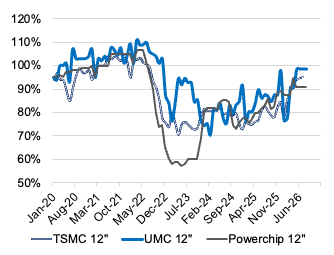
TSMC is raising capex by 10-20% to benefit its equipment vendors: Benefited from revising 2026 sales outlook from over 30% yoy to slightly over 40% yoy (guided 3Q26 sales growth of 12-15% qoq and 4Q26 sales growth of over 10% qoq) with nearly full capacity utilization on many technology nodes, TSMC has decided to raised its 2026 capex to US$60-64bn, up 46.7-56.6% yoy, from April guidance of US$56 bn, up 37% yoy (Jan guidance of US$52-56bn, up 27-37% yoy). This has boosted TSMC 2026 capital density (capex to sales ratio) to 35-37% from last year and earlier guidance of 33% and should benefit TSMC’s key scanner vendor ASML, other front-end, CoWoS, and testing equipment vendors;

Source: Andrew Lu on global semis/techs
Comments
Nothing yet. Say the first thing.
Sign in to join the conversation.