
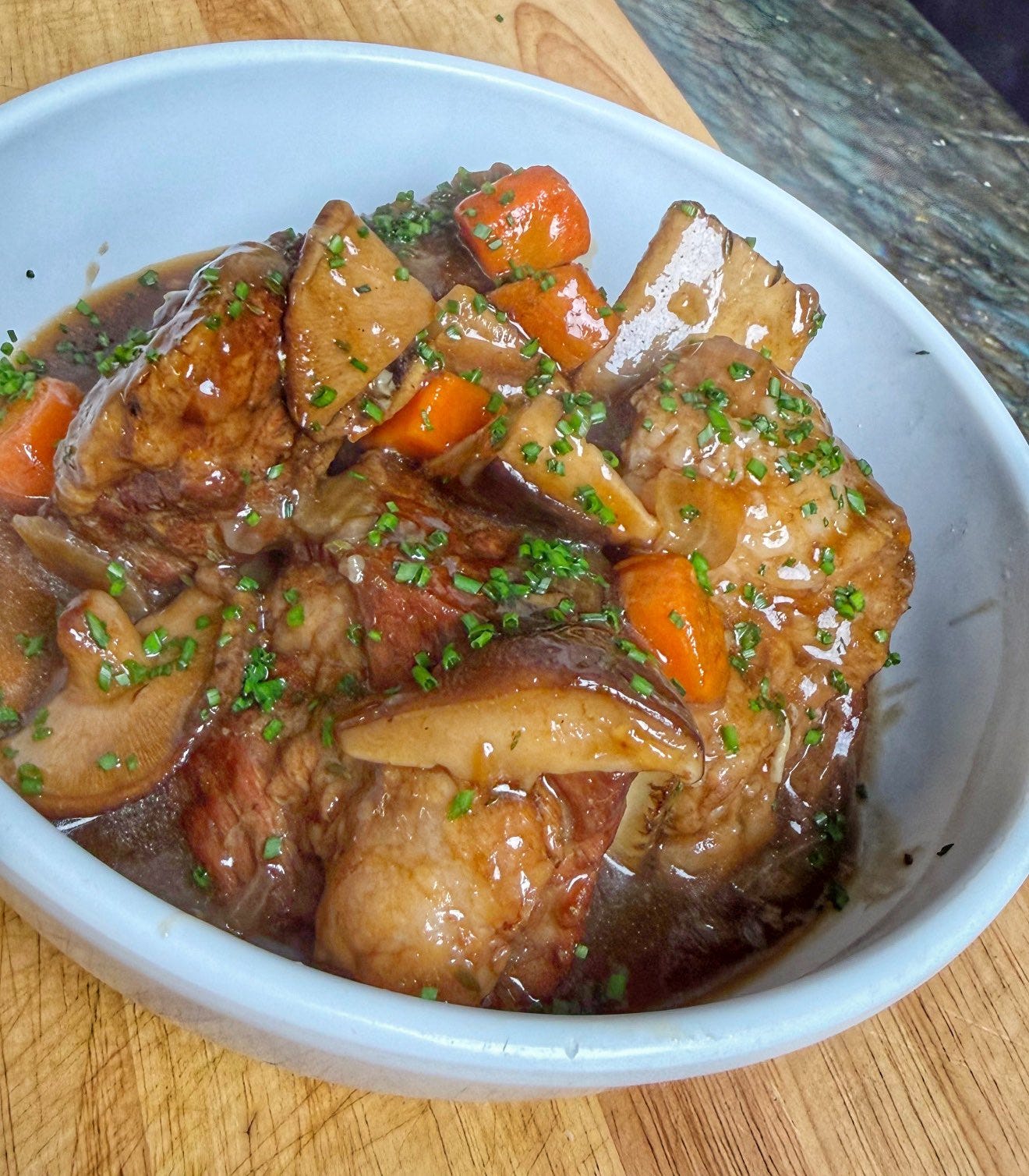
Every year around St. Patrick’s Day, everyone defaults to corned beef. Don’t get me wrong, I love it — but if you want something deeper, richer, and honestly more impressive, you go with short ribs. This is one of those dishes that looks like it took all day and a culinary degree—but it’s actually just about controlling one thing: heat.
Because here’s the truth most people get wrong:
The fastest way to ruin a braise is to let it boil.
I made a full YouTube video walking through this step-by-step
but below is the exact recipe and method so you can nail it at home.
Ingredients
3 large bone-in short ribs (about 2 lbs total)
1 large white onion, diced
2 carrots, diced
1 cup sliced shitakke mushroom
8 cloves garlic, diced
1 large can Guinness
1–2 cups chicken stock
1 cup black coffee
8 sprigs fresh thyme
Salt and pepper
The Method (This Is Where It Matters)
1. Build Your Base
Start by heating a heavy-bottomed pot or Dutch oven over medium heat.
Sear the meat on all sides, making sure you brown every possible area. This is the flavor. Remove the meat but leave the pan as is.
Add your diced onion, mushrooms, and carrots first. Let them sweat and develop some color—don’t rush this. You’re building sweetness and depth right here.
Once softened and slightly caramelized, add the garlic and cook for another minute.
2. Deglaze with Guinness
Pour in the Guinness and scrape up all the browned bits from the bottom of the pan.
This is where the dish starts to take shape—that malty, slightly bitter backbone is what makes this feel like a proper St. Patrick’s Day braise.
Let it reduce slightly.
3. Add Stock + Coffee
Add your chicken stock and the cup of black coffee.
The coffee might sound unconventional, but it works. It deepens the roastiness of the Guinness and brings out the beef flavor without making the dish taste like coffee.
Reduce the liquid by about half.
4. Bring It to a Simmer (Critical Step)
Before the ribs go in, you must bring the liquid to a gentle simmer.
Not a boil or aggressive bubbling. Just a slow, lazy simmer.
This step sets the tone for the entire cook.
5. Add the Short Ribs
Nestle your seared short ribs into the liquid.
They should be about ¾ submerged, not fully covered.
Add the thyme sprigs right on top.
6. Into the Oven
Partially cover the pot and place it into a 325–350°F oven.
And here’s the most important part of the entire recipe:
Do NOT let the liquid boil.
Check it periodically. You want a gentle, slow movement in the liquid—not a rolling boil.
If it’s bubbling aggressively, your oven is too hot.
Cook Time
2.5 to 3 hours, until fork-tender
The meat should feel like it’s just barely holding together when you lift it.
Finish Like a Pro
Once the ribs are done, pull the pot from the oven and remove the short ribs carefully. Now you’ve got liquid gold sitting in that pot.
Bring the braising liquid back to a simmer on the stovetop and skim off any excess fat if needed.
Mix a small cornstarch slurry (cornstarch + cold water), then slowly stir it into the liquid until it thickens into a glossy, rich sauce.
You’re not making gravy—you’re tightening it just enough to coat the back of a spoon. Return the short ribs to the sauce or plate them and spoon it over the top.
Final Thoughts
This is the type of dish that fills your house with that deep, savory aroma—Guinness, beef, thyme, roasted vegetables—all working together. It’s rustic, rich, and it’s exactly what you want this time of year.
Serve it over mashed potatoes, buttered noodles, or just with a piece of crusty bread.
And remember:
If you control the heat, you control the dish.
Comments
Nothing yet. Say the first thing.
Sign in to join the conversation.