
The first thing that comes to mind when you think of a royal holiday is the awe-inspiring but typically wet Highlands that surround Balmoral Castle. This is partly by design. Despite living across Windsor Castle, Buckingham Palace, Sandringham and Balmoral, the late Queen managed to acquire a reputation for frugality, and the annual jaunts to the Scottish estate helped to feed into this legend.
The supposedly austere and draughty castle was in some ways the perfect foil for the holidays that weren’t documented by BBC cameras or troubled by the paparazzi.
The Queen had her beloved Royal Yacht Britannia until 1997, but less well documented is the Royal Family’s love of other people’s yachts and grand holiday homes. Camilla regularly takes her children on holidays on billionaires’ boats, and it’s been rumoured that William and Catherine also enjoy trips on floating gin palaces owned by the super-rich. Indeed, Andrew and Fergie have over the years turned the royal freebie holiday into an art form.
While such gilded holidays are often hinted at but rarely confirmed, it was Princess Margaret’s biannual retreats in Mustique that first demonstrated why such luxury is best kept under wraps.
The public might not be able to relate to stalking in Scotland or shooting at Sandringham, but seeing the Queen’s sister living it up in the Caribbean while the rest of the country froze in the winter was always going to generate unwelcome heat.
In much the same way that the 1969 documentary The Royal Family was thought by the Queen to have shone too much light on the mystery, her sister’s hedonistic existence in the Caribbean similarly left too little to the imagination.
Mustique was to prove the Princess’s escape but also her downfall, and it was to give the Queen and her courtiers many sleepless nights. It also gave ammunition to her many critics.
One of the most persistent was Labour MP Willie Hamilton, a perennial thorn in the Royal Family’s side. Margaret’s Caribbean holidays were a particular source of irritation. In 1977, railing against the cost of the monarchy, he told the Commons that the Princess had been given £50,000 a year tax-free so that she could ‘spend most of her time on Mustique in the Caribbean’.
Lord Glenconner, a former boyfriend of the Princess and husband of her best friend and lady-in-waiting Lady Anne Glenconner, spent £45k on Mustique in 1958, but his best investment was still to come.
The 10-acre estate he gave to Princess Margaret as a wedding present helped turn the tiny island into perhaps the most iconic playground for the world’s famous, rich and powerful, and her royal glamour helped attract guests and residents like Mick Jagger and countless other global megastars.
One of the appeals of the fly-blown tropical island was that it gave Margaret a sense of agency that she lacked back home. She would describe Les Jolies Eaux as the only place she owned; indeed, this was a bone of contention with her husband, who was furious that it was a wedding present to his wife rather than to the two of them. Back home she was, as she called herself, ‘second-hand rose’; in Mustique she was the undisputed top dog.
Margaret’s biographer Noel Botham described the Princess as the ‘perfect hedonist’ and her day-to-day life arguably proved his point. She would go out almost every night and finish each evening, usually around 2am, with a whisky and listening to her records. On awaking, she would be served fresh fruit and orange juice. A subtle nod would see vodka added to her juice if the previous evening warranted a hair-of-the-dog remedy.
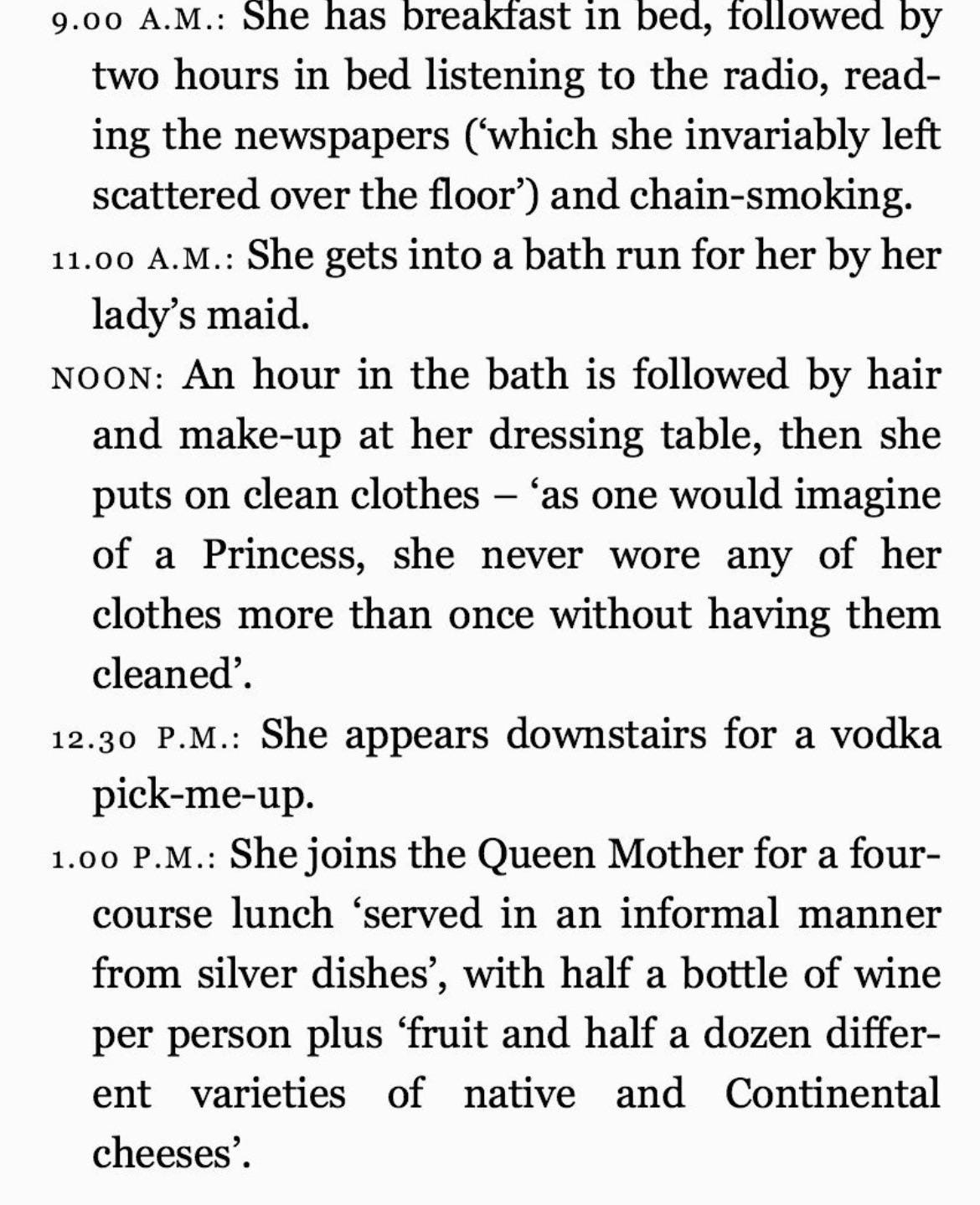
Her former footman David John Payne detailed her daily routine in his book My Life with Princess Margaret. Craig Brown’s inclusion of Payne’s account in his excellent book Ma’am Darling has since seen the routine go viral multiple times, with some envying her Ab Fab existence and others seeing it as clear evidence of addiction, depression and a rather empty existence.
Mustique, or ‘Mustake’, as Lord Snowdon called it, was therefore perfectly suited to Princess Margaret. As one fellow visitor said of the Queen’s sister, ‘she could get away with anything really and she did!’
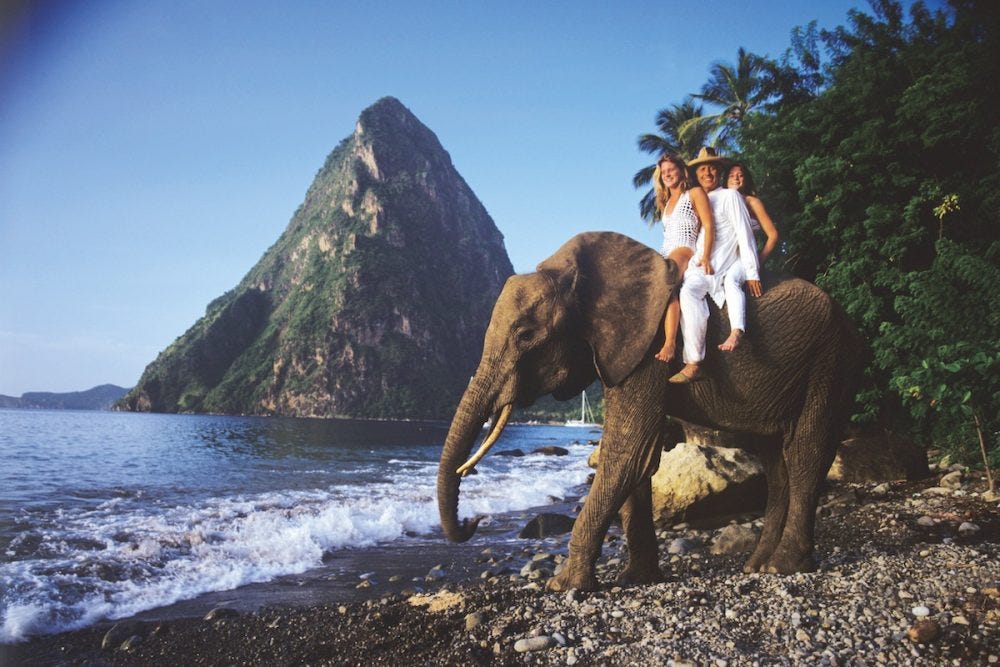
Lord Glenconner, fittingly for a man who brought an elephant to his island, was the ultimate ringmaster and his sense of theatricality meant that the parties were always over-the-top affairs made even more glamorous by the ever-changing cast of celebrities and less salubrious characters.
Margaret’s brief encounter on the island in the early 1970s with British gangster and part-time actor John Bindon was the blue touchpaper that sparked an explosion of interest. A few years later, in 1978, he was acquitted of the murder of another East End rogue, John Darke. After his release, his girlfriend, baronet’s daughter Vicki Hodge, negotiated a £40,000 fee with the Daily Mirror for Bindon to serialise his life story, with the emphasis on his alleged relationship with Princess Margaret.
Comments
Nothing yet. Say the first thing.
Sign in to join the conversation.