
By Kiersten Neumann
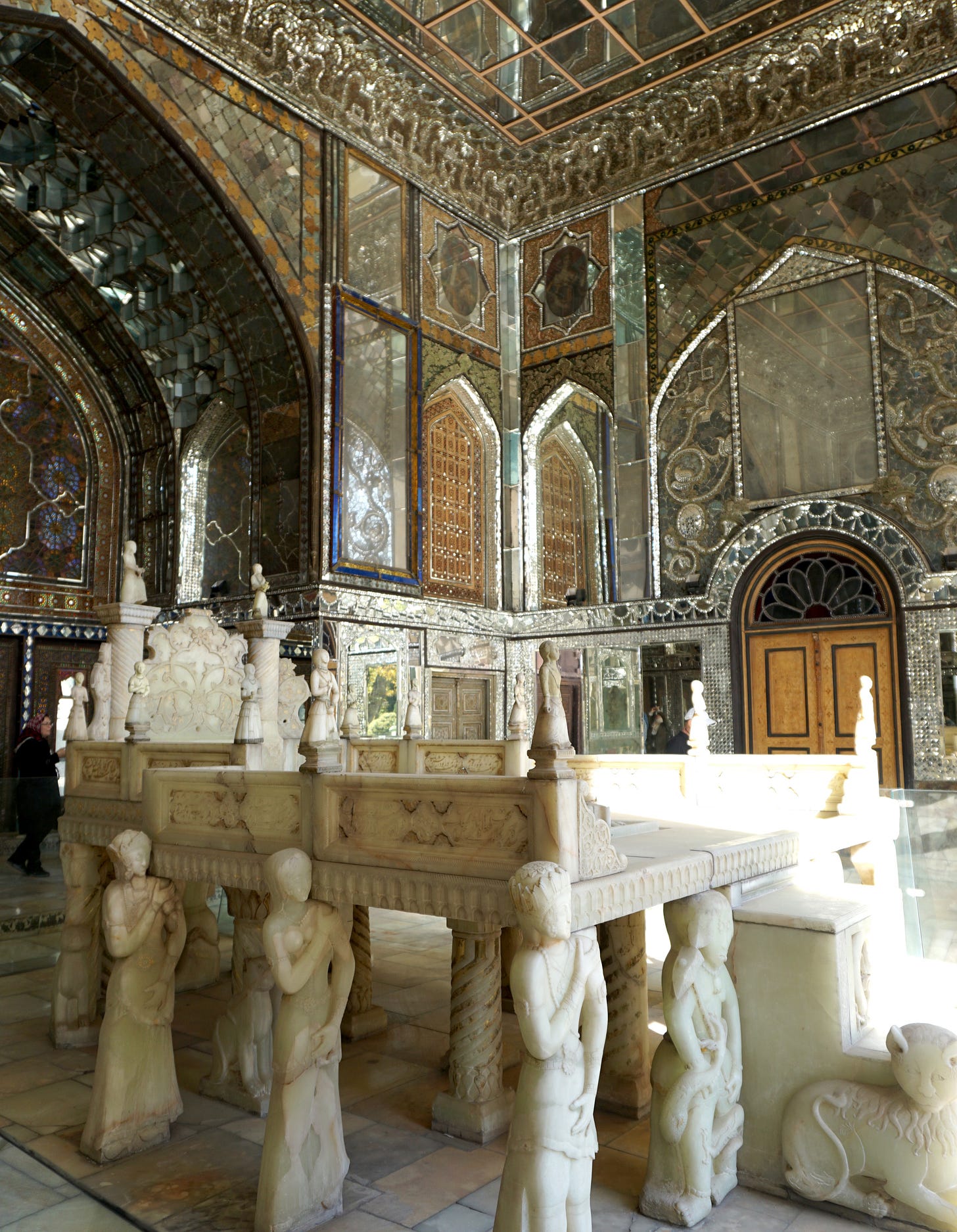
For scholars residing far from the Middle East — in North America, where ASOR is based, and elsewhere — whose work centers on Middle Eastern cultural heritage, the war being waged across the region feels both a world away and overwhelmingly close to home. As civilians endure death, injury, displacement, and the prospect of long-term trauma, the destruction of historic landmarks, museums, markets, schools, and neighborhoods also reveals how war tears apart the physical fabric of communal life. Some of these sites are the direct target of strikes; a greater share of the damage is collateral — the result of shockwaves and shrapnel. Watching the continuous dismantling of the beating hearts of so many urban communities — places where many of us have walked, studied, lived, and built lasting relationships—is devastating beyond words. And with all of this comes the added feeling of futility — of calling for the protection of cultural heritage, of invoking international agreements that exist precisely for moments like this one, and watching them go unheeded. To speak of cultural heritage in wartime is not to look away from human suffering, but to recognize its loss as another form of that same suffering.
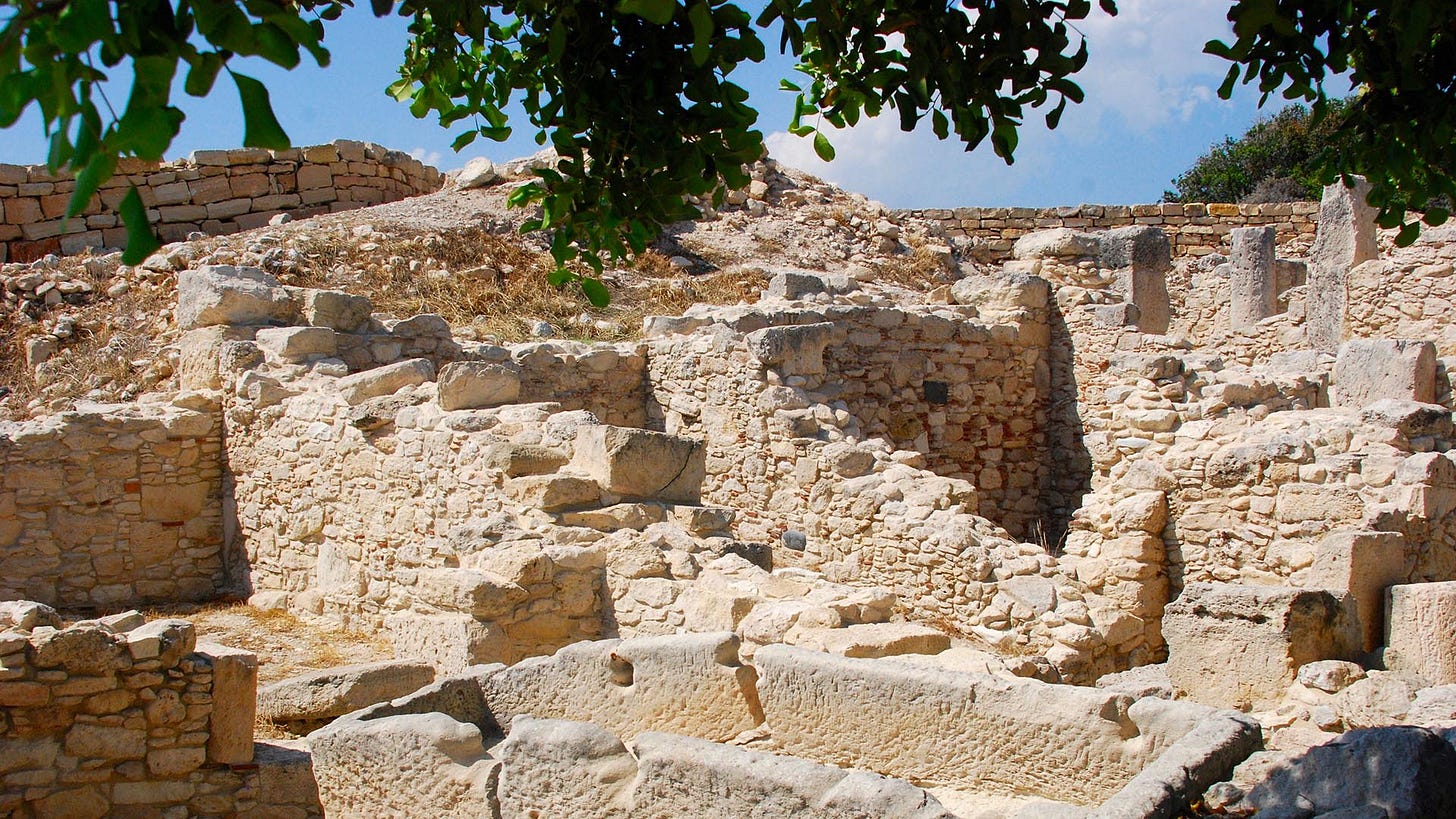
Still haven’t figured out your summer plans? There are still a few spots open for the Friends of ASOR: Cyprus Across the Ages tour in June. Join other like-minded archaeology enthusiasts and enjoy behind-the-scenes access to sites from prehistoric settlements to Classical cities to Byzantine and medieval monuments, guided by renowned archaeologists and specialists the whole way. Contact us for more info.
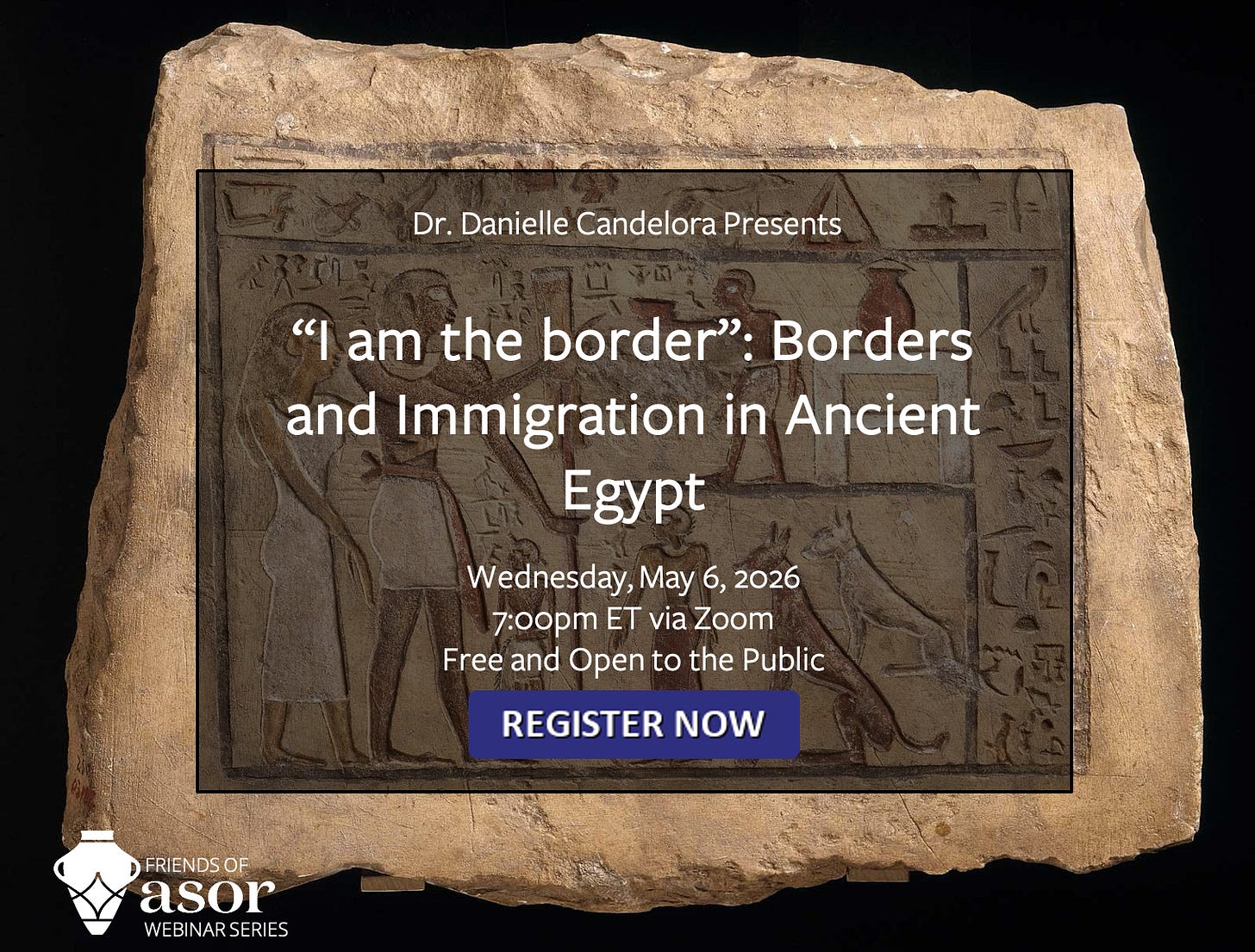
Join us for the LAST FOA webinar of the season on Wednesday, May 6th at 7:00pm ET: “‘I am the border’: Borders and Immigration in Ancient Egypt,” presented by Dr. Danielle Candelora. From Tex-Mex cuisine to the use of Hinglish (mixed Hindi/English) in Bollywood movies, the influence of borderlands is ubiquitous in modern culture. Issues of borders, citizenship, and immigration are at the forefront of media headlines around the globe, and are examined across fields as diverse as Political Science and Sociology to Comparative Literature and the Visual Arts. Exploring these multiple approaches allows for new insights into the entangled concepts of borders, immigration, and identity in ancient Egypt. Read more and register here.
Over 100 game boards carved into the ruins by shepherds were found at the site of Ptolemais in Libya. Read more at LBV.
Researchers have recovered 42 lost pages of a 6th century manuscript of the New Testament by using multispectral imaging on parchment reused in the 13th century. Read more at Archaeology News.
Archaeologists at Oyxrhynchus in Egypt have uncovered mummies from the Roman period with gold tongues and even a fragment of Iliad (a passage from the famous Catalog of Ships in Book II). It’s the first fragment of Homer ever found inside a mummy, and seems to have been intentionally deposited. Read more at LBV or LiveScience.
Researchers think they figured out why people in the Levant stopped using massive tools 200,000 years ago. Read more at phys.org.
Spanish archaeologists have documented more than 30 shipwrecks in the Bay of Gibraltar, including a Punic ship from the 5th century BCE. Read more at The Guardian.
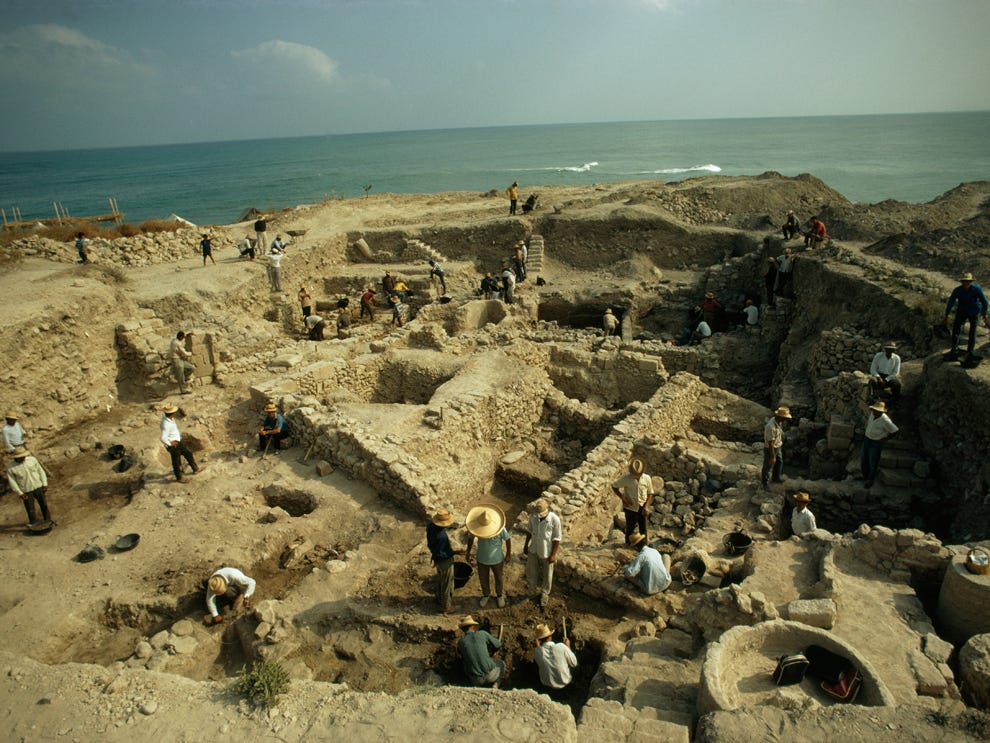
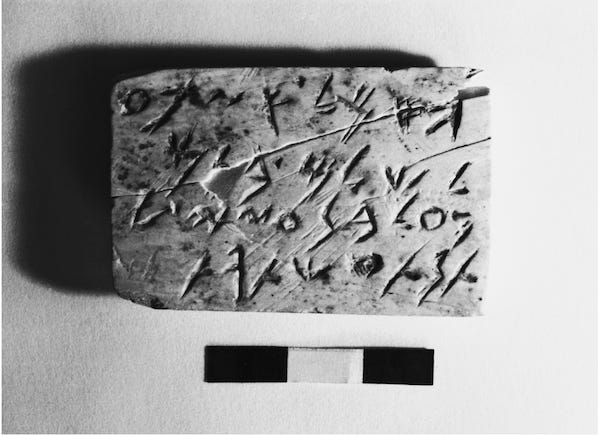
Sarepta (modern Sarafand, Lebanon) sits on a promontory about 13 km south of Sidon. Excavated by an 80-person team led by James Pritchard from 1969 to 1974, the site shows evidence of continuous occupation from ~1600 BCE to ~600 CE. Pritchard’s excavations were thoroughly published, showing that Sarepta was a prosperous commercial port and industrial center, with facilities for metallurgy, purple dye, olive oil, and pottery (the Semitic root of its name, srp, means “to burn” — perhaps a reference to its industry). Cult places were uncovered too, including an Iron Age shrine (7th-6th centuries) that produced multiple inscriptions, including the earliest confirmed mention of the goddess Tanit in the Phoenician homeland.
The Deep History of AI began 3,000 years ago (Big Think)
What Role Did Children Play in the Rise of Civilization? (Biblical Archaeology Society)
Who Is Blake Whiting? The Most Astonishingly Productive Historian in Recent Times is Someone You’ll Never Meet (The American Scholar)
Locating God in Ancient Israel | A Conversation with Prof. William Schniedewind (Near East by Midwest)
We’ve Misunderstood Mummification This Whole Time, Here’s Why (Bible & Archaeology, interview with Kara Cooney)
Ahmad Al-Jallad: Were the Arabs Really Pagans at the Dawn of Islam? (Exploring the Quran and the Bible)
By Andrew T. Abernethy
We know little about Isaiah the person but much about his time, the composition of his book, and his message. Of all this, what accounts for his enduring importance? Read more here.
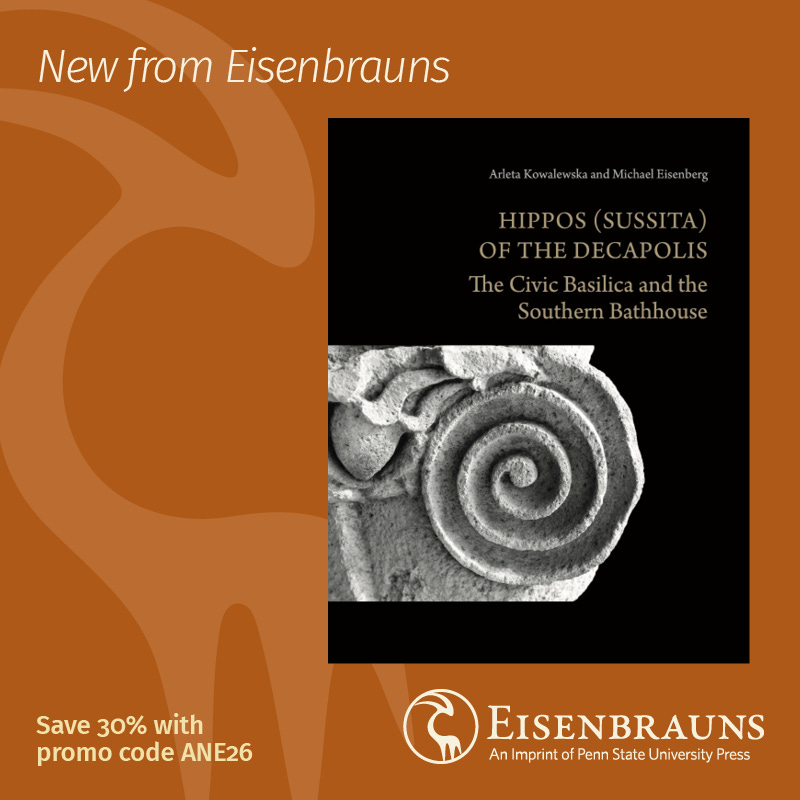
Eisenbrauns is pleased to announce the publication of Hippos (Sussita) of the Decapolis: The Civic Basilica and the Southern Bathhouse. This comprehensive publication makes a significant contribution to the study of Roman civic and bathing architecture, urbanism, and material culture, offering fresh insights into life in the Decapolis under Roman rule.
Use promo code ANE26 to save 30% on this title when you visit eisenbrauns.org. Sign up for BookNews to stay up to date on new and forthcoming titles in archaeology from Eisenbrauns.
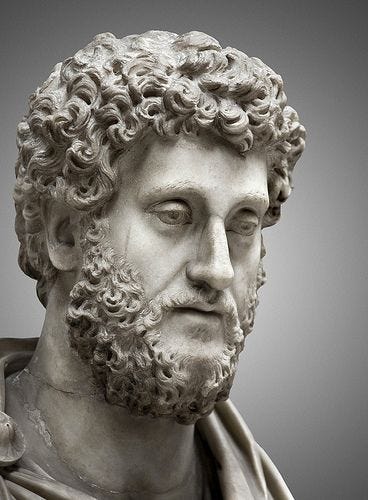
Nero fiddling while Rome burned, Caligula appointing his horse as consul, Commodus fighting as a gladiator: Rome’s worse emperors live on in popular memory as few other figures from the past do. Just how bad were these men? If you are in the greater Washington D.C. area, come and meet anew these notorious rulers and learn how their abuse of power generated a literature of protest that has shaped culture to the present day. Josiah Osgood (Georgetown University) will discuss this and more on Sunday, May 17 at 3:00pm (luncheon at 2pm) at Tandoori Fairfax in Fairfax, Virginia.
Membership starts at $46 per year ($35 for students) and includes benefits such as a subscription to Near Eastern Archaeology. Your dues directly support ANE Today, as well as scholarships and other ASOR initiatives.
Published with the assistance of The Lanier Theological Library and Stevan Dana
No posts
Comments
Nothing yet. Say the first thing.
Sign in to join the conversation.