
By Hanan Charaf and Martine Francis-Allouche
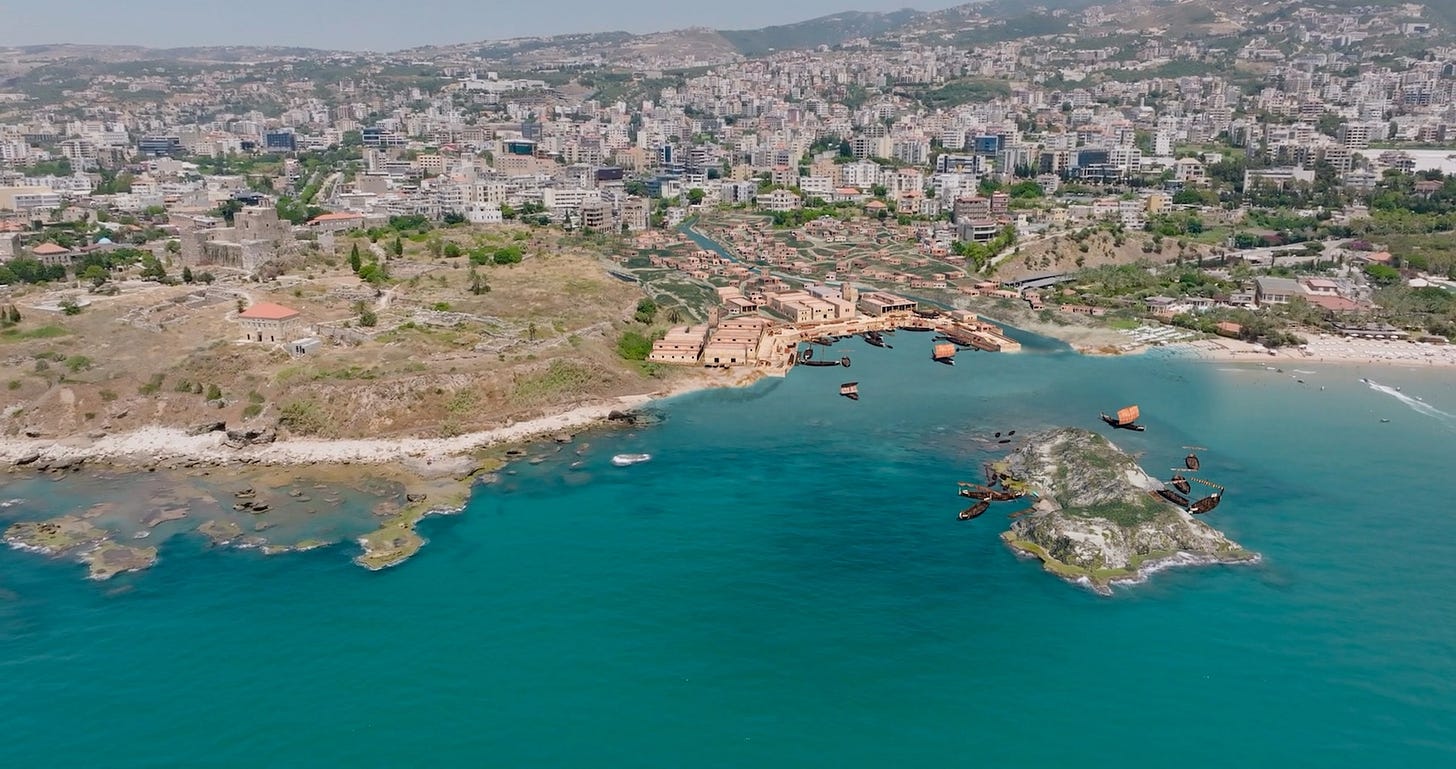
The ancient site of Byblos (modern Jbeil), known as Gubla in Akkadian, Kpn in Egyptian, and Gbl in Phoenician, developed into one of the most enduring and influential centers of the ancient Near East. This modest settlement of six hectares, located on the Lebanese coast approximately 40 km north of Beirut, became, over the course of millennia, a key place in a vast web of exchange linking the ancient Near East to Egypt and beyond.
Its history is not one of imperial conquests or territorial expansion. Rather, it is a story of interconnectedness, that of a city that flourished through its ties with other regions and powers. Byblos occupied a liminal position between inland routes — the Bekaa Valley leading to Syria and Mesopotamia — and maritime routes extending along the Levantine coast into the broader Mediterranean. This position allowed it to function as a gateway: goods could arrive from distant regions, be redistributed, and continue their journey.
One thing certain is that the rise of Byblos cannot be understood apart from its geography. The site, situated on a sandstone promontory, offered natural advantages favorable for a permanent settlement: access to a water point and two sheltered anchorages, and proximity to fertile hinterlands and Mount-Lebanon forests where the famous cedrus libani and other conifers grew.
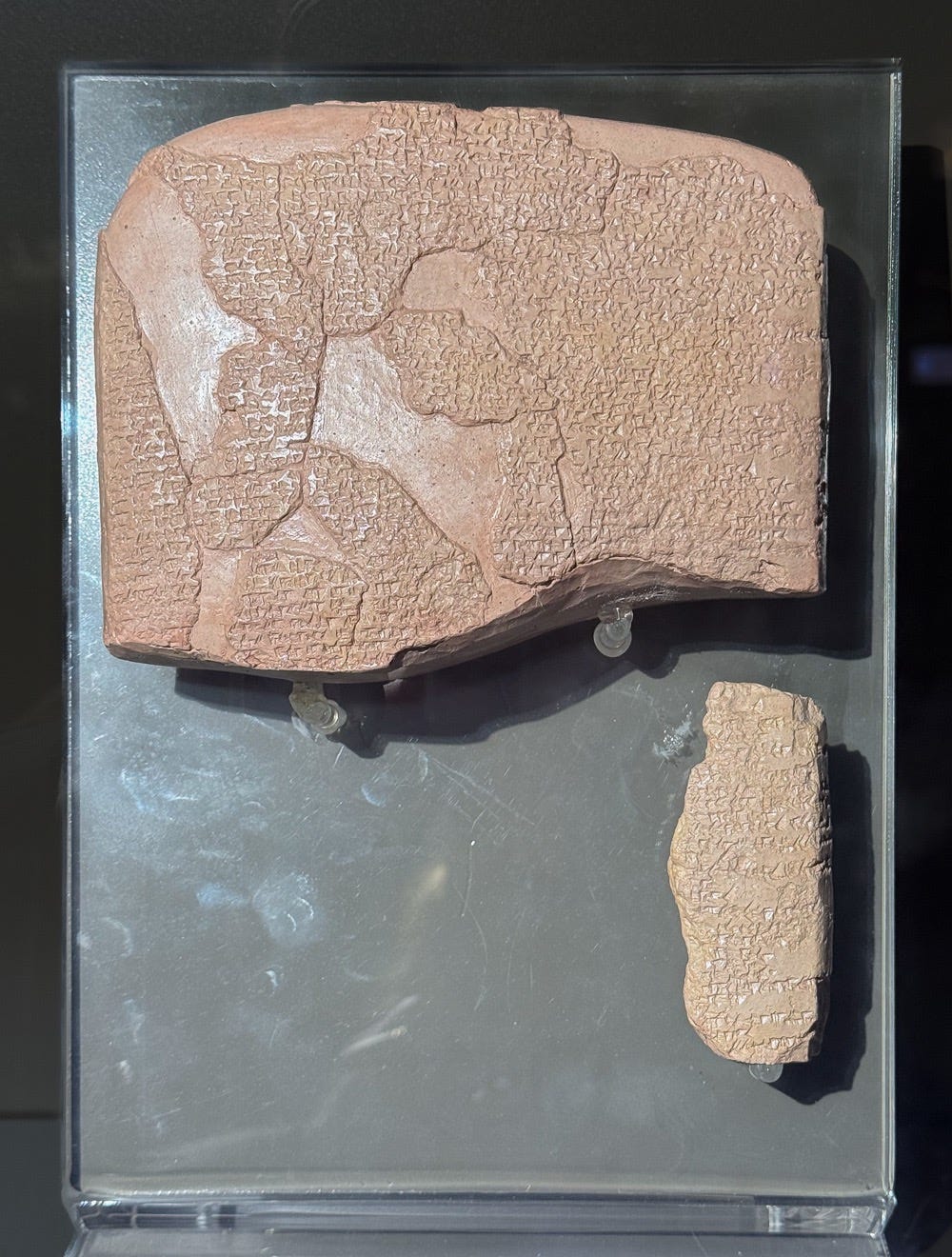
The Egyptian-Hittite peace treaty was drawn up ca. 1259 BCE between Ḫattušili III of the Hittites and Ramesses II of Egypt. It is known to us in various copies: two inscribed on the walls of Egyptian temples and the one inscribed on a clay tablet in Akkadian using cuneiform, and found at Boğazköy (the Hittite capital) in 1906. The text states that the original was recorded on silver tablets given to both sides. Although popularly known as the Treaty of Kadesh (ca. 1274), the treaty was actually concluded about 15 years after the famous battle between Ramesses II and Muwatalli II (which ended in a stalemate).
This document is often described as the oldest surviving peace treaty, but that isn’t quite accurate. There is a much older diplomatic document establishing peace between two states — the Ebla-Abarsal treaty of c. 2350 BCE, which sets out the status of the city-state of Abarsal as a vassal of Ebla. Another treaty from ca. 2250 BCE and found in Susa (Iran) records how the king of Elam promised allegiance to Naram-Sin.
Nonetheless, the Ramesses/Ḫattušili treaty is notable as it appears to be the earliest surviving example of a genuine parity diplomatic agreement between two large kingdoms. The treaty’s terms established mutual non-aggression, a defensive alliance against third-party attack, and the extradition of fugitives with a guarantee of humane treatment for those returned.
The cuneiform version of the Egyptian-Hittite treaty is on display in the Istanbul Airport Museum, as part of the exhibition “Treasures of Türkiye: Faces of the Throne” covering 12,000 years of Anatolian history. A copper replica is on display in in the UN headquarters in New York, donated by Türkiye — a fitting reminder of the enduring importance of international diplomacy.
The mysterious copper scroll and the end of days (Haaretz)
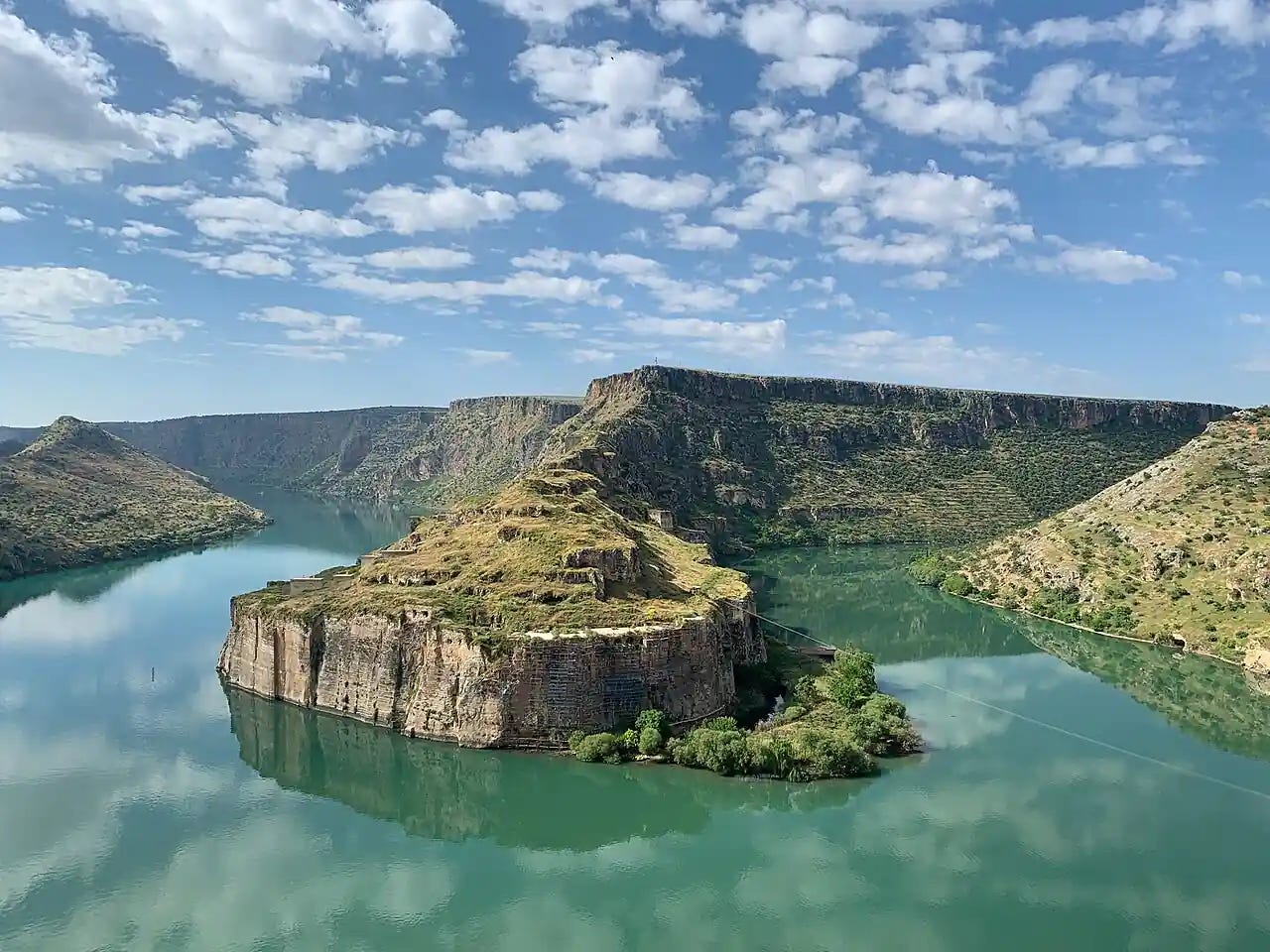
How Nile River stability shaped the rise of ancient Napata in Sudan’s Kushite kingdom (Archaeology News)
Türkiye intercepts over 1 million artifacts annually to stop smuggling (Türkiye Today)
How birdsong gave rise to Hieroglyphs: Phonetic signs emerged as imitations of animal sounds (LBV)
Inside Hegra, the Lost City of the Nabataeans (SLICE History)
Before Genesis: What the Old Testament Borrowed from Mesopotamia (Misquoting Jesus Podcast with Bart Ehrman)
Aleppo: The Home of the Storm God (Dig)
The Social Contract of the Afterlife: Egyptian Letters to the Dead (American Research Center in Egypt Blog)
Mesopotamia and the Ancient Origins of Modern Immigration Anxiety (The Academic Archaeologist)
By Willemijn Waal
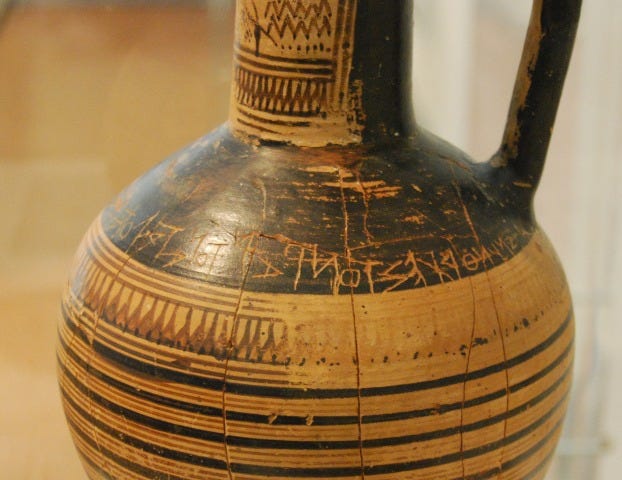
The Greek alphabet is often considered to be the first ‘true’ alphabet, from which all modern alphabets are derived. So why does it look so ‘old?’ Or is the question, how old is it really? Read more.
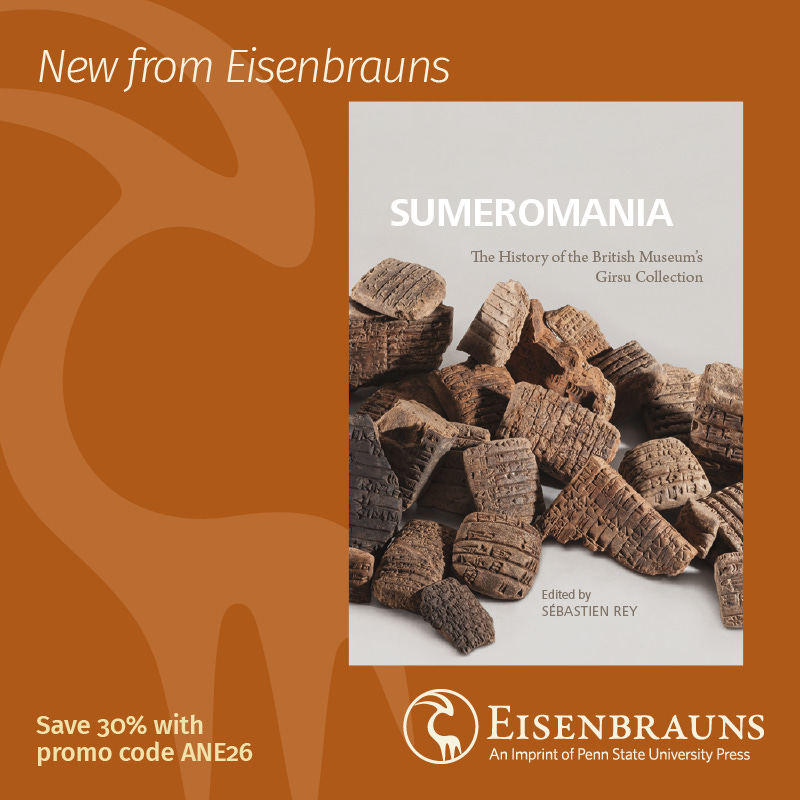
Eisenbrauns is pleased to announce the publication of Sumeromania: The History of the British Museum’s Girsu Collection, edited by Sébastien Rey. This fascinating new volume uncovers the dramatic and complex story behind the British Museum’s collection of artifacts from the ancient Sumerian city of Girsu (modern Tello, Iraq), tracing how objects were excavated, purchased, and transported during a period of fierce competition among empires, archaeologists, and antiques dealers. By revealing the history behind the statues, tablets, and other objects in the collection, this book changes our understanding of museum collecting, provenance, and the archaeological history of ancient Mesopotamia.
Use promo code ANE26 to save 30% on this title when you visit eisenbrauns.org.
Sign up for BookNews to stay up to date on new and forthcoming titles in archaeology from Eisenbrauns.
Join the Biblical Archaeology Society of Northern Virginia (BASONOVA) for their next lecture, Archaeology, the Gospels, and Understanding First Century Roman Galilee, by James R. Strange (Stamford University), presented via Zoom on Wednesday, June 24 at 8 pm EST.
Archaeologists of the Galilee exploring remains of the lifetime of Jesus begin with problems—questions—and seek to solve them by using the methods they have developed or by developing new methods. Rather than serving apologetics or illustrating the Gospels, archaeologists want to understand the technologies, societies, and values of first century Galilee. In this Zoom presentation we will look at how archaeologists use objects and buildings to learn about some values of the people of the region through which Jesus travelled and in which his teachings took on meaning.
Membership starts at $46 per year ($35 for students) and includes benefits such as a subscription to Near Eastern Archaeology. Your dues directly support ANE Today, as well as scholarships and other ASOR initiatives.
Published with the assistance of The Lanier Theological Library and Stevan Dana
No posts
Comments
Nothing yet. Say the first thing.
Sign in to join the conversation.