
I was a block or two from the office when the thought popped into my head: I should document what is happening right now. I might want to write about this someday.
It was the summer of 2018. I was running on fumes. We’d just come out of Cambridge Analytica and the Russian ads investigation, and the midterms were still ahead of us — I didn’t know yet how we were going to get through them. I wasn’t thinking about book deals or literary agents. I was thinking about how tired I was, and how much was happening that no one outside a few rooms would ever see. So I made a mental note and kept walking.
I didn’t think about it much again until I started thinking about leaving Facebook. I’ll write in a future piece all the details about how I picked a publisher and how I actually wrote the book. For this first piece, I wanted to share why I wanted to write what would become Disrupting Politics.
First and foremost, I didn’t want anyone else telling my story. Historians are already starting to write the history of this period — the platforms, the elections, the decade that broke and remade how democracy and technology collide — and I wanted my perspective in that record. I also felt, and still feel, a real shortage of center-right, nuanced voices in this conversation. That gap is the same reason I started writing publicly at all.
Most people who pick this book up will do it for the Facebook chapters, and there’s plenty there: ten years of it. But I didn’t want to write just a Facebook book. I wanted to write about how I got to that room in the first place, which meant going back to campaign work, and even further back, to what politics and technology looked like around 2000, when almost none of this existed yet.
Most people who pick this book up will do it for the Facebook chapters, and there’s plenty there: ten years of it. But I didn’t want to write just a Facebook book. I wanted to write about how I got to that room in the first place, which meant going back to campaign work, and even further back, to what politics and technology looked like around 2000, when almost none of this existed yet. And I didn’t want to stop when I walked out of Facebook’s doors, either. The five and a half years since have their own story: a changeover in platforms, in power, in who’s actually shaping this conversation now.
I wanted to be vulnerable in this book, too, as much as that still terrifies me. This book isn’t just the decisions and the trade-offs, though there’s plenty of that. I wrote about the physical and mental toll this work took on me, not just the career highlights, because if you work in trust and safety, or anywhere near this world, you already know how lonely it can be. Most people only ever see what leadership decided. They rarely see the people who did the actual work, day after day, with none of the credit and all of the weight.
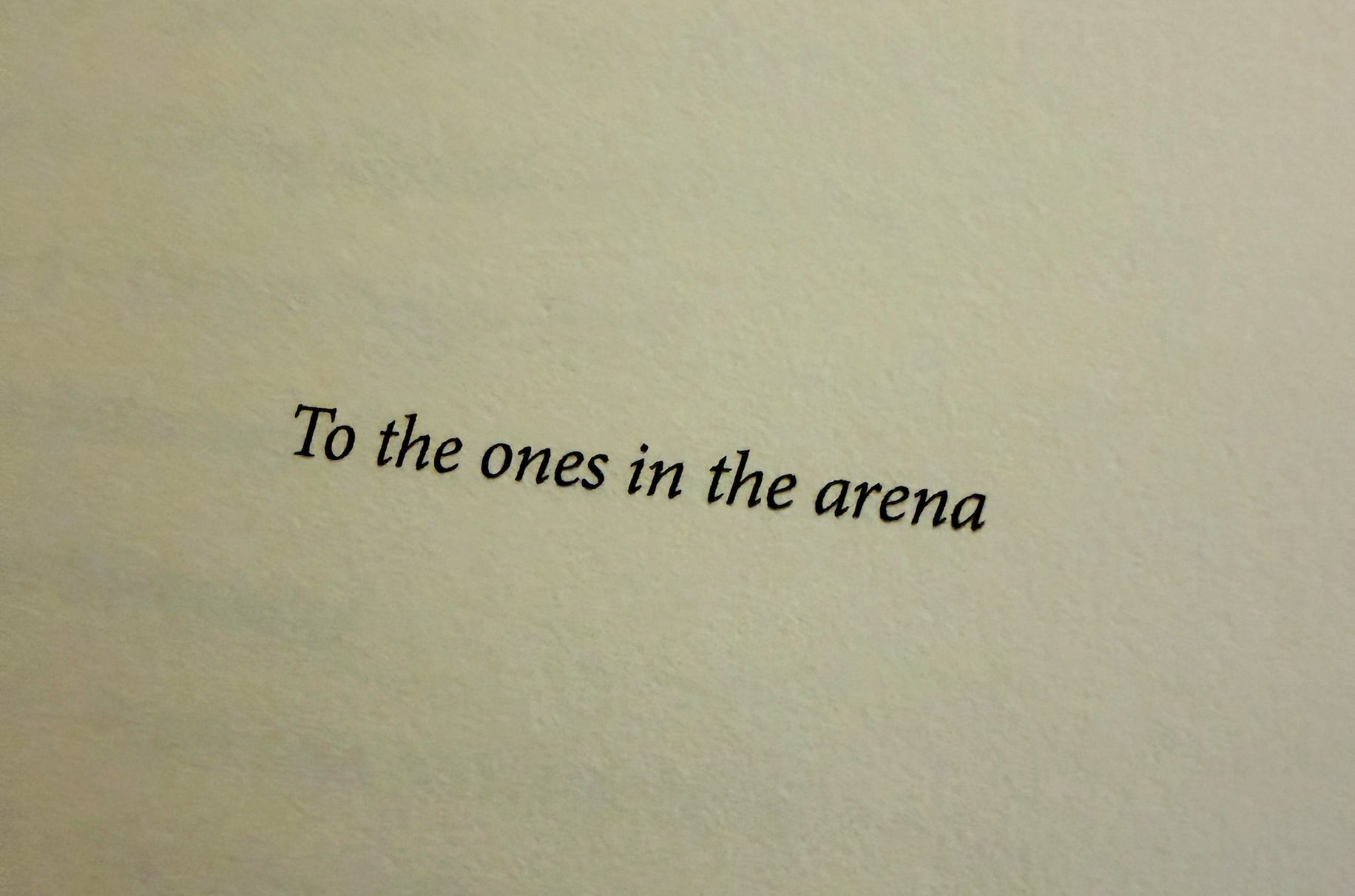
That’s who this book is dedicated to: the ones in the arena. Not just the people in trust and safety, but everyone in campaigns and elsewhere who did the hard, invisible work alongside me. When things got particularly bad at Facebook, I used to hand out cards with a line from Teddy Roosevelt’s “Man in the Arena“ speech, the one about the credit belonging to the person who is actually in the ring, not the critic pointing out how the strong man stumbled. I couldn’t have written a page of this book without those people, and I wanted them to know I hadn’t forgotten that.
I was in the room at Facebook when we were making decisions about elections with no playbook, because no one had ever had to make those decisions before. Nobody there wanted democracy to break. We just didn’t always understand what we were building until it was already out in the world. That’s the thread running through all 25 years of this book: the early days of online campaigning, the rooms inside Facebook, and everything since. Campaigns, governments, and companies making real decisions in real time, with no idea yet how those decisions would reshape politics, or our lives.
I didn’t write this to tell you what Facebook did to you. I wrote it to remind you what you can still do. The biggest lesson I took from all of it is that we rarely understand what a new technology has done to us until we’re already living with the consequences. That’s exactly where we are with AI right now. We still have choices about what we use, what we trust, and what we build next.
That’s why the book ends where it does: with the words panic responsibly. Don’t look away from what this technology can get wrong. Just don’t miss what it can still get right.
P.S. — Over the coming months, I’ll be sharing more about how this book came together, along with excerpts as we get closer to launch.
If this helped you connect some dots, consider sharing it with someone else trying to make sense of where AI, technology, politics, and public trust are all heading next. Word of mouth is still how most people find me, and I’m grateful for every share.
No posts
Comments
Nothing yet. Say the first thing.
Sign in to join the conversation.