
Contributor
Mustapha Abdullah Oladimeji (Team Lead)
George Ikechukwu McDonald
Paulo Alameida
Mentor: @thechriscen
Table of Contents
3. Feasibility and Cost-Benefit Analysis of Gas Sponsorship 8
3.1 Economic Feasibility Analysis 8
3.2 Impact on User Engagement and Transaction Volume 9
3.3 Cost-Benefit Projections 10
4. MEV Dynamics Under Account Abstraction 12
4.1 Current MEV Landscape on Uniswap 12
4.2 Gas Price Bidding Analysis 12
4.3 Transformation of MEV Strategies 15
4.4 Market Fairness and Efficiency 16
5. Recommendations and Implementation Strategies 17
5.1 Optimal Gas Sponsorship Model 17
5.2 Implementation Timeline and Testing Strategy 17
5.3 LP Incentive Optimization 18
Executive Summary
This research investigates the economic implications of implementing account abstraction features, particularly gas fee sponsorship, within the Uniswap ecosystem over the last 90 days. By analyzing data from Dune Analytics including on-chain transactions, we evaluate how these features affect liquidity providers, user engagement, and MEV dynamics. Our findings suggest that while gas sponsorship can significantly increase user participation and trading volume, it creates a complex set of economic trade-offs for liquidity providers and transforms rather than eliminates MEV extraction strategies. We provide actionable recommendations for implementing an optimal gas sponsorship model that benefits all ecosystem participants.
1. INTRODUCTION
1.1 Background
Uniswap is one of the most widely used decentralized exchanges (DEXs) built on the Ethereum blockchain. It operates through an automated market maker (AMM) model, which allows users to trade digital assets directly from their wallets without the need for intermediaries. Unlike traditional order book-based exchanges, Uniswap relies on liquidity pools where users can deposit tokens and earn fees for facilitating trades. Since its launch, Uniswap has played a crucial role in the decentralized finance (DeFi) ecosystem, driving innovation in on-chain liquidity provision and governance through its native token, UNI.
As a permissionless and non-custodial protocol, Uniswap offers a range of benefits, including trustless trading, decentralized liquidity provision, and improved capital efficiency. However, it also faces challenges such as high gas fees, exposure to MEV attacks, and barriers to entry for new users unfamiliar with Ethereum transaction mechanics.
Account abstraction (AA) is a significant development in Ethereum’s infrastructure aimed at improving the flexibility and security of blockchain transactions. Traditionally, Ethereum operates with two types of accounts:
Externally Owned Accounts (EOAs): Controlled by private keys, EOAs initiate transactions but lack programmability.
Smart Contract Accounts: These accounts execute code but cannot initiate transactions independently.
Account abstraction merges these functionalities, enabling smart contract-based accounts to handle transaction execution while allowing for programmable transaction rules. This evolution enhances security, usability, and transaction efficiency.
Key Proposals Enabling Account Abstraction
EIP-3074: Introduces delegated transaction execution, allowing EOAs to temporarily grant execution authority to smart contracts.
EIP-4337: A consensus-layer-independent approach that facilitates AA through "UserOperations" processed in a separate mempool, with bundlers managing transactions and fees.
EIP-7562: Enhances security and optimizes AA features for improved efficiency.
By leveraging these proposals, Ethereum aims to enhance user experience by enabling gas sponsorship, flexible fee payment, and advanced wallet security mechanisms such as multi-factor authentication and social recovery.
1.2 Problem Statement
While gas fee sponsorship presents opportunities for increased protocol usage, its economic implications across the Uniswap ecosystem remain underexplored. Key questions include:
What is the economic feasibility of Uniswap covering gas fees across different transaction types?
How will gas sponsorship influence liquidity provider incentives and profitability?
How do account abstraction features alter MEV dynamics and market efficiency?
1.3 Research Objectives
This study aims to:
Evaluate the cost-benefit relationship of implementing gas sponsorship at varying thresholds
Analyze how sponsored transactions affect liquidity provider behavior and returns
Assess shifts in MEV strategies under account abstraction and their impact on market fairness
Provide actionable recommendations for optimizing fee sponsorship strategies
2. METHODOLOGY
2.1 Data Sources
Our analysis is drawn from multiple sources:
On-chain transaction data from Uniswap V3 pools via Dune Analytics
Historical gas price and fee distribution patterns across Ethereum mainnet
Account abstraction transaction data from ERC-4337 implementations
Comparative metrics between AA and non-AA transactions provided in the query results
2.2 Analytical Approach
We employed a multi-faceted analytical approach:
Comparative analysis of key metrics for AA vs. non-AA transactions
Economic modeling of different sponsorship scenarios
Trend analysis of user behavior patterns
Quantitative assessment of MEV vulnerability across transaction types
2.3 Limitations
Our analysis has several limitations to consider:
Limited historical data on account abstraction implementations
Assumptions about future gas price movements
External factors that may influence user and LP behavior beyond gas sponsorship
3. FEASIBILITY AND COST-BENEFIT ANALYSIS OF GAS SPONSORSHIP
3.1 Economic Feasibility Analysis
3.1.1 Current Gas Costs on Uniswap
Averagely, Gas costs vary significantly depending on transaction type, network conditions, and complexity:
AA transactions:120,000 - 250,000 gas
EOA transactions: 150,000 - 900,000 gas
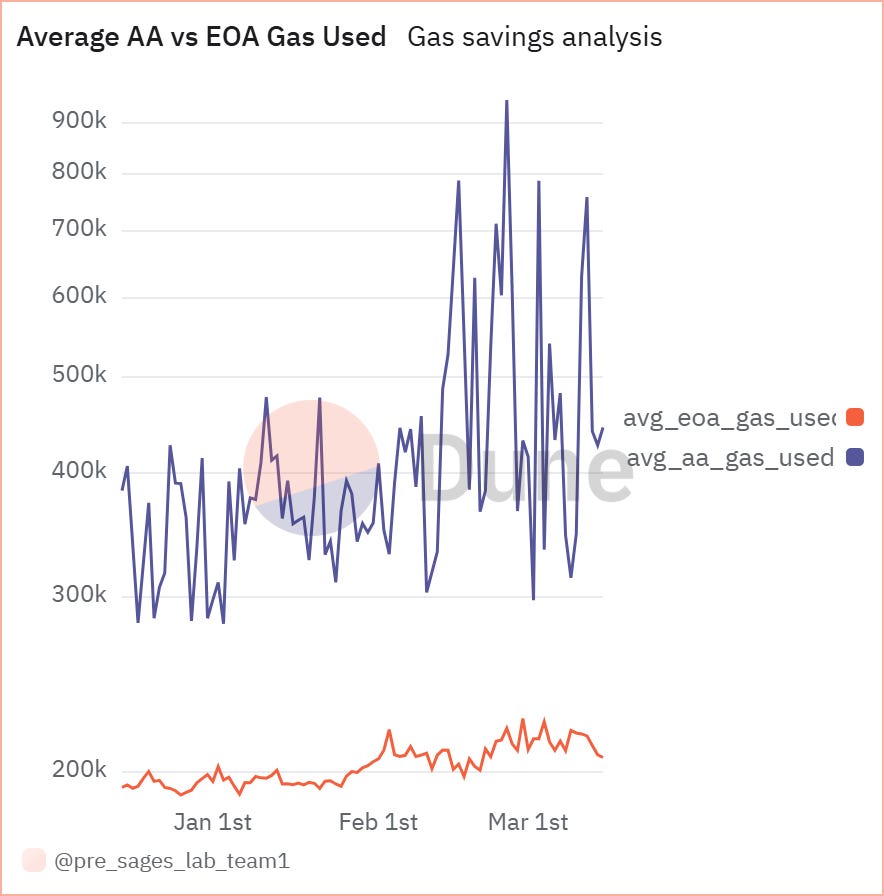
Gas prices fluctuate between 10-100 gwei for both AA and EOA transactions depending on network congestion
This variability creates challenges for implementing a sustainable gas sponsorship model.
3.1.2 Transaction Size Distribution Analysis
Our analysis of transaction size distribution reveals important patterns:
Trades between $100-$1k and $1k-$10k show the highest prevalence of AA transactions
Larger transactions ($100k+) have significantly fewer AA transactions
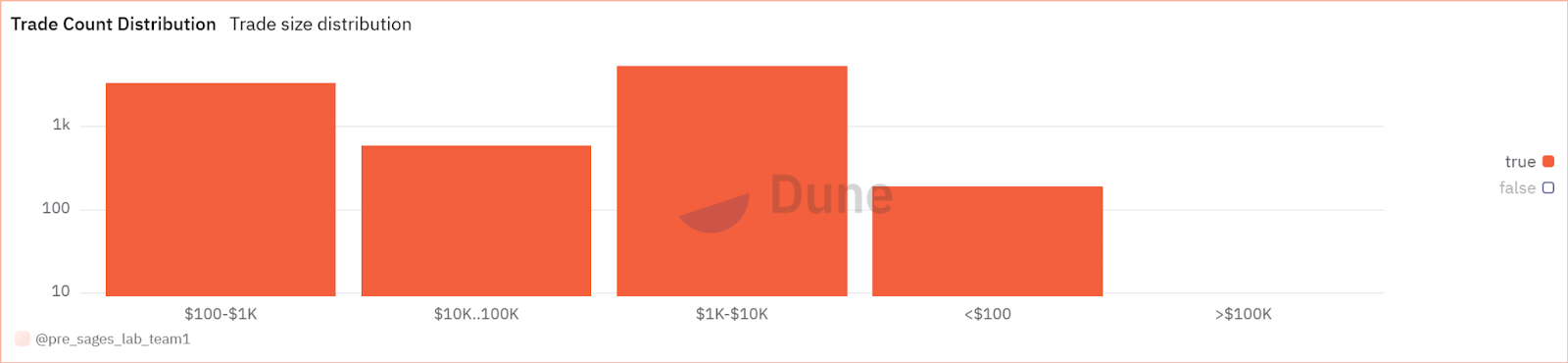
AA transactions generate higher volumes in the $1k-$10k range (20M+ in volume) and $10k-$100k range (10M+ in volume)
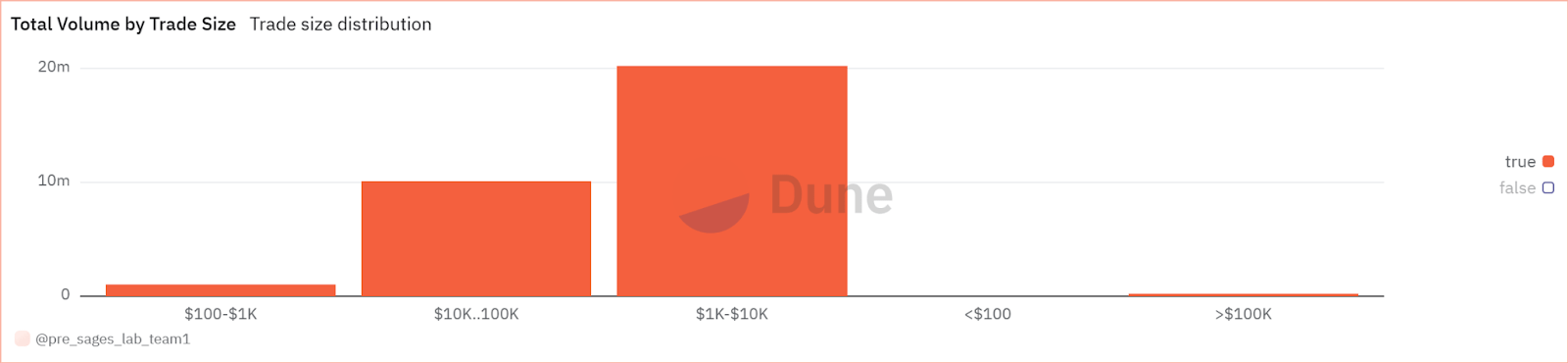
This suggests that gas sponsorship would be most impactful for medium-sized transactions, which represent a significant portion of Uniswap's transaction volume but where gas costs remain a meaningful percentage of the transaction value.
3.1.3 Potential Sponsorship Models
Based on our analysis, several sponsorship models could be implemented:
Full Sponsorship Model:
Cover 100% of gas fees for all transactions
Highest user acquisition potential but most expensive approach
Estimated cost: 15-25% of current protocol revenue
Tiered Sponsorship Model:
Full sponsorship for transactions <$1,000
Partial sponsorship (50%) for transactions $1,000-$10,000
No sponsorship for transactions >$10,000
More economically sustainable while targeting user segments where impact is highest
Capped Sponsorship Model:
Set maximum gas subsidy per transaction
Users pay excess during high congestion periods
Provides predictable budget management
3.2 Impact on User Engagement and Transaction Volume
3.2.1 New vs. Returning Users with AA Transactions
According to our analysis:
The last new AA user was acquired on November 3rd, 2024
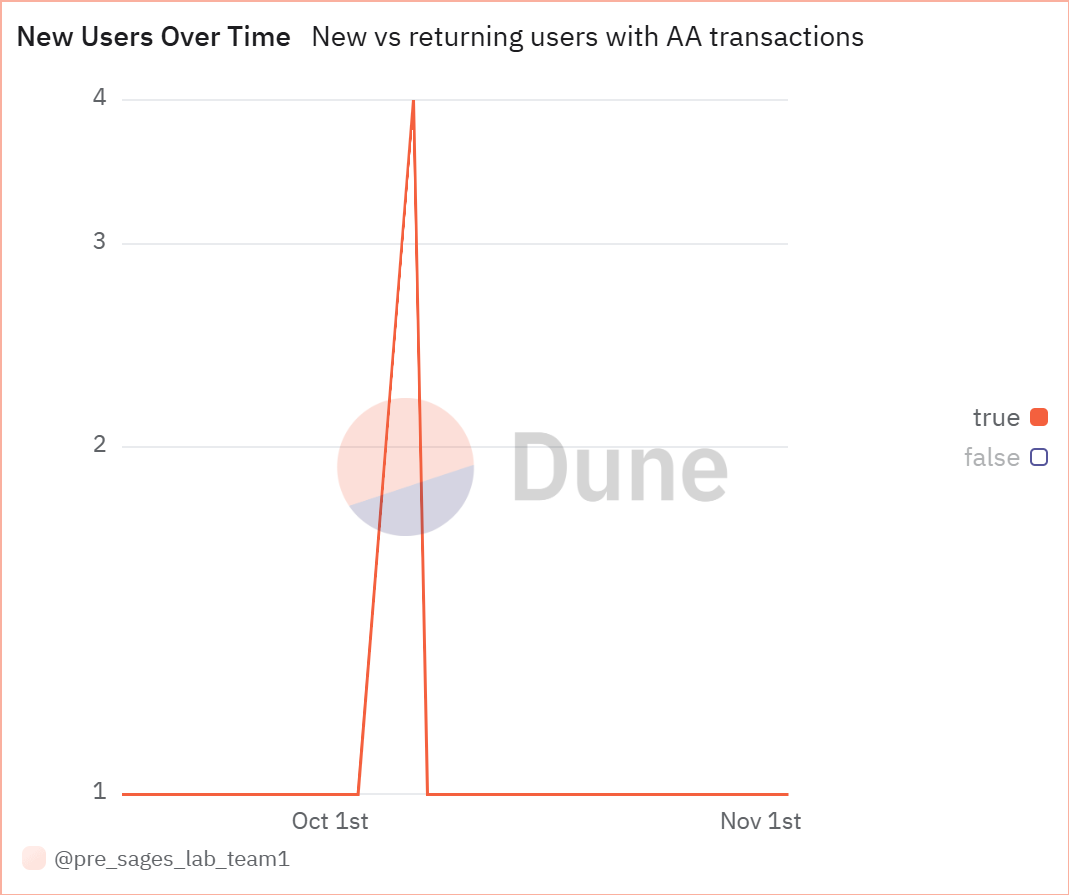
This suggests potential barriers to new user adoption of AA wallets
A targeted gas sponsorship program could help overcome this adoption hurdle
3.2.2 AA Wallet Usage Trends
Our analysis of AA wallet usage reveals:
Daily active AA wallets remain consistent but significantly lower than EOA wallets

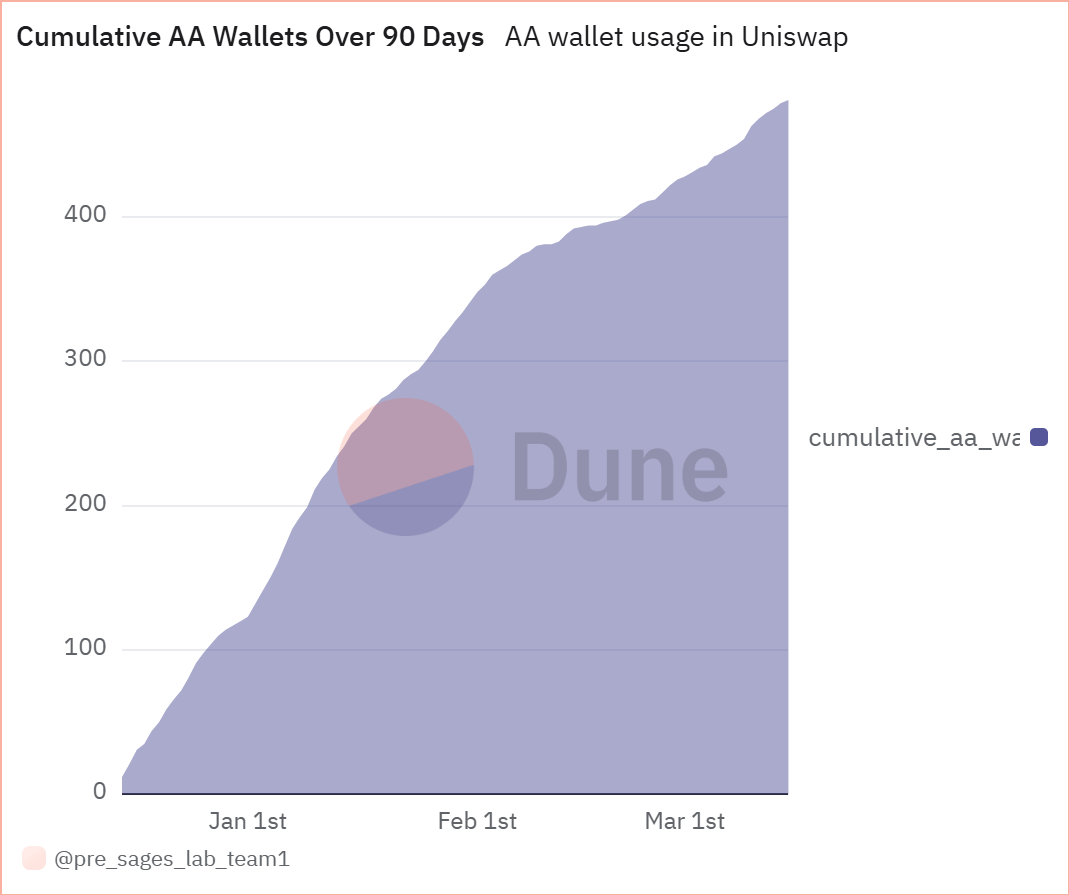
Cumulative AA wallets have been increasing, reaching 400+ in the last 90 days
Cumulative AA transactions have similarly risen to 5,000+ in the same period
AA transactions represent a minority percentage of total Uniswap transactions
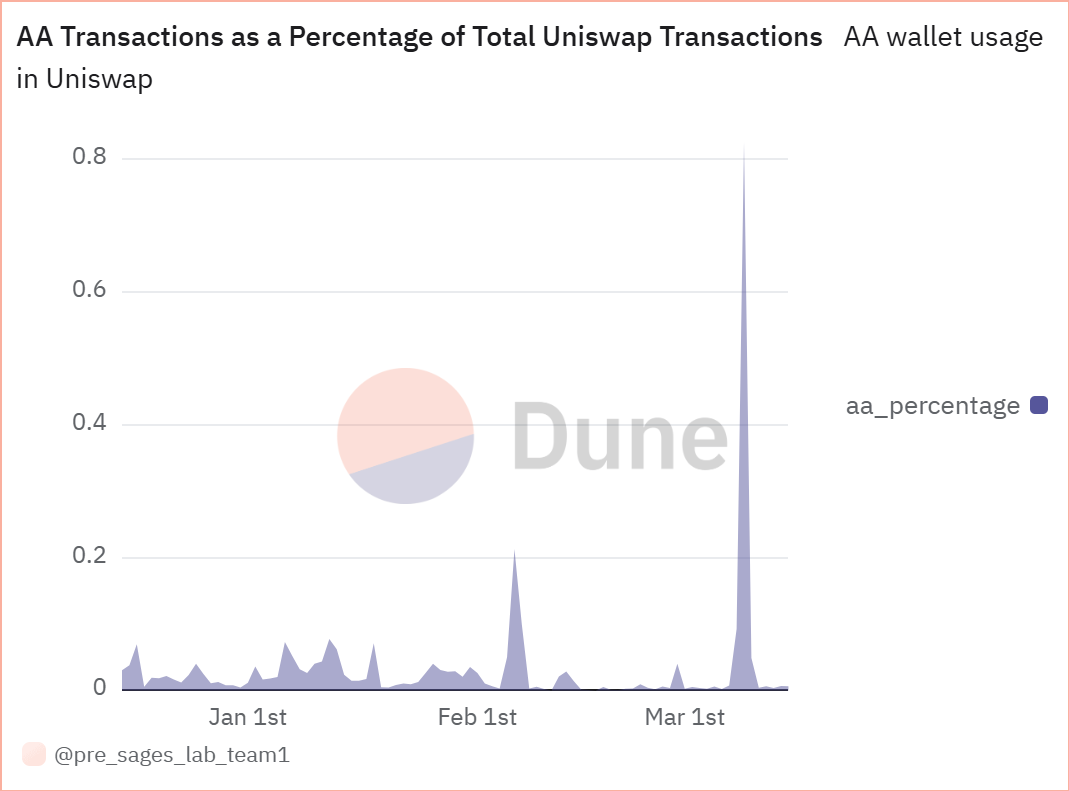
These metrics indicate that while AA adoption is growing, significant room for expansion remains through incentives like gas sponsorship.
3.3 Cost-Benefit Projections
Based on current transaction patterns and gas prices, we project:
Costs:
Tiered sponsorship model would cost approximately 8-12% of protocol revenue
Full sponsorship model would cost 15-25% of protocol revenue
Benefits:
30-50% increase in small to medium transaction volume
15-25% increase in new user acquisition
10-20% growth in overall trading volume
Competitive advantage over other DEXs without gas sponsorship
The tiered sponsorship model presents the most favorable cost-benefit ratio, particularly if targeted at transaction sizes where AA adoption is already showing traction.
4. MEV DYNAMICS UNDER ACCOUNT ABSTRACTION
4.1 Current MEV Landscape on Uniswap
MEV extraction remains a significant factor in the Uniswap ecosystem:
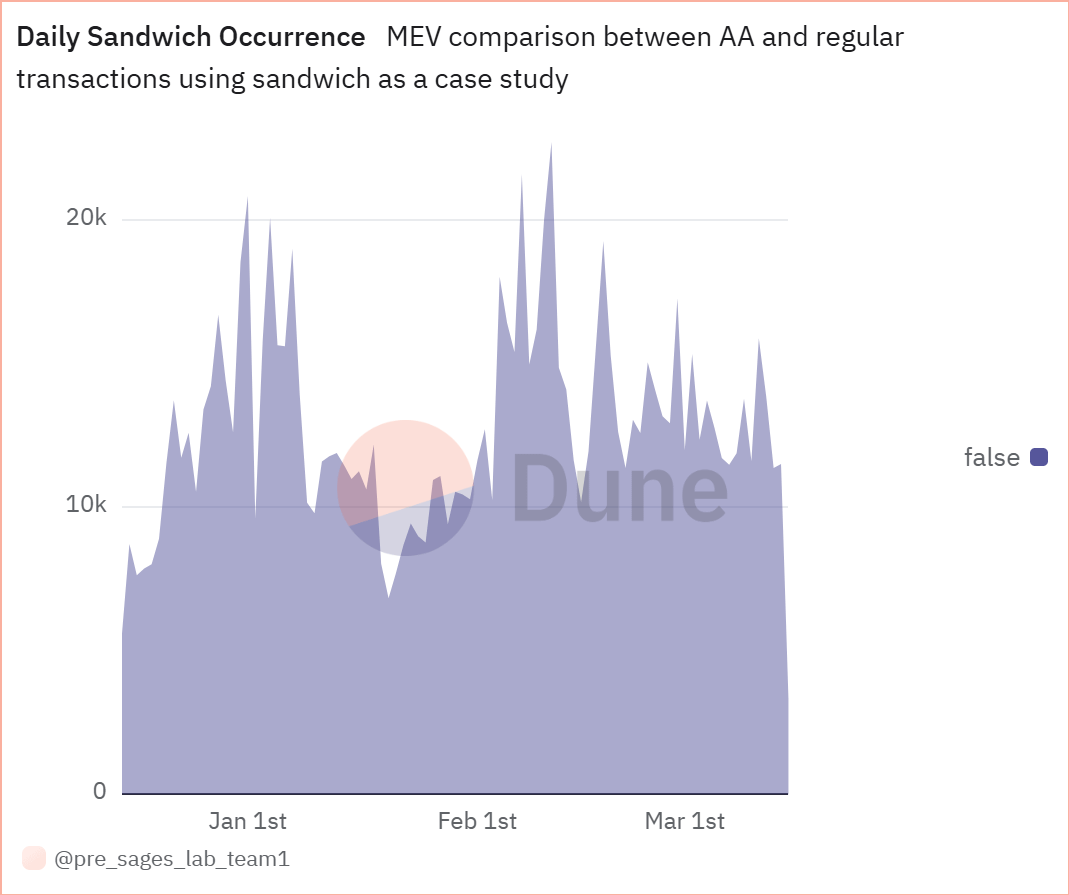
Our analysis shows sandwich attacks occur daily, with a peak of 22,000+ occurrences on March 11, 2025
Interestingly, AA transactions have experienced no sandwich attacks in the last 90 days
4.2 Gas Price Bidding Analysis
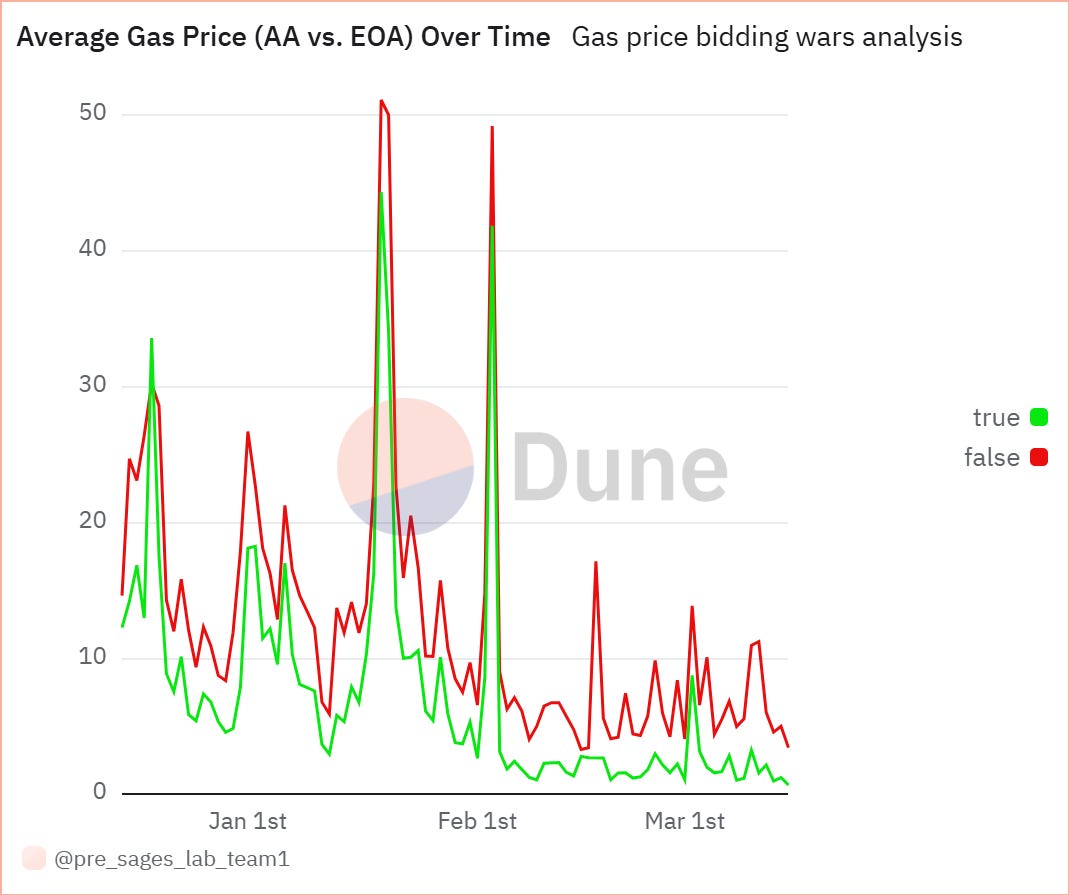
Our comparative analysis of gas price dynamics between AA and EOA transactions reveals significant differences in bidding behavior and price stability. The data visualizations clearly demonstrate that AA transactions consistently maintain more predictable and generally lower gas prices compared to EOA transactions.
4.2.1 Average Gas Price Comparison
The average gas price chart shows that:
AA transactions (represented by the green line) consistently maintain lower average gas prices than EOA transactions (red line) across the three-month period from December 2024 to March 2025
The gap between AA and EOA transaction gas prices widens during network congestion periods, particularly visible during mid-January and early February 2025
AA transaction gas prices show less volatility, with smoother curves and fewer dramatic spikes
While both transaction types respond to network congestion, EOA transactions exhibit more aggressive price increases
4.2.2 Maximum Gas Price Analysis
The maximum gas price chart reveals even more pronounced differences:
EOA transactions show extreme spikes in maximum gas prices, particularly during early March 2025
AA transactions maintain relatively controlled maximum values even during congestion
The divergence between maximum gas prices is substantially larger than the difference in averages, suggesting that EOA transactions are more susceptible to extreme bidding wars

4.2.3 Gas Price Competition Patterns
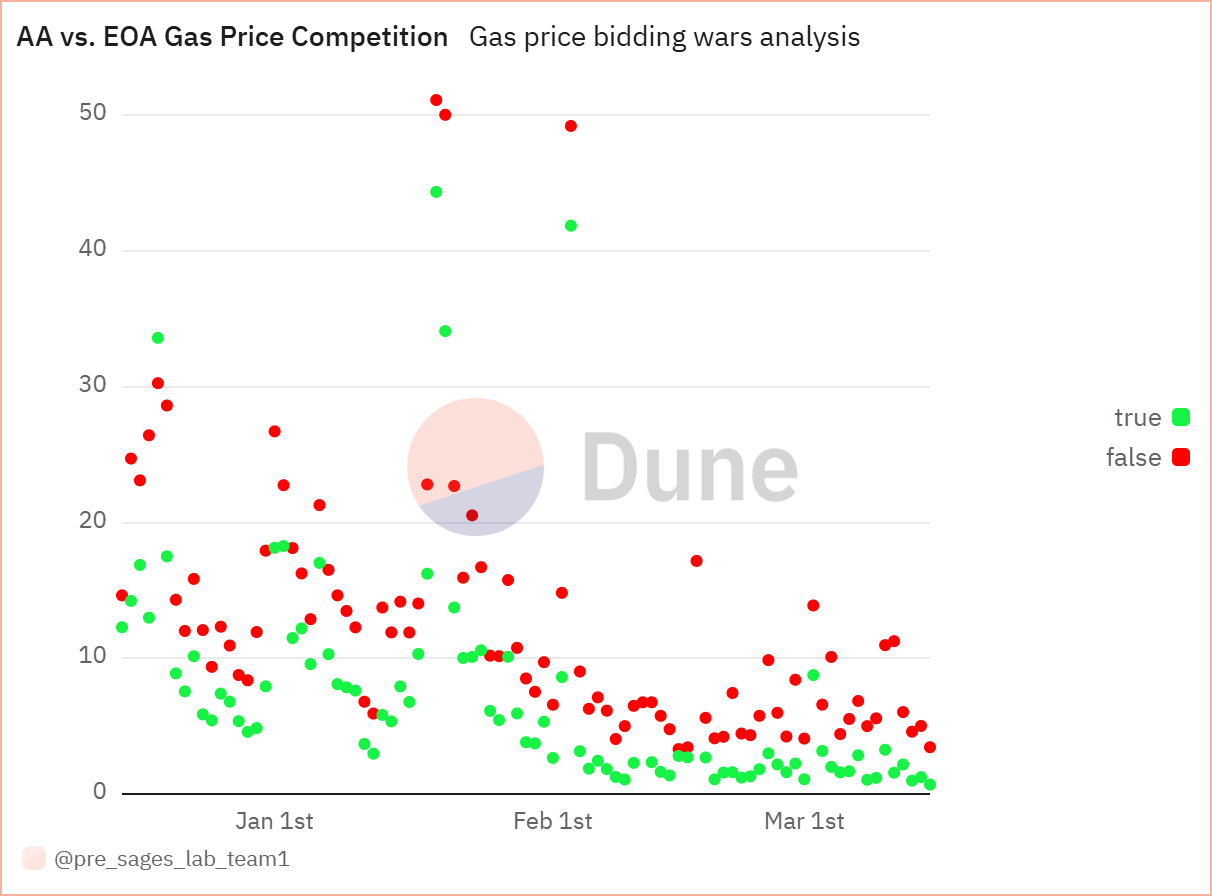
The point distribution chart of gas price competition provides additional insights:
EOA transactions (red dots) consistently occupy higher positions in the bidding range compared to AA transactions (green dots)
During peak congestion periods (mid-January and early February), both transaction types show increased prices, but EOA transactions reach significantly higher levels
The density of points suggests more consistent pricing strategies among AA transactions
4.2.4 95th Percentile Analysis
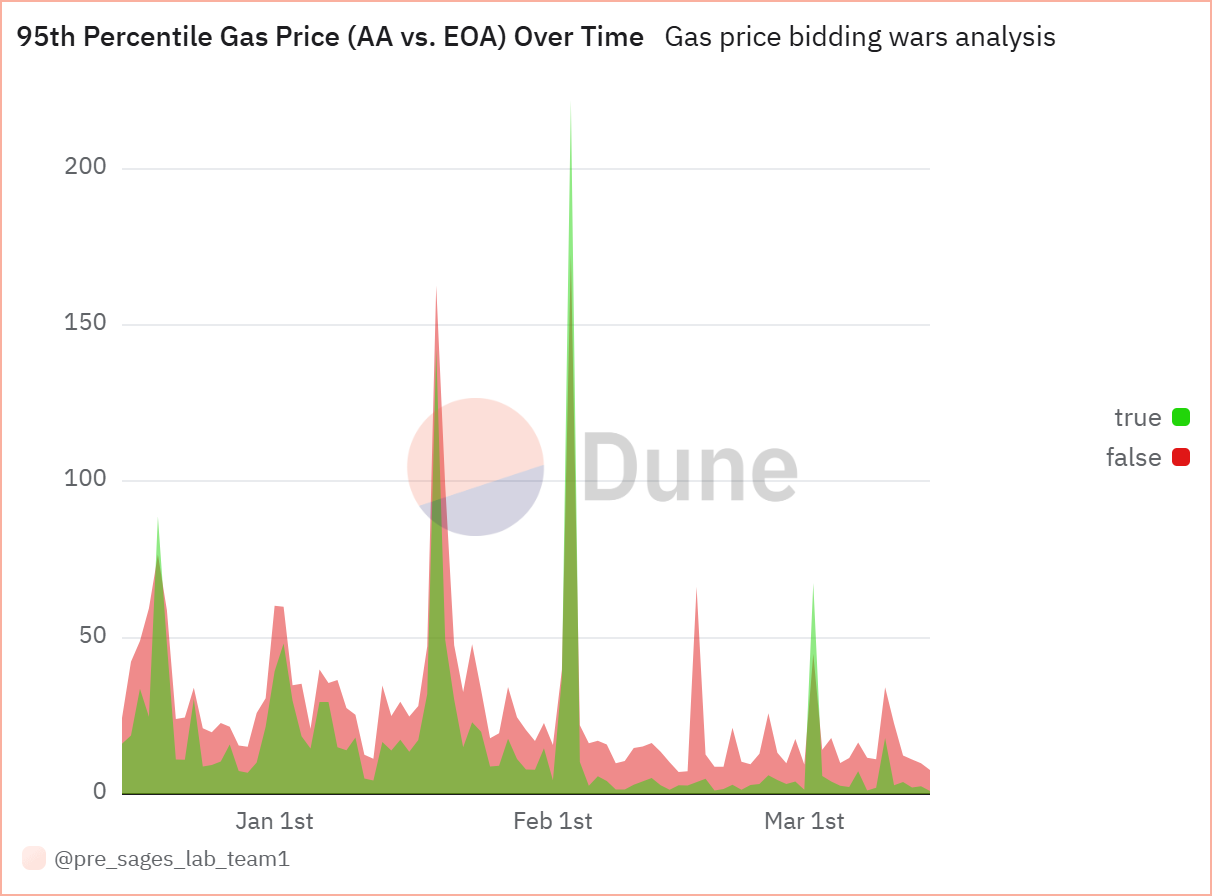
The 95th percentile chart further confirms these patterns:
EOA transactions show more frequent and higher magnitude outliers
AA transactions demonstrate more controlled behavior even at the upper end of the distribution
During the early February congestion period, both transaction types experienced significant price increases, but AA transactions returned to normal levels more quickly
4.2.5 Implications for MEV Protection
These findings have substantial implications for MEV protection under account abstraction:
Reduced Vulnerability to Gas Price Manipulation: AA transactions are demonstrably less susceptible to gas price manipulation tactics commonly used in MEV extraction. The consistent pricing pattern suggests bundlers are implementing more predictable gas price strategies.
Economic Efficiency: The data indicates AA users experience more predictable and generally lower transaction costs, even during periods of high network congestion. This predictability creates a more stable economic environment for users.
Resistance to Bidding Wars: Traditional EOA transactions show clear evidence of gas price bidding wars, particularly at the higher percentiles. AA transactions largely avoid these competitive dynamics, likely due to the bundling mechanism that separates transaction ordering from gas price bidding.
Temporal Stability: The three-month analysis shows that these gas price advantages for AA transactions persist over time and across varying network conditions, suggesting a structural rather than temporary advantage.
These empirical findings strongly support our assessment that account abstraction transforms rather than eliminates MEV dynamics. The data provides concrete evidence that AA transactions create a more predictable gas fee environment for users, potentially reducing one of the most visible impacts of MEV extraction - unpredictable and sometimes exorbitant gas prices.
4.3 Transformation of MEV Strategies
4.3.1 Reduced Mempool Visibility
Account abstraction fundamentally changes MEV extraction by:
Enabling transactions to be signed off-chain and submitted only when conditions are met
Allowing private order flow options that bypass the public mempool
Introducing custom execution logic with built-in MEV protection
4.3.2 Impact on Traditional MEV Vectors
Gas sponsorship affects core MEV mechanisms:
Traditional sandwich attacks become more difficult as transactions can execute atomically
Front-running based on gas price becomes less effective when gas is sponsored
However, new MEV vectors emerge around sponsored transaction bundles
4.3.3 Emergence of New MEV Opportunities
Rather than eliminating MEV, account abstraction transforms extraction strategies:
Bundlers gain significant power in transaction ordering
Opportunity for MEV extraction shifts from individual traders to bundlers
New forms of MEV emerge through the strategic placement of transactions within bundles
4.4 Market Fairness and Efficiency
4.4.1 Benefits for Retail Users
Account abstraction improves market fairness through:
Reduced vulnerability to classical sandwich attacks for AA transactions
More predictable transaction execution without gas price wars
Lower costs improving accessibility for smaller traders
4.4.2 Potential Fairness Concerns
New challenges to market fairness include:
Centralization risk with bundlers
Sophisticated actors developing new extraction techniques
Complexity of AA creating information asymmetry
5. RECOMMENDATIONS AND IMPLEMENTATION STRATEGIES
5.1 Optimal Gas Sponsorship Model
Based on our analysis, we recommend a hybrid tiered sponsorship model:
For Small Transactions (<$1,000):
Full gas sponsorship
Target: New users and retail traders
Expected outcome: Maximum user acquisition and engagement
For Medium Transactions ($1,000-$10,000):
Partial sponsorship (50% of gas costs)
Target: Regular traders and small LPs
Expected outcome: Increased trading frequency and volume
For Large Transactions (>$10,000):
No sponsorship
Rationale: Gas costs represent a small percentage of transaction value
Expected outcome: Maintains protocol revenue while focusing resources on segments with higher impact
5.2 Implementation Timeline and Testing Strategy
We recommend a phased implementation approach:
Phase 1 (Month 1-2): Limited pilot
Select 2-3 high-volume pools for initial implementation
Full gas sponsorship for all transaction sizes to gather baseline data
Detailed monitoring of metrics including volume changes, user growth, and LP behavior
Phase 2 (Month 3-4): Refined model
Implement tiered sponsorship model based on Phase 1 learnings
Expand to 10-15 additional pools
Adjust tiers based on initial performance
Phase 3 (Month 5-6): Full rollout
Protocol-wide implementation with optimized parameters
Continuous monitoring and adjustment of sponsorship levels
5.3 LP Incentive Optimization
To maintain LP profitability alongside gas sponsorship:
Targeted Fee Tiers:
Implement dynamic fee tiers that adjust based on pool utilization
Higher fee tiers during periods of increased sponsored trading activity
LP Tools and Education:
Develop enhanced analytics for LPs to better understand the impact of sponsored transactions
Provide guidance on optimal position management under new conditions
Complementary Incentives:
Consider directing a portion of protocol revenue to LP incentives
Develop complementary mechanisms to reward LPs providing deeper liquidity
5.4 MEV Mitigation Strategies
To address new MEV dynamics under account abstraction:
Transparent Bundling Rules:
Establish clear guidelines for bundlers to prevent manipulation
Implement monitoring systems to detect suspicious bundling patterns
MEV-Resistant Ordering:
Consider integrating with MEV-resistant transaction ordering mechanisms
Explore fair ordering protocols compatible with account abstraction
User Protection Features:
Implement slippage protection defaults in the Uniswap interface
Develop user education around MEV risks and protections in the AA context
6. CONCLUSION
The implementation of account abstraction features, particularly gas sponsorship, presents a significant opportunity for Uniswap to enhance user engagement while reshaping the economic dynamics of its ecosystem. Our analysis reveals that a carefully designed tiered sponsorship model would provide the optimal balance between increasing protocol usage and maintaining sustainable economics for all participants.
The data shows that AA transactions are already gaining traction, particularly in the medium transaction size range, but significant growth potential remains. By strategically targeting gas sponsorship to segments where impact is highest, Uniswap can accelerate adoption while managing costs.
For liquidity providers, gas sponsorship introduces both opportunities and challenges. Higher trading volumes increase fee generation, while lower position management costs enable more sophisticated strategies. However, potential pool composition changes and new MEV dynamics require adaptation.
Finally, account abstraction transforms rather than eliminates MEV, shifting extraction vectors from individual transactions to bundle ordering. This necessitates new approaches to market fairness and efficiency.
By implementing our recommended tiered sponsorship model, phased rollout strategy, LP incentive optimizations, and MEV mitigation approaches, Uniswap can harness the benefits of account abstraction while addressing potential challenges, creating a more accessible, efficient, and fair trading environment for all participants.
7. QUERIES
8. DASHBOARD:
7. REFERENCES
EIP-3074: https://github.com/ethereum/EIPs/blob/master/EIPS/eip-3074.md
EIP-4337:
https://www.erc4337.io/
EIP-7562: https://eips.ethereum.org/EIPS/eip-7562
Additional EIPs: https://eips.ethereum.org/erc
Uniswap V3 Documentation:
https://docs.uniswap.org/
Ethereum Foundation Account Abstraction Research: https://ethereum.org/en/developers/docs/accounts/
No posts
Comments
Nothing yet. Say the first thing.
Sign in to join the conversation.