
Since I was about 12, I’ve narrated my daily routines to myself in the mirror, bantering with myself as I show off the products to a phantom audience sitting behind my reflection, Truman Show style. I feel my most confident and animated self when I do this. I am witty and charming and beautiful as I show the camera my holy grail mascara for an effortless day-to-night look. It’s an old habit that has turned into a sad form of therapy, a way to imagine having an audience that cares so much about me that they want to know even the most banal details of my day. I know that “caring” for a specific figure is more complicated than just that—that parasociality has massively skewed how we identify and attach value to ourselves and others based on surface level assumptions—but as a pre-teen on the internet, the shiny idea of being an influencer or an actual famous person with masses of people that find you so talented and magnetic that they can’t get enough of you felt like a doorway into finding out who I really am. The fantasy of attention and notoriety was a distant freedom that would lead me to the true self I was digging so desperately for, and still am.
I grew up being rewarded and encouraged more for acts intelligence, grace and kindness than looks (though I won’t say I wasn’t given attention for that as well, just not as much). As an adult, I’ve tapped into that by choosing a more behind-the-scenes journalist kind of life of uplifting and exploring art and media made by talented, charismatic people, but at my center, I still crave that validation—to be known as someone in front, not behind. Maybe it’s the superficial influence of social media on my young brain. Or maybe it’s inherent. Maybe it’s the natural fear of falling into irrelevance, the need to be known and remembered as a desperate attempt against my mortality in a line of billions of others that also want to be remembered forever. Maybe it’s my conditioning as a woman. Does it make me a bad feminist? My awareness of the increasing panopticon and the ways in which it is used against women especially is burned into my daily consciousness, and yet, at the core of every plaid-wearing academic social criticism girl is still the conditioning to want to be desired, the consciousness of society’s gaze and the thirst for its approval. And as much as I read feminist theory and think I’m absolved from it all, that’s simply not true.
I also think this fantasy of celebrity and audience comes in part from the perceived ability to be vulnerable in front of mulitudes of people. I long for the confidence and sheer charm to be so comfortable within yourself that you can be expand that persona in front of any room. When I recently saw Lorde live, her performance was so cinematic and powerful, yet deeply personal and exposed that I felt like I was having an ego death. Her energy, as a small figure on a massive stage, emanated throughout the stadium. She has harnessed an ability to rip her heart out in front of thousands of people and have them demanding more. Yearning for it. Being under her spell was a visceral realization of how much freer I need to be. However, I tend to avoid the vulnerability that inevitably comes with that. I want to be the puppet master of my own persona, but I’m so focused on making sure I’m in control of how you see me, of you who think I am, that I begin to slowly filter away any chance at being real with anyone, including myself.
Watching the development of celebrity culture into influencer celebrity culture, I subconsciously internalized the ways in which we as viewers squash out vulnerability. Celebrities and influencers, people who constantly make themselves vulnerable to the public, are put on a pedestal, but when a sliver of their humanity outside of the curated image of them we’ve mentally designed peeks through the cracks, we are confused, disgusted, even. We filter opportunities for self expression through multiple layers of cringe culture, branding, algorithms and irony, so much so that earnest, genuine expression feels forced or uncomfortable. I grew so hyper-aware of the ways my vulnerability can be used against me that my desire to be someone that can lay everything out in front of anyone, that can both lose and create self before your very eyes, grew overshadowed by an insecurity that I can’t be that person. That everything I am will just be used against me.
This has lead to deflecting vulnerability wherever I can. I ask people questions about themselves so they won’t ask me about myself. I don’t journal, because that means disconnecting from my daily operations to actual get real with myself about myself. I’ve become so obsessed with maintaining order in my life, with being strict about my productivity as an attempt to attain the life and person I wish to embody, that I’m forcing myself not to feel. Only operate. It’s all so silly. In a sense, our deterrence to vulnerability feels like a primal instinct remixed and rehashed through thousands of years of modernization. Of course you wouldn’t want to be exposed or weak in the wild—you’ll be prey. On the opposite end, it’s primal for us to want connection with other humans and to desire attention from our peers, and yet we deny ourselves of that natural inclination to want to be noticed, not out of fear of being mauled by an animal in the wild, but for fear of being socially mauled by the very peers we seek connection with. And we all want it. And the cycle goes on and on.
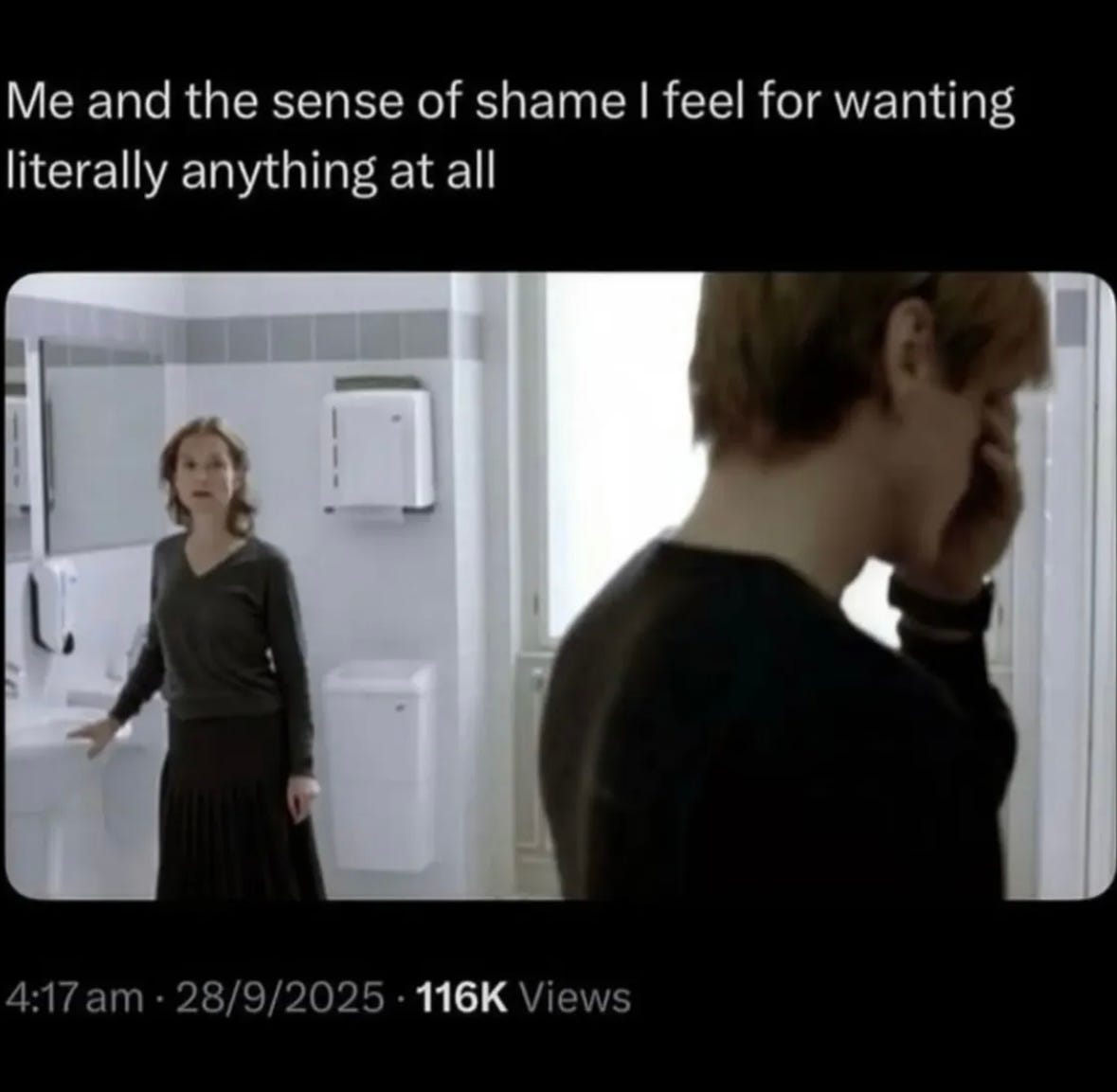
This long introduction is just me explaining that I have realized my inability to be vulnerable has started to stunt my ability to create work that I’m actually proud of, that’s actually a part of me. I don’t know my voice as a writer because I’m so busy worrying about how I sound or if I’m smart enough. I don’t want to be too ironic within the influx of dry self-aware Gen-Z bloggers on here, but if I’m too earnest, I’m trying too hard. I have so many stipulations, so many steel walls up that I fear I’m beginning to keep life out, like every day I live is shown to me in 2x speed on a phone screen.
So. Since I struggle so much with journaling, I’ve decided to start doing more update-y blogs like this one, both for my own personal archive, and maybe to connect with others in the ways I’ve denied myself. I like to think of it as a 2010’s-style “monthly favs” video, but I’ll be breaking down the things I’ve done, what I’ve made, and what I’ve engaged with (structure inspired by Mina Le’s High Brow blog). Here is an honest, open expression of what swirls around and within me, and I hope this helps us connect.
WHAT I’VE DONE
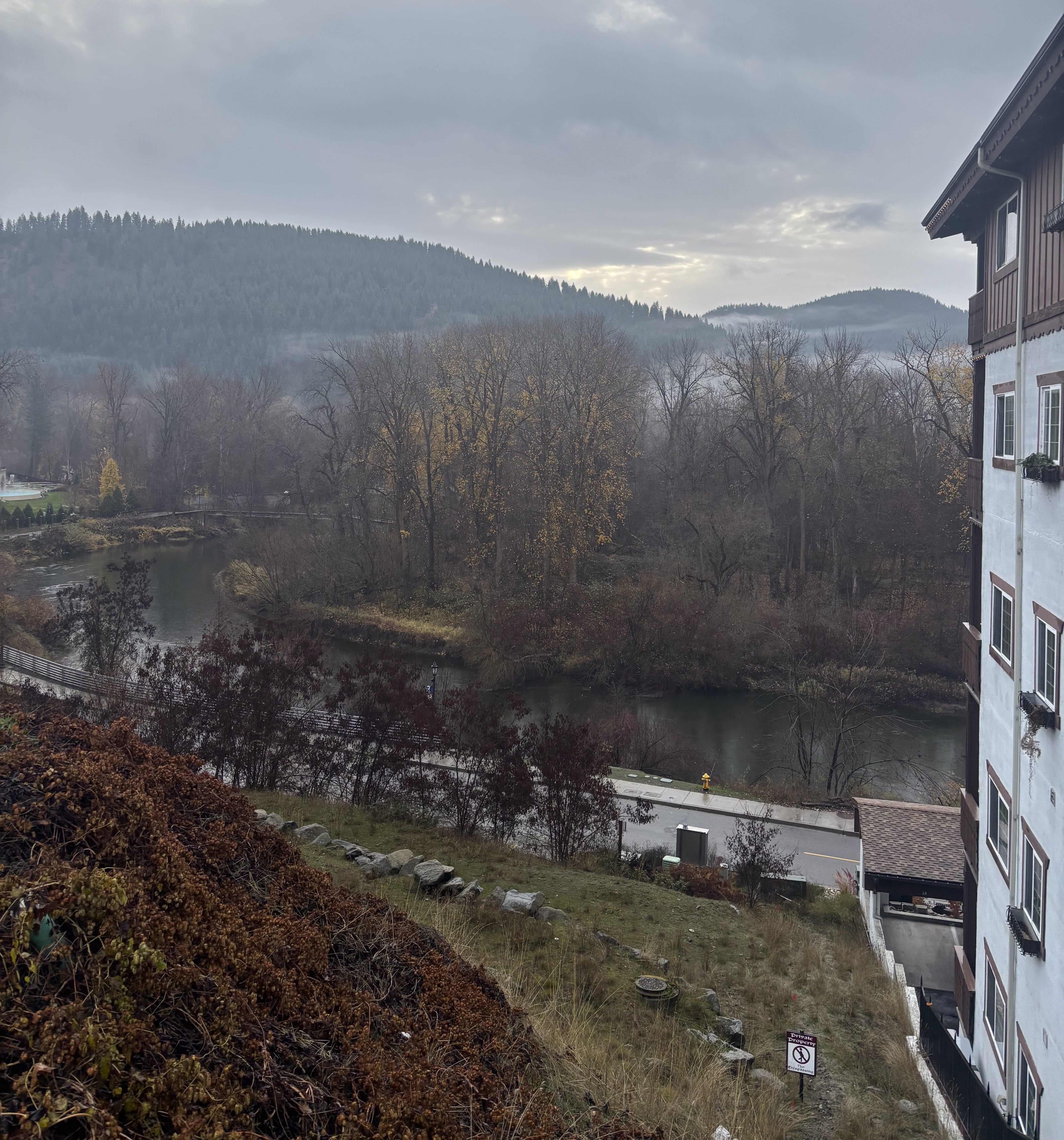
A lot. I have a tendency to overload my plate and guilt myself for not being able to juggle 20 things a week. I usually only give myself a break when I go out of town or do something to remove myself from my day to day, which I actually did this month. In early November, my partner Angel and I went on a trip to Leavenworth, Washington for our 6 year (!) anniversary. We rented a car and booked a hotel, like real adults with real budgets.
Leavenworth is a absurd place that, like much of Washington, can feel disconnected and mismatched from our collective plane of existence (there’s a reason Twin Peaks is based here). After driving through small farming towns outside of Seattle and snaking through the damp wood on the highway, a clearing opens with a wooden sign that reads “Leavenworth…Wilkommen!” in ornate Fraktur font. Entering Leavenworth was like the scene in Shrek 2 when our main characters enter Far Far Away to the tune of “Funky Town,” Shrek gawking at the fairy tale satire of Hollywood, lords and ladies in velvet shopping at Versarchery and Burger Prince. Leavenworth, a Bavarian themed tourist town, truly commits to the bit: even the 76 gas station (which we started to call “ye old 76”), the Mexican restaurant, McDonald’s and the Safeway off the freeway welcome guests with wooden carved signs, gable roofs and timber balconies decorated with vibrant flower boxes. Wooden standees of blonde women in dirndls loiter on street corners to provide maps of the town, and every hour on the hour, lederhosen-clad characters emerge from the top of a clock tower to spin in circles to oom-pah rhythms.

I thought, like Tombstone in Arizona or Paulsbo, Washington’s viking-themed town, Leavenworth was Bavarian-themed in celebration of the heritage of its pioneers. That’s not the case. Leavenworth was originally inhabited by Yakama, Chinook, and Wenatchi tribes until, as with much of the west, it was overtaken by gold rush pioneers and turned into a trading post they called Icicle Flats. The Great Depression hit Icicle Flats hard in the 1930’s, and after 30 years of economic desolation, the town leaders’ million-dollar idea to revive it was to attract tourism. After serving in Germany in WWII, one of the town leaders recognized a similarity between the Bavarian Alps and the Cascade Mountains. Thus, Leavenworth was born.1
It’s funny, because my memories of living in Germany as a child are full of brutalist architecture and minimalist IKEA-style furniture, less of the kitschy wooden warmth of Leavenworth. Not that I was walking around discrediting it for being “inaccurate.” It’s a caricature of Bavaria—a fantasy version of a different culture made and operated by Pacific Northwestern Americans—of course it won’t be like actual Germany. That’s what the town revolves around: a fantasy. A fantasy of capturing the feeling of being contained within the foggy crooks of the Bavarian alps while deep in the Cascade Mountains; a fantasy of a small town immune to economic turmoil; a fantasy of a town whose buildings were hand built by the hands that maintain it; a fantasy of a town where the streets smell like cinnamon and the fantastical spirit of the holidays remains year-round; a fantasy of a town where even the corporations have style and heart; a fantasy of a town where the local businesses that retain culture and community aren’t overtaken by the corporations or badly-constructed apartment buildings. It’s a place fueled by escapism and operates well off of it. While on our trip, time lingered in the way that it does when you’re lost in someone else’s imaginary world.
Visiting in early November, we missed both the Oktoberfest and Christmas tourism crowds, so Angel and I, hand in hand, spent three days wandering around the practically empty Christmas town, our cold breath following us in clouds and our faces illuminated by twinkly lights on wooden rafters while accordion polka music echoed behind us. We spoke to the locals about vintage books and homemade olive oil. We learned how nutcrackers are made and stared hundreds of them in the eye. We watched Family Feud and HGTV in our hotel room and drank white wine in the hot tub. It was escapism at its finest and purest. Escapism not for the sake of escaping our drab, daunting day to day, but for the sake of burrowing in a sense of stillness, reconnecting with the strange world encompassing us and our tiny footprints in it. A glorious illuminated silence, together.
On the night of our anniversary, we stood outside of two similar restaurants comparing the menus. An older woman on a solo trip stopped us to recommend a restaurant called Mozart’s, where we ended up eating Austrian food in a solo room by candlelight. When Angel told the women we were having our anniversary dinner, she told us to “always celebrate each other.” I think moments like this are always my favorite part of traveling—the random people you meet and the grounding spots you wander into that reveal the shiny white pearl of existence that remains at the center of your world.
WHAT I’VE READ
I spent September and October reading Mary Shelly’s Frankenstein for the third (fourth?) time. I won’t get much into it right now, as I cracked it open again for the purpose of writing a big, long essay about perhaps my favorite book of all time following the release of Guillermo del Toro’s film adaptation. That essay is coming…soon. At some point.
After re-reading Frankenstein and every single analysis from the 19th century to now that I could get my hands on, I started reading The Passion According to G.H. by Clarice Lispector. My partner’s aunt Mia (who happens to also be my friend), an avid Clarice Lispector fan, passed her copy on to me after she had me read the author’s final novel A Breath of Life. As with most books passed on to me or impulsively purchased during a period of manic literary obsession, The Passion According to G.H. was shoved between the rest of the dusty bookcase neglect not yet muddied by these sweaty fingers. But this month, I finally picked it up. Maybe it was fate. Maybe fate and convenience go hand in hand more often than we think. Maybe I’m always looking for fate in moments of inspiration. (Truthfully, I wanted to read the book so I could return it to Mia at Thanksgiving).
Either way, I think I’ve been subconsciously waiting for Lispector’s writing as I try to develop my own voice as a writer and face the raw, exposed vulnerability I so desperately try to hide under the bed with my luggage and summer clothes. Something I’ve loved about Lispector’s work is her ability to effortlessly weave imagery and language that is figurative, poetic and deeply visceral within a fictional setting. Her stream of consciousness style is grounded by her use of extreme specificity—more so in The Passion According to G.H. than A Breath of Life, which I found a bit more difficult to wade through. You can feel how inherent the character of G.H., with her specific oddness and personal philosophical birth, came to Lispector, the contours of every word thickly lined with innermost intimate and universal truths. According to the back of the book, Lispector said that of all her works, this one “best correspended to her needs as a writer.” I’m only a fourth into it, but this is something I’ve kept lingering in the back corner of my mind while I read. More on this next time.
WHAT I’VE LISTENED TO
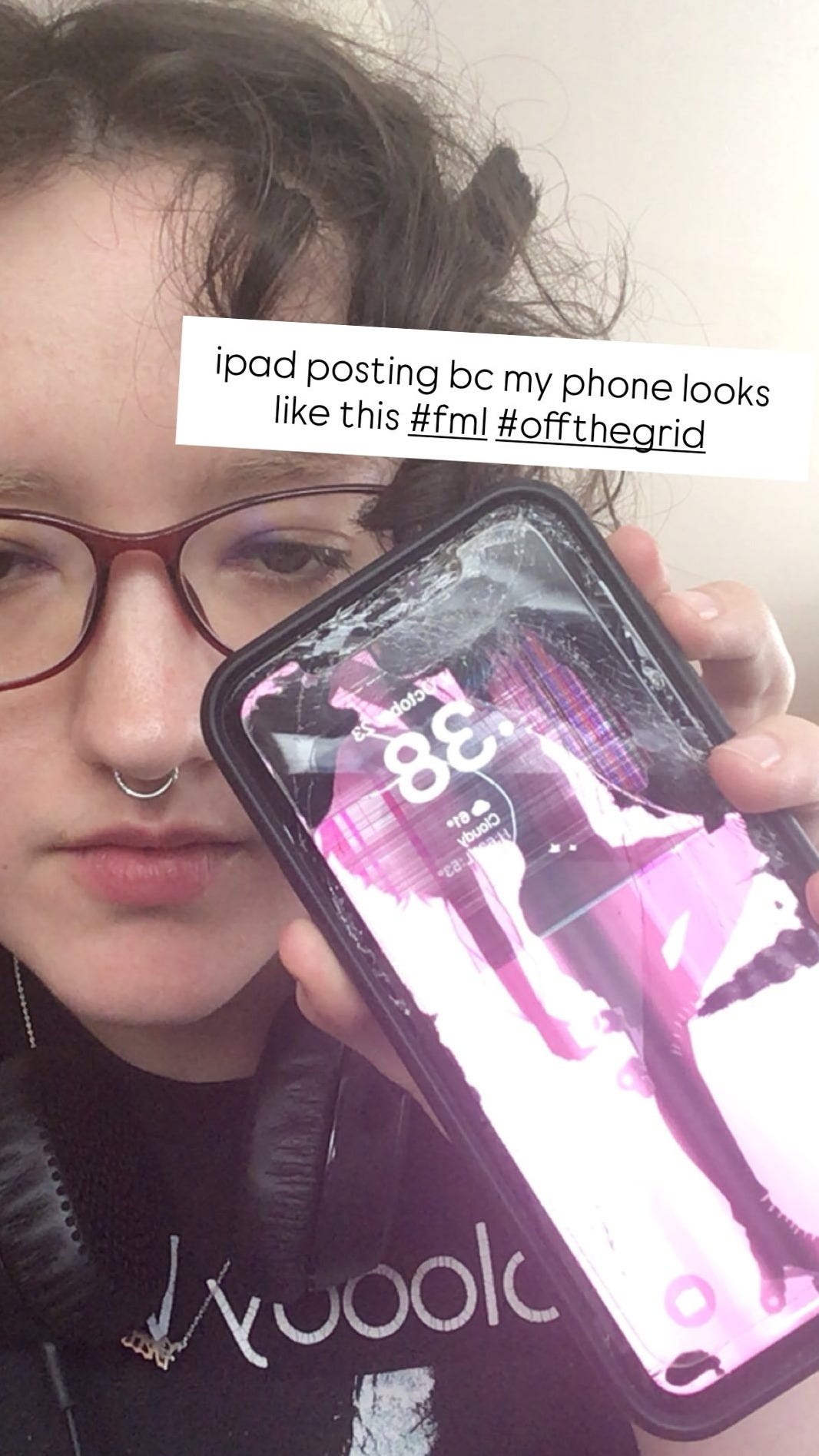
In early October, I accidentally smashed the screen of my iPhone 11 while working a 3-day poetry festival, leaving part of the screen black and the other part severely pixelated and data-moshed (very cyberpunk glitch-core vibes, despite the devastation). I had to text my parents (who still have me on their phone plan) from the piece of screen still operable in between wrangling 60-something-year-old poets from venue to venue. Luckily, we were able to replace it with a newer iPhone, and my access to the entire world at my fingertips is restored. Yipee!
With the new $600 phone, Apple gave me a free 3-month subscription to Apple Music (how generous!) I had been wanting to leave Spotify for a while (you know why), but as anyone tethered to a digital space from adolescence knows, the idea of leaving an online platform your being has grown dependent on feels like diving head-first into the deep end, the water so dark and murky you don’t even know if there’s a bottom. This is dramatic, I know, but I’ve had my Spotify account since the year I got my first period, okay? My relationship to these platforms has served as the background to my identity forming for over a decade, the crests and troughs of my autobiography outlined with every hyper-specific playlist and downloaded album. But, I like to think my morals are stronger than my earthly needs, the saint that I am, so I took the dive into the deep end…and swapped to Apple Music. Very brave, I know.
In all seriousness, while Apple—and Apple Music by extension—is still far from a perfect corporation (which is just an oxymoron at this point), they do pay artists more per stream than Spotify. It feels very dystopian to have to choose between one mega corporation that pays artists $0.003 per stream for their art and another mega corporation that pays artists $0.01 per stream, but here we are. Physical media is always the best option in this situation, and I’ve been trying to use my record player and radio more often. However, my inherently American desire for convenience still remains a cog perfectly fitted to churn away with the rest of my daily operations, so streaming remains a product of it. For now.
Since I’ve had my Spotify account since I was about 12, I have THOUSANDS of songs that I am now going through and transferring to my Apple Music account one. by. one. It sounds daunting, and it is, but I absolutely love it. It feels like scrubbing off the dead skin of my past lives while reliving long ignored memories.
A few songs i’ve rediscovered my love for so far:
Beaches - A. Swayze & The Ghost
Break the Rules - Charli XCX (Charli has been a genius since the beginning)
Claridad - Los Walters
WHAT I’VE WATCHED
Last month I watched Hulu’s High Fidelity starring Zoë Kravitz twice, once on my own and the second time with my Angel and my high school bff Caitlin. Earlier this year, Angel and I watched the 2000 film of the same name, which was also based on the novel by Nick Hornsby of the same name, which I have not read and don’t plan to (no offense, Nick Hornsby, I’m sure it’s great). I couldn’t tell if I disliked the movie because it was actually bad or because the protagonist Rob is an unlikable music douche that plays the victim in every situation he’s in despite being insufferable and also a cheater and a liar. So basically every guy I was involved with pre-my current boyfriend. Yes, he learns to take accountability for his wrongdoings at the end, but his redemption comes with the convenient perk of a reunion with his ex-girlfriend Laura, who aids him in discovering how to pursue a his dreams and be a better man better, even after it is revealed (spoiler alert) that he cheated on her while she was pregnant with his child.
I won’t turn this into a rant about how fraught and one-sided messages of accountability feel in straight-male-dominated straight-male-made media, but High Fidelity (2000) just felt like watching a guy be inconsiderate and self-obsessed for almost 2 hours and then get his fairytale ending after saying I’m sowwy. This movie is a testament to the fact that heterosexual women aren’t the only ones brainwashed by fairytales, but I digress.
High Fidelity the show flips perspectives by making Rob a messy late-twenties Brooklyn cool girl. I loved this show’s take on the story, because although the protagonist is gender-bent, she is still every bit as self-obsessed and inconsiderate as her male alter, and not in a “good for her” or “I respect women’s wrongs” kind of way. Post-third wave feminism, I’ve watched a lot of female characters that run away from commitment because they’re too empowered or damaged to be bothered with trite concepts such as love and compassion, but the female iteration of Rob bends this aloof cool girl stereotype as the plot spirals in on her and she tries and fails again and again to claw her way out the messes she’s made. While Rob fits into the mentally ill female anti-hero archetype established by characters like Fleabag or the cast of Girls, she is realistic in her shifts between manic justification and depressed self-awareness of her flaws, and like the Rob that came before her, she must face accountability and pick up the pieces of the damage she’s created. But. She doesn’t get a happy ending. But she doesn’t get a bad one either. As is life. The side characters in the show have significantly more depth than the characters in the movie (sorry, Jack Black), and are potentially my favorite part of the show. Along with Rob’s outfits. Come on.

In proper High Fidelity fashion, here’s a quick fire list of the movies I watched last month and how I felt about them: Battle Royale (AMAZING); The Lost Boys (I want to be an 80’s vampire so badly); TRON: Ares (YUCK); Sinners (YES!); The Substance (also YES!); Weapons (yeah okay); Saw (eh); Crimson Peak (eh); Frankenstein (more on that later); Angel’s Egg (wtf but SURE!); Oh Hi! (Logan Lerman…)
Comments
Nothing yet. Say the first thing.
Sign in to join the conversation.