
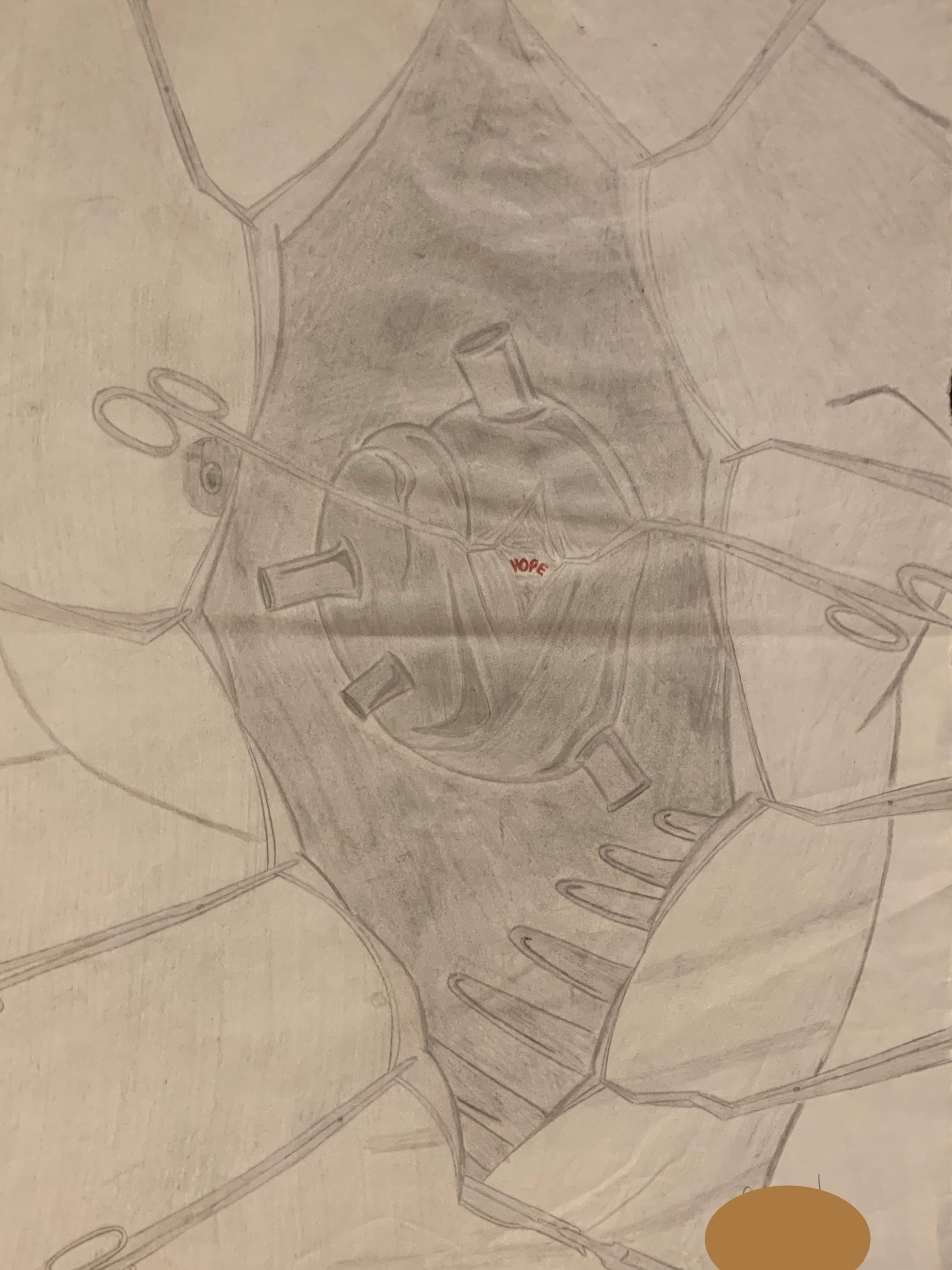
26 junio 2026
Hola y welcome back to CubaCurious.
First, I want to offer my condolences to Venezuelans, especially those who lost loved ones in the massive earthquake that hit the country Wednesday night. The enormous and generous Venezuelan diaspora is already organizing to help. I have a link below for those of you looking for options.
We’ll call her Teresa. She’s a highly educated Cuban woman who arrived in the U.S. with her husband in recent years. They’re both legal U.S. residents now, making their way, working, and living freely and contentedly in a southern state. Despite knowing little about me, Teresa agreed to an entrevista. She just didn’t want me to use her real name in the interview.
Hearing the views of Cuban Americans who’ve been here for a while is relatively easy for me. Newly arrived Cubans are much more cautious about speaking with reporters and writers. They worry that any criticism of the regime will trigger reprisals against their loved ones on the island. If someone here accuses them of having ties to the regime, that could lead to problems with Cuban Americans who are on red alert for “that kind of Cuban.” Then there’s U.S. Immigration and Customs Enforcement.
I was extremely lucky to be introduced to the brave and astute Teresa, whose experiences in Cuba and here have helped me to better understand:
What it’s like to end up in the “land of the imperial enemy.”
How age impacts Cubans’ support of a U.S. military intervention.
What Americans don’t get about Cuba.
How the revolution’s goal of “dividing to conquer” has “dismembered” Cuban society.
Why foreigners who defend the regime are making a “great error.”
Please let me know what you think in a comment, consider sharing with others, or subscribing to CubaCurious if you haven’t yet done so.
And thank you so much for finding time to think about Cuba.
Hasta la semana que viene,
Ana
*Besides the Red Cross and other groups who are helping Venezuela, please consider a donation to GEM, a disaster relief fund in Doral, Florida. Volunteers, many Venezuelan American, are packing hygiene kits and medical supplies to be shipped to Venezuela right now.
CubaCurious is a reader-supported publication. To receive new posts and support my work, consider becoming a free or paid subscriber.
Entrevista with “Teresa.”
1. It must be a great relief to have your entire family now out of Cuba. How have things been for you here?
That has been a blessing. That we are all out. We have a relatively small family, so it was easier for us to accomplish that. But I have many friends still there, and we support them as best we can. It’s very painful to see them struggling. I know one day I’ll be able to help them more than I can right now. I’m an optimist. I am confident that their lives will improve soon.
My husband and I have used our natural entrepreneurial spirit to navigate life here, follow the legal process to secure permanent resident status, find jobs, start again. We’ve achieved some of our goals. We do not want to be parasites in this American society that has received us without hesitation. Admiration and gratitude are the main sentiments I feel for the United States.
Here, people throw out a lot of things. I can’t do that knowing all the things people need there. The other day I saw a walker in someone’s trash pile. Perfectly new. I picked it up and shipped it to my friend in Cuba, who refuses to have knee surgery; things are so bad at Cuban hospitals. . . You have no idea the words of thanks she gave me. It broke my heart. She’s earned several degrees. Had her career. But I have to send her even acetaminophen.
In my opinion, part of the regime’s strategy has been to keep the people submerged in need and difficulties for decades. In that overwhelming environment there is no space to organize against the system.
2. An estimated 20% of Cubans left the island in recent years. That’s devasting to the country, obviously, but what is it like at street level?
That sustained emigration, since 1959, has divided families: children without parents, mothers without their sons, friends separated because of political views. Cubans are in every latitude now, and each exodus takes the young, because that’s who leaves. Cuba is full of very old people. For the first time in this last wave we saw old Cubans taking the route through Nicaragua, I’m talking about people who were 75 years and older.
Keep in mind that that was one of the strategies of the revolution. Divide and you will conquer. They wanted us to doubt each other. It’s well known that they designed the system so practically every family had someone who worked for state security as informers. They wanted us to be afraid and to not say anything or form groups to challenge the government. The family would get together and in would walk a cousin or a friend, in his checkered shirt or white guayabera (traditional men’s short sleeve shirt)—those shirts were their symbols. Everybody knew and would say, be careful what you say. He’s an informant.’
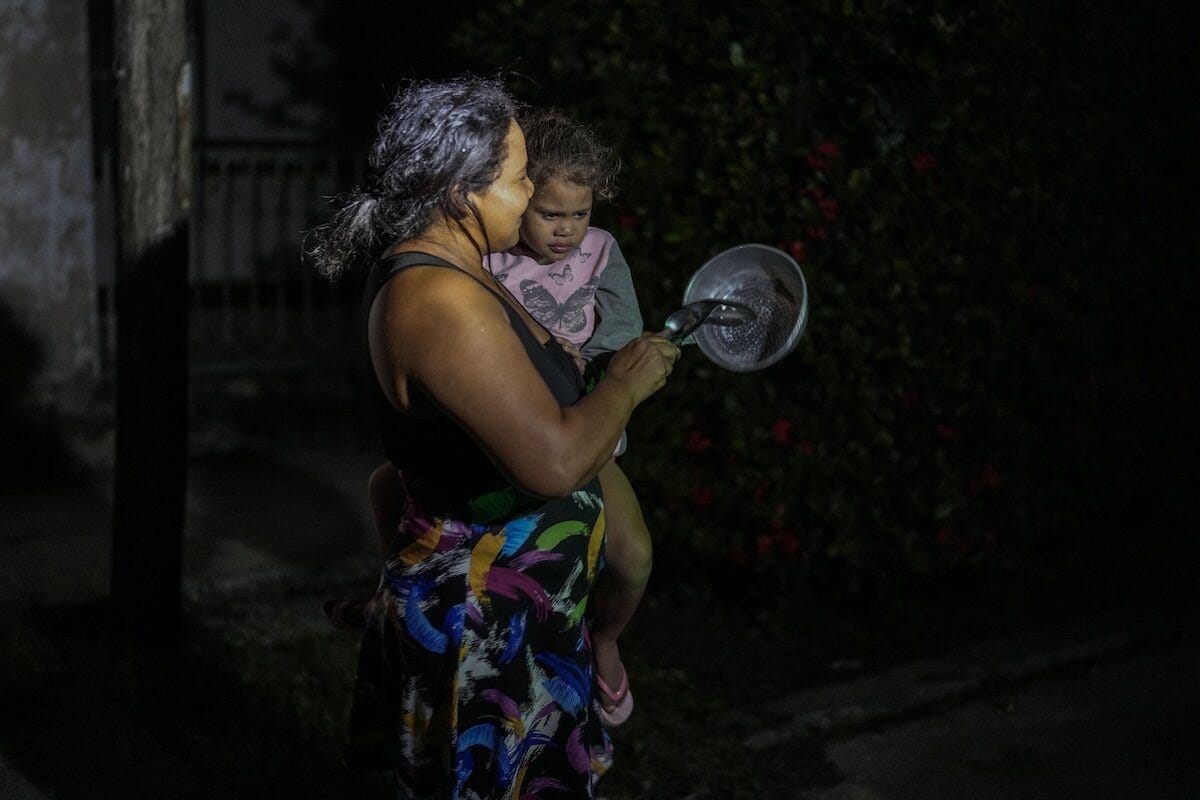
These are the designs that Fidel created. Even after his death his strategy is working, because the diaspora is divided. In Miami some people have turned into vigilantes, accusing some Cubans here of having been with the government in Cuba.
Don’t forget that for a long time, having relatives that fled to the U.S. damaged your standing in Cuba or, for example, your chances at education. As soon as they found that out about you, it meant you were on a different path and needed to be verified before being accepted.
So even in that way Fidel has won. Look at what Miguel Díaz Canel (Cuba’s appointed president) said the other day, that he was implementing the contingency plan that Fidel had used in 1991, when the Soviet Union collapsed. Imagine. In the 21st century they’re boasting about using a plan that was in place when things were very bad. Things are much, much worse now. As if that’s going to work.
3. What has surprised you most about life here?
Honestly, every day I’m surprised by the real possibilities that exist in this country. There’s always a path to solve your problems, some of them are basic, but in Cuba those basic needs become truly horrible problems.
The U.S. is a country, in my opinion, whose laws are organized in a practical way, and most people—even children—know their rights. That’s impressive when you come from a place that has laws, but they are violated constantly. And forget about people’s understanding of those laws, or their rights. No. They don’t know because it doesn’t matter.
I see Cubans here who’ve changed completely, their vision of life is different. How they act. They identify now with this new standard of living. We’d been given this false impression in Cuba that we had everything because we had free health care and education, that that was quality of life. I’m in awe of the quality of health care here. They would tell us how awful things were here, and they repeated them so many times, you believed them.
Today in Cuba people are dying from lack of basic medical resources that should be there. They are so poorly nourished that they can’t withstand an illness. They die.
4. There seems to be a division among Cubans, wherever they are, about the possibility that the system will change. What are the main obstacles, besides the regime’s clear rejection of any political change? These proposed reforms they just announced, that’s coming under duress, pressure from the U.S.
Yes, there are divisions but at least we all want the same thing: real change. But the path to liberty needs a leader, and that’s where I think we’re very debilitated. Someone who could be the glue to pull all of us together. The system has damaged the concept of country so severely that there is massive division. Divided, we won’t come to a good solution.
. . . I don’t think putting the process for that change in external hands is the way either. Cuba must change from within, with help from us on the outside. We can achieve this. It’s a difficult path, but in the history of humanity no dynasty has lasted forever.
5. What don’t Americans understand about Cuba? And more generally, what would you say to people around the world who see the revolution as a good thing and support the Cuban government.
I don’t think Americans can understand the level of difficulty of ending a government and changing a political system that has stolen LIBERTY from its citizens for almost 70 years—even with everyone wanting that change, nothing happens.
In my opinion, the people living in this great country have an exalted understanding of liberty. For generations Cubans have had a false understanding of liberty, the one they were taught, that health care and education are liberty. Living with dignity is liberty, too, and a more fundamental liberty.
For those who support the regime, their first great error is that they’re defending a miniscule percentage of the population, because the rulers aren’t suffering. Those people are listening to the people in power. What needs to happen is we need to get testimonies of average Cubans, the ones who worked for the revolution, like me.
I was working in the cane fields when I was 14. It was a law that before you went on to secondary school you had to work in the countryside. I worked 45 days in those fields, waking up before dawn, with rats and tarantulas running around. What did we know about cutting cane?
They should talk with those average Cubans, not the functionaries and high-level officials and see how they are now. That’s who they need to tune into.
6. Do you think most Cubans would support an invasion to oust Cuba’s leaders?
It depends. Young people, let’s say under 40, wouldn’t care, I think. There aren’t many of them left. But older Cubans, especially the ones who fought in all those wars we fought in those other countries, they know what war is. They wouldn’t want that. I am very fearful of an invasion. I worry that it would have bad consequences here, in the U.S.
7. Do you think U.S. policies are working to weaken the regime?
Undoubtedly. Look at that special assembly last week and the new reforms. That’s because of sanctions and pressure. They could have done that in 2016 when Obama went to Cuba. Look at that. Ten years that they lost. I thought I was going to be part of that, going to be able to help Cuba reform.
Don’t forget that in the middle of Perestroika, the Russians offered Cuba the chance to reform, but Cuba turned it down.
These new reforms won’t work. They’ve dismembered Cuba. So many people have left.
Keep in mind that within those measures they’re hiding their own businesses, disguising them as private businesses but they are military or party people. In my opinion, almost all the private businesses are linked to the people in power, their families.
They’re trying to restart an expired machine. Who is going to implement those measures in the middle of so much destruction?
Who would invest with no guarantee that the regime won’t take it all away again? The regime doesn’t want those businesses to succeed. If a business gets too successful, they’d show up and say . . . ‘you have to shut you down.’ Because if you do well financially, you’ll support a leader who can make things better, you’ll form a political group, you’ll challenge their system. They don’t want that.
8. I’ve sensed a resentment from the regime toward citizens; leaders have scolded citizens in the past for economic failures. I thought of that the other day when they announced an immediate end to price caps on basic goods as part of the new economic reforms. Who does that in the middle of an inflationary crisis, when people can’t even afford the most basic things? To me it was a slap at the people: You want capitalistic reforms? Now you got them.
That attitude [of blaming the people] is because they tell us we own everything. It’s an erroneous concept that they use, that the people are all equal, have the same rights, the same lives, can ride the same buses. So, with total shamelessness, they say that when something fails, who were the workers? We were. So, it’s our fault. The people didn’t take care of the thermoelectric power plants. That’s why they failed.
Cuba has had great people who saw how to improve things. People with a lot of wisdom and courage. But when that minister or high functionary stands up and identifes the problem and the solution, what happens? They get rid of him. The upper caste is bothered by that kind of person.
The upper caste isn’t struggling. They don’t need the reforms or change. So, they get rid of the person with the ideas.
Any last thoughts you’d like to send to CubaCurious readers?
Yes. You said you feel down about the prospect for change in Cuba. Lift up your enthusiasm! Keep writing, that’s how you’re fighting in the battle.
I remember, one morning I woke up and heard that the Berlin Wall had come down. The two Germanies were one country. No one could believe it. We thought it was a hoax. But it was real. Then the Soviet Union ceased to exist.
My mother would say to me, ‘See, if they fell, the same can happen here.’
Thank you for your insights, Teresa. I’ll try to remember your mother’s words the next time my hope for Cuba falters.
¡Ánimo y adelante! Spirit and onward!
CubaCurious is a reader-supported publication. To receive new posts and support my work, consider becoming a free or paid subscriber.
Comments
Nothing yet. Say the first thing.
Sign in to join the conversation.