
15 mayo 2026
*Cubasplaining: when non-Cubans try to correct Cubans about their history by “splaining” Cuba to them. Root: 1950s English and Ricky Ricardo’s frequent requests for Lucy to “splain” how she got into trouble.
8 mayo 2026
Hola y welcome back to CubaCurious.
Gracias for being here.
Cuba news alerts have been flying into my inbox all week—and another flurry just came in:
o Cuba announced it’s officially out of oil.
o It will accept the $100 million in humanitarian aid the U.S. has been offering, the same one Cuban foreign minister Bruno Rodriguez called a “fable” and a “lie” on Tuesday.
o Cuba says U.S. will “encounter neither obstacles nor ingratitude” in the delivery of the aid from Cuba.
o CIA director John Ratcliffe traveled to Cuba yesterday to discuss security concerns, review aid delivery plans, and future engagement—“all against the backdrop that Cuba can no longer be a safe haven for adversaries in the Western Hemisphere” and that Cuba makes fundamental changes, a CIA official told CBS.
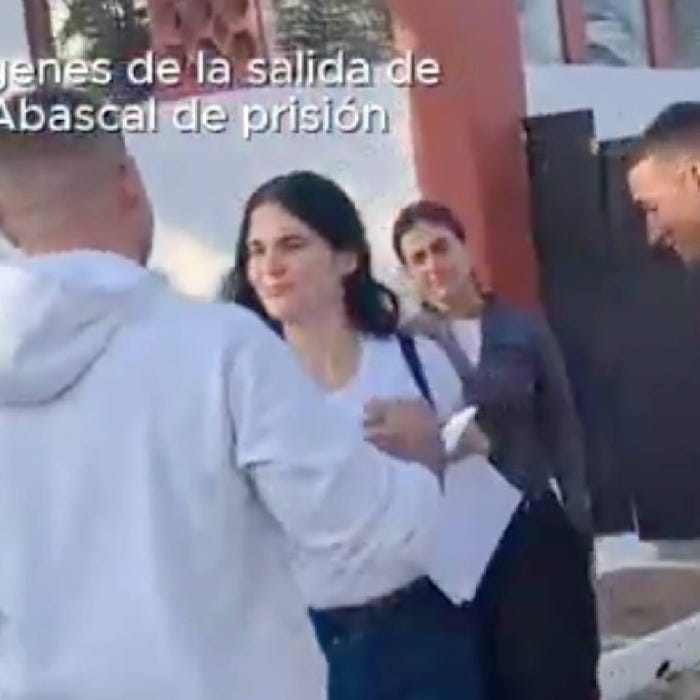
o Cuba freed 27-year-old political prisoner Sissy Abascal and allowed her to leave the country with her family. The Ladies in White member had been in prison since 2021 for painting “Patria y Vida” on a sheet with other protestors.
o CBS reported that the U.S. is moving to indict Raul Castro for the shoot down by a Cuban MiG of two Cessnas carrying four Cuban Americans on a humanitarian mission in 1996 over international waters. Castro, 94, was the head of the armed forces at the time.
Maybe that last one should have been first.
Even the potential indictment of a nonagenarian dictator hasn’t stopped me from focusing on a New York Times op-ed that was published on Monday. “What We Saw in Cuba Shocked Us,” written by two congressional reps who were in Cuba for five days, blames the massive suffering in Cuba and the country’s complete economic collapse squarely on U.S. sanctions. The regime gets away clean as a whistle, other than a one-sentence reminder to improve political rights.
As I read, I kept thinking about a term Cubans use when they describe their unelected “president,” Miquel Díaz Canel. He’s un puesto a dedo, someone put into a post by the point of a finger.
Unlike foreigners who travel to Cuba and consume too much propaganda, Cubans know they did not elect their president, despite the dictatorship’s insistence that they did. If we elected him, then who lost? Show us the loser, is one of the ways I’ve heard Cubans counter the regime’s gaslighting.
Unfortunately, many foreigners think the Cuban people and the Cuban government are the same thing. They want to support the Cuban people, so they support the Cuban government, which was chosen by the people—or so the government says.
And that is where they are entirely wrong.
Cubans have been showing their opposition to totalitarian rule since the Escambray Uprising soon after Castro came to power in 1959. They rejected their government openly in the 1994 Maleconazo and the unprecedented countrywide protests of July 2021. Tens of thousands of Cubans marched in the streets, shouting Libertad, Down with the dictatorship, Down with communism. They did not shout “Down with the embargo” as Cuban officials claimed.
Recently, I wrote about an independent international survey that found that 96% respondents want political change. Who wouldn’t after 70 years of single-party rule, all but the last seven under the Castro name?
Cubans are showing their opposition to the regime daily protests and open defiance of officials, rare occurrences before July 2021. An estimated 20% of the population emigrated in recent years. And more than 1000 known Cuban political prisoners are languishing in Cuba’s overcrowded, filthy, and unmonitored prisons. They go hungry and suffer from untreated diseases. They’re serving long sentences alongside common prisoners in maximum-security prisons for criticizing their government and calling for political change. One of them is there because he wrote signs that read: How much longer?
That view of Cuba is missing from the op-ed. The authors were moved deeply by the suffering they saw and want to help the Cuban people. But they base their argument on the flawed notion that the Cuban people support their government. They ignore the evidence that is bracingly clear to anyone who is listening to average Cubans, not Cuba’s unelected rulers.
The authors describe U.S.-Cuba policy as a deliberate attempt to “inflict collective punishment on the civilian population by manufacturing a humanitarian crisis.”
They didn’t mention that the most recent sanctions target military and political elites responsible for human rights abuses. They failed to mention that the goal of the sanctions is to spur the political change that the Cuban people clearly want. They didn’t mention U.S. attempts to deliver $100 million in aid to Cubans through the Catholic church and the regime’s refusal of that aid.
The economic goals are certainly part of the U.S. strategy. But most average Cubans would welcome foreign investment that can benefit them, not the regime, which has controlled foreign investment since Castro opened the economy in the 1990s for the first time—thirty years after he came to power.
There’s no doubt that recent oil sanctions have worsened the crisis for average Cubans. But the blackouts, food lines, health care debacle, and gas shortages the authors saw have been a fact of life in Cuba for decades. For years a key feature of Cuba’s state-controlled news has been the latest update on the country’s megawatt deficits and the schedule for rolling blackouts.
Cuba has run out of oil in large part because it lost the free supply Venezuela had been sending it for years after Maduro was captured. But that free oil had been dwindling in recent years as Venezuela’s economy weakened. The regime sold an estimated 60% of the free oil on the open market. Cubans want to know where those profits went? They were supposed to be reinvested, at least that’s what the regime promised.
Instead of investing in its Soviet era power plants, the government—or rather the military’s conglomerate, GAESA—doubled down on tourism and luxury hotels. The military has enriched itself, managing an estimated 70% of the economy, the juiciest sectors, and without accountability to the Cuban people. The military’s hotels ablaze in light during blackouts have been a gut punch to Cubans. They know they’ve been mostly empty, yet the nation’s resources continued to pour into them.
Blaming the partial U.S. trade embargo for Cuba’s woes has been the regime’s strategy since 1962, when John F. Kennedy imposed it in retaliation for Cuba’s expropriation of American businesses and its alliance with the Soviet Union.
But we’ve seen here that the embargo is porous; it does not include food, medicine, medical equipment, vehicles, or humanitarian aid. Cuba imports solar panels, products, motorcycles, batteries, jacuzzies, and golf carts, although how those last two benefit the Cuban people is a mystery.
The U.S. is currently exporting oil to some Cuban private businesses directly, avoiding the regime, although it has a history of hiding its role in those ventures, as it does with the so-called civil society groups it presents to the international community as evidence of Cuba’s civil liberties. The Federation of Cuban Women, for example, is one of the primary organizers of acts of repudiation against government opponents. Where’s the civic mission in sending thugs and bullies to dissidents homes?
By focusing soley on U.S. policies as the source of Cuba’s suffering the authors protect the regime for its role in that suffering. They admit that the regime “can and must do more” on political and civic rights and “mistreatment of political prisoners” but they praise the regime for false signs of progress in those areas, like the release of 2010 prisoners in recent weeks.
That prisoner purge is something that happens every so many years, when Cuba’s jails fill to overflowing. Not one of the released prisoners was a political prisoner. In fact, the regime specified that no prisoner who had challenged authority would be released.
How can there be democratic reforms in Cuba when the regime has never admitted to having any political prisoners? Activists have been calling for that single concession for decades. It was one of the goals they had for President Obama when he attempted to normalize relations with Cuba at the end of his second term.
The few economic freedoms given during that time were gradually rescinded, particularly when private businesses became too profitable, however that was defined. Then the restaurant or shop was shut down. Sometimes the owners were accused of a crime or fined. Time passed and the government introduced other economic freedoms. It’s a policy kiss and slap that keeps entrepreneurial heads spinning and the economy in disarray.
The authors praised Cuba for its recently opening the economy to investment by Cubans living abroad. Yet that invitation revealed the economic straitjacket Cubans are born and raised in. What country bars investment from any qualified investor? One that chooses political control for its leaders over economic opportunity for its people.
For the last two years I’ve tried to chronicle the human rights abuses of an unelected government that pretends to be a humanitarian revolution but is a military dictatorship. I’ve shared stories of the systemic trampling of Cubans’ basic freedoms, of tortured political prisoners, economic policies that punish the few, lucky approved private businesses, and the consistent pleas from average Cubans for help from the international community.
The op-ed ignores that Cuba. It is another example of Cubasplaining, except this one landed in the New York Times for American consumption rather than in the ears of a gobsmacked Cuban.
Cubans want what we have but their government won’t give them. Basic human rights, a chance to dream and achieve those dreams. Freedom to think and say what they believe. Due process rights. Separation of powers. A free press. The right to elect their leaders in fair elections.
Cuba’s leaders are not interested in those reforms. They’ve proven it for almost 70 years. The party slogan of continuidad, continuity, shows the government’s disconnection with the Cuban people.
Cubans are tired of being lied to, of promises of a Cuba that never comes.
As one Cuban wrote in an lively exchange on Facebook: When you’re drowning, you don’t ask who is throwing you a life vest. You take it.
Hasta la semana que viene,
Ana
Will change come for Cuba? Here’s one of my favorite Cuban songs, a bolero about waiting and wondering. Quizás, Quizás, Quizás. Perhaps, perhaps, perhaps.
I love this arrangement. It’s an easy song to learn even if you don’t speak Spanish. Try it and sing away.
Siempre que te pregunto
Que cuándo, cómo y dónde
Tú siempre me respondes:
Quizás... quizás... quizás...
Y así pasan los días
Y yo voy desesperando
Y tú, tú, tú contestando:
Quizás... quizás... quizás...
Estás perdiendo el tiempo
Pensando, pensando;
Por lo que más tú quieras
¿Hasta cuándo?
¿Hasta cuándo?
Y así pasan los días
Y yo voy desesperando
Y tú, tú, tú contestando:
Quizás... quizás... quizás...
Siempre que te pregunto
Que cuándo, cómo y dónde
Tú siempre me respondes:
Quizás... quizás... quizás...
Siempre que te pregunto
Que cuándo, cómo y dónde
Tú siempre me respondes:
Quizás... quizás... quizás...
Y así pasan los días
Y yo voy desesperando
Y tú, tú, tú contestando:
Quizás... quizás... quizás...
Estás perdiendo el tiempo
Pensando, pensando;
Por lo que más tú quieras
¿Hasta cuándo?
¿Hasta cuándo?
Y así pasan los días
Y yo voy desesperando
Y tú, tú, tú contestando:
Quizás... quizás... quizás...
Siempre que te pregunto
Que cuándo, cómo y dónde
Tú siempre me respondes:
Quizás... quizás... quizás...
You won’t admit you love me
And so, how am I ever, to know
You always tell me
“Perhaps, perhaps, perhaps”
A million times I’ve asked you, and then
I ask you over, again
You only answer
“Perhaps, perhaps, perhaps”
If you can’t make your mind up
We’ll never, get started
And I don’t wanna wind up
Being parted, brokenhearted
So if you really love me, say yes
But if you don’t dear, confess
And please don’t tell me
“Perhaps, perhaps, perhaps”
Perhaps, perhaps, perhaps
If you can’t make your mind up
We’ll never, get started
And I don’t wanna wind up
Being parted, brokenhearted
So if you really love me, say yes
But if you don’t dear, confess
And please don’t tell me
“Perhaps, perhaps, perhaps”
Perhaps, perhaps, perhaps
Perhaps
Perhaps
Perhaps
No posts
Comments
Nothing yet. Say the first thing.
Sign in to join the conversation.