
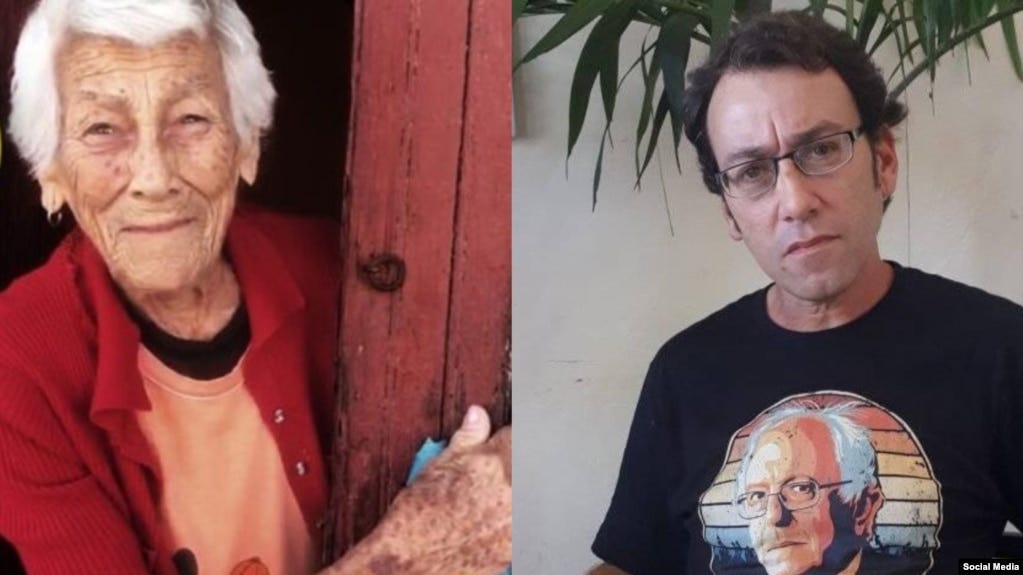
8 mayo 2026
Hola y welcome back to CubaCurious.
Gracias for being here.
I’m taking a break this week from the painful stories of human rights abuses that continue to flow from the island. Sadly, the regime shows no sign of easing up on dissidents, let alone freeing an estimated 1000+ political prisoners. We’ll have more on that next week.
Here are your three not-too-painful scoops for this week—stuff the regime doesn’t want to talk about but that you, being curious about Cuba, should know.
UNO—Reporters Without Borders (RSF) says more than half of all countries are in “difficult” or “very serious” press freedom conditions, its worst findings in 25 years. And Cuba came in at a dismal 160 out of 180 countries on its list. A look at what it costs to write the truth in Cuba.
DOS—Cuba will permit direct investment by citizens living abroad—but new laws are bolstering the regime’s restrictions on who can come and go from the island based on political orientation, profession, state need. Question: would you invest in a country that persecuted you when you left, stripped you of your property, and keeps changing the rules of the game?
TRES—The Cuban regime is impeding U.S. aid from getting to Cubans, Marco Rubio says. He wants the pope to help get aid directly to Cubans in need, not the regime, which has been accused of selling donated products in the Cuban military’s stores. He may have covered other important . . . topics . . . during yesterday’s Vatican visit, but I hope he got somewhere on that one.
Hope you enjoy the read. Please let me know what you’re thinking and share, re-stack, or click the heart to help others find CubaCurious.
Hasta la semana que viene,
Ana
CubaCurious is a reader-supported publication. To receive new posts and support my work, consider becoming a free or paid subscriber.
UNO
Cuba 2nd worst in Americas for press freedom, behind Nicaragua—Reporters Without Borders (RSF) reports.
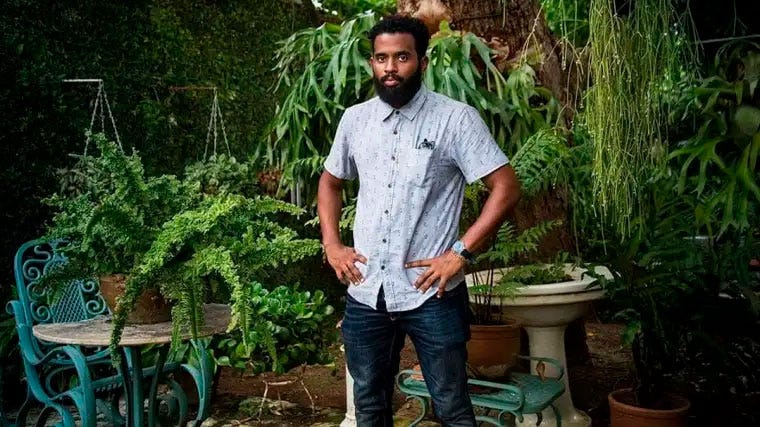
Last Sunday was World Press Freedom Day, a good day for assessing freedom of the press globally, but a bad one for Cuba, which RSF ranked 160th out of the 180 countries it evaluated. Only Nicaragua (168) ranked worse in this hemisphere.
Independent journalism is illegal in Cuba; only state-controlled journalism is allowed. Radio, television, and dailies are strictly controlled by the Cuban regime. RSF reports that rather than protecting journalists, the regime persecutes them, forcing them to operate essentially clandestinely.
In January 2026, the Cuban Institute for Freedom of the Expression and the Press (ICLEP) documented 114 assaults against Cuban independent journalists, a 12% rise from the previous month and a 67.6% year-over-year rise compared to January 2025. Cuba’s indie journalists feel this burden every day yet continue to risk their and their families’ safety to report the news.
A few examples. Yoani Sánchez, a founder of 14ymedio, was recently held under house arrest, a plainclothes political police agent stationed at her building’s doorway stopped her from leaving her home. There was no explanation given, no authority she could appeal to for justice. RSF describes this practice as “prior censorship,” since it prevents journalists from even attempting to cover a story.
Camila Acosta, who works for Spanish ABC, and her partner, who is also a journalist, were detained and held in police custody repeatedly in recent weeks, causing distress for their families as hours passed without word of their whereabouts.
Yadiel Hernández, a 14ymedio contributor, was imprisoned last year in a maximum-security prison, incommunicado for months, without being charged. Another 14ymedio reporter, José Gabriel Barrenechea, who was persecuted for years for exercising his profession, was arrested last year for protesting a power. He is now serving a six-year sentence, guilty of “associating with people of bad morals and social conduct,” among other “crimes.
Cuba’s independent journalists know very well what Barrenechea’s real crime was. Attempting to report the news—freely.
Journalists are fined, sometimes heavily, for concocted reasons. Some have been evicted by nervous landlords, who are harassed by the political police for housing them. Journalists’ relatives and friends have also been targeted, at times reporting the loss of employment or expulsion from school.
It’s no surprise that so many Cuban journalists have fled, or been forced into exile. But even exile hasn’t ended punishment by the regime’s agents or friends.
While hiding out in Guyana after escaping Cuba, journalist José Luis Tan Estrada reported almost being run over two days in a row by the same motorcycle at the same intersection. Another respected journalist, Abraham Jiménez Enoa, who fled Cuba after heavy persecution, said two men approached him while walking with his young son in a Barcelona park. “We know you’re close to home,” one of them said in a Cuban accent.
The Committee to Protect Journalists, among other international groups, has denounced the ongoing persecution of Cuban journalists and called for local law enforcement to protect the reporters.
Unfortunately, the independent reporters who remain in Cuba don’t have even that chance for protection.
DOS
Cuba to allow investment by citizens living abroad—but expands restrictions on leaving/returning based on political orientation, profession, state need.
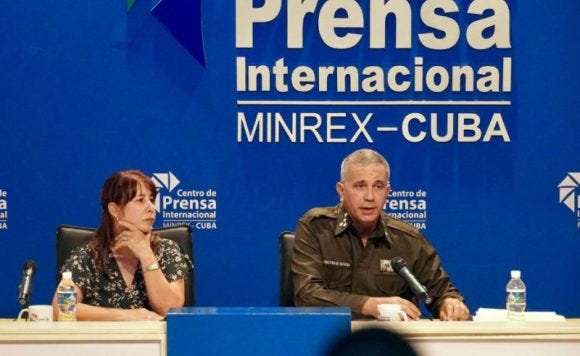
The Cuban government published new laws this week that restore some emigre property rights and allow their limited investment on the island. Both goals are critical for the country right now, after years of mass emigration, declining birth rate, and a severe economic crisis. The decrees may also improve Cuba’s position in negotiations with the U.S., which is demanding democratic reforms from the regime.
Almost two years after it was approved, Cuba’s 2024 Immigration Law was finally laid out this week in Granma, the official newspaper of the Communist Party of Cuba. Previously, Cubans who remained abroad for 24 consecutive months were designated “emigrated” and forfeited their property rights and some of their rights as residents. No longer will Cubans who stay abroad longer than two years lose their homes, cars, and other property to the government, at least according to the new law—which goes into effect in 180 days.
But some analysts warn that the new law expands the regime’s ability to punish political opponents. They say the new law codifies the regime’s existing practice of preventing some political foes from leaving the country and others from returning to it, even when they have not been accused of a crime or are under investigation. As such, the regime can restrict the movement of citizens considered a threat to the “ . . . political, economic, and social fundamentals of the Cuban state,” or deemed otherwise “undesirable.”
Such practices defy rights protected by the Universal Declaration of Human Rights and the International Covenant on Civil and Political Rights, including birthright citizenship and the right to leave and return to one’s homeland at will.
The same issue of Granma detailed new rules permitting Cuban passport holders living abroad to invest in businesses on the island, as long as they “ . . . apply for it [the permits] and participate in the country’s economic model.”
The government announced the new measures in March 2026. Unlike the immigration law, which was approved in July 2024, the decree was rushed through the approval and publication process.
I imagine it will take a lot to convince prudent Cubans in the diaspora to invest in a country that disparaged them as “traitors” and “worms” while they attempted to leave, stripped them of their homes and property when they succeeded in getting out, and has repeatedly vowed its commitment to state-controlled wealth over individual gain.
If they sweep that sobering history aside, they should look at the country’s erratic regulations of small and medium sized private companies, which are relatively new to Cuba’s economic landscape. The few permitted private businesses have had to be careful to not become too successful. Some entrepreneurs learned that the hard way when their profitability attracted the government’s attention and their businesses were summarily shut down.
The regime’s sudden economic policy changes have left even large foreign investors empty handed. Last fall, amidst a severe hard currency shortage, the Cuban government announced that foreign companies would not be allowed to transfer funds abroad from their Cuban accounts without authorization. As reports about the fund freeze were published, some foreign companies revealed that the Cuban government had been controlling access to their funds for some time, requiring express authorization before withdrawals could be made.
I’ve heard average Cubans complain bitterly about not being able to access their own money, not only through ATMs, which are often inaccessible due to power outages or because they run out of cash, but even in person at their banks. One woman told me she’s had to go to the bank in person repeatedly before finally being allowed to withdraw money. “They’ll tell me the system is down, to come back another day,” she said. When she returns, there’s another excuse, then another.
I imagine her walking back home on a sweltering Havana afternoon, empty handed. How will she pay for tomorrow’s rice, if she can find any?
TRES
Regime impeding U.S. aid to Cubans, Marco Rubio says. Seeks pope’s help.
U.S. wants donations delivered through Church, not regime, which has been accused of selling donated products in military’s stores.
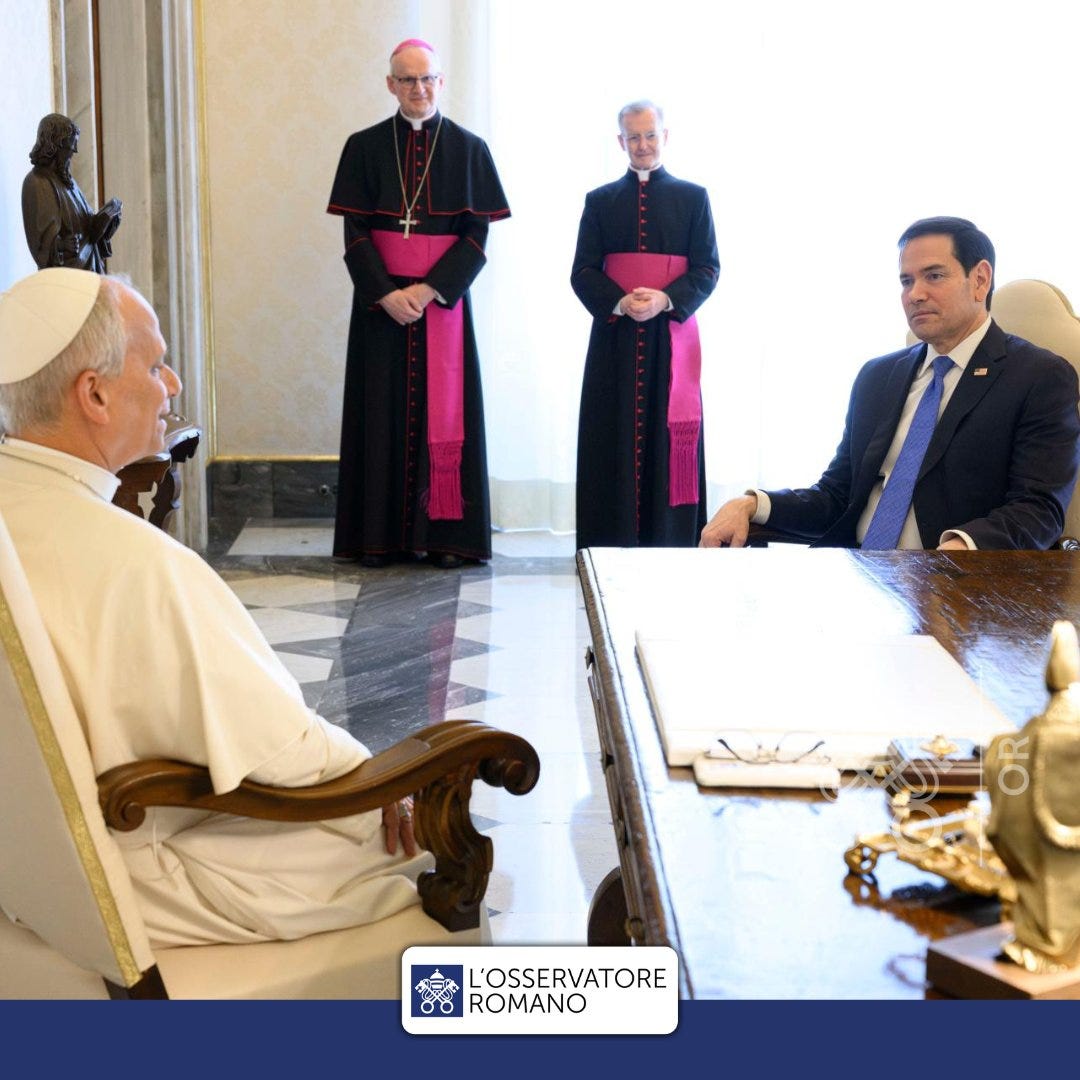
U.S. Secretary of State Marco Rubio said his visit to Rome this week had been previously planned and downplayed any link to the recent tension caused by Trump’s criticism of the pope. Rubio, a devout Catholic who has met previously with Pope Leo, said in a press conference this Tuesday that “there’s lots to talk about,” and that he will talk with the pope about religious freedom and the situation in Cuba.
“We’re willing to give more humanitarian aid to Cuba . . . distributed through the church, but the Cuban regime has to allow us to do it, but they won’t allow us to do it—their own people more humanitarian aid—and we’re willing to do it through the Church. So there’s a lot to talk about.”
This is the second time in recent months that U.S. officials discussed Cuba at the Vatican. Mike Hammer, the head of the U.S. embassy in Cuba, traveled to Rome in February and spoke with top Vatican diplomats about ways to give the Cuban “the opportunity to live in freedom.”
“It is crucial that everyone comes together globally, be it the Vatican, the Italian government, or the Cuban people in exile, to support a transition that we hope will happen soon and peacefully,” Hammer told the Madrid-based news agency EFE.
In February the U.S. delivered $6 million in humanitarian aid through Caritas Cuba (Catholic Charities) to Cuban victims of Hurricane Melissa. Rubio wants to reopen that channel so more U.S. aid reaches Cubans directly, rather than through the Cuban government and agencies it claims are independent.
Cuban activists and independent journalists have reported that donated products from other countries are being sold at military-controlled dollar-only stores. Average Cubans have also posted products they purchased from state stores marked “donated by x, not for re-sale.”
Earlier this year, the Mexican news agency Azteca Noticias reported extensively on this pattern, showing that products donated by Mexico, like canned food, toilet paper, and other basic supplies, were being sold, in dollars, in stores run by the Cuban military through its conglomerate, GAESA.
Although Cuban activists have repeatedly presented evidence about the problem to the European Parliament and the United Nations, material and financial aid destined for the Cuban people continues to flow directly to the regime. The EU alone delivered an estimated $6 million in humanitarian aid to Cuban authorities since the start of 2026.
Dr. Orlando Gutiérrez Boronat, leader of the Asamblea de la Resistencia Cubana (Assembly of the Cuban Resistance) criticizes the practice. “The resources that are sent to Cuba do not reach the Cuban people. The regime receives the resources and uses them to serve the ends of a dictatorship. The alleged organizations operating on the island are part of that regime. Their action is subordinated to maintaining power, not to helping urgent needs.”
Rubio’s visit to Rome may lead to more aid reaching more Cubans in need. Let’s also hope it also encourages the Vatican, which has served as intermediary in the past, to urge the Cuban regime to release all political prisoners and move toward democratic change, the key goals of U.S.-Cuba policy over the last 67 years.
Thanks for reading CubaCurious. This post is public so feel free to share it.
Cuban Treat of the Week
Cuban singer-songwriter Carlos Varela captures the scars left by the struggle for freedom, its dreams and losses, in his song Cicatrices en la Acera, Scars on the Sidewalk. If I find the lyrics in Spanish, I’ll send along with a translation.
I hope you at least enjoy the melody and the heart of this gorgeous song.
CubaCurious is a reader-supported publication. To receive new posts and support my work, consider becoming a free or paid subscriber.
Comments
Nothing yet. Say the first thing.
Sign in to join the conversation.