
Before we moved here, we researched thoroughly, asked questions, watched videos, read forums, and listened carefully to experienced people. That preparation carried us only so far. Advice can help you anticipate the obvious, but it can’t account for what this mountain will throw at you. Out here, experience is the only real teacher, and no one is coming to fix our mistakes.
If you like these posts, hit the ❤️. Your feedback matters a lot to me.
In the past 5 years, we’ve learned a lot. Most of it came from doing things wrong - making mistakes and adjusting to the uniqueness of this place. Many things were totally unexpected, and we never would have thought to anticipate them, regardless of prior research and preparation. Other things happened due to poor information or advice. At the end of the day, learning the hard way has been the only way.
We weren’t builders, plumbers, or pest controllers before moving here. We came from the oil industry - Curt, a truck mechanic, me, a warehouse/parts person (forklift certified, ha).
I wasn’t good at using a drill, and he didn’t know chicks could be different colours.
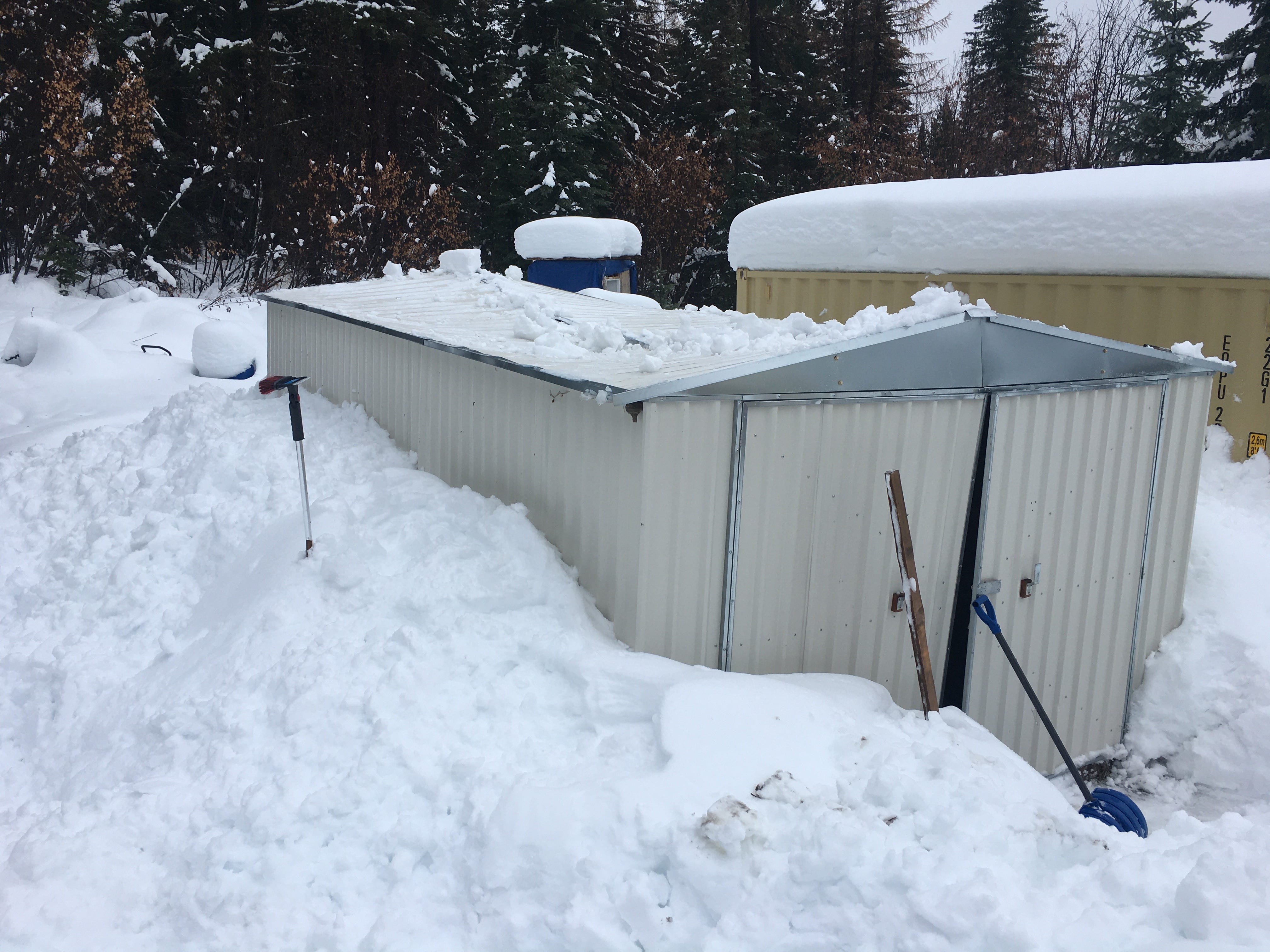
If you’re from a warm place that doesn’t get snow, you likely don’t know how much it can weigh. The light fluffy stuff can be as little as 3 pounds per cubic foot, while wet, saturated snow can be 20 pounds (possibly more, I’d guess).
One day a few seasons ago, Curt and I went to town to run errands and grab some dinner. While we were away, it snowed a foot. Not a big deal, clearing roofs the following day would have been fine - but before we got back that evening, the snowfall became rain. That foot of snow turned into a sponge. In only a few hours, the tin shed collapsed.
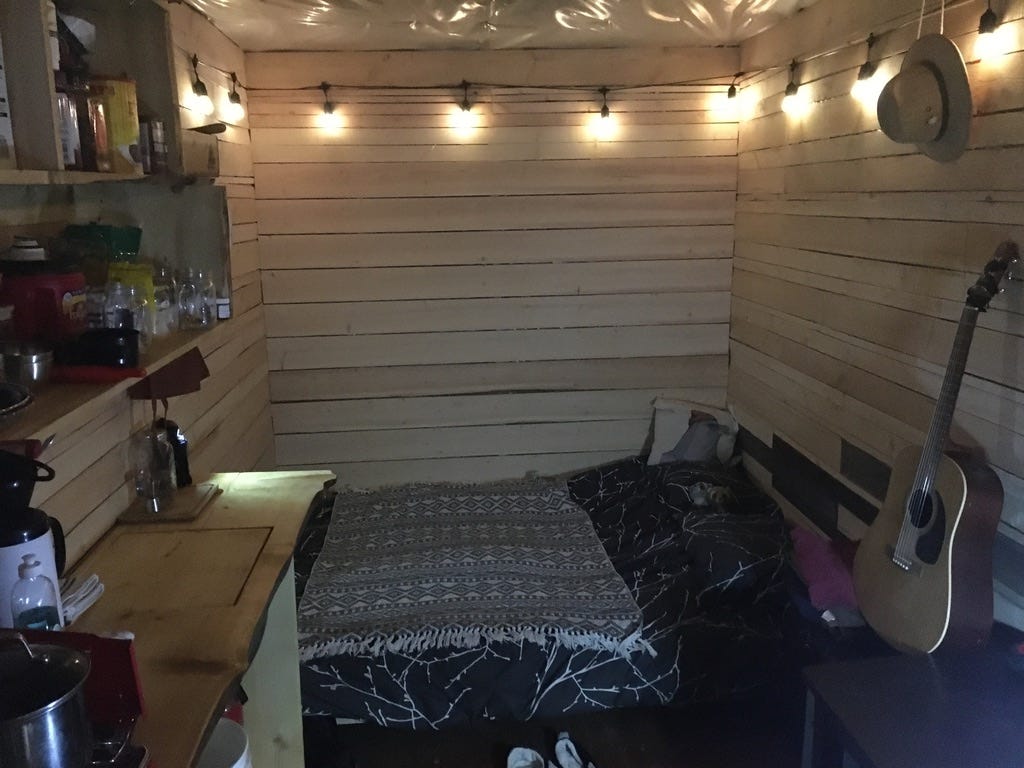
The treated mahogany floor in a shipping container is over an inch thick. We coated it so that we weren’t subjecting ourselves to the chemicals in the wood. For the first winter, as we built the shipping container house around us, we slept on a mattress on the floor. Though a bit chilly, it seemed like a fine choice until I lifted the mattress and discovered something mortifying.
There was mould growing on the bottom of my mattress.
What I didn’t understand at the time: cold floor + people + no airflow = mould.
We exhale a surprising amount of moisture - about 1/2 cup per day. Though we’d vapour barriered the rest of the house properly(thank goodness), we failed to account for the floor. The mattress was collecting humidity and growing its own ecosystem.
Gross.
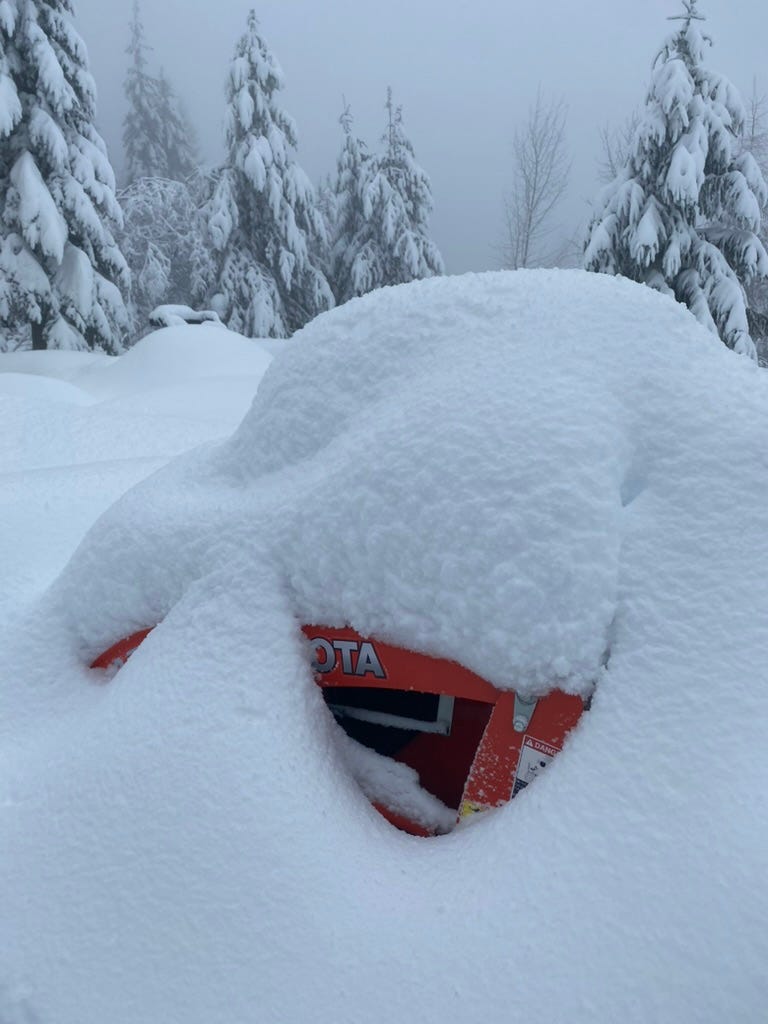
I’ve tried flying kites; it’s a silly thing to watch as I run around in circles. The wind swirls around the mountain, not coming from one direction consistently, ever. I’d have success for a moment, followed by a sudden nosedive as the wind does an about-face. Because of that, tarping things here to protect them from the weather is almost impossible. Even the purpose-made fitted tarp for my sawmill has been pulled off by the wind.
The wild snowshoe hares have been surprisingly pesky. Beyond eating plants, they enjoy power cords. Something they enjoy even more than power cords has been my laundry. If something drying on the clothesline falls off, the hares get it. Like a linen murder scene, bunny tracks in the snow lead to a garment in bits.
Thankfully, the cats scare them and the gophers off for the most part.
Gophers like open spaces, so as soon as I mowed a yard, they figured it was theirs. They moved in en masse, to the point that on more than one occasion, a running gopher collided with my leg. They aggressively hazed me, chirping all around the perimeter with their loud siren noise. When I caught one stealing my goat feed and confronted it kindly, a gang of gophers literally circled me. After going on a strong offensive, they’ve learned to keep their distance - for now.
I was told in the beginning that in the winter, stored diesel would need a stabilizing additive to prevent it from gelling. As it turns out (common knowledge to many, but not me), the diesel sold at gas stations has an additive already put in it for winter. In the fall, it’s common to ask, ‘Do you have winter diesel yet?’ If they do, it’s time to stock up.
Storing gas has come with its own problems. One year, there was water in the gas from a particular station. Our trucks quietly compensate for sub-par fuel by making automatic adjustments, but the small engines can’t handle it. It took a while to deduce, as every small engine began to sputter, cough, and ultimately quit running. There was something wrong with the multiple cans we’d bought. This was a very frustrating time.
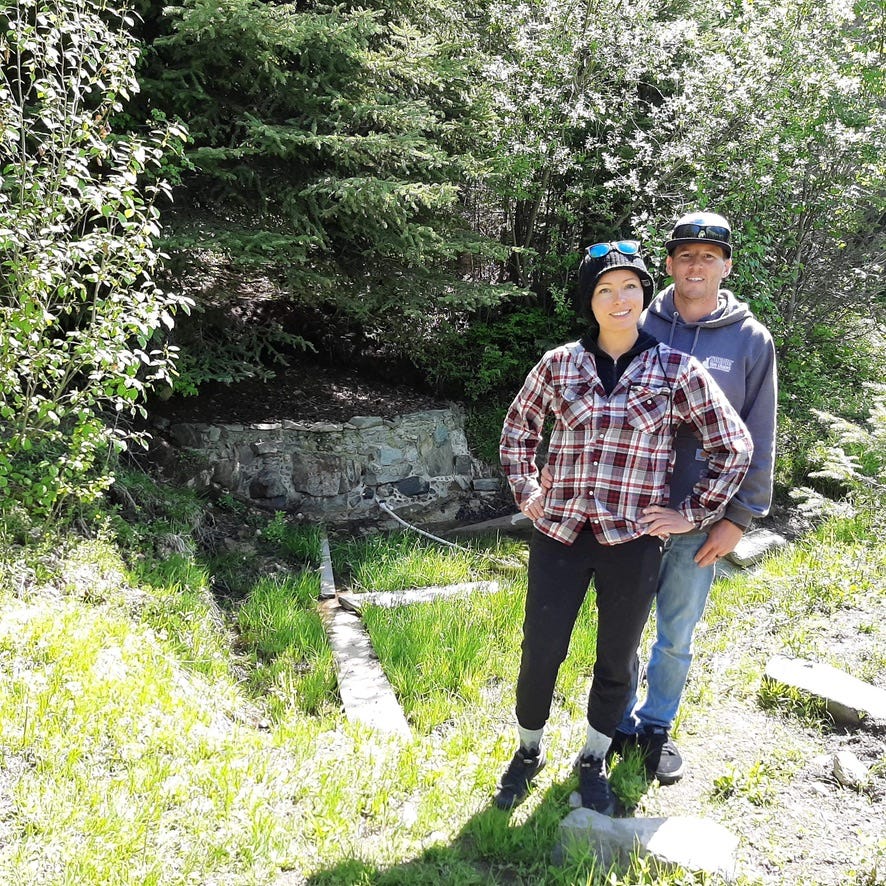
As much as water is life, water is a living thing. It is always changing the plot, finding new ways to escape and keeping itself at the center of attention. My water comes from a spring, which we harnessed by creating a ‘spring box’.
Basically, we built a small stone wall downhill of the spring to catch and collect the water. While building it, we discovered far more water than anticipated and a sand layer which perpetually leaks. Now, every year, it needs a few adjustments and tweaks in order to collect water. Once the water is collected, we move it uphill above the house to gravity feed down (in the summer) or store it (in the winter).
Here’s a list of the many ways I’ve made mistakes with water.
Painting outdoor vessels black did not prevent them from freezing
Moose and bear trampling, crushing and chewing on pipes
Closed valves of IBC totes freezing and breaking
Rabbits and squirrels chewing on hoses
Algae in totes, regardless of cover
Airlocks in the system
and on… and on..
The mountain hasn’t given us unusual problems so much as it has removed the buffer. The stakes feel higher because the responsibility sits squarely on our shoulders. The difference is that rectifying those problems is harder; no plumber is coming, and there is no quick service call to make.
Currently, the nearest town is boiling its water due to a leak in its own system, reminding me that unpredictability is not unique to life off-grid. Water systems fail, pests exist everywhere, and bad gas would have been frustrating regardless. The lessons have been difficult and sometimes frustrating, but they’ve given me competence, patience, and a deep respect for how much of modern life usually happens out of sight.
This mile-high curriculum is a steep order, but here’s hoping I earn a passing grade.

Comments
Nothing yet. Say the first thing.
Sign in to join the conversation.