
Four Maine Democrats are actively engaging in a primary for what’s been and remains a highly competitive House seat.
As states gerrymander in earnest, Maine’s second congressional district stands out.
That’s because it’s not lopsidedly partisan.
Trump won the district in 2016, 2020 and 2024. But through that whole time period, ME-2 was represented by a Republican for just two years.
Democrat Jared Golden first prevailed in Trump’s first midterm election but isn’t running this year.
Republicans want to flip it red.
Former Gov. Paul LePage, who will be 78 by Election Day, is again back from the Sunshine State.1 He rented an apartment in Augusta to establish residency so he can try to make it to Congress.

The polls show a close race.
Some analysts assert that LePage is the clear frontrunner.
But, according to polling from the University of New Hampshire (UNH), LePage is far from a behemoth.
Of the four Democrats running in the primary, Maine Auditor Matt Dunlap and state Sen. Joe Baldacci trailed LePage by a single point. Jordan Wood sat four points back. UNH did not poll Paige Loud.
Nationally Republicans’ midterms look very tough for them.
And so the tussle to win the Democratic nomination matters.

What happened in the first debate?
The four candidates agreed with each other an awful lot on stage, but some things stood out.
Most inspiring: Loud’s experiences and Dunlap’s response.
In the debate, the moderator asked Paige Loud about her lack of experience in office. (By the way, former congressional staffer Wood also hasn’t been elected to anything but didn’t get that question.)
Loud energetically and convincingly talked about how being a social worker positioned her to know what Maine people are facing in trying to pay their bills and get ahead. Loud also noted that she was well acquainted with public policy affecting people’s lives.
Not only was this inspirational but so was Dunlap’s response. Instead of diving right into answering the question he was asked, he used part of his time to say how much he appreciated Loud being there, that he was about her age when he first ran and why it was essential to have young people in office. Dunlap validated her candidacy and experiences.
Most different policy-wise: Baldacci on health care
While all the candidates talked about passing something like Medicare for All, Baldacci proposed taking the incremental step of lowering the Medicare eligibility to 55 as a way of moving toward universal coverage. This would improve the risk pools for Medicare and for private insurance but it would also leave out a lot of people who need health care.
Most disingenuous: Jordan Wood on why he’s running
Wood was asked why he switched from running for the U.S. Senate to the House. His answer was that he went where he was most needed.
But Wood’s Senate candidacy hadn’t been going anywhere before he jumped to the House race and promised to move to the congressional district. He declared after Rep. Golden left the race (in which Golden had a primary challenger, Matt Dunlap) and after a UNH poll released in October 2025 found Wood with just 1% of the vote in the Senate race.
Oddest moment: Maine state parks
No doubt this question was meant to be kind of fun but it ended up being interesting and revealing. The moderator asked everyone what they thought was Maine’s most under appreciated state park.
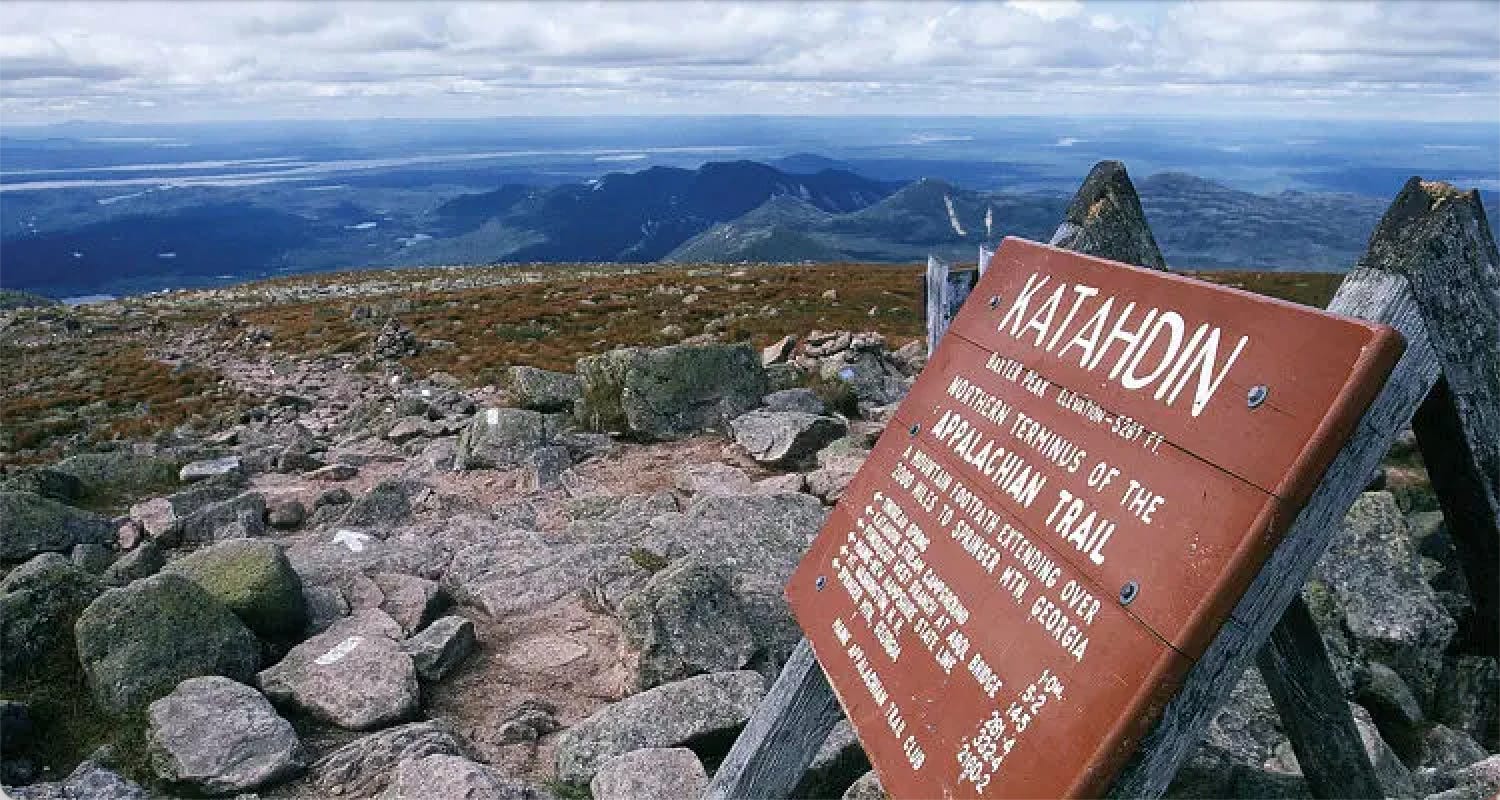
Wood and Baldacci named Baxter State Park. Yes, they named the famous locale that includes the high point of Maine, Mount Katahdin, which is also a sacred site for the Wabanaki people and the northern terminus of the Appalachian Trail. Drawing people from all over, it’s hard to see how it’s the most under appreciated (and, to get technical, isn’t part of Maine’s sprawling, wonderful state park system).
Loud’s and Dunlap’s responses2 made them look more in touch with Maine’s amazing woods and waters and perhaps more inclined to care about federal policies protecting the outdoors.
The Money Race
In politics, having the most campaign cash doesn’t mean you’re going to come out on top. Still, it’s worth looking at how fundraising has been going for the Democrats.
These summaries use FEC data through the end of March 2026.
Baldacci and Dunlap
These candidates polled the best versus LePage and have political experience.
Baldacci brought in $281,417.91 in total contributions, with $273,967.91 coming from individuals. His reported $148,939.77 in cash on hand includes $35,500 he loaned to his campaign.
Dunlap raised $617,357.24 in total contributions, with $609,357.24 of that coming directly from individual donors. He has $244,254.60 in cash on hand, $100,000 more than Baldacci.
Wood and Loud
Neither of these candidates have been elected to public office.
Wood, with strong ties to national Democrats and the party’s fundraising networks, had the largest war chest: $696,479.87 in cash on hand. $250,000 of that comes from a loan Wood made to his campaign.
Loud is running on a shoestring of $4,674.11 in cash on hand.
Thanks for reading Political Sightlines! This post is public so feel free to share it.
The Road to November
If the first debate proved anything, it’s that the Democratic field is largely unified on policy. Meanwhile they’re having to raise and spend money against each other.
Without a primary, LePage is sitting on $1,335,520.40 in cash on hand.
But while the Democratic candidates scramble for donations before a nominee is chosen on June 9, the national heavyweights are setting up to move in.
Because Maine’s Second District is a non-gerrymandered open seat, it’s a target for the national parties.
Democrats’ House Majority PAC, is planning to spend more than $8 million on the race. According to the Portland Press Herald, their initial ad reservations include $2.72 million in Bangor, $4.73 million in Portland, and $780,000 in Presque Isle.
National Republicans will also spend heavily. With a narrow House majority they want to protect amidst very difficult political headwinds, the GOP sees Maine’s second congressional district as one of their best pickup opportunities.
The primary, then, isn’t just about who can raise the most money today. It’s about who can best survive a multi-million dollar pummeling and attract volunteers and voters.
As I will explain in a future post, I see Dunlap as the best situated to beat LePage.
If you watched the debate, please share your impressions below.
Also look for a ME-2 Democratic primary debate on Thursday, May 28, at 7 PM on Maine Public Television, hosted by Maine Public and the Portland Press Herald.
Political Sightlines is a reader-supported publication. To receive new posts and support my work, consider becoming a free or paid subscriber.
In 2022 Republican Paul LePage returned to Maine from Florida to challenge and decisively lose to Gov. Janet Mills.
Dunlap named Reid State Park. Loud offered Tidal Falls (which she acknowledged might not be a state park and it isn’t — it’s a preserve — but it’s still a better answer than Baxter, which is very appreciated).
Comments
Nothing yet. Say the first thing.
Sign in to join the conversation.