
Content warning: violence against women.
I first heard vaguely about Australia’s much hyped Giggle v Tickle case, in which transgender woman Roxanne Tickle has now successfully appealed her discrimination case against Giggle for Girls app founder and CEO Sall Grover, about a year ago in the UK. I can’t remember from whom. That it was in Britain isn’t surprising though.
Then, on this very site last Thursday, I saw a sensational headline from someone there announcing “Australia decides what a woman is.”
There are a few stories that explain the case, in which Grover has been ordered to pay $20,000 in damages after a court found two acts of direct discrimination on her part, well. This ABC one and this Conversation one and this Conversation one provide a good overview, while this Women’s Agenda piece lays out Australia’s position on transgender rights. This X thread provides some useful information. The judgement is here. NGO Equality Australia also released this explainer. Please pay particular attention to the section titled “single sex spaces”.
It’s hard to get into everything because there’s little time and I’m not a legal expert. I have spent the past week reading every story and listening to every podcast I can find on this however.
When I first saw the aforementioned Substack headline, yes I rolled my eyes and thought please don’t bring this here. That’s even though I respect gender critical UK writers and journalists and read what they write, agree with them on some other issues even if we’re not on the same page on this, and have even bought some of their books. And I acknowledge that some of their journalism - on the Tavistock Clinic and the Cass review for example - has been important and necessary.
The difference in reaction to the Grover case from people in Australia and people in the UK (not all but many) has certainly underscored transcontinental differences when it comes to this issue. This isn’t to say that there aren’t some Australians who are upset at the ruling, there’s many, or that Australians don’t have agency in this matter, which has predictably sparked a knee-jerk reaction from our opposition Liberal Party, the National Party and far-right party One Nation. They’re now vowing to introduce bills that will set out the biological definition of a woman when Parliament returns soon.
If you’ve spent time in Australia and the UK, you will certainly notice that our countries have gone down different paths on this issue, shaped mainly by different laws but also by a difference in the media coverage. I love the UK and the people there, but for all the wonderful things about modern day Britain, this issue which has sadly become utterly toxic, isn’t one of them. Interestingly, while I was writing this, Amnesty released this report that maps the growth of the UK’s gender critical movement and argues that press coverage of the trans issue has been disproportionate to the size of the community’s population.
This was the day before it was reported that the UK’s Equality and Human Rights Commission (EHRC) long-awaited policy on single-sex toilets wouldn’t include transgender women. Of course there are so many tolerant and kind people in the UK. But this debate always feels like it’s dialed up to eleven there. Earlier, I saw that journalist Ian Dunt, who I think is one of the best political writers and analysts to come out of the country, is the latest victim of an internet pile on, all for daring to make JK Rowling and the rabbit hole she’s gone down the subject of a podcast, which is entirely reasonable and justified given her fame and her past statements and actions on this.
Of course the people who are the real victims of all of this are the trans women whose lives are at the centre of this issue and we should keep that in mind. One in two trans people experienced hate, one in ten experienced violence in the previous 12 months in Australia, according to NGO Our Watch, citing a 2023 study. Meanwhile 55% of trans women experienced sexual harassment or assault, almost double the rate for cisgender women. And one in three trans people experienced homelessness, 19% were unemployed and 56% had faced discrimination in healthcare, according to the Australian Human Rights Commission (AHRC), which backed Tickle in the case from the get-go.
The ruling has also sparked some very interesting responses in the UK and US, as well as in Australia. In one video, for example, somewhere in the UK an anti-trans activist walked across a field asking those supporting the ruling if we knew our “feminist history”. Fun fact: in Australia, we were among the first in the world to vote, thanks very much. I am acknowledging that Indigenous people weren’t included in this, of course. Still, some responses felt like they had a bit of a 1950s “Mother England” vibe to them, as someone on another platform described perfectly.
Yes of course we can take it, there’s such a thing as free speech, and you’d laugh if this issue wasn’t so serious but still - tone deaf? A bit? The lack of self awareness is stunning.
What’s been quite gobsmacking and infuriating is all the “thoughts and prayers for all the women and girls of Australia” posts. This includes some on this site and other platforms, by some people from a far who don’t live here or aren’t from here and who I thought would know better. I’ve seen several others say the same thing on other platforms.
Please, if you want to be upset, be upset for trans women. They are the ones who are marginalized here, and as I detailed above, they will suffer the most from the hate you stir up. And by all means feel sorry for women who are victims of domestic violence in Australia at the hands of cisgender men. But for God sake, please don’t tell me (us) that you’re thinking of me (us), people who are from here and who call this place home, from some 17,000 miles away. We live in a sovereign nation, a democracy, where there’s rule of law, we have agency and can think for ourselves. Again, this is so very tone deaf.
I think most Australians are inclusive and tolerant when it comes to LGBTQ+ people, including trans people, too. In fact I don’t think this is an even an issue for most people. I know I don’t face any threat from trans women.
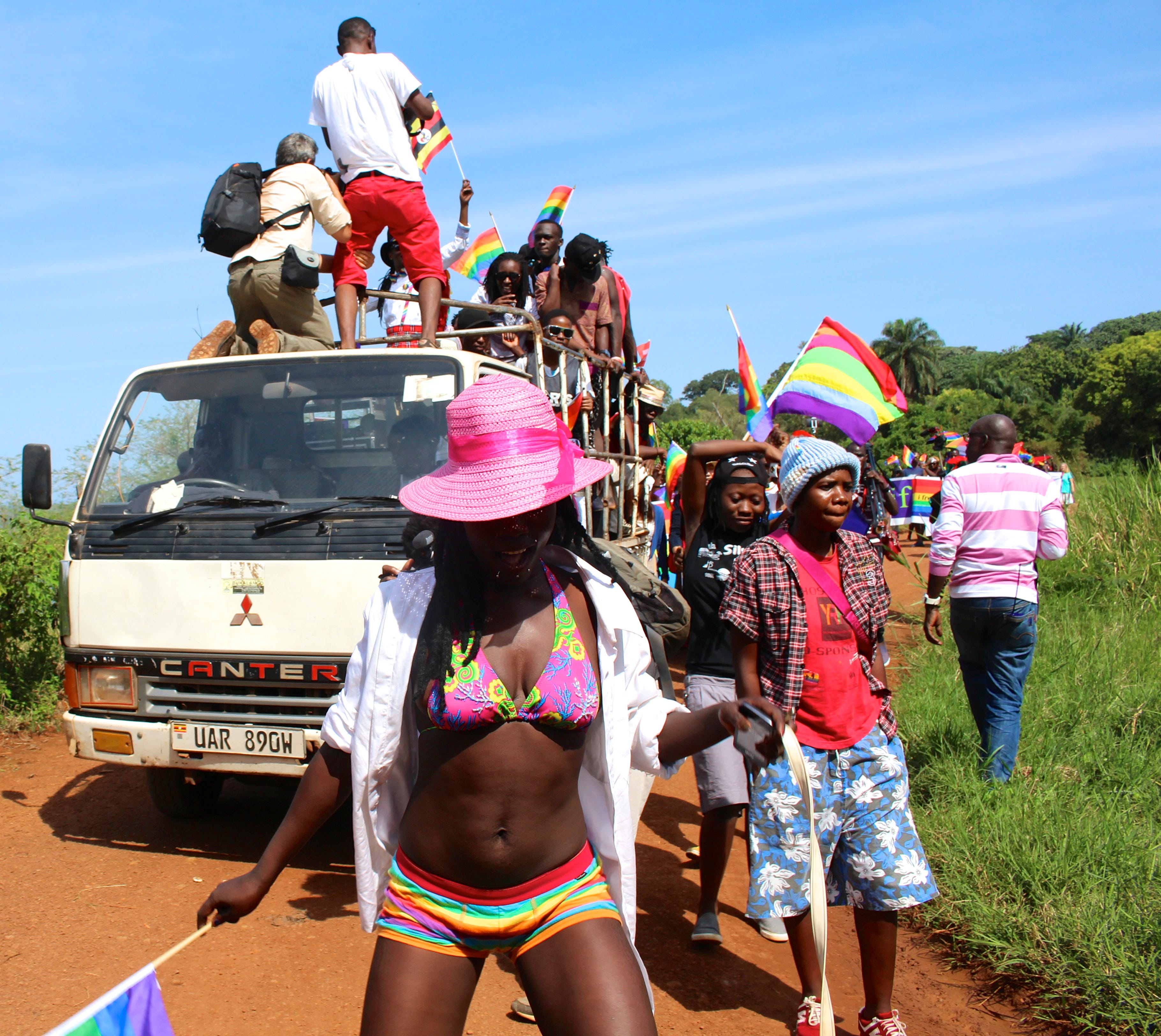
As I’ve lived in and travelled to some places around the world, several, mainly Uganda, where legislators actually debated putting people to death for same sex acts and voted to imprison them for life (there’s only straight and gay, trans rights are virtually unheard of through no one’s own fault) that I’ve had to think about the LGBTQ+ culture wars a lot. I appreciate that not everyone has had this experience. And yes it can get very tricky to balance your own values and living in a different culture that embraces the opposite. But we need to be wary of importing and exporting culture wars to other countries and imposing our own beliefs and culture on them. What I’ve seen over the past couple of weeks actually reminds me in a way of the hate and hysteria that was exported to Uganda and other parts of Africa from the US far right, albeit on a different level and with different circumstances of course, given that we are talking about authoritarian states.
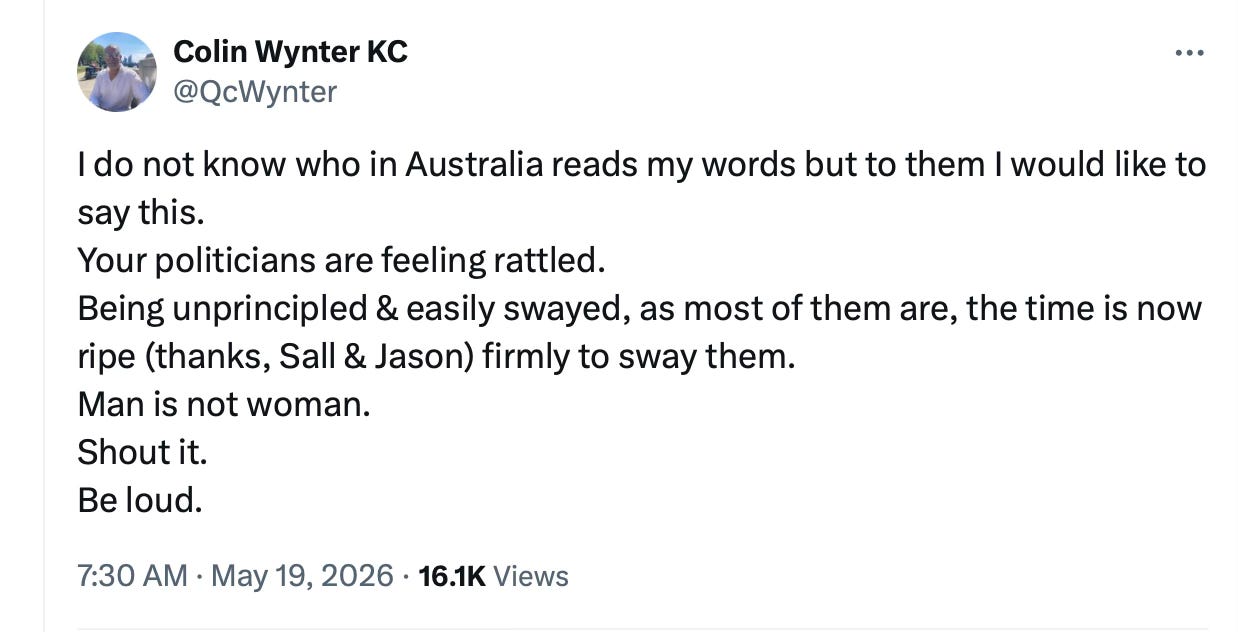
Yet a protest was organised at our high commission in London, made up of both expats and others (luckily there were more blown up kangaroos than people), with many telling us that Britain stood with Australia. “Oz had fallen,” some said.
In the US, which under Trump has moved aggressively to roll back trans rights at the federal level since January 2025, people who thought we were actually living out Crocodile Dundee, were also stunned.
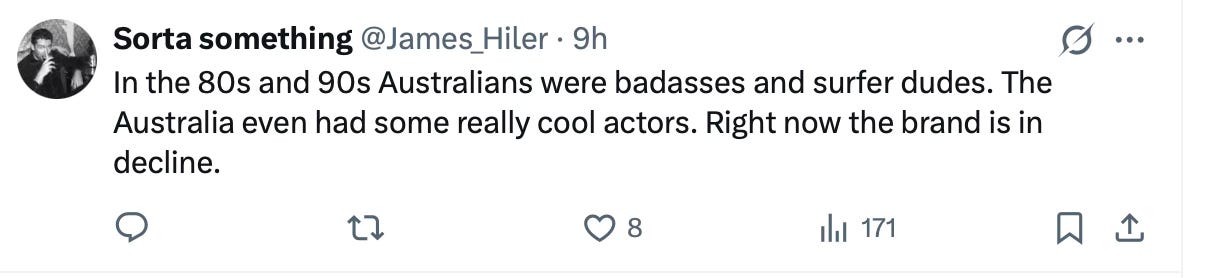
The gender wars are an interesting one because - not to make light of this subject but to illustrate how hysterical some of the reactions have been - as many outside indicated they haven’t taken such an interest in Australia since the original Crocodile Dundee movie. That was in 1986, over four decades ago. Can you think of any other issue that would provoke such a response?
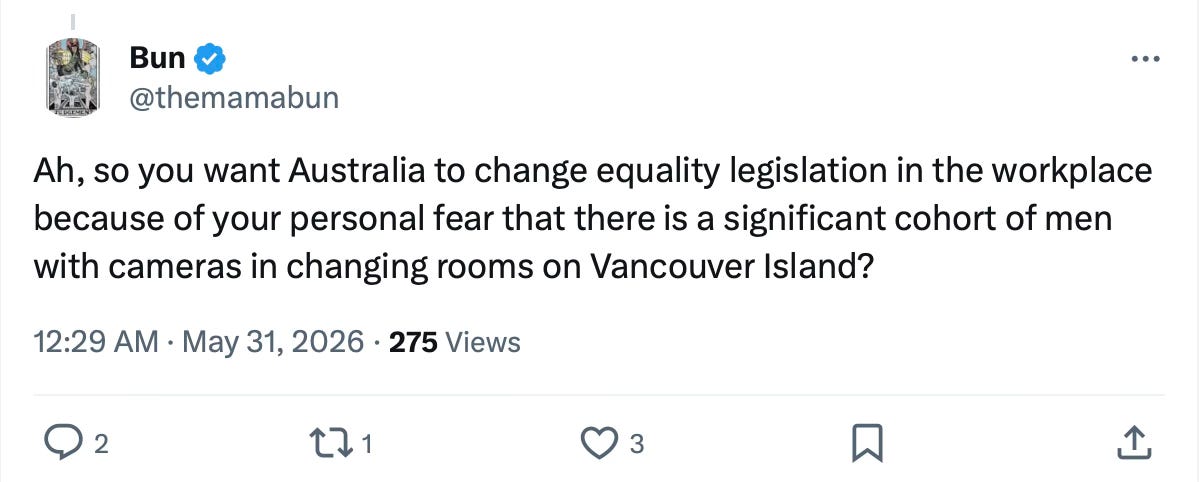
Take for example these responses below:

Then we have this delightful, insightful commentary:
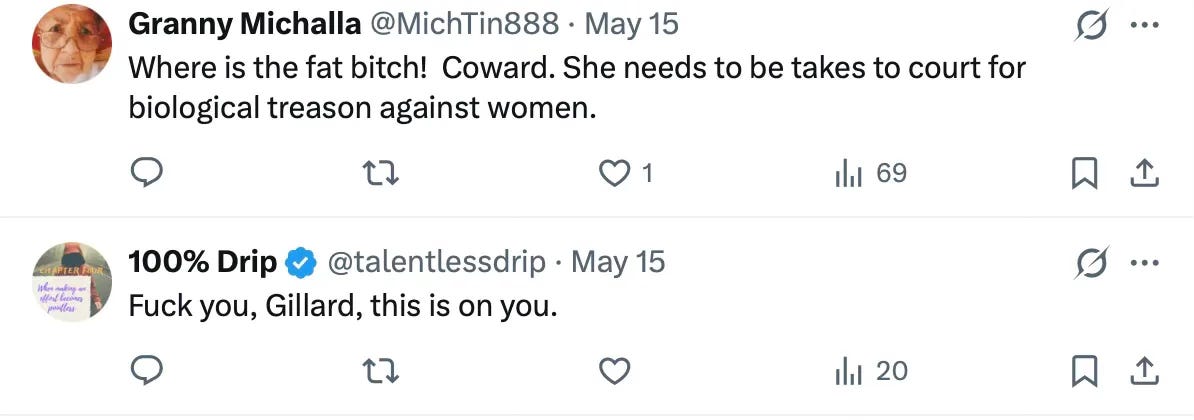
(Note: I would not normally showcase posts like these ones directly above. But maybe it is time for some of these anti-trans people to have a good look at some of the people they have on their side and take a look at what they’re fueling. Are you comfortable with all of this??)
Perhaps journalist and writer Peter FitzSimons said it best when in relation to a “gotcha” question on X - “what is a trans person?” - he replied, “Who knows? Who cares? Live and let live!”
There’s no doubt we’re now seeing trans rights come under unprecedented attack all across the world. During the week a bill that would legally define “man” and “woman” passed its first reading next door in New Zealand. What’s interesting about this is that there are questions over whether it would have any legal impact, yet it would still serve to create an atmosphere of hate and harassment in the country. This is reminiscent of what has happened in Uganda, where I lived for about seven years, which has now passed two anti-gay laws, on top of its penal code originally introduced by the British during colonialism, an issue that I’ve written about extensively.
Meanwhile Kenya last week ruled that its law does not expressly prohibit the alteration of sex or gender markers on official documents. The east African nation is a significant outlier on this when looking at the continent. But it is part of a small and slowly growing cluster of the continent’s courts that have pushed ahead of their legislatures on trans rights, rather than being a completely isolated case. So it seems like when it comes to this battle, it’s one step back, one step forward, another back.
When it comes to Britain, it is a democracy and it can make its own laws, and we should respect them, of course. They can knock themselves out with as many conversations about toilets as they want as far as I’m concerned, whether I agree with their law or not, and even if it does get so very tedious. I actually don’t understand why this has become such a huge talking point in Britain in the first place, when there’s so much else going on and actual problems to deal with. The level of obsession in this country over this subject now - fights over swimming ponds and running events for instance - actually make it boring.
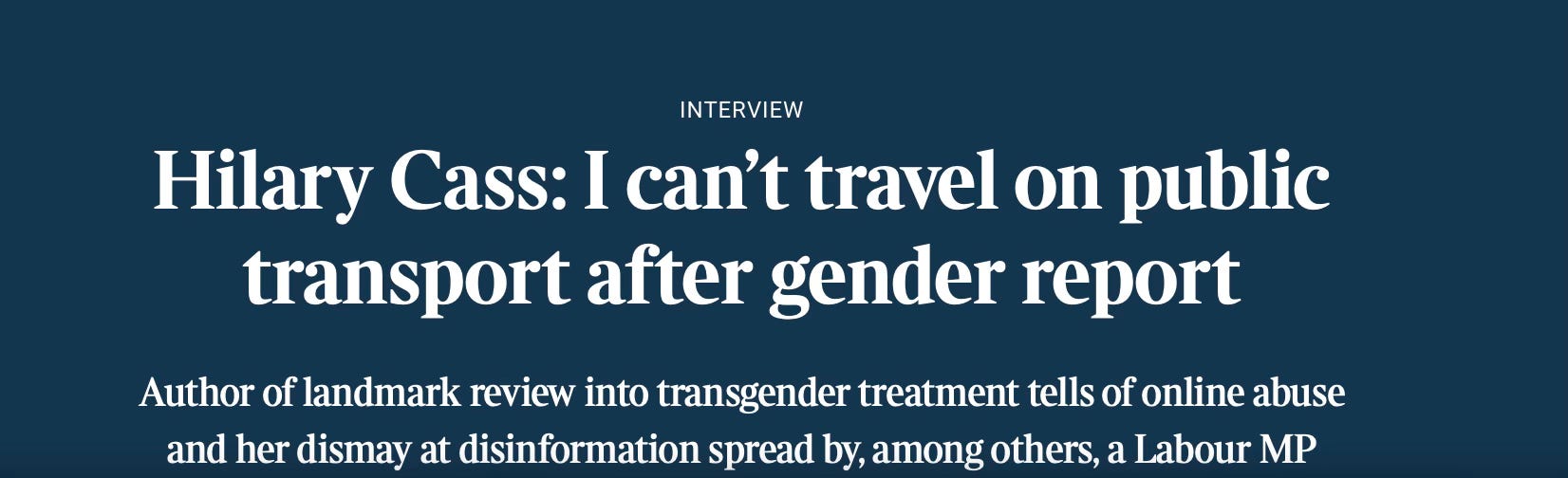
Then there’s been things like the headlines about the doctor behind the landmark review of the NHS’s gender identity services for children and young people, who in 2024 revealed that she was not able to use public transport out of fear for her safety. Where the UK has gone to on this issue is terrifying. Of course that’s not to say that Australia is a Utopia or that LGBTQ+ people aren’t victimized here - or that we’re also not going to go down this road. Our far right One Nation party is on the rise.
To their credit, most of our press here, including major outlets such as the ABC, The Guardian and major women’s media like Mamamia, currently won’t go near Grover with a barge pole, leaving her to do press with the likes of our Murdoch media (Sky news and The Australian or Mail) and then The Christian Post, religious podcasts in New Zealand, and unsurprisingly, GB News and Talk TV and the rightwing papers in the UK. I can see why. News sites are in the business of making money. They’d lose their young progressive readership in an instant, and some of their older ones too (remember Holly “everyone starts off a lefty” and then some remain lefties even if you don’t agree Valance) if they amplified her.
Grover herself has complained in several interviews that she has to “go half way around the world to be heard on this.” The fact is however that this is not a victory for her, she has lost in court twice now. So besides media likely not wanting to cover her because of her views, is it in the public interest to splash her across newspaper front pages as she demands?
The other thing to remember is that this issue is mainly being thrashed out on social media, which makes me ask does chatter on X amount to public interest, and should outlets cover stories just because of this? And if you’re taking the temperature on something only through X, do you end up with a very warped view? Especially when sites like the one formerly known as Twitter are now predominantly far right since Elon Musk took over and many moderates and progressives have fled to Bluesky and other platforms.
Even on X this week though, the differences in attitudes between Australia and the UK were evident. Our former prime minister Julia Gillard - our first female prime minister, the same one who I saw last month at the Women Deliver gender equality conference - summed this up while speaking in Adelaide back in 2023 when she was asked the inevitable gotcha question, what is a woman:
“I’m very happy to answer your question but I do worry that — I should just say I spend around half of each year in the UK - and in the UK this has turned into a kind of gotcha parlour game. So if you’re listening to the radio there will literally be some person on there from London City Council who’s trying to tell you why the traffic is not going to flow well that day and the journo will be saying ‘can you tell me what a woman is?’ to try and create these gotcha moments.”
As much as I don’t like to amplify this particular site, her entire response here is worth a read. When you consider that any answer will be beat up by the press, can you actually blame any politician who avoids this question now, no matter what side they’re on?
The Giggle vs Tickle case required the court to examine the application of the Australian government’s 2013 amendments to the 1984 Sex Discrimination Act, which was amended by Gillard’s government. It relies on the Convention on the Elimination of All Forms of Discrimination against Women (CEDAW). Presumably, Gillard, who was not only a seasoned politician at the time but had worked as a lawyer, was well aware of what she was doing when this bill was passed without a formal vote but with broad support.
Gillard isn’t perfect nor without criticism but did some good things during her leadership and has done brilliant work since, yet has been vilified, threatened and harassed on social media all week for her role in amending the Act, after becoming the subject of a witch hunt by those not happy with the ruling. One British anti-trans activist on this platform made reference to "from Gilead to Gillard" in a piece about the case. While this might have been one of the more moderate responses, I’m fairly certain she didn’t know much about her.
X is a cesspit these days, but this is one of the worst if not the worst pile ons I’ve seen of late, with many using this issue as an excuse to simply target a former leader who they never liked, and by bad faith actors with an agenda. The “misogyny” and hypocrisy label aimed at Gillard is unfair for several reasons. The law was widely backed at the time, as I said. The government was bringing domestic law into line with obligations Australia had already accepted. The law contains many protections. And there have been several governments since hers (made up of men) who could have amended the SDA, if it was problematic.
But in any case, what we’ve seen over the past week hasn’t been valid criticism of Gillard, it’s been hate. And it’s strange that so many attacking her are the same people who claim to be fighting for women.
Incidentally, one of the areas Gillard has been working in is research on attitudes towards gender and the “manosphere”, as the chair of the Global Institute for Women's Leadership at King's College London. I bet she will have some interesting observations for further data, if there’s to be a silver lining from all of this.
There are many problems with Grover, who first came to public attention in 2022, when she criticized Australia’s Medicare for referring to mothers as “birthing parents” on a form, claiming that this was part of the “erosion of women’s rights.” Some pointed out that this wouldn’t stop her from calling herself a “mother.” The federal government agency responsible for the forms said it had received positive feedback for the gender-neutral language. The federal government eventually gave in to Grover and removed the term from the required forms.
In an interview she did with Australian current affairs show The Project last year, when asked if it was correct that she didn’t believe trans women exist, she replied “100%.” Grover added: “The only pre-requisite to be a trans woman is to be a man.”
In court - in actual court - Grover misgendered and ridiculed Tickle, as has been highlighted by others in the past week. She laughed at Tickle and readily admits this, refusing to apologise.
In one podcast interview with Andrew Gold in the UK, Grover spoke of “LGBTQI alphabet plus people”. Gold, who hosts the Heretics podcast, informed her that Britain “was called Terf Island”. He added: “you can feel it.”
Grover added in the interview that hate speech laws passed by Australia’s federal Parliament after the Bondi terrorist attack last year were further proof of how “absolutely batshit insane Australia is”. But she concluded that she couldn’t be an awful person because “I have a mixed-race daughter.”
She sat alongside lawyer Katherine Deves in that interview. Deeves was a failed candidate in our federal election in 2022. During the discussion with Gold, Deeves hit out at gender self-identification laws that were introduced in New South Wales last year, claiming that Sydney was “completely captured by woke”, with the city’s inner-west “just smothered in rainbow flags”. As for the media, she added, “they're so woke, they even have their own channel called ABC Queer”.
When it comes to her legal case, even if Grover felt she was technically in the right, she had no manners, as others have pointed out. Here is an actual line from last week’s judgment:
“Some of her conduct was gratuitous, disrespectful and unnecessary to the conduct of her case. It did not advance her defence.”
What is also very concerning - it seems this story hasn’t been picked up overseas yet - is just who is backing Grover. Last week, Australia’s LGBTQ+ newspaper Star Observer reported that she was being supported by the Alliance Defending Freedom (ADF), a wealthy US-based conservative Christian legal organisation designated an anti-LGBTQ hate group by the Southern Poverty Law Center. who is a doctoral student at UTS and an expert in these groups, knows more about them and has written this about them here.
The ADF, based in Scottsdale, Arizona, was founded in 1994. Its overseas arm, ADF International, is headquartered in Vienna. It has offices in Brussels, Geneva, London, Strasbourg, Mexico City and New York.
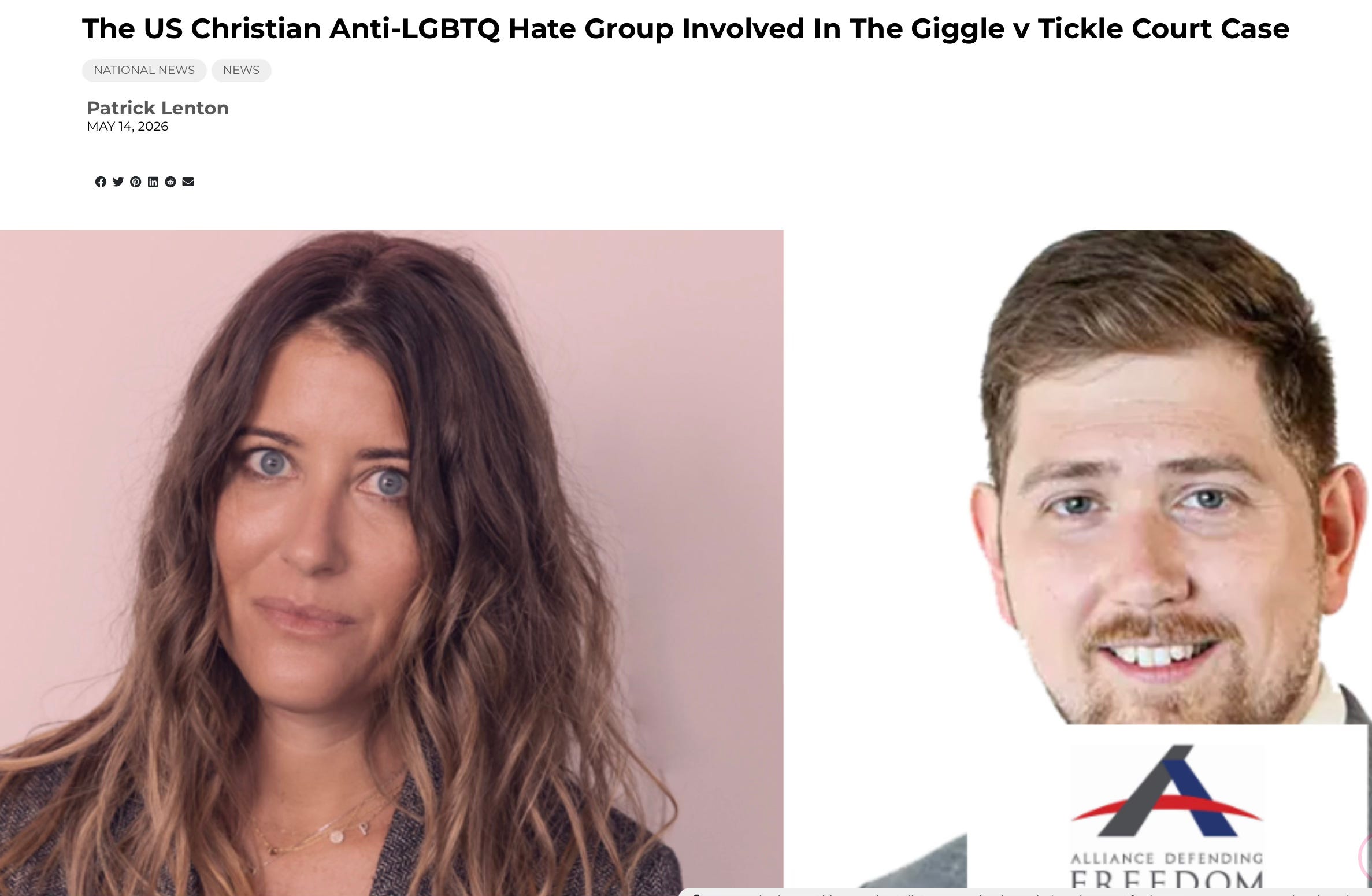
ADF haven’t confirmed that they’re funding Grover and nor are they on record as being a party, intervener, amicus curiae, or otherwise formally listed participant in the case, the Star Observer said.
But they put out a press release after the May 15 ruling, with quotes from their director of advocacy and a photo of Grover. This was at least the third statement they have released supporting the Giggle for Girls CEO and founder. She had presumably given them this image or was happy with the release being disseminated. And in one story Grover posted on X, written by The Christian Post, ADF featured high up in the second paragraph.
ADF played a key role in overturning Roe v Wade and has publicly stated it wants a world where abortion is “not just illegal but unthinkable.” On their website, they say: “Alliance Defending Freedom rejoices alongside others in the pro-life movement over the victory in Dobbs... Alliance Defending Freedom attorneys and staff were proud to be involved from the very beginning, all the way back in 2017.”
There's no ambiguity here. They celebrate their involvement in overturning Roe openly and in detail on their own website. And they now have their paws in over 100 countries, and are also funding a separate lawsuit against a South Australian school over its sex education curriculum.
UK Reform party leader Nigel Farage’s appearance before the US Congress in 2025 was orchestrated by the group, and ADF have stated that their long-term goal is to roll back abortion rights in Britain, as The New York Times revealed last year. Zoe Williams for The Guardian followed this up with an op-ed which is worth a read, too.
According to a Ms Magazine report from late 2025, the organisation has arranged meetings between Reform and the Trump administration to discuss abortion and online safety laws, but denied that its representatives have met with Farage directly to talk about this.
We therefore have to ask this: is the case against Tickle actually about defending “women’s sex-based rights” or is it simply about opposing the trans ones?
Should Grover eventually win in the High Court, the ADF will be emboldened, although they already have a foothold in our country now. Where will they go and what will they do next? If you’re supporting the new poster girl for women’s rights, how do you feel about championing someone who is being backed by the same group which worked to overturn a landmark US abortion rights case, is now getting into bed with a far right party in the UK which could be in power soon and will most likely try to curtail these rights there, in Australia and God knows where else?
Should they have a win for their side in Australia and trans rights are rolled back, clearly reproductive health rights will be up for grabs next, as far as the ADF are concerned. And others. As we know they could be in the UK and elsewhere too. We know how the saying goes “first they came for…” This is another reason why we have to unite, we need to be on the same page on this. The stakes are too high for us not to be. And no, the argument about finding some strange bedfellows on your journey does not do it for me, as others have also pointed out.
In looking for figures for this piece, I discovered there’s hardly any data on how many trans and gender diverse people we have in our country. According to the Australian Bureau of Statistics (ABS), less than 1% of people in the country fall into this category, including trans men, trans women and non-binary people. This equates to about 178,900 Australians.
On the question of same sex spaces, as Gillard pointed out in 2023:
“There are a set of issues that need to be thought through about prison arrangements, about fairness in elite sport - those sorts of things - that we need to think about and work through if we try to do it inclusively. Most people in their lives won’t end up playing elite sport, most people won’t end up in prison. Most people in their lives will encounter at some point someone who is a transsexual person, and I think what really counts is the openness and spirit of inclusion about the way that you encounter them.”
And I, having certainly met, known and appeared on stage with, transsexual women believe that part of that inclusion is referring to them the way they want to be referred to, using the pronouns that they want have used about them – I would seek to do that in that circumstance – I would seek to do it when I was meeting somebody from an ethnically-diverse background if there was a particular way that they wanted to be referred to, have their ethnicity referred to then I would adopt that way and the list goes on and I think if we can all do that we can kind of take the temperature out of this.
What we do have data on is attitudes towards trans people here. A 2025 Redbridge survey conducted for NGO Equality Australia of over 1,000 Australians found that 81% agreed or strongly agreed that trans people deserved the same rights and protections as other Australians. Meanwhile, 89% agreed or strongly agreed that LGBT people deserved to live with dignity and respect, and 91% agreed or strongly agreed that they should have the freedom and choice to live their lives happily.
Time spent on this issue is a distraction from the one woman on average who is killed every week in Australia. Our prime minister Anthony Albanese labelled this a national crisis two years ago. What those in the UK and US so very concerned about the Giggle vs Tickle case haven’t heard is that last Saturday, the family and friends of Isla Bell gathered in Melbourne to mourn her, as The Guardian reported. The body of the 19-year-old was found in late November 2024 in a rubbish tip. The man charged with killing Bell has had charges downgraded to manslaughter and subsequently withdrawn due to insufficient evidence for a trial. No prayers or thoughts were sent to Australia from around the globe over this last week and nor was it much of a talking point by Australians concerned with the Giggle case on socials.
Only four days later came the story of a father who allegedly killed his two autistic sons he was caring for, and his wife, before turning himself in to police. It is said to be one of the most confronting alleged domestic violence cases in NSW, according to the Sydney Morning Herald. Yet this didn’t make headlines overseas, and people in Australia upset about the Grover ruling also didn’t make mention of this tragedy, either.
It's going to be very interesting to see where Australia goes on all of this. At the moment, the only thing that is keeping this case alive is legal proceedings, because as I said fortunately our media are not really going near this apart from reporting on what happens in court. The cases of two anti-trans activists, however, are due to be back in court soon. This includes Kirralie Smith, who lost her appeal in August 2025 against a two-year apprehended violence order (AVO) protecting transgender soccer player Stephanie Blanch, after a court upheld findings that Smith had conducted a "sustained campaign of belittling, harassment and intimidation" against Stephanie on social media. Interestingly but unsurprisingly, one far right group taking an interest in Smith’s case I wrote about a few years ago, after they whipped up a moral panic in Kenya.
Grover has indicated that she will be making an application to appeal in the High Court and is hoping that this will be accepted. Of course we don’t know how it would rule in the event of any case, but this was discussed in this Conversation piece, which said it could go either way.
While they’re waiting for court dates, Grover and others will no doubt continue to try to gather political will for changing the SDA. When one Senator attempted to introduce an amendment to the law in Parliament last July, our Labor and Greens parties blocked it before it even reached a second reading. With Labor holding government and the Greens controlling the balance of power in the Senate, it now remains very difficult.
Unless a significant number of Labor members are to break ranks, which given Albanese's carefully neutral public position seems unlikely, any bill of this kind would almost certainly meet the same fate. The opposition can introduce as many laws as it likes - without the Senate crossbench, they will go nowhere. We have an election behind us, so what the Coalition can do, however, is use the issue as a political wedge in the lead-up to the next one. Already, two female Independent MPs have come out in the last week and said that they are concerned with the opposition leader’s weaponization of this issue.
Australia tends to run a few years behind the US and the UK on cultural trends. But as we have seen elsewhere across the globe, the people who want to import and export this particular culture war are unfortunately organised, well-funded and determined. I hope we don’t have to, but if it comes down to it we will have to fight - to keep our society peaceful, tolerant, inclusive, and to protect some of those who are most vulnerable.
Comments
Nothing yet. Say the first thing.
Sign in to join the conversation.