
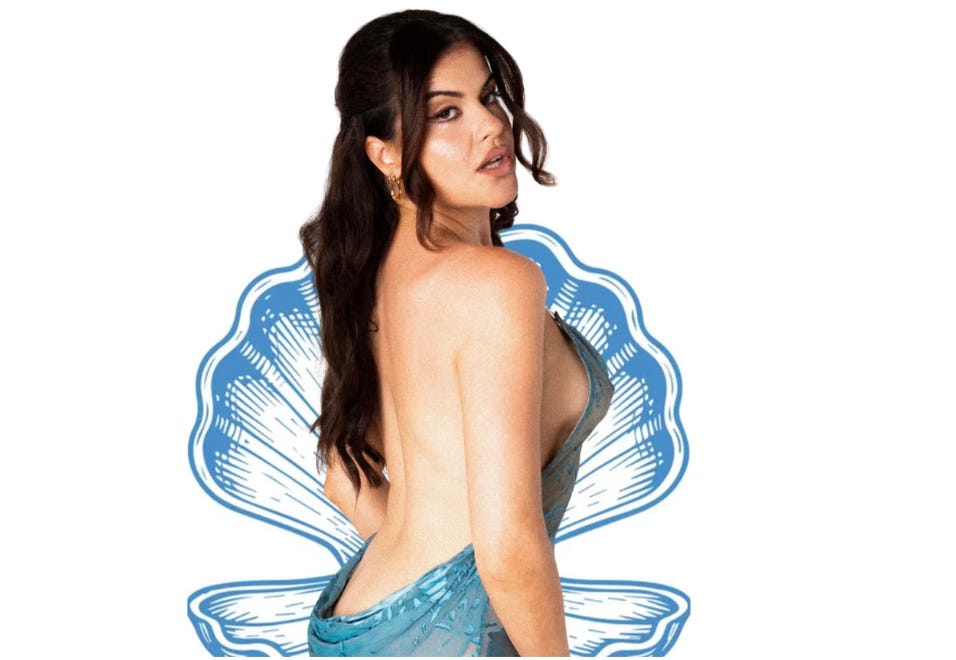
“Men never put their face in dick pics because they think they’re going to be prime minister one day. A man told me that.”
This is one of the standout lines from the nearly month-long festival, which has been described as a mini-Edinburgh and which wrapped up today. It comes from Elouise Eftos, aka “Australia’s first attractive comedian”, in her new show, Aphrodite. Eftos, who is Greek-Australian, was nominated for the best newcomer award at Edinburgh last year. (Fun fact: she also had a cameo in Colin From Accounts. And she’s moving to London soon, so go and see her if you’re there).
She’s served up so many other clever lines in both these sets, too many to remember all.
But here’s another example a few weeks ago from an interview in The Age:
“I’d have to be pretty stupid to call myself Australia’s first attractive comedian and actually think that I am Australia’s first attractive comedian.” Pause. “It’s not my fault that people think it’s true.”
She went on to say, seriously:
“I think people don’t want to admit it. It’s quite groundbreaking to be a woman doing comedy that doesn’t do self-deprecating humour, who doesn’t talk down about herself. It’s quite a punk-rock statement.”
Hers was the funniest joke about a dick pic I’ve ever heard, in fact it’s probably the only joke about a dick pic that I’ve ever found funny. When I was on a festival pub crawl around Footscray in the inner-west of Melbourne yesterday, taking in shows featuring First Nations comedians, those of colour and LGBTQ+ performers, I got chatting to the group leader about it. He warned me, as someone who is new to stand up, that I should be wary of only performing smut. Then he said: “There’s so many jokes about dick pics but hardly any about vaginas.”
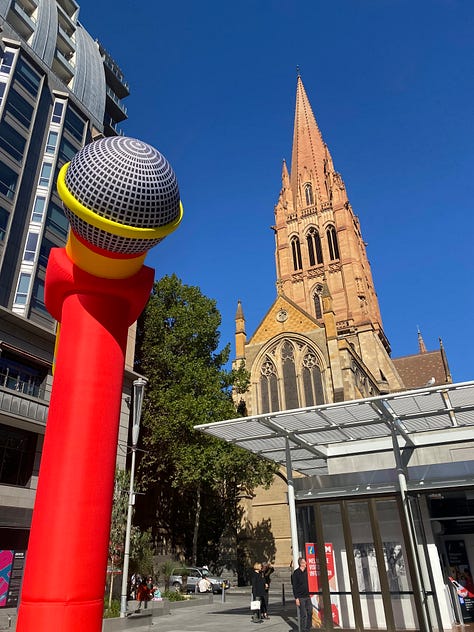
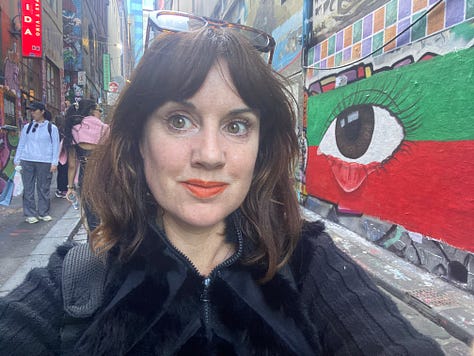
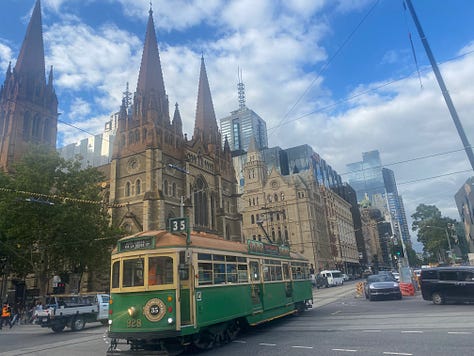
Should women comedians be self-deprecating? It’s a question I still can’t answer nearly a year since I began doing stand up, and with very limited experience.
Last month, I stayed with Justine Sless, a British comedian of more than 20 years now living in Melbourne. She made a return to this year’s festival after a decade-long hiatus with a show called Bravo. Sless doesn’t subscribe to the view that women should be self-deprecating at all, as she told us when I did a comedy workshop with her a few weeks ago.
”A good joke takes you somewhere completely unexpected and makes you laugh, an excellent joke makes you laugh and think,” she adds.
Sless’ masters dissertation, The Mistress of Mirth Comedy Tour which she gave me a copy of, specifically explores how women perform live stand-up. It serves as a manifesto for her “practitioner-theorist” approach - the idea that comedy shouldn’t just be about putting yourself down for a cheap laugh, but about using the stage to challenge perspectives and to “reharness your own narrative.” There’s a whole section on self-deprecation, which Hannah Gadsby also addresses in Nanette: “Self-deprecation is not humility, it is humiliation,” she says.
Sless’ show was very smart, beginning with jokes about “NGO speak”, which really resonated with me working in the sector too, as well as some very prescient lines about AI and experiences of life back in north east England in the 70s. Perhaps it nearly entered self-deprecation territory when she nearly got real estate apps mixed up with dating apps after her marriage of 31 years broke down, and she was forced to move out, and the discovery of a bra in the bedroom of her new, younger partner “donkey man” which she thought didn’t belong to her. It did.
However there were none of the more overt put downs that I guess some female comedians feel forced to use.
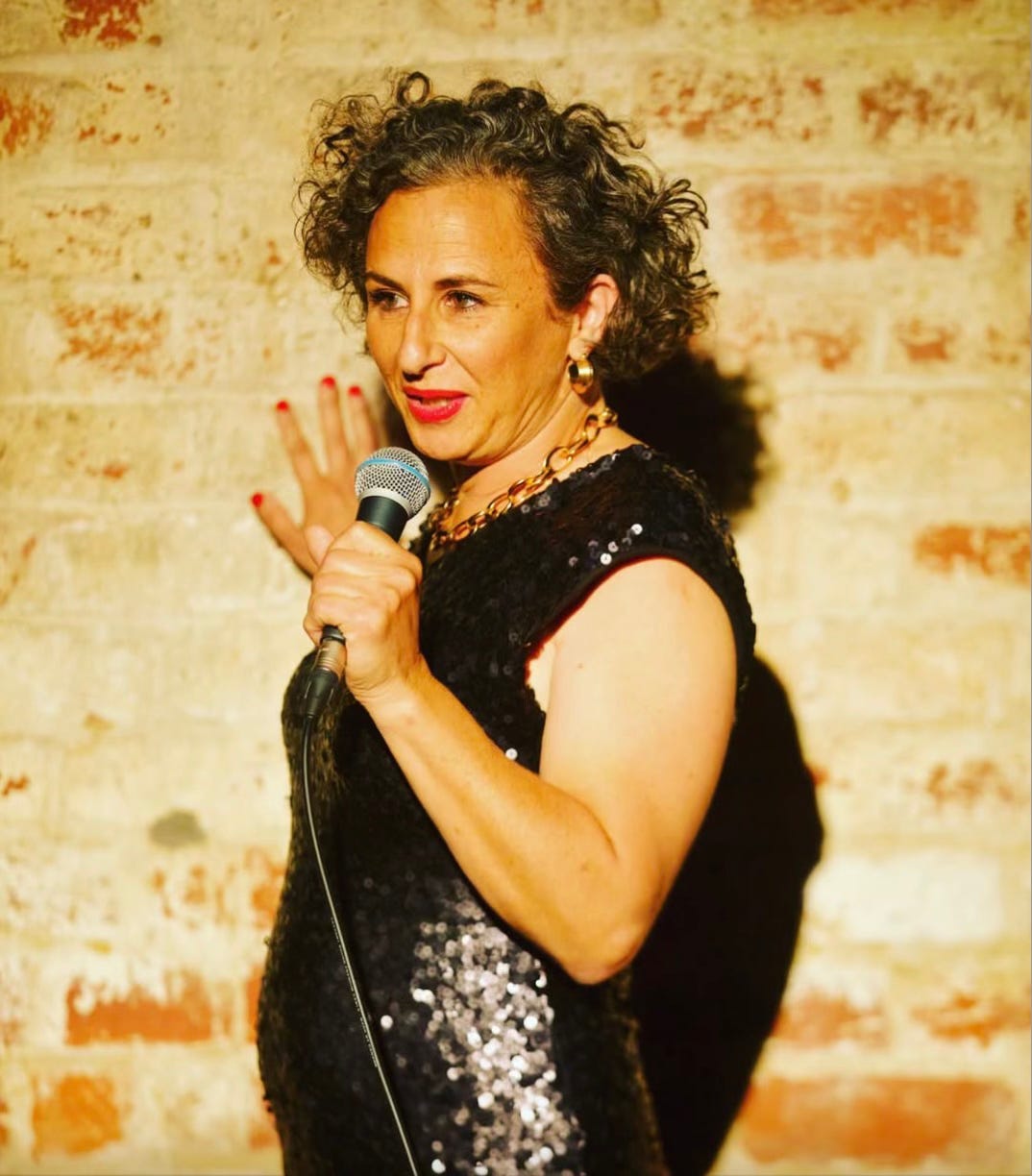
I think it’s hard for women comedians who are starting out or perhaps not to be self-deprecating, though. Maybe it’s hard for women not to be self-deprecating fullstop.
We may be this by nature. I know I use self-deprecation as a form of communication and empathy. It’s expected of us.
And when you’re a newbie performer, of course you want to get the laughs. One of the reasons that I started doing stand up last year was because I felt like I had so much material about the broken hiring market, and rejection, too, to put to use. “That sounds like the most brutal thing ever to do,” someone told me only recently after I’d told them about this. To me, it was a natural response.
“I think people are also so worried about punching up not down,” the pub crawl leader said to me, offering another explanation for why we might use self-deprecation.
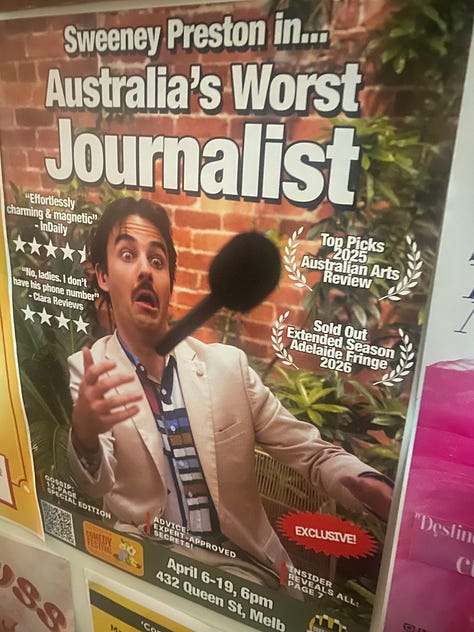
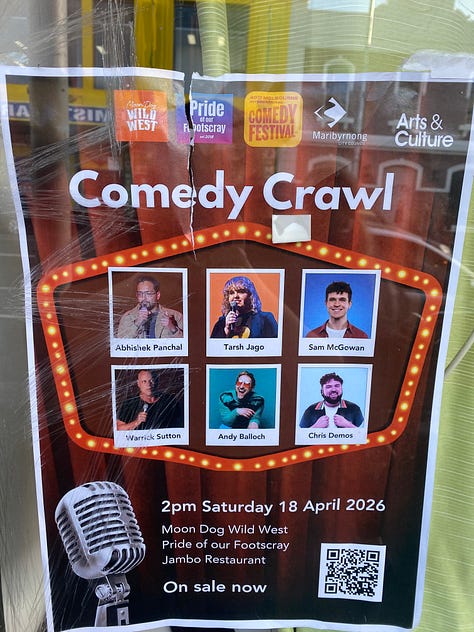
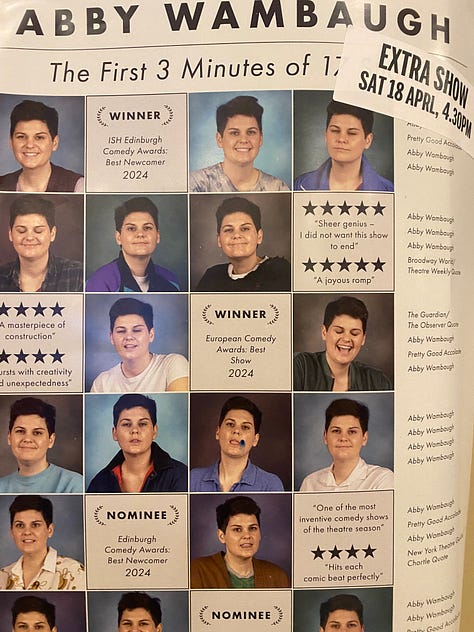
Being in Naarm (Melbourne) for the comedy festival for the first time has been such a treat. I can’t believe what a diverse range of talent was on display. I didn’t get to as many shows as I wanted to because work has been busy, but what I did prioritize was those by First Nations and African comedians.
Last night I went to see Aboriginal Comedy All Stars at Melbourne Town Hall, which was brilliant. Today I went to see Ugandan-Australian Anisa Nandaula. I can’t describe how excited and proud I was seeing an Ugandan-Aussie comedian bringing the house down for hundreds of people, it was her biggest show yet, she said. (Nor was she self-deprecating). I also saw Joe White, an Ethiopian-Australian performer, who was really good.
Maybe it’s because of the types of shows I’ve been to, that something that also stands out to me is all the jokes about… racism. For instance during Aboriginal Comedy All Stars yesterday, Sean Choolburra told us “I’m worried about the world. But it’s not what you think it is, racism. Because Australians are getting heaps better at being racist.”
I nearly fell off my chair laughing, as did every one else. I’m still thinking about it today and wondering why it’s so funny. Is it because it could be - gasp - true but also because you wouldn’t get away with saying it in a more serious forum? For instance when ABC journalist Laura Tingle said Australia was a "racist country" during a 2024 Sydney Writers’ Festival panel discussion, she was counseled by the broadcaster.
As Sless brought up during a conversation we had recently, and also in her show, because of how comedy is perceived, taught and learnt within the Australian mindset - ie as larrikin and low brow unlike literature - does it mean there’s more room for risk? In light of the 2026 Adelaide Writers' Week being cancelled after the withdrawal of over 180 authors and stakeholders protesting the board's decision to remove Palestinian-Australian author Randa Abdel-Fattah, it’s interesting to think about.
Would we ever see a comedian or comedy festival cancelled because of a joke/jokes about Gaza? Incidentally, it was a topic that I didn’t hear come up once in Melbourne this year.
Besides racism, another heavy theme of the festival was LinkedIn. I’m not kidding, it seemed to come up in every show, including the very first one. And in another, for example, Londoner Jimmy McGhie joked that the only platform he wanted to get cancelled from was LinkedIn.
Which, considering this Substack has become quite LinkedIn focused, has me wondering if I might be onto a winner.
..
Comments
Nothing yet. Say the first thing.
Sign in to join the conversation.