

Not a lot of people and things had a good year in 2025, but my goodness, ghosting did. And so did the people who took part in it.
Ghosting went to new heights last year.
There was ghosting by people you met at events, who gave you their details and said “pitch me.” There was ghosting by people online who asked for story ideas. There was ghosting by HR teams and recruiters for full-time jobs. And there was ghosting by people you’d done a lot of brilliant, hard work for in the past, people who were happy with it and benefited from it. I think this is perhaps the worst kind: ghosting when the relationship’s already there, as happens socially too, but more on that in a minute.
Unbelievably, there are now three tiers of ghosting: ghosting when trying to get the work, ghosting after you’ve submitted the work, and ghosting when you need to be paid.
There’s so much ghosting it’s like Halloween all year round.
It’s confronting to even write this, although I’m not the one doing the ghosting. But it’s awful to admit where we’re at with basic manners, civility, ethics and kindness, for whatever reason. As one other journalist said to me when we were talking about ghosting by previous editors, it felt mean, whether it was intentional or not.
I think of Dolly Alderton’s prescient novel Ghosts, released in 2021, which is about dating, where the word “ghost” in this context comes from. But I wonder if it’s time for another book, maybe a dystopian one, looking at ghosting in the workforce with the rise of AI.

There’s now so much ghosting that I often think: should I pitch a feature on… ghosting? I have a fair idea what would happen, though. If you want to have a bet on whether I’d get a reply, in a sweepstake where we take bets, do let me know, and I’m happy to set this up.
There was so much ghosting last year that I began to wonder, and a friend and colleague had the same thought when she mentioned it to me, what it’s going to be like in the future. If, or when, the world ends, will we even be speaking to each other, I wondered further? My niece and nephews may not know a time when people got back to each other, but I, and others, do. Does that mean my generation feels it more?
Gatekeeping, the practice of not sharing opportunities, had an equally terrific year.
There was so much ghosting and gatekeeping in 2025 that despite trying to remain positive, not wanting to think about it because there’s nothing to do but keep going, and still doing so much in the end, it was hard not to dwell on it some of the time. I know others feel like this too.
It’s difficult to grapple with the fact that you haven’t been given a chance to do something you know you’re capable of, and have done before, simply because someone pulled the ladder up after them. It’s hard knowing that so much isn’t based on merit any more, that even sending a pitch to an editor is completely subjective and can come down to whether they personally like you or not.
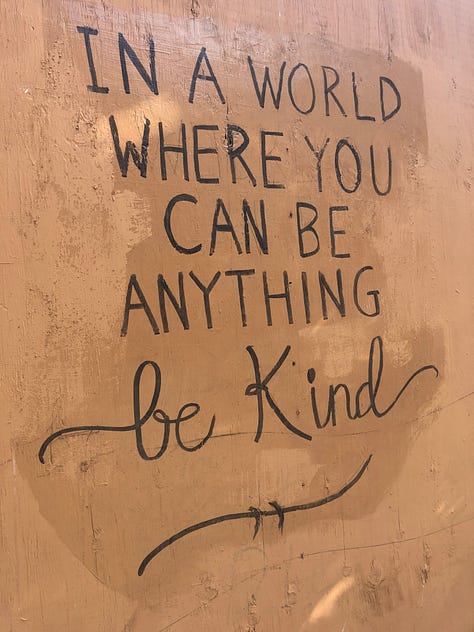
The truth, though, I feel, is that ghosting says far more about the person doing it than the ghostee. Yes, it feels rude, especially when “no thanks” takes about three seconds to type. We should try to reply to someone if we can, because it’s the kind thing to do. There may also be a huge reckoning at some point, and we may see a “tsunami of job cuts,” as Joanna Milne described last year when we were talking about this. So it’s probably not a good idea to ghost, because one day it could be you.
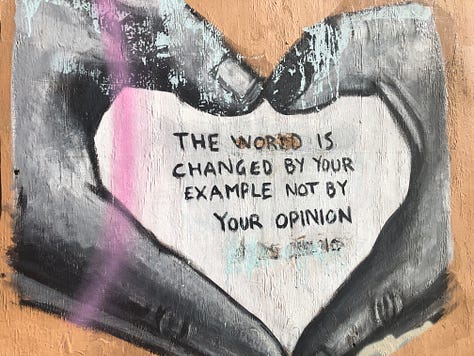
I’ve walked around Highgate Cemetery a few times, too, and what I see on people’s epitaphs is that they were “kind,” “loving,” a “good friend.” (I’m sure these were the same people who didn’t ghost.) Not “they were a huge name on LinkedIn,” which could mean they posted that they were hiring, told people to contact them, got plenty of inquiries, and never got back to any of them, something we seem to be seeing a lot of.
All people in life want is to know where they stand, in personal relationships, at work, anywhere. The average person, I think, is very resilient. They bounce back quickly from disappointment. All they want is to be told “this isn’t going anywhere,” whether it’s a date or a job, so they can move on. There’s more than one person, one job, in life for all of us.
The person doing the ghosting, however, may think otherwise. By doing so, are they placing themselves, or the thing, the relationship, the job, at the centre of the ghostee’s world, whether they mean to or not? When you think about it, is ghosting actually quite narcissistic?



Despite all of this, there’s some good news on ghosting on the job front this year, from Canada, a country typically known for its kindness. As of 1 January 2026, ghosting has been banned in the job application process in its most populous province, Ontario.
Yes, we have another reason to celebrate Canada this month, and it’s not just because its leader, Mark Carney, blew people away at Davos.
Under changes made to Ontario’s Employment Standards Act, 2000, employers with more than 25 employees must tell candidates who reach the interview stage whether they got the job, within 45 days of that interview.
The legislation also enforces pay transparency and requires employers to disclose whether AI is being used in the interview process. And it prohibits bosses from asking for “Canadian experience” only, which I can vouch is a real thing.
Believe it or not, the last one is also a problem in Australia, with some LinkedIn posts of late warning that jobseekers here are being told they don’t have “enough Australian experience,” even though they’re… Australian. You can’t make it up.
This is also a problem for people moving here from other places, when it shouldn’t be. People with foreign experience can bring a lot to the table. Nor is it the image of the open and diverse society Australia markets to the rest of the world.
(I’d also like to point out that, as much as I love Australia, and there’s so much good about the country, has Australia seen itself on the map? We are, as one of our best prime ministers reportedly once described it, at the “arse end of the earth,” and that’s a fact.
We were once a convict colony. Another fact. So please don’t talk to me about people in Australia needing “Australian experience” to work. It’s a joke. But it’s interesting that this idea of needing “local experience” has also surfaced in Canada, a country obviously in a very different spot on the map, and a much more globally engaged one.)
If there was ever a country going to ban ghosting, it was always going to be Canada. I didn’t think people there could get any more polite, to be honest. I remember being in Ottawa in 2018, working on a story where I had to speak to a government minister. I remarked to his press secretary how good-mannered everyone in the country was.
When she replied that a lot of their journalists complained, I told her they should move to Uganda, where I’d lived, and where if you’re a reporter trying to get a comment, you’ll most likely be met with complete obstruction. Canada and Uganda sit, of course, at opposite ends of the political spectrum, one a democracy, the other a dictatorship.
I’m biased too, of course, being half-Canadian, with a Canadian mother. I know the country isn’t a utopia. But it’s pretty good most of the time.
Take the pay transparency provision in Ontario’s new law, for example. How did this come about? The mothers, of course. It was self-described “career coach, HR expert, salary negotiation whisperer, and pay transparency and equity advocate” Allison Venditti, from Moms at Work, who call themselves the country’s largest network of mothers, who pushed for pay transparency for seven years.

Venditti launched Canada’s first job board demanding pay transparency, created a handbook teaching how to advocate for it at work, and has since been instructing people in the US, EU and beyond on the issue too, she says.
“These were years of my life,” Venditti has said of the campaign. “Thousands of hours of work, and hundreds more of doubt, disappointment and fury.”
One of the sites she had to push on pay transparency was Charity Village, which describes itself as Canada’s “top source” for nonprofit jobs.
Of course, in an ideal world, we wouldn’t have to legislate to force people to have basic manners, and there’s some debate about whether this law will actually lead to change, and what companies can still get away with.
But this is where we are. It seems like a good start, and it’s an example of what long-term grassroots advocacy can achieve. Keep in mind, too, as one follower, David Arthur, pointed out to me, that Ontario brought this law in under Doug Ford. Is it getting scary when he’s considered one of the more moderate premiers?
Other provinces in Canada already have laws like Ontario’s, and others are getting ready to introduce them. As usual, though, it feels like this story hasn’t had enough mainstream media coverage.
Should we all pack up and move to Canada now?
Seriously, other countries should think about taking a leaf out of Canada’s book, including Australia, where unemployment rose from 3.5% in September 2022 to 4.5% in September 2025, according to Australian Bureau of Statistics (ABS) figures.
Australia recently passed a world-first law introducing a social media ban for under-16s. Part of me can’t help wondering whether we could have led the way by banning workplace ghosting instead.
The UK, which is reportedly now eyeing up a similar social media law, would also do well to introduce a law to outlaw ghosting, with some university graduates there now submitting hundreds of applications to land a single role [figure needs sourcing — see note below].
Unpaid internships and “free tasks” for jobs, now out of control in the UK, should also be tackled, as should pay transparency, a challenge in both Britain and Australia.
For the time being, though, let’s celebrate Canada. This makes me proud to be half-Canadian. And I now know there’s a reason for the saying “the world needs a bit more Canada.”

Comments
Nothing yet. Say the first thing.
Sign in to join the conversation.