
A little while ago, I decided to stop rating books. I love tracking what I read: I use Goodreads, I book journal and record my progress as I go. But after years of rating my reads out of five, I started to feel uncomfortable reducing my thoughts to a numeric scale.
To be clear, I’m not arguing against rating books as a principle. I actually love seeing my friends’ Goodreads ratings, and think they can be a great spark for bookish conversations. But I started to feel conflicted about my own rating system.
I like to flip back through old book journaling entries to remember what I read last month, last year, five years ago. I often find myself surprised at how I’d rated things. Sometimes this is because I’m seeing my ratings in the context of all of the other books I read before and after, and feel like I’d over- or under-rated certain books relative to others. Sometimes I’d notice a book that I’d rated quite low, but still find myself thinking about its characters or themes months or years later.
I can feel tempted to change my rating retroactively, to bump books up or down a star or two with the wisdom of hindsight. But that also feels wrong. Clearly, I had some rationale for my original rating in the moment. So why did I feel differently about it now?
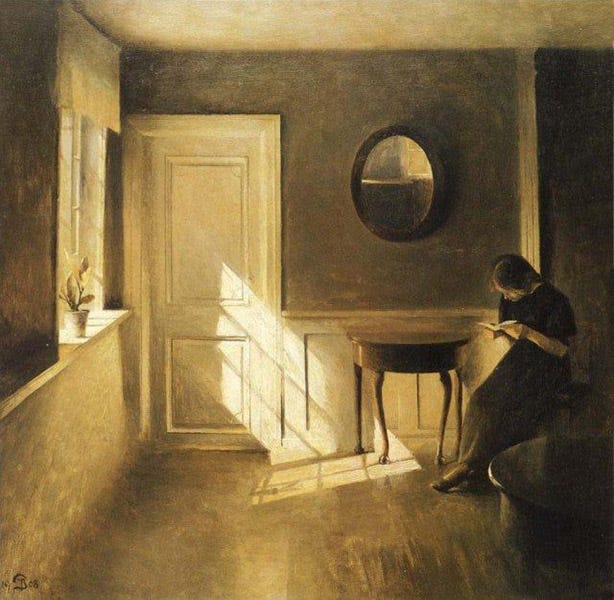
I think that many things can make a book ‘good’. Something beautiful about reading fiction is its power to immerse you in a different world or a character’s mind, and you can choose where you need to go on a particular day. This can be vastly different depending on your mood, energy, mental capacity, and what’s going on in your life.
If I think about some of the books I have loved in the last few years, it becomes very difficult to compare them on a single scale. How do I rate Claire Keegan’s Foster vs Frank Herbert’s Dune? How does Dostoyevsky’s Crime and Punishment compare to Mick Herron’s Slow Horses? I took such different things from each book: escapism, enjoyment, quiet contemplation, excitement, philosophical reflection.
Even thinking about books I didn’t love, those that were flawed to the point of irritating or exhausting me, I can still have taken a lot from reading them. Perhaps one of them sent me down a rabbit hole, left me questioning why it challenged me so much or rubbed me up the wrong way. Perhaps another prompted a really interesting conversation with someone else who loved it. It feels healthy to come up against things you don’t like: to read unlikeable protagonists, or morally ambiguous interactions between characters, or a plot that leaves you frustrated. More than that, I think this is a crucial part of working out your personal taste and worldview.
All of this makes it quite tricky for me to place books on a simple five-point scale. Sometimes I feel a strong intuition about where a book sits, and I will rate it despite my usual approach. More often, I feel happier writing some notes about how a book made me think and feel, and leaving it at that.
An example: I recently read Jem Calder’s I Want You to Be Happy. It’s a buzzy new release, and I was kindly gifted a copy by Faber and invited to an event where Calder spoke about his writing process. I had read the book beforehand, and honestly didn’t love it. But I found the prose very sharp, and I had a strong emotional reaction to it: I felt irritated, at points genuinely angry, with the characters and the choices they made. The ending especially frustrated me. It won’t end up being one of my top reads of the year, but I was still left feeling that Calder had, at least partly, succeeded in making his point.
So, how would I rate I Want You to Be Happy compared to a John Grisham thriller I can’t remember the name or plot of, but read in one sitting and quite enjoyed last summer after picking it up for £1 at a charity shop on holiday? Honestly, I have no idea.
I find myself coming back to the question: why do I read? I don’t have a single answer to this, but a multifaceted one. I read to relax and be entertained, to escape my daily life, to be sucked into a different world in which no one cares about my PhD or my job prospects or my health troubles. But I also read to learn, to engage my brain, to grapple with difficult questions. I read to try to understand people living vastly different lives to my own, but also to discuss books with others who have read them. I read to feel closer to my loved ones by taking their recommendations—on our third date, my partner bought me a copy of The Left Hand of Darkness by Ursula K Le Guin, which felt like an intimate peek into his mind.
I think it is completely fine if you decide you only want to read for escape or for entertainment. The world is heavy, and we are constantly bombarded with news ranging from moderately anxiety-inducing to horribly devastating. I can’t emphasise enough how in favour I am of reading as a way to feel calm, safe, or distracted amidst that. And besides, books primarily written to entertain can of course be well-crafted, clever, and thought-provoking, alongside being funny or thrilling or escapist.
But I think there is also a lot of joy to be found in experimenting with literature. Trying something you wouldn’t usually go for because the cover caught your eye in a bookshop, or because someone with different tastes from your own recommended it to you. There can also be joy in persisting through a difficult read: one that pushes you beyond your comfort zone and leaves you feeling more engaged with the world.
Books can be valuable in so many ways. I suppose that, ultimately, I’ve decided that not every book needs to be optimal to be worth reading. I considered trying to develop a rating system that could factor in all of these different elements: enjoyment, uniqueness, writing style, character development, themes tackled, etc. But instead, what if I just stopped rating them?
Some months on, this has worked well for me. I love journaling about books more than ever: keeping scribbled notes as I read, and writing up my final thoughts once I’ve finished. I love reading reviews and chatting about my thoughts with friends. None of this has been hampered by deciding to drop my rating system. In fact, I think I feel less restricted, less compelled to try and force myself into one camp or the other upon finishing a book.
I’m no longer especially interested in whether a book was ‘five stars’; I’m much more interested in where it took me.
I would love to hear your thoughts on this. Do you rate books? Do you have a particular system for this, or do you give a ‘vibes-based’ rating in the moment? Would you ever retroactively change a rating?
amy catriona is a reader-supported publication. to receive new posts and support my work, consider becoming a free or paid subscriber ★
Comments
Nothing yet. Say the first thing.
Sign in to join the conversation.