
As an aspiring writer in the 80s I daydreamed about living in NYC and working at magazines, which I read voraciously. I especially enjoyed advice columns and stories that talked about the rarified life of writers and their friends in the city. My favorite pieces included E. Jean Carrol’s articles and advice columns in Elle and other publications, as well as Dominick Dunne’s fascinating Vanity Fair articles about true crime.
Life didn’t follow my plan, as often happens, and in 2019 I was working in a high-stress, government position in Washington, DC, when E. Jean Carroll published What Do We Need Men For? Carroll, now 82, journalist, author, and advice columnist, alleged that Donald Trump raped her in a dressing room at a department store in Manhattan in the mid-90s, leading to two blockbuster court cases.
Ask E. Jean Must be Seen as Widely as Possible

Now, 7 years later, the documentary Ask E. Jean by director Ivy Meeropol has been released in theaters and is playing in film festivals. The documentary examines the question of why Carroll waited decades to come forward, making a convincing case that she belongs to the “silent generation”—a cohort of women who were conditioned to endure the predatory behavior of men with a shrug and a smile.
“I was born in 1943,” she explains in the film. “We are the chin-up, move-it-on, grin-and-bear-it generation. We didn’t complain. It would never occur to me. We actually smiled about it and moved on. That’s how we handled things.”
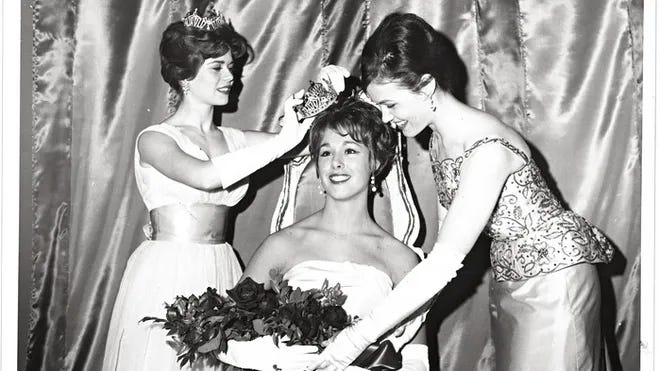
Carroll is a former Miss Indiana University and Miss Cheerleader USA who became the first female contributing editor at Playboy and wrote the feisty “Ask E Jean” column for Elle from 1993 to 2019. She hosted her own cable TV show, wrote for one season of Saturday Night Live, and penned an unauthorized biography of fellow gonzo journalist Hunter S. Thompson.
Even though she said, “My writing wasn’t that good,” she sensed that there was something about her personality that belonged on the page. From writing the column, she landed a TV show where guests brought her their problems and she helped solve them. She considered it another form of being a cheerleader.
The Attack
It’s when she’s riding high and enjoying life, that E. Jean runs into Donald Trump in the revolving door of the Bergdorf Goodman department store in New York City as she’s leaving taping her cable show. Trump recognizes her as the “girl who gives advice” and she recognized him as “the real estate guy.”
Here, her recorded deposition takes over as narrator in the film: Come help me choose a gift, Trump urges, and Carroll, ever open to adventure, agreed. They start with handbags then move on to hats, but Trump is already heading up the escalator to lingerie. There is some back and forth over a bodysuit. Trump tells her to try it on. She tells him to try it on. And then she finds herself in the store’s fitting room, a place she doesn’t want to be, but keeps telling herself this is “hilarious.” Carroll’s delivery in the deposition is appropriately direct, but you can feel the emotion layered into it as she relives every decision and every detail that led her to this awful moment. The questions they ask make it that much worse. (Was she wearing a bra? Underwear? List all the men you’ve slept with.)
What the documentary captures so achingly, is how outwardly confident E. Jean masks the inner wounded E. Jean. It’s clear this wasn’t any old incident in a dressing room—it was sexual abuse, and it changed her forever. “I never had sex again after the incident,” E. Jean explains in the documentary.
The dichotomy is staggering between the woman who talked about sex but could no longer have it; the woman who told other women to stand up for themselves but couldn’t stand up for herself. Heart wrenchingly, the documentary includes earlier footage from a talk show during which Carroll insisted that Anita Hill and Paula Jones should have been able to stand up to Clarence Thomas and Bill Clinton, respectively. Of course, she said this before she was attacked.
Carroll didn’t set out to end up in the courtroom. She initially wrote a list of “hideous men” (including mafia bosses, media titans, boyfriends, husbands, a serial killer, and a president) that she had encountered, because the #MeToo movement had deeply affected her, and her readers were pleading for guidance on whether to come forward with their own stories of abuse.
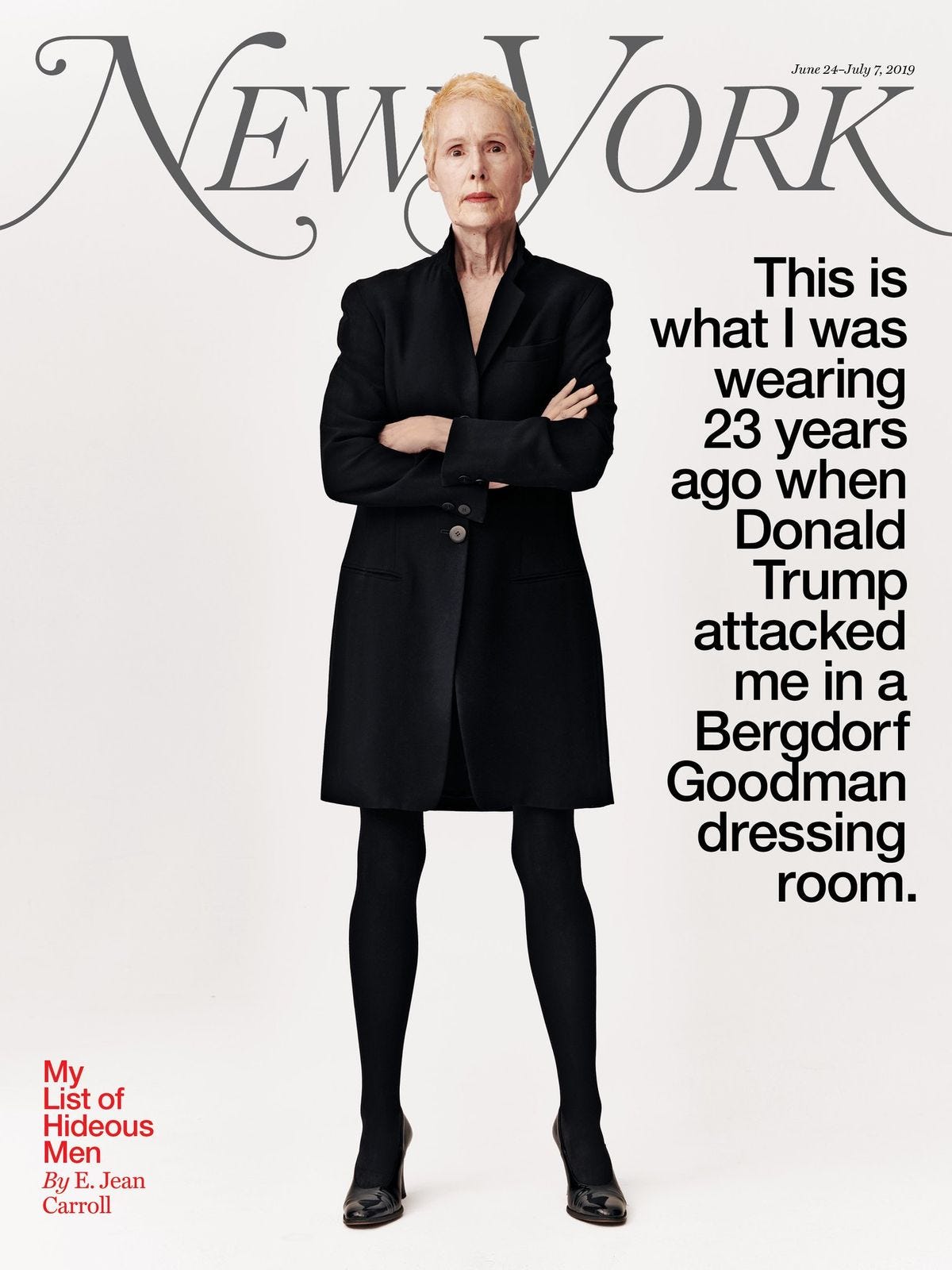
The details of her encounter with Trump are still vivid in her memory, including the clothing she wore and her feeling of shock, “It’s welded into my brain.” she said. In fact, she wore the same clothes on the cover of the New York magazine in June 2019 with the main cover line: “This is what I was wearing 23 years ago when Donald Trump attacked me in a Bergdorf Goodman dressing room.” The magazine also included an excerpt that includes her account of the attack.
After the assault, however, Carroll did what countless women of her era did, confiding in trusted friends—the author Lisa Birnbach and television journalist Carol Martin—and then buried the memory deep down. Birnbach suggested she report the attack and said she would go with her to do so, while Martin said she should never tell anyone else about it. Her initial reaction, attempting to laugh it off, has frequently been weaponized against her.
Trump, who had been accused of sexual misconduct by an estimated 27 women by 2019, stood on the White House lawn and told reporters that he’d never met Carroll and would not have assaulted her because “she’s not my type.” Carroll, who had spent decades building a career as an author, journalist, and advice columnist based on her credibility, said the relentless defamation was intolerable.
During Carroll’s private deposition from 2022, Trump’s lawyer Alina Habba asks her, “If you were concerned about being dragged through the mud, why would you choose to sue Donald Trump?”
Carroll removes her glasses calmly and replies firmly: “Because he called me a liar. He called me a liar. And I couldn’t let it stand.”
She said in the lawsuit that readers no longer wanted to write to a woman the president had branded a liar and that her column had received 50 percent fewer letters from readers. In fact, once the lawsuit was filed in 2020, Elle didn’t renew her contract. “A women’s magazine fires a woman for standing up to a powerful man? As we say in the fashion world,” Carroll says in the film, “Not a good look.”
The Photograph
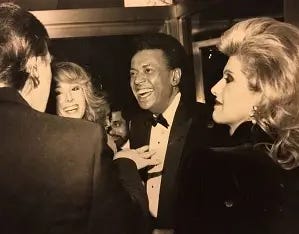
During his deposition, Trump was shown a photograph from 1987 of himself with his first wife, Ivana Trump, talking with and Carroll and her then-husband, John Johnson, at a public event in New York. Trump misidentified Carroll as his ex-wife, Marla Maples, undermining his “not my type” defense.
Carroll was represented by Roberta Kaplan, a civil litigator described by peers as a “street fighter” and a “force of nature”. In 2023 a jury found Trump liable for sexual abuse and defamation but did not determine that he raped her, awarding Carroll $5 million.
The Second Trial
Trump continued social media attacks on Carroll, who also received death threats and had to put in cameras and use other security measures at her home. Therefore, in a second civil suit in 2024 the jury awarded Carroll $83.3 million for defamation as a punitive measure to deter him and others from further defamation.
The effect of the terrible messages and Trump’s attacks on Carroll after the first trial is clear. While the depositions are less than a year apart, she looks ten years older.
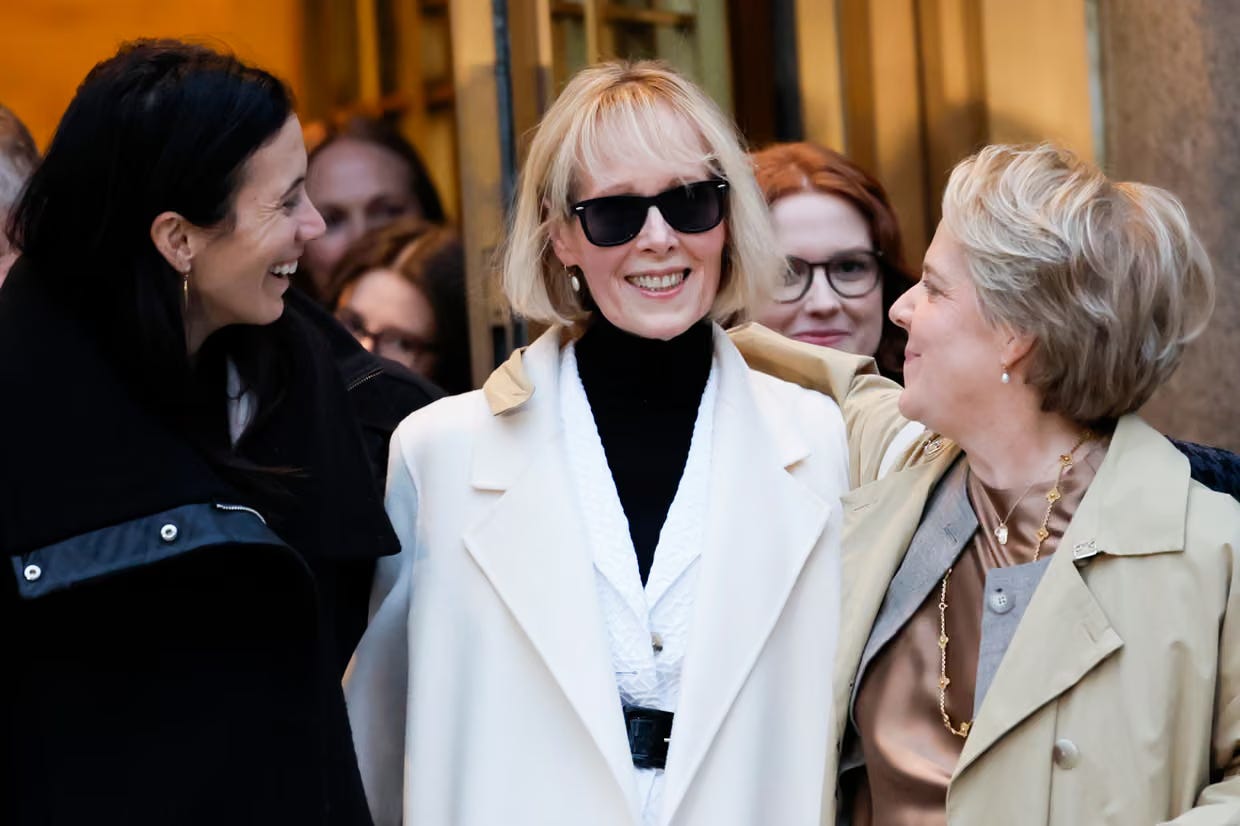
Carroll explains, with her signature candor, one of the big challenges she faced heading into the second trial. “Who on a jury is going to believe an 80-year-old woman is fuckable? Nobody.” Whether Carroll was sufficiently attractive then or now shouldn’t matter, but she and her lawyers know very well that it does. She hires the same hair and makeup stylist she worked with in the ’90s, Lisa Corelli, to make her look as much as possible like she did back then.
While Trump’s lawyers are seeking to overturn the rulings, in July 2026 Carroll received $5,625,005.48, which included the original $5 million plus three years of accrued post-judgment interest.The second amount is still under appeal.
Getting Carroll on Board with the Documentary
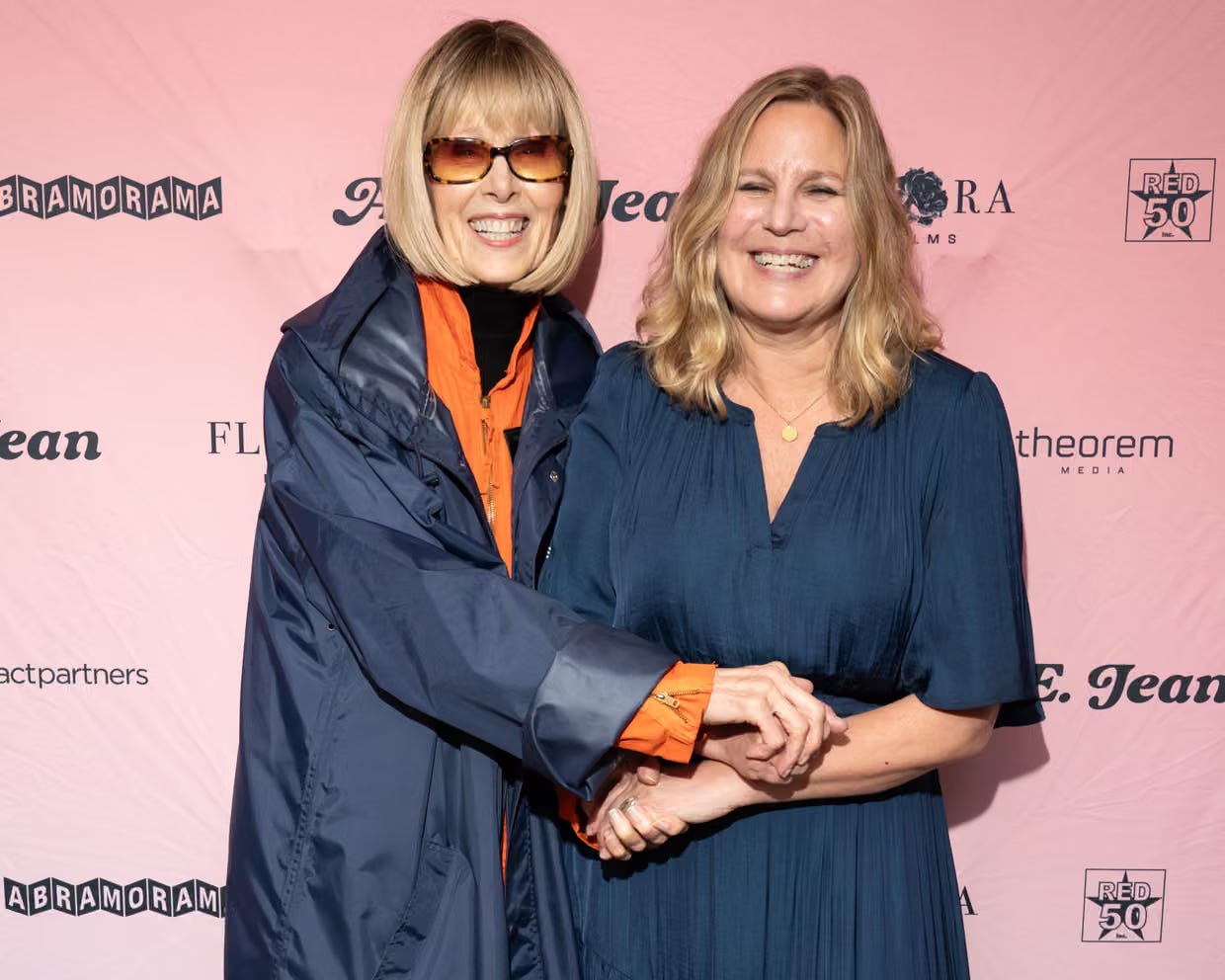
In the post-screening Q&A that I attended, Meeropol, 57, said that, initially, Carroll wanted nothing to do with a documentary. “I was lucky because she basically told everybody, ‘I’d rather eat my shoe.’ I find it very funny because it’s classic her.”
Eventually, a mutual friend persuaded Carroll to watch Meeropol’s acclaimed HBO documentary Bully. Coward. Victim. The Story of Roy Cohn, about the notorious lawyer who mentored the young Trump and prosecuted Meeropol’s grandparents, Julius and Ethel Rosenberg. A Zoom meeting followed, the connection was immediate, and Carroll declared: “All right Ivy, let’s do it.”
Meeropol found Carroll to still be energetic, eccentric, funny, generous in her support, and, despite her status as a public figure who belonged to New York’s media elite, protective of her solitude. “She needs her time alone; she’s a writer; that’s what she loves to do. She likes to be in her cabin with her dogs, drinking her tea and writing or reporting. A lot of what she had to endure with the trials and all the publicity was very hard for her.”
Securing funding for the project proved even more difficult. Financiers and studios repeatedly turned the film down, blaming Trump fatigue, too many #MeToo films, or Carroll not being famous enough. “I was surprised and disappointed,” says Meeropol. “I thought we’ve got the most incredible character in documentary history, possibly.”
Rescuing Tapes, aka Time Capsules
The film eventually secured independent equity investment in 2023, with a budget of less than $2 million. Meanwhile, Meeropol and her team had been digging through Carroll’s packed storage unit and the basement of her home, rescuing boxes of dusty VHS tapes.
They completed that task just in time. “The very next day she called me and said, ‘You’re not going to believe this. The basement flooded.’” The rescued tapes, along with 25 further episodes unearthed by NBCUniversal, yielded footage of Carroll’s 1990s television show, broadcast on the America’s Talking cable network, run by Roger Ailes.
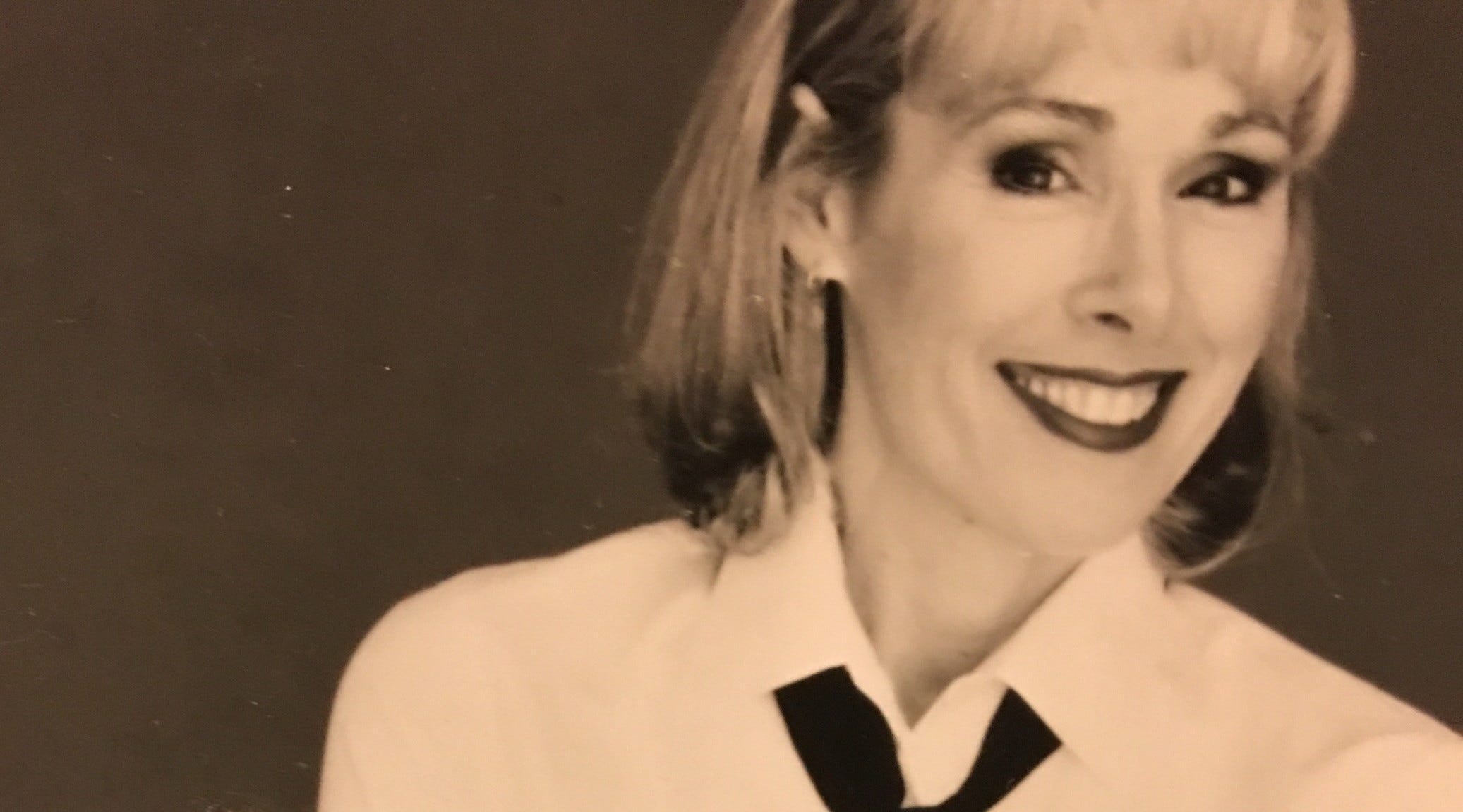
Watching the footage, Meeropol was struck by how radically progressive Carroll’s advice was for the era. “She is giving incredible advice at a time when women were not hearing that. Like, ‘You don’t have to be married at 30. Who told you that? Don’t beat yourself up because you’re not married at 30. If you’re bored at home because your husband goes off to work and you drop your kid off at school, go to college.’
She advises one guest to “always press charges,” and another to let go of her guilt around being raped—advice that Carroll herself will struggle to follow. Where a much less charitable filmmaker might frame the contradiction as a “gotcha,” Meeropol frames it as an evolution in thinking. Carroll, in her typically clear-eyed, clear-voiced manner, does not mince words when asked why she didn’t report Trump then: “Didn’t have the guts.”
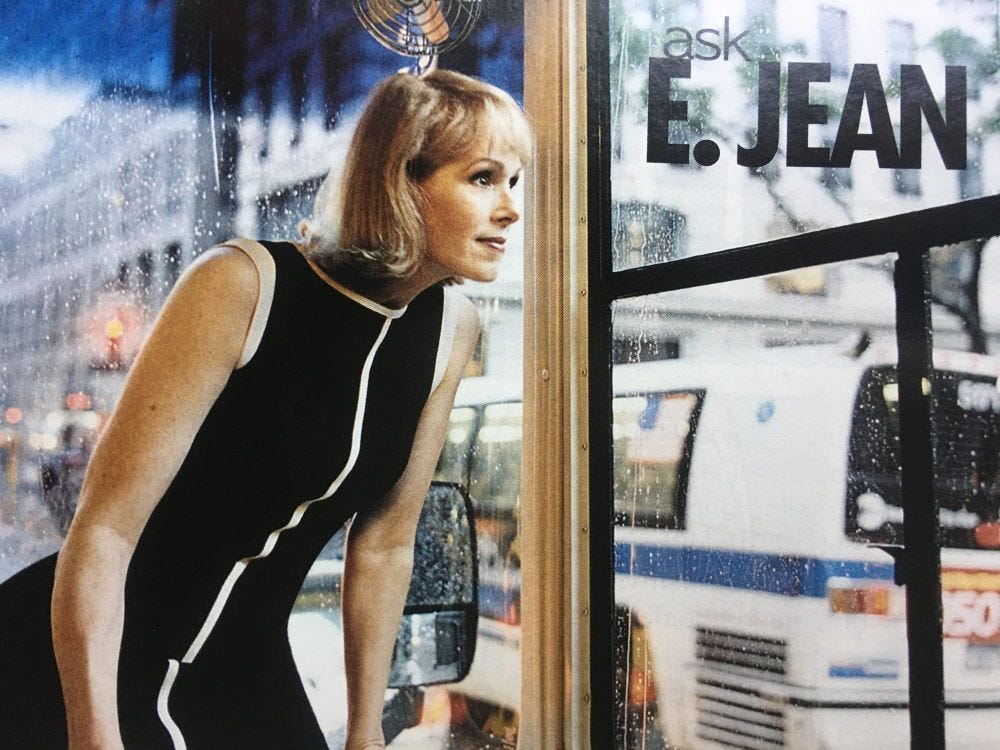
“It’s so interesting to see because it’s such a time capsule moment in the mid-90s. As E. Jean says, women were finally talking about their careers and what they want to do with their lives, which was not something she’d experienced except that she was this outlier who had paved her own way when she got to New York City and launched her career in the male-dominated magazine world.”
Shame has Got to Switch Sides
Meeropol was determined not to frame Carroll as a victim. “She rejects those terms herself —even ‘survivor’. I’m at a loss sometimes what language to use because it’s so current but she embodies the opposite of that. That’s what Gisèle Pelicot [a Frenchwoman who waived her right to anonymity as the victim in a multiple rape case] has been talking about and the Epstein survivors coming out: shame has got to switch sides.
“I thought about that a lot with E Jean. She herself embodies the flip side of shame because she will sit there and say, yeah, I was flirting with Donald Trump, I did try to laugh it off and I do love men. It’s refreshing. The worst thing for her would have been she says it in her show when she’s talking to a young woman who is talking about being raped—is to make yourself the victim.”
During a phone interview Carroll said she was doing this for “every woman who has come forward and was dragged through the mud, ridiculed, and called a liar.” In addition, the purpose of the lawsuit is “to demonstrate that even a man as powerful as Trump can be held accountable under the rule of law,” the filing states.
Later, in a deposition, she says that her memories of her own experience bring her shame because she feels as if it was her fault. Even the deposition is harrowing: “If women could see what kind of questions their fellow woman is asked when she brings charges of rape against a powerful man, it would stop a racehorse,” she tells the filmmakers.
The most illuminating part of Ask E. Jean is not really Carroll’s story, as interesting as she is and as important as her court cases have been. The film’s strength is in how it illustrates a cultural shift in attitudes toward women who make accusations against powerful men. As Carroll points out, progress is slow, and women still stay silent for many reasons. But her decision to come forward, she believes, has inspired others to do the same, and that can help turn shame into triumph.
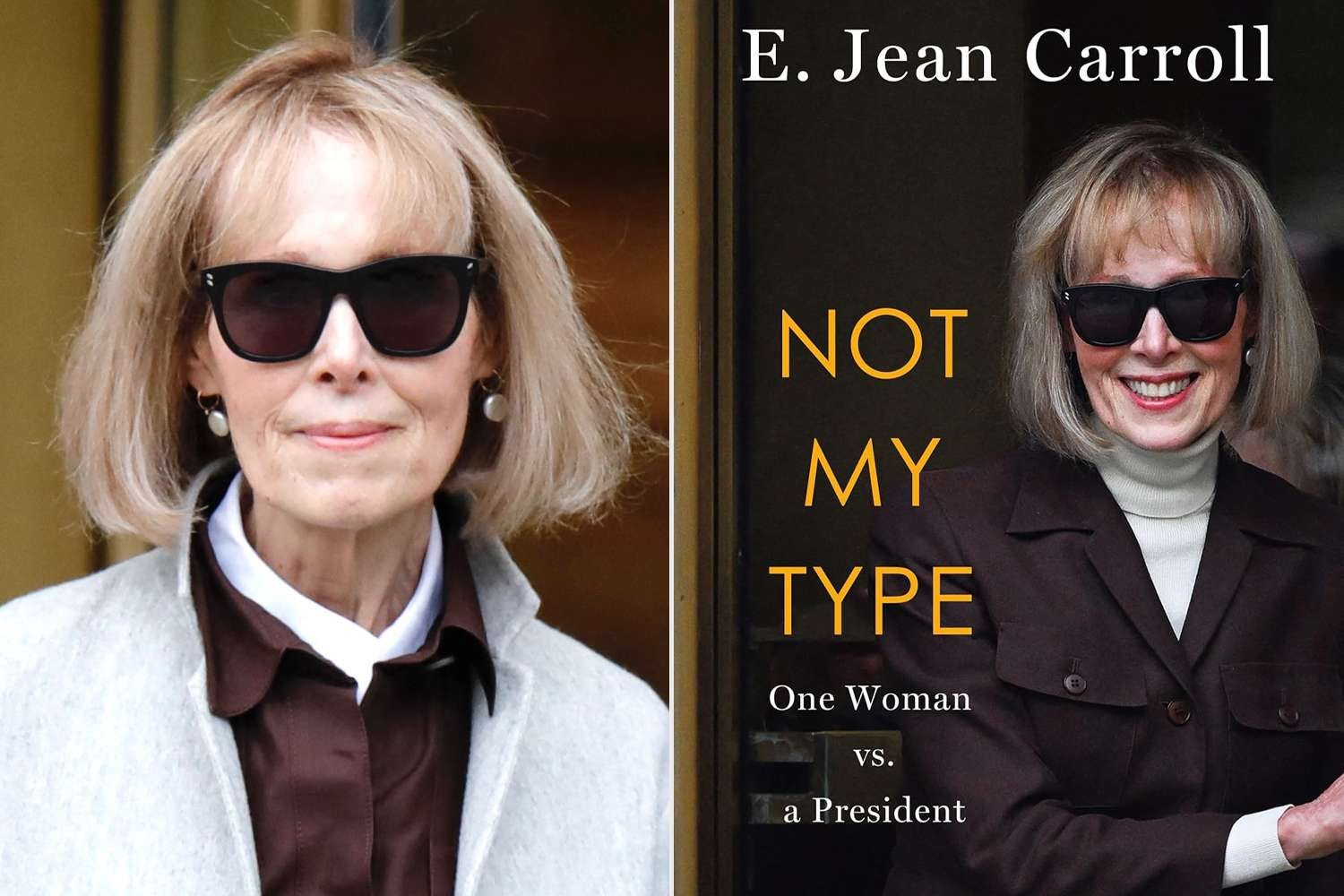
Carroll also wrote a book in 2025 with the cheeky title Not My Type: One Woman vs. A President, which is a hilarious, hopeful, revelatory behind the scenes account of the trials that riveted the nation.
Behind the Scenes and Supporters
Although some backers asked to have their names removed from the project, due to the political environment, Graydon Carter and Sheila Nevins are among the executive producers. Additionally, it was reported recently that the U.S. Department of Justice had opened a criminal inquiry into people involved in the lawsuits. Democratic billionaire donor Reid Hoffman has publicly said that a U.S. Department of Justice criminal investigation of donations he made in support of Carroll’s sexual abuse and defamation lawsuits against Trump is designed to “silence” critics of the president.
Nonetheless, Hoffman wrote in an X post on Friday that Trump “is investigating me because I supported E. Jean’s lawsuit”. The LinkedIn co-founder added on Substack that “Trump cannot be allowed to use the full weight and power of the U.S. government to come after women who speak up, or anyone who supports them in doing so”.
Conclusion
In recent years, Carroll reignited public discourse by standing up to power—becoming the only woman to beat Trump twice in court, and sparking a national conversation about truth, accountability, and resilience. This film is a portrait of an indomitable woman who proved it’s never too late to reclaim your voice, rewrite your story, and change the world.
As E. Jean said on her show, “Never let them steal your joy!” and “Fate loves the fearless!” Two very good pieces of advice.
The Red Purse of Justice is written by Amy Benavides, the daughter of a Cold War spy who writes articles related to her life, terrorism, espionage, history, and culture that she discovers as she writes her memoir.
Subscribe to make sure you receive her articles on Tuesdays (free subscribers) and Thursdays (paid subscribers). On Fridays I post a column for paid subscribers about topics that would help recruiters build a rapport with their targets.
No posts
Comments
Nothing yet. Say the first thing.
Sign in to join the conversation.