
OK, so not really. There are plenty of Catholic quotes that you need. We have this whole Bible and Catechism and intellectual tradition. Stuff like that.
But if you had to sum up the mission of a Catholic during our limited time on Earth, you’d be hard-pressed to find a more profound, goose-bump popping, humbling passage than this one from St. John Henry Newman’s Meditations.
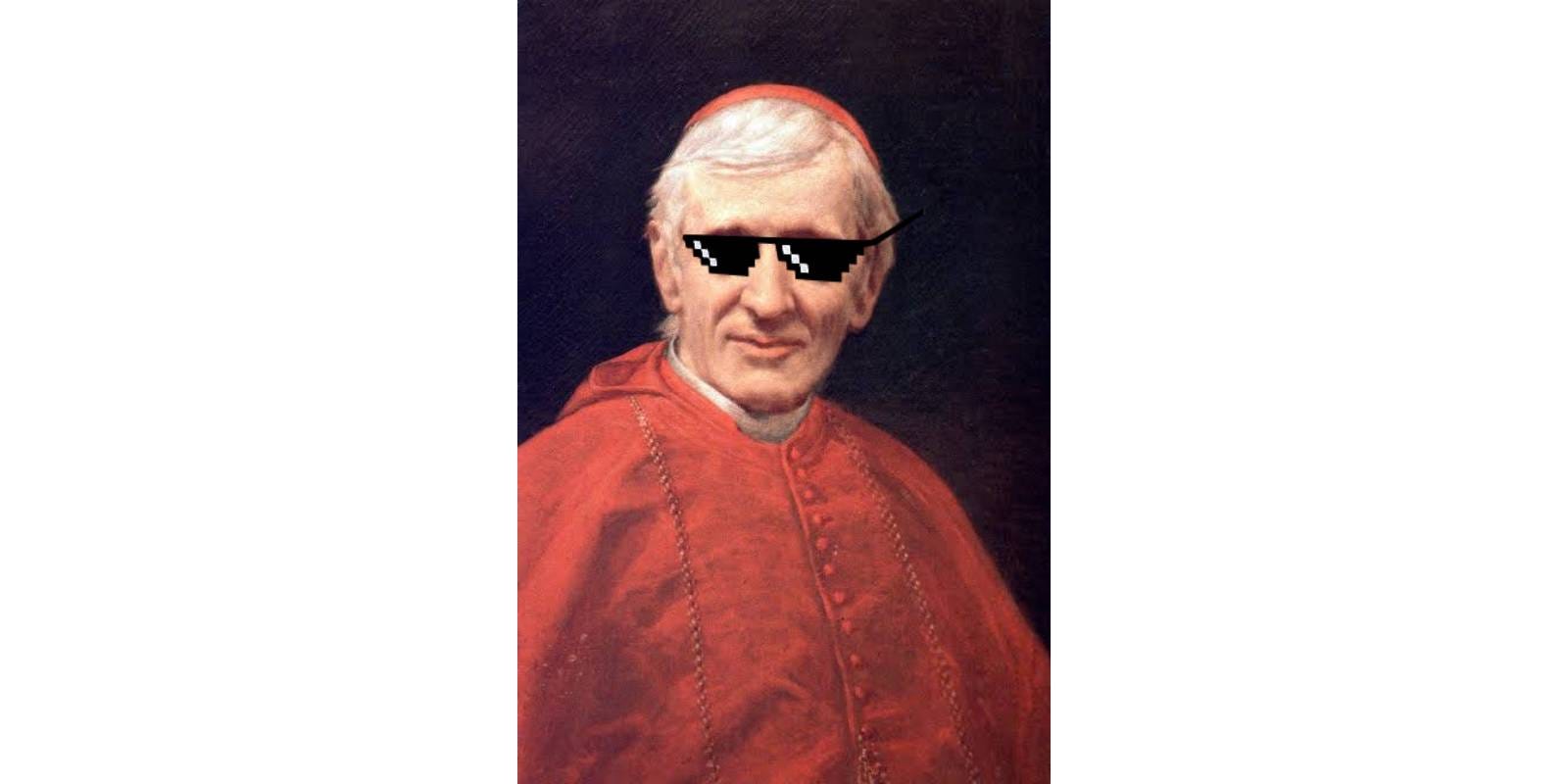
Since October 9 is his feast day and all, let’s give him the microphone for a moment:
God has created me to do Him some definite service; He has committed some work to me which He has not committed to another.
I have my mission—I never may know it in this life, but I shall be told it in the next. Somehow I am necessary for His purposes, as necessary in my place as an Archangel in his—if, indeed, I fail, He can raise another, as He could make the stones children of Abraham. Yet I have a part in this great work; I am a link in a chain, a bond of connection between persons.
He has not created me for naught. I shall do good, I shall do His work; I shall be an angel of peace, a preacher of truth in my own place, while not intending it, if I do but keep His commandments and serve Him in my calling.
Therefore I will trust Him. Whatever, wherever I am, I can never be thrown away.
If I am in sickness, my sickness may serve Him; in perplexity, my perplexity may serve Him; if I am in sorrow, my sorrow may serve Him. My sickness, or perplexity, or sorrow may be necessary causes of some great end, which is quite beyond us.
He does nothing in vain; He may prolong my life, He may shorten it; He knows what He is about.
He may take away my friends, He may throw me among strangers, He may make me feel desolate, make my spirits sink, hide the future from me—still He knows what He is about.
Whenever I encounter this prayer—and it seems to follow me around to some extent and hit me like a ton of bricks all over again each time—I feel an indescribable combination of guilt, fear, hope and empowerment. Let’s unpack each one of those while also hopefully elucidating the brilliance of this meditation.
Guilt.
Do we trust God? I mean, really trust him? It’s far too easy to look at each line of the quote above and sarcastically reply “Oh YEAH?!” after each sentence.

In our human frailty and misplaced pride, we alternate between feeling completely in control of everything and then completely unmoored from our thoughts, our feelings, our actions, and even those around us. Our perplexity certainly doesn’t seem to be serving him. How could it?
But if everything Newman says about God is true, the answer to our sarcastic reply is, “Yes, of course.”
And that leaves me feeling guilty for all the times I haven’t trusted in God’s secret mission for me. My quest for control and to fulfill my own selfish desires has distracted me from the service God has created me to do for him. And if I’m reading Newman properly, that is some work to which he has committed me and no one else!

Here’s more from Newman to quell the guilt a bit:
He did not forsake us in our sin. He did not forsake me. He found me out and regained me. He made a point of it—He resolved to restore me, in spite of myself, to that blessedness which I was so obstinately set against. And now what does He ask of me, but that, as He has loved me with an everlasting love, so I should love Him in such poor measures as I can show.
Fear.
This quote is so dang scary. If we truly trust him, everything we do in our lives will be serving God’s secret mission for us—and only He “knows what He is about.”

Sidenote: Newman’s eloquence in this excerpt is extraordinary. He says so much, so succinctly and powerfully. I love the phrase “He knows what He is about.” It’s somehow foreboding and reassuring at the same time. Again with the goosebumps.
But back to fear. We don’t know where we’re going, what will happen to us, or what the mission even is. We have a Catholic way of life to follow and we are led by the Holy Spirit, but we are limited by our free will and our propensity to sin.
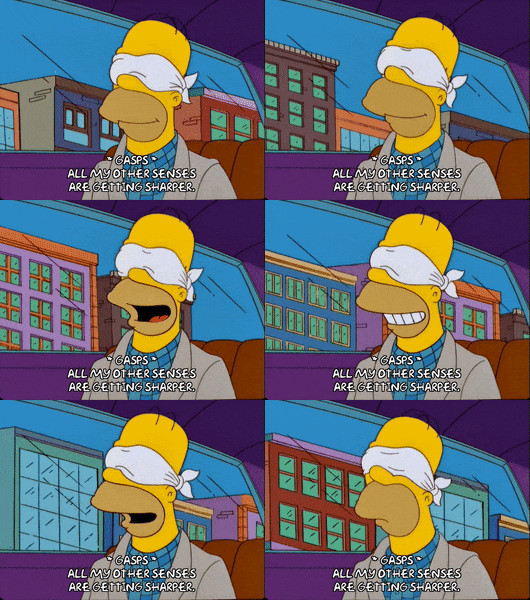
Newman is laying out a life in which we are essentially driving a car while blindfolded and God keeps switching around the gas and brake pedals. Are we there yet? You may never know in this life.
This passage does not promise happiness, success, safety, or security. In fact, it guarantees the opposite. Newman composes a veritable country song of all the unspeakable challenges we might face while engaged in this mission, should we choose to accept it.
Speak comfort to me, Newman!

Here’s more from Newman to quell the fear a bit:
Let us put ourselves into His hands, and not be startled though He leads us by a strange way, a mirabilis via, as the Church speaks. Let us be sure He will lead us right, that He will bring us to that which is, not indeed what we think best, nor what is best for another, but what is best for us.
Hope.
Fortunately, that terrible country song Newman was writing is entitled “He Knows What He is About,” the magical six-word phrase that turns all the bad stuff on its ear by giving it a higher purpose and a divine logic that surpasses all understanding. These are “necessary causes of some great end, which is quite beyond us.”
At one point, John Henry Newman borrows from another famous Newman, of the Randy variety. God can’t let you throw yourself away. He has not created us for naught. He does nothing in vain. Every moment of our lives—good or bad—is serving an ultimate good that might remain imperceptible to our limited human minds.

Here’s more from Newman to stoke the hope a bit:
God has created all things for good; all things for their greatest good; everything for its own good. What is the good of one is not the good of another; what makes one man happy would make another unhappy. God has determined, unless I interfere with His plan, that I should reach that which will be my greatest happiness. He looks on me individually, He calls me by my name, He knows what I can do, what I can best be, what is my greatest happiness, and He means to give it me.
Empowerment.
This passage is often referred to as John Henry Newman’s Mission Prayer, and that’s where the real power of these words come to light.
Despite all the daunting language, this passage is ultimately a rallying cry for Christians to go be Christians in the world and accept the results of such a life as always being for the glory of God.
After “He knows what He is about,” my second favorite line in this meditation is “I shall be an angel of peace, a preacher of truth in my own place, while not intending it, if I do but keep His commandments and serve Him in my calling.”
Once again Newman’s brilliant brevity is on display as he provides a fantastic gut check to the ego of every reader. There is no greater mission than to be an angel of peace and a preacher of truth in my own place—while also not intending to be those highfalutin things. You’re on a mission from God. But so is everyone else.
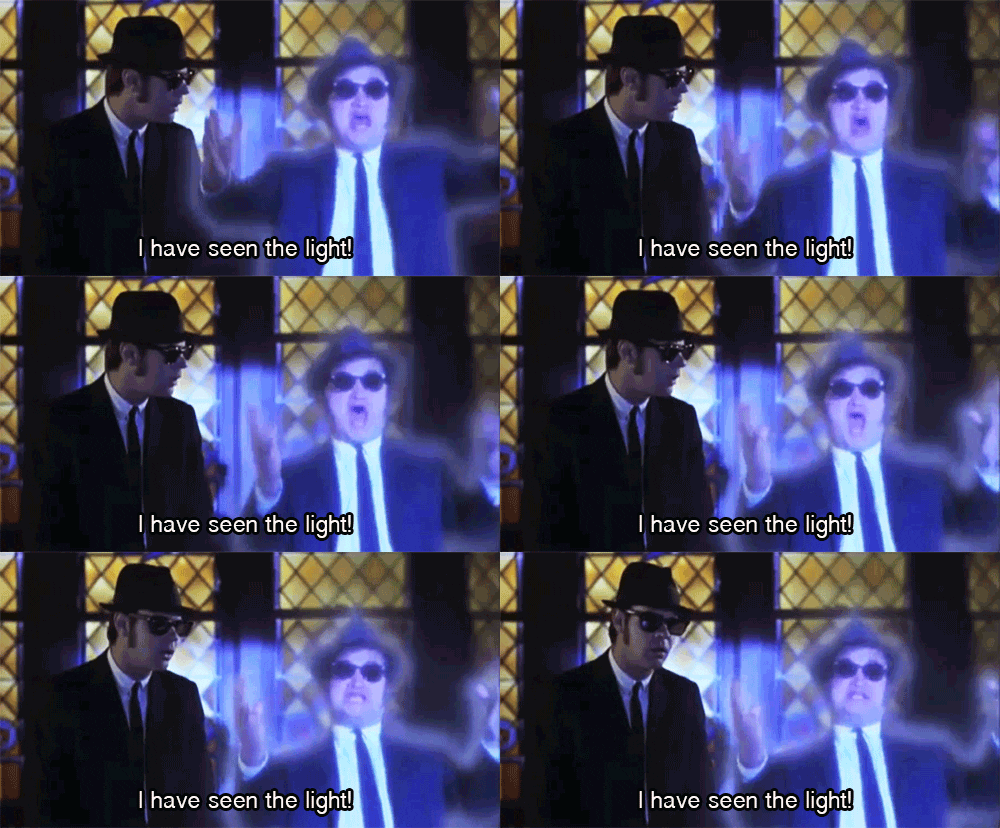
With apologies to Elwood and Jake, stop trying so hard to let everyone know that you’re on a mission from God and start quietly living His precepts. We “have a part in this great work,” we are not the great work itself.
But our part in this work is so important! We can be the Jenga piece that keeps the entire tower from falling. He knows what He is about…and he knows what we are about.
It’s hard to not get excited about getting up for (God’s) work in the morning, when faced with the fact that your heavenly creator literally created you to be doing your specific contribution to the work—and no one else. Let’s go!
I’d like to let Newman himself play us out by quoting the beginning and end of this meditation that are not often included with the more famous part. (You can read the full meditation online here)
God was all-complete, all-blessed in Himself; but it was His will to create a world for His glory. He is Almighty, and might have done all things Himself, but it has been His will to bring about His purposes by the beings He has created. We are all created to His glory—we are created to do His will. I am created to do something or to be something for which no one else is created; I have a place in God's counsels, in God's world, which no one else has; whether I be rich or poor, despised or esteemed by man, God knows me and calls me by my name.
After the famous passage I quoted at the top of this article, Newman concludes with a vital prayer:
O Adonai, O Ruler of Israel, Thou that guidest Joseph like a flock, O Emmanuel, O Sapientia, I give myself to Thee. I trust Thee wholly. Thou art wiser than I—more loving to me than I myself. Deign to fulfil Thy high purposes in me whatever they be—work in and through me. I am born to serve Thee, to be Thine, to be Thy instrument. Let me be Thy blind instrument. I ask not to see—I ask not to know—I ask simply to be used.
May we all count ourselves as instruments in God’s divine masterpiece, not needing to hear the finished symphony until our part in it is complete. St. John Henry Newman, pray for us!
Newman, out.
Thanks for reading (A)musing Catholic! Subscribe for free to receive new posts and support my work.
Comments
Nothing yet. Say the first thing.
Sign in to join the conversation.